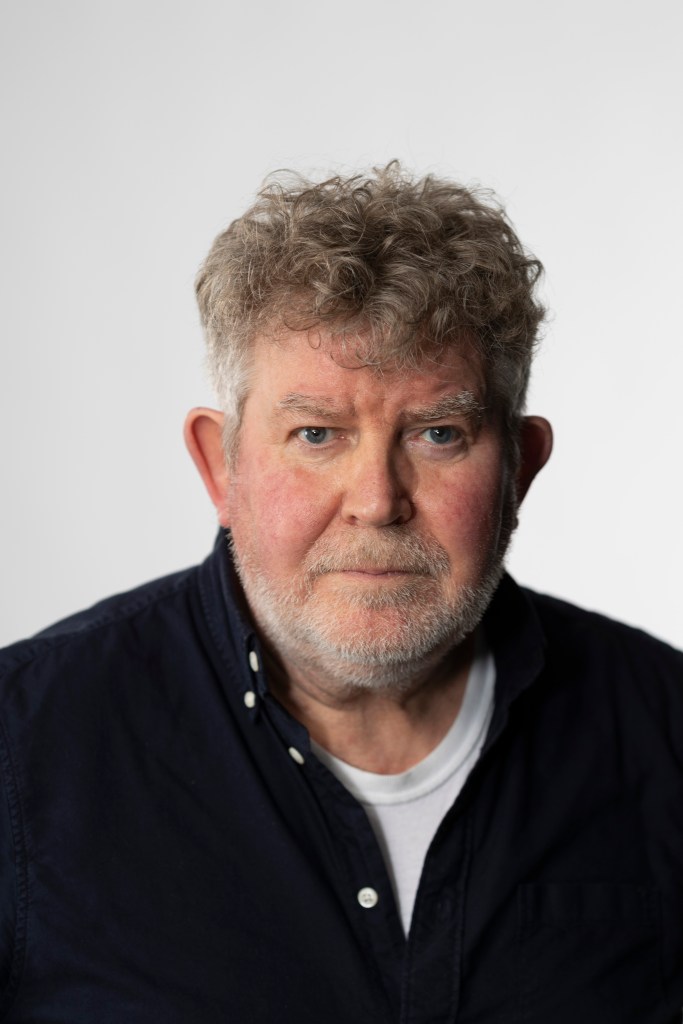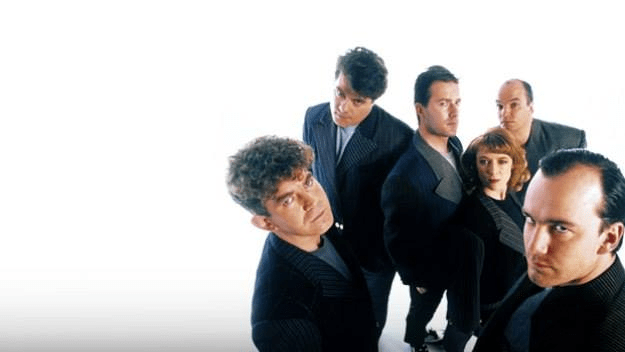

FLA 22: Sioned Wiliam (23/07/2023)

I’ve interviewed Sioned Wiliam a couple of times before. The first time was about twenty years ago, when she was the head of comedy at ITV commissioning the likes of Baddiel and Skinner, Harry Hill, Simon Nye and Rob Brydon, not to mention BAFTA winners like Cold Feet, and also The Sketch Show, the series which first brought Lee Mack and Tim Vine to national recognition. A few years later, when Ian Greaves and myself spent a year – a year! – writing a book on Week Ending, she told us about writers’ meetings and discovering a young Cardiff writer called Peter Baynham. She has become a good friend.


But as well as working as a producer of comedy and entertainment shows in London – Tonight with Jonathan Ross, Game On, Drop the Dead Donkey, Yonderland, Paris starring Alexei Sayle and Big Train (the latter two written by Linehan and Mathews) – and running the Radio 4 comedy department for seven years (2015–22), Sioned has had a considerable parallel career working in Welsh language entertainment broadcasting, as presenter, contributor and behind the scenes.


As someone who has spent over two-thirds of my life living in Wales, I am struck by the irony that my grasp of the Welsh language remains patchy at best, but the divide has always fascinated me. And so, via Zoom, one afternoon in May 2023, we discussed not only Sioned’s career in comedy and commissioning, but a subject that is comparatively rarely written about in English media: pop music in Wales.


But we began with the usual question: what music was Sioned Wiliam listening to at home when she was young?

——


SIONED WILIAM

My father [academic and prize-winning writer Urien Wiliam, 1929–2006] loved classical music, so he played a lot of Beethoven and Brahms, although he didn’t like Mozart, he thought he was populist rubbish! He loved Vaughan Williams, but it’s only relatively recently that I’ve grasped what a sublime composer he was. My husband Ian [Brown, top sitcom writer] has also introduced me to composers like Britten, and Handel operas – I remember going to see those brilliant Nick Hytner productions of Xerxes and Ariodante at the ENO. And we also once went to see a concert at Westminster Abbey to mark the 300th anniversary of the death of Queen Mary, with the music of Henry Purcell [televised live on BBC2, 6 March 1995]. It was wonderful to be in that building where the music was originally played, with the drummers entering from the cloisters and remarkable singers like Ian Bostridge and Emma Kirkby.


But back to music at home when I was young. We also had a lot of protest music in the house because my parents were like a lot of people in the 60s in Wales who were involved in the Welsh language movement, which was allied with the civil rights movements all over the world, really. There were a lot of really great protest songs in the Welsh language by young, very groovy bands, all fantastic singers. I’ve still got singles from that era, quite valuable now because they’re quite rare. I’ve even got a song book from that 60s/70s period, which my son has been learning to play.


As children, we used to perform in what they call noson lawen, which means ‘merry night’, which was a tradition, and we were forever doing something from school in a party, or something like singing a song and then finding as I was on the same stage as these Welsh stars like Heather Jones, one of the greatest voices ever, and Dewi Pws, and bands like Y Pelydrau.


At school, we sang oratorios, using this sol-fah technique, which was very popular in the Welsh industrial areas because it was a way for people to access music without having to read music. So our wonderful music teacher Lily Richards taught us Mendelssohn’s Elijah and Verdi’s Requiem using sol-fa, so my copy is all  ‘do-ray-me’. You could hear these sounds and she would do all the hand gestures and everything.  


As children, you grew up with this incredibly rich culture of music, both popular and beautiful. There was the Eisteddfod tradition, which was competitive, and you did that at a local level, or at the youth level, the Urdd, the many competitions you were part of as a child. And then there was the nationalist element as well. But also there was this upsurge in live music. People like Meic Stephens, Heather Jones, Dewi Pws, Geraint Jarman, Eleri Llwyd… There was a woman called Nest Howells, with the most incredible singing voice, who used to sing for a group called Brân.


Gruff Rhys from Super Furry Animals put together these wonderful compilation albums called Welsh Rare Beat (Finders Keepers Records, two volumes, 2005, 2007) featuring a lot of these singers, the best of 60s/70s Welsh rock. Gruff comes from that tradition of very melodic music. Welsh musicians tend to like hymns and folk songs, very melodic and pretty. They don’t have these repetitive, swirling things that you have in Gaelic music or in Scots music. They tend to have a beginning, a middle and end, quite often in the minor key, but they always have very beautiful melodies. It’s a real tradition.


JUSTIN LEWIS

Funny you mention the Welsh Rare Beat compilations. Volume 2 has a Swansea-based group on it called AD 73, for which my dad sang and played drums! But unfortunately, the title and recording don’t match: the title’s called ‘Higher and Higher’ but it’s actually the other side of the single that’s featured, ‘Jerusalem’, which is an instrumental, and so my dad isn’t singing on it!


SIONED WILIAM

You must let Gruff know!


JUSTIN LEWIS

I should really, shouldn’t I? Actually, my dad’s first language was Welsh. During World War II, and his mum had died before he was even two years old, he was evacuated to Carmarthenshire, to Pontyberem, with a lovely couple who lived there. And they looked after him, he was initially educated in Welsh and then moved back to Swansea, and to Mumbles, where I’m from.


But weirdly I don’t remember Welsh being spoken very much. You would sometimes sing Welsh songs at school, and obviously you’d hear it through television. In the days before S4C, obviously you’d get Welsh language programming integrated into the BBC and ITV schedules, and I’d just sort of pick things up just from cadences or associations or just repetitions. [SW agrees] So my Welsh language knowledge is patchy really. We had Welsh lessons, the same way you’d have French lessons or Geography. But with Welsh, we’d had a very good teacher for a year, and then she left and we had a very ineffectual teacher, and I lost enthusiasm then. Particularly unfortunate because that was 1982/83, when S4C was just starting on television.


SIONED WILIAM

But that was very common, Justin. People had it drummed into them that it wasn’t worth anything. I lived in Barry as a kid, an English-speaking town, although we had a lot of Welsh speakers, but the message was: ‘Why pick that funny language, it’s gonna hold you back.’


My grandad was of the generation that had the ‘Welsh Not’ put around their necks. At the turn of the 20th century in Welsh schools, if a child was heard speaking Welsh in school, they had a piece of wood put round their neck with WN on it. They have examples of this on display in St Fagans Museum, near Cardiff. And if they then heard another child speaking Welsh, they’d put it round their neck. And if you had that round your neck at the end of the day, you were beaten in front of the whole school.


That was part of a culture that were doing their best to get rid of the language. My mother lived in Carmarthen where almost nobody spoke in English at all, but she was educated entirely through the medium of English. She was told she was just an uncivilised peasant. Emlyn Williams’ play The Corn is Green (1938)… that’s the same story. That the boy is brilliant, but he is civilised by learning English. There was no sense offered of this ancient rich culture and literature. And someone like me had the opposite; we only spoke Welsh at home, and my father was a writer, my grandfather was a professor of Welsh in fact, so there was a real interest in the culture in my house.


JUSTIN LEWIS

I think you can only really do it from speaking the language every day.


SIONED WILIAM

Things have changed so much. I think people realise that any bilingualism is really good for a child’s brain. When I was eleven, I had to go to Pontypridd [about 15 miles away] to a senior school that would teach me through the medium of Welsh. That school split eleven times, there are now eleven schools where there was one, but Barry has four junior Welsh-speaking schools. And in school there is greater ease with bilingualism than 20 or 30 years ago, and I think a lot of people feel a bit angry now as well. They were kind of fed this lie that it was going to hold them back.


JUSTIN LEWIS

It also, it occurs to me, never felt like we were taught much about Welsh history.


SIONED WILIAM

Well, this is true, and a scandal. They’re talking about this now in all sorts of areas of Welsh history.


JUSTIN LEWIS

Do you know that book by Richard King, Brittle with Relics (Faber, 2022)? It’s an oral history of Wales, from 1962 to 1997, it ends with the devolution referendum. And while I knew bits, there was so much I did not know – and I was living there for most of it!  


SIONED WILIAM

But I’ll tell you what’s changed a lot in relation to the Welsh language is football. Football said: We own this language, it’s our right to this language. Half our team speak it, so we’re going to do press conferences in Welsh, we’re going to sing songs in Welsh, like Dafydd Iwan’s ‘Yma o Hyd’, which became this phenomenon, because they played it again and again and again in Cardiff Stadium, and everyone knew the words. Earlier last year, they invited him to sing before a Wales game, and he said, ‘Oh, they won’t have heard of me’, but when he went in, this predominantly English-speaking stadium went mad. He started to sing the song, and they joined in as they knew the words.


I didn’t in all my life think that would happen, that there would be this feeling of ‘We own this, we may not speak much of it, but it’s ours. We know that song, and that’s mine as well as yours…’ It’s so much healthier.


JUSTIN LEWIS

I was watching that Hywel Gwynfryn at 80 documentary that was on at Christmas.


SIONED WILIAM

Yes. It’s great.


JUSTIN LEWIS

I guess I first knew him from the children’s programmes that were on in the 70s like Bilidowcar (BBC Cymru, 1975–88), which was a sort of Welsh language equivalent of Blue Peter or Magpie. How on earth do you sum up a man like Hywel Gwynfryn, he seems to have done everything, he’s like a cross between Terry Wogan and John Noakes…


SIONED WILIAM

And a journalist on top of that. [He began his career on the BBC Cymru Wales news magazine, Heddiw in 1964.]


JUSTIN LEWIS

He is an integral part of Welsh language becoming a contemporary part of a changing world. As was your dad – I was re-reading his obituary in the Independent, written by Meic Stephens, who you mentioned earlier, and Stephens made the point of how entertainment as well as education was vital to the survival of a language. ‘We need quizzes, cartoons and pop songs in Welsh as much as we need philosophical treatises and historiography.’ [‘Obituary: Urien Wiliam’, The Independent, 26 October 2006]


SIONED WILIAM

Yes, that’s right.


JUSTIN LEWIS

And is it true – because it’s mentioned in the same piece – that your dad coined the Welsh word for ‘television’: ‘teledu’?


SIONED WILIAM

When a new word comes along, the Welsh Academy (like the Academy of France, in France) think of what the word might be in Welsh – obviously ‘television’ is both Greek and Latin in origin – and I think they did a competition for the best translation. My father won that competition, and I think he created the word ‘teledu’. We were always told that story as children. But to be honest with you, I’m not entirely sure every bit of that is true. Whether he had suggested a word, and then other people embellished it, I don’t know. But he was definitely part of that process.


——

FIRST: TRWYNAU COCH: ‘Mynd i’r Capel Mewn Levis’ (Recordiau Sgwar, single, 1978)

[Currently not on YouTube. Or on Spotify, unfortunately! It was when we had the conversation. When they return, they will be reinstated here.]

SIONED WILIAM

When I was in the sixth form, and then an undergraduate in Aberystwyth, we used to go and see lots of live bands, and one of them was Trwynau Coch [‘The Red Noses’], this great punk band from Swansea that John Peel used to play. It was Huw Eurig, Rhys Harris and his twin brother Alun. They used to do songs like ‘I Want to Go to Chapel in Levis’ (‘Mynd i’r Capel Mewn Levis’, 1978) and when you saw them live, they were able to replicate their studio sound on stage rather well.


Although I think I may have bought a Tebot Piws [The Purple Teapot] one before then, who were this great, very funny band, with Dewi Pws.


And then there was Geraint Jarman and the Cynganeddwyr. Cynganedd is a particular strict metre of Welsh poetry. Geraint was a Cardiff boy, and he had these amazingly diverse band playing reggae, with people from all kinds of backgrounds in the band, so it wasn’t cultural appropriation as we know it today – but Geraint would sing in Welsh. It actually came from the Casablanca Club in Cardiff, they were fantastic to see live as well.


It was a great live scene at Aberystwyth. I also saw English bands too – Joe Jackson’s Jumpin’ Jive, one of the best gigs I’ve ever seen, and Squeeze, I even liked U2! And I loved Motown, always loved Stevie Wonder, stuff you could dance to.


JUSTIN LEWIS

What do you think was the effect of punk and new wave on Welsh music, did it create similar inspiration to that going on in English and American cities? How did it change perceptions in Welsh society?


SIONED WILIAM

Definitely. The fact that John Peel would play and give validation to these bands like Trwynau Coch, and Anrhefn, who were from mid-Wales – Rhys Mwyn, their co-founder is now a presenter with BBC Radio Cymru… Even though Peel didn’t understand what they were singing about, made us feel like somebody recognised our existence outside Wales. He made a huge impact. And Melody Maker and NME would review them. It made it feel more legitimate, part of a bigger picture.


JUSTIN LEWIS

I found a clip of John Peel on The Tube (Channel 4, 3 April 1987) introducing a band called Datblygu, who were very significant in the history of Welsh pop.


SIONED WILIAM

Yeah, he used to play them quite a lot.


JUSTIN LEWIS

I guess they had the same kind of spirit as The Fall, these very sardonic lyrics. In fact, there’s a really interesting documentary about them online (Prosiect Datblygu 2012 – this also has English subtitles).


SIONED WILIAM

Unfortunately, Dave [R Edwards, lyricist and founder] died not so long ago [2021], and they were seminal, a lot of people were very influenced by them. And they were kind of quite rude about Welsh language stuff, which nobody had had the courage to do before from the same background. When you have the confidence that your culture exists, you have the freedom to start being a little bit naughty then. But before then, you’re just struggling to survive. So it was a sign of maturity that Dave, like Datblygu, you know, could laugh at middle-class Welsh people.


JUSTIN LEWIS

Let me ask you about i dot, a music show you produced for S4C in Wales.


SIONED WILIAM

I did the first series (1996). I was working at Talkback at the time, but it must have been quiet. Huw Eurig who ran the production company Boomerang rang me up, and I thought it would be really good fun. It was a particularly magical period in Welsh music: we had Super Furry Animals, Catatonia, 60 Foot Dolls from Newport… Gorky’s Zygotic Mynci.


We recorded i dot in Newport and Bangor, in two different nightclubs, with a little moving set, and we had two really charismatic presenters: Daniel Glyn and Ffion Dafis, who’s a brilliant actress and novelist as well.  


JUSTIN LEWIS

Obviously there had been previous Welsh pop shows, I remember Sêr (HTV Cymru) from when I was a kid, and Fideo 9 a bit later, which I think Geraint Jarman was involved in, right?


SIONED WILIAM

Fideo 9 (Cwmni Criw Byw/S4C, 1988–93) was a seminal programme, yeah. With directors making films, people like Endaf Emlyn – this was the age of the MTV video – and again, there was this flowering of Welsh language music that’s still going strong. But back when I was a kid, they had Disc a Dawn (BBC Cymru, 1966–73) with the wonderful Mici Plwm, which was like Top of the Pops. Twndish (BBC Cymru, 1977–79) was another one. They kind of evolved over the years. i dot, I think there were two or three series. I could only do the first one, I think I was doing Big Train after that.


 ——

LAST: CARWYN ELLIS & RIO 18: Joia! (2019, Recordiau Agati/Banana & Louie Records)

Extract: ‘Tywydd Hufen Iâ’

JUSTIN LEWIS

Moving on to more recent Welsh language artists, I knew about Gruff Rhys’s Griffiths, but I hadn’t heard the Carwyn Ellis album with Rio 18, especially this record with the National Orchestra of Wales.


SIONED WILIAM

Carwyn Ellis is a clever guy. He plays in Chrissie Hynde’s band – in fact, there’s a song to her on this, called ‘Joia’, with this Latin American rhythm all the way through, in fact all through the whole album. Absolutely stunning. We’d play this driving down to Italy, my son Macsen would insist on having this wide variety of things.


It’s really interesting how many good Welsh session musicians there are. Carwyn, Peredur ap Gwynedd, his brother Rheinallt, an excellent guitarist, they’ve played with everyone. And Pino Palladino, who played with Geraint Jarman…


JUSTIN LEWIS

Yes, that’s Pino on ‘Wherever I Lay My Hat (That’s My Home)’ by Paul Young, amongst many other things, which of course begins with this bass part straight out of the beginning of Stravinsky’s Rite of Spring! I knew he was from Cardiff, but not of his early work.


SIONED WILIAM

He played with a lot of Welsh bands, I remember.


JUSTIN LEWIS

And you’ve also brought Parisa Fouladi, a newer name, to my attention. Again, reggae influences there.


SIONED WILIAM

Again, it’s that internationalist approach, she’s Welsh-Iranian, people from a lot of different backgrounds – but singing in Welsh. It’s fantastic.


JUSTIN LEWIS

I was thinking about how this internationalist relationship between Welsh language music and the rest of the world often seems more profound than the English language connection. [SW agrees] When I was about six, 1976, I saw this weekly series on BBC 1, in Welsh – I’d forgotten the title but I have now established it was called Y Tir Newydd [‘The New Land’, BBC Cymru, Summer 1976]. It was a group of musicians playing American songs but with Welsh lyrics. Things like ‘Freight Train’. The singers were Mari Griffith who I’d seen on that schools programme Music Time


SIONED WILIAM

Oh I loved her, she had a brilliant singing voice, great guitarist.


JUSTIN LEWIS

…And Emyr Wyn. And the theme to the series was a translated version of ‘America’ from West Side Story, which I don’t think I’d ever heard in English. I didn’t question why this was on, just saw it every week, and doing research for this, I discovered they made it for the 1976 bicentenary. And I got this feeling, ‘Oh okay, and this is something I’m not getting from English language television at the moment.’ It’s funny how you absorb things sometimes.


SIONED WILIAM

Yes. Emyr Wyn another great singer. I think what’s so key is with almost every presenter on Welsh television, they can do other things, playing an instrument, singing a song. It’s fascinating.


JUSTIN LEWIS

And of course, you fit into this category yourself. You were regularly on radio and television in Wales, presenting before you became associated with comedy.


SIONED WILIAM

Yes. When I was a student, at Aberystwyth, I started doing that and after I graduated, this lovely producer at HTV called Dorothy Williams very kindly offered me a chat show – which was probably terrible! And I did lots for them, reviewed films, and then did a show with Elinor Talfan, a sort of afternoon cookery show, which was great fun. And because I was a post-graduate student at the time, it was good money!


Prior to this, I had been doing a drama degree at Aberystwyth. I was very very lucky because at the time I was there, Mike Pearson (who sadly died last year) and the Brith Gof theatre company (founded in 1981) were part of a company that came from Cardiff Lab, this extraordinary movement, the Third Theatre they called it, were also teaching at Aberystwyth at the time. So I got the most incredible opportunities to work with people from all over the world. I did three shows with Brith Gof, and then we did lots of Stanislavsky and Chekhov. It was a brilliant, enlightened degree, very academic as well, but we did lots of performing and lots of touring and stuff. I did Japanese Noh theatre, did a show in Harlech Castle, we did a promenade performance round the villages of West Wales.


I had three years there, and then I got a grant to do further research, and went to Royal Holloway College for two terms but they didn’t mention to me that the person I was going to be working with wasn’t there anymore, she’d left! So I wrote to John Kelly at Jesus College, Oxford, because he was the only person I knew who was an expert in Sean O’Casey, who I was studying. So I had to get the university at Aberystwyth to send my degree dissertation and then have it translated into English. My English wasn’t brilliant at that point, not academically brilliant anyway, you know. And then I got a place at Jesus, because a student there hated it so much they decided to transfer to Aberystwyth.


I arrived at Oxford [summer 1983], and I auditioned straight away for as many plays as I could get into. I got into something called the Oxford Revue, but it wasn’t the real one, it was an alternative to it. I’ll tell you who was in it, was John Sparkes! Who wasn’t a student, but was great fun. Pooky Quesnel was in it as well.


JUSTIN LEWIS

And then you formed a double act with Rebecca Front. The Bobo Girls. How did that come about?


SIONED WILIAM

We went to Edinburgh, did a show, and Rebecca had written one of the songs for it. And then, in the autumn, I went back to Oxford, and finally got to meet Rebecca through the proper Oxford Revue, and Patrick Marber too.


JUSTIN LEWIS

We should probably explain the Bobo Girls a little, for those who don’t know. You performed sketches, often written by Rebecca’s brother Jeremy Front [who now writes the Charles Paris Mysteries on Radio 4, amongst many many other things]. But you also performed these songs that Rebecca wrote. So it became clear that you both loved singing, and this was going to work?


SIONED WILIAM

Absolutely. Also, there wasn’t much for women to do in the Oxford Revue items. I always used to say we got very good at filing because we were playing so many secretaries. So after that first year, we decided to try and write our own stuff, and in 85 we went to Edinburgh and again in 87, got on Radio 4’s Aspects of the Fringe both times, did residencies at places like the Canal Café in London. And eventually, 1989 and 1991, we did two series for Radio 4 [called Girls Will Be Girls]. And Armando Iannucci produced the second series. But there weren’t many opportunities outside that, there weren’t panel games or Taskmaster, those things didn’t exist, really.


JUSTIN LEWIS

And by then, from ’88, you were a staff producer in BBC Radio Light Entertainment – and you went on to produce one of the great Alan Partridge half-hours, Knowing Knowing Me Knowing You (Radio 4, 3 July 1993). The Knowing Me Knowing You series, produced by Armando, had won the Sony Award, so you made this special mock ‘celebratory behind-the-scenes’ documentary. For a long time it was a bit of a lost gem.


SIONED WILIAM

It was just the most enormous fun. We only had two days in the studio, and at first there wasn’t a shape to anything because they were just so used to improvising, brilliantly. The one contribution I think I made was to say, ‘Let’s find a story, have a beginning, a middle and an end’. But they knew each other so well by then, the character was so rounded. And Rebecca playing Carol, Alan’s wife, weeping, in the background. It was very funny. But I was producing because Armando, who was usually the producer, wanted to be in it as well.


JUSTIN LEWIS

Yes, as ‘Mario Santini’! I love that little running joke where he keeps having to go back to the Fifteen-to-One production office, which I think is a coded reference to the fact that at the time he was working with Chris Morris on getting The Day Today off the ground for television. But I love all the stuff about the hierarchy of guests, the availability of guests. And then a few months after I heard that, I saw The Larry Sanders Show for the first time.


SIONED WILIAM

You know I’m in an episode of Larry Sanders, do you?


JUSTIN LEWIS

That’s crazy! Which one?


SIONED WILIAM

It’s in the very last series. I’m not really in it! I’m sitting in the [chat show] audience with my husband Ian. We were on a tour of Universal Studios, and someone asked if we wanted to be in the audience for Larry Sanders. It was fantastic. It was one where Jon Stewart was hosting it because Larry (Garry Shandling) was ill, and there’s the Nazi Jeopardy sketch with Hank, and the studio executive characters are horrified, and there’s one shot where me and Ian are sitting behind them. [‘Adolf Hankler’, S6 E6, aired in the US on 19 April 1998.] And later, we met Fred Barron, who had been instrumental in getting Sanders and Seinfeld off the ground. So that’s my connection with Sanders, a bit nerdy but it’s a good one.


JUSTIN LEWIS

And of course, you produced Jonathan Ross’s chat show for a while, in the early 90s, but I did not know that you’d been planning a radio pilot with Vic and Bob.


SIONED WILIAM

Yes, I’d been to see them live in Deptford in 1989. I’m not sure we ever got to make that pilot. I’ve got some of their original documents for it somewhere, which I treasure. We offered it to Radio 1 and they didn’t get it at all.


JUSTIN LEWIS

You went back to BBC Radio in 2015 as Commissioner of Comedy. What are you most proud of commissioning from your time back there?


SIONED WILIAM

I’m very proud of bringing Alexei Sayle back to Radio 4 [Imaginary Sandwich Bar]. Michael Spicer’s The Room Next Door. Jon Holmes’ The Skewer, which won 28 awards. There’s a great series on medicine coming from Kiri Pritchard McLean. But also bringing people like Mae Martin, Rosie Jones, who we had before anyone else. Lost Voice Guy. Tez Ilyas. Lots of younger women, but lots of older women too. Conversations from a Long Marriage by Jan Etherington, for Roger Allam and Joanna Lumley.


JUSTIN LEWIS

I was especially interested in something you said on the Kay Stonham podcast (Female Pilot Club) recently. You mentioned how you might greenlight something, and say, ‘I don’t entirely get this, but I trust the performers and producers’. You might not like everything the department makes but something still intrigues you about it.


SIONED WILIAM

Yeah. Or you know the audience loves it. There are shows the audience will get, they might not make me laugh, but they’re very popular, greatly loved, and the best they could be. Or things that were a bit weird that I was too old to appreciate, but you knew that the young people involved were brilliant. That’s how Hitchhikers’ Guide to the Galaxy got on the air in the 70s, they believed in Geoffrey Perkins as a producer. I think it’s your job to put the odd thing on that you don’t quite understand. One famous show, a real Marmite show, I never quite got myself, and it might not necessarily be my bag, but people adore it so much, it’s the bag of the core audience. It’s not my place to stop it, and with any comedy, nobody can agree on what’s funny.


Also, there are things I saw on stage that would never work on Radio 4 because it’s too much about being in the room with them. It’s very hard to take improv out of the live situation, it’s like gossamer. You couldn’t put the Radio 4 microscope on it – it would diminish it.


And there were other calls I made. Miles Jupp and Andy Zaltzman taking over The News Quiz. Sue Perkins taking over Just a Minute after Nicholas Parsons…


JUSTIN LEWIS

Just a Minute’s a good example of something that you almost couldn’t imagine without Nicholas, and it’s a different thing now, but it still works. Same with I’m Sorry I Haven’t a Clue. I remember when Humphrey Lyttelton died, and you couldn’t imagine anyone else doing it – and yet it continues. So you left the department last year?


SIONED WILIAM

I felt ready to go. It had been seven years. I wasn’t made redundant, it had been great, but I didn’t want to get jaded with it, and also with Covid, I realised that I wanted to do a range of things in my life and not sit in an office all day. It was the right point to go.


JUSTIN LEWIS

Are you going back to programme making, in comedy production? Or are you concentrating on more novel writing?


SIONED WILIAM

I’m back to the freelance life – exec producing some telly projects, broadcasting and writing. And I’ve really enjoyed doing the rounds of literary festivals with my latest book.


JUSTIN LEWIS

Was writing an area you always wanted to get into? Because this is novel number four, is it?


SIONED WILIAM

It did take me a long time to find a voice. I mulled over the first book for about four years before I sent a few chapters to the publisher. It’s the kind of thing you take on holiday with you, and there’s a bit of satire in there – not entirely pulpy, but it is entertaining. And this next book is actually about people that going to Italy to a holiday home, but it’s got parallels perhaps with Wales.

——

ANYTHING: MADNESS: The Liberty of Norton Folgate (2009, Stirling Holdings Limited/Union Square/BMG)

Extract: ‘The Liberty of Norton Folgate’

SIONED WILIAM

I always loved their videos and songs in the 80s, but I’d kind of forgotten about them until my son, who was then in his teens, saw them – this is so strange – on Strictly Come Dancing, in the guest music slot, around 2016. And he said, God, these are good. He became obsessed with them, and of course, I had no idea that they had this massive body of recent work, like Norton Folgate (2009), which is just absolutely magnificent.


JUSTIN LEWIS

I can’t work out how they did it all, especially early on. Because they were all so young, even though I know there were seven of them, and they all wrote songs in various combinations; they all co-wrote at least one major hit single.


[They really did. Here’s the evidence.


Mike Barson (keyboards):

‘My Girl’, ‘Night Boat to Cairo’, ‘Embarrassment’, ‘Return of the Los Palmas 7’, ‘Grey Day’, ‘House of Fun’, ‘Driving in My Car’, ‘Tomorrow’s Just Another Day’, ‘The Sun and the Rain’, ‘Lovestruck’, ‘NW5’.


Graham McPherson (aka Suggs) (vocals):

‘Night Boat to Cairo’, ‘Baggy Trousers’, ‘Shut Up’, ‘Wings of a Dove’, ‘One Better Day’, ‘Yesterday’s Men’, ‘

Waiting for the Ghost Train’.


Chris Foreman (guitar):

‘Baggy Trousers’, ‘Shut Up’, ‘Cardiac Arrest’, ‘Our House’, ‘Yesterday’s Men’, ‘Uncle Sam’.


Lee Thompson (saxophone, percussion):

‘The Prince’, ‘Embarrassment’, ‘House of Fun’, ‘Uncle Sam’, ‘Lovestruck’, ‘NW5’.  


Dan Woodgate (drums, percussion):

‘Return of the Los Palmas 7’, ‘Michael Caine’.


Mark Bedford (bass guitar):

‘Return of the Los Palmas 7’, ‘One Better Day’.


Carl Smyth (aka Chas Smash) (vocals):

‘Cardiac Arrest’, ‘Our House’, ‘Tomorrow’s Just Another Day’, ‘Wings of a Dove’, ‘Michael Caine’.


—-


SIONED WILIAM

Yeah. These little vignettes of London life, incredibly beautiful, and well written. So I suppose I rediscovered them through my son. I then saw some stuff that Suggs had done and thought, ‘Gosh, he’s very funny and he’d bring a slightly different listenership to Radio 4.’ So he did these shows [in 2019], Love Letters to London, walking around London just as he’d been this kid who had wandered around London on his own, on the buses, you know, while his mother was working at the Colony Club. But in general, as a family, we’re big Madness fans. We’ve seen them live now a few times.


JUSTIN LEWIS

How does the live set work now? Is it a mixture of new-ish and the hits?


SIONED WILIAM

I went to the 40th anniversary show [2019], and the first half was sort of ‘unplugged’, lots of stuff I’d never heard before. Then, more familiar stuff, but also things like ‘Bullingdon Boys’ (2019), stuff from the last two albums, which I know quite well. And then obviously, they build up to things like ‘Night Boat to Cairo’ at the end.


But then there’s also the Suggs solo stuff, things like ‘Green Eyes’, and my favourite song is ‘Powder Blue’, which is about him and his wife [Bette Bright, formerly a member of the band Deaf School]. They’ve had this obviously wild night, saying their pop star friends have all gone home, they’re both listening to Aretha Franklin. It’s very funny, but it’s very beautiful, nobody would really connect it with Madness.


They were a very political band, always – singing about racism, homelessness, Thatcherism – and still are. ‘Norton Folgate’ is about immigration, and there’s this huge range of fantastic Turkish instruments on it. It’s about looking out into the world and welcoming culture into London and how London’s the melting pot. It’s an ode to joy to cultural richness. Quite often, their stuff is about the little person trying to make their way in the world, encountering all sorts of difficult things, but with a musicality I can’t get over.

——

JUSTIN LEWIS

I was interested to find out what you, as a comedy commissioner, made of the sitcom pilot they made in 1984. It’s quite a curio, this little test-tape, shot on location.

‘MADNESS: THE PILOT’ (Talkback Productions, 1984)

SIONED WILIAM

It’s fascinating, isn’t it? I didn’t realise it was written by Ben Elton and Richard Curtis.


JUSTIN LEWIS

Just after The Young Ones finished. It was the first thing they wrote together, I believe – shortly afterwards they started work on Blackadder II. And produced by Geoff Posner, who at the time was working with Lenny Henry and about to start working with Victoria Wood (As Seen on TV).


SIONED WILIAM

It looked like Geoff, one of the great comedy directors and producers, probably had to do it in about a day for about 20p. But the Madness boys all had so much personality and charisma. Geoff gave it as much style as he could in what was obviously a very short amount of time, but I don’t know why they didn’t take them because they could have been brilliant.


JUSTIN LEWIS

This was one of the first two pilots made for television by Talkback [set up by Mel Smith and Griff Rhys Jones initially to make radio commercials]. The other was a vehicle for Frankie Howerd, but neither of them made it to the screen. The Madness one eventually turned up as part of a DVD boxset they released, called Gogglebox (2011).


But I remember reading about that pilot about a year before they made it, in Smash Hits, and because I’d seen The Young Ones and obviously they’d guested in it, I could picture this three-camera studio sitcom, with an audience. Although I also remember thinking, even then, ‘But Madness have already found their ideal comic medium, and it’s the promotional video.’


SIONED WILIAM

Yeah, they made fantastic videos. Clever, funny, literate, as were their songs.


JUSTIN LEWIS

Can pop groups do sitcom, I wonder? Could there be another Monkees?


SIONED WILIAM

Can there even be another sitcom?! The age of the sitcom has passed, to be honest with you. We seem to have these hybrids, some better than others, some hyper-real, some more surreal. Now, say if you were to do a sitcom with Madness now, you could either go hyper-real and make it gritty, or you go with these flights of fancy.


JUSTIN LEWIS

What are you enjoying at the moment, comedy-wise?


SIONED WILIAM

The Windsors makes me laugh out loud. Derry Girls, unashamedly funny but poignant and moving at times. And there’s this thing on Sky called Extraordinary, this kind of magical realism comedy, it’s about every single person having a superpower. It’s full of flights of fancy and it’s surreal but terribly touching as well. Colin from Accounts, more of a soap than a comedy, but really delightful. So I would say that sitcom’s just evolved into a different shape. There’s some fantastic new stuff out there. I don’t want to be the dinosaur who bemoans the end of sitcom, though I am sad that nobody wants to write Frasier anymore, which seems to me to be the difficult thing to do. It is much easier to do something that’s mildly amusing.


JUSTIN LEWIS

Not Going Out seems to be the last one standing now in Britain. And they’ll still try things like do a live episode, or one in real time.


SIONED WILIAM

And there’s Mrs Brown’s Boys, which is more panto than sitcom. But there isn’t the appetite to do a Seinfeld or Frasier now – it costs too much, they won’t pay a room full of writers. This is what the writers’ strike in America is all about. That infrastructure that allows you to make shows like Brooklyn Nine-Nine or Big Bang Theory. It’s very difficult now to get that kind of level of funding to create these brilliant lines. There was some wonderful story about how the Frasier writing room would be silent for about two hours while they just tried to think what Daphne might say to Dr Crane, which had to be something Daphne would say, but which would also move the plot on.


JUSTIN LEWIS

It’s funny how the world of television has never been so diverse in terms of who’s on there – rightly so, obviously! – and yet the range of programmes has never been so narrow. Because all these people could be appearing on, could be making, so many different things – but so many genres seem to have a house style.


SIONED WILIAM

That’s a real worry, yeah, and with comedians, they seem to be used in every way apart from being funny, so they’re going fishing or cooking. The amount of factual entertainment you get now with comedians because it’s cheaper, and they don’t have to write anything.


But just in general, the notion of spending all that time working on a weekly script with a room full of people… it never really existed in this country. And there’s not a hope in hell of it happening now, because people’s choices have changed. And something else we’ve lost: you used to be able to put your hand over the side of a page of script and know who was speaking from the line of dialogue. There’s so many shows now where everybody has the same voice.


JUSTIN LEWIS

We have got this far, and we somehow haven’t mentioned Bob Dylan. I have been aware for a while you are a massive fan.


SIONED WILIAM

I first heard Dylan while I was a postgraduate student at Oxford. My boyfriend at the time, John, was a huge fan, had all the bootlegs and went to see him at every possible opportunity. I had always bought into the cliché that Dylan couldn’t sing but when I saw Dont Look Back at the cinema, belting out his songs with such power and charisma, I completely changed my mind. He’s so funny and smart in that film. And then I heard the live version of ‘Like a Rolling Stone’ in Manchester – extraordinary – and the Pennebaker film when he’s with The Band. I love all his different phases, even the religious stuff and Nashville Skyline and that wonderful trilogy of American Classics albums he did a few years ago [2015–17]. And my son and I always play the Christmas Album [Christmas in the Heart] every year – we love the arrangements!

——

You can follow Sioned on Twitter at @sionedwiliam.

Her four novels, Dal i Fynd (2013), Chwynnu (2017), Cicio’r Bar (2018) and Y Gwyliau (2023) are published by Y Lolfa.

—-

FLA 22 PLAYLIST

Sioned Wiliam

(For the time being, this site and project uses Spotify for the conversation playlists, but obviously I disapprove that Spotify doesn’t pay artists and composers properly, and other streaming platforms are available, as are sites to buy downloads and buy recordings. For consistency, you can also listen to the selections via YouTube (where available), and links are provided in each case, below.)

Track 1: RALPH VAUGHAN WILLIAMS: ‘Fantasia on a Theme of Thomas Tallis’

Academy of St Martin in the Fields, Sir Neville Marriner: https://www.youtube.com/watch?v=P04yfGRNebM

Track 2: WOLFGANG AMADEUS MOZART: The Magic Flute: ‘Ach, ich Fühl’

Renée Fleming, Orchestra of St. Luke’s, Sir Charles Mackerras: https://www.youtube.com/watch?v=pjbY2-U2_MI

Track 3: GEORG FRIDERIC HANDEL: Ariodante: ‘Scherza Infida’

Ann Murray, Orchestra of the Age of Enlightenment, Sir Charles Mackerras: https://www.youtube.com/watch?v=Pj2NKIPta0w

Track 4: TRWYNAU COCH: ‘Mynd I’r Capel Mewn Levis’ [Currently not on YouTube or on Spotify but will be reinstated here when it is]

Track 5: HEATHER JONES: ‘Cwm Hiraeth’: https://www.youtube.com/watch?v=Xzmqws-K5kc

Track 6: GERAINT JARMAN A’R CYNGANEDDWYR: ‘Gwesty Cymru’: https://www.youtube.com/watch?v=E9TWFZ7Wc_c

Track 7: JOE JACKSON: ‘It’s Different for Girls’: https://www.youtube.com/watch?v=KLDFG5vm5kA

Track 8: STEVIE WONDER: ‘I Don’t Know Why’: https://www.youtube.com/watch?v=_QtgkxwG1Ew

Track 9: SQUEEZE: ‘Pulling Mussels (from a Shell)’: https://www.youtube.com/watch?v=Hn0Rzi1s5iU

Track 10: SUPER FURRY ANIMALS: ‘Ysbeidiau Heulog’: https://www.youtube.com/watch?v=cttikLIQnMg

Track 11: CARWYN ELLIS: ‘Tywydd Hufen Ia’: https://www.youtube.com/watch?v=OZPhTQ2QfOc

Track 12: MADNESS: ‘The Liberty of Norton Folgate’: https://www.youtube.com/watch?v=7X8BDcn-rSA

Track 13: MADNESS: ‘The Sun and the Rain’: https://www.youtube.com/watch?v=T_9FeMMlLZw

Track 14: MADNESS: ‘Powder Blue’: https://www.youtube.com/watch?v=ePLFqfzcqO8

Track 15: BOB DYLAN: ‘Tangled Up in Blue’: https://www.youtube.com/watch?v=QKcNyMBw818

Track 16: BOB DYLAN: ‘If Not for You’: https://www.youtube.com/watch?v=yyouhbgAiCA

Track 17: BOB DYLAN: ‘Blind Willie McTell’: https://www.youtube.com/watch?v=_AIRdU6CPf0

Track 18: BOB DYLAN: ‘Like a Rolling Stone’: https://www.youtube.com/watch?v=IwOfCgkyEj0

Track 19: BOB DYLAN: ‘Mozambique’: https://www.youtube.com/watch?v=4K_YPW-_Vnk

Track 20: SIDAN: ‘Cymylau’: https://www.youtube.com/watch?v=6zjVwMVbYkQ

Track 21: ENDAF EMLYN: ‘Macrall wedi Ffrio’: https://www.youtube.com/watch?v=mVJOxRCWVF0

Track 22: MEIC STEVENS: ‘Tryweryn’: https://www.youtube.com/watch?v=fok0IlnYEXI

Track 23: MEIC STEVENS: ‘Y Brawd Hwdini’: https://www.youtube.com/watch?v=XA5fqsMneEc

FLA 19: Moray Hunter (25/06/2023)

It’s forty years since Moray Hunter’s career as a writer for television and radio got underway, with his writing collaborator John Docherty (later known as Jack Docherty*). The pair were already part of the Edinburgh sketch troupe The Bodgers, along with Pete Baikie and Gordon Kennedy, who all graduated to their own Radio 4 series in 1985.


With the addition of two more writer-performers, Morwenna Banks and John Sparkes, the sextet formed a company to make television’s Absolutely (Channel 4, 1989–93), establishing a cast of memorable, quotable and occasionally grotesque characters: Little Girl, Don and George, Frank Hovis, Stoneybridge Town Council, The Nice Family, Denzil and Gwynedd, and Moray’s own star turn, the pedantic but cheerful Calum Gilhooley.


As Absolutely Productions diversified into numerous spin-off projects and nurturing talents including Armstrong & Miller and Dom Joly’s Trigger Happy TV, Moray continued writing with John/Jack Docherty on mr don and mr george, The Creatives and The Cup. The Absolutely team minus Docherty reformed in 2013 for three more radio series, while Moray has devised and scripted four series of Alone for Radio 4, starring Angus Deayton.


I’ve been a fan of Moray’s work for, well, 40 years, so was delighted he agreed to participate in First Last Anything, one morning in June 2023. I hope you enjoy our chat.


[*In 1988, John Docherty became Jack Docherty for professional performing purposes due to Equity union rules (there was already a performer called John Docherty), but Moray calls him John throughout our conversation. Fellow Absolutely collaborator John Sparkes will be referred to by his full name to avoid any confusion.]


—-


MORAY HUNTER

My dad sang in the church choir and did light opera, amateur opera with a company called Southern Light Opera Company in southern Edinburgh. He was good, he was usually the comedy foil. They’d do a show once a year in the King’s Theatre, and it was always sold out because it was filled with family and friends.


I’ve not really followed any interest in musicals or light opera, but I did love those shows at the time, usually great romantic stories: The Desert Song, and then My Fair Lady and The Merry Widow. So those records were in the house, and maybe something like ‘100 Best Classical Tunes’? Unlike those Top of the Pops compilations you used to get back then, these were played by proper people. [Laughter]


—-

FIRST: BENNY HILL: ‘Ernie (The Fastest Milkman in the West)’ (Columbia Records, single, 1971)

JUSTIN LEWIS

The Christmas number one of 1971, and your first single.


MORAY HUNTER

Okay. I was feeling slightly awkward about this one…


JUSTIN LEWIS

I watched him as a kid a lot because he did TV parodies and I loved anything like that. He was clever on that front in the 50s and 60s with television techniques and playing all the parts in the sketches. 


MORAY HUNTER

Yeah, although there was always that end-of-the-pier thing going on, and the scantily-clad women got harder to defend. But ‘Ernie’ did make me laugh.


JUSTIN LEWIS

Strange to think now that ‘Ernie’ was much played by Junior Choice.


MORAY HUNTER

Ignoring the double entendres. Was Junior Choice hosted by Ed Stewpot Stewart? One week, he read out this request from Edinburgh, a message from a guy in Pilton for another chap in Drylaw nearby. These two gangland areas basically, with young boys running around in gangs. And the message was: ‘I’d like you to play “This Town Ain’t Big Enough for Both of Us” by Sparks.’ A threat on the airwaves – and Stewpot was like, ‘What a lovely message.’ [Laughter]


JUSTIN LEWIS

‘Ernie’ is kind of a Western pastiche, isn’t it? Certainly in its accompanying promo.


MORAY HUNTER

Yeah, that was kind of ahead of its time as well, the video.


JUSTIN LEWIS

Novelty records back then all seemed to be story songs and someone dies at the end. They all seemed to do that. Well… okay, ‘Lily the Pink’ by the Scaffold did it as well. That makes two. [Laughter]


[I thought of other examples afterwards. ‘Paddy McGinty’s Goat’. ‘The Old Lady Who Swallowed A Fly.’ ‘Hole in the Ground’ by Bernard Cribbins.]


—-


MORAY HUNTER

We got an Alba stereo in 1971 – it was like a Dansette, but a bit bigger than that with one separate speaker. Our parents got us The Best of Andy Williams and The Best of the Seekers. But we had some money put aside and we could go out and get our own records.


I had Bridge Over Troubled Water. I bought the lyrics book for that which had the chords – like ‘El Condor Pasa’, which I wasn’t particularly a fan of, but it was quite an easy play for a guy learning guitar. ‘The Only Living Boy in New York’ is probably my favourite track on that. The harmonies, just beautiful. That great story about that song when Art Garfunkel went off to film Catch 22, and Paul Simon was a bit pissed off: ‘What am I doing? I’m here on my own. And why aren’t you here?’


JUSTIN LEWIS

The cracks in the relationship, I guess.


MORAY HUNTER

They didn’t last that much longer.


JUSTIN LEWIS

Obviously they did the odd gig after that. But before the album was even released, they knew they were done.


—-


MORAY HUNTER

I love singer-songwriters, and the acoustic guitar. That’s been the basis of everything for me musically, really, and James Taylor, with Mud Slide Slim and the Blue Horizon, was one of the first for me.


JUSTIN LEWIS

He’s interesting, because he’d signed to the Beatles’ Apple label initially, and then became the biggest singer-songwriter of the time. Has everyone covered ‘You’ve Got a Friend’ now?


MORAY HUNTER

Not even his song, of course! It’s Carole King! It’s his ex, his first ex-wife, so…


JUSTIN LEWIS

Yeah, who plays on the record.


MORAY HUNTER

And then recorded it on Tapestry. But I don’t think she released it as a single.


JUSTIN LEWIS

Another early purchase: Piledriver by Status Quo, from 1972. I don’t think I had ever actually heard a Quo album from start to finish, apart from greatest hits sets. This one fully establishes them with the 12-bar boogie era, after their first couple of years in psychedelia. Apparently they heard ‘Roadhouse Blues’ by The Doors somewhere in Germany, and they thought, ‘Oh – we could do something like that’, and that was the basis for the Quo sound. And they cover ‘Roadhouse Blues’ on this record.


MORAY HUNTER

I remember going to see them. My first gig had been a Strawbs gig (21 March 1973), at Usher Hall in Edinburgh, and they’d just brought out that awful single…


JUSTIN LEWIS

‘Part of the Union’?


MORAY HUNTER

Yeah, but the previous album, Grave New World (1972) had been great. So I went to see them, but the next night (22 March 1973), a lot of mates went to see Status Quo at the Caley Picture House, and that sounded like much more fun: ‘Okay, I’ll get my denims out.’ Quo was always a good night. You’d go and see them playing at the Apollo in Renfield Street in Glasgow, and catch the last train home – and the balcony would famously go up and down when folks were jumping up and down. Quite worrying, if you’re underneath it. Or on top of it.


JUSTIN LEWIS

I wish I’d heard them properly at that time, because by the 80s when I was 14, 15… they were brilliant at Live Aid, of course… but they were almost showbiz rock by then. And I once shared a house at university with someone who had a Quo greatest hits which had this terrible medley single on it [‘The Anniversary Waltz Parts I & II’, 1990], which seemed to be their attempt to cover every song ever written.


MORAY HUNTER

Their nadir, really. But I went to see them a few years after that – John Doc and Pete are also fans – and they’d obviously worked out they should be playing the earlier stuff again.


JUSTIN LEWIS

Next, Bowie’s Ziggy Stardust – was it seeing ‘Starman’ on Lift Off or Top of the Pops?


MORAY HUNTER

I was living a sheltered life in Edinburgh, so never mind the make up and when he’s draping himself around Mick Ronson – I was simply amazed by a blue guitar. So I got into Ziggy Stardust, then Aladdin Sane… I remember a pal of mine, Al, always very up-to-date musically, and him playing me ‘Time’ – ‘Time falls wanking to the floor’… and then I went back and listened to Hunky Dory, which came out before those two. Someone asked on Twitter the other week, ‘run of best three Bowie albums’, and I think those would be mine.


—-


JUSTIN LEWIS

How did you begin writing comedy, then?


MORAY HUNTER

Growing up in Edinburgh, there were lots of single sex schools and my parents went to a church called Greenbank Church. I wasn’t terribly religious, but there was a youth fellowship there, which was a place to meet girls, really. It was called the Junior Quest when you were about 15 or 16 and then you went on to Senior Quest, but both versions joined forces for an annual show at the Churchill Theatre, the highlight of the Quest year. And we’d write our own material. I think the first-ever sketch I’d written was this Robin Hood item, with lots of gags probably from a joke book, and I cast myself as Robin Hood, but I was told afterwards I’d been mouthing everyone’s lines, because I’d written it. So that was a habit I had to break. And by Senior Quest, I was directing that show a couple of times, writing lots of it.


JUSTIN LEWIS

The four members of the Bodgers – you, Pete Baikie, Gordon Kennedy and John Docherty – were all at the same school, right? In different years, admittedly.


MORAY HUNTER

We were, we were. Pete and I were in the same class aged five, although we weren’t mates then, but this Quest thing brought us together, because we got him to take over the folk group, and he mentored me through it, because he’s obviously an accomplished musician. I could get by on guitar.


Then I wrote lots of our sixth form revue at school, and after university, I was working as an apprentice lawyer, and watching Not the Nine O’Clock News, looking at the writers’ list and thinking, ‘Who’s this Richard Curtis who’s writing every week, and Colin Bostock-Smith? I’d like to be on that list one day’, and I really started getting the bug. I also realised [the legal profession] was not for me.


JUSTIN LEWIS

Didn’t John Docherty also study law, or start studying it at least?


MORAY HUNTER

He was at Aberdeen University, and like me, he knew that this just wasn’t for him. I think he wrote on his last exam paper the words ‘Parting is such sweet, sweet sorrow’.


JUSTIN LEWIS

Just as you were noting who wrote Not the Nine O’Clock News, I was also interested in who wrote things. So seeing you and John in the end credits of various shows – Radio Active, In One Ear, Spitting Image – meant that I tuned in specially for In Other Words… the Bodgers (BBC Radio 4, 1985), your first series. And quite a few sketches would turn up from that when you began doing Absolutely in 1989. ‘This is radical television… We’re behind the set… Beat this! I’m still in the dressing room!’


MORAY HUNTER

We first did that sketch in the theatre, in the Pleasance in Edinburgh. It worked well, but the best bit was we found that John, if we gave him enough time, could rush upstairs, get into the roof, and there was this well, this trapdoor where he could stick his head out and surprise the audience, having been on stage a minute before.


JUSTIN LEWIS

Apparently, Angus Deayton gave you and John your break as writers for radio and TV.


MORAY HUNTER

Angus had seen us in Edinburgh in 1982, although it was John Gorman who contacted us. He’d been in the Scaffold, but had been working with Chris Tarrant on Tiswas, OTT and now this new late-night show called Saturday Stayback (Central/ITV, 1983). Angus had contacted Stayback about us because he was going to script edit the series. We sold a lot of our best sketches to Stayback and it wasn’t quite our cup of tea, but it paid very well.


JUSTIN LEWIS

A strange show. A sort of variety sketch show with live music, but set in a real Midlands pub with what appears to be real customers.


MORAY HUNTER

But it led to us working with Angus on Radio Active [for three series, 1983–85]. So all this was his doing. God bless him.


JUSTIN LEWIS

It’s back to ‘who wrote things’, isn’t it? I’d watch Alas Smith and Jones, see twenty writers’ names flash by and then the long game was trying to work out who had written what. Like discovering you and John had written the ‘Hi-Fi Sales Conference’ sketch, a favourite of mine: ‘What do all the buttons do?’ [Alas Smith and Jones Series 3, Episode 1: 18 September 1986]:

MORAY HUNTER

That’s probably the best thing we ever wrote for them. When Mel and Griff did the sketch, it was a studio night, we were in the audience, it got a decent reception, and they announced, ‘The two guys that wrote this are actually here’ and they made us stand – though we were a bit shy – and we got a round of applause. Which was a nice touch.


LAST: WILLIAM THE CONQUEROR: Maverick Thinker (Chrysalis Records, 2021)

Extract: ‘Maverick Thinker’

MORAY HUNTER

A gang of us go up north every September, for a few days carousing and maybe some golf, some fishing, some drinking. I was going up with one of the guys, Doug, in his car, with his music on, and I had my Shazam out. That’s how I discovered William the Conqueror, a trio with Ruarri Joseph from Edinburgh originally but now living in Cornwall, plus Naomi Holmes (bass) and Harry Harding (drums). They’re indie rock, with a slight Americana feel to it. Ruarri had made three solo albums – more acoustic – but now it’s more electric guitar.


Ruarri’s lyrics are quite imperceptible at times, very poetic and a great read, but  it’s more a mood thing with him. He’s got a great voice – half-sings, half-speaks. In fact, one of his songs, ‘Maverick Thinker’, starts with him saying about how he spoke to his mum: ‘I phoned my mum and she says you don’t sing like you used to.’ I’m sure that’s autobiographical because he’s just telling a story or talking, but then gradually singing it. It just works.


Doug also put me on to Peter Bruntnell, also a bit Americana, although I don’t know where he’s from…  


JUSTIN LEWIS

New Zealand apparently. But he’s been settled over here quite some time.


MORAY HUNTER

I recently saw him in the Voodoo Rooms in Edinburgh, in a room with about fifty people packed in. Absolutely brilliant, and there was a three-piece group, with this local guy, Iain Sloan, on steel guitar, and a bass player called Peter Noone, but not the Herman’s Hermits guy.


Another mate of mine put me onto Colin Hay. There’s a fascinating Netflix documentary about him: Waiting for My Real Life (2015). He emigrated with his family to Australia. He started Men At Work. Huge success. Things fell apart. He’s on his uppers, he ends up moving to LA, and the documentary joins him as he’s gigging again. He’s just one man with a guitar turning up at a venue with maybe a hundred people, and he’s got three or four well-known hits from Men at Work, and his new stuff. He’s very witty. I saw him recently at the Fruit Market in Glasgow, a really special night. And that song, ‘Waiting for My Real Life to Begin’… I’ve always felt like that myself.


JUSTIN LEWIS

That’s a good philosophy – your attitude is still active: ‘Okay, what’s next?’


MORAY HUNTER

Yeah, things could be better. He was rags to riches, and he’s not rich again, but he’s a really contented man. You can tell that he’s just so comfortable in himself, and happy with what he’s doing.


JUSTIN LEWIS

It’s about having creative control. It bothers me when people accuse young people of wanting to be famous – I think the majority of them want some kind of success in doing something interesting.


MORAY HUNTER

That’s what Colin Hay looks like. A man in control when he turns up. He knows that’s all he needs and that’s it. He’s stripped his life down to that.


JUSTIN LEWIS

And in the same vein, perhaps: Rab Noakes. Now, I know you must have seen him live quite a lot, you’ve been a big fan for many years, and I remember seeing your tweet when he died, only last year.


MORAY HUNTER

My older brother who was at Dundee University, was into him. He went to one of his gigs at the University Union, ‘71 or ‘72, and he grabbed a few friends to come along, none of whom knew who Rab was. And there was a raffle for his new album [Rab Noakes, 1972].


JUSTIN LEWIS

The one with ‘Drunk Again’ on it.


MORAY HUNTER

Yeah. My brother won the raffle, and probably deserved to because he brought a few folk along. It was a signed album, but he got Rab to sign it again. There was a little dog in the photo and he signed it ‘Pony’ for the dog. I think it must have been the dog’s name. Anyway. Three years later, I’m at Dundee University, Rab Noakes is playing the Union again, and I grab a few people to There’s a raffle for the new album [Never Too Late, 1975], and I win it. I go backstage and try and explain to him how amazing it is because my brother had won another raffle three years earlier…


Luckily, later on, I got to know Rab a bit. Doing The Bodgers in Edinburgh in 1984, we took over the Calton Studios, and we had a few slots to sell – and Rab came and did a few late-night slots, and he came and saw us and was very nice. And [in the late 1980s] when he became a radio producer [at BBC Radio Scotland], I ended up doing some shows for him, like our St Andrew’s Day show.


I have another memory of Rab. In the 90s, I was working in Glasgow for a few weeks, and on my day off, I couldn’t find his latest album – Standing Up (1994) – in any of the shops. As I came out of HMV in Argyle Street, standing in front of me was Rab. He said, ‘What are you doing here?’ And I said, ‘I’m looking for your new album and I can’t find it anywhere.’ So, being Rab, he asked me for my address, and two days later, it came through my letterbox.


JUSTIN LEWIS

That’s lovely.


MORAY HUNTER

They say never meet your heroes, but that does not apply in this case.


JUSTIN LEWIS

That career path of becoming a radio producer made me think of Pete Atkin who’d been in that duo with Clive James, writing and performing songs, and then he became an entertainment producer at BBC Radio in London. In fact, when Rab became a producer at Radio Scotland, there was a youth programme on the station called Bite the Wax. With a young guy called Armando Iannucci and another guy called Eddie Mair.


MORAY HUNTER

In fact, Rab became Robert Noakes for a period because he felt he wanted to separate the singer-songwriter Rab from Robert. It never took, the Robert thing! A great man.


JUSTIN LEWIS

I found a Melody Maker gig review from 1970, in London. It mentions that the audience, who had probably never seen Rab before, had a rapport with him and the songs, and were already able to join in on choruses. Clearly there’s a real warmth in the performances from the get-go.


MORAY HUNTER

Very self-effacing and I think that endears him to people. He wasn’t a showman, but very egalitarian – just as likely to come in lugging an amp as anyone else. Folk pick up on that. And there are catchy tunes, which help.


JUSTIN LEWIS

And what about the Jackson Browne choice. ‘Late for the Sky’? Which is in Taxi Driver, of course. When Bickle’s watching the TV.


MORAY HUNTER

This one is because of my mate Jem, who I was pals with at university, who had good taste in music. This would have been my second year, 1976. I still adore Late for the Sky. That was my introduction. I realise there’s quite a lot of maudlin stuff in my choices, do you think?


JUSTIN LEWIS

You don’t strike me as that kind of person!


MORAY HUNTER

I was looking at the list, and I think I am ‘glass half full’, but I vary. I have a darker side.


JUSTIN LEWIS

Is that the comedy writing, though?


MORAY HUNTER

A bit of that, yeah. The sad clown thing.


JUSTIN LEWIS

And then there’s Decemberists. I was very lucky to see them live some years ago, at the Brixton Academy.


MORAY HUNTER

Oh, did you?


JUSTIN LEWIS

I didn’t know much of their stuff, I was stunned to discover they’d made about five albums.


MORAY HUNTER

I only really know this album. ‘June Hymn’ so beautifully evokes summer… there’s the line about summer coming to Springville Hill, which is near where they are in Portland, in Oregon. It just makes me think of those endless summers when you’re a kid and you think, ‘I’m never going back to school, this is life now.’ I love the harmonies and Colin Meloy’s got such a great voice.


—-


JUSTIN LEWIS

How did you and John Docherty become mainstays in the Spitting Image writers’ room?


MORAY HUNTER

We had applied for the annual writers’ contract at BBC Radio, encouraged to do so by Angus Deayton, him again, and we got the gig. We started in April 1984. We were hanging around the Radio Light Entertainment corridor, writing for various shows. At the meeting with [head of Radio LE] Martin Fisher, he said, ‘If you get offered BBC telly, we’d understand – but what we don’t want, is if you wrote for The Other Side, [meaning ITV and Channel 4].’ We went, ‘No problem’, never thinking that only six weeks later, we’d be hired for what was the second series of Spitting Image. Rob Grant and Doug Naylor had taken over script editing the show, and if memory serves, our radio producer Alan Nixon (who had worked with them on Son of Cliché) had talked us up to them. And then ‘Spit” offered us about the same amount of money for the series that we were getting for the whole year of writing for radio. It was a big, big show. We felt we had no option but to go for it.


JUSTIN LEWIS

I remember going to school the Monday morning after the first ever episode [February 1984], and everyone was a bit ‘Hmm, not sure’ – but by the second run that summer, it was absolutely unmissable.


MORAY HUNTER

We loved it when Chris Barrie got hold of how to do the voice of the sports commentator and presenter David Coleman.


JUSTIN LEWIS

Yes, the Question of Sport host then.


MORAY HUNTER

We didn’t really do much politics, John and I, we were kind of ‘the silly department’. We had this idea about Coleman getting confused and commentating on the opening title graphics for Sportsnight by mistake. At the time, the titles for Sportsnight had a clip of the Boat Race, with Oxford and Cambridge sinking, and the previous clip was Everton winning the League. They cut to the Boat Race and ‘Coleman’ is going, ‘Oh my god, and Everton are sinking.’


JUSTIN LEWIS

I love that ‘Coleman’ item where he’s doing the athletics commentary, and the bell sounds for the last lap, and he just goes absolutely bananas: ‘I’ve gone too soon, there’s a whole lap to go. Disaster for Coleman!’ And he ends up exploding.


MORAY HUNTER

That was a favourite trick on the show. Like the death at the end of the comedy song, having the puppet explode was our equivalent.


JUSTIN LEWIS

‘Coleman’ is immediately hilarious on Spitting Image. What Chris Barrie gets right is that detail from time to time that he had the faintest remnant of a north country accent.


MORAY HUNTER

I never knew he was from the north.


JUSTIN LEWIS

He was born in Cheshire [Alderley Edge, it transpires]. It was still the days when BBC presenters had their regional accents smoothed out.


Absolutely, 1989 (l-r): Moray Hunter, Gordon Kennedy, John Sparkes, Morwenna Banks, Pete Baikie, Jack Docherty

JUSTIN LEWIS

What was the thinking behind setting up an independent production company to make Absolutely? You just wanted to do it yourselves?


MORAY HUNTER

Basically, that. And Alan Nixon at BBC Radio Light Entertainment really pushed us to do that. After including us in a few Pick of the Fringe radio shows, Alan had asked us to do the Bodgers radio series [In Other Words… The Bodgers, 1985], after which there were some complaints that we all sounded the same, and they didn’t know how many Scottish guys were in it. So for a second series, we got some extra voices, our pals Morwenna Banks and John Sparkes, so it became Bodgers, Banks and Sparkes (BBC Radio 4, 1986). So then, there was a woman from Cornwall, a Welsh guy and there’s still ‘is it four or five Scottish guys’?  


When we tried to sell Absolutely, for television, STV were briefly keen on the idea. But when Channel 4 expressed interest, Alan Nixon said, ‘You know, we could do it.’ Absolutely was a funny company at the start because the six of us set it up with Alan, and two other producers, Jamie Rix and David Tyler. But clearly to begin with, the company was mainly going to be about the Absolutely show. So Alan became the sole producer until some of us started producing shows ourselves further down the line. But yes, it was really to get control. Once we got a couple of production fees, we could get an office, and see what else we could do. It was a good model.


JUSTIN LEWIS

And obviously Don and George, which was you and John Docherty, had some TV exposure before Absolutely. Friday Night Live (Channel 4, 1988), of course, but also on a variety show in Scotland a year earlier called The Terry Neason Show


MORAY HUNTER

Oh god, that’s right. We first did Don and George as a couple of tweed-suited peak-capped buffers.


JUSTIN LEWIS

As much older characters?


MORAY HUNTER

For some New Year Hogmanay shows. We did one with Craig Ferguson and Peter Capaldi, we’re all just starting out really, and the next year with [Alan Cumming and Forbes Masson’s] Victor and Barry characters. They’d written a song for the four of us, and I had about a day to desperately learn these lyrics. If you catch the clip of it, I lose it for about a whole verse – much to John D’s amusement later on – which reminds me, oddly enough, of what my dad used to do on stage with Southern Light Opera.


JUSTIN LEWIS

I’ve heard you and Gordon, and John all mention that you were trying to avoid certain types of comedy with Absolutely – so no TV parodies or celebrities or overt politics. Some armchair psychology here, but is that partly because you’d just done four years on Spitting Image? And also, almost nobody’s doing character comedy in ’88. Harry Enfield is, Barry Humphries, and a few others. But almost everyone else is doing sitcom, stand-up or impressions.


MORAY HUNTER

A lot of political comedy stand-up, yeah. We weren’t very political, we didn’t want to be. I think ‘no parody’ was John Docherty’s suggestion initially. I hadn’t thought about the Spitting Image thing – it could have been that. But doing characters helped place it in the real world, somehow, even though we were doing some surreal stuff in that real world. It was a good rule, although it was very annoying at times, if you had a good parody sketch and you couldn’t do it.


JUSTIN LEWIS

All this is to Absolutely’s advantage – it remains remarkably fresh all these years later.


MORAY HUNTER

It’s contemporary but not topical.


JUSTIN LEWIS

Because the trouble with leaning on personalities and impressions is that, 30 years on, nobody knows who most of them are. Interesting from a social and historical perspective, perhaps, but not always in terms of the comedy.


MORAY HUNTER

Though we did cheat once, with that U2/Simple Minds spoof video. I think it was a Pete and John D thing. [Absolutely, Series 2 Episode 8, final item]


JUSTIN LEWIS

I always saw that as a composite parody. There were so many bands making videos like that at the time! On the subject of Absolutely music, was Pete writing all the song lyrics himself?


MORAY HUNTER

Sometimes we’d write with him, they’d toss the lyrics around, but he did a lot of them himself – in the Absolutely Radio Show more recently, just about all of them. He’s a brilliant songwriter.


JUSTIN LEWIS

It strikes me that a lot of the humour in Absolutely is not coming from television, but from other places: absurdist cinema or theatre, or even literature.


MORAY HUNTER

Yeah. Pete’s always tried to do something a bit unexpected, it’s just in his nature – John D too, probably. John Sparkes had trained as an actor and had done a lot of physical comedy, so he wanted to bring that to bear. But we had a lot of time to fill in the early series, a longer slot than half-an-hour, so we’d have these epic 10-minute sketches… like a battle outside a pub with the Salvation Army… But by series four, which was six half-hours, we were doing three-minute sketches. In a way, I preferred the longer stuff because we were really letting go.


After series four (1993), Channel 4 wanted another series, and we had an idea of having a town where all our characters lived, but we never had quite the nerve to do it. And a wee while later, the League of Gentlemen did that and absolutely bloody nailed it! For years I thought we had made a mistake by not doing another series, but we had been running on empty a bit by series four, and I was certainly writing less material by that series.

JUSTIN LEWIS

How did the writing sessions work? I picture a situation rather like Monty Python where the six of you would read stuff out to the group.


MORAY HUNTER

At the start of a new series, we’d go away for a couple of days, an excuse to get in a room together with lovely food and nice drink. We’d put a whiteboard up and discuss things. In the early days, John and I were actually still writing together, mostly physically in a room. Later we’d write separately and bring things in. But also John D would work on stuff with Morwenna, as would I.


A lot of stuff we’d read out would be quite messy, though you could see the kernel of an idea and where it was going. John Sparkes’ stuff, though, was really tight, handwritten scripts – it was finished, basically. Those Denzil and Gwynedd sketches – they are absolutely packed, two and a half minutes. And that room of theirs being slightly askew is a good metaphor for Absolutely. Everything is leaning a slightly different way.


I’m about the words, really, I wasn’t so much into the surreal although John D and I did take Don and George in a very surreal direction in Absolutely and then in their own series [mr don and mr george, Channel 4, 1993]. I like ‘real’ stuff, but obviously there’s a big chunk of me that’s happy doing big and silly.


JUSTIN LEWIS

Was there meant to be a second series of mr don and mr george? You were certainly writing it, I believe.


MORAY HUNTER

We had big plans for it, and they commissioned a couple of scripts because they weren’t sure. and the story we got was it was nixed because [then Channel 4 boss] Michael Grade’s son didn’t get into it. Whether that’s true or not, I don’t know. It was a shame. It’s one of my regrets that we didn’t get to do more of that. The success of Father Ted shows that going surreal can work.


JUSTIN LEWIS

I always thought Don and George had the potential to cross over to a much younger audience. I could imagine kids liking that show.


MORAY HUNTER

That’s a very good point. We were going out at [half-ten on a Wednesday] with that first series and that turned into a hard slot. You could do edgier, racier stuff there, and we were not doing that! It should have been out at 7 or half-seven.


JUSTIN LEWIS

When you revived Absolutely for Radio 4 in 2013, John D wasn’t involved. I know he was doing Scot Squad, a semi-improvised sitcom for BBC1 in Scotland, very successful. I’m presuming you hadn’t fallen out…


MORAY HUNTER

No, we hadn’t fallen out. He didn’t really fancy doing Absolutely again. I think he just felt it was ‘going backwards’. It could withstand one member not being involved, although in a way John was almost the unofficial leader of the group – he wrote loads of material and was also good at developing other people’s ideas. Initially I wasn’t sure, but I thought maybe we could survive without him. It’s not the same without him, but I still think it stood up as a show. When Python lost Cleese [for Monty Python’s Flying Circus series four], they could still do a decent Python show.


JUSTIN LEWIS

Interesting parallel because Cleese was often described as the unofficial leader of Python.


MORAY HUNTER

‘The tall one with the silly legs.’ It was funny to do Absolutely without John D but, apart from anything, it was a good social thing, getting the gang back together. It was still slightly nerve-wracking to read out stuff to the group, but it’s not a bad process.


JUSTIN LEWIS

Returning to some of those characters, were you wondering where they were in their lives? Had they aged in your minds?


MORAY HUNTER

Definitely. All this technology had been happening in the meantime, so much for the likes of Calum to get to grips with – or not get to grips with. So it was joyous to revisit those characters, and find there’s still life in them, talking about the issues of the day and contemporary life.


JUSTIN LEWIS

Is it true that you’ve written a pilot for the Calum character?


MORAY HUNTER

I wrote a sitcom script for him. I should have done it years ago. There’s a lot more depth to that character, I think, than was initially suggested. I’ve just written about four and a half thousand words of what would be a Calum book, which I’m quite keen to try and get someone interested in. Partly to bring him up to date, but also include some favourite sketches from over the years. That could also be quite a nice audiobook.


JUSTIN LEWIS

A Calum autobiography! I’ve always found him endearingly cheerful.


MORAY HUNTER

Yeah, he’s positive, actually.


JUSTIN LEWIS

He’s not a stock ‘nerd’ character. Just as Frank Hovis’s redeeming feature is he’s incredibly apologetic about his predicaments, and Morwenna refuses to do Little Girl as ‘cute’. They’re not clichés.  


MORAY HUNTER

Calum has changed, though. John D invented him for our Edinburgh show in 1987 (The Couch), and he said, ‘You’ve got to play this guy’, and I said, ‘Fair enough’ – one of the biggest gifts I ever got. At that stage he was just an annoying friend of John’s – funny in itself.


But over the years, because Calum’s pedantic and annoying, he can point out when other people are being boring and annoying. Like the coffee shop sketch in the radio series where they say, ‘Do you want anything else with that?’, which they always do, even though you haven’t asked for anything. And so he says, ‘Okay, well, what else have you got? Can you list everything…?’ He’s more on our side of it now. Sometimes he’s making a good point.


JUSTIN LEWIS

When we were talking about Benny Hill earlier, it reminded me that he was Tony Benn’s favourite comedian, while Elvis Costello was a big fan of the Peter Tinniswood sitcom I Didn’t Know You Cared. Nicola Benedetti, the violinist, would – according to one interview – watch Seinfeld on a loop. Does Absolutely have any surprising celebrity fans that you know of?


MORAY HUNTER

See, I would put Seinfeld on a loop too. In fact, I have done. Recently, I was doing a scene with Miranda Richardson in Good Omens 2, which is coming up this summer. Don’t make a cup of tea or you’ll miss me, but I’m in there. She was great, really charming, and I couldn’t believe I was working with Queenie from Blackadder II – and so much else of course – but yeah, it turned out she was a fan of Absolutely, so that was nice!


JUSTIN LEWIS

Is that it for Absolutely, then? I know there’s no more radio series, but could there ever be a tour?


MORAY HUNTER

We’ve always failed to get a tour sorted. There’s too many naysayers! I don’t think John D would come back for a start. We thought about it during the original run on TV, and again a few years ago, in the midst of the radio show. But there was always one person going, ‘I’m not in the mood, I don’t want to do it’. That is a regret. We should have done it when we’d just done the TV series.  

—–

ANYTHING – RADIOHEAD: OK Computer (Parlophone, 1997)

[Extract: ‘Let Down’]

MORAY HUNTER

OK Computer by Radiohead was a real game-changer for me. Beautiful melodies… but quite rocky as well. It’s just a masterwork, particularly ‘Let Down’, which I love. And then I worked backwards with them: The Bends and then Pablo Honey. As with the Bowie albums, three albums in a row. But then, for me, I’m not sophisticated enough, musically, with Kid A and Hail to the Thief, when they started getting experimental.


JUSTIN LEWIS

I did respect Radiohead for choosing to do something different at a time when they didn’t have to. That takes real nerve.  


MORAY HUNTER

Although I just wish they’d done something else differently from what they did. [Laughter] But it’s like Bowie, always coming back, reinventing himself.


JUSTIN LEWIS

Yeah, see, I think my three Bowie albums in a row would be Station to Station, Low, Heroes. A little bit later.


MORAY HUNTER

Another song from recent times: I was watching Guilt, Neil Forsyth’s series. Not only can he write, he’s also got great taste in music. There’s a song in it called ‘My Backwards Walk’ by Frightened Rabbit, which has a sad story behind it, because the lead singer, Scott Hutchison…


JUSTIN LEWIS

He died, is that right?


MORAY HUNTER

Yeah, a troubled guy. You can hear it in his lyrics, and in his voice. But he was also hugely talented. ‘My Backwards Walk’ is about a break-up and he wishes he could do a backwards walk, go back and sort things out.


JUSTIN LEWIS

I’ll have to look that up.


MORAY HUNTER

It’s a beautiful song. What else did I have on my list? ‘I’ll Take You There’ by the Staple Singers. I’m a Hearts fan and when they won the Scottish Cup Final for the first time in my lifetime, in 1998, I set the video to record the game on BBC, in case we won, and went to the game. And during the little video montage afterwards, they played that song. So I fell in love with that, and of course now it evokes a very good day.


JUSTIN LEWIS

Do you still have a deep connection with the Edinburgh music scene?


MORAY HUNTER

I’ve been listening to Adam Holmes, a singer-songwriter. ‘Edinburgh’, from his most recent album, Hope Park, is a love song to the city. As I’m living back up north now [near Berwick], I’m spending more time there, and appreciating it more and more. And there’s Blue Rose Code, which is Ross Wilson, Edinburgh-born but now based in London. He writes some achingly beautiful songs and feeds my need for melancholy. ‘Denouement’ was the first I discovered, again on that journey to the Highlands. The travel was every bit as good as the arrival in this case.


What else have I been listening to lately? I’ve always loved The Cure, a great mix of some poppy songs, and also some ark, brooding melodies – like ‘Lullaby’. ‘So Here We Are’ by Bloc Party, who I don’t know much about, but this is a mesmerising blend of rock and electronica. Similarly addictive is ‘Changes’, not a Bowie cover, by Antonio Williams featuring Kerry McCoy.


I play in a fun band, The Strawmen, with some pals, most of us fairly new to our instruments – I’m learning bass. Our first song was ‘Strawman’ by Lou Reed, hence our name. Our leader, the proper muso in the group is a guy called Marcus Paine, who, apart from his missionary work with us keen amateurs, also heads up a band called Roark – and he’s just released an album, Pelforth Poolside Dusk. So my last song is my current favourite off that: ‘Gone, But Not Forgotten’. He’s a man who knows how to write a hooky chorus and I really enjoy his voice.


—-


JUSTIN LEWIS

One final Absolutely question. If all six of you were in a pub, as I believe you often were when making the show…


MORAY HUNTER

Still are sometimes!


JUSTIN LEWIS

…what would each of you put on the jukebox? Were you all aware of each other’s musical taste?


MORAY HUNTER

Pete Baikie would put on something by The Beatles. No question about that.

John Docherty would put on Talking Heads. Gordon Kennedy… Gordie’s quite a good singer, he was in a band with Pete called There’s An Awful Lot of Coffee in Brazil, who then changed their name to the Hairstyles. They were a half-serious, half-comedy band. So Gordon might play something by Free or Bad Company. Morwenna, she might play Belle and Sebastian, she’s a big fan. John Sparkes, I have no idea. Basically the Welsh national anthem, although he’s not sporty either, so…


JUSTIN LEWIS

He could hum ‘Greensleeves’.


MORAY HUNTER

Actually, yes. It would be something off the wall with John Sparkes. What was the one he used to do, as Frank Hovis, with a beer glass, spilling the beer everywhere? ‘Tears’ by Ken Dodd. But his version, it has to be ‘Tears’ by John Sparkes.

—–

The Absolutely Radio Show, featuring all three runs of the BBC Radio 4 series plus extra material, is out now, published by BBC Audio.


The television incarnation of Absolutely is available to stream via the Channel 4 website, and is also still available on DVD on the Absolutely Everything set (which contains many many extras).


mr. don & mr. george, TV series is also available to stream via the Channel 4 website.


Many episodes (currently series 3 and 4)  of Moray’s Radio 4 sitcom, Alone – starring Angus Deayton, Abigail Cruttenden, Pierce Quigley, Kate Isitt and Bennett Arron – can be heard on BBC Sounds. All 25 episodes (including the pilot episode) are also available to buy via BBC Audiobook.

You can follow Moray on Bluesky at @morayh.bsky.social.

 —-

FLA 19 PLAYLIST

Moray Hunter


(For the time being, this site and project uses Spotify for the conversation playlists, but obviously I disapprove that Spotify doesn’t pay artists and composers properly, and other streaming platforms are available, as are sites to buy downloads and buy recordings. For consistency, you can also listen to the selections via YouTube (where available), and links are provided in each case, below.)

Track 1: KATHRYN GRAYSON AND TONY MARTIN: ‘One Alone’ [from The Desert Song]: https://www.youtube.com/watch?v=F7kDbG1WKuA

Track 2: KITTY CARLISLE: ‘Vilia’ [from The Merry Widow, original 1934 recording]: https://www.youtube.com/watch?v=MWoK2scz7m8

Track 3: BENNY HILL: ‘Ernie (The Fastest Milkman in the West)’: https://www.youtube.com/watch?v=8e1xvyTdBZI

Track 4: SIMON AND GARFUNKEL: ‘The Only Living Boy in New York’: https://www.youtube.com/watch?v=5biEjyXNa2o

Track 5: JAMES TAYLOR: ‘You Can Close Your Eyes’: https://www.youtube.com/watch?v=t4XGEQmT3eM

Track 6: STATUS QUO: ‘Don’t Waste My Time’: https://www.youtube.com/watch?v=CwQHDZYX3ao

Track 7: DAVID BOWIE: ‘Five Years’: https://www.youtube.com/watch?v=2ObjtVdsV3I

Track 8: WILLIAM THE CONQUEROR: ‘Maverick Thinker’: https://www.youtube.com/watch?v=QcwxdSeeJ6U

Track 9: PETER BRUNTNELL: ‘Handful of Stars’: https://www.youtube.com/watch?v=PpORe23Jcrw

Track 10: COLIN HAY: ‘Waiting for My Real Life to Begin’: https://www.youtube.com/watch?v=Ko5isS9JQKM

Track 11: RAB NOAKES: ‘Just Away’: https://www.youtube.com/watch?v=E-nq2ItlY20

Track 12: JACKSON BROWNE: ‘Late for the Sky’: https://www.youtube.com/watch?v=n3SJz9jujEA

Track 13: DECEMBERISTS: ‘June Hymn’: https://www.youtube.com/watch?v=EnP5hRYp6uI

Track 14: RADIOHEAD: ‘Let Down’: https://www.youtube.com/watch?v=-Z_NvVMUcG8

Track 15: FRIGHTENED RABBIT: ‘My Backwards Walk’: https://www.youtube.com/watch?v=yKH-YEhzuvA

Track 16: STAPLE SINGERS: ‘I’ll Take You There’: https://www.youtube.com/watch?v=IhHBr7nMMio

Track 17: BLUE ROSE CODE: ‘Denouement’: https://www.youtube.com/watch?v=96CaPpkLVAU

Track 18: ADAM HOLMES: ‘Edinburgh’: https://www.youtube.com/watch?v=0kSm-9tQIjM

Track 19: THE CURE: ‘Lullaby’: https://www.youtube.com/watch?v=oGyqB3yC87k

Track 20: BLOC PARTY: ‘So Here We Are’: https://www.youtube.com/watch?v=dzZQJZdcCU4

Track 21: ANTONIO WILLIAMS FEATURING KERRY MCCOY: ‘Changes’: https://www.youtube.com/watch?v=ip6P1do1__c

Track 22: ROARK: ‘Gone But Not Forgotten’: https://www.youtube.com/watch?v=SurUs9Zx0C4