FLA 36: Jamie Muir (14/12/2025)

To round off series three of First Last Anything conversations, it was an utter delight to chat to producer, director and filmmaker Jamie Muir. Jamie has worked for fifty years in television, joining ITV company London Weekend Television in the mid-1970s as a researcher on the weekly arts series Aquarius. He was part of both the respective teams that created and developed Aquarius’s successor, Melvyn Bragg’s The South Bank Show for LWT from 1977, and The Late Show, a nightly BBC2 arts magazine that ran for six years from 1989–95. He also produced Book Four, a regular books series in the early years of Channel 4, hosted by Hermione Lee.

Since 1992, Jamie has made a wide variety of documentary films and series, for BBC, ITV and Channel 4, on arts, factual and history, fronted by figures including Lucinda Lambton, Simon Schama, Alan Yentob, Tom Holland, and David and Jonathan Dimbleby.

There was a lot to ask Jamie, as you can well imagine – and there was the small matter of discussing music as well, plus early family life, especially with his dad Frank Muir, the extraordinary comedy writer and executive with a notable broadcasting career of his own. But over Zoom, one afternoon in late November 2025, we talked about some of Jamie’s notable record purchases, as well as the power of photojournalism, why humour in arts television is underrated, and even music that turns up too often in documentaries. We hope you enjoy our chat – and wish you the merriest of Christmases. See you in 2026.

—–

JUSTIN LEWIS:

What music do you remember first hearing at home? You mentioned when we were setting this up things like comedy records, musicals.

JAMIE MUIR:

Yes, definitely comedy records, so Peter Sellers, Songs for Swingin’ Sellers, and then things like Bernard Cribbins’ ‘Hole in the Ground’, Lance Percival’s ‘Riviera Caff’: those kind of things which we found hilarious. And then probably My Fair Lady, Oliver!, Carousel – those were the kinds of records my parents had. They also loved French chanson, so Edith Piaf, Charles Trenet… which they had on old 78s until I used them for target practice, and shot them up with an air rifle.

JUSTIN LEWIS:

You were how old at this point?

JAMIE MUIR:

Ten.

JUSTIN LEWIS:

This is about the time you’d have started buying records yourself, if I’ve got the maths right. It’s interesting you mention Peter Sellers. Your dad Frank co-wrote things with Denis Norden, like ‘Balham – Gateway to the South’, a very famous sketch Sellers did on record.

JAMIE MUIR:

Yes he did, he wrote two or three things for Sellers with Denis, and there’s one about a young pop star [Twit Conway], ‘So Little Time’, which is sort of based on Elvis. It’s got some great jokes in it:

‘Now I’ve got some money I’ve been able to move my old mum and dad into a small house.’

‘I bet they’re delighted.’

‘No, they ain’t, they was in a big house.’

JUSTIN LEWIS:

Your dad was one of the most familiar faces on TV when I was growing up in the 70s and 80s: Call My Bluff, My Music, all sorts of things. As with Denis Norden: I didn’t know there was this whole writing career that came before it. How aware were you as a child of all this?

JAMIE MUIR:

I was very small, but every Sunday afternoon, he would disappear, to record the weekly episode of Take it From Here for radio. And then during the week, he would go and write with Denis, who we knew as children. They were incredibly long runs, something like 35 or 40 episodes.

JUSTIN LEWIS:

For twelve years!

JAMIE MUIR:

Yeah, for twelve years. It was a ridiculous, extraordinary work rate. Then in summer breaks, they’d go off and script-doctor Norman Wisdom films.

JUSTIN LEWIS:

Oh my god, so it didn’t stop.

JAMIE MUIR:

No, it didn’t. And of course, because nothing was recorded… jokes had no long tail.

Talbot Rothwell was in the same writing stable, and when the series was over, he asked if he could borrow some jokes. Someone had typed all their jokes up in a book, they lent them to him, and that’s how ‘Infamy, infamy, everyone’s got it infamy’ ended up in Carry on Cleo.

JUSTIN LEWIS:

So that started in Take It from Here?

JAMIE MUIR:

They just said, ‘Sure, we don’t need it anymore.’

JUSTIN LEWIS:

There was probably this thought back then that this was all ephemeral.

JAMIE MUIR:

[With Denis], my dad also wrote something for television that’s a bit dubious, I suppose: Jimmy Edwards [from Take It from Here] as the headmaster of a school, who was very free with the cane.

JUSTIN LEWIS:

Oh yes, Whack-O!

JAMIE MUIR:

Which I remember loving as a child. And one of the boys in the film spin-off of that [Bottoms Up, 1960] went on to be a member of the Jimi Hendrix Experience. Mitch Mitchell, the drummer.

JUSTIN LEWIS:

What I was going to say about your dad’s connection with television and pop is that he was on things like Juke Box Jury [1962].

JAMIE MUIR:

He did quite a lot. When television came back after World War II [in 1946], I think he was an announcer. I’ve always meant to ask John Wyver about this because he’s about to publish a book called Magic Rays of Light: The Early Years of Television [out on 8 January 2026].

JUSTIN LEWIS:

Which I must get!

JAMIE MUIR:

I think Dad worked at Alexandra Palace really quite early on. And we were certainly unusual amongst my friends growing up. We were a telly household very early on too, I think late 50s.

JUSTIN LEWIS:

Oh, so ITV was up and running.

JAMIE MUIR:

Yup, and because Dad was an executive [in comedy] at the BBC in the 60s, he would watch everything, and we’d sit and watch with him and he’d ask us what we thought of it. So we were a family that watched television critically which was, again, quite unusual. [One night], I’d gone to bed and he got me up and said, ‘There’s a play on you might enjoy. It’s by a writer called Harold Pinter. And it’ll be quite strange, but it’ll also quite funny. So we watched the Tea Party [BBC1, 25 March 1965, repeated BBC2, 30 April 1965]. And that was magic.

And we’d also seen a production of Hamlet Live from Elsinore [BBC1, 19 April 1964, the night before the chequered launch of BBC2], with Christopher Plummer [and Michael Caine as Horatio]. That is etched in my memory as an early example of watching grown-up television.

JUSTIN LEWIS:

One thing I remember Denis Norden saying about his writing partnership with Frank: he recalled that Frank thought comedy was essentially a kindly medium whereas Norden, in his own words, ‘liked the bastards, the WC Fields and Larry Sanders’, the untrustworthy characters.

JAMIE MUIR:

There was a sort of slight Lennon and McCartney thing about the two of them. But what we sometimes forget is that back in those days, the comedy had to suit all ages, eight to eighty. Dad used to say, ‘It would have been nice to have been able to write for my peers.’ He was quite envious of the freedoms that came with alternative comedy later.

JUSTIN LEWIS:

I had often wondered what he thought of that era. Did he keep up with all that too?

JAMIE MUIR:

Oh god, yes. He loved Steve Coogan, The Young Ones, The Fast Show. He just didn’t like anything that he felt was a bit lazy – recycling old gags.

—-

JUSTIN LEWIS:

When did you start to think you’d like to work in television yourself?

JAMIE MUIR:

A bit later on – once I’d started watching arts programmes, I think, because I’d watch Monitor and then one presented by James Mossman called Review [BBC2, 1969–71], with this exploding television screen in the opening titles.

JUSTIN LEWIS:

And were you watching pop shows, entertainment shows?

JAMIE MUIR:

Absolutely. That Hughie Green show…

JUSTIN LEWIS:

Opportunity Knocks

JAMIE MUIR:

That’s right: ‘Sincerely, folks!’ Crackerjack, obviously.

JUSTIN LEWIS:

Well, that’s where a lot of the pop groups would go.

JAMIE MUIR:

And then Sunday Night at the London Palladium on ITV. And I was there watching at home when John Lennon said on the Royal Variety Performance [4 November 1963]: ‘Those of you in the posher seats, rattle your jewellery.’ I saw those kinds of things go out, rather than see them in clip form later on.

JUSTIN LEWIS:

Because you wouldn’t have known, you couldn’t have known, that would happen.

JAMIE MUIR:

Yes, so that was incredibly exciting, to grow up in a household where something like television was just taken as a really valuable experience in terms of educating us.

JUSTIN LEWIS:

And did your parents observe what was going on in pop music because the generation gaps in those days were wider than they might be now? Were your parents up for rock’n’roll, generally?

JAMIE MUIR:

Yeah, they absolutely loved it, because the big influence – The Beatles – happened when I was nine or ten. I remember hearing ‘Love Me Do’ on a tiny little transistor radio. They kind of lived pop music through our enthusiasm.

And then very touchingly, Justin, after my sister and I left home, for many years, they’d carry on watching Top of the Pops because it had been part of our family life, sitting around commenting on the bands. So they just carried on. Dad, he died when he was 77 [in 1998], but even in those last few years, he could name all the members of Oasis. He had no kind of hierarchies in terms of knowledge, he was interested in everything. Each day, he’d get the Times, the Daily Mail and the Daily Mirror for the TV reviewing. So he would know what the poshos thought and also what the Mirror thought. Again, a big influence on my sister and I – the photojournalism in the Mirror. Taking the news in through images, rather than through masses of text.

JUSTIN LEWIS:

Well, in those days, with television, you’d see something and the chances are you wouldn’t see that again, or at least nobody expected to. So a photograph in a newspaper, that would be important. Which leads us neatly into the first record you bought, then…

FIRST: ELVIS PRESLEY: ‘Wooden Heart’ (1961, single, RCA Records)

JUSTIN LEWIS:

…because obviously Elvis never came to Britain – save for that ten-minute stop at Prestwick Airport – so how did you first become aware of Elvis? Did you see him on television somehow, was footage being shown there?

JAMIE MUIR:

Do you know, I think it was in either Egham or Virginia Water, in the newsagents, seeing Elvis Monthly, a little fan booklet, and I think I started asking Mum to buy me copies of that. And I possibly knew of Elvis through that magazine, these strong images – and then hearing ‘Wooden Heart’ on the radio. I fell in love with that and went out and bought it. So I think I came to Elvis through images rather than hearing the music. Then later on, my sister Sal and I became big fans of the films, and we’d go and see Girls, Girls, Girls or whatever.

JUSTIN LEWIS:

Because ‘Wooden Heart’ is from GI Blues, the first film after he left the army, isn’t it?

JAMIE MUIR:

Exactly. It’s quite interesting, because this song is safe, exactly what you would buy when you’re eight or nine, rather than ‘Jailhouse Rock’.

JUSTIN LEWIS:

It’s that middle section of his career where he’s an all-round entertainer, in between the rock’n’roll period and the Vegas period. It’s the in-between bit, not often discussed now, but he was selling absolutely zillions of records.

JAMIE MUIR:

I’m absolutely sure this was the first thing I bought with my own money. The next stage came when I bought ‘Concrete and Clay’ by Unit 4 Plus 2 (1965) – I just thought the lyrics to that were wildly romantic. Of course, The Beatles were romantic, but somehow, they were inextricably a part of my childhood. ‘Concrete and Clay’ was the beginning of my understanding older adult emotions in song, I suppose.

JUSTIN LEWIS:

I think Salman Rushdie heard this in his formative years too – you know he wrote a novel called The Ground Beneath Her Feet (1999), which led to a collaboration with Bono, but which started as the inspiration from ‘Concrete and Clay’. But you never know what records will cut through and stay with you, do you?

JAMIE MUIR:

I’m trying to be as honest as one can be all these years later.

JUSTIN LEWIS:

It’s a series of accidents, really. [JM agrees] And for once in this series, we’re going to switch round the order of Last and Anything, because I’m intrigued to know how you get from ‘Concrete and Clay’ to this, just a couple of years later?

ANYTHING: THE DOORS: Strange Days (1967, Elektra Records)

Extract: ‘Strange Days’

JUSTIN LEWIS:

It must have been incendiary to hear this at the time.

JAMIE MUIR:

The Beatles were becoming more and more surreal, but because I had grown up with them, they were never shocking. Not even Sergeant Pepper because it was clearly a continuum, and these were people you heard about through the newspapers or the telly – you were familiar with them as characters, and so the surrealism of the lyrics didn’t really strike me as something outrageously new.

JUSTIN LEWIS:

Also, the Beatles and George Martin have that connection with The Goons, the British sense of absurdism. George Martin even produced the Peter Sellers records we talked about earlier. But this, from America – that’s a different thing altogether.

JAMIE MUIR:

Probably through friends at school, I heard about this band called The Doors, and I asked for it for Christmas. The lyrics were something close to poetry, a poetry that you couldn’t quite understand.

JUSTIN LEWIS:

That feeling of ‘What does it mean?’ but also ‘Does it matter if I don’t know?’

JAMIE MUIR:

And that was kind of thrilling.

JUSTIN LEWIS:

Would you have gone to the Roundhouse concert (1968), because they didn’t play Britain very often?

JAMIE MUIR:

I saw the film [The Doors Are Open, Granada, December 1968], not at the time, I don’t think, but I do remember seeing a proto-pop video for ‘Five to One’ off the next album, Waiting for the Sun.

JUSTIN LEWIS:

I really hadn’t listened to The Doors for a long time before preparing for this interview, but I was at college when the film came out in 1991, the Oliver Stone film.

JAMIE MUIR:

Oh, where he shoots rock concerts like they’re battlefields.

JUSTIN LEWIS:

I always think of that bit where they’re noodling around, trying to come up with the ‘Light My Fire’ organ riff, and we chuckled a lot at that back then. Although watching Get Back, I’ve realised that sometimes that is exactly how a riff comes about. But some of Strange Days is absolutely terrifying.

JAMIE MUIR:

The spoken word interlude, ‘Horse Latitudes’, is so odd.

JUSTIN LEWIS:

That’s exactly the track I was thinking of.

JAMIE MUIR:

‘When the still sea conspires an armour…’

JUSTIN LEWIS:

Which Jim Morrison wrote at high school.

JAMIE MUIR:

Oh did he?

JUSTIN LEWIS:

I gather. So over here, this record must have seemed terribly exotic.

JAMIE MUIR:

And kind of adult, as opposed to the Beatles – who obviously were adult but came out of childhood… They were something you were beginning to grow out of. And after the Doors came Cream and Jimi Hendrix…

JUSTIN LEWIS:

On Strange Days, you get the Moog synth, the idea that the studio itself becomes an instrument. Apparently, they’d heard an acetate of Sergeant Pepper and decided, ‘We should do something like that’ because their first album had not been like that.

JAMIE MUIR:

Often people’s second album is a pale version of the first, but there really is a shift of gears with this, isn’t there?

—-

JUSTIN LEWIS:

So how did your career in TV start? Was Aquarius at London Weekend Television your first thing, ’74, ‘75ish?

JAMIE MUIR:

I did a history degree at University College in London and had no idea what I wanted to do, but right at the end of my time there, I was a kind of roadie for a poetry festival at Southbank [1973 at the Young Vic], just putting the leaflets on chairs. And Aquarius did an omnibus edition [eventually broadcast on ITV, 25 May 1974] where they took the best acts from the festival. I met the team then, and Humphrey Burton, the programme editor and presenter, was about. I said, ‘I’d love to work on Aquarius.’ And he said, ‘Well, I never take people straight out of university.’ I could see why, so I went off and got a job as an archaeologist – even though I don’t have any theoretical knowledge – working on Roman timber waterfront sites on the banks of the Thames.

Literally a year later, I rang up Aquarius and Humphrey said, ‘Okay, well you’d better come and have lunch, then. Can you come now?’ Which was kind of impressive. I said, ‘I’m not really dressed for it.’ He said, ‘No, come on, we’re very broad minded.’ I literally went in gumboots, and a jersey with a great hole in it. And he said to me, ‘Actually, we could do with some extra help with picture research.’ So I went in to do that once a week.

From there, I went to three days a week, and then full time for a couple of months. But then, to carry on, I had to be formally boarded, go through that process, because obviously it was very unionised in those days. But I got through that, and that’s when I joined properly as a researcher [1975] and had a fantastic 18 months with Humphrey and Russell Harty, and Peter Hall as well.

JUSTIN LEWIS:

What’s the earliest Aquarius film you can remember working on? The other day, I was watching a really nice little feature (via YouTube) about Erik Satie where LWT’s graphic designer Pat Gavin had made this animation [ITV, 2 July 1977].

JAMIE MUIR:

I wrote the script for that!

[Pat Gavin’s animation in full on Satie, Passing Through, can be seen here: https://www.youtube.com/watch?v=3Xa4gGXE7YQ&list=RD3Xa4gGXE7YQ&start_radio=1]

JUSTIN LEWIS:

And that led me to other Aquarius items. I saw the Kyung Wha-Chung interview with Humphrey, after which she plays the Bruch Violin Concerto [ITV, 29 September 1974], which I feel almost certain I saw at the time. Because it had a spell on Sunday afternoons, that series, rather than late Saturday nights.  And I even found this send-up of sports commentators that John Cleese and Eric Idle made for the strand [ITV, 14 August 1971). It’s interesting how arts programmes could be quite irreverent. People can often misunderstand arts TV, I think, they assume nobody involved has a sense of humour.

JAMIE MUIR:

Yes, later on [in the 1990s] I was able to make humorous documentaries with Lucinda Lambton, which were good fun to do, to have the licence to make something that was intentionally light-hearted and funny.

JUSTIN LEWIS:

People rightly talk up the Jonathan Meades documentaries, but Lucinda Lambton was also making a lot of things in that same spirit.

JAMIE MUIR:

I made a series with Lucy called Alphabet of Britain.

JUSTIN LEWIS:

I was watching the episode about concrete last night! [BBC2, 27 February 1995].

JAMIE MUIR:

‘These are stirring times for concrete…’ – it’s great being able to do a documentary where you can just put silly puns in. But anyway, in the early days, at LWT, I was taken on, along with a researcher called Nigel Wattis. And one of the early films the show made was about Andrew Lloyd Webber’s album Variations [made with his cellist brother Julian]. And we – Alan Benson the film’s director and I – suggested to Melvyn that it would make a good theme for The South Bank Show.

JUSTIN LEWIS:

Yes, one of the many variations of Paganini’s 24th Caprice.

[The Lloyd Webber film appeared in the second-ever South Bank Show, broadcast on ITV, Saturday 21 January 1978]

JUSTIN LEWIS:

It’s interesting how The South Bank Show made a virtue of popular arts – it might do abstract art one week, but pop another week. I mean, Paul McCartney’s in the opening episode. Was that the intention, to make the spectrum as broad as you could?

JAMIE MUIR:

Yes, but us researchers were quite amused by the Paul McCartney choice because although it was a huge thing for Melvyn’s generation to make a gesture by interviewing McCartney first, really there was punk rock by 1978 [in fact Wings were at number one with ‘Mull of Kintyre’ as The South Bank Show premiered], so quite soon we had Patti Smith in the studio, my fellow researcher David Hinton worked on a film with Talking Heads and also a film about Rough Trade Records.

In that first year of South Bank Show, there was a slightly uneasy mixture between a shortish film of 20–25 minutes, and a panel review, like Saturday Review or Late Review later on. Melvyn and guests would review a book or play or something, and then he’d introduce the film. And, actually, none of us could manage that balance, we needed a bigger team for something like that.

JUSTIN LEWIS:

What would happen at the start of a series, then? You’d meet up and all suggest people or subjects to make films about?

JAMIE MUIR:

Exactly. That was interesting – there were four or five researchers on the team. Melvyn suggested we should hire consultants to feed what was going on into the programme. But I said, ‘I think we should be your consultants’, because I thought we’d be doing ourselves out of a job otherwise. So we divided the subject areas up between us and we made ourselves authorities in the different subject areas.

And then we’d have these seminars where we’d go up to the meeting room, there’d be cheese, grapes, a bit of wine, and we’d pitch ideas. It was a terrific process that Melvyn devised, because we’d be pitching against each other, and he’d say, ‘Don’t just suggest Spielberg, what’s the angle?’ So you were bringing him an idea, but also trying to conceptualise it. We had really good discussions out of that, he built a wonderful team – and we’re all still friends to this day. Because it wasn’t silly competitiveness, it was genuine intellectual competitiveness. ‘Is this the right moment to do William Golding or should we do a film on Coppola?’

JUSTIN LEWIS:

The other night, I was watching the film on Philip Larkin, screened [ITV, 30 May 1982] to mark his 60th birthday, but actually made a year earlier. And Larkin refused to be shown on camera, right?

JAMIE MUIR:

It was funny. Melvyn went up to see him in Hull. There was a lot of correspondence about where they were going to meet. They settled on the Station Hotel. And they had a bottle or two. Of course, in those days, closing time was rigorously enforced, and Melvyn said, ‘Come on, you’ve got to let us finish’, and Larkin said, ‘I do have a professional reputation in the town.’ I think the publican said he was going to call the police. Anyway, Larkin said he’d take part, but he didn’t want to appear. Though in fact, if you notice, the tip of his nose is in shot.

JUSTIN LEWIS:

I was thinking about how arts programmes would often be on after comedy shows. I think of Arena being on after Fry & Laurie. And The South Bank Show more often than not seemed to be on after Spitting Image on Sunday nights. There was something about both arts programmes and comedy shows that had this kind of playfulness, striving for innovation.

JAMIE MUIR:

I had a real salutary lesson early on with that. If you worked after a certain time, you were allowed to get a cab home, and cab drivers pulling into London Weekend were always interested in what shows we made. One asked me, ‘What show do you work on?’ I said, ‘The South Bank Show’, perhaps thinking maybe he wouldn’t watch it, and he said, ‘Oh! I saw the programme about Harold Pinter – I didn’t know he grew up in Hackney!’ So, never try to match people to subject matter. There are an infinite variety of ways in to a subject. And as a young person, that was a really important lesson. I often found that with The South Bank Show, people watched it for a whole variety of reasons.

JUSTIN LEWIS:

You’d be working on, what?, four or five films a series, because there seemed to be 26 a year.

JAMIE MUIR:

It felt like hard work, certainly.

JUSTIN LEWIS:

You’d be working on more than one at once, though.

JAMIE MUIR:

And they were pretty thoroughly researched. We didn’t have the internet then. It was all books and going to talking to people, and writing a careful brief, and then being on hand in the cutting room for any stills or extra visual material the director wanted. So it was a very rich and fulfilling role, researching in those days.

JUSTIN LEWIS:

Do you have particular favourite films that you worked on from those days?

JAMIE MUIR:

I think the most exciting was the programme with William Golding [broadcast on ITV, 16 November 1980 – his first interview in 18 years]. Because he’d sort of vanished. And I’d read Lord of the Flies, when I was about 13, 14, but hadn’t read anything else, and [in my mid-twenties] I read my way through the others. It was a fantastic body of work, and because I was working on the programme, I decided to ring up and see what he was up to. And Faber said, ‘He’s just finishing a novel, but he doesn’t want to do any publicity for it’ – it was a book called Darkness Visible [1979]. There’d been a ten-year gap before that one. And then they said, ‘But he has just started on a new novel, set on a ship [which became Rites of Passage, 1980], and he’s very upbeat about it – keep in touch.’

So every four months, I’d ring up: ‘How’s he getting on?’

‘Oh, he’s motoring away.’

And then, at one of these pitching sessions for the next series, I said to Melvyn, ‘Golding’s got a new novel out. I think this is the one we should cover.’

And Melvyn said: ‘Yes, but Anthony Burgess has got Earthly Powers. He’s a great talker.’

‘Yes, but Golding hasn’t done interviews for ages. He’s like a lost figure.’

So Melvyn wrote to him and Golding wrote back this brilliant letter: ‘What it amounts to is this.  I’ve no objection to being filmed down here in what are my own surroundings so to speak; and no objection to talking in general terms on general topic (whither China, whatever happened to flying saucers, waterlilies, dragonflies and Homeric poetry,) but a quarter-of-a-century of churning out dreary answers to the dreary examination questions on my books or book has made me determined to give it, give it, up up up.’

Melvyn could see that he wasn’t actually objecting to a programme, so he went down to see him, and they got monumentally pissed. When he came back, I asked, ‘What have you agreed?’ And he said, ‘I can’t remember. All I remember is he dared me to walk along the wall around the pond in his garden.’

From the letter, we appreciated that he didn’t want to talk about the books, so I constructed a shape for the programme that would take them to places [around Wiltshire] which would then provoke discussion of the themes of the novels. We’d go to Stonehenge, Marlborough, and then Salisbury [which inspired The Spire]. And then the night before filming began, he said, ‘I will talk about the books as well.’ So I quickly had to prepare some questions about the books too. It was great because he wasn’t on the publicity circuit, and he responded incredibly openly to Melvyn’s questions. And then he went on to win the Booker Prize for Rites of Passage. I was personally extremely proud of landing a programme at exactly the right time.

JUSTIN LEWIS:

And also getting a kind of trust from the interviewee, not so much that their guard is down, but they’ve worked out this could be a different kind of interview.

JAMIE MUIR:

We really got to know contributors through their work, which I suppose is flattering for most artists. We’d done a programme on Scorsese in the States quite early on [22 February 1981 – there was a second profile in September 1988] and he then told other filmmakers, ‘Oh, The South Bank Show is a good place to go, if they contact you.’

[From 1988, the Bravo cable channel in the USA began broadcasting selected editions of The South Bank Show.]

JUSTIN LEWIS:

As we’re having this conversation [in late 2025], Melvyn Bragg has retired from In Our Time on Radio 4 after 26 years and over a thousand episodes – Misha Glenny is succeeding him as host in January. He’s had an incredible career what with that and decades of The South Bank Show and so many other things. What do you think you learned about programme making from Melvyn in those early days at LWT and from the team he assembled for the series?

JAMIE MUIR:

He was a hard task master – at one time or another we all got a bollocking, particularly in the first year when the programme was finding its feet. But he believed in teams, in working collaboratively.  I think he consciously modelled The South Bank Show on Monitor where he had thrived. The big lesson we researchers learned from him was to think through the elements of a programme rather than just shout out names of possible interviewees. That and the value of research, which was a very LWT thing. Because there was also John Birt and Peter Jay on programmes like Weekend World and in newspaper articles [for The Times], developing the ‘Mission to Explain’ – [giving a subject context, less emphasis on sensationalism and presenting a greater understanding of a story’s issues]. That was influential.

—–

JUSTIN LEWIS:

How did it feel to be producing a programme on the opening night of Channel 4 in 1982?

JAMIE MUIR:

Bloody terrifying.

JUSTIN LEWIS:

You were like the fifth programme ever on Channel 4. This was Book Four, with Hermione Lee, just before the first ever Channel 4 News.

JAMIE MUIR:

It was scary because there were so many different publicists involved and we were just trying to steer our way through it. It had to be a studio-based show, although actually, it would have been better if we’d gone to authors’ homes, I think. It was quite formal, being in the studio, in a way that was beginning to seem old fashioned.

JUSTIN LEWIS:

It feels incredible to think how books coverage was once such an integral part of television, and how that’s mostly gone now.

JAMIE MUIR:

I resolve not to be bitter, or nostalgic about the past, but it’s true.

JUSTIN LEWIS:

It’s such a shame, because if you look at the archive from the sixties to the nineties, that extraordinary inventory of arts television, you wonder how the arts of the 2020s will be represented in the archives. I know we still have radio, and podcasts, but the visual content is vital too.

JAMIE MUIR:

What is the Adam Curtis of thirty years’ time going to draw on? That’s the sadness, that richness of archive isn’t going to be there.

—-

JUSTIN LEWIS:

In 1988, you moved from LWT to the BBC, and began working as a producer on a new nightly format for BBC2, The Late Show. How did that come about?

JAMIE MUIR:

It had been a very fixed world in arts television, there’d been Omnibus and Arena on the BBC, us on LWT, and then that summer Signals had begun on Channel 4. So the plates started to shift, and Kevin Loader – who’s gone on to be a film producer – rang up several of us at LWT. I think Mary Harron, who also went on to make feature films, was the one he rang first – a good friend of mine. And then Kevin rang me, and I thought, ‘This is the time to make a move’. Because the way the union worked, in order to direct, everyone had to go on a formal directing course either at LWT or at the Short Course Unit at the National Film School. And because I’d been doing Book Four, I was the last to get this kind of formal training. I’d managed to make one film, about Eric Gill, through the religious department at Channel 4 because they had slightly more money – and that had been a tremendous experience.

So after Kevin rang me, I joined the team that was conceptualising The Late Show. We spent an autumn devising it.

JUSTIN LEWIS:

Because Alan Yentob had just become BBC2 controller, a particularly rich period for the channel.

JAMIE MUIR:

It was a fantastic time, and the launch editor Michael Jackson [future BBC2 controller and also later head of Channel 4] was an inspiring person to work with. I was a nightly producer on The Late Show, a tough job, but I got the opportunity to make films and I made as many as I could.

JUSTIN LEWIS:

What you were saying earlier about the early multi-item era of The South Bank ShowThe Late Show was four or five items a night wasn’t it? A film report, studio interview, bit of live music… So you were producer one night a week?

JAMIE MUIR:

Yeah, although it was mostly going into cutting rooms and saying to people, ‘Could you cut two minutes out?’ And they’d say, ‘Which two minutes?’ And I’d say, ‘Any two minutes, we’re going on air in six minutes.’ The pace was so hectic, compared with The South Bank Show. It was often quite difficult to work out what the elements of that night’s show would be – because somebody could die and [you’d have to react to that].

JUSTIN LEWIS:

And you were on straight after Newsnight.

JAMIE MUIR:

I think I would have benefited from a spell on Newsnight first.

JUSTIN LEWIS:

You also helped bring back Face to Face, with Jeremy Isaacs in the John Freeman role.

JAMIE MUIR:

Yes, I did two or three, and then Julian Birkett produced them thereafter. There was a studio producer called John Bush [another South Bank Show producer/director] who worked out the direction, because there’s a very small number of angles that they used in Face to Face. So that was learning from the past.

JUSTIN LEWIS:

You pointed me towards the Late Show film on Julian Cope [BBC2, 6 March 1991], which you made with Mark Cooper. And I remember seeing it at the time. I’ve always enjoyed him in interview mode – he goes from grand pronouncement to humorous to self-effacing to sincere and back again. An absolutely perfect interviewee because you’ll always get something different.

JAMIE MUIR:

I’d loved the Teardrop Explodes, ‘Treason’ and things like that. We made it just up the road from where I lived.

JUSTIN LEWIS:

I recognised the Brixton streets!

JAMIE MUIR:

He seemed very home-based. So I thought I’d make it as close to a home movie as possible, and not stray too far from his area.

JUSTIN LEWIS:

That’s a wonderful version of ‘Las Vegas Basement’ in that. Why do you think The Late Show came to an end? I know you’d already moved on.

JAMIE MUIR:

I suspect it was cost. It was expensive to run, and by then, I think the BBC was starting to think it needed to be competing with the output of the Discovery Channel. So the trend in arts programmes was to go for big CGI epics, do you remember that? The thing that was deemed to be incredibly successful was Jeremy Clarkson’s film about Isambard Kingdom Brunel [in Great Britons, 2002], and that was perceived to have cut through on a much bigger scale. Arts programmes were retooled to try and emulate its success.

JUSTIN LEWIS:

A bit like how if you make a science film, not to denigrate the people who make them, you have to have someone standing next to a volcano. Or something. You have to have the thought, ‘How’s this going to look spectacular on television?’

JAMIE MUIR:

Yes. There was also a fascination with that man who used to do lectures about storytelling, Robert McKee. And trying to get documentaries to conform to the three-act structure. I thought it would have been nice to have a crack at making that kind of thing, but then it vanished because of the banking crash in 2007, and the BBC was back to the middle ground again, which is where I flourished, the presenter-led programmes, that kind of thing.

JUSTIN LEWIS:

One thing that’s definitely increased in documentaries is the amount of music. It used to be that music was used quite sparingly, even in documentaries that were already about music. Were you choosing a lot of music clips yourself?

JAMIE MUIR:

Yes, both LWT and the BBC had these music departments with fantastic resources where more or less anything was available in physical form to listen to, but they’d also done these deals…

JUSTIN LEWIS:

There were blanket agreements?

JAMIE MUIR:

Yes, that was kind of thrilling. You could discover a favourite composer or song and work them in.

JUSTIN LEWIS:

Can you isolate one or two particularly special examples?

JAMIE MUIR:

A friend recommended a contemporary classical composer called Howard Skempton. His work, anything he did, worked so beautifully with images. I loved working with his music. He wrote a piece called ‘Small Change’ that has got the inevitability of a Beatles tune, it’s so perfect. You feel it’s existed forever. He also wrote a magnificent orchestral piece called ‘Lento’ (1991).

When I made a film for Imagine… about Barbara Hepworth (BBC1, 18 June 2003)…

JUSTIN LEWIS:

Oh that was an excellent film, was rewatching it in preparation for this…

JAMIE MUIR:

…I rang him up to ask if I could use a piece of music he had written in memory of Barbara Hepworth. When I called he said, ‘Oh I know you! You’re the one who’s always using my music.’ I said, ‘Oh God, has it always been appropriate?’ And he said, ‘That doesn’t matter. It’s just good that it’s in circulation.’

JUSTIN LEWIS:

Oh, that’s nice.

JAMIE MUIR:

He was so generous. I wish I’d pushed it a bit further and asked him to compose original music for a project.

What was funny was the people who worked in the BBC music department put up this list, pinned to the wall, of Music We’d Like to Ban [from documentaries etc]. It said, ‘All Michael Nyman.’

JUSTIN LEWIS:

I was about to ask, is Philip Glass on that list? Who I love, but I’m sure his work has been in everything by now.

JAMIE MUIR:

Yeah, all Philip Glass. ‘Ferry Cross the Mersey’ for any programme about Merseyside. ‘Let’s Make Lots of Money’ for any consumer programme about the 80s. It was so accurate, that list. I hope somebody keeps that list when they close the department.

——

LAST: LAURA CANNELL: The Rituals of Hildegard Reimagined (2024, Brawl Records)

Extract: ‘The Cosmic Spheres of Being Human’

JUSTIN LEWIS:

I know a little about Laura Cannell, I bought one of her albums a little while back, The Sky Untuned (2019), which was quite violin-centric. And this, which I’ve come to late, but which I’ve been playing a lot, is much more recorder-centric. How did you discover this? Did you know her stuff?

JAMIE MUIR:

No – it was good old BBC Radio 6 Music. I heard it when I was cooking one evening. I love the fact this draws on the past but is contemporary. I thought that balance of the two is tremendously appealing. And as well as the music, the fact it was recorded in an old church. I love that sort of gesture.

JUSTIN LEWIS:

It occurred to me, as with The Doors earlier but in a different way, it’s got that element of sound distortion, the treatment of the instrumentation… You’ve got her playing a bass recorder, a twelve-string knee harp, a delay pedal. And that’s it. And as on The Sky Untuned, the instruments start to sound quite otherworldly, not like themselves.

JAMIE MUIR:

Yes, it could have strayed off into New-Agey yoga music, but I found that weight of history behind it very attractive.

JUSTIN LEWIS:

It’s quite ghostly, isn’t it.

JAMIE MUIR:

It is. I am drawn to that kind of Ghostbox sound.

JUSTIN LEWIS:

Me too.

JAMIE MUIR:

I love the wit of it, I think. But I do also have a kind of seasonal taste in music. In autumn and winter, I’ll listen to more classical, more English folk-rock – the music of my teenage years, like Shirley Collins. I love her album Heart’s Ease, especially ‘Locked in Ice’. Then in the spring and summer, I’ll listen to ska – The Skatalites’ version of ‘I Should Have Known Better’ is a favourite – and reggae, and the things that my children recommend. It’s quite a profound yearly cycle.

JUSTIN LEWIS:

What are your children recommending you at the moment?

JAMIE MUIR:

They’re very big Harry Styles fans, I love playing that in the car. My middle one is a big fan of Florence and the Machine and she grew up quite near where I live, so we all recognised quite a lot of the references in a song like ‘South London Forever’. What else do they like? Quite a lot of jazzy things at the moment.

JUSTIN LEWIS:

Ezra Collective?

JAMIE MUIR:

Exactly. Oh, and that band Haim.

JUSTIN LEWIS:

When you were saying earlier about how your parents carried on watching Top of the Pops for many years… you’re also keeping that connection going, of keeping up to date. How old are they?

JAMIE MUIR:

They’re 33 to 26.

JUSTIN LEWIS:

And what are you working on now? Because you’ve done fifty years of television.

JAMIE MUIR:

I thought I’d reinvent myself as a small-scale filmmaker. I bought a Blackmagic camera, which is the price of a laptop, but actually, it’s quite difficult to operate and you spend all your time fiddling with it rather than talking to the person you’re filming. And while you could shoot a feature film on it, it seemed to be taking me forever to learn the camera.

So at the moment, I’m making things on my phone, which is fantastic because it’s quick. My neighbour is a historian called Tom Holland, who does The Rest is History.

JUSTIN LEWIS:

You’ve made some films with him before, haven’t you?

JAMIE MUIR:

Yeah. And he led the campaign to try and stop the Stonehenge tunnel going through the World Heritage Site. We shot this thing in half a day, and there was an article in The Times that linked to this tiny little film. Which was extraordinary. And I also made a film on my phone with my wife –Caroline’s a fundraiser – who wanted a short video for the charity she works for. So that kind of thing is what I’m doing now. Learning how to do that, doing charity videos, things with Tom, a range of bits and pieces.

—–

JUSTIN LEWIS:

Just looking at my questions list. We’ve covered most of it, I think. What’s left?

JAMIE MUIR:

The other Jamie Muir!

JUSTIN LEWIS:

Oh yes – have you ever been confused with the Jamie Muir in King Crimson?

JAMIE MUIR:

Yes, all the time. Because I was doing programmes about books, I was in a pool of people who’d be invited to book launches by Faber & Faber. And I was invited to the launch of the Faber Book of Political Verse, which had been edited by the then-Home Secretary, Kenneth Baker. Joanna Mackle at Faber introduced us:

‘So this is Jamie Muir who works on The South Bank Show.’

Kenneth Baker says, ‘Jamie Muir? My brother-in-law’s called Jamie Muir. He’s the percussionist with a band called King Crimson. Do you know Larks’ Tongues in Aspic?’

JUSTIN LEWIS:

It’s not a sentence you’re expecting from the Home Secretary, really. Especially not then.

JAMIE MUIR:

There’s been a film quite recently about King Crimson, a really good one [In the Court of the Crimson King, 2022]. The director Toby Amies rang me up, wondering whether I was that Jamie Muir, and I suggested he included a section on people who were mistaken for him. Sadly, he’s died now, but I wondered if people had ever asked him what it was like working with Simon Schama.

——

You can follow Jamie Muir on Bluesky at @jamiembrixton.bsky.social.

——

FLA Playlist 36

Jamie Muir

(For the time being, this site and project uses Spotify for the conversation playlists, but obviously I disapprove that Spotify doesn’t pay artists and composers properly, and other streaming platforms are available, as are sites to buy downloads and buy recordings. For consistency, you can also listen to the selections via YouTube (where available), and links are provided in each case, below.)

Thanks to Tune My Music, you can also transfer this playlist to the platform or site of your choice by using this link: https://www.tunemymusic.com/share/xj8YbZXFOI

Track 1:

PETER SELLERS: ‘So Little Time’:

https://www.youtube.com/watch?v=FacRB8U0xiI

Track 2:

ELVIS PRESLEY: ‘Wooden Heart’:

https://www.youtube.com/watch?v=k5RO_RSI8QM&list=RDk5RO_RSI8QM&start_radio=1

Track 3:

UNIT 4 PLUS 2: ‘Concrete and Clay’:

https://www.youtube.com/watch?v=1CEQ640sHr8&list=RD1CEQ640sHr8&start_radio=1

Track 4:

THE DOORS: ‘Strange Days’:

https://www.youtube.com/watch?v=tHOK87ozcho&list=RDtHOK87ozcho&start_radio=1

Track 5:

THE DOORS: ‘Horse Latitudes’:

https://www.youtube.com/watch?v=oVWNkW21BeA&list=RDoVWNkW21BeA&start_radio=1

Track 6:

THE DOORS: ‘Five to One’:

https://www.youtube.com/watch?v=oOzpncIHCLs&list=RDoOzpncIHCLs&start_radio=1

Track 7:

ANDREW LLOYD WEBBER: ‘Theme and Variations 1–4’ (based on Paganini’s 24th Caprice in A Minor):

https://www.youtube.com/watch?v=0WnX5zYznIc&list=RD0WnX5zYznIc&start_radio=1

Track 8:

THE TEARDROP EXPLODES: ‘Treason’:

https://www.youtube.com/watch?v=cn9zRk_2-GE&list=RDcn9zRk_2-GE&start_radio=1

Track 9:

JULIAN COPE: ‘Las Vegas Basement’:

https://www.youtube.com/watch?v=Sdeu37Focqc&list=RDSdeu37Focqc&start_radio=1

Track 10:

HOWARD SKEMPTON: ‘Small Change’:

https://www.youtube.com/watch?v=ZQIoW_iFPlE&list=RDZQIoW_iFPlE&start_radio=1

Track 11:

HOWARD SKEMPTON: ‘Lento’:

https://www.youtube.com/watch?v=BCGhH_N_Ovc&list=RDBCGhH_N_Ovc&start_radio=1

Track 12:

LAURA CANNELL: ‘The Cosmic Spheres of Being Human’:

https://www.youtube.com/watch?v=uCy6y8VKwYI&list=RDuCy6y8VKwYI&start_radio=1

Track 13:

LAURA CANNELL: ‘The Rituals of Hildegard’:

https://www.youtube.com/watch?v=Fb8GXhsDBRs&list=RDFb8GXhsDBRs&start_radio=1

Track 14:

SHIRLEY COLLINS: ‘Locked in Ice’:

https://www.youtube.com/watch?v=ekmpu0ippKY&list=RDekmpu0ippKY&start_radio=1

Track 15:

THE SKATALITES: ‘I Should Have Known Better’:

https://www.youtube.com/watch?v=p7SL5iO0x1c&list=RDp7SL5iO0x1c&start_radio=1

Track 16:

HARRY STYLES: ‘Golden’:

https://www.youtube.com/watch?v=enuYFtMHgfU&list=RDenuYFtMHgfU&start_radio=1

Track 17:

FLORENCE & THE MACHINE: ‘South London Forever’:

https://www.youtube.com/watch?v=lua-N4OrPKA&list=RDlua-N4OrPKA&start_radio=1

Track 18:

KING CRIMSON: Exiles:

https://www.youtube.com/watch?v=nMeFafKx7GI&list=RDnMeFafKx7GI&start_radio=1
FLA 23: Joanne Limburg (30/07/2023)

I first became aware of Joanne Limburg’s work in 2010 when she published the extraordinary memoir, The Woman Who Thought Too Much, about her life experiences with obsessive compulsive disorder. Hilary Mantel, no less, recommended it in The Observer newspaper. Immediately after finishing it, I found Joanne on Twitter to thank her for writing it, and we’ve been following each other there ever since.


Joanne has since been diagnosed as autistic, and has completed two further works of non-fiction : Small Pieces (2017), about the loss of her brother and mother; and most recently, Letters to My Weird Sisters (2021), a sequence of letters to four women in history who didn’t ‘fit in’ with their respective societies.


Her career as a poet flourished after she won the Eric Gregory Award in 1998, since when she has published three volumes of poetry for adults – Femenismo (2000), Paraphernalia (2007) and The Autistic Alice (2017) – and one volume for younger readers, Bookside Down (2013). 


Joanne’s work is thoughtful, imaginative, moving and often humorous, and when I was first considering potential guests for this series, Joanne was in my mind from day one. So I am delighted to say that one morning in July 2023, we had a most diverting conversation about music and writing. Quite often, I only realise a conversational theme during the edit, and in this one, we both keep coming back to it: the concept of permission in creativity.


—-


JUSTIN LEWIS

You’re the first person who’s been on this who’s my school year age. I think there’s only a few weeks between us.


JOANNE LIMBURG

I think you’re just a few weeks younger, yes.


JUSTIN LEWIS

So this could be interesting in terms of how we experienced the same things in our different parts of the country. What music was being played in your house when you were small, then? What records did your parents have in their collection?


JOANNE LIMBURG

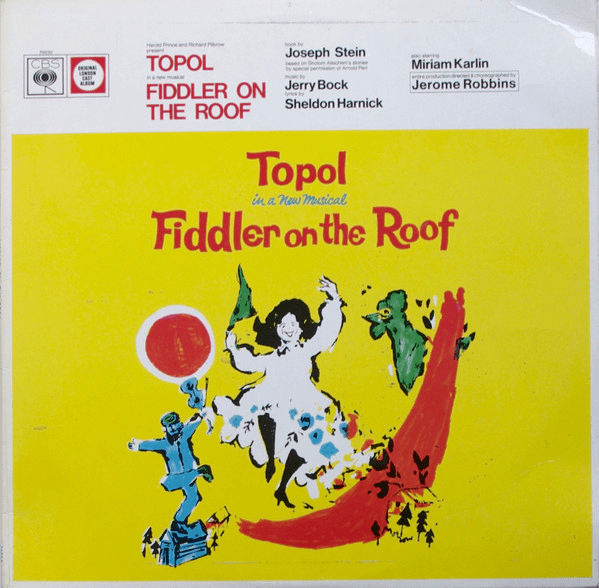
I remember being interested in my parents’ albums according to how colourful they were. I loved the Fiddler on the Roof album, which had a really colourful sleeve.

JOANNE LIMBURG

That had a really colourful sleeve, and Wally Whyton’s Party Playtime, which was for kids. My mum liked opera and my dad liked Sibelius, but I don’t remember them being played much when I was young, they were just sitting there in the rack. I remember Junior Choice being on Radio 1. I remember watching Top of the Pops. And I realised the other day that one of my earliest memories is probably seeing 10cc perform ‘Donna’ (1972). Because I have a particular memory of how Lol Crème looked at that point, because he looked in some ways like my dad. My earliest pop memory – I found it the other day on YouTube – was an advert for Jelly Tots.


JUSTIN LEWIS

‘Rowntrees Tots, please yourself.’

The soundtrack to the 45-second Rowntrees Tots advert (1974), written and performed by The First Class under the name ‘The Tots’.

JOANNE LIMBURG

There was a sort of tie-in single. ‘Don’t just sit there upon the shelf.’


JUSTIN LEWIS

I remember the ad, but I had no idea there was a single. ‘Please Yourself’ by The Tots (1974) – from the same team who made ‘Beach Baby’ by The First Class. The days of pop writers writing adverts and then adapting them for actual singles with the brand names taken out. Like David Dundas with ‘Jeans On’.


JOANNE LIMBURG

Something else I remember: When I was three, my parents recorded me singing ‘Long Haired Lover from Liverpool’ and also when I was three, I have a memory of being in my uncle’s estate car. I was the youngest family member on an extended family trip to Knebworth. I can remember the other kids laughing because I started singing Suzi Quatro’s ‘Can the Can’ very earnestly. I’m sure I didn’t sing it in any kind of tuneful way, and I’m sure I got the words wrong as well. But this is how 70s it was: while the younger kids, me and two of my cousins, were on the back seat, the older kids were in the boot. [Laughter]

——

FIRST: ELVIS PRESLEY: ‘Way Down’ (RCA, single, 1977)

JOANNE LIMBURG

Memories can detach and reattach themselves, but I remember buying this specifically from WHSmiths in Temple Fortune [in northwest London] – although maybe it was in Golders Green. It was quite small, and you had to go up to a desk and ask for it.


I had been given a little record player for my seventh birthday, and a friend and a neighbour gave me a load of records to go with it – not necessarily things I would have chosen… Things like… Guys and Dolls?


JUSTIN LEWIS

Oh yeah, the group. Who spawned Dollar.


JOANNE LIMBURG

Exactly. And one called ‘Who’s in the Strawberry Patch with Sally?’


JUSTIN LEWIS

Which I think was by Tony Orlando and Dawn.


JOANNE LIMBURG

I also remember ‘Knowing Me, Knowing You’ by ABBA turning up. Which I think was after ‘Way Down’?


JUSTIN LEWIS

Before, in fact!


JOANNE LIMBURG

But ‘Way Down’ is the one I remember buying.


JUSTIN LEWIS

The strangest thing is, I do not remember the announcement of the death of Elvis at all. Do you?


JOANNE LIMBURG

I do. I remember we were on holiday in Scotland, it happened over the summer in August [1977]. In fact, on a different holiday in Scotland, a year later, Pope Paul VI died, and we were not Catholics, obviously, we were Jews, but I remember it because we were in a different place. With Elvis, either it was on the car radio, or my parents were talking about it while they were driving us through the Highlands. I don’t know that I was aware of him until he died and it was explained to me who he was. Though I probably heard ‘Blue Suede Shoes’ or ‘Hound Dog’ playing somewhere, so was aware of his voice in the background.


JUSTIN LEWIS

‘Way Down’ had just been released in the UK, and there was no sign that it was going to be a particularly big hit. It went in the charts at 46, the next week – the week Elvis died – it went up to 42, so not showing any real signs of going anywhere. And then… it goes to number 4, and then number one for five weeks.


JOANNE LIMBURG

He did the ultimate publicity stunt… by dying.


JUSTIN LEWIS

The last thing he ever recorded.


JOANNE LIMBURG

Obviously, I liked it then, but I don’t think of it as a particularly momentous piece of music.


JUSTIN LEWIS

But something else I found out. Those really low notes, at the end of each chorus.


JOANNE LIMBURG

That’s probably why I bought it. Because there’s a kind of novelty thing that amuses a seven-year-old, those low notes.


JUSTIN LEWIS

I still can’t get anywhere near them even now. But I assumed it was Elvis singing them. And it isn’t. It’s the backing singer. He had this backing singer called J.D. Sumner (1924–98), who had this background in gospel and country music. Basically, his big thing was he could do these incredibly low notes. At the end of ‘Way Down’, that last note is C1, which is three octaves below middle C. I think it’s the lowest note sung on a major hit record.


JOANNE LIMBURG

It’s almost infrasound, isn’t it?


—–


JUSTIN LEWIS

You first came to my attention with The Woman Who Thought Too Much. I think I either read the Hilary Mantel review of it, or I saw it in a shop. And at the time, for various reasons, I wanted to find out more about obsessive compulsive disorder, and this was such a well-written, sensitive, accessible and relatable account. In fact, so many of your books have been so enlightening and helpful to me.


JOANNE LIMBURG

Well, there are these sorts of parallels in our life paths. Because I write autobiographically.


JUSTIN LEWIS

Yes. And in some ways, we have different backgrounds, but… we’re the same age, we’ve lost a sibling at roughly the same age, we lost our fathers at roughly the same age. And I’m currently in the process of getting assessed for autism.


JOANNE LIMBURG

It’s interesting because I sort of think of you as my first actual Twitter friend.


JUSTIN LEWIS

That’s a really lovely thing to say.


JOANNE LIMBURG

I think we’ve known each other on Twitter for 13 years. Sometimes, I’ll be watching Top of the Pops on BBC4 and I’ll say to my husband, ‘Justin just said this’, and early on, I tried to explain you, and I said, ‘He’s a male me, really.’


JUSTIN LEWIS

How wonderful. I’d always felt I was in that grey area where I didn’t know, and when I started to read your stuff, it made so much sense to me.


One reason I’m doing this series at all is because I feel a slight sense of unfinished business with music. I found it quite awkward being a musical performer, I started a music degree, didn’t finish it, didn’t know what to do, really.


JOANNE LIMBURG

Oh, I didn’t know you were actually a musician yourself, because you don’t mention that, funnily enough.


JUSTIN LEWIS

I don’t talk about it very much. I got Grade 8 flute when I was fifteen. I was okay, and I got into university partly, I think, because I had perfect pitch.


JOANNE LIMBURG

It often goes with autism.


JUSTIN LEWIS

Right, right. But obviously, neither of us knew at the time what this was, none of it was explained. Because we were in this funny situation and…


JOANNE LIMBURG

We both were and were not autistic children.


JUSTIN LEWIS

So were you learning instruments at school, having lessons?


JOANNE LIMBURG

Because I knew that my grandfather had played the violin, I imagined he was a professional. Actually, he was an amateur player, he died when my mum was very small so I never met him. I persuaded my parents to let me start the violin, so I played the violin from eight to fourteen. In fact, for my ninth birthday, I got the record of David Oistrakh playing Beethoven’s Violin Concerto – I still play that now. But I wasn’t that great – I got to Grade 4 and the piano up to about Grade 3, but I didn’t have the discipline to do it properly.


Also, I think I found schoolwork very easy, and didn’t understand that just because you couldn’t do something straight away, it didn’t mean you were rubbish at it. I was immature – I mean, why wouldn’t I have been, I was a child! – but I didn’t get practising at that age. I think I was fairly musical – not perfect pitch, although I’ve got reasonable pitch. But it never went anywhere, and then when I was eleven, I went to this very academic girls’ school where people were there on music bursaries, and I felt just crap by comparison. There were lots of teachers attached to the school, so I was given one of them, and she was just horrible to me. She said to me, ‘You have to join the orchestra.’ So I joined the second violins and it was one of the most demoralising moments of my entire life. I just couldn’t do it.


JUSTIN LEWIS

Was it about the music, or the dynamic or the space you were playing in?


JOANNE LIMBURG

I couldn’t quite read [the score] at that speed. The other frustrating thing is: I find it difficult to sing with other people, so I don’t know how people sing in harmony. Because if I’m near someone else who’s singing a different tune, I can’t stop hearing it, and I get lost and tangled up. We were singing some Schumann in the choir once and I remember getting completely lost at one point, and there were all these girls obviously singing around me very confidently. So – you know, I’m not particularly musically talented, but I’m not tone deaf, I would say.


JUSTIN LEWIS

I really used to think that we all heard music the same way, that we could all hear the same things.


JOANNE LIMBURG

And we don’t at all.


JUSTIN LEWIS

I’m really aware of it now, my reaction to certain stations on digital radio, and I know it isn’t the actual music some of the time.


JOANNE LIMBURG

There’s a really high-pitched noise.


JUSTIN LEWIS

I have heard you talk about an aversion to loud noise, and that’s happening more and more with me now. Although it depends what the noise is, where I am, how I’m feeling. Has that been the case for you as well?


JOANNE LIMBURG

Always been the case. I’ve always been very upset if something goes bang. I’ve always been scared of balloons.


JUSTIN LEWIS

And does that extend to music as well as sound?


JOANNE LIMBURG

I don’t like it if it’s turned up beyond a certain point, I find it painful. So I don’t really like going to concerts cause it’s turned up so loud at them. It hurts my ears. I’ve often had to leave events earlier because the music was so loud.


JUSTIN LEWIS

I do remember as a kid about noise levels because my dad used to be a drummer in various groups and things, and we’d accompany him to things. I went with him to a drum clinic when I was about 13, which he wasn’t playing in, but there were a lot of absolute virtuosos in that. I’d probably get more out of it now, but it was about four hours of drums. A very late night, that one.


JOANNE LIMBURG

I always think, it’d be great to learn drums, great to learn bass. It’s always the rhythm section I want to be in, but realistically, when you’re young and you think about being in a band, and you just look at them on the stage, or in an orchestra – I don’t know how they manage to stay together. They can all start together and stop together. That must take a long time to get there, and you’re doing the same movement again and again and again. And with something like bass and drums, you’re often playing the same four notes again and again, and I suppose you must have to go into some kind of trance-like state. There must be some element of muscle memory because if you stop, you’d suddenly go: ‘What am I doing?’ It’s like if you walk down the stairs and you start noticing your feet.


JUSTIN LEWIS

Or thinking about the process of breathing. Whereupon it suddenly gets more difficult.


JOANNE LIMBURG

Kevin Godley, 10cc’s drummer, was asked, ‘How can you do all those different things at the same time? He said, ‘It’s not different things at the same time. It’s different parts of one thing.’


JUSTIN LEWIS

We nearly met, didn’t we? We nearly met at the British Library about 10 years ago.


JOANNE LIMBURG

When I might have been looking at Queen Anne’s letters, when I was researching my novel about her, A Want of Kindness.


JUSTIN LEWIS

Which is the one book of yours I haven’t actually read yet.


JOANNE LIMBURG

It’s quite different from the others – partly because it’s the only fiction. And because I decided, insanely, that I was only going to use words that were around at the time. I don’t know if it feels like an accomplishment to have done that. I wouldn’t want to do it again. It was a great big thought experiment to put myself in someone else’s mind so I needed the furniture of their mind, not mine. I read the King James Bible, and the Book of Common Prayer, and John Foxe’s Book of Martyrs, the sorts of things she would have had in her head, and her letters, and I got a sense of her voice from that.


I don’t think it did too badly – it came out in America – but it was marketed as a historical fiction book and it’s more like fiction that happens to be historical. Also, difficult things were going on in my family at the time, and it was an escape, in retrospect: ‘Yes, yes, I’m just going to go to the 17th century and work this all out there.’


JUSTIN LEWIS

I heard you on a podcast a while back saying you were working on another novel, is that still happening?


JOANNE LIMBURG

I thought about it. But that’s gone on the extreme back backburner because I don’t really feel like I’m a novelist, as if people might expect another novel from me. Like I didn’t do all of Queen Anne’s life, so there’s a possible sequence in the air, but I found having a novel out very difficult, and I found working on it very difficult.


I found another interesting story. A woman called Sarah Scott (1720–95) wrote a best-selling book called Millenium Hall (1762), about this ideal place with all these women who have various racy back stories – which is probably what made people read the book. These independently wealthy women pool their resources and live in Millenium Hall where they spend their time studying and sketching and making music and living the 18th century idea of a good life, and also doing good works on the side.


So there’s a school and there’s some cottages. And there’s also – interesting in disability theory – a walled-off bit where they have various disabled people who are thought of as looking different or disfigured, living together in a community, and they support them.


Sarah Scott had smallpox very badly as a young woman and was left very marked by it. So this would have been a concern of hers, and she tried to do this [experiment] in real life. It obviously fell through because of all those real-world things: personalities, money, health. And I thought there’s a plot there, in the gap between ideal and reality.


Scott’s book is narrated by a man who visits, and it records his wonder and amazement as he’s shown around this extraordinary place by these marvellous virtuous women. So there are these ‘gorblimey guvnor’ monologues by people they helped, saying how much they’ve been helped, how the ladies have shown them how to be better, more virtuous Christians and all this. It would have been thought of as progressive then, but it still speaks to how we try and help people now, and how you see people getting outraged if the objects of their charity don’t show gratitude. And I also wondered what these people said when their backs were turned. There’s a lot of material in it but I don’t know if I can spend another five years writing a novel on spec.


JUSTIN LEWIS

I tried to write a novel which I suspect was thinly veiled memoir, and it didn’t really feel believable as fiction. Maybe I should try again. But I remember you mentioning that you originally considered writing The Woman Who Thought Too Much as a novel, and then you concluded that you had to make it about you, you had to say, ‘Look, this is me, this is what happened.’


JOANNE LIMBURG

Yeah, it becomes about testimony and witness, and the truth-claim you make about it: ‘No, I’m sharing experience. This is me, the value of that.’ And also it’s not that I ‘don’t follow fiction’, it’s not that I ‘don’t enjoy it’, it’s not that I ‘can’t understand it’ – all those various stereotypical things about autistic people. But it seems like a lot of work to me to make people up. I don’t think it’s a lack of imagination so much as ‘I can’t be bothered.’


JUSTIN LEWIS

Obviously a lot has happened in your life, to you, and to those around you.


JOANNE LIMBURG

Yes, my brother took his own life while I was writing The Woman Who Thought Too Much.


JUSTIN LEWIS

I hope this is okay to ask you about this – as that tragedy is the last thing that happens in that book – but had you already completed a draft?


JOANNE LIMBURG

No, no, it’s okay. It happened while I was drafting. There’s one bit in the book where I talk about feeling really, really unbearable and I don’t say why. And I think that was when I returned to the book after taking weeks out. Because I had to go back to it. The publishers said, ‘You can take a break’, but I thought it better to just push on.


JUSTIN LEWIS

Because you’ve committed by then to a certain level of ‘This is what happened’?


JOANNE LIMBURG

Yeah, and I had enormous guilt, which I do talk about in the book. Because about 18 months before my brother died, he’d been diagnosed in America – where he was living – with what was then called adult ADD. And I just went, ‘Oh this changes things, can I mention it in the book?’ – and he totally panicked, because he didn’t want anyone at work to know. And I was just really ashamed. And I still am actually guilty about that. Although I think probably most people who are writing a book about mental health would have responded like that at that point. In retrospect, it looks especially callous, but I think I’m being a bit hard on myself really.


JUSTIN LEWIS

It’s a dilemma I know I have as well: How do you write about other people? You can write about your own response, but you also have to think, How would I feel if somebody was writing about me? I always have that thought when I’m trying to write about anybody. But you can only take that so far, sometimes.


JOANNE LIMBURG

In The Woman Who Thought Too Much I made a conscious decision that I was the protagonist and OCD was the antagonist. And so I kept writing about other people to a minimum, which had the unfortunate effect of making me look very self-obsessed. But I just wanted to protect everyone. I know someone who’s a crime writer, and she read that book and said, ‘Oh, there’s a suppressed narrative about your mother. Is that deliberate or unconscious?’ And I said, ‘Oh it’s pretty deliberate. And then that suppressed narrative came to the fore in the book I wrote after Mum died [Small Pieces, which is also about my brother]…

—–

LAST: GABRIELS: Angels & Queens (Part I: 2022; Part II, 2023, Atlas Artists/Parlophone)

Extract: ‘Love and Hate in a Different Time’ 

JUSTIN LEWIS

Slightly confusingly, this album has appeared in two volumes and there’s now a deluxe version available of both.


JOANNE LIMBURG

I saw them on Later with Jools Holland. I thought, ‘They’re amazing’, but also, ‘I’ve heard that voice before, it’s something that’s been played a lot in the background of things.’ And then I found out it was ‘Love and Hate in a Different Time’.


JUSTIN LEWIS

I’m so glad you chose this, it’s one of my favourite singles of the last few years – and I’ve just discovered it’s one of Elton John’s favourites as well. Because did you see his Glastonbury set?


JOANNE LIMBURG

Oh yes! He had the guy on with him, Jacob Lusk.


JUSTIN LEWIS

For ‘Are You Ready for Love?’.


JOANNE LIMBURG

I just love voices like that, and when someone’s doing something different with sound.


JUSTIN LEWIS

I hadn’t consciously checked who produced this album until I was doing some preparation for this, and it’s Sounwave who’s worked on all the Kendrick Lamar albums. So the production is this really unusual mix – this very special honeyed voice on top, and these horns and strings that feel like they’ve wandered in from Al Green and Detroit Emeralds records in the 70s, but then you’ve got these murkier, distorted textures in the middle which bring to mind Thundercat’s records too. A very powerful combination.


JOANNE LIMBURG

It seems to speak somehow to the times we’re in. And he’s got one of those gospel-trained voices, my favourite sort of voice. It’s a cliché, but I imagine it’s called  soul music, because you can hear someone’s soul. It’s not just that gospel singers use the biblical language, it’s the tone… I don’t know much about singing voices, I couldn’t tell you what the technical terms are, but there’s something that makes you pay attention and say, ‘Ohh yes, this is human.’


—-


JUSTIN LEWIS

Your most recently published book, and just one reason I’ve wanted to get you on this ever since I first had the idea, is Letters to My Weird Sisters: On Autism, Feminism and Motherhood (2021), a fabulous book.


JOANNE LIMBURG

Thank you very much.


JUSTIN LEWIS

Which as the title suggests is a sequence of four letters you’ve addressed to women in history: Virginia Woolf (1882–1941), Adelheid Bloch (1908–40), Frau V (19th/20th century; exact dates and real name unknown) and Katharina Kepler (1546–1622). And I was interested to hear you mention two inspirations for it. One was Steve Silberman’s NeuroTribes book (2015), which I’ve since read and loved… but also, Beyoncé’s Lemonade (2016).


JOANNE LIMBURG

Yes! There were a few other inspirations, but she was one of them. I saw the film of Lemonade, and I thought, She is not exhibiting herself. It’s like: ‘I’m talking to my fellow Black women, and there’ll be stuff the rest of you don’t understand and I’m not going to explain it to you. But you’re allowed to listen. But I’m not talking to you. This is how we talk when it’s us, and it’s our reality.’


I was really impressed by that. Well, I don’t understand ‘Formation’, I don’t know what ‘I got hot sauce in my bag, swag’ means. But a point is being made: ‘You, the white listener, are not at the centre of things. We’re talking now. You sit. You listen.’ And so I wanted to make an analogous move , decentering non-autistic people.


JUSTIN LEWIS

What kinds of responses have you had from neurotypical people since its publication?


JOANNE LIMBURG

Pretty good and actually, I had a review from quite a well-known clinician who just took it on the chin, really.


JUSTIN LEWIS

This reminds me of when you’re a kid, and you’re listening to something or reading or watching it, and there are references you don’t necessarily understand, but you think, ‘You know what? It’s fine. One day I will understand this.’ Not everything has to be explained.


JOANNE LIMBURG

No. Because of the way I write, I probably made things clear anyway. But what I deliberately didn’t do in that book is something people quite often do when writing about their condition (and which I did do in The Woman Who Thought Too Much). They will say something like, ‘According to the DSM, which is the Diagnostic and Statistical Manual of Mental Disorders, the National Autistic Society says…’ and I just thought, Fuck that.


JUSTIN LEWIS

So you reclaimed the word ‘weird’?


JOANNE LIMBURG

Yeah, exactly. I thought, This is about my experience, this is about flipping the mirror around and saying no, this is how the world looks to us. I was talking about this to someone the other day, and I said, ‘The thing about autism is, it’s always been a spectacle.’ There’s a woman, I think, called Grunya Sukhareva (1891–1981), who first identified that group of children in Russia, and whose work was possibly ripped off by Leo Kanner and Hans Asperger… but that’s another thing. It starts with Kanner looking at a group of children, Asperger looking at a group of children and describing them. So right from its inception, its [first] appearance in the wider culture, it’s an outside-in phenomenon, which has led to so much suffering and so much oppression. So I thought: No. This is absolutely inside-out.


I’m going to go off on a long tangent now – sorry!


JUSTIN LEWIS

Don’t worry. Please go ahead!


JOANNE LIMBURG

When I was studying psychoanalysis years ago, I was reading a paper by Anna Freud, who talked about how she’d been dealing with child survivors of the Holocaust. And she noticed that they identified not with the adults they were with, but with adults like the guards, the non-Jewish staff, and that this was a protective measure. You can see how it’s a protective measure, because ‘I’m not in this powerless suffering group. I’m one of the winners. I’m one of the people in charge.’


In Weird Sisters, I talk about ‘the socially gracious Joanne’, and I think about her in relation to someone else’s concept of the ‘nice lady therapist’…and we do this all the time; we want to identify with the ones who are in power – not the people who are having stuff done to them, but the people with the power, the people in control. And one way you can do that is by taking on medical language. ‘I’m on your side.’ And it winds up propping up something that’s often called epistemic injustice, where to find out knowledge about yourself, you have to go to someone who’s extracted it and borrow it back in their terms. And I thought, Absolutely not. I’m done with that. I can understand the protectiveness of that identification, but I think my rejection of it is a reflection of how confident and safe I feel now.


Relative to how I felt before that, I can say no. I don’t need to borrow your authority. And I don’t need your approval either.


JUSTIN LEWIS

And you chose the word ‘weird’ for this book because you didn’t want to posthumously diagnose the people that you’re writing about, the people you’re writing to.


JOANNE LIMBURG

And Steve Silberman’s very clear as well that you can’t do that. It’s not ethically right, and it’s bad scholarship.


JUSTIN LEWIS

Did you have a longer list of people that you were going to include in the book?


JOANNE LIMBURG

Oh yes, yes.


JUSTIN LEWIS

And were there any people from the world of music you were considering for inclusion?


JOANNE LIMBURG

I think I thought about Hildegard of Bingen (c. 1098–1179). I can think of lots of men in music… Glenn Gould (1932–82), for instance. Autism and music go together quite well, and I think sound engineering or record production is quite a good job for a lot of autistic people because of the detail.


JUSTIN LEWIS

Though it’s quite surprising there are still relatively few record producers who are women, unless they’re producing themselves.


JOANNE LIMBURG

Yeah. I’m sure that’s entirely for social reasons. I love a particular kind of BBC Four-type music documentary when they tell you how the tracks are put together. I love tracks like ‘Memphis Soul Stew’ by King Curtis which narrates its own construction. Sometimes I will listen to a particular track, but to just one bit of it, like just the bass – on, say, ‘Video Killed the Radio Star’, or just the drums, like on ‘Reverend Black Grape’. It has nothing to do what time in your life you’ve associated it with, or the image of the band. It’s entirely to do with: What is this thing made of? And when I see people talking about production or sound engineering, with that kind of enthusiasm, I 100% understand.


JUSTIN LEWIS

I find that not enough is talked about arrangement in music. It’s such an important aspect. And when people say ‘Music sounds the same’, what they often mean – I think – is that too many arrangements sound the same. [Joanne agrees] I mean part of the problem now is that so many people are using the same software to make records, whereas pre-digital, people were having to find their own way.


JOANNE LIMBURG

I love hearing stories about tape loops – ‘we cut up these tape loops’ and all that ingenuity.


JUSTIN LEWIS

I’m not here to plug my upcoming book, but quite a few studio stories in that one.


JOANNE LIMBURG

They’re the stories I like. I don’t care whether they got pissed and threw a TV out the window or not. I want to know how they made the record.


JUSTIN LEWIS

The stories of people getting drunk or having sex are a bit dull. I don’t really believe in excess for its own sake. And it’s been written about so much, and it’s led to some terrible things happening in the entertainment world.


But also, it’s considered perfectly normal, apparently, for musicians to stand on stage for two hours a night, on a 300-date tour of the world, in different cities, jet-lagged and missing their loved ones. And we somehow expect them to not take drugs or be screwed up in some way. A strange thing to demand of people.


JOANNE LIMBURG

I know. I remember talking to a musician years ago. I think Amy Winehouse had just died, sadly, and we talked about her, and about Michael Jackson. I said, ‘It’s such a dangerous situation to be worth that much money to so many people. It’s not going to do you any good.’


JUSTIN LEWIS

But something that recently happened which came too late for inclusion in my book, unfortunately, was Lewis Capaldi at Glastonbury. A very interesting moment. The crowd understood it, they ‘got it’, which was encouraging.


JOANNE LIMBURG

People our age and older complain about millennials and Gen Z being all oversensitive, but I think it’s a great quality they have. They recognise that it’s not easy to be human, and we could just be compassionate with each other rather than saying ‘buck up’.


JUSTIN LEWIS

It’s not easy to be a performer sometimes.


JOANNE LIMBURG

God, no.

 —-

ANYTHING: GEORGE MICHAEL: ‘A Different Corner’ (Epic Records, single, 1986)

JUSTIN LEWIS

I haven’t seen the Wham! documentary yet, because I don’t have Netflix anymore.


JOANNE LIMBURG

Oh that’s a shame. I watched the documentary with my husband.


JUSTIN LEWIS

I just wasn’t using it. But it sounds like the concept of Wham! came out of friendship. George Michael and Andrew Ridgeley were friends, they never ever fell out as far as I know, and there was a lot of generosity from both sides about how they existed. There was never any kind of acrimony, during or after. And I’ve read about how Andrew almost gave George permission to be a pop star, which he might not have done otherwise. He’d have probably become a songwriter, but as a way of getting his songs noticed…


JOANNE LIMBURG

Yes, this extraordinary generosity, like Andrew was George’s booster rocket. And he was OK with that. I mean, yes, a well-paid booster rocket, but still, it’s an extraordinary lack of ego.


JUSTIN LEWIS

There were a lot of jokes at Andrew’s expense in those days especially, but so much of pop music is about image.


JOANNE LIMBURG

And a persona on to which people, especially very young people, can project stuff.


JUSTIN LEWIS

With many of the Wham! records, I have little doubt that even if Andrew didn’t write the songs, he was certainly listening to a lot of music. They once reviewed the new singles in Smash Hits, and he had as many astute things to say about the records as George did.


JOANNE LIMBURG

At the time, I had not entirely positive feelings about Wham!, I think. Probably to do with the age we were, let’s be honest. I associated them with the ‘popular girl’/’mean girl’ people. Especially as Wham! came from my part of London as well. So it was all very close.


JUSTIN LEWIS

You were in… Stanmore, is that right?


JOANNE LIMBURG

Yeah, so George’s father’s restaurant was in Edgware, and my family went there at least once. I think I probably knew people who knew them because some people at my school were from Bushey. But also, I didn’t like the plasticky-ness of Wham!, I found it actively off-putting at the time. I knew it was catchy, and that was undeniable.


JUSTIN LEWIS

I genuinely liked the first album, Fantastic!. And after that ‘Wake Me Up Before You Go-Go’ was a complete break with the past, and it got such a slagging in the press.


JOANNE LIMBURG

I liked that one. I really liked it, my mum liked it.


JUSTIN LEWIS

Yeah, yeah. But it was a very dramatic left-turn from what they’d been doing previously. I wasn’t buying the records by then, although I had the first Hits Album compilation (1984) and played ‘Freedom’ quite a lot on that.


JOANNE LIMBURG

Which I never liked at the time, for some bizarre reason, or ‘Last Christmas’ – but not for any particular reason.


JUSTIN LEWIS

So what changed your mind with ‘A Different Corner’, the solo George single from spring 1986, while Wham! were still a thing?


JOANNE LIMBURG

I can see how it tracks a change in my attitude to George Michael, and to pop. Because, you know, put me back at that age: I’m the sort of nerdy, bookish outsider, so naturally I liked guitar bands, and I gravitated, of course, towards Morrissey. Oops.


JUSTIN LEWIS

Have you seen that clip from Eight Days a Week? George Michael is on a discussion panel with Morrissey and Tony Blackburn… talking about Joy Division.

Eight Days a Week, BBC2, 25 May 1984. (Since our conversation, the full episode has been uploaded, during which the panel also discusses Everything But the Girl and the film Breakdance.)

Wake Me Up Before You Go-Go’ by Wham! had that week entered the UK charts at number 4. The following week it reached number 1. ‘Heaven Knows I’m Miserable’ by The Smiths had been released that week, soon peaking at number ten. At the time Tony Blackburn was broadcasting at BBC Radio 1 and at BBC Radio London. The presenter of Eight Days a Week was The Guardian’s pop music critic Robin Denselow.

JOANNE LIMBURG

And George gets it much better than Morrissey. I don’t think I saw that at the time, but I do remember an interview Wham! did on Radio 1 then, and they were just so funny, and I realised how smart they were. Even if they didn’t wear it on their lyrical sleeve, so to speak.


JUSTIN LEWIS

There are all these hidden things you only spot later. It took me years to clock that the church organ intro on ‘Faith’, which oldies radio always skips now – it’s the melody of Wham!’s ‘Freedom’.


JOANNE LIMBURG

I’ll have to go back and listen. But yeah, at the time, I thought Wham! represented something consumerist and anti-intellectual and airheaded, even though I never thought they were stupid.


JUSTIN LEWIS

No, no. But I think the way the 80s get remembered now – and I like lots of 80s pop – is a bit reductive. It’s all a bit neat for me, most of the politics has been taken out of it.


JOANNE LIMBURG

It wasn’t neat, no. What decade is, when you look at it closely! So I wasn’t sure about them, for reasons that I think had to do with their image, rather than their music, and also because I was a pretentious teenager, and I didn’t appreciate how hard simplicity is. You know, why would I have understood what was clever about what they did?


So, with ‘A Different Corner’, I thought, ‘Oh it’s this guy who presents this soppy image, singing this soppy ballad, it’s all kind of fake. I think I saw Wham! as fake at the time, and this song as another piece of mushy sentiment – and also probably gender comes into it. Not wanting to be a girl liking girls’ music’.


JUSTIN LEWIS

Funnily enough, I remember there was a pressure on me to like ‘boys’ music’, or ‘real music’, whatever that is. The Jam, you know – who I like a lot, but the fanbase could be terribly judgemental. There was a lot of that going on. And with Wham!, I assumed that by this patch, they were aiming at a younger audience than me anyway – though I’m not convinced now that was true.


JOANNE LIMBURG

And I didn’t like the feeling that I was being instructed to have a crush on someone. So I think I probably felt that a response was being mandated for me that I had no intention of giving.


JUSTIN LEWIS

So when do you think your perception of ‘A Different Corner’ changed? It is, to be fair, not an obvious single for anybody to release.


JOANNE LIMBURG

I think it might even have been not long before he died – or since he died. Which I’m ashamed to say. But it was also finding out that he did the whole thing himself. That appealed to me. ‘Oh, how can I make this in a studio?’ I thought: That is my sort of person.


JUSTIN LEWIS

I believe he was the first person to sing, write, record and produce a record entirely by themselves and get to number one in Britain. (Aged twenty-two, by the way.)


JOANNE LIMBURG

I knew none of this at the time. I think I would have immediately been interested if this had been talked about.


JUSTIN LEWIS

Does the Wham! documentary discuss the placing of these two very different records in the context of Wham!’s apparently upbeat catalogue? Because they are completely different in tone.


JOANNE LIMBURG

Well, I think they started writing ‘Careless Whisper’ together very early, as teenagers. But with ‘A Different Corner’ – the thought he’d put into it. You can hear the space in it. The video was just him in almost-empty spaces, and it sounds like space. It sounds like someone in an empty room, and he’s constructed that through sound.


I always appreciate syntactical complexity – you know, ‘Had I been there’. Even in ‘Careless Whisper’ there’s ‘Calls to mind a silver screen’.


JUSTIN LEWIS

And not putting the song title in the chorus. In both those songs, burying it in the second verse.


JOANNE LIMBURG

‘Turned a different corner, and we never would have met, if I could, I would’ – it just breaks your heart. I think it’s a song about very adult emotions, actually. He was very young when he wrote it, but it sounds like quite an old soul song, really, doesn’t it? It’s a desperately, desperately sad song, and it seems extraordinary that at that point in his life, he was writing it, but also putting it out. And number one for three weeks.


JUSTIN LEWIS

And I guess it’s laying the groundwork for the rather different solo career – ‘Cause I’m not planning on going solo’ on ‘Wake Me Up Before You Go-Go’ – where he gradually, slowly disappears from view. He becomes much more enigmatic, with these occasional flashes of doing something. The last album of new original material was as long ago as 2004.


JOANNE LIMBURG

When the whole ‘Outside’ thing happened (1998), that extraordinary way he responded to being outed. ‘Yes, I was out looking for sex. I’m a gay man. A lot of gay men do that. What of it?’ I laugh every time I see the ‘Outside’ video, when he just took the piss out of it. I just thought, ‘You are such a strong-minded, magnificent person.’


——


Joanne Limburg’s The Woman Who Thought Too Much, A Want of Kindness, Small Pieces and Letters to My Weird Sisters are all published by Atlantic Books. She also has another poetry collection due out in 2027, Alas, published by Bloodaxe Books.

For much more on Joanne’s career and books, please see her website: http://joannelimburg.net

You can follow her on Bluesky at @jlimburg.bsky.social.


—-

FLA PLAYLIST 23

Joanne Limburg

(For the time being, this site and project uses Spotify for the conversation playlists, but obviously I disapprove that Spotify doesn’t pay artists and composers properly, and other streaming platforms are available, as are sites to buy downloads and buy recordings. For consistency, you can also listen to the selections via YouTube (where available), and links are provided in each case, below.)

Track 1: BOCK & HARNICK: Fiddler on the Roof: ‘Tradition’

Topol, Original London Cast Recording: https://www.youtube.com/watch?v=dcn5dUJ6y1I&list=PLbPRxrjG037NU1htyTgYJ4FjXxZHKdd8F&index=1

Track 2: 10CC: ‘Donna’: https://www.youtube.com/watch?v=SThPj7MPX2o

Track 3: THE TOTS: ‘Please Yourself’: https://www.youtube.com/watch?v=T_ZPu6COSsw

Track 4: ELVIS PRESLEY: ‘Way Down’: https://www.youtube.com/watch?v=weLSA2vekLA

Track 5: LUDWIG VAN BEETHOVEN: ‘Violin Concerto in D Major, Op. 61: III. Rondo. Allegro’

David Oistrakh, André Cluytens, Orchestre National Radiodiffusion Française: https://www.youtube.com/watch?v=d5OJYNmr0gY

Track 6: GABRIELS: ‘Love and Hate in a Different Time’: https://www.youtube.com/watch?v=-694O6oGWSY

Track 7: BEYONCÉ: ‘Formation’: https://www.youtube.com/watch?v=OI2jn3lJTAE

Track 8: HILDEGARD VON BINGEN: ‘Ordo Virtutum, Pt. V’

Vox Animae: https://www.youtube.com/watch?v=KQ6YCIQ8-q0

Track 9: KING CURTIS: ‘Memphis Soul Stew’: https://www.youtube.com/watch?v=4Sm9n-6hy6M

Track 10: BUGGLES: ‘Video Killed the Radio Star’: https://www.youtube.com/watch?v=W8r-tXRLazs

Track 11: BLACK GRAPE: ‘Reverend Black Grape’: https://www.youtube.com/watch?v=ik9HDX8hJV0

Track 12: GEORGE MICHAEL: ‘A Different Corner’: https://www.youtube.com/watch?v=IPWHkK-_a_A

Track 13: THE SMITHS: ‘How Soon is Now?’: https://www.youtube.com/watch?v=OCAdHBrVD2E

Track 14: GEORGE MICHAEL: ‘Outside’: https://www.youtube.com/watch?v=62902eXZ8a0


FLA 10: Peter Curran (14/08/2022)

I am forever telling Peter Curran that the BBC’s Greater London Radio, for which he presented daily shows for most of the 1990s, is probably my favourite pop radio station of all time. Even though I only lived in London for the last three years of its existence. You never knew what record it would play next, always a compliment in my book.


In Peter’s thirty-year broadcasting career, notably for GLR and BBC Radio 4, he has interviewed an estimated 10,000 people. As well as narrating and producing documentaries on a variety of subjects, and producing a wealth of audiobooks, he has teamed up with the playwright, director and former stand-up Patrick Marber for eight series (so far) of Radio 4’s very funny nocturnal conversation, Bunk Bed. Peter has also been a drummer in rock bands, most enduringly for PiG in the late 70s and for much of the 80s.


One afternoon, and evening, in June 2022, we chatted over Zoom about his career and musical tastes. And here’s some of what we discussed – beginning with what was playing in the Curran family home back in 1960s and 1970s north Belfast.


—-


PETER CURRAN

Growing up, we had lots of Frank Sinatra, and my mum was a big fan of Neil Diamond, but my parents were also cursed with Music for Pleasure and Top of the Pops albums, which cost a pound. Myself and my five sisters would buy them for Christmas, and my parents would manage to summon a smile as they tore open the wrapper of another ageing crooner from the 1950s bought from the bargain bucket. That was basically how their Christmases were spent.


But they had some quite interesting records – they had this Reader’s Digest box set which I suppose a lot of families might have had in the 60s. There were albums called Music for Dining, Music for Cocktails, Music for Relaxing, Music for Mornings. It was sort of pre-Brian Eno kind of ambient music for absolutely every moment of your day [Laughs].


JUSTIN LEWIS

That’s how Music for Airports must have got its title! And on Spotify, you get all these mood playlists now: Chillout. Music for Running. Not a million miles away from these Reader’s Digest records.


PETER CURRAN

Yes. They were definitely selling a kind of aspirational lifestyle. The covers were very vivid: women in these wasp-waisted skirts and men in these lounge suits, smoking a fag. So it was a combination of reassuring people who were worried that they maybe didn’t have the ‘right’ furniture or the ‘right’ carpets or the ‘right’ food or whatever. A bit like an Abigail’s Party vibe – by sticking on this album, it would suddenly create the mood for cocktails, and then you’d change it over for your dinner. And then I suppose at the end of the night you’d play Music for Relaxing.


JUSTIN LEWIS

Previous guest David Quantick’s parents were also in the Reader’s Digest book and record club. So there was clearly a wave of… well, okay, there was you, there was David, that’s two households. [Laughter]

 —-

FIRST: DAVID BOWIE: Aladdin Sane (1973, RCA)

Extract: ‘Time’

PETER CURRAN

This was the first album I bought without adult supervision, I was 13, and I was just enchanted. The cover was so sexy, he was this sort of androgynous creature, obviously nude, and they airbrushed out his privates. And then I put it on, and it was just a seductive, strange place. It had echoes of stuff I’d heard as a kid on old black and white films that my parents would watch, a bit Jacques Brel, sort of German Weimar, you know, that sort of piano. A little bit ‘Lili Marlene’. And yet there was this alien-looking character doing this with crunching guitar riffs and lyrics of soiled glamour.    


It’s funny how the lyrics have developed over the years, why it’s always been with me, sort of my whole life because I didn’t understand fully what he was writing about until later on. That first track, ‘Watch That Man’. ‘There was an old-fashioned band of married men/Looking up to me for encouragement…’ I just thought, Wow, wouldn’t it be brilliant to have [that] instead of adults giving you orders? Looking up to you to give you encouragement. It just sounded an impossibly powerful world.


JUSTIN LEWIS

I’m trying to imagine what it would have been like to hear at the age of 13, because I didn’t hear this for a long time. My version of Bowie in the 80s was a very different thing, and I always feel slightly fraudulent in that I can never quite call myself a Bowie fan, because that would suggest I had this moment of revelation and I didn’t really have that. Only in the 90s did I properly investigate, and Low is my big one, but obviously all the 70s stuff is fascinating – and actually the 90s stuff too.


PETER CURRAN

Everyone talks about their moment of first seeing David Bowie on telly, but mine isn’t the usual one of him and Mick Ronson putting their arms around each other. It was a bit later – I was watching Top of the Pops [BBC1, 18/05/1973] and there was a specially recorded video for ‘Drive-In Saturday’ which has disappeared. I’ve never seen it again, I’ve searched for it. But I remember these incredible Californian bright colours, all saturated and bleeding into each other, and a boy looking very pale in the back of convertible. And there might even have been a TV in the car or a video player. ‘Like the video films we saw’? Nobody had a clue what those would have been.


JUSTIN LEWIS

When you were just saying now about all the little motifs from films and old music, I suddenly realised when I was listening to the title track – is Mike Garson in his piano solo referencing ‘Rhapsody in Blue’? There’s one bit where he gets really close to it. You know the bit?


PETER CURRAN

Yeah, yeah.


JUSTIN LEWIS

Maybe that’s something all Bowie superfans already have discussed into the ground…


PETER CURRAN

Because it was recorded in between American tours, and the songs were written on American tours, I think when he got Mike Garson in the studio, he wasn’t sure what he wanted him to do. He wanted him to do something and I think he started doing this sort of, you know, tasteful jazz Blues American songbook accompaniment. Which was quite sort of slinky, and then [buck daft] with the improv stuff at sort of Bowie’s behest. I suppose the other thing was, it was one of those records that was quite subversive because the surface shimmered a bit but there was much dirtier stuff, more interesting stuff musically and lyrically underneath it.


JUSTIN LEWIS

It feels like a really tense record, moreso than Ziggy Stardust, to me, although maybe that’s just hindsight, the thought that he might not do this kind of thing for much longer, and move on to something else.


PETER CURRAN

It’s all about what it’s like to be a rock star. He’s now officially David Bowie Superstar, and there’s the sex and drugs and he’s already sounding jaded even though he’d been ultra-famous for not that long.


JUSTIN LEWIS

You’re not supposed to do that in a pop group, really – once you start writing about ‘being on tour’…


PETER CURRAN

But I think it was sort of the role play. The fact that he was playing a role could have entitled him so you don’t know if it’s Aladdin Sane… I think Bowie described it as ‘Ziggy goes to Hollywood’. So in a way, yeah, it’s through the prism of this rockstar character, but also through him as well.


I mean ‘Cracked Actor’ was the rudest song. For me, at 13 years old. ‘I’m stiff on my legend… crack, baby crack’. It’s really, really rude. But you could just see that this is why he wanted to be a star. It’s so full of arousal but also insincerity. ‘Before you start professing that you’re knocking me dead.’ It’s like these amazing things are happening, and yet he’s really cynical about why people are doing these things.


JUSTIN LEWIS

I wonder if it’s partly because he had those years before he was famous. I wonder, had he become a big star at 17, would he have been able to write that? He knew what it had been like to be obscure before ‘Space Oddity’ – and actually even after ‘Space Oddity’. For a couple of years, there weren’t any more hits.


PETER CURRAN

Yeah, as my friend and colleague Patrick Marber remarked, he had these try-outs, everything from folk to English whimsy and psychedelia, which all failed, and then suddenly in ten years just knocked out these classics, one after the other.


I remember speaking to Lindsay Kemp, the great mime artist, designer and choreographer. He was a huge influence on Bowie and he was saying that he really got that ‘time is not on my side’ idea that he and Bowie had talked about. You know, the fleeting nature that the art’s what people will remember, you will be dead comparatively soon, compared to how long your art might last. So make the art matter.


But the song ‘Time’ itself – I’m still kind of marvelling at it. You know, he’s waiting in the wings – it’s dramatic. It starts with that little piano – when you expect Liza Minnelli to come on in a spotlight for Cabaret, that sort of burlesque-ish parody, that barrelhouse piano.


JUSTIN LEWIS

Well, in fact, Cabaret had just happened, hadn’t it? The film, that was ‘72 so that would fit in terms of influence.


PETER CURRAN

Aladdin Sane is connective tissue to so many other musical and cultural references. Even just the song ‘Time’, aside from the rudeness: ‘Time, in quaaludes and red wine/Demanding Billy Dolls/And other friends of mine.’ I didn’t know what that meant for years until I read about the New York Dolls, and discovered that Billy Dolls is a reference to the death of their drummer Billy Murcia (1951–72).


But it also connects with the artist I’ve loved since I was a little kid and that’s Elvis. I love the way Bowie does an Elvis impersonation. Because ‘Time’, aside from the deeper meditation, it’s about standing at the side of the stage, waiting: ‘We should be on by now.’ But in the line before that, he goes [Elvis voice], ‘Well, I looked at my watch/It’s at 9:25/I think, oh god/[Dylan voice] I’m still A-live.’ So he references Elvis and Dylan. To know that Bowie was still a massive fan of the artists he loved, and wanted to do nods to them, even though he was being looked up to as a great artist himself.


JUSTIN LEWIS

The early 70s seems to establish that first wave of postmodern pop music, drawing on its own back catalogue and creating something new out of it. It’s made me think of the first Roxy Music LP, and the opening track (‘Re-Make/Re-Model’) where it stops dead, and there’s the ‘Day Tripper’ bass riff. And then it stops again and there’s Andy Mackay on sax quoting ‘The Ride of the Valkyries’ and then, there’s a little bit of the ‘Peter Gunn’ riff. And Bowie does something similar in drawing on this archive from his formative years.


PETER CURRAN

The playfulness of Bowie doing an Elvis impersonation – I know lots of people have done it since, but that was the first time – apart from on ‘Donald Where’s Your Troosers’ by Andy Stewart – the gold standard. And when you’re a kid, you think artists are all individual and very distinct from each other – yet here’s what felt like this lovely fraternal nod.


And I must mention Mick Ronson here, his musical director and guitarist on the album. the sound of his guitar was just out of this world – particularly on ‘Cracked Actor’. That sort of distorted grunt, like an old Spitfire engine starting up… I’m going to use a terrible phrase Justin, and will only use it once, but in terms of melodic rock, he was just an absolute screamer on guitar. He was brilliant – did all the arrangements and produced most of Lou Reed’s Transformer album too, and died skint because he got no share of the proceeds from his incredible work with Bowie.


JUSTIN LEWIS

I’m sure you’re still a big Bowie fan, but have you dipped in and out over the years?


PETER CURRAN

Unfortunately, I’m one of those tedious people who thinks that Tin Machine were awful. But his late flourish was fantastic, and the last album, Blackstar, was amazing. I’d heard he was really ill. But it was quite something, for this arch stylist to go out with just a bigger heart and a more soulful impact than many artists would ever manage. His philosophy and soul was writ large. What a way to sign out.


JUSTIN LEWIS

It’s almost forgotten now that there was this two-day window, when Blackstar came out, and Bowie was still alive. I’m glad I got to hear it (only once, admittedly) while he was still around. And I didn’t immediately clock its full significance, even though I knew he wasn’t well. But because there’d been The Next Day, which I’d also liked, I still somehow didn’t think of this one as The Last One. I wasn’t listening as closely as I probably should have been. But it meant, that waking up on that Monday morning (11/01/2016), it was like, Jesus Christ. Especially because it had just been his birthday.


PETER CURRAN

Just having those few days to hear it with him still on the planet was beautiful, you know – rather than being overburdened with the epitaph.


—–


JUSTIN LEWIS

Going back to your teenage years, presumably, you were going to see gigs in Belfast?


PETER CURRAN

Absolutely, that sense of occasion and coming together. I mean, that certainly existed in Belfast, you would literally go and see anybody. I think the first band I saw was Dr Feelgood, when I was fifteen. [Ulster Hall, 19/10/1976] A guy in my class’s father ran a little print shop in Belfast and I think we’re at a safe enough distance now to say that his big brother who worked there would run off another sheet of tickets which were not to be resold, but were discreetly handed out to friends and family… [Laughter]… So we saw a lot of people at a heavy discount.


JUSTIN LEWIS

You’re fifteen, you haven’t got a lot of money…


PETER CURRAN

And it was a very limited number! He wasn’t doing it as a racket. But in Belfast, during the Troubles, at a time when you were swivel-eyed most of the time, avoiding particular streets or parts of town, a gig was like this anonymous communion, it was ironically quasi-religious. There was nothing hippyish about it, though. You could come together.


JUSTIN LEWIS

You also had a new commercial radio station in Belfast: Downtown Radio. Did that cater for new bands, because I’m just wondering how you started on that itinerary as a drummer?


PETER CURRAN

In about 1978, there was suddenly lots of really interesting music – Gang of Four, and Public Image Limited, particularly – so I took to the kitchen stools with a pair of drumsticks, and joined a friend who was quite an accomplished singer, and piano player, and a 14-year-old bass player, so we formed a band, called PiG, and various other people joined and left. But our first live performance came out of sending a demo to Downtown Radio. They used to have a DJ called Davy Sims, who’s still on the go, and who subsequently became a production executive. He used to have a show where he’d get local bands sending in tapes for session. He was kind of a cross between John Peel and Mike Read, which is more appetising than it sounds.


JUSTIN LEWIS

In PiG, you all had names ending in Pig. Something Pig. You were Deadly Pig, right?


PETER CURRAN

That was our homage to the Ramones, who we loved. So we also just used Pig like a surname. We were nothing if not derivative, Justin! But we got to be in the same room as some great bands, regardless of our own failings, musically. We got some support gigs because we played virtually for free. We got to support Dexys Midnight Runners when they played Belfast [Queen’s University, 07/03/1980], and we had to share a dressing room with them. We were spotty teen herberts and there were all these men in there…


JUSTIN LEWIS

That’s the other thing, there were a lot of them in Dexys Midnight Runners.


PETER CURRAN

There were nine or ten of them, but even though they were only a few years older than us, they were definitely men. I just remember the sight of Big Jim Patterson, the trombone player, just putting a bottle of Bushmills Whiskey to his mouth, and taking a couple of hefty glugs. And they were so intense. That was the shocking thing. We were just shuffling in the corner, like we were outside the headmaster’s office or something. But with them, the room crackled with the degree of focus – they were going out to play, there was no messing around, and there was just this fantastic, visceral, athletic musical performance. And at that moment, you realise: We are never gonna be a band like that. That is a band.


JUSTIN LEWIS

Are there any PiG recordings online? I couldn’t find any. It’s the hardest band name in the world to Google. You can’t even put ‘PiG John Peel’ into Google, because obviously Peel had the nickname ‘The Pig’ for his wife – on the grounds that she snorted when she laughed.


PETER CURRAN

Well, we were fairly well aware of that, and also that he loved Public Image, and we loved Public Image.


JUSTIN LEWIS

How would you describe the sound of the group? Did it change over time?


PETER CURRAN

It changed a lot. I’ll give you a sort of timeline. A bit like Public Image; a bit like a punky Ben Folds Five; a kind of Jam-type band; and then into a Chic/Talking Heads area.

And then into a kind of amorphous, undistinguished, noodly… we had a brilliant flute and keyboard player. The closest we ever got [to making it] – I went to see Geoff Travis at Rough Trade because he got one of our demos, and he used the deathless phrase, ‘Are you determined to keep that singer?’ And out of misguided loyalty we said, ‘Yeah, we certainly are.’


JUSTIN LEWIS

And you kept going quite a while.


PETER CURRAN

Yeah, we had lots of different line-ups. It was just a nice way of seeing the world, playing the Edinburgh Festival, doing the music for a few plays, so it was just thrilling, playing live music. That strange weightlessness – suddenly, you feel that if you’re on stage playing with people, space and time open up and you can walk around inside seconds… it’s a lovely kind of suspended reality. Even you know, if you’re sweating your guts out behind a drum kit in some stinky pub in West London, like the Fulham Greyhound.


After PiG split up, around 1986, I was asked by Terry Bickers to play drums in a new band called The House of Love. They weren’t even called that at the time; they’d just started. I was living in Brixton, in Coldharbour Lane, and they were rehearsing in a kind of clothing warehouse down the bottom of the road. Maybe this is the reason why they asked me – I was the convenient drummer! I turned them down, and it was probably a lucky escape really, although I really loved Terry and some of the music was great.

—-

LAST: BIG THIEF: Dragon New Warm Mountain I Believe In You (Big Thief/4AD Records, 2022)

Extract: ‘Change’

JUSTIN LEWIS

I didn’t know this at all. It’s one of these times where I discover a new group, to me, and find they’ve made five albums.


PETER CURRAN

I was in a similar position. It’s got an infuriating title but it’s a lovely album. They recorded it in, I think, four different contrasting places around the United States, and they would check into studios or cabins, and try and be fed by the atmosphere and the vibe of the place, and allow that to inform the songs. You get different shades of America in it and I just like the way it’s quite inventive and innocent, without being twee.


JUSTIN LEWIS

When I first put it on, I was thinking, ‘Oh this is quite folky, sounds a bit Nanci Griffith, quite nice’, and then the next track is not that, it’s a bit scuzzier, and then the track after that is a bit more countrified, almost with a kind of cajun influence… So when you just said now about its different recording locations, that makes sense, because it’s not just different styles, they actually sound different. 


PETER CURRAN

Absolutely. It reflects those different (I’m going to use that terrible word) ‘textures’, that location can bring. You normally don’t get that on an album, but it’s very distinctive here. They went to small, intimate, downbeat places. There was one in Colorado, one in New York – and I can’t remember the other two locations, but there were different recording engineers, so they brought their own [identity] to the overall sound.


JUSTIN LEWIS

So how did you come across it, and how do you find new music generally?


PETER CURRAN

A lot of stuff is by chance. Just reading about bands in the traditional manner. To be honest, I think I was slightly ruined by playing songs on the radio for 10 years every day – that it became an actual job. I mean, the fan is still there, and I’m still buying music. But I don’t do it with the sort of zeal that I once had because I don’t have to be across everything.


JUSTIN LEWIS

They strike me as exactly the sort of group that Greater London Radio would have gone for, back in the day [PC agrees]. What were your beginnings at GLR like, back in ‘91?


PETER CURRAN

I was Tommy Vance’s programme assistant on drivetime, lighting his cigars, and so on, and then the first regular gig I got was doing the classic rock show in the evenings, sitting in for a few people. But instead of concentrating on the job in hand, I would flip a switch so I could overhear the feed from downstairs in the basement studio. And down there, Chris Morris would be editing together his GLR show, with all the brilliant cut-up interviews, and archive and music. Unprofessional of me, but what a thrill.


JUSTIN LEWIS

And then, you moved to Sunday nights – I think on one edition you had both some lot called Radiohead doing an early session, and some bloke called Tim Berners-Lee – and then it was daytime. I didn’t live in London then, I was way too late for the era where it was Chris Evans and Danny Baker and Chris Morris, although Baker had come back to GLR by ’97… but you were a key part of that daytime schedule right through the 90s. It was Gideon Coe at breakfast, Robert Elms mid-morning, Fi Glover and then Andi Oliver after lunch, and you at drivetime.


And as a station in general, you had a very eclectic and unusual music policy. This was pre-6Music, and even pre-XFM for a while, but I remember one afternoon you came out of the 4pm bulletin with your first record which was a Pixies record, ‘Gigantic’, and it was still quite a shock to hear that on daytime radio. This doesn’t sound extraordinary anymore because 6Music do this kind of thing all the time now, but in 1997, it still did. And even the playlisted records were interesting; it felt like a complement to Radio 1, which I also liked.


PETER CURRAN

The playlist was an A, B and C-list, and we’d only have to play two playlist records an hour.


JUSTIN LEWIS

My god, was that all?


PETER CURRAN

Yeah, we were allowed to pick the rest of the rest of the records ourselves.


JUSTIN LEWIS

Even only a decade later, that had flipped round completely. I remember Adam Buxton being asked about his 6Music Saturday show with Joe Cornish, and he said, ‘We get two free choices an hour.’ Even Mark and Lard on Radio 1 afternoons used to have a jingle voiced by Kylie Minogue which announced, ‘Mark and Lard. At least four good records a show!’ In other words: four records they could choose themselves. But it’s nice to hear that with GLR, it wasn’t an artificially adventurous set up, it sounded like you really could bring in a box of records spontaneously and play mostly what you wanted.


PETER CURRAN

Absolutely. When I started off at GLR, I was bringing in and playing my own records from home, because they didn’t have a lot of them in the library. I wasn’t exactly youthful when I started, but believe it or not, I was seen as having a more youthful kind of collection than most of the other people there. So I had the advantage of having comparatively young people’s records that weren’t in the charts: new wave, electronic, reggae, disco, indie or experimental.


JUSTIN LEWIS

I was always a little surprised GLR didn’t do better with the listening figures, because I assumed people wanted to hear that variety of music. But I have a feeling that most people really do prefer to hear the same songs. One theory I have now is that people like singing in the car to songs they know.


PETER CURRAN

Yeah, with life being so unpredictable, you want the comfort of familiarity. And also, GLR didn’t fit the template of BBC local radio, so when it died [March 2000], it rebranded and there was a lot less music, more chat and phone-ins. And the figures went up. BBC London gets around half a million now, has done for years, and GLR was more like… 300,000, and that was when they were the only game in town. But unfortunately, the BBC didn’t appreciate who was listening to it. As well as the music, the current affairs and local news aspect was really strong. GLR should have been a kind of exception to the norm in BBC terms, in terms of the local radio rule. 


JUSTIN LEWIS

Bearing in mind, I didn’t really hear GLR till 1997 when I moved to London, so I only heard the last three years.


PETER CURRAN

You were very kind to give it the time of day! [Laughs]


JUSTIN LEWIS

But what I liked particularly was the way it said: Here’s a city where lots of things are happening every day. It felt like Time Out: arts, music, comedy, films. But it didn’t assume you had lots of money, so even though you couldn’t go to everything, you felt like you were being given a sample of what London was like that day. The interviews were diverting enough so that even if you didn’t manage to get that book or you didn’t get to the exhibition or the play, you got some insight anyway. I bought a lot of books out of the interviews in your programme. And it actually sounded like you had all read the books.


PETER CURRAN

I think the station wore its duties as a public service broadcaster quite lightly, but at the same time was very aware of listeners. I certainly saw myself as a fan of music and films and books, so could act as a conduit for the listener who might be into the same sort of things. It was civilised stalking of people whose work I was fascinated by. What a thrill to provide a service of getting to be in the same room as these wonderful artists and creators.


JUSTIN LEWIS

Did you get a sense of who your audience was?


PETER CURRAN

There’s no point in pretending not to blow the trumpet. Lots of guests who came in said they listened to the shows. There was Peter Cook, Terry Jones, Derek Griffiths from Play School, and Hugh Laurie. The first time I interviewed Michael Palin, a total hero from childhood so I was almost trembling, he said, ‘I’m one of your regular listeners.’ [Laughs]


And when GLR was threatened with closure (1999), Michael was really kind. He agreed to be the subject of this Time Out campaign to get well-known people to champion it all. It was a lovely sort of endorsement, especially because it was our duty to do playful, well-researched interviews with people and celebrate their work. Despite our small listenership, we could sometimes get big names because we appreciated what they did.

—–

ANYTHING: THE O’JAYS: Back Stabbers (1972, Philadelphia International)

Extract: ‘When the World’s at Peace’

PETER CURRAN

I was nineteen, and I was working in America, as a maintenance man in motels, in Wildwood, New Jersey. One of the motels was called the Bristol Plaza and it was run by this lovely old Jewish couple, Sam and Clara, who still had their numbers from the concentration camp stamped on their arms, and they actually met when they were teenagers, and the camp was liberated just before they would have died. So Sam was very lively and very aware of how life is fleeting, and so he was always shouting at people to hurry up.


I worked alongside a guy called Julius who was a Vietnam vet, and as a Black guy who grew up in Chicago, he had quite an interesting take on American pride in the military and stuff. He had been in the underwater demolition squad and so there were a few interesting tales there, but he and I used to stand for hours folding towels in the laundry for the motel. He introduced me to The O’Jays’ music. We had this little cassette player and I would bring cassettes and play him music and he played me music. And he would play me ‘long hair music’ as he called it. And I’d be, ‘I didn’t think you’d be into hippy stuff!’ – but no… ‘Long hair music, like Beethoven and Tchaikovsky and stuff’, because classical composers had long hair. [Laughter]


He was brilliant. He introduced me to The O’Jays’ music and he played me this album. It’s fantastic for lots of reasons. For people who don’t know it, it’s got a few hits: the title track, and ‘Love Train’. It’s got Gamble and Huff songwriting and production – that Philadelphia soul sound, very lush strings, different from the Detroit Motown sound. There’s an element of the Philadelphia sound that was ‘leisure songs’, but this album created the illusion of lush, sumptuous soul records that you could get down to with ‘your lady’, or leave for a loved one to listen to. To really understand how you felt, but couldn’t put into words. And you imagine tonnes and tonnes of people doing that when that album came out.


It came out just after What’s Going On by Marvin Gaye and some of the songs have that same concern about racial violence and inner-city deprivation and so forth, but also you get the broken-hearted loverman stuff as well. Eddie Levert, the lead singer, had been a big fan of Mario Lanza when he was a kid, and he once said, ‘I’m going to hold the notes till their whole heart breaks’ in tribute to Mario Lanza. I love that.


The way they break down the vocals into stabs and yelps is quite arresting, even worrying – and obviously a lot of it is technique – but it really brings you up short. It’s so courageous to not just keep the song rolling along, keep the arrangement going, keep the orchestra going. I love when they hit upon some repetitive vocal phrase that can work: here it is again, here it is again. Eddie Levert does this ‘The song is moving on, but no, I’m staying to reiterate this phrase, I’m gonna reiterate this phrase, I’m gonna bang it home…’. It becomes this powerful, mini-mantra in the middle of a song, and it takes such confidence to be able to do that. Never did anyone wallow with such power and broken-heartedness as Eddie Levert and his co-conspirators in the O’Jays.


—-


JUSTIN LEWIS

With Bunk Bed, in the grand tradition of radio comedy shows, you have a catchphrase of sorts. But instead of ‘Can I do you now, sir?’ or ‘Stop messing about’, it’s you or Patrick saying to the other, ‘I’ve got something to play you on my phone.’ [Laughter] It’s a really interesting approach, surprising the other person and surprising the listener too. ‘What’s it going to be this time? Kingsley Amis on Monitor? “God Save the Queen” by the Sex Pistols?’ It feels like the one element of the programme that you can pre-plan.


PETER CURRAN

I do love the archive element. It’s good stimulation for us, and good for the listener, just to widen the frame of the conversation. If I play Patrick something he won’t have heard it before, and I won’t have heard what he plays me. Sometimes, it dies horribly and prompts nothing except a sort of grunt, but in fact even the grunt of dissatisfaction works and so we leave it in the edit. I remember playing Patrick ‘There Ain’t No Pleasing You’ by Chas and Dave, and I suddenly said, ‘I’m sorry, I’ve changed my mind, that isn’t producing a sense of delight’, and then he goes on to dig into that and is superbly condescending about it… That kind of loss of confidence and belief is always a joy to witness, if not experience!


It’s just an interesting way of sharing strange stuff with the listener, but also we’re genuinely sharing it with each other because it’ll hopefully prompt something and we never know. I think that’s the thing ‘cause because it is improvised.


JUSTIN LEWIS

And as you’ve said, you can’t see each other’s expressions because you’re in the dark. One of my favourite moments in it comes when Patrick plays you ‘Cinderella Rockefella’ by Esther and Abi Ofarim, a number one hit from 1968, and I enjoy that about 30 seconds in, you say, ‘Yes, I think we’ve got the idea there.’ [Laughter] I think you said your parents had this record.


PETER CURRAN

That’s right. There’s a really horrific video of them miming the song, while touring around the West End of London, Piccadilly Circus, with bowler hats and doormen, and this faded swinging London air. When Patrick played it to me, I felt a certain terrible heaviness, even though I was lying in the bed. I felt like I had a weight on top of me.


JUSTIN LEWIS

It’s very difficult to feel relaxed to that record, isn’t it? I first heard it in the early 80s, I was 11, and we were on holiday in Snowdonia in a camper van, and this was on… it must have been Radio 2. And I can remember hearing it and thinking, ‘I want to get out, but we’re in a moving vehicle.’ [Laughter]

—-

Bunk Bed‘s eleventh and final series was broadcast by BBC Radio 4 during February and March 2025. Most of its episodes can still be heard on BBC Sounds: https://www.bbc.co.uk/sounds/brand/b060cdyj. From time to time, Peter and Patrick have been joined by some special guests on the spare mattress, who have included Kathy Burke, Cate Blanchett, Harry Shearer, Don Warrington, Jane Horrocks, Andi Oliver, Rhys Ifans, Benjamin Zephaniah, and Guy Garvey & Rachael Stirling.

Peter is the founder and executive producer of Foghorn Productions, and its website has links to several of its other documentaries and series.

Peter continues to work on BBC Radio 4 regularly, via Pick of the Week, Saturday Live and various documentaries. In March 2025, his hour-long collaboration with Tony Phillips, No Blacks No Irish, about the history of the notorious ‘No Blacks, No Irish, No Dogs’ sign was broadcast as part of the excellent Archive on 4 series. You can find that here: https://www.bbc.co.uk/programmes/m0028kwb

You can follow Peter on Twitter at @curranradio. He can also be found on Bluesky at @petercurran1.bsky.social.

—-

FLA 10 Playlist

Peter Curran

(For the time being, this site and project uses Spotify for the conversation playlists, but obviously I disapprove that Spotify doesn’t pay artists and composers properly, and other streaming platforms are available, as are sites to buy downloads and buy recordings. For consistency, you can also listen to the selections via YouTube (where available), and links are provided in each case, below.)

Track 1: DAVID BOWIE: ‘Time’: https://www.youtube.com/watch?v=GDP9jLwzh0g

Track 2: DAVID BOWIE: ‘Drive-In Saturday’: https://www.youtube.com/watch?v=WABWNOEwC9A

Track 3: ROXY MUSIC: ‘Re-Make/Re-Model’: https://www.youtube.com/watch?v=m-zSnO7sbXg

Track 4: ANDY STEWART: ‘Donald Where’s Your Troosers’: https://www.youtube.com/watch?v=uZ7Izh2dOUM

Track 5: DR FEELGOOD: ‘She Does it Right’: https://www.youtube.com/watch?v=oDFshGOUb-g

Track 6: DEXYS MIDNIGHT RUNNERS: ‘There There My Dear’: https://www.youtube.com/watch?v=3ZwWnXuB_eg

Track 7: BIG THIEF: ‘Change’: https://www.youtube.com/watch?v=MTIzsTv1ENY

Track 8: BIG THIEF: ‘Time Escaping’: https://www.youtube.com/watch?v=CkIvGej2WyI

Track 9: PIXIES: ‘Gigantic’ (Single Version): https://www.youtube.com/watch?v=R0id6tY9AY8

Track 10: THE O’JAYS: ‘When the World’s At Peace’: https://www.youtube.com/watch?v=4dP3ik52Gqg

Track 11: THE O’JAYS: ‘Back Stabbers’: https://www.youtube.com/watch?v=YRyh2s1oWwM

Track 12: PETER CURRAN AND PATRICK MARBER:

‘Bunk Bed: Series 4 Episode 1 – HG Wells’: https://www.bbc.co.uk/programmes/b091wb3b