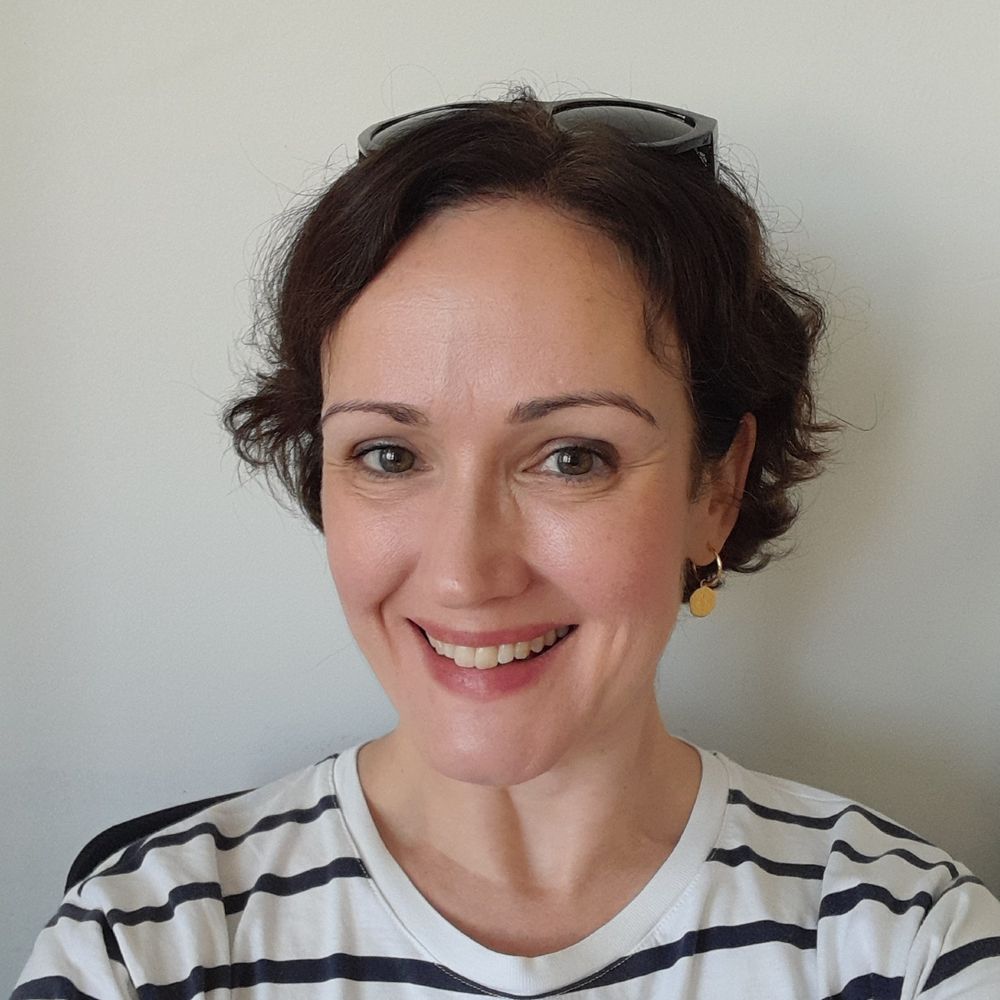
FLA 32: Joanna Wyld (09/11/2025)

Of all the guests I’ve had on First Last Anything so far, Kent-born Joanna Wyld might have worn the most musical hats. Writer, musician, composer, librettist, teacher and administrator, she’s played in orchestras, concert bands and pop groups, she has a passion for everything from bellringing to soul music, and has been a prolific writer of articles, liner notes and concert programme notes for many years. Her writing is always so perceptive, thoughtful, colourful, nuanced and (underrated quality, this) informative.

In conversation, Joanna is no different. What follows, the highlights from a couple of hours on Zoom one afternoon in October 2025, could easily have run twice as long. I love it when a conversation with a guest introduces me to many new pieces, and this is certainly one of those occasions. We both hope you enjoy reading it, and sampling Joanna’s wide-ranging listening choices – not only her First, Last and wildcard selections, but all her other suggestions too.

—-

JUSTIN LEWIS:

So to begin with, what music do you first remember hearing in your home? Because I know you have a very eclectic taste – was that always there?

JOANNA WYLD:

Yes, I think ‘eclectic’ is a really good reflection of my home growing up. I didn’t grow up in what you would describe as a musical household. Everyone loved music, but my parents weren’t classically trained – my dad can’t read music but loves it, my mum can read music, and plays the piano and the organ.

We were never told that a particular genre was better than others. We had a good eclectic range of records that we enjoyed playing. I think the first record I learned to put on the record player independently was The Beatles’ ‘I Want to Hold Your Hand’. And there were quite a few Beatles singles, but also my brothers and I would use music to capture our imaginations a bit. Because we’d hear ‘Oxygene’ by Jean-Michel Jarre when we’d go to the London Planetarium, it would be on if you were waiting to go in. So [at home] we’d use those kinds of experiences – we’d use a reel-to-reel tape recorder, and – I mean, we were very little, it was very silly – we’d write a type of sci-fi script with ‘Oxygene’ playing in the background as our soundtrack.
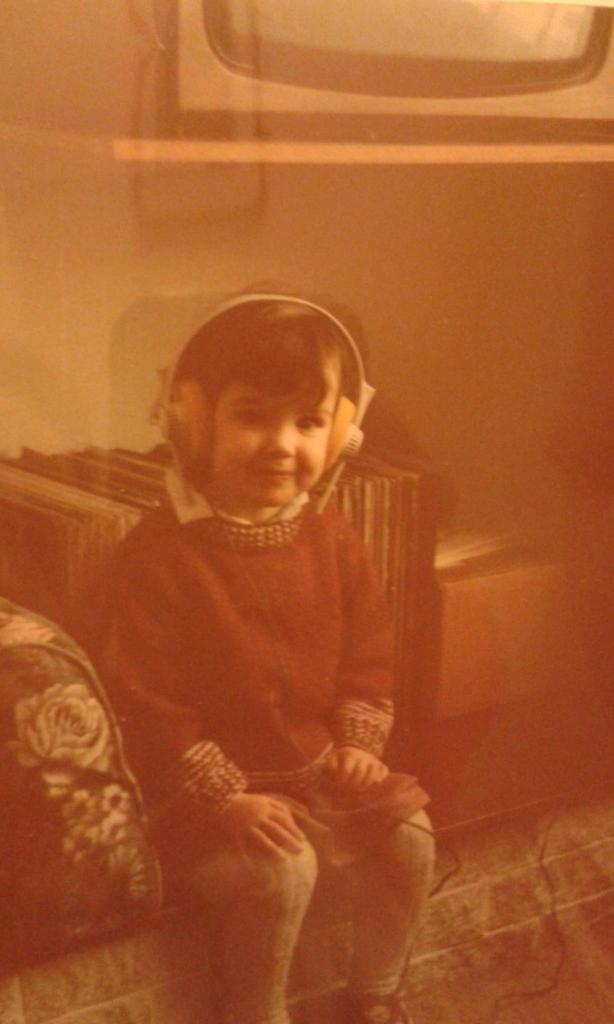
My relationship with sound was affected by certain things growing up. My grandad and my dad were – and my dad still is – bellringers, which I think is a hugely underrated discipline. We rightly praise the Aurora Orchestra playing things by heart – I went to see them do The Rite of Spring by heart [at Saffron Hall in 2023] and it was absolutely mindblowing, they deserve all the credit for that – but bellringers do that every weekend, three hours or more of memorised mathematical permutations while handling these unwieldly bells. If we’re going to be patriotic about something, I feel like that’s something to be proud about, because it’s unusual and it’s such a skill.  

With bellringing, there are these interesting patterns, but also these slight irregularities because it’s not mechanised – there are people doing this, and there are also these spatial qualities of sound that you get when you hear it resonating in a ringing chamber. With the tunings, you get these harmonics, these overtones, and sometimes they seem to vibrate or clash.

JUSTIN LEWIS:

There’s that way that bells can sound slightly off-key, which you sometimes get with distance and echo. Do you have perfect pitch, then?

JOANNA WYLD:

No, and actually, I suspect my relationship with tuning is a little bit strange because I grew up with this sense of music being a little more fluid, not necessarily fitting within these strict parameters we’re used to thinking about in terms of pitch. And I suspect that then influenced my love for composition and contemporary and 20th century music later, made me open to it, because I’d grown up with this variety of sounds, without that sense of hierarchy about it.

JUSTIN LEWIS:

And did you do some bellringing yourself?

JOANNA WYLD:

I did learn for a short while, but then I had an experience where a rope hit me – it is quite dangerous. My dad was there, and he grabbed it and it was fine… but I was a bit put off by that. Also, I don’t think I’ve got the mathematical brain to do all the actual methods, but I love the sound of it. It could almost be rebranded as mindfulness. If you listen, it’s got enough patterns to keep your brain interested – but it’s also quite mesmerising. I think, I hope, there is a new generation of people coming through who can do it. It’s in the category of things like dry-stone walling… almost like folk traditions. These things deserve to be continued in the least jingoistic way, just because they are interesting and skilful.

I have a CD called Church Bells of England, which is an incredibly sexy thing to own, and it has all these examples of ringing in various places. None of them are perfect in terms of the ringing or the sound quality, but they give a sense of what’s hypnotic about it. The example from St Giles, Cripplegate launches straight into these complex patterns, it’s so absorbing. And then you have composers who’ve drawn on this, from William Byrd’s emulation of change-ringing in keyboard music, to Jonathan Harvey’s wonderful Mortuous Plango, Vivos Voco, which samples the tenor bell at Winchester Cathedral. I heard it played during a London Sinfonietta concert and you felt like you were surrounded by the recording of the bell, it was a visceral experience.

——

JOANNA WYLD:

Classical music came in when we were in the car, we’d put cassettes on, and I did discover then that I really loved this music. This would have been from the age of about eight onwards… that’s when I started to play the flute.

JUSTIN LEWIS:

The exact age I started too, actually. Why did you pick the flute, then?

JOANNA WYLD:

Well, it was slightly by default, because in my primary school, which was very tiny, you could learn the piano, the violin or the flute. There were three teachers who came in, and I had more of a yearning to learn the clarinet, but it wasn’t really possible. It just wasn’t very practical – this is before we got our piano. My older brother had been learning to play the violin, so I kind of ended up on the flute because that was what was available. I mean, it took ages to get a note out of it, but it wasn’t a burning ambition to learn that particular instrument.

JUSTIN LEWIS:

Yeah, I think I wanted to play the violin, but I have a feeling my parents couldn’t have coped with the idea there’d be at least three years of scraping. I seem to remember we were watching something on TV, there was someone playing the violin absolutely brilliantly, and I recall saying something like, ‘Oh I’d love to be able to do that’, and it all went very quiet in the room. So maybe that was a clue. I think with the flute, I think I liked it as a colour in an ensemble, rather than as a solo instrument. I did enjoy playing but I found solo playing quite stressful – and also I felt a bit alienated in my teens because I did want to be in bands, but I had no idea how you went about that. I learned the saxophone for a while, and that got me into bands a bit. But I told this story on a podcast recently – when I got into university, I did a music degree for a year, but obviously in the college orchestra you could only really have three flautists in there. You couldn’t really have fifteen.

JOANNA WYLD:

Yes, if you’ve got too many flutes, what do you do? I was really lucky because I grew up near the Bromley Youth Music Trust, a music hub that offers affordable music ensembles, so I grew up in a concert band system, and that’s how they deal with instruments where there are too many for a standard orchestra. That was quite a discipline in terms of ensemble playing. And so I ended up in this concert band where we’d tour and do competitions and it was quite high level, but it was a brilliant exercise in eclectic music, because in concerts you’d have stuff written for it specifically, often quite contemporary and imaginative. And then you’ve got arrangements of pop, film and classical – so a lovely kind of cross section. Music for concert band and brass band is another genre that’s oddly underrated I think. I love the ‘Overture’ from Björk’s Selma Songs (don’t watch Dancer in the Dark, it’s traumatising, but listen to the soundtrack), it’s a lovely example of rich brass writing. And the song that pairs with it, ‘New World’, is gorgeous, very powerful.

And then in the sixth form, I got into the BYMT symphony orchestra having sort of worked my way through. That was a huge experience, and I was just so lucky, because we were playing quite high-level repertoire: Britten’s ‘Four Sea Interludes’, and Bernstein’s ‘On the Waterfront’, and Dvořák symphonies, Sibelius symphonies… We played Mahler, you know! I became immersed in all this. And our teachers were phenomenal because they expected these really high standards of us, and we were living up to them. This was a lot of state-school educated people, and we were so lucky to have this affordable opportunity to make music like that. Then at university, I was exposed to more 20th century and contemporary and started to play things like the Berio ‘Sequenza’ and Messiaen’s ‘Le merle noir’, stuff which uses more kind of percussive and unusual sounds on the flute.

JUSTIN LEWIS:

Tell me about Richard Strauss, who you mentioned to me was a particularly important composer you heard at a formative age.

JOANNA WYLD:

It’s his ‘Four Last Songs’ [composed in 1948] in particular. I think, for GCSE or A level music, I had heard his ‘Morgen!’ [‘Tomorrow!’]. Back in the day, CDs were quite expensive and I wasn’t buying them lots. My birthday or Christmas was coming up and so I asked my parents for Strauss’s ‘Morgen!’. They couldn’t find that on record in our local record shop so they gave me this instead – a happy accident.

I love all of the music on that record for different reasons – you’ve also got ‘Death and Transfiguration’, [a tone poem written in 1888–89] when Strauss was quite a young man, and which in many ways is not really about death but is more life-affirming, though it’s dramatic. Whereas with the ‘Four Last Songs’ everything’s stripped back, because he did tend towards bombast and vulgarity at times, and these were written when he was really facing death. They’re just four of the most beautiful things ever written. The third one in particular [‘When Falling Asleep’] just has this incredible climactic moment and wonderful violin solo. And in the final song [‘At Sunset’], you get this pair of piccolos which are the birds representing the two souls of him and his wife, off into the ether – it’s just so beautiful.

JUSTIN LEWIS:

And ‘At Sunset’ quotes a little motif from ‘Death and Transfiguration’, doesn’t it, at one point?

JOANNA WYLD:

Yes, and there’s a horn solo at the end of [the second song] ‘September’ – his father was a very celebrated horn player. And through him, he’d been to hear lots of premieres of Wagner operas because his father was playing in them, and his father tried to discourage his interest in Wagner! [laughs] Anyway, so you feel as though that horn solo might have been just a nice little valedictory kind of farewell to that memory of his father as well.

JUSTIN LEWIS:

I know you particularly love this specific recording of the ‘Four Last Songs’, with Gundula Janowitz singing and Herbert von Karajan conducting [first released in 1974], but I take it you know who else was a fan of it as well?

JOANNA WYLD:

David Bowie [which inspired him to write four songs for his Heathen album]. Yes, I love this fact. I’m kind of thrilled that it’s that specific recording, with Janowitz – because people are divided as to which is the best. Strauss is one of those people, like Mahler, where I have different recordings of their works because I do think people can bring something different in. But yeah, I just love the fact that Bowie loved the same recording as I do!

JUSTIN LEWIS:

Bowie’s influences just seem to come from so many places. We’re back to eclectic again, as with you.

JOANNA WYLD:

I think I’m discerning about quality, but there isn’t a hierarchy of genres. Obviously, classical is my speciality, and I’m passionate about it, but it’s all there to be enjoyed, we’re complex human beings, and Bowie obviously recognised that. I understand why people specialise, but I love to embrace variety.

——

FIRST: QUEEN: ‘Bohemian Rhapsody’/ These Are the Days of Our Lives’ (EMI Records, cassette single, 1991)

JUSTIN LEWIS:

‘Bohemian Rhapsody’ was first released in 1975 when I was five, and I vividly remember the video on Top of the Pops. It’s hard to remember what the world was like before this record, because it is one of the first that’s seared into my mind.

JOANNA WYLD:

And this reissue was the first record that I can remember wanting to buy. I was eleven. I heard it on the radio. It was just unlike anything else I’d ever heard. But it’s got that context of originally coming out in the mid-seventies when there was the mainstream three-minute pop song and at the same time there was prog: people yodelling or a synth solo, sometimes quite self-indulgent. But here you’ve got something that’s both: it’s mainstream adjacent and also proggy – it’s an extended idea and a concept. I just thought it was really fun, kind of dramatic and extraordinary. And that appealed.

It wasn’t that long afterwards that Wayne’s World (1992) cemented it as well. But for me it also represents a couple of things I generally find interesting about music. One: it’s the victim of its own success – as you said, you can’t imagine it not being there. Even those who don’t like it, couldn’t imagine it not being there. That’s an extraordinary achievement. And that can lead to it becoming ubiquitous and taken for granted, almost an irritant.

A parallel for me would be Holst’s Planets suite. I fell into the same trap with that – I’d just heard it so many times. And then at university, I finally got to play in it. And I realised: this is so well written, so well orchestrated, and this would have been incredibly original at the time. And it has been emulated a lot since, but I hadn’t given it enough credit for what it was, when it was written.

The other aspect of ‘Bohemian Rhapsody’ I find interesting: it’s so of the person who wrote it. Some composers have that instantly recognisable fingerprint. Holst is one, Messiaen, Stravinsky, Copland, more recently Louis Cole and Genevieve Artadi, both separately and together as Knower, – and I think Freddie Mercury is another, in this song. It’s him, just going, ‘I’m not going to worry about what anyone else thinks, I’m not going to draw on lots of other influences, this is what I want to write.’ I admire anyone who can do that.

JUSTIN LEWIS:

There are aspects of it that remain mysterious, like nobody has ever quite nailed what it is really about. Brilliantly, someone has put up clips of Kenny Everett actually playing ‘Bohemian Rhapsody’ for the first time, on his weekend lunchtime show on Capital Radio in 1975 – have you heard this?

JOANNA WYLD:

No, but he championed it, didn’t he? I haven’t done a deep dive, I have to admit.

JUSTIN LEWIS:

I only found it the other day. Seems he had been playing extracts from it, and then he plays the whole thing.

Kenny Everett, Capital Radio, c. October 1975

We had this song in our house because it’s on their album A Night at the Opera, which has this ambitious mix of quite whimsical, almost music-hall songs, and then out-and-out rock tracks. I still think it’s probably their best record. I like to hear it as part of the album. As you just said with The Planets, it’s good to go back and play it in context.

But even with Kenny Everett’s support, it’s still really weird they put this out as the single, in a way. And obviously, you bought this re-release after Freddie Mercury had just died [24 November 1991]. How aware were you of that event?

JOANNA WYLD:

I think this was the first experience I had of a celebrity death having an impact, and of feeling incredibly sad. The AA side, ‘These Are the Days of Our Lives’, is just incredibly poignant. I can’t watch the video where he sort of says ‘I love you’ at the end. It’s just so, so heartbreaking. I think for a lot of people, it really brought home the reality of the HIV and AIDS pandemic. That this wonderful larger-than-life figure, famous and well-off and all the rest of it, had been hit by it. I don’t remember the extent to which I understood everything at that point in my life, but it definitely stayed with me. It felt like such a horrible shock and a horrible loss. 

JUSTIN LEWIS:

Until I was doing the research for this, I’d forgotten it was a charity single, for the Terrence Higgins Trust. Since when it’s been in so many other things – Wayne’s World as you mentioned, but just this summer, in September, at the Last Night of the Proms.

JOANNA WYLD:

The Prom was a lot of fun. I know it divided opinion a little bit, but it’s nice to celebrate people while they’re alive. I think Brian May and Roger Taylor deserve that moment. While I’m not the biggest Queen fan, and I don’t listen to the music loads, they do all seem fundamentally decent, and those remaining members have really championed Freddie’s memory and always mention him. There’s something quite loving there.

——

JUSTIN LEWIS:

I wanted to talk to you about writing liner notes for CD releases and programme notes for concerts, because that’s something you’ve been doing for many years. How did you first get into this sort of work?

JOANNA WYLD:

The first clue lies back in my childhood. We’d play classical music in the car, and one cassette we had was Saint-Saëns’ Carnival of the Animals suite [composed 1886, but only published posthumously in 1922], featuring lots of quite kid-friendly stuff. And when I went to secondary school, my first music assignment was to write the description of a piece of music. I remember spending ages on this, being so enthused by it. I went home, read the sleevenotes of Carnival of the Animals, got my little dictionary of music, did a bit of research and wrote it up. It was like a prototype for what I’d do later. It was just a Year 7 essay, I was about eleven, it wasn’t hugely in-depth, but it’s interesting that’s stuck with me as a memory – an early enjoyment of writing about music showed up.

But how I got into it professionally… I was working at a record company, originally called ASV, which also had some peripheral labels: Gaudeamus was an early music label, Black Box was a contemporary music label, everything on White Line was sort of middle of the road, like light music, and then Living Era was the nostalgia label. This was my first job after university, and I was the editorial assistant.

For Living Era, we used to get these liner notes written on a typewriter by these lovely old gents who were jazz experts, some of them virtually contemporary with the songs they were writing about! They were delightful to work with, but one day we were missing a liner note, and my boss said, ‘This person just forgot to file this copy and we really need it now. Can you cobble something together?’ And this was in the days before there was a huge amount on the Internet about these things. I think I used early Wikipedia. But because I’d edited and proofread so many of these notes already, I knew the style. So I was able to emulate that slightly chatty nostalgic style, as well as getting the information in. I knocked this out quite quickly and my boss was quite impressed, which was nice, and then asked me to do more and more bits of writing.

And then ASV got bought out by Sanctuary Records, which had all these associated metal artists – so you’d go into the canteen and Bruce Dickinson of Iron Maiden would be there, and they’d have Kerrang! TV on. We had a meeting interrupted because Robert Plant was in reception. It was very glamorous, quite fun – I loved it, and I got to meet some really interesting people.

But all this meant that later, still in the heyday of CD production, particularly in classical music, I was hired to do a lot of freelance writing. There was a lot of repackaging – essentially getting older recordings and repackaging them as ‘The Best of Poulenc’ or whoever it was – and new labels were being set up. So I was asked to churn out quite a lot of essays for them, and quite quickly built up a body of work. The hardest commission was when my daughter was only a couple of months old, when I was asked to do 17 liner notes in two and a half weeks, so I was a machine for that period. It was something like one essay a day. And obviously I was looking after a small child!

Then I started to get emails from various people – the BBC, Royal Liverpool Philharmonic, and others: ‘We’ve noticed your writing, we like it, would you like to send me some examples.’ And it’s slowly built from there.

I would say I’m a generalist. I’m not someone who’s done a PhD in a specific area, I always treat myself as someone who’s not really an expert, but I will do the research when I’m writing a programme note, as thoroughly as possible, as is relevant for that programme note, but I’m always kind of standing on the shoulders of people who’ve done that in-depth research. But equally, I’m trying to bring my perspective, and the way I hear it and write about it, hopefully I can bring some joy to people’s listening experience. 

JUSTIN LEWIS:

And you got to write about new commissions as well, is that right?

JOANNA WYLD:

One that was really nice – it was a premiere performance – was Mark-Anthony Turnage’s ‘Owl Songs’ as a tribute to Oliver Knussen (1952–2018). It was a real privilege to write about that because I’d met Oliver Knussen a couple of times, an absolute gem of a man and composer. His music is just these crystalline jewels of orchestral beauty, and I’d recommend something like ‘Flourish with Fireworks’ (1988) to anyone who thinks contemporary music’s a bit alienating. So he mentored Mark-Anthony Turnage who I’ve also since interviewed, and Olly was known affectionately as Big Owl – particularly Mark referred to him in that affectionate way. So the Owl Songs are these wonderful tributes.

JUSTIN LEWIS:

Are you adhering to house style with these things, or do they tend to leave you alone?

JOANNA WYLD:

There’s very little editorial interference, actually, which is lovely. And I’ve built up trust with a number of commissioners, which is great. What has changed in the style of writing for these sorts of things is it used to be much more academic, much closer to my university essays. The expectation would be that your audience would be aficionados – but it was a lot drier. Actually it’s much more fun now, because the emphasis is on something more inviting and accessible that could be read by anyone, and if you do something more technical, you just explain it in passing. You try and make it as enjoyable as possible to read and that has been fun because I can bring out my own personality a bit more, and feel freer to illuminate what’s exciting about the music.

I feel very strongly that we tend to present classical music as very polite, elegant and smooth, and it can be all of those things, but it can also be… terrifying, for example. Like with Stravinsky’s Rite of Spring, I get palpitations – it’s visceral, it’s filthy. Or Richard Strauss, which can be, to be blunt, very sexual – and I think people almost need permission to hear it in that way because they think classical is ‘all very nice’, and actually… he was a bit of a perv, you know? And if that sort of thing’s there, it’s pointless to not draw people towards that way of listening or bringing out the enjoyment of it.

JUSTIN LEWIS:

Why do you think then that happened to classical music, that the politeness of it became paramount? Is it because of how it was taught, or presented?

JOANNA WYLD:

Every possible experience you have had is all there in classical music somewhere. These are very complex people writing it, and often that’s what I enjoy exploring – their personality, their quirks, their flaws, and the rest of it.

I mean, this is a huge topic – people have done PhDs on this – but in terms of how we receive it… the Victorians have a fair bit to answer for. You know, the idea of the Opera House: people had previously been there as an everyday experience, and then it became this hierarchy of ‘who sits where’, and then obviously with different genres, you have this shift – music that was contemporary becoming historical, and then becoming classical, so it’s no longer immediate. Whereas pop music is obviously reflecting people now. So with anything historical, you can end up with this sheen of respectability and this sense of it being a museum piece, something that you have to treat with reverence.

It’s really complicated but yes, definitely the way it’s taught, even the way it’s marketed… the way even people who love classical music sometimes talk about it… it can be quite reverential, and there are bits of it that are of course sublime. But there’s plenty else in there, and it’s almost just encouraging people to go and hear it.

JUSTIN LEWIS:

So how do you strike a balance between musicology and biography when you’re writing these?

JOANNA WYLD:

There used to be more of an emphasis on musicology – perhaps the structure of a piece of music could go into a bit of detail – whereas now I tend to start with biography and history and set the scene. I try and give a bit of historical context and wherever possible bring out the interesting details about that composer that are relevant to that piece. And if possible, quotes – direct quotes are really interesting. If I can find them, if they’re reliable, just from letters or whatever, because that just tells you so much about them.

We were told at university: You mustn’t let the biography of a composer influence the way the music is interpreted too heavily. I think that’s fair, particularly from an academic perspective – that you are not there to try and tell a story through every single score. And if you’re trying to look at it on its own terms, musically, you do need to separate the two, but for a concert-going or a CD-listening experience, it brings the music to life, stops it being a museum piece. Because you realise these human beings were just as complicated as we are, and often just funny, or grumpy or whatever. Then I might go into some musical detail, and if I’ve got space, try and do a bit of a listening guide, try and draw out some highlights, some things to listen out for.

Occasionally I’ll do a deep dive, find something that isn’t widely known, or almost gives people permission to think of those composers in a slightly different way. For example, JS Bach’s ‘Musical Offering’ (1747). With Bach, he’s so revered we tend to deify him, and talk about him in reverential tones. But the story behind that piece is so fascinating. I did a lot of research from a non-classical perspective, like reading a bit of Gödel, Escher, Bach [by the US scientist Douglas Hofstadter, published 1979], and stuff about mathematical patterns. But with that piece, you also had family dynamics going on – his son [CPE Bach] was working for Frederick [the Great, King Frederick II of Prussia] who commissioned this piece, but they laid down the gauntlet in the most provocative way by saying, ‘Oh, improvise a fugue in six parts’ and no-one had ever really done that. He managed a three-part improvisation and then went away – and it was as though he had a fit of pique, producing this ridiculously vast response to this challenge, creating something out of this deliberately difficult and angular theme. And none of this that I included was new, but it was quite nice to bring out those aspects. Especially with someone like Bach who obviously had great faith and appears to be very holy… that composition came from a bit of anger and irritation.

JUSTIN LEWIS:

Yes, bringing composers to life as human beings without overemphasising to the detriment of the work. I’m sure it’s changed in school-teaching now, back stories are brought up more. I had good music teachers at school, but I don’t ever remember being taught about these composers’ lives, which now feels really weird. Or even the wider history of the time.

JOANNA WYLD:

It’s like Beethoven was a young carer, effectively. His dad descended into alcoholism after his mother’s death, so he was caring for his siblings, which prevented him from staying in Vienna to study with Mozart, which he really wanted to do. Information like that is really humanising, especially as Beethoven was perhaps the first in the 19th century to be regarded as ‘in touch with the divine’, and really cast that long shadow.

I would probably say I’m not a musicologist like, say, Leah Broad [FLA 28], but I’d call myself a music historian. The history of it is fascinating, and it helps people to get closer to the music because they realise these were normal people who might have been incredibly gifted but also worked really hard. Again, Bach was one of those people, who said, Anyone who works as hard as me can do the same thing. Which is not entirely true, but nor was he sitting there on a cloud, you know, being a genius.

JUSTIN LEWIS:

I mentioned this in the Leah Broad chat, about hearing Radio 3 say in passing about how Felix Mendelssohn essentially revived JS Bach’s music around 1830 – it had hardly been played for about eighty years after Bach’s death.

JOANNA WYLD:

It had really gone out of fashion, it’s sort of staggering. Although Mozart and Beethoven had studied Bach, and actually the sort of contrapuntal depth they learnt from him is one thing that elevates their music above the more lightweight stuff of the time. So his influence was still there at key moments, although in terms of performance it wasn’t until Mendelssohn revived it.

——

JUSTIN LEWIS:

Something else I discovered from your website: you’ve been a librettist. Can you tell me about your work with Robert Hugill?

JOANNA WYLD:

That was a wonderful opportunity. A friend put us in touch. It was called ‘The Gardeners’. Robert had read this article about a family of gardeners in the Middle East, tending war graves, and it was intergenerational. So he had this idea, it was his conception, of how the generations relate to each other, and the old man of the three generations could hear the dead. So there was that metaphysical aspect to it, and so we had a chorus of the dead, and the youngest is quite a rebellious character. All of this was fictionalised – this isn’t based on the article – and it was a chamber opera, so it’s not huge scale, but it unfolded as a sort of family drama. Ultimately, the old man dies, whereupon the youngest man inherits his ability to hear the dead. Meantime, you’ve got the women of the family trying to keep the peace. So it’s a family drama with a metaphysical aspect. We performed it a couple of times, which was amazing, firstly at the Conway Hall and then at the Garden Museum with a wonderful cast.

JUSTIN LEWIS:

Is it about trying to find words that sound good as well as have meaning? When you’re writing something like that, does it become clear what doesn’t belong? Do you have a working method for something like that?

JOANNA WYLD:

I definitely think it helps that my Masters was in Composition. And I’ve set a lot of words myself. So I know the kind of thing I would set, and it’s not always the choice you might expect. It has to be something where the words lend themselves to musical treatment. Which often means there’s a rhythmic lilt to them – you’re thinking of the words rhythmically, but also making sure they don’t obstruct the music. So if it’s really overly polysyllabic and flowery, that’s going to get in the way, and it becomes about the words, not the music. But there’s also how the words sit next to each other – I remember reading a wonderful letter from Ted Hughes to Sylvia Plath about the choice of two words in one of her poems. It was two quite punchy words next to each other, and I think he suggested weighting them differently but also talking about them as if they were physical objects. I relate to that. So when I’m writing something like that, and I’m not saying it’s on that level, I try and think in terms of the weight of the words, and how they’ll then sit in someone’s mouth.

JUSTIN LEWIS:

Because just as there’s a musicality in music itself, there’s a musicality in words too, so you’ve got to match the two up. Do you still write music yourself, as well?

JOANNA WYLD:

I’ve written a couple of songs with bands I’ve been in, I enjoyed that. I had a really lovely teacher at university, Robert Saxton, but you really have to pursue it, you have to be so obsessed with it, and I also realised I’m probably better at writing about music than writing music.

JUSTIN LEWIS:

What sort of music were you writing for the bands you’ve been in?

JOANNA WYLD:

One song started out as a sort of Hot Chip parody really, almost like a joke – and then I added some influences from LCD Soundsystem; it’s quite a fun track, which we once played at a wedding, and a conga formed, which was one of the biggest compliments.

JUSTIN LEWIS:

That’s brilliant.

JOANNA WYLD:

And then I’ve written a sort of cathartic song called ‘Prufrock’, where I drew on TS Eliot’s ‘Love Song of J. Alfred Prufrock’.

JUSTIN LEWIS:

So you were singing these?

JOANNA WYLD:

Yeah. Another one was called ‘The Air’ which was my attempt at layering stuff together in a sort of Brian Wilson fashion.

JUSTIN LEWIS:

And what were your bands called? Were you gigging?

JOANNA WYLD:

One was called Fake Teak, and we recorded ‘Prufrock’. It’s my brother’s band, named after the equipment that our dad had when we were growing up. That’s now evolved into something called Music Research Unit, which is a similar line-up, but more fluid and with new songs. We had our first rehearsal just yesterday! Then I’m in another band called Dawn of the Squid, and I don’t write for them, and they’re hard to describe, but they’re kind of… indie-folk, and there’s comedy in there.

JUSTIN LEWIS:

Is this out there to hear?

JOANNA WYLD:

There’s a new Dawn of the Squid album, which I didn’t play on, I can’t take any credit, but that’s out. There’s quite a bit of Fake Teak on Spotify. I play synthesisers and flute in these groups, and to go back to what we were discussing earlier – about sounds not being strictly in tune – what I find lovely about some synthesisers is they feel much closer to acoustic instruments; they can go out of tune, and you can make unpleasant as well as pleasant noises on them. I play this instrument sometimes called an ARP Odyssey [analogue synthesiser introduced in 1972] and it can go out of tune on stage, it’s a real rarity, and it’s been used in loads of pop like Ultravox. But I have had gigs where it’s gone a bit out of tune, and in a weird way I kind of enjoyed that more than digital instruments where it’s got presets and everything’s tidy, because it feels much closer to my experience of other instruments.

—–

LAST: THE UNTHANKS: Diversions, Vol. 4: The Songs and Poems of Molly Drake (2017, RabbleRouser Music)

Extract: ‘What Can a Song Do to You?’

JOANNA WYLD:

I’m not a folk expert, I’m getting into it more, but like a lot of people, I came to this because I heard Unthanks do the ‘Magpie’ song on Detectorists. Then I went to a concert, locally, on the strength of that, and that’s where they performed some of these Molly Drake songs. I loved the whole concert – one of my prevailing memories of it is my crying my contact lens out during one of the Molly Drake songs, and just having to sit there with it in my palm, kind of half-blind.

JUSTIN LEWIS:

These songs are amazing to hear because we know so much, or at least we think we do, about Nick Drake’s life, but obviously the Molly Drake archive hasn’t been pored over by scholars too much. I think most of these songs are from the Fifties, and the Unthanks have covered them, apparently, because they wanted to make better quality recordings. And the Molly Drake versions are out there too. But there’s something about these songs that are both public creativity – as in the Drake family being aware of these songs – and private creativity too as it wasn’t out in the public domain for years. And you keep having to remind yourself that these songs were written before Nick Drake got into music himself, not afterwards. 

JOANNA WYLD:

Yes, so many women composers are talked of in relation to their male relative, but you’re right that she was doing this first. It clearly influenced Nick Drake, and the almost painful shyness is a clear link, so it illuminates his music, which I also love, but I think on its own terms Molly’s music is phenomenal and yet, incredible that she was so shy that I think her husband bought her a reel-to-reel and set her up in a room on her own with it. He recognised her talent so there was this idea of ‘Let’s get this down for posterity’, but there was no concept in her mind that anyone would ever hear it, which seems really alien to us now, but there’s a real beauty to that.

JUSTIN LEWIS:

I think there can be a pressure when you’re writing something that you know is going to be for public consumption in some way. But I found a great Rachel Unthank quote:

‘Her work shares her son’s dark introspection, but in Molly we get a clearer sense of how those who understand depths of despair can do so only by understanding happiness and joy too. Through Molly’s work, we see the soulful, enigmatic lonesomeness as a person who is also a member of a loving and fun-loving family.’

I think that’s really important because Nick Drake – and his work – tends to be defined by what happened to him, and not all of him and his work is like that. I mean, the Molly song that feels like it could have been written in response to his early death – ‘Do You Ever Remember?’ – was written much earlier.

JOANNA WYLD:

You mentioned family, but obviously on the Unthanks recording, you’ve also got Gabrielle Drake reciting the poetry. I went to the Nick Drake Prom, with the Unthanks performing with Gabrielle Drake, which was phenomenally moving – and brave of her as well, I thought. And it’s a rich combination to listen to – you’ve got the sugared almond sound of the Unthanks’ voices, and the woodier timbre of her delivery. The whole thing really cuts to your heart, similar to Nick Drake, but it’s even less crowded in metaphor, it cuts to the heart with a deceptive simplicity. The first track, ‘What Can a Song Do to You?’, has one of those melodies that feels like it’s always existed, and then this tremendous bit of poetry. I really admire people who can pick and use very few words to convey something. I was lucky enough to interview Michael Morpurgo many years ago, and he blew my mind in terms of how to write. He used to say, ‘We don’t need to teach kids lots of florid words, but to be direct.’ That lyrical and nuanced but straightforward vocabulary can be more powerful and it’s something I aspire to, [but] I don’t always find it easy.

JUSTIN LEWIS:

I feel the same way. As an editor and sometime writer, I find that writing a simple sentence is actually quite hard.

JOANNA WYLD:

The poem I was going to mention at the end of ‘What Can a Song Do to You?’: ‘Does it remind you of a time when you were sad? (So in other words, why? Why is this person crying?) Does it remind you of the time when you were sad? Ah, no. But it reminds me of a time when I could be. It reminds me of a time when I could be…

And I sort of think that’s… mindblowing.

JUSTIN LEWIS:

That particular song has been going around my head for the last few days. Going back to what you were saying with Detectorists making you aware of Unthanks, film and TV does seem to be a major way for people to connect with people now. I sometimes look at the streaming stats for tracks at random, wonder how that’s become the biggest thing, and it’s nearly always some film or TV programme I wasn’t aware of.

JOANNA WYLD:

I guess it’s a route in. I recognise this with classical music as well – I’m lucky enough to have grown up with enough that I’ve absorbed bits and learned about it, done my degrees in it. If I hadn’t done that, that might be my way in as well. And as I don’t have that background with folk song – I like the genre in a broad sense, but I wouldn’t know where to start looking. There’s too much out there, and there are playlists but they can be a bit too rambling.

——

ANYTHING: THE CARDINALL’S MUSICK / ANDREW CARWOOD / DAVID SKINNER: Cornysh, Turges, Prentes: Latin Church Music (1997, Gaudeamus/ASV Records)

Extract: William Cornysh: ‘Salve Regina’

JOANNA WYLD:

This ties a few things together. This is the William Cornysh recording of ‘Salve Regina’, which is my favourite work on that album, but it’s on the Gaudeamus label which I mentioned earlier. I worked with some of the people on that label, but I also know about this repertoire because I was lucky enough at university to study early music with David Skinner, who’s one of the two founders of The Cardinall’s Musick [the other being Andrew Carwood]. They’ve since gone in different directions and David now conducts [a consort] called Alamire. So this is going back a bit, but it was through that university experience that I got to hear this. It’s funny – we were talking about church music earlier but this is English Catholic music of the Tudor era and it’s sad to me that the Catholic Church in this country doesn’t have that kind of choral tradition because we’ve got these riches but for some reason it’s not performed in that church context very often, but nor is it often sung in the concert hall either. Slightly later you get Thomas Tallis and William Byrd, in the Elizbaethan era, that gets mentioned a bit more. But for some reason the Eton Choir Book doesn’t get as much attention and I think it deserves it, so I thought it might be quite fun to bring that in. Because particularly with the Cornysh ‘Salve Regina’, it’s incredible.

JUSTIN LEWIS:

In fact, I’ve got a quote from David Skinner here, from the 1990s: Henry VIII had destroyed most of the musical manuscripts and he says ‘there are literally only two of the choir books I worked from when originally there would have been hundreds.’

JOANNA WYLD:

Yes, Lambeth is the other one, I think?

JUSTIN LEWIS:

He mentions the Eton Choir Book, and the other was Caius?

JOANNA WYLD:

I will have to check my facts because the history of this area is so complex!

JUSTIN LEWIS:

I’m glad you said that! I merely skimmed this, and it felt quite complicated!

JOANNA WYLD:

Really complicated, and I’m sure some of the complexities of how it was written have gone out of the window for me… I learned them a long time ago. I do, very geekily, have a facsimile copy of the Eton Choir Book. I occasionally try and follow along, and it’s quite tricky to follow because instead of it being arranged in score, you’ve got the four parts written separately.

But when I heard the ‘Salve Regina’ at university, it stuck out for me. It’s incredibly beautiful, it takes a bit of time to get into the language and it’s interesting to me that a lot of people who love early music and love contemporary music overlap because early music predates a lot of ‘the rules’ that dominate so much of Western music. With this piece, it’s like you’re walking through a cathedral, meandering, just wandering, but then you get these cadences or these chords, very vivid moments, that feel like light coming through stained glass. And it’s quite a long piece, but right at the end, it just builds and builds up to that high note, which then drops down, and then you have these glorious last two chords. At that point, it’s almost like you’re at the rose window… Even if you’re not religious, music does reflect every facet of who we are, and spirituality is one facet of who we are as human beings. So it’s powerful even if we don’t specifically believe in something. It’s a sense of time travel. It takes you out of yourself and takes you back, but it also kind of elevates as well.

———–

JOANNA WYLD:

At school, I don’t recall learning much pop at all. It wasn’t that I wasn’t exposed to it, but in terms of my actual education, the emphasis was on the history of Western music, classical and symphonic music and so on. My daughter did have to analyse pop – I remember Fleetwood Mac’s ‘The Chain’ being one example. I’ve been a primary school teacher, and I do remember teaching some Stevie Wonder because any excuse, I absolutely love Stevie Wonder, but it was Black History Month and so I brought in his songs about social history, and they all knew ‘Happy Birthday’ but we could talk about how that brought in Martin Luther King Day, which was a lovely way of giving the pupils a sense of the impact music can have.

JUSTIN LEWIS:

Interesting that they knew the song, it’s not one of his you hear that often now.

JOANNA WYLD:

They all knew the chorus, when I sang that bit, they knew that, but they didn’t know the verses or the lyrics so they just thought of it as generic. It’s not my favourite Stevie song – I’ve got so many – but it’s an example of how powerful music can be.

———

You can find out more about Joanna, and her work, at her website, Notes Upon Notes: https://www.notes-upon-notes.com

You can follow her on Bluesky at @joannawyld.bsky.social.

Also, find out more about Dawn of the Squid at their website: https://dawnofthesquid.co.uk

—–

FLA PLAYLIST 32

Joanna Wyld
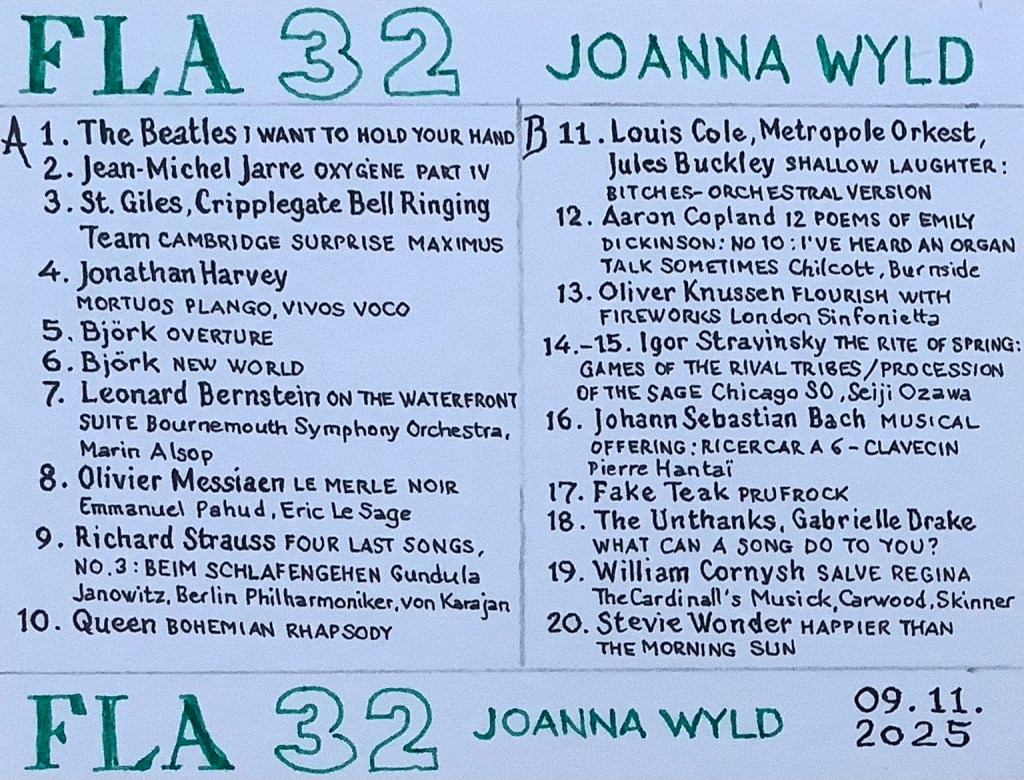
For the time being, this site and project uses Spotify for the conversation playlists, but obviously I disapprove that Spotify doesn’t pay artists and composers properly, and other streaming platforms are available, as are sites to buy downloads and buy recordings. For consistency, you can also listen to the selections via YouTube (where available), and links are provided in each case, below.)

Thanks to Tune My Music, you can also transfer this playlist to the platform or site of your choice by using this link: https://www.tunemymusic.com/share/QWjXV28T8E

Track 1:

THE BEATLES: ‘I Want to Hold Your Hand’:

https://www.youtube.com/watch?v=XT4pwRi2JmY&list=RDXT4pwRi2JmY&start_radio=1

Track 2:

JEAN-MICHEL JARRE: ‘Oxygène, Part IV’:

https://www.youtube.com/watch?v=_PycXs9LpEM&list=RD_PycXs9LpEM&start_radio=1

Track 3:

ST GILES, CRIPPLEGATE BELL RINGING TEAM: ‘Cambridge Surprise Maximus’: https://www.youtube.com/watch?v=o8rwhJHt9Ds&list=RDo8rwhJHt9Ds&start_radio=1

Track 4:

JONATHAN HARVEY: ‘Mortuos Plango, Vivos Voco’:

https://www.youtube.com/watch?v=0T-H-fVlHE0&list=RD0T-H-fVlHE0&start_radio=1

Track 5:

BJÖRK: ‘Overture’:

https://www.youtube.com/watch?v=6k4xT0qjUW4&list=RD6k4xT0qjUW4&start_radio=1

Track 6:

BJÖRK: ‘New World’:

https://www.youtube.com/watch?v=eNma-h_urvs&list=RDeNma-h_urvs&start_radio=1

Track 7:

LEONARD BERNSTEIN: ‘On the Waterfront Suite’

Bournemouth Symphony Orchestra, Marin Alsop:

https://www.youtube.com/watch?v=t4isx_tGYwM&list=RDt4isx_tGYwM&start_radio=1

Track 8:

OLIVIER MESSIAEN: ‘Le merle noir’:

Emmanuel Pahud, Eric Le Sage:

https://www.youtube.com/watch?v=hT8MQpg7oTo&list=RDhT8MQpg7oTo&start_radio=1

Track 9:

RICHARD STRAUSS: ‘4 Letzte Lieder [Four Last Songs], TrV 296: No. 3: Beim Schlafengehen’:

Gundula Janowitz, Berliner Philharmoniker, Herbert von Karajan:

https://www.youtube.com/watch?v=t5n0DqFlpMY&list=RDt5n0DqFlpMY&start_radio=1

Track 10:

QUEEN: ‘Bohemian Rhapsody’:

https://www.youtube.com/watch?v=xG16sdjLtc0&list=RDxG16sdjLtc0&start_radio=1

Track 11:

LOUIS COLE, METROPOLE ORKEST, JULES BUCKLEY: ‘Shallow Laughter: Bitches – orchestral version’: https://www.youtube.com/watch?v=bEmMAG4C1BE&list=RDbEmMAG4C1BE&start_radio=1

Track 12:

AARON COPLAND: ’12 Poems of Emily Dickinson: No. 10: I’ve Heard An Organ Talk Sometimes’:

Susan Chilcott, Iain Burnside:

https://www.youtube.com/watch?v=SvKLlCf2TWE&list=RDSvKLlCf2TWE&start_radio=1

Track 13:

OLIVER KNUSSEN: ‘Flourish with Fireworks, op. 22: Tempo giusto e vigoroso – Molto vivace’:

London Sinfonietta:

https://www.youtube.com/watch?v=wLkTfXPC-TU&list=RDwLkTfXPC-TU&start_radio=1

Track 14:

IGOR STRAVINSKY: ‘The Rite of Spring, Part 1: V. Games of the Rival Tribes’:

Seiji Ozawa, Chicago Symphony Orchestra:

https://www.youtube.com/watch?v=XiAr76Qs8WY&list=RDXiAr76Qs8WY&start_radio=1

Track 15:

IGOR STRAVINSKY: ‘The Rite of Spring, Part 1: VI. Procession of the Sage’:

Seiji Ozawa, Chicago Symphony Orchestra:

https://www.youtube.com/watch?v=nvBog5Tej2I&list=PL-XNw6p4EDBv7-H-z2Vo_c3sB3rvIxt7-&index=6

Track 16:

JOHANN SEBASTIAN BACH: ‘Musical Offering, BWV 1079: Ricercar a 6 – Clavecin’:

Pierre Hantaï:

https://www.youtube.com/watch?v=5K07rF5xOvQ 

Track 17:

FAKE TEAK: ‘Prufrock’:

https://www.youtube.com/watch?v=L5-1prkhHjU&list=RDL5-1prkhHjU&start_radio=1

Track 18:

THE UNTHANKS: ‘What Can A Song Do to You?’

[Poem read by Gabrielle Drake]:

https://www.youtube.com/watch?v=Jzqb_78LUkI&list=RDJzqb_78LUkI&start_radio=1

Track 19:

WILLIAM CORNYSH: ‘Salve Regina’:

The Cardinall’s Musick, Andrew Carwood, David Skinner:

https://www.youtube.com/watch?v=pQprxgtbk4E&list=RDpQprxgtbk4E&start_radio=1

Track 20:

STEVIE WONDER: ‘Happier Than the Morning Sun’:

https://www.youtube.com/watch?v=S4PcSOLtf-U&list=RDS4PcSOLtf-U&start_radio=1
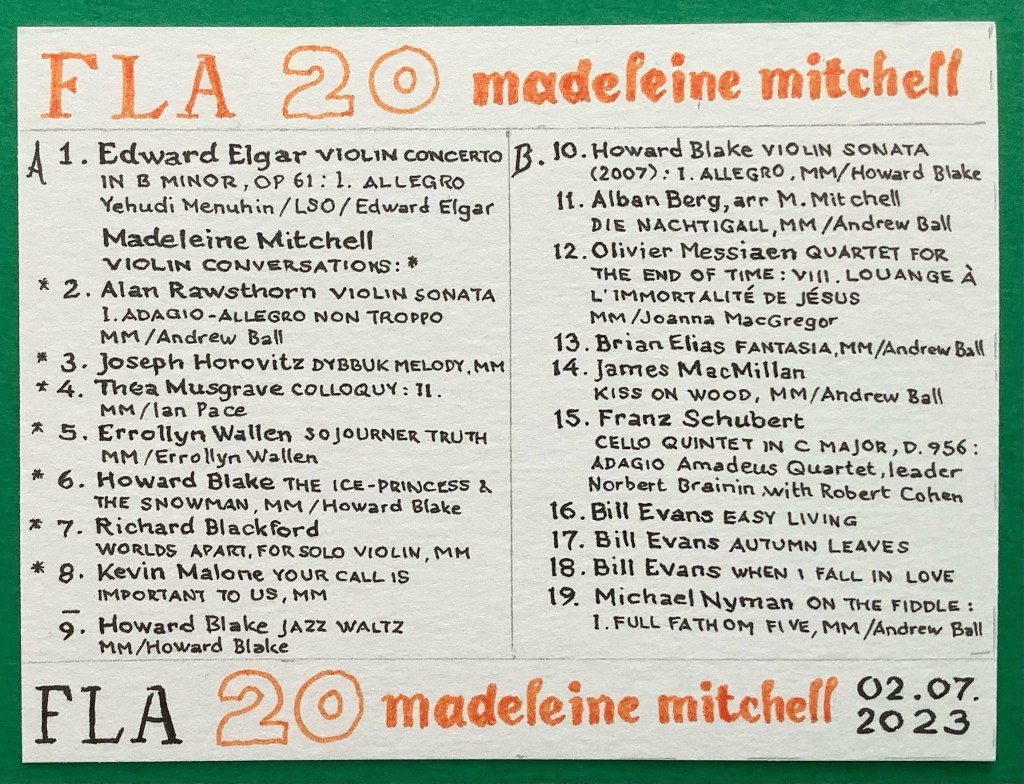
FLA 20: Madeleine Mitchell (09/07/2023)

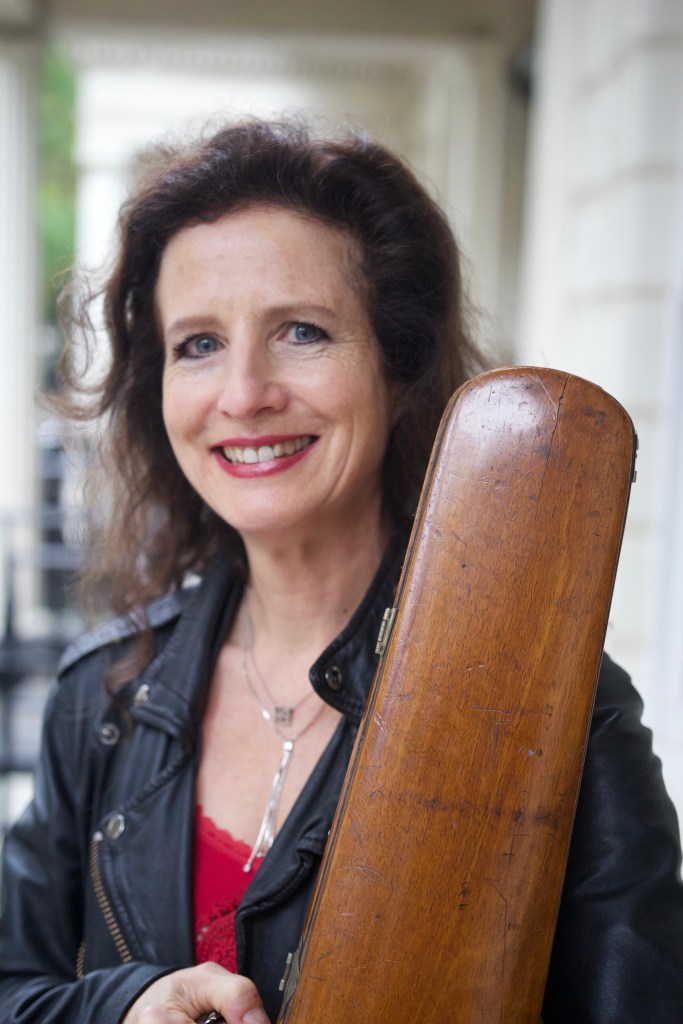
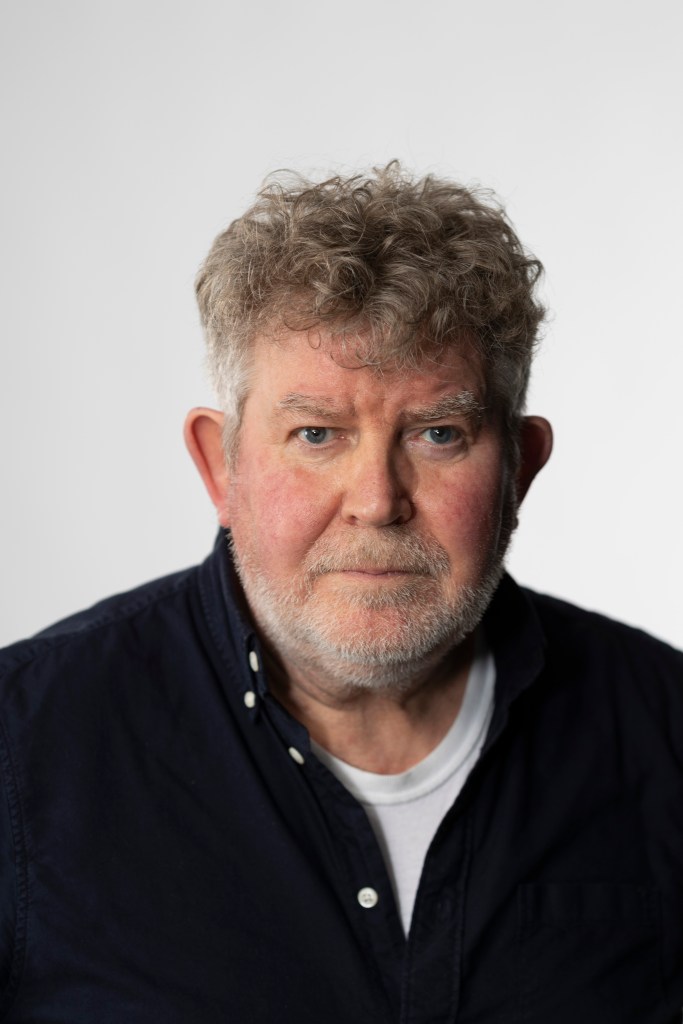
© Rama Knight

I first saw the award-winning violinist Madeleine Mitchell on television in 1979, when I was nine. At the time she was one of the rising stars at London’s Royal College of Music, and the leader of its orchestra. Since then, she has had the most varied of professional careers, initially joining Sir Peter Maxwell Davies’s (1934–2016) ground-breaking group of 6 players, The Fires of London in the mid-1980s, at the same time as winning prizes giving her solo recitals and concerto performances in Europe. She toured and recorded with the Michael Nyman Band, before founding the London Chamber Ensemble in 1992 for a performance of Messiaen Quartet for the End of Time with Joanna MacGregor which they went on to perform at the BBC Proms in 1996 and record. In 2006 Madeleine was asked to put together a chamber music album of the music of William Alwyn for Naxos and in 2019, Madeleine and the LCE released an album of the Chamber Music of the Welsh composer Grace Williams (1906–77), to great acclaim.


Simultaneously, Madeleine’s career as a soloist has been equally illustrious, as concerto soloist and in recitals, on radio and television, and on numerous recordings, including a series of highly acclaimed albums: British Treasures (2003), In Sunlight: Pieces for Madeleine Mitchell (2005), the popular Violin Songs (2007), FiddleSticks (2008, an ACE award-winning collaboration with percussionists ensemble bash), and Violin Muse (2017). In this strand of her catalogue, she has often showcased new, neglected, or previously unrecorded works.


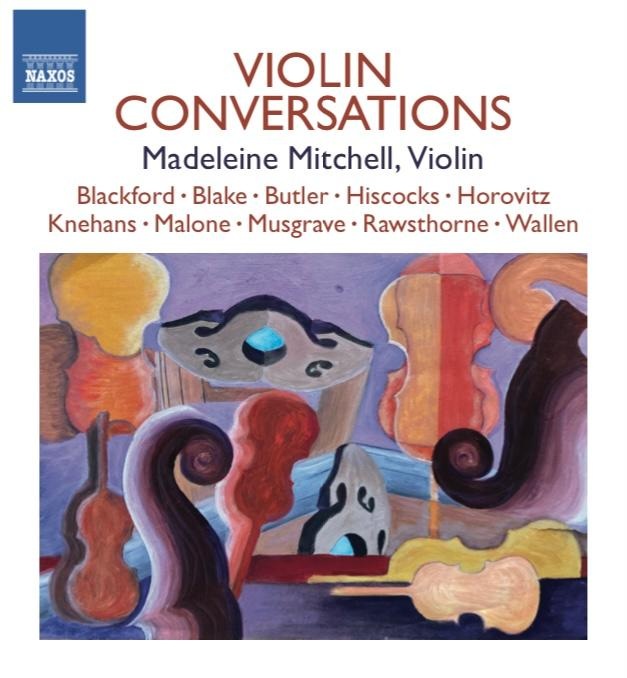
Her terrific new album, Violin Conversations, released by the Naxos label on 23 June 2023, is no exception. It assembles two rarely recorded violin sonatas (by Alan Rawsthorne, and Thea Musgrave) with a programme of approachable newer compositions for violin and piano, by Douglas Knehans (a pupil of Musgrave’s), Errollyn Wallen, Howard Blake, Martin Butler, as well as solo pieces by the late Joseph Horovitz, Wendy Hiscocks and Richard Blackford, and a piece for violin and tape by Kevin Malone. 


I spoke to Madeleine on Zoom on the eve of the album’s release to discuss all of its musical conversations and connections, and to look back and indeed forward at her varied career. She shares her memories of the remarkable Yehudi Menuhin (1916–99), of the creation of her Red Violin Festival – a celebration of this most versatile of instruments – and her surprising connection to the cinematic output of David Bowie. And plenty more besides.


We also discuss a concert she was about to perform with her London Chamber Ensemble, which took place in London on 29 June 2023. The programme comprised Franz Schubert’s Cello Quintet (his only string quintet, written in 1828) – which she tells me she had the honour of performing with Norbert Brainin (1923–2005) – and the newly recovered original version of Herbert Howells’ String Quartet No 3 (In Gloucestershire), written in 1916–20, but long thought to have been lost. (A later version, from 1923, has survived.)


But we begin at the beginning with the question I usually ask: the music she first heard when young. We hope you enjoy our violin conversation.


—-

MADELEINE MITCHELL

I heard just classical music at home. My mother was an amateur pianist and Welsh, so came from the singing tradition. She continued to play the piano in her nineties, and we used to play piano duets, even one of the last times I saw her… when she was 96.


My parents were never pushy or anything like that, but they had the radio on: Radio 3 or the Third Programme as it was called then. I remember at my very ordinary primary school in Essex, standing up in class, and saying, ‘I don’t like Dave Clark Five, I like Mozart!’


I started the piano when I was six and loved it, as I did music theory. When I was ten, I played the Mozart Fantasia in D minor from memory for the whole school. It was an absolute thrill even though my friends weren’t really from that sort of background. My mother said to me, ‘If you played an orchestral instrument, you could have fun making music with the other children.’ And I thought, ‘She’s right and I’d like to play the violin.’ Fortunately, you could learn violin free at school.

—- 

FIRST: EDWARD ELGAR: Violin Concerto in B minor

Yehudi Menuhin, soloist, London Symphony Orchestra, conductor Edward Elgar, 1932 recording

Extract: 1st movement: Allegro

MADELEINE MITCHELL

My dad was an engineer and was very skilled at that sort of thing. He had a reel-to-reel tape recorder, which was also how I heard quite a bit of music. One recording he had on reel-to-reel was the legendary recording from 1932 of Yehudi Menuhin, aged sixteen, playing the Elgar Violin Concerto with Elgar himself conducting – and I was really taken with this. Unlike most of the great composers, who were keyboard players, Elgar was a violinist, and he wrote this work in 1910 for Fritz Kreisler.


Amazingly, my local library, the Havering Central Library had the sheet music for it, so I borrowed it. And at the same library I also found this book that had been discarded, which was called Theme and Variations by Yehudi Menuhin (published 1972). It wasn’t just about music. There were chapters on architecture and Indian music and organic food… It was fascinating.


JUSTIN LEWIS

The impact that Menuhin had is almost impossible to overstate. When I was a child in the 70s, everybody knew who he was. He appeared on Morecambe and Wise, he guested on Parkinson (BBC1, 18 December 1971) – which I would not have seen at the time – but I saw the clip of him and Stéphane Grappelli, much repeated since, on other programmes. (The two made a return appearance on the Parkinson show on 17 November 1973.)


MADELEINE MITCHELL

Playing Tea for Two? Yeah. I loved Grappelli. He would be in my top ten violinists along with Heifetz and Oistrakh and Kreisler. But with Menuhin, I think it’s the emotion in his sound that Menuhin gets – in German they call it “innigkeit – inner feeling and it’s very moving.


I once gave a recital in Russia at the St Petersburg Festival of British Music, and afterwards the agent came up to me and suggested I play the Elgar Violin Concerto. I thought: ‘Wow! First of all, you know it, and secondly, you’re asking me to do it!’ So she sent me off to a place called Samara, one and a half hours east of Moscow by plane, where Shostakovich wrote his Seventh Symphony, and where they all went during the Second World War because it was safer than Moscow.


This was in the February, and I imagined it would be so cold there, but everything was very well heated. There was a very good conductor called Ainārs Rubiķis, who had won the Mahler Competition and the orchestra were fabulous. And after the first rehearsal, the flautist came up to me and she said, in broken English, ‘We didn’t know this piece. We knew the Elgar cello concerto. But we love this violin concerto. It’s so emotional.’ I said, ‘You’ve absolutely got it. That’s exactly what Elgar said. He said, “It’s so emotional, too emotional. But I love it.”’


And that’s what I love. And that’s what Menuhin gets in the music. When I heard his recording, I got the music as a teenager and tried to play the second subject, working out what fingering Menuhin did. Years later, at the Royal College of Music, I had lessons with Hugh Bean (1929–2003), a student of Albert Sammons (1886–1957), who worked closely with Elgar (1857–1934), and when I came to learn the concerto properly, to perform it, in 1993 I asked Hugh Bean if I could  play it for him and I remember him saying, ‘Oh Albert said that Elgar said’, and I thought, I must write this down, this is really important. In fact, Hugh used more simple fingerings in places, in a more English kind of way. Menuhin loved England, he lived in London, founded the Menuhin School and became Lord Menuhin, so he took up those English ways, while there was that Jewish/Russian/American thing going on as well. Fascinating.


JUSTIN LEWIS

These connections and conversations, stretching back into history, are so striking. But you have another connection with Menuhin, because in the 1990s you started a festival, right?


MADELEINE MITCHELL

Yes, towards the end of his life, in 1997, he agreed to be the Patron of my Red Violin festival, [a celebration of the violin and violin playing across different genres] – Gwyll Ffidil Goch in Welsh, a ten-day festival in Cardiff – which was dear to his heart. I was thrilled. I was invited to Menuhin’s studio in central London to record an hour’s interview for the BBC and because he couldn’t make the launch, he did this lovely video message – you can see it on YouTube.

Madeleine Mitchell and Yehudi Menuhin: Red Violin Festival, 1997

MADELEINE MITCHELL

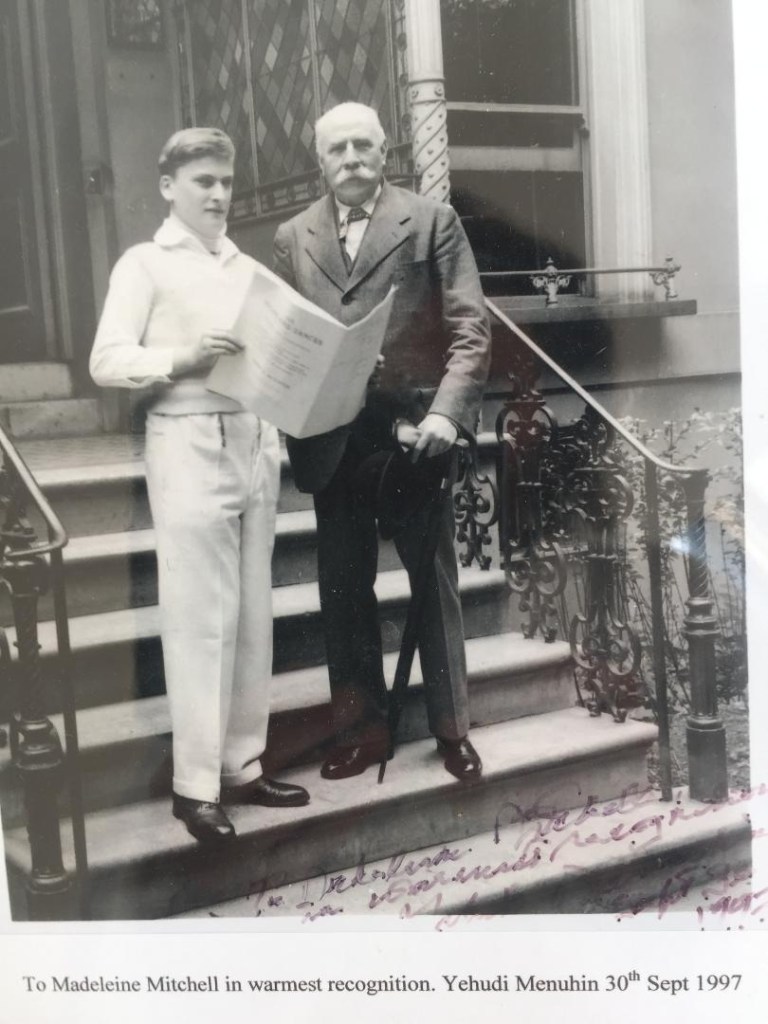
I had with me the photograph of him when he was 16, in 1932, on the steps of Abbey Road [which had in fact only just opened, as EMI Recording Studios]… having just recorded this concerto… And he signed the photograph and then he embraced me. Very touching. So it sort of came full circle, it was a huge endorsement for my creative idea, which I’m keeping going. We’re doing another Red Violin festival in October 2024 in Leeds.

Photo of Yehudi Menuhin, age 16, with Sir Edward Elgar, after their legendary EMI recording of the Elgar Violin Concerto, on the steps of Abbey Road. Signed by Menuhin for Madeleine Mitchell when she interviewed him at his home, for the BBC Radio 2 documentary about her Red Violin festival of which he was the Founder Patron. 

Photograph supplied by MM with Yehudi Menuhin, 1997, Red Violin, credit ITN

JUSTIN LEWIS

Tell me, then, about how you originally came up with the idea for the festival.


MADELEINE MITCHELL

The title came from the titles of the paintings, Le Violon Rouge (The Red Violin) by Raoul Dufy (1948) and Jean Pougny (1919). My mother was more of an artist than a musician and so we were surrounded by her art as well as reproductions of fine paintings at home such as Cézanne, and I collected cards of violin paintings –Picasso, Chagall and Matisse as well as Dufy etc.


I had the idea at Christmas 1994 while all was quiet. I had just played in The Soldier’s TaleL’Histoire du Soldat – by Stravinsky, this tale of the soldier who sells his soul, represented by the violin, to the devil. Obviously the violin is the foundation of the orchestra and it struck me how the violin had inspired not only composers in all sorts of music but also painters and writers etc and I thought how wonderful it would be to have a festival celebrating the violin across the arts.


JUSTIN LEWIS

It’s such a magical, versatile musical instrument. It not only has a different voice in all these different genres of music, but I can remember as a child thinking that a group of orchestral violinists made a sound that felt different from a solo violinist sound. I know all instruments have that ability to some extent, but the violin for me does it more than most. But how did you progress on violin and piano after your early lessons?


MADELEINE MITCHELL

I had shared lessons with a peripatetic music teacher, and was loaned a very ordinary school violin. But when I was eleven, I had one year of private lessons, and was awarded an Exhibition to the Junior Department of the Royal College of Music, and got in on piano first study. But I think they thought I was very promising on the violin. So then I became joint principal until I was eighteen. And when I got a scholarship at the Royal College of Music (on a violin for which my parents paid £20), they said, ‘How are you going to have time for both and the graduate course?’ So at that point I decided to do piano second study, and then I studied viola as well at College.


JUSTIN LEWIS

I was a flautist when I was growing up. I was fascinated by the violin as a child, even though I never learned to play it. It always looked far too complicated! [Laughter] I couldn’t imagine finding the level of coordination that’s required.


MADELEINE MITCHELL

It’s very difficult!


—-

Violin Conversations: Cover painting by Evelyn Mitchell née Jones (1924–2020)

JUSTIN LEWIS

Your new album, Violin Conversations, really does cover a great deal of ground. How did you decide on its running order?


MADELEINE MITCHELL

It happened gradually. In the back of my mind was my duo partner, the pianist Andrew Ball (1950–2022). I really loved playing with Andrew. We made four albums and we did a lot of broadcasts and concerts for twenty years in a whole range of repertoire. He’d play the César Franck Violin Sonata marvellously, but also new music too. A very intelligent, lovely person. And he got Parkinson’s; absolutely tragic, so couldn’t play anymore. It was such a loss. But while he was still alive, I thought, ‘We’ve got this recording of this live broadcast of the Alan Rawsthorne Violin Sonata’ [broadcast, BBC Radio 3, 11 July 1996] which went very well. It’s a good piece, but it’s hardly ever been recorded, as opposed to another recording of a Brahms sonata or the Ravel, two other favourites we did in the same concert.


Meanwhile, I had put Thea Musgrave’s Colloquy into my programme: ‘A Century of British Music by Women’ in 2021, only to discover there was no available recording. It was recorded at the time of the première in 1960 by the performers who recorded it for vinyl, but it’s not available, and it wasn’t reissued. I thought, that’s a strong piece by an important composer, we really ought to record that.


So we’ve got two 20th century classics. In fact, I didn’t actually know until I researched it that the Musgrave and the Rawsthorne were both premiered at the same concert, the Cheltenham Music Festival in 1960, even though the Rawsthorne had been written in 1958, two years earlier.


JUSTIN LEWIS

The Musgrave and Rawsthorne has an extra neat connection with this series, in that the violin soloist for both was Manoug Parikian, whose son Lev was First Last Anything’s very first guest!


MADELEINE MITCHELL

I knew Manoug slightly, but I actually did play with Lamar Crowson, who was the pianist.


JUSTIN LEWIS

Let’s talk about some of the more recently composed works on Violin Conversations, then. Many written specially for you.


MADELEINE MITCHELL

I knew all the composers. I met Richard Blackford in 2003 at the centenary celebration of the Royal College of Music’s Tagore Gold Medals, the award for the most distinguished student of the year. We won it in different years, but that’s how we met and became friends. During the first lockdown in 2020, when I went back to completely solo violin – there was nothing else you could do – I agreed to contribute to a charity album, Many Voices on a Theme of Isolation, to help raise money for Help Musicians UK and I asked Richard, who sure enough, wrote me, very quickly, a solo violin piece called Worlds Apart, to pay homage to those people who were not able to be together because of the lockdown. It’s a haunting little piece. Three minutes. But I’ve re-recorded it for Violin Conversations, to get better quality.


A lot of the pieces were gifts. Martin Butler also wrote me a piece that grew out of lockdown, because composers were quite active during that period. So he wrote me Barcarolles; it just appeared out of the blue as a present, and he lives near the sea in Sussex, so the wateriness of it… it all goes together.


JUSTIN LEWIS

Errollyn Wallen’s Sojourner Truth also has a connection with lockdown, doesn’t it?


MADELEINE MITCHELL

I met Errollyn twenty years ago. We became friends, I’d see her from time to time, and about three years ago, she wrote me a piece, Sojourner Truth, commissioned with a grant from what was the RVW Trust, now the Vaughan Williams Foundation. He was a very generous composer, who bequeathed a lot of his estate to setting up this foundation for other British composers, for new music, and for neglected composers – like Grace Williams (one of his former students).


I went to stay with Errollyn at her lighthouse recently in the north of Scotland, and when I gave the première of Sojourner Truth in March 2021, she was in her lighthouse during lockdown. I was able to rehearse with a pianist in London, two metres apart, while Errollyn was on FaceTime, hearing it and telling me things. So it was really wonderful to finally meet up with her and play it with her. It took a bit of persuading because she said she was a bit out of practice, but you know, it was her particular style of a jazzy singer-songwriter. She probably wrote it at the piano and then she was able to say things to me – ‘take more time here’, or whatever it was. I found it really interesting.


JUSTIN LEWIS

I was watching the video conversation you two had about Sojourner Truth, in which you discuss one of the greatest things about commissioning a new composer – you can directly talk to the composer!


MADELEINE MITCHELL

It’s a no brainer, isn’t it? It’s wonderful! You can just ask some things, and they’ll tell you things, and they’re very happy to do so. And I’m so pleased to have been able to commission Errollyn Wallen, to celebrate this extraordinary woman, Sojourner Truth (c. 1797–1883), the American abolitionist. Who I had not heard of. What an extraordinary life. You know, it’s great that that she will live on in perpetuity in the title of that piece and on this recording.

Errollyn Wallen and Madeleine Mitchell perform and discuss Sojourner Truth.

JUSTIN LEWIS

I’m sure one reason I’m increasingly immersed in classical music more profoundly, admittedly belatedly in life, is the way that it now feels much more inclusive, in a way it didn’t used to. How have you seen this change over your professional career, that awareness of diversity?


MADELEINE MITCHELL

It’s got a lot better, for sure. There’s much more focus on it on it now. With women composers, it’s very important to still retain the quality, so it’s not just tokenism for the sake of it. But it’s good that composers like Grace Williams, who were rather self-critical and didn’t push themselves forward and didn’t really have a powerful publisher, are now getting the recognition that they deserve.


JUSTIN LEWIS

Tell me about some of the other composers on Violin Conversations.


MADELEINE MITCHELL

Joseph Horovitz, who died last year, was a brilliant lecturer in my first year at the Royal College of Music, who became a friend. Dybbuk Melody was a piece he gave me on a piece of manuscript, but it hadn’t been recorded.


JUSTIN LEWIS

Wasn’t it written for a production of S. Ansky’s The Dybbuk (BBC1, 24 February 1980)?


MADELEINE MITCHELL

It was, you’re absolutely right, it was for the closing credits. A very Jewish piece. So I had that. Wendy Hiscocks, the Australian composer, had these two pieces which hadn’t been recorded. One is Caprice – in a slightly Vaughan Williams-y idiom, if you like. There’s Kevin Malone’s Your Call is Important to Us, a piece for violin and tape. And while Thea Musgrave is a sort of granite-like grit in the oyster in the middle of the album, you have the spacious piece by her former student Douglas Knehans (b. 1957), Mist Waves, which he wrote for me in 2019.


JUSTIN LEWIS

And to round off, there’s a collaboration with Howard Blake. There’s quite a story behind how you first met him!


MADELEINE MITCHELL

I met Howard in 1982, the year that he composed The Snowman, so I was very young then. I was invited to audition for the part of the young violinist in the film The Hunger, with David Bowie and Catherine Deneuve. I went to the home of Tony Scott, the film’s director and Howard Blake was there as the Musical Director. Unfortunately, I wasn’t quite young enough, or didn’t look quite young enough to play the 13-year-old girl in the film. But Howard really liked my playing at the audition, so unbelievably, he invited me to record two solo tracks at the legendary Abbey Road Studios, for the film. So although I’m not visually in the film, my playing is: the violin part of the slow movements of the Lalo and Schubert E flat piano trios. Just me and Howard in this huge Studio 1 at Abbey Road. It was incredible.

Years later, I saw Howard again at the Chester Music Christmas party, and he said, ‘I’ve reworked my Violin Sonata, which I wrote years ago. Would you like to come and try it?’ So I did and we worked well together. His music has a lot of jazz influence, which appeals to me, and we ended up making an album of this Violin Sonata for Naxos [2008], along with his Penillion, and an arrangement he made for us of his of Jazz Dances for violin and piano.  


We then did lots of concerts together. And at lunch, he’d tell me all these stories, how he was in the studios in the 70s, playing for Eartha Kitt. And you know, he has a very particular style of playing the piano. He arranged Walking in the Air for me as well, in 2010, but then he came up with The Ice Princess and the Snowman, a really beautiful piece, and we originally did it for a Classic FM live video at St John’s Smith Square, where he talks about it as well:

The Violin Conversations album is mostly new music, but what strikes me – compared to 40 years ago – is it’s much wider and broader, different styles being more readily accepted. So, Howard Blake’s is unashamedly tonal romantic music, and the Horovitz Dybbuk Melody and the Wendy Hiscocks Caprice – it’s all tonal music really. There was a time when all that was shunned and it was out of fashion… But what’s happened during those four decades is there’s a wider brief for contemporary music where all sorts of things are accepted: violin and tape, electronics, as on the Kevin Malone, or something that you might say is quite traditional – Errollyn’s piece is based on a slave song – but written very recently.


JUSTIN LEWIS

One of the best things about the digital world is how we can connect up all this material. New music, or even just previously unheard music, is easier to find.


MADELEINE MITCHELL

What occurs to me, joining up the dots of this conversation: Yehudi Menuhin seemed quite an elderly, ethereal sort of person, but actually he really had his finger on the pulse. He said to me – and this was 30 September 1997, just before the Red Violin festival: ‘Young people have a short attention span. It’s good what you’re doing because you know you’re giving them the taste of jazz and folk fiddle and classical, and pictures.’ And this was 1997, before we all had mobile phones. With this album, there are four pieces that are three minutes long. People can give it a try. It doesn’t require a huge investment, you know. Richard Blackford – three minutes; Wendy Hiscocks’ Caprice – three minutes. Howard’s piece is four minutes.


JUSTIN LEWIS

We’ve all got four minutes to spare to listen to something.


MADELEINE MITCHELL

And one movement of the Rawsthorne, even. I mean, I think it’s a spectacular opening. That wonderful cluster on the piano, very dramatic. And then this soaring violin line. It’s very arresting. I hope people will respond to it.


JUSTIN LEWIS

Obviously you’ve been doing commissions from contemporary composers a long time, from the mid-80s, I think. How does that commissioning process work? Do people come to you; do you go to them?


MADELEINE MITCHELL

It’s a mixture. I wasn’t just a kind of virtuoso violinist when I was growing up, I was an all-round musician in lots of ways: I loved music theory, I loved harmony, and I would write little pieces myself when quite young, thinking maybe I’d like to be a composer. Then the violin took over, and I just loved the expressivity of its sound.


But composing was in the back of my mind somehow. In the early 1980s I was asked to lead the contemporary ensemble at the Aspen Music Festival in Colorado when I had a fellowship there as a student, so I met Philip Glass and Ned Rorem there. And when I came back from America, I was invited to audition for a position in Sir Peter Maxwell Davies’s very prestigious group, the Fires of London. It was a very tough audition. Two rounds. I had to play viola, as well, and had to play from memory a big violin solo of one of his pieces: Le Jongleur de Notre Dame (1978). So I was invited to join the Fires of London, and it was a baptism of fire.


JUSTIN LEWIS

What do you think you learned from Peter, in terms of ensemble playing as well as solo playing? Because that must have been an incredible thing to be doing, those sorts of performances.


MADELEINE MITCHELL

It was, it was. It was absolutely extraordinary. I really liked Max – we always used to call him Max. He asked me to look over the manuscript of the violin concerto he was writing for Isaac Stern and I stayed friends with him until the end of his life; he always used to call me ‘love’ and he even signed my daughter’s trumpet music to his Sonatina, not just with a signature but a message thanking her for playing it!  But one of the first things I did with him was a five-week tour of the States with The Fires of London in 1985 for Columbia Artists Management, with Max conducting. We started off in Toronto, we sold out Lincoln Center. We sold out UCLA in Los Angeles, we played at Kennedy Center in Washington. We were on the cover of Time magazine. We had receptions with the British Ambassador… It was really amazing.


Some of the music was absolutely fiendish to play; I remember the cellist in the group said to me, ‘I just look at the music and work out where the beats go’, because it was very complex. It was a sort of intellectual challenge, which I did actually quite enjoy, just to work out how it fitted together.


And Max had these amazing eyes, like a fire, talking of Fires of London, now I come to think of it. He may not have been a born conductor, but just to have him there – there was something about the energy. And of course I was the new girl, and I was joining this incredible group. The clarinettist in the group David Campbell remained friends with me, and I invited him to join me for my first recording, which was the Messiaen Quartet for the End of Time, with Joanna MacGregor (piano), and Christopher Van Kampen, marvellous cellist, who sadly died.


Meanwhile, I’d won some competitions and was very busy, going off to play the Brahms Violin Concerto for the first time. All this was happening at the same time. But it was really through Max that I met composers, including Brian Elias who wrote a piece for the Fires called Geranos (1986), for the six of us.


One competition I won was the Maisie Lewis Young Artist Award from The Worshipful Company of Musicians which gave me a South Bank recital and as well as playing Brahms and Bartok I thought it’d be good to commission a piece, so I commissioned Brian Elias for my début and his ‘Fantasia’ has worn well. I met other composers like James MacMillan, who after I commissioned a piece – Kiss on Wood, wrote me a second piece as a present – A Different World (both on the album In Sunlight: Pieces for Madeleine Mitchell, along with Elias Fantasia). And I suppose it’s snowballed, because I’ve met lots of composers and they come to me, and sometimes, out of the blue, they write me pieces as presents.


JUSTIN LEWIS

What new pieces are you planning to perform or record next?


MADELEINE MITCHELL

The composer George Nicholson heard me play at Sheffield University in 2019, and wanted to write me a piece, which I thought would be a short piece. But no! It’s a seven-movement Suite for solo violin, which I’m premiering in November at the St Andrew’s Music Festival in Sheffield. I’ll have to work at that – it’s a big piece. And there have been a couple of concertos: Piers Hellawell wrote Elegy in the Time of Freedom me in 1989 which I premiered at the Queen Elizabeth Hall in 1992 and Guto Pryderi Puw’s Violin Concerto, Soft Stillness, which I recorded with the BBC National Orchestra of Wales in 2016.


But coming back to this business about wanting to be a composer, I like to do arrangements. I don’t have time or inclination to compose – I’m too busy with playing – but I do like arranging, it’s the next best thing. And I also like creative projects. I won a Royal Philharmonic Society Enterprise Award for my proposal to combine art with music in an intelligent, relevant way with specific reference to the Victoria & Albert Museum’s exhibition of Carl Fabergé (1846–1920), From Romance to Revolution. My quartet gave the performance in January 2022, coming out of lockdown, and I made a film, with the images of Fabergé (courtesy of Wartski, Chairman Nicholas Snowman OBE), combined with music of the time and place.


Fabergé came to London in 1903. And then, of course, there was the Revolution in 1917. So we started off with the Russian music from St Petersburg – Borodin and contemporaries – but then I remembered that there was this Herbert Howells’ Luchinushka, which is a Russian Lament from 1917. It’s originally a violin and piano piece, which I’d played a lot all over the place, Sri Lanka, California… And I got permission from the Howells Trust to arrange it for string quartet. So that’s on the film, it’s on YouTube, the Fabergé film. They heard that, they liked it, and they’ve asked me to record that now with the original Howells Quartet no.3 we just premiered with my London Chamber Ensemble. So that’s my next project…

Madeleine Mitchell on Music & Art

V&A Fabergé and Anglo-Russian Quartets, London Chamber Ensemble

(Fabergé images in the above film courtesy of Wartski, Chairman Nicholas Snowman OBE)

Herbert Howells: Luchinushka (arrangement)

Madeleine Mitchell live with Rustem Kudurayov, piano in Firenze

JUSTIN LEWIS

And speaking of Herbert Howells, there’s been quite an exciting find of one of his works! Tell me about that.


MADELEINE MITCHELL

Yes, we have been invited, as the London Chamber Ensemble – which lately is really focused on the core string quartet – to give the première performance and recording of Herbert Howells’ String Quartet No. 3, In Gloucestershire, which was thought to be lost.


JUSTIN LEWIS

The score was thought to be lost?


MADELEINE MITCHELL

It was left on a train in 1916 and never recovered – and he rewrote it some years later. But it’s not the same; The third movement is most similar, but the rest is really different. The early string parts were found recently, and I was very pleased that the Howells Society got in touch and asked, ‘Would your group like to do this?’ Yes, of course!


—-

LAST: AMADEUS QUARTET: FRANZ SCHUBERT: String Quintet in C Major, D.956

Extract: II. Adagio

MADELEINE MITCHELL

Coupled with the Howells première, we’ll also be playing the Schubert Cello Quintet. The concert is for the Schubert Society of Great Britain, a little bastion of culture in London W2, near Paddington. [JL: The concert took place on 29 June 2023, at St James’s Sussex Gardens. It was a superb afternoon of music, and it was a privilege to be there.] The Cello Quintet is interesting because, years ago, I went to the International Musician Seminar as a young professional violinist, and the idea was that young musicians would spend a week playing with veteran musicians. I had the honour of working next to Norbert Brainin, the legendary leader of the Amadeus Quartet, and in a trio with the cellist Zara Nelsova.

Madeleine Mitchell with Norbert Brainin, Prussia Cove, 1993

I loved playing with Norbert – we got on like a house on fire – and years later I was so honoured that he asked me to be the second violinist, to join him for his 80th birthday concert at the Wigmore Hall, which was sold out. He oozed music, he had such warmth and sparkle. I love that group’s playing, and although Norbert wasn’t born in Vienna, the other three members were, and they’ve got that unique Viennese spirit. I find when some of the groups play that piece now… it’s a bit fast, it doesn’t quite have the space to breathe and sing.


But people have chosen the second movement of the Schubert Quintet for Desert Island Discs, with Norbert Brainin, because it’s so special. So I wanted to choose that recording as a recent thing I’ve been listening to because we’ve just been performing it.


—-

ANYTHING: BILL EVANS: Everybody Digs Bill Evans (NOT2CD299 – Not Now Music Limited compilation 2009)

Extract: ‘Easy Living’

MADELEINE MITCHELL

I don’t know where this comes from because I don’t think it was particularly part of my home background. But I really got into jazz, I loved jazz when it wasn’t fashionable and I was a member of Ronnie Scott’s and the 100 Club when I was in my twenties. I love Grappelli, of course, but I particularly like piano jazz. You obviously listen to a lot of classical music, and for my leisure and recreation, I go to art galleries and the opera, but I also like to listen to jazz, so maybe on a Friday night I’ll put on my favourite, which is this double album from Bill Evans, Everybody Digs Bill Evans. My daughter will say, ‘Oh, not again, you know, I’ve got this!’ But then I made a Bill Evans playlist on Spotify.


JUSTIN LEWIS

Which you sent me. I’ve been enjoying that.


MADELEINE MITCHELL

Autumn Leaves and When I Fall in Love. I can’t put my finger on why I like it so much. It’s subtle. I love the chords. I love the sound. It’s sophisticated. It’s quite romantic as well. I play a lot of new music, but actually I’m a real romantic. I absolutely love playing Brahms and Bruch and maybe that’s what I like about this music I’ve selected. I started as a pianist, I really like the piano so maybe that’s a contributing factor.


—-


MADELEINE MITCHELL

Another composer who relates to several pivotal moments in my career is Alban Berg. I first heard his Die Nachtigall, from his Seven Early Songs, on an LP which was chucked out of the same Romford library as the Menuhin book. It was an anthology of Pierre Boulez favourites, and it included this, performed by Heather Harper with an orchestra. Years later, in 1992, I arranged this for my début at the Huddersfield Festival of Contemporary Music, and my first concert with Andrew Ball for a late-night recital programme I devised about Night Music. The lighting was by Ace McCarron, the original lighting designer for The Fires of London, then Music Theatre Wales.


And there’s another Fires of London connection! Max and Harrison Birtwistle – two of the Manchester Five – were influenced by the Second Viennese School, of which Berg and Arnold Schoenberg were the key players, with Anton Webern. Max and Harry originally co-founded The Pierrot Players in 1967 – with the same instrumentation as Schoenberg’s Pierrot Lunaire (which happened to be the first piece I ever performed for the BBC), plus percussion, which became The Fires of London in 1971.  


But also, the first opera I ever saw was Berg’s Wozzeck at Covent Garden when I was sixteen; a friend from my local Youth Orchestra had just got a job in the Royal Opera House violin section and invited me. I was bowled over by it and I have loved opera ever since.


—-


JUSTIN LEWIS

You were in the Michael Nyman Band for a while, weren’t you?


MADELEINE MITCHELL

That’s right. A couple of years after the Fires of London disbanded in 1987, I was asked if I would join Music Theatre Wales Ensemble as their principal violinist because it sort of naturally grew out of the Fires in a way. One of the pieces we did was Michael Nyman’s The Man Who Mistook His Wife for a Hat in Swansea, at Taliesin Arts Centre. Michael came all the way to that theatre to hear the performance and he said he liked my gutsy playing, and asked if I would come and play in his band. So I did, for a couple of tours, and got to know him really well, and then he arranged three pieces for me called On the Fiddle, which I recorded for the In Sunlight album. And then he wrote two more pieces for me, Taking It as Read on my Violin Muse album.


JUSTIN LEWIS

You need to write a memoir to cover this career!


MADELEINE MITCHELL

I’ve never specialised. I don’t like the idea of musicians or people being put in boxes. You know, you tend to get known for the premières because they’re more newsworthy than you playing your favourite Beethoven Sonata (for me no.10 opus 96) – but that sonata is the one which is what inspired Geoffrey Poole to write his Rhapsody for me. It all came out of a mutual love of that piece and wanting to play it together.


JUSTIN LEWIS

I think I saw you on television when I was a child. Could you have been on the schools programme, Music Time (BBC1, c. 1979)? Which I think Chris Warren-Green did as well.


MADELEINE MITCHELL

Yes, it’s very interesting. A lot of people saw that because it went out live. I was a student, and I was asked by the Royal College of Music to go and do this. And I remember exactly what I had to play, and exactly what I had to say. I had to play a solo violin bit from Saint-Saëns’ Carnival of the Animals, just a few bars, and I had to say, ‘I can make sounds which slide up and down.’


JUSTIN LEWIS

Oh yes, the donkey. [Carnival of the Animals, Part VIII. People with Long Ears]


MADELEINE MITCHELL

I wasn’t nervous about the playing, but I was a bit nervous about the words because it was going out live and I wasn’t used to doing it. I remember going into a telephone box to practise my lines to make sure I had them fluent. When I became a professional and I would start talking to audiences, they would give me feedback that they really liked that. And gradually I became more and more confident and fluent about the speaking so that I’ve got to love talking to audiences.


When I was in charge of the Graduate Solo and Ensemble Performers at the Royal College of Music, I instigated seminars where I would coach the students about the whole performance including walking on, bowing and speaking to the audience. Sometimes they didn’t have English as a first language, but I’d say, ‘practise speaking slowly and clearly’, just as my parents used to say to me before I went on the radio. It is very important to do that.


Sometimes if you’ve started playing at an early age and grown up with it, you forget that some people don’t have that, and it’s lovely to help them get into it, so they have a human connection. Even if they don’t know how to play the violin or they don’t ‘understand’ the music, it doesn’t matter because, as I always say to them, you just have to listen. You don’t have to be able to read music or know the history, because if you’re open to it, it’s about being moved by music, isn’t it? And I feel if that’s what I can do for even one or two people in an audience, then I’ve done a good job.


JUSTIN LEWIS

Yes, I know you can’t always talk to the audience in a concert, but I came to see you and Nigel Clayton play at St John’s Smith Square at Easter, and I really loved the section where you paid tribute to Nicholas Snowman, who had just died, as you introduced the piece written for you in his memory by Michael, Lord Berkeley.


MADELEINE MITCHELL

That audience at St John’s Smith Square was lovely. Straight away, there was a feeling of warmth, and excitement at times. I find often the end of the concert, with the encore, is the best bit.


JUSTIN LEWIS

But I find classical music easier to absorb now. It might just be because I’m older, but I used to feel – maybe incorrectly – there were a lot of formalities, and I feel there aren’t quite as many now. It feels more accessible.


MADELEINE MITCHELL

Maybe now you can go to concerts again you don’t take it for granted. I remember when I premiered Kevin Malone’s Your Call is Important to Us (for violin and tape) which he’d written me, in May 2022, it was soon after the second lockdown and it was such a joy and such a relief to walk out into that concert hall at Manchester University and see a sea of people’s faces. I kept going during lockdown with livestreamed concerts, but it just isn’t the same at the end of a livestreamed concert when you’ve given your all, but there’s no applause and you can’t see anyone. People can send you comments and things, but it isn’t the same. I think that performing is a three-way process.


JUSTIN LEWIS

I found this really great quote from an American newspaper. It was around the time of The Fires of London touring the States in ‘85. And Peter Maxwell Davies describes this relationship between the composer, the performer and the audience, and how vital that is, no matter how the piece is played.


MADELEINE MITCHELL

I always say this to people when they come up to me after concerts and they say, ‘Oh, I wish I’d kept up with the violin when I was a child…’ – that sort of thing. They’re a bit disparaging about themselves and I say, ‘Look, you’re really important. You’re the audience.’ The audience is a very valued one-third of the triangle, if you like: the composer at the top, then the performers as the conduit, the channel, and the audience not only receiving the music, but also giving back. You can pick up the energy of an audience. It’s very palpable. It’s an exchange.

—-

With Madeleine once more as Artistic Director, The Red Violin festival was again staged to much acclaim, over five days in Leeds, in October 2024.

For further news, information and links on Madeleine’s career and upcoming concerts, visit her website and sign up to the mailing list: www.madeleinemitchell.com.

Madeleine is performing at Leighton House on Tuesday 24 June 2025, London W14, with Julian Milford, piano and Kirsten Jenson, cello. They will be playing Brahms’ Piano Trio in B major op.8, Mel Bonis’s Soir – Matin for piano trio, and salon pieces by Sir George Dyson. For tickets, click here: https://www.eventbrite.co.uk/e/madeleine-mitchell-friends-concert-leighton-house-246-tickets-1233078804899

Madeleine’s Violin Conversations was released on the Naxos label in June 2023. In August 2023, shortly after its release, Ivan Hewett gave it a glowing review in the Telegraph. Read here: https://www.madeleinemitchell.com/is-madeleine-mitchell-the-future-of-classical-music

You can follow Madeleine on Twitter at @MadeleineM_Vln, and on both Instagram and Threads at @madeleine_mitchell_violin. She is on Bluesky at @madeleinemitchell.bsky.social.

Subscribe to her youtube channel at https://www.youtube.com/@ViolinClassics

And her Facebook page is here:  https://www.facebook.com/MadeleineMitchellViolinist

FLA PLAYLIST 20

Madeleine Mitchell

(For the time being, this site and project uses Spotify for the conversation playlists, but obviously I disapprove that Spotify doesn’t pay artists and composers properly, and other streaming platforms are available, as are sites to buy downloads and buy recordings. For consistency, you can also listen to the selections via YouTube (where available), and links are provided in each case, below.)

Track 1: EDWARD ELGAR: Violin Concerto in B Minor – 1st Movement

Yehudi Menuhin, London Symphony Orchestra, conducted by Edward Elgar: https://www.youtube.com/watch?v=tJQVXr6jvBc


Track 2: ALAN RAWSTHORNE: Violin Sonata: I. Adagio – Allegro non troppo

Madeleine Mitchell, Andrew Ball piano: https://www.youtube.com/watch?v=muwwopo3Ays


Track 3: JOSEPH HOROVITZ: Dybbuk Melody

Madeleine Mitchell: https://www.youtube.com/watch?v=tIxKggZNaTQ


Track 4: THEA MUSGRAVE: ‘Colloquy’: II.

Madeleine Mitchell, Ian Pace piano: https://www.youtube.com/watch?v=mrdn49VcE18


Track 5: ERROLLYN WALLEN: Sojourner Truth

Madeleine Mitchell, Errollyn Wallen piano: https://www.youtube.com/watch?v=r1391EMDUCI


Track 6: HOWARD BLAKE: The Ice-Princess and the Snowman, Op. 699

Madeleine Mitchell, Howard Blake piano: https://www.youtube.com/watch?v=4mul3zdJnds


Track 7: RICHARD BLACKFORD: Worlds Apart for solo violin

Madeleine Mitchell: https://www.youtube.com/watch?v=MT5gSlQRsbQ


Track 8: KEVIN MALONE: Your Call is Important to Us for solo violin and tape

Madeleine Mitchell: https://www.youtube.com/watch?v=MzTFMVn4PNE


Track 9: HOWARD BLAKE: Jazz Waltz

Madeleine Mitchell, Howard Blake piano: https://www.youtube.com/watch?v=WXR_76y6UF4


Track 10: HOWARD BLAKE: Violin Sonata, Op. 586 (2007 Version of Op. 169): I. Allegro

Madeleine Mitchell, Howard Blake piano: https://www.youtube.com/watch?v=75JUIJUQdek


Track 11: ALBAN BERG: Die Nachtigall (arr. M. Mitchell) from Violin Songs album Divine Art

Madeleine Mitchell, Andrew Ball piano: https://www.youtube.com/watch?v=KmpX0BkPCtQ


Track 12: OLIVIER MESSIAEN: Quartet for the End of Time:

VIII. Louange à l’Immortalité de Jésus

Madeleine Mitchell violin, Joanna MacGregor piano: https://www.youtube.com/watch?v=3pJ9qIZxIfQ


Track 13: BRIAN ELIAS: Fantasia [from In Sunlight: Pieces for Madeleine Mitchell NMC]

Madeleine Mitchell, Andrew Ball piano: https://www.youtube.com/watch?v=rbcNnw-A1yg


Track 14: JAMES MACMILLAN: Kiss On Wood

[from In Sunlight: Pieces for Madeleine Mitchell NMC]

Madeleine Mitchell, Andrew Ball piano: https://www.youtube.com/watch?v=9JzsTA5OKAE


Track 15: FRANZ SCHUBERT: Cello Quintet in C Major, D.956: 2. Adagio

Amadeus Quartet, leader Norbert Brainin with Robert Cohen, cello: https://www.youtube.com/watch?v=GvtvfolsClM


Track 16: BILL EVANS: Easy Living: https://www.youtube.com/watch?v=T0ZwAJAgBFM

Track 17: BILL EVANS: Autumn Leaves: https://www.youtube.com/watch?v=r-Z8KuwI7Gc

Track 18: BILL EVANS: When I Fall in Love: https://www.youtube.com/watch?v=adPpG0Dnxeg

Track 19: MICHAEL NYMAN: On The Fiddle: I. Full Fathom Five

Madeleine Mitchell, Andrew Ball piano: https://www.youtube.com/watch?v=OoWywOdPYHY

FLA 19: Moray Hunter (25/06/2023)

It’s forty years since Moray Hunter’s career as a writer for television and radio got underway, with his writing collaborator John Docherty (later known as Jack Docherty*). The pair were already part of the Edinburgh sketch troupe The Bodgers, along with Pete Baikie and Gordon Kennedy, who all graduated to their own Radio 4 series in 1985.


With the addition of two more writer-performers, Morwenna Banks and John Sparkes, the sextet formed a company to make television’s Absolutely (Channel 4, 1989–93), establishing a cast of memorable, quotable and occasionally grotesque characters: Little Girl, Don and George, Frank Hovis, Stoneybridge Town Council, The Nice Family, Denzil and Gwynedd, and Moray’s own star turn, the pedantic but cheerful Calum Gilhooley.


As Absolutely Productions diversified into numerous spin-off projects and nurturing talents including Armstrong & Miller and Dom Joly’s Trigger Happy TV, Moray continued writing with John/Jack Docherty on mr don and mr george, The Creatives and The Cup. The Absolutely team minus Docherty reformed in 2013 for three more radio series, while Moray has devised and scripted four series of Alone for Radio 4, starring Angus Deayton.


I’ve been a fan of Moray’s work for, well, 40 years, so was delighted he agreed to participate in First Last Anything, one morning in June 2023. I hope you enjoy our chat.


[*In 1988, John Docherty became Jack Docherty for professional performing purposes due to Equity union rules (there was already a performer called John Docherty), but Moray calls him John throughout our conversation. Fellow Absolutely collaborator John Sparkes will be referred to by his full name to avoid any confusion.]


—-


MORAY HUNTER

My dad sang in the church choir and did light opera, amateur opera with a company called Southern Light Opera Company in southern Edinburgh. He was good, he was usually the comedy foil. They’d do a show once a year in the King’s Theatre, and it was always sold out because it was filled with family and friends.


I’ve not really followed any interest in musicals or light opera, but I did love those shows at the time, usually great romantic stories: The Desert Song, and then My Fair Lady and The Merry Widow. So those records were in the house, and maybe something like ‘100 Best Classical Tunes’? Unlike those Top of the Pops compilations you used to get back then, these were played by proper people. [Laughter]


—-

FIRST: BENNY HILL: ‘Ernie (The Fastest Milkman in the West)’ (Columbia Records, single, 1971)

JUSTIN LEWIS

The Christmas number one of 1971, and your first single.


MORAY HUNTER

Okay. I was feeling slightly awkward about this one…


JUSTIN LEWIS

I watched him as a kid a lot because he did TV parodies and I loved anything like that. He was clever on that front in the 50s and 60s with television techniques and playing all the parts in the sketches. 


MORAY HUNTER

Yeah, although there was always that end-of-the-pier thing going on, and the scantily-clad women got harder to defend. But ‘Ernie’ did make me laugh.


JUSTIN LEWIS

Strange to think now that ‘Ernie’ was much played by Junior Choice.


MORAY HUNTER

Ignoring the double entendres. Was Junior Choice hosted by Ed Stewpot Stewart? One week, he read out this request from Edinburgh, a message from a guy in Pilton for another chap in Drylaw nearby. These two gangland areas basically, with young boys running around in gangs. And the message was: ‘I’d like you to play “This Town Ain’t Big Enough for Both of Us” by Sparks.’ A threat on the airwaves – and Stewpot was like, ‘What a lovely message.’ [Laughter]


JUSTIN LEWIS

‘Ernie’ is kind of a Western pastiche, isn’t it? Certainly in its accompanying promo.


MORAY HUNTER

Yeah, that was kind of ahead of its time as well, the video.


JUSTIN LEWIS

Novelty records back then all seemed to be story songs and someone dies at the end. They all seemed to do that. Well… okay, ‘Lily the Pink’ by the Scaffold did it as well. That makes two. [Laughter]


[I thought of other examples afterwards. ‘Paddy McGinty’s Goat’. ‘The Old Lady Who Swallowed A Fly.’ ‘Hole in the Ground’ by Bernard Cribbins.]


—-


MORAY HUNTER

We got an Alba stereo in 1971 – it was like a Dansette, but a bit bigger than that with one separate speaker. Our parents got us The Best of Andy Williams and The Best of the Seekers. But we had some money put aside and we could go out and get our own records.


I had Bridge Over Troubled Water. I bought the lyrics book for that which had the chords – like ‘El Condor Pasa’, which I wasn’t particularly a fan of, but it was quite an easy play for a guy learning guitar. ‘The Only Living Boy in New York’ is probably my favourite track on that. The harmonies, just beautiful. That great story about that song when Art Garfunkel went off to film Catch 22, and Paul Simon was a bit pissed off: ‘What am I doing? I’m here on my own. And why aren’t you here?’


JUSTIN LEWIS

The cracks in the relationship, I guess.


MORAY HUNTER

They didn’t last that much longer.


JUSTIN LEWIS

Obviously they did the odd gig after that. But before the album was even released, they knew they were done.


—-


MORAY HUNTER

I love singer-songwriters, and the acoustic guitar. That’s been the basis of everything for me musically, really, and James Taylor, with Mud Slide Slim and the Blue Horizon, was one of the first for me.


JUSTIN LEWIS

He’s interesting, because he’d signed to the Beatles’ Apple label initially, and then became the biggest singer-songwriter of the time. Has everyone covered ‘You’ve Got a Friend’ now?


MORAY HUNTER

Not even his song, of course! It’s Carole King! It’s his ex, his first ex-wife, so…


JUSTIN LEWIS

Yeah, who plays on the record.


MORAY HUNTER

And then recorded it on Tapestry. But I don’t think she released it as a single.


JUSTIN LEWIS

Another early purchase: Piledriver by Status Quo, from 1972. I don’t think I had ever actually heard a Quo album from start to finish, apart from greatest hits sets. This one fully establishes them with the 12-bar boogie era, after their first couple of years in psychedelia. Apparently they heard ‘Roadhouse Blues’ by The Doors somewhere in Germany, and they thought, ‘Oh – we could do something like that’, and that was the basis for the Quo sound. And they cover ‘Roadhouse Blues’ on this record.


MORAY HUNTER

I remember going to see them. My first gig had been a Strawbs gig (21 March 1973), at Usher Hall in Edinburgh, and they’d just brought out that awful single…


JUSTIN LEWIS

‘Part of the Union’?


MORAY HUNTER

Yeah, but the previous album, Grave New World (1972) had been great. So I went to see them, but the next night (22 March 1973), a lot of mates went to see Status Quo at the Caley Picture House, and that sounded like much more fun: ‘Okay, I’ll get my denims out.’ Quo was always a good night. You’d go and see them playing at the Apollo in Renfield Street in Glasgow, and catch the last train home – and the balcony would famously go up and down when folks were jumping up and down. Quite worrying, if you’re underneath it. Or on top of it.


JUSTIN LEWIS

I wish I’d heard them properly at that time, because by the 80s when I was 14, 15… they were brilliant at Live Aid, of course… but they were almost showbiz rock by then. And I once shared a house at university with someone who had a Quo greatest hits which had this terrible medley single on it [‘The Anniversary Waltz Parts I & II’, 1990], which seemed to be their attempt to cover every song ever written.


MORAY HUNTER

Their nadir, really. But I went to see them a few years after that – John Doc and Pete are also fans – and they’d obviously worked out they should be playing the earlier stuff again.


JUSTIN LEWIS

Next, Bowie’s Ziggy Stardust – was it seeing ‘Starman’ on Lift Off or Top of the Pops?


MORAY HUNTER

I was living a sheltered life in Edinburgh, so never mind the make up and when he’s draping himself around Mick Ronson – I was simply amazed by a blue guitar. So I got into Ziggy Stardust, then Aladdin Sane… I remember a pal of mine, Al, always very up-to-date musically, and him playing me ‘Time’ – ‘Time falls wanking to the floor’… and then I went back and listened to Hunky Dory, which came out before those two. Someone asked on Twitter the other week, ‘run of best three Bowie albums’, and I think those would be mine.


—-


JUSTIN LEWIS

How did you begin writing comedy, then?


MORAY HUNTER

Growing up in Edinburgh, there were lots of single sex schools and my parents went to a church called Greenbank Church. I wasn’t terribly religious, but there was a youth fellowship there, which was a place to meet girls, really. It was called the Junior Quest when you were about 15 or 16 and then you went on to Senior Quest, but both versions joined forces for an annual show at the Churchill Theatre, the highlight of the Quest year. And we’d write our own material. I think the first-ever sketch I’d written was this Robin Hood item, with lots of gags probably from a joke book, and I cast myself as Robin Hood, but I was told afterwards I’d been mouthing everyone’s lines, because I’d written it. So that was a habit I had to break. And by Senior Quest, I was directing that show a couple of times, writing lots of it.


JUSTIN LEWIS

The four members of the Bodgers – you, Pete Baikie, Gordon Kennedy and John Docherty – were all at the same school, right? In different years, admittedly.


MORAY HUNTER

We were, we were. Pete and I were in the same class aged five, although we weren’t mates then, but this Quest thing brought us together, because we got him to take over the folk group, and he mentored me through it, because he’s obviously an accomplished musician. I could get by on guitar.


Then I wrote lots of our sixth form revue at school, and after university, I was working as an apprentice lawyer, and watching Not the Nine O’Clock News, looking at the writers’ list and thinking, ‘Who’s this Richard Curtis who’s writing every week, and Colin Bostock-Smith? I’d like to be on that list one day’, and I really started getting the bug. I also realised [the legal profession] was not for me.


JUSTIN LEWIS

Didn’t John Docherty also study law, or start studying it at least?


MORAY HUNTER

He was at Aberdeen University, and like me, he knew that this just wasn’t for him. I think he wrote on his last exam paper the words ‘Parting is such sweet, sweet sorrow’.


JUSTIN LEWIS

Just as you were noting who wrote Not the Nine O’Clock News, I was also interested in who wrote things. So seeing you and John in the end credits of various shows – Radio Active, In One Ear, Spitting Image – meant that I tuned in specially for In Other Words… the Bodgers (BBC Radio 4, 1985), your first series. And quite a few sketches would turn up from that when you began doing Absolutely in 1989. ‘This is radical television… We’re behind the set… Beat this! I’m still in the dressing room!’


MORAY HUNTER

We first did that sketch in the theatre, in the Pleasance in Edinburgh. It worked well, but the best bit was we found that John, if we gave him enough time, could rush upstairs, get into the roof, and there was this well, this trapdoor where he could stick his head out and surprise the audience, having been on stage a minute before.


JUSTIN LEWIS

Apparently, Angus Deayton gave you and John your break as writers for radio and TV.


MORAY HUNTER

Angus had seen us in Edinburgh in 1982, although it was John Gorman who contacted us. He’d been in the Scaffold, but had been working with Chris Tarrant on Tiswas, OTT and now this new late-night show called Saturday Stayback (Central/ITV, 1983). Angus had contacted Stayback about us because he was going to script edit the series. We sold a lot of our best sketches to Stayback and it wasn’t quite our cup of tea, but it paid very well.


JUSTIN LEWIS

A strange show. A sort of variety sketch show with live music, but set in a real Midlands pub with what appears to be real customers.


MORAY HUNTER

But it led to us working with Angus on Radio Active [for three series, 1983–85]. So all this was his doing. God bless him.


JUSTIN LEWIS

It’s back to ‘who wrote things’, isn’t it? I’d watch Alas Smith and Jones, see twenty writers’ names flash by and then the long game was trying to work out who had written what. Like discovering you and John had written the ‘Hi-Fi Sales Conference’ sketch, a favourite of mine: ‘What do all the buttons do?’ [Alas Smith and Jones Series 3, Episode 1: 18 September 1986]:

MORAY HUNTER

That’s probably the best thing we ever wrote for them. When Mel and Griff did the sketch, it was a studio night, we were in the audience, it got a decent reception, and they announced, ‘The two guys that wrote this are actually here’ and they made us stand – though we were a bit shy – and we got a round of applause. Which was a nice touch.


LAST: WILLIAM THE CONQUEROR: Maverick Thinker (Chrysalis Records, 2021)

Extract: ‘Maverick Thinker’

MORAY HUNTER

A gang of us go up north every September, for a few days carousing and maybe some golf, some fishing, some drinking. I was going up with one of the guys, Doug, in his car, with his music on, and I had my Shazam out. That’s how I discovered William the Conqueror, a trio with Ruarri Joseph from Edinburgh originally but now living in Cornwall, plus Naomi Holmes (bass) and Harry Harding (drums). They’re indie rock, with a slight Americana feel to it. Ruarri had made three solo albums – more acoustic – but now it’s more electric guitar.


Ruarri’s lyrics are quite imperceptible at times, very poetic and a great read, but  it’s more a mood thing with him. He’s got a great voice – half-sings, half-speaks. In fact, one of his songs, ‘Maverick Thinker’, starts with him saying about how he spoke to his mum: ‘I phoned my mum and she says you don’t sing like you used to.’ I’m sure that’s autobiographical because he’s just telling a story or talking, but then gradually singing it. It just works.


Doug also put me on to Peter Bruntnell, also a bit Americana, although I don’t know where he’s from…  


JUSTIN LEWIS

New Zealand apparently. But he’s been settled over here quite some time.


MORAY HUNTER

I recently saw him in the Voodoo Rooms in Edinburgh, in a room with about fifty people packed in. Absolutely brilliant, and there was a three-piece group, with this local guy, Iain Sloan, on steel guitar, and a bass player called Peter Noone, but not the Herman’s Hermits guy.


Another mate of mine put me onto Colin Hay. There’s a fascinating Netflix documentary about him: Waiting for My Real Life (2015). He emigrated with his family to Australia. He started Men At Work. Huge success. Things fell apart. He’s on his uppers, he ends up moving to LA, and the documentary joins him as he’s gigging again. He’s just one man with a guitar turning up at a venue with maybe a hundred people, and he’s got three or four well-known hits from Men at Work, and his new stuff. He’s very witty. I saw him recently at the Fruit Market in Glasgow, a really special night. And that song, ‘Waiting for My Real Life to Begin’… I’ve always felt like that myself.


JUSTIN LEWIS

That’s a good philosophy – your attitude is still active: ‘Okay, what’s next?’


MORAY HUNTER

Yeah, things could be better. He was rags to riches, and he’s not rich again, but he’s a really contented man. You can tell that he’s just so comfortable in himself, and happy with what he’s doing.


JUSTIN LEWIS

It’s about having creative control. It bothers me when people accuse young people of wanting to be famous – I think the majority of them want some kind of success in doing something interesting.


MORAY HUNTER

That’s what Colin Hay looks like. A man in control when he turns up. He knows that’s all he needs and that’s it. He’s stripped his life down to that.


JUSTIN LEWIS

And in the same vein, perhaps: Rab Noakes. Now, I know you must have seen him live quite a lot, you’ve been a big fan for many years, and I remember seeing your tweet when he died, only last year.


MORAY HUNTER

My older brother who was at Dundee University, was into him. He went to one of his gigs at the University Union, ‘71 or ‘72, and he grabbed a few friends to come along, none of whom knew who Rab was. And there was a raffle for his new album [Rab Noakes, 1972].


JUSTIN LEWIS

The one with ‘Drunk Again’ on it.


MORAY HUNTER

Yeah. My brother won the raffle, and probably deserved to because he brought a few folk along. It was a signed album, but he got Rab to sign it again. There was a little dog in the photo and he signed it ‘Pony’ for the dog. I think it must have been the dog’s name. Anyway. Three years later, I’m at Dundee University, Rab Noakes is playing the Union again, and I grab a few people to There’s a raffle for the new album [Never Too Late, 1975], and I win it. I go backstage and try and explain to him how amazing it is because my brother had won another raffle three years earlier…


Luckily, later on, I got to know Rab a bit. Doing The Bodgers in Edinburgh in 1984, we took over the Calton Studios, and we had a few slots to sell – and Rab came and did a few late-night slots, and he came and saw us and was very nice. And [in the late 1980s] when he became a radio producer [at BBC Radio Scotland], I ended up doing some shows for him, like our St Andrew’s Day show.


I have another memory of Rab. In the 90s, I was working in Glasgow for a few weeks, and on my day off, I couldn’t find his latest album – Standing Up (1994) – in any of the shops. As I came out of HMV in Argyle Street, standing in front of me was Rab. He said, ‘What are you doing here?’ And I said, ‘I’m looking for your new album and I can’t find it anywhere.’ So, being Rab, he asked me for my address, and two days later, it came through my letterbox.


JUSTIN LEWIS

That’s lovely.


MORAY HUNTER

They say never meet your heroes, but that does not apply in this case.


JUSTIN LEWIS

That career path of becoming a radio producer made me think of Pete Atkin who’d been in that duo with Clive James, writing and performing songs, and then he became an entertainment producer at BBC Radio in London. In fact, when Rab became a producer at Radio Scotland, there was a youth programme on the station called Bite the Wax. With a young guy called Armando Iannucci and another guy called Eddie Mair.


MORAY HUNTER

In fact, Rab became Robert Noakes for a period because he felt he wanted to separate the singer-songwriter Rab from Robert. It never took, the Robert thing! A great man.


JUSTIN LEWIS

I found a Melody Maker gig review from 1970, in London. It mentions that the audience, who had probably never seen Rab before, had a rapport with him and the songs, and were already able to join in on choruses. Clearly there’s a real warmth in the performances from the get-go.


MORAY HUNTER

Very self-effacing and I think that endears him to people. He wasn’t a showman, but very egalitarian – just as likely to come in lugging an amp as anyone else. Folk pick up on that. And there are catchy tunes, which help.


JUSTIN LEWIS

And what about the Jackson Browne choice. ‘Late for the Sky’? Which is in Taxi Driver, of course. When Bickle’s watching the TV.


MORAY HUNTER

This one is because of my mate Jem, who I was pals with at university, who had good taste in music. This would have been my second year, 1976. I still adore Late for the Sky. That was my introduction. I realise there’s quite a lot of maudlin stuff in my choices, do you think?


JUSTIN LEWIS

You don’t strike me as that kind of person!


MORAY HUNTER

I was looking at the list, and I think I am ‘glass half full’, but I vary. I have a darker side.


JUSTIN LEWIS

Is that the comedy writing, though?


MORAY HUNTER

A bit of that, yeah. The sad clown thing.


JUSTIN LEWIS

And then there’s Decemberists. I was very lucky to see them live some years ago, at the Brixton Academy.


MORAY HUNTER

Oh, did you?


JUSTIN LEWIS

I didn’t know much of their stuff, I was stunned to discover they’d made about five albums.


MORAY HUNTER

I only really know this album. ‘June Hymn’ so beautifully evokes summer… there’s the line about summer coming to Springville Hill, which is near where they are in Portland, in Oregon. It just makes me think of those endless summers when you’re a kid and you think, ‘I’m never going back to school, this is life now.’ I love the harmonies and Colin Meloy’s got such a great voice.


—-


JUSTIN LEWIS

How did you and John Docherty become mainstays in the Spitting Image writers’ room?


MORAY HUNTER

We had applied for the annual writers’ contract at BBC Radio, encouraged to do so by Angus Deayton, him again, and we got the gig. We started in April 1984. We were hanging around the Radio Light Entertainment corridor, writing for various shows. At the meeting with [head of Radio LE] Martin Fisher, he said, ‘If you get offered BBC telly, we’d understand – but what we don’t want, is if you wrote for The Other Side, [meaning ITV and Channel 4].’ We went, ‘No problem’, never thinking that only six weeks later, we’d be hired for what was the second series of Spitting Image. Rob Grant and Doug Naylor had taken over script editing the show, and if memory serves, our radio producer Alan Nixon (who had worked with them on Son of Cliché) had talked us up to them. And then ‘Spit” offered us about the same amount of money for the series that we were getting for the whole year of writing for radio. It was a big, big show. We felt we had no option but to go for it.


JUSTIN LEWIS

I remember going to school the Monday morning after the first ever episode [February 1984], and everyone was a bit ‘Hmm, not sure’ – but by the second run that summer, it was absolutely unmissable.


MORAY HUNTER

We loved it when Chris Barrie got hold of how to do the voice of the sports commentator and presenter David Coleman.


JUSTIN LEWIS

Yes, the Question of Sport host then.


MORAY HUNTER

We didn’t really do much politics, John and I, we were kind of ‘the silly department’. We had this idea about Coleman getting confused and commentating on the opening title graphics for Sportsnight by mistake. At the time, the titles for Sportsnight had a clip of the Boat Race, with Oxford and Cambridge sinking, and the previous clip was Everton winning the League. They cut to the Boat Race and ‘Coleman’ is going, ‘Oh my god, and Everton are sinking.’


JUSTIN LEWIS

I love that ‘Coleman’ item where he’s doing the athletics commentary, and the bell sounds for the last lap, and he just goes absolutely bananas: ‘I’ve gone too soon, there’s a whole lap to go. Disaster for Coleman!’ And he ends up exploding.


MORAY HUNTER

That was a favourite trick on the show. Like the death at the end of the comedy song, having the puppet explode was our equivalent.


JUSTIN LEWIS

‘Coleman’ is immediately hilarious on Spitting Image. What Chris Barrie gets right is that detail from time to time that he had the faintest remnant of a north country accent.


MORAY HUNTER

I never knew he was from the north.


JUSTIN LEWIS

He was born in Cheshire [Alderley Edge, it transpires]. It was still the days when BBC presenters had their regional accents smoothed out.


Absolutely, 1989 (l-r): Moray Hunter, Gordon Kennedy, John Sparkes, Morwenna Banks, Pete Baikie, Jack Docherty

JUSTIN LEWIS

What was the thinking behind setting up an independent production company to make Absolutely? You just wanted to do it yourselves?


MORAY HUNTER

Basically, that. And Alan Nixon at BBC Radio Light Entertainment really pushed us to do that. After including us in a few Pick of the Fringe radio shows, Alan had asked us to do the Bodgers radio series [In Other Words… The Bodgers, 1985], after which there were some complaints that we all sounded the same, and they didn’t know how many Scottish guys were in it. So for a second series, we got some extra voices, our pals Morwenna Banks and John Sparkes, so it became Bodgers, Banks and Sparkes (BBC Radio 4, 1986). So then, there was a woman from Cornwall, a Welsh guy and there’s still ‘is it four or five Scottish guys’?  


When we tried to sell Absolutely, for television, STV were briefly keen on the idea. But when Channel 4 expressed interest, Alan Nixon said, ‘You know, we could do it.’ Absolutely was a funny company at the start because the six of us set it up with Alan, and two other producers, Jamie Rix and David Tyler. But clearly to begin with, the company was mainly going to be about the Absolutely show. So Alan became the sole producer until some of us started producing shows ourselves further down the line. But yes, it was really to get control. Once we got a couple of production fees, we could get an office, and see what else we could do. It was a good model.


JUSTIN LEWIS

And obviously Don and George, which was you and John Docherty, had some TV exposure before Absolutely. Friday Night Live (Channel 4, 1988), of course, but also on a variety show in Scotland a year earlier called The Terry Neason Show


MORAY HUNTER

Oh god, that’s right. We first did Don and George as a couple of tweed-suited peak-capped buffers.


JUSTIN LEWIS

As much older characters?


MORAY HUNTER

For some New Year Hogmanay shows. We did one with Craig Ferguson and Peter Capaldi, we’re all just starting out really, and the next year with [Alan Cumming and Forbes Masson’s] Victor and Barry characters. They’d written a song for the four of us, and I had about a day to desperately learn these lyrics. If you catch the clip of it, I lose it for about a whole verse – much to John D’s amusement later on – which reminds me, oddly enough, of what my dad used to do on stage with Southern Light Opera.


JUSTIN LEWIS

I’ve heard you and Gordon, and John all mention that you were trying to avoid certain types of comedy with Absolutely – so no TV parodies or celebrities or overt politics. Some armchair psychology here, but is that partly because you’d just done four years on Spitting Image? And also, almost nobody’s doing character comedy in ’88. Harry Enfield is, Barry Humphries, and a few others. But almost everyone else is doing sitcom, stand-up or impressions.


MORAY HUNTER

A lot of political comedy stand-up, yeah. We weren’t very political, we didn’t want to be. I think ‘no parody’ was John Docherty’s suggestion initially. I hadn’t thought about the Spitting Image thing – it could have been that. But doing characters helped place it in the real world, somehow, even though we were doing some surreal stuff in that real world. It was a good rule, although it was very annoying at times, if you had a good parody sketch and you couldn’t do it.


JUSTIN LEWIS

All this is to Absolutely’s advantage – it remains remarkably fresh all these years later.


MORAY HUNTER

It’s contemporary but not topical.


JUSTIN LEWIS

Because the trouble with leaning on personalities and impressions is that, 30 years on, nobody knows who most of them are. Interesting from a social and historical perspective, perhaps, but not always in terms of the comedy.


MORAY HUNTER

Though we did cheat once, with that U2/Simple Minds spoof video. I think it was a Pete and John D thing. [Absolutely, Series 2 Episode 8, final item]


JUSTIN LEWIS

I always saw that as a composite parody. There were so many bands making videos like that at the time! On the subject of Absolutely music, was Pete writing all the song lyrics himself?


MORAY HUNTER

Sometimes we’d write with him, they’d toss the lyrics around, but he did a lot of them himself – in the Absolutely Radio Show more recently, just about all of them. He’s a brilliant songwriter.


JUSTIN LEWIS

It strikes me that a lot of the humour in Absolutely is not coming from television, but from other places: absurdist cinema or theatre, or even literature.


MORAY HUNTER

Yeah. Pete’s always tried to do something a bit unexpected, it’s just in his nature – John D too, probably. John Sparkes had trained as an actor and had done a lot of physical comedy, so he wanted to bring that to bear. But we had a lot of time to fill in the early series, a longer slot than half-an-hour, so we’d have these epic 10-minute sketches… like a battle outside a pub with the Salvation Army… But by series four, which was six half-hours, we were doing three-minute sketches. In a way, I preferred the longer stuff because we were really letting go.


After series four (1993), Channel 4 wanted another series, and we had an idea of having a town where all our characters lived, but we never had quite the nerve to do it. And a wee while later, the League of Gentlemen did that and absolutely bloody nailed it! For years I thought we had made a mistake by not doing another series, but we had been running on empty a bit by series four, and I was certainly writing less material by that series.

JUSTIN LEWIS

How did the writing sessions work? I picture a situation rather like Monty Python where the six of you would read stuff out to the group.


MORAY HUNTER

At the start of a new series, we’d go away for a couple of days, an excuse to get in a room together with lovely food and nice drink. We’d put a whiteboard up and discuss things. In the early days, John and I were actually still writing together, mostly physically in a room. Later we’d write separately and bring things in. But also John D would work on stuff with Morwenna, as would I.


A lot of stuff we’d read out would be quite messy, though you could see the kernel of an idea and where it was going. John Sparkes’ stuff, though, was really tight, handwritten scripts – it was finished, basically. Those Denzil and Gwynedd sketches – they are absolutely packed, two and a half minutes. And that room of theirs being slightly askew is a good metaphor for Absolutely. Everything is leaning a slightly different way.


I’m about the words, really, I wasn’t so much into the surreal although John D and I did take Don and George in a very surreal direction in Absolutely and then in their own series [mr don and mr george, Channel 4, 1993]. I like ‘real’ stuff, but obviously there’s a big chunk of me that’s happy doing big and silly.


JUSTIN LEWIS

Was there meant to be a second series of mr don and mr george? You were certainly writing it, I believe.


MORAY HUNTER

We had big plans for it, and they commissioned a couple of scripts because they weren’t sure. and the story we got was it was nixed because [then Channel 4 boss] Michael Grade’s son didn’t get into it. Whether that’s true or not, I don’t know. It was a shame. It’s one of my regrets that we didn’t get to do more of that. The success of Father Ted shows that going surreal can work.


JUSTIN LEWIS

I always thought Don and George had the potential to cross over to a much younger audience. I could imagine kids liking that show.


MORAY HUNTER

That’s a very good point. We were going out at [half-ten on a Wednesday] with that first series and that turned into a hard slot. You could do edgier, racier stuff there, and we were not doing that! It should have been out at 7 or half-seven.


JUSTIN LEWIS

When you revived Absolutely for Radio 4 in 2013, John D wasn’t involved. I know he was doing Scot Squad, a semi-improvised sitcom for BBC1 in Scotland, very successful. I’m presuming you hadn’t fallen out…


MORAY HUNTER

No, we hadn’t fallen out. He didn’t really fancy doing Absolutely again. I think he just felt it was ‘going backwards’. It could withstand one member not being involved, although in a way John was almost the unofficial leader of the group – he wrote loads of material and was also good at developing other people’s ideas. Initially I wasn’t sure, but I thought maybe we could survive without him. It’s not the same without him, but I still think it stood up as a show. When Python lost Cleese [for Monty Python’s Flying Circus series four], they could still do a decent Python show.


JUSTIN LEWIS

Interesting parallel because Cleese was often described as the unofficial leader of Python.


MORAY HUNTER

‘The tall one with the silly legs.’ It was funny to do Absolutely without John D but, apart from anything, it was a good social thing, getting the gang back together. It was still slightly nerve-wracking to read out stuff to the group, but it’s not a bad process.


JUSTIN LEWIS

Returning to some of those characters, were you wondering where they were in their lives? Had they aged in your minds?


MORAY HUNTER

Definitely. All this technology had been happening in the meantime, so much for the likes of Calum to get to grips with – or not get to grips with. So it was joyous to revisit those characters, and find there’s still life in them, talking about the issues of the day and contemporary life.


JUSTIN LEWIS

Is it true that you’ve written a pilot for the Calum character?


MORAY HUNTER

I wrote a sitcom script for him. I should have done it years ago. There’s a lot more depth to that character, I think, than was initially suggested. I’ve just written about four and a half thousand words of what would be a Calum book, which I’m quite keen to try and get someone interested in. Partly to bring him up to date, but also include some favourite sketches from over the years. That could also be quite a nice audiobook.


JUSTIN LEWIS

A Calum autobiography! I’ve always found him endearingly cheerful.


MORAY HUNTER

Yeah, he’s positive, actually.


JUSTIN LEWIS

He’s not a stock ‘nerd’ character. Just as Frank Hovis’s redeeming feature is he’s incredibly apologetic about his predicaments, and Morwenna refuses to do Little Girl as ‘cute’. They’re not clichés.  


MORAY HUNTER

Calum has changed, though. John D invented him for our Edinburgh show in 1987 (The Couch), and he said, ‘You’ve got to play this guy’, and I said, ‘Fair enough’ – one of the biggest gifts I ever got. At that stage he was just an annoying friend of John’s – funny in itself.


But over the years, because Calum’s pedantic and annoying, he can point out when other people are being boring and annoying. Like the coffee shop sketch in the radio series where they say, ‘Do you want anything else with that?’, which they always do, even though you haven’t asked for anything. And so he says, ‘Okay, well, what else have you got? Can you list everything…?’ He’s more on our side of it now. Sometimes he’s making a good point.


JUSTIN LEWIS

When we were talking about Benny Hill earlier, it reminded me that he was Tony Benn’s favourite comedian, while Elvis Costello was a big fan of the Peter Tinniswood sitcom I Didn’t Know You Cared. Nicola Benedetti, the violinist, would – according to one interview – watch Seinfeld on a loop. Does Absolutely have any surprising celebrity fans that you know of?


MORAY HUNTER

See, I would put Seinfeld on a loop too. In fact, I have done. Recently, I was doing a scene with Miranda Richardson in Good Omens 2, which is coming up this summer. Don’t make a cup of tea or you’ll miss me, but I’m in there. She was great, really charming, and I couldn’t believe I was working with Queenie from Blackadder II – and so much else of course – but yeah, it turned out she was a fan of Absolutely, so that was nice!


JUSTIN LEWIS

Is that it for Absolutely, then? I know there’s no more radio series, but could there ever be a tour?


MORAY HUNTER

We’ve always failed to get a tour sorted. There’s too many naysayers! I don’t think John D would come back for a start. We thought about it during the original run on TV, and again a few years ago, in the midst of the radio show. But there was always one person going, ‘I’m not in the mood, I don’t want to do it’. That is a regret. We should have done it when we’d just done the TV series.  

—–

ANYTHING – RADIOHEAD: OK Computer (Parlophone, 1997)

[Extract: ‘Let Down’]

MORAY HUNTER

OK Computer by Radiohead was a real game-changer for me. Beautiful melodies… but quite rocky as well. It’s just a masterwork, particularly ‘Let Down’, which I love. And then I worked backwards with them: The Bends and then Pablo Honey. As with the Bowie albums, three albums in a row. But then, for me, I’m not sophisticated enough, musically, with Kid A and Hail to the Thief, when they started getting experimental.


JUSTIN LEWIS

I did respect Radiohead for choosing to do something different at a time when they didn’t have to. That takes real nerve.  


MORAY HUNTER

Although I just wish they’d done something else differently from what they did. [Laughter] But it’s like Bowie, always coming back, reinventing himself.


JUSTIN LEWIS

Yeah, see, I think my three Bowie albums in a row would be Station to Station, Low, Heroes. A little bit later.


MORAY HUNTER

Another song from recent times: I was watching Guilt, Neil Forsyth’s series. Not only can he write, he’s also got great taste in music. There’s a song in it called ‘My Backwards Walk’ by Frightened Rabbit, which has a sad story behind it, because the lead singer, Scott Hutchison…


JUSTIN LEWIS

He died, is that right?


MORAY HUNTER

Yeah, a troubled guy. You can hear it in his lyrics, and in his voice. But he was also hugely talented. ‘My Backwards Walk’ is about a break-up and he wishes he could do a backwards walk, go back and sort things out.


JUSTIN LEWIS

I’ll have to look that up.


MORAY HUNTER

It’s a beautiful song. What else did I have on my list? ‘I’ll Take You There’ by the Staple Singers. I’m a Hearts fan and when they won the Scottish Cup Final for the first time in my lifetime, in 1998, I set the video to record the game on BBC, in case we won, and went to the game. And during the little video montage afterwards, they played that song. So I fell in love with that, and of course now it evokes a very good day.


JUSTIN LEWIS

Do you still have a deep connection with the Edinburgh music scene?


MORAY HUNTER

I’ve been listening to Adam Holmes, a singer-songwriter. ‘Edinburgh’, from his most recent album, Hope Park, is a love song to the city. As I’m living back up north now [near Berwick], I’m spending more time there, and appreciating it more and more. And there’s Blue Rose Code, which is Ross Wilson, Edinburgh-born but now based in London. He writes some achingly beautiful songs and feeds my need for melancholy. ‘Denouement’ was the first I discovered, again on that journey to the Highlands. The travel was every bit as good as the arrival in this case.


What else have I been listening to lately? I’ve always loved The Cure, a great mix of some poppy songs, and also some ark, brooding melodies – like ‘Lullaby’. ‘So Here We Are’ by Bloc Party, who I don’t know much about, but this is a mesmerising blend of rock and electronica. Similarly addictive is ‘Changes’, not a Bowie cover, by Antonio Williams featuring Kerry McCoy.


I play in a fun band, The Strawmen, with some pals, most of us fairly new to our instruments – I’m learning bass. Our first song was ‘Strawman’ by Lou Reed, hence our name. Our leader, the proper muso in the group is a guy called Marcus Paine, who, apart from his missionary work with us keen amateurs, also heads up a band called Roark – and he’s just released an album, Pelforth Poolside Dusk. So my last song is my current favourite off that: ‘Gone, But Not Forgotten’. He’s a man who knows how to write a hooky chorus and I really enjoy his voice.


—-


JUSTIN LEWIS

One final Absolutely question. If all six of you were in a pub, as I believe you often were when making the show…


MORAY HUNTER

Still are sometimes!


JUSTIN LEWIS

…what would each of you put on the jukebox? Were you all aware of each other’s musical taste?


MORAY HUNTER

Pete Baikie would put on something by The Beatles. No question about that.

John Docherty would put on Talking Heads. Gordon Kennedy… Gordie’s quite a good singer, he was in a band with Pete called There’s An Awful Lot of Coffee in Brazil, who then changed their name to the Hairstyles. They were a half-serious, half-comedy band. So Gordon might play something by Free or Bad Company. Morwenna, she might play Belle and Sebastian, she’s a big fan. John Sparkes, I have no idea. Basically the Welsh national anthem, although he’s not sporty either, so…


JUSTIN LEWIS

He could hum ‘Greensleeves’.


MORAY HUNTER

Actually, yes. It would be something off the wall with John Sparkes. What was the one he used to do, as Frank Hovis, with a beer glass, spilling the beer everywhere? ‘Tears’ by Ken Dodd. But his version, it has to be ‘Tears’ by John Sparkes.

—–

The Absolutely Radio Show, featuring all three runs of the BBC Radio 4 series plus extra material, is out now, published by BBC Audio.


The television incarnation of Absolutely is available to stream via the Channel 4 website, and is also still available on DVD on the Absolutely Everything set (which contains many many extras).


mr. don & mr. george, TV series is also available to stream via the Channel 4 website.


Many episodes (currently series 3 and 4)  of Moray’s Radio 4 sitcom, Alone – starring Angus Deayton, Abigail Cruttenden, Pierce Quigley, Kate Isitt and Bennett Arron – can be heard on BBC Sounds. All 25 episodes (including the pilot episode) are also available to buy via BBC Audiobook.

You can follow Moray on Bluesky at @morayh.bsky.social.

 —-

FLA 19 PLAYLIST

Moray Hunter


(For the time being, this site and project uses Spotify for the conversation playlists, but obviously I disapprove that Spotify doesn’t pay artists and composers properly, and other streaming platforms are available, as are sites to buy downloads and buy recordings. For consistency, you can also listen to the selections via YouTube (where available), and links are provided in each case, below.)

Track 1: KATHRYN GRAYSON AND TONY MARTIN: ‘One Alone’ [from The Desert Song]: https://www.youtube.com/watch?v=F7kDbG1WKuA

Track 2: KITTY CARLISLE: ‘Vilia’ [from The Merry Widow, original 1934 recording]: https://www.youtube.com/watch?v=MWoK2scz7m8

Track 3: BENNY HILL: ‘Ernie (The Fastest Milkman in the West)’: https://www.youtube.com/watch?v=8e1xvyTdBZI

Track 4: SIMON AND GARFUNKEL: ‘The Only Living Boy in New York’: https://www.youtube.com/watch?v=5biEjyXNa2o

Track 5: JAMES TAYLOR: ‘You Can Close Your Eyes’: https://www.youtube.com/watch?v=t4XGEQmT3eM

Track 6: STATUS QUO: ‘Don’t Waste My Time’: https://www.youtube.com/watch?v=CwQHDZYX3ao

Track 7: DAVID BOWIE: ‘Five Years’: https://www.youtube.com/watch?v=2ObjtVdsV3I

Track 8: WILLIAM THE CONQUEROR: ‘Maverick Thinker’: https://www.youtube.com/watch?v=QcwxdSeeJ6U

Track 9: PETER BRUNTNELL: ‘Handful of Stars’: https://www.youtube.com/watch?v=PpORe23Jcrw

Track 10: COLIN HAY: ‘Waiting for My Real Life to Begin’: https://www.youtube.com/watch?v=Ko5isS9JQKM

Track 11: RAB NOAKES: ‘Just Away’: https://www.youtube.com/watch?v=E-nq2ItlY20

Track 12: JACKSON BROWNE: ‘Late for the Sky’: https://www.youtube.com/watch?v=n3SJz9jujEA

Track 13: DECEMBERISTS: ‘June Hymn’: https://www.youtube.com/watch?v=EnP5hRYp6uI

Track 14: RADIOHEAD: ‘Let Down’: https://www.youtube.com/watch?v=-Z_NvVMUcG8

Track 15: FRIGHTENED RABBIT: ‘My Backwards Walk’: https://www.youtube.com/watch?v=yKH-YEhzuvA

Track 16: STAPLE SINGERS: ‘I’ll Take You There’: https://www.youtube.com/watch?v=IhHBr7nMMio

Track 17: BLUE ROSE CODE: ‘Denouement’: https://www.youtube.com/watch?v=96CaPpkLVAU

Track 18: ADAM HOLMES: ‘Edinburgh’: https://www.youtube.com/watch?v=0kSm-9tQIjM

Track 19: THE CURE: ‘Lullaby’: https://www.youtube.com/watch?v=oGyqB3yC87k

Track 20: BLOC PARTY: ‘So Here We Are’: https://www.youtube.com/watch?v=dzZQJZdcCU4

Track 21: ANTONIO WILLIAMS FEATURING KERRY MCCOY: ‘Changes’: https://www.youtube.com/watch?v=ip6P1do1__c

Track 22: ROARK: ‘Gone But Not Forgotten’: https://www.youtube.com/watch?v=SurUs9Zx0C4

FLA 10: Peter Curran (14/08/2022)

I am forever telling Peter Curran that the BBC’s Greater London Radio, for which he presented daily shows for most of the 1990s, is probably my favourite pop radio station of all time. Even though I only lived in London for the last three years of its existence. You never knew what record it would play next, always a compliment in my book.


In Peter’s thirty-year broadcasting career, notably for GLR and BBC Radio 4, he has interviewed an estimated 10,000 people. As well as narrating and producing documentaries on a variety of subjects, and producing a wealth of audiobooks, he has teamed up with the playwright, director and former stand-up Patrick Marber for eight series (so far) of Radio 4’s very funny nocturnal conversation, Bunk Bed. Peter has also been a drummer in rock bands, most enduringly for PiG in the late 70s and for much of the 80s.


One afternoon, and evening, in June 2022, we chatted over Zoom about his career and musical tastes. And here’s some of what we discussed – beginning with what was playing in the Curran family home back in 1960s and 1970s north Belfast.


—-


PETER CURRAN

Growing up, we had lots of Frank Sinatra, and my mum was a big fan of Neil Diamond, but my parents were also cursed with Music for Pleasure and Top of the Pops albums, which cost a pound. Myself and my five sisters would buy them for Christmas, and my parents would manage to summon a smile as they tore open the wrapper of another ageing crooner from the 1950s bought from the bargain bucket. That was basically how their Christmases were spent.


But they had some quite interesting records – they had this Reader’s Digest box set which I suppose a lot of families might have had in the 60s. There were albums called Music for Dining, Music for Cocktails, Music for Relaxing, Music for Mornings. It was sort of pre-Brian Eno kind of ambient music for absolutely every moment of your day [Laughs].


JUSTIN LEWIS

That’s how Music for Airports must have got its title! And on Spotify, you get all these mood playlists now: Chillout. Music for Running. Not a million miles away from these Reader’s Digest records.


PETER CURRAN

Yes. They were definitely selling a kind of aspirational lifestyle. The covers were very vivid: women in these wasp-waisted skirts and men in these lounge suits, smoking a fag. So it was a combination of reassuring people who were worried that they maybe didn’t have the ‘right’ furniture or the ‘right’ carpets or the ‘right’ food or whatever. A bit like an Abigail’s Party vibe – by sticking on this album, it would suddenly create the mood for cocktails, and then you’d change it over for your dinner. And then I suppose at the end of the night you’d play Music for Relaxing.


JUSTIN LEWIS

Previous guest David Quantick’s parents were also in the Reader’s Digest book and record club. So there was clearly a wave of… well, okay, there was you, there was David, that’s two households. [Laughter]

 —-

FIRST: DAVID BOWIE: Aladdin Sane (1973, RCA)

Extract: ‘Time’

PETER CURRAN

This was the first album I bought without adult supervision, I was 13, and I was just enchanted. The cover was so sexy, he was this sort of androgynous creature, obviously nude, and they airbrushed out his privates. And then I put it on, and it was just a seductive, strange place. It had echoes of stuff I’d heard as a kid on old black and white films that my parents would watch, a bit Jacques Brel, sort of German Weimar, you know, that sort of piano. A little bit ‘Lili Marlene’. And yet there was this alien-looking character doing this with crunching guitar riffs and lyrics of soiled glamour.    


It’s funny how the lyrics have developed over the years, why it’s always been with me, sort of my whole life because I didn’t understand fully what he was writing about until later on. That first track, ‘Watch That Man’. ‘There was an old-fashioned band of married men/Looking up to me for encouragement…’ I just thought, Wow, wouldn’t it be brilliant to have [that] instead of adults giving you orders? Looking up to you to give you encouragement. It just sounded an impossibly powerful world.


JUSTIN LEWIS

I’m trying to imagine what it would have been like to hear at the age of 13, because I didn’t hear this for a long time. My version of Bowie in the 80s was a very different thing, and I always feel slightly fraudulent in that I can never quite call myself a Bowie fan, because that would suggest I had this moment of revelation and I didn’t really have that. Only in the 90s did I properly investigate, and Low is my big one, but obviously all the 70s stuff is fascinating – and actually the 90s stuff too.


PETER CURRAN

Everyone talks about their moment of first seeing David Bowie on telly, but mine isn’t the usual one of him and Mick Ronson putting their arms around each other. It was a bit later – I was watching Top of the Pops [BBC1, 18/05/1973] and there was a specially recorded video for ‘Drive-In Saturday’ which has disappeared. I’ve never seen it again, I’ve searched for it. But I remember these incredible Californian bright colours, all saturated and bleeding into each other, and a boy looking very pale in the back of convertible. And there might even have been a TV in the car or a video player. ‘Like the video films we saw’? Nobody had a clue what those would have been.


JUSTIN LEWIS

When you were just saying now about all the little motifs from films and old music, I suddenly realised when I was listening to the title track – is Mike Garson in his piano solo referencing ‘Rhapsody in Blue’? There’s one bit where he gets really close to it. You know the bit?


PETER CURRAN

Yeah, yeah.


JUSTIN LEWIS

Maybe that’s something all Bowie superfans already have discussed into the ground…


PETER CURRAN

Because it was recorded in between American tours, and the songs were written on American tours, I think when he got Mike Garson in the studio, he wasn’t sure what he wanted him to do. He wanted him to do something and I think he started doing this sort of, you know, tasteful jazz Blues American songbook accompaniment. Which was quite sort of slinky, and then [buck daft] with the improv stuff at sort of Bowie’s behest. I suppose the other thing was, it was one of those records that was quite subversive because the surface shimmered a bit but there was much dirtier stuff, more interesting stuff musically and lyrically underneath it.


JUSTIN LEWIS

It feels like a really tense record, moreso than Ziggy Stardust, to me, although maybe that’s just hindsight, the thought that he might not do this kind of thing for much longer, and move on to something else.


PETER CURRAN

It’s all about what it’s like to be a rock star. He’s now officially David Bowie Superstar, and there’s the sex and drugs and he’s already sounding jaded even though he’d been ultra-famous for not that long.


JUSTIN LEWIS

You’re not supposed to do that in a pop group, really – once you start writing about ‘being on tour’…


PETER CURRAN

But I think it was sort of the role play. The fact that he was playing a role could have entitled him so you don’t know if it’s Aladdin Sane… I think Bowie described it as ‘Ziggy goes to Hollywood’. So in a way, yeah, it’s through the prism of this rockstar character, but also through him as well.


I mean ‘Cracked Actor’ was the rudest song. For me, at 13 years old. ‘I’m stiff on my legend… crack, baby crack’. It’s really, really rude. But you could just see that this is why he wanted to be a star. It’s so full of arousal but also insincerity. ‘Before you start professing that you’re knocking me dead.’ It’s like these amazing things are happening, and yet he’s really cynical about why people are doing these things.


JUSTIN LEWIS

I wonder if it’s partly because he had those years before he was famous. I wonder, had he become a big star at 17, would he have been able to write that? He knew what it had been like to be obscure before ‘Space Oddity’ – and actually even after ‘Space Oddity’. For a couple of years, there weren’t any more hits.


PETER CURRAN

Yeah, as my friend and colleague Patrick Marber remarked, he had these try-outs, everything from folk to English whimsy and psychedelia, which all failed, and then suddenly in ten years just knocked out these classics, one after the other.


I remember speaking to Lindsay Kemp, the great mime artist, designer and choreographer. He was a huge influence on Bowie and he was saying that he really got that ‘time is not on my side’ idea that he and Bowie had talked about. You know, the fleeting nature that the art’s what people will remember, you will be dead comparatively soon, compared to how long your art might last. So make the art matter.


But the song ‘Time’ itself – I’m still kind of marvelling at it. You know, he’s waiting in the wings – it’s dramatic. It starts with that little piano – when you expect Liza Minnelli to come on in a spotlight for Cabaret, that sort of burlesque-ish parody, that barrelhouse piano.


JUSTIN LEWIS

Well, in fact, Cabaret had just happened, hadn’t it? The film, that was ‘72 so that would fit in terms of influence.


PETER CURRAN

Aladdin Sane is connective tissue to so many other musical and cultural references. Even just the song ‘Time’, aside from the rudeness: ‘Time, in quaaludes and red wine/Demanding Billy Dolls/And other friends of mine.’ I didn’t know what that meant for years until I read about the New York Dolls, and discovered that Billy Dolls is a reference to the death of their drummer Billy Murcia (1951–72).


But it also connects with the artist I’ve loved since I was a little kid and that’s Elvis. I love the way Bowie does an Elvis impersonation. Because ‘Time’, aside from the deeper meditation, it’s about standing at the side of the stage, waiting: ‘We should be on by now.’ But in the line before that, he goes [Elvis voice], ‘Well, I looked at my watch/It’s at 9:25/I think, oh god/[Dylan voice] I’m still A-live.’ So he references Elvis and Dylan. To know that Bowie was still a massive fan of the artists he loved, and wanted to do nods to them, even though he was being looked up to as a great artist himself.


JUSTIN LEWIS

The early 70s seems to establish that first wave of postmodern pop music, drawing on its own back catalogue and creating something new out of it. It’s made me think of the first Roxy Music LP, and the opening track (‘Re-Make/Re-Model’) where it stops dead, and there’s the ‘Day Tripper’ bass riff. And then it stops again and there’s Andy Mackay on sax quoting ‘The Ride of the Valkyries’ and then, there’s a little bit of the ‘Peter Gunn’ riff. And Bowie does something similar in drawing on this archive from his formative years.


PETER CURRAN

The playfulness of Bowie doing an Elvis impersonation – I know lots of people have done it since, but that was the first time – apart from on ‘Donald Where’s Your Troosers’ by Andy Stewart – the gold standard. And when you’re a kid, you think artists are all individual and very distinct from each other – yet here’s what felt like this lovely fraternal nod.


And I must mention Mick Ronson here, his musical director and guitarist on the album. the sound of his guitar was just out of this world – particularly on ‘Cracked Actor’. That sort of distorted grunt, like an old Spitfire engine starting up… I’m going to use a terrible phrase Justin, and will only use it once, but in terms of melodic rock, he was just an absolute screamer on guitar. He was brilliant – did all the arrangements and produced most of Lou Reed’s Transformer album too, and died skint because he got no share of the proceeds from his incredible work with Bowie.


JUSTIN LEWIS

I’m sure you’re still a big Bowie fan, but have you dipped in and out over the years?


PETER CURRAN

Unfortunately, I’m one of those tedious people who thinks that Tin Machine were awful. But his late flourish was fantastic, and the last album, Blackstar, was amazing. I’d heard he was really ill. But it was quite something, for this arch stylist to go out with just a bigger heart and a more soulful impact than many artists would ever manage. His philosophy and soul was writ large. What a way to sign out.


JUSTIN LEWIS

It’s almost forgotten now that there was this two-day window, when Blackstar came out, and Bowie was still alive. I’m glad I got to hear it (only once, admittedly) while he was still around. And I didn’t immediately clock its full significance, even though I knew he wasn’t well. But because there’d been The Next Day, which I’d also liked, I still somehow didn’t think of this one as The Last One. I wasn’t listening as closely as I probably should have been. But it meant, that waking up on that Monday morning (11/01/2016), it was like, Jesus Christ. Especially because it had just been his birthday.


PETER CURRAN

Just having those few days to hear it with him still on the planet was beautiful, you know – rather than being overburdened with the epitaph.


—–


JUSTIN LEWIS

Going back to your teenage years, presumably, you were going to see gigs in Belfast?


PETER CURRAN

Absolutely, that sense of occasion and coming together. I mean, that certainly existed in Belfast, you would literally go and see anybody. I think the first band I saw was Dr Feelgood, when I was fifteen. [Ulster Hall, 19/10/1976] A guy in my class’s father ran a little print shop in Belfast and I think we’re at a safe enough distance now to say that his big brother who worked there would run off another sheet of tickets which were not to be resold, but were discreetly handed out to friends and family… [Laughter]… So we saw a lot of people at a heavy discount.


JUSTIN LEWIS

You’re fifteen, you haven’t got a lot of money…


PETER CURRAN

And it was a very limited number! He wasn’t doing it as a racket. But in Belfast, during the Troubles, at a time when you were swivel-eyed most of the time, avoiding particular streets or parts of town, a gig was like this anonymous communion, it was ironically quasi-religious. There was nothing hippyish about it, though. You could come together.


JUSTIN LEWIS

You also had a new commercial radio station in Belfast: Downtown Radio. Did that cater for new bands, because I’m just wondering how you started on that itinerary as a drummer?


PETER CURRAN

In about 1978, there was suddenly lots of really interesting music – Gang of Four, and Public Image Limited, particularly – so I took to the kitchen stools with a pair of drumsticks, and joined a friend who was quite an accomplished singer, and piano player, and a 14-year-old bass player, so we formed a band, called PiG, and various other people joined and left. But our first live performance came out of sending a demo to Downtown Radio. They used to have a DJ called Davy Sims, who’s still on the go, and who subsequently became a production executive. He used to have a show where he’d get local bands sending in tapes for session. He was kind of a cross between John Peel and Mike Read, which is more appetising than it sounds.


JUSTIN LEWIS

In PiG, you all had names ending in Pig. Something Pig. You were Deadly Pig, right?


PETER CURRAN

That was our homage to the Ramones, who we loved. So we also just used Pig like a surname. We were nothing if not derivative, Justin! But we got to be in the same room as some great bands, regardless of our own failings, musically. We got some support gigs because we played virtually for free. We got to support Dexys Midnight Runners when they played Belfast [Queen’s University, 07/03/1980], and we had to share a dressing room with them. We were spotty teen herberts and there were all these men in there…


JUSTIN LEWIS

That’s the other thing, there were a lot of them in Dexys Midnight Runners.


PETER CURRAN

There were nine or ten of them, but even though they were only a few years older than us, they were definitely men. I just remember the sight of Big Jim Patterson, the trombone player, just putting a bottle of Bushmills Whiskey to his mouth, and taking a couple of hefty glugs. And they were so intense. That was the shocking thing. We were just shuffling in the corner, like we were outside the headmaster’s office or something. But with them, the room crackled with the degree of focus – they were going out to play, there was no messing around, and there was just this fantastic, visceral, athletic musical performance. And at that moment, you realise: We are never gonna be a band like that. That is a band.


JUSTIN LEWIS

Are there any PiG recordings online? I couldn’t find any. It’s the hardest band name in the world to Google. You can’t even put ‘PiG John Peel’ into Google, because obviously Peel had the nickname ‘The Pig’ for his wife – on the grounds that she snorted when she laughed.


PETER CURRAN

Well, we were fairly well aware of that, and also that he loved Public Image, and we loved Public Image.


JUSTIN LEWIS

How would you describe the sound of the group? Did it change over time?


PETER CURRAN

It changed a lot. I’ll give you a sort of timeline. A bit like Public Image; a bit like a punky Ben Folds Five; a kind of Jam-type band; and then into a Chic/Talking Heads area.

And then into a kind of amorphous, undistinguished, noodly… we had a brilliant flute and keyboard player. The closest we ever got [to making it] – I went to see Geoff Travis at Rough Trade because he got one of our demos, and he used the deathless phrase, ‘Are you determined to keep that singer?’ And out of misguided loyalty we said, ‘Yeah, we certainly are.’


JUSTIN LEWIS

And you kept going quite a while.


PETER CURRAN

Yeah, we had lots of different line-ups. It was just a nice way of seeing the world, playing the Edinburgh Festival, doing the music for a few plays, so it was just thrilling, playing live music. That strange weightlessness – suddenly, you feel that if you’re on stage playing with people, space and time open up and you can walk around inside seconds… it’s a lovely kind of suspended reality. Even you know, if you’re sweating your guts out behind a drum kit in some stinky pub in West London, like the Fulham Greyhound.


After PiG split up, around 1986, I was asked by Terry Bickers to play drums in a new band called The House of Love. They weren’t even called that at the time; they’d just started. I was living in Brixton, in Coldharbour Lane, and they were rehearsing in a kind of clothing warehouse down the bottom of the road. Maybe this is the reason why they asked me – I was the convenient drummer! I turned them down, and it was probably a lucky escape really, although I really loved Terry and some of the music was great.

—-

LAST: BIG THIEF: Dragon New Warm Mountain I Believe In You (Big Thief/4AD Records, 2022)

Extract: ‘Change’

JUSTIN LEWIS

I didn’t know this at all. It’s one of these times where I discover a new group, to me, and find they’ve made five albums.


PETER CURRAN

I was in a similar position. It’s got an infuriating title but it’s a lovely album. They recorded it in, I think, four different contrasting places around the United States, and they would check into studios or cabins, and try and be fed by the atmosphere and the vibe of the place, and allow that to inform the songs. You get different shades of America in it and I just like the way it’s quite inventive and innocent, without being twee.


JUSTIN LEWIS

When I first put it on, I was thinking, ‘Oh this is quite folky, sounds a bit Nanci Griffith, quite nice’, and then the next track is not that, it’s a bit scuzzier, and then the track after that is a bit more countrified, almost with a kind of cajun influence… So when you just said now about its different recording locations, that makes sense, because it’s not just different styles, they actually sound different. 


PETER CURRAN

Absolutely. It reflects those different (I’m going to use that terrible word) ‘textures’, that location can bring. You normally don’t get that on an album, but it’s very distinctive here. They went to small, intimate, downbeat places. There was one in Colorado, one in New York – and I can’t remember the other two locations, but there were different recording engineers, so they brought their own [identity] to the overall sound.


JUSTIN LEWIS

So how did you come across it, and how do you find new music generally?


PETER CURRAN

A lot of stuff is by chance. Just reading about bands in the traditional manner. To be honest, I think I was slightly ruined by playing songs on the radio for 10 years every day – that it became an actual job. I mean, the fan is still there, and I’m still buying music. But I don’t do it with the sort of zeal that I once had because I don’t have to be across everything.


JUSTIN LEWIS

They strike me as exactly the sort of group that Greater London Radio would have gone for, back in the day [PC agrees]. What were your beginnings at GLR like, back in ‘91?


PETER CURRAN

I was Tommy Vance’s programme assistant on drivetime, lighting his cigars, and so on, and then the first regular gig I got was doing the classic rock show in the evenings, sitting in for a few people. But instead of concentrating on the job in hand, I would flip a switch so I could overhear the feed from downstairs in the basement studio. And down there, Chris Morris would be editing together his GLR show, with all the brilliant cut-up interviews, and archive and music. Unprofessional of me, but what a thrill.


JUSTIN LEWIS

And then, you moved to Sunday nights – I think on one edition you had both some lot called Radiohead doing an early session, and some bloke called Tim Berners-Lee – and then it was daytime. I didn’t live in London then, I was way too late for the era where it was Chris Evans and Danny Baker and Chris Morris, although Baker had come back to GLR by ’97… but you were a key part of that daytime schedule right through the 90s. It was Gideon Coe at breakfast, Robert Elms mid-morning, Fi Glover and then Andi Oliver after lunch, and you at drivetime.


And as a station in general, you had a very eclectic and unusual music policy. This was pre-6Music, and even pre-XFM for a while, but I remember one afternoon you came out of the 4pm bulletin with your first record which was a Pixies record, ‘Gigantic’, and it was still quite a shock to hear that on daytime radio. This doesn’t sound extraordinary anymore because 6Music do this kind of thing all the time now, but in 1997, it still did. And even the playlisted records were interesting; it felt like a complement to Radio 1, which I also liked.


PETER CURRAN

The playlist was an A, B and C-list, and we’d only have to play two playlist records an hour.


JUSTIN LEWIS

My god, was that all?


PETER CURRAN

Yeah, we were allowed to pick the rest of the rest of the records ourselves.


JUSTIN LEWIS

Even only a decade later, that had flipped round completely. I remember Adam Buxton being asked about his 6Music Saturday show with Joe Cornish, and he said, ‘We get two free choices an hour.’ Even Mark and Lard on Radio 1 afternoons used to have a jingle voiced by Kylie Minogue which announced, ‘Mark and Lard. At least four good records a show!’ In other words: four records they could choose themselves. But it’s nice to hear that with GLR, it wasn’t an artificially adventurous set up, it sounded like you really could bring in a box of records spontaneously and play mostly what you wanted.


PETER CURRAN

Absolutely. When I started off at GLR, I was bringing in and playing my own records from home, because they didn’t have a lot of them in the library. I wasn’t exactly youthful when I started, but believe it or not, I was seen as having a more youthful kind of collection than most of the other people there. So I had the advantage of having comparatively young people’s records that weren’t in the charts: new wave, electronic, reggae, disco, indie or experimental.


JUSTIN LEWIS

I was always a little surprised GLR didn’t do better with the listening figures, because I assumed people wanted to hear that variety of music. But I have a feeling that most people really do prefer to hear the same songs. One theory I have now is that people like singing in the car to songs they know.


PETER CURRAN

Yeah, with life being so unpredictable, you want the comfort of familiarity. And also, GLR didn’t fit the template of BBC local radio, so when it died [March 2000], it rebranded and there was a lot less music, more chat and phone-ins. And the figures went up. BBC London gets around half a million now, has done for years, and GLR was more like… 300,000, and that was when they were the only game in town. But unfortunately, the BBC didn’t appreciate who was listening to it. As well as the music, the current affairs and local news aspect was really strong. GLR should have been a kind of exception to the norm in BBC terms, in terms of the local radio rule. 


JUSTIN LEWIS

Bearing in mind, I didn’t really hear GLR till 1997 when I moved to London, so I only heard the last three years.


PETER CURRAN

You were very kind to give it the time of day! [Laughs]


JUSTIN LEWIS

But what I liked particularly was the way it said: Here’s a city where lots of things are happening every day. It felt like Time Out: arts, music, comedy, films. But it didn’t assume you had lots of money, so even though you couldn’t go to everything, you felt like you were being given a sample of what London was like that day. The interviews were diverting enough so that even if you didn’t manage to get that book or you didn’t get to the exhibition or the play, you got some insight anyway. I bought a lot of books out of the interviews in your programme. And it actually sounded like you had all read the books.


PETER CURRAN

I think the station wore its duties as a public service broadcaster quite lightly, but at the same time was very aware of listeners. I certainly saw myself as a fan of music and films and books, so could act as a conduit for the listener who might be into the same sort of things. It was civilised stalking of people whose work I was fascinated by. What a thrill to provide a service of getting to be in the same room as these wonderful artists and creators.


JUSTIN LEWIS

Did you get a sense of who your audience was?


PETER CURRAN

There’s no point in pretending not to blow the trumpet. Lots of guests who came in said they listened to the shows. There was Peter Cook, Terry Jones, Derek Griffiths from Play School, and Hugh Laurie. The first time I interviewed Michael Palin, a total hero from childhood so I was almost trembling, he said, ‘I’m one of your regular listeners.’ [Laughs]


And when GLR was threatened with closure (1999), Michael was really kind. He agreed to be the subject of this Time Out campaign to get well-known people to champion it all. It was a lovely sort of endorsement, especially because it was our duty to do playful, well-researched interviews with people and celebrate their work. Despite our small listenership, we could sometimes get big names because we appreciated what they did.

—–

ANYTHING: THE O’JAYS: Back Stabbers (1972, Philadelphia International)

Extract: ‘When the World’s at Peace’

PETER CURRAN

I was nineteen, and I was working in America, as a maintenance man in motels, in Wildwood, New Jersey. One of the motels was called the Bristol Plaza and it was run by this lovely old Jewish couple, Sam and Clara, who still had their numbers from the concentration camp stamped on their arms, and they actually met when they were teenagers, and the camp was liberated just before they would have died. So Sam was very lively and very aware of how life is fleeting, and so he was always shouting at people to hurry up.


I worked alongside a guy called Julius who was a Vietnam vet, and as a Black guy who grew up in Chicago, he had quite an interesting take on American pride in the military and stuff. He had been in the underwater demolition squad and so there were a few interesting tales there, but he and I used to stand for hours folding towels in the laundry for the motel. He introduced me to The O’Jays’ music. We had this little cassette player and I would bring cassettes and play him music and he played me music. And he would play me ‘long hair music’ as he called it. And I’d be, ‘I didn’t think you’d be into hippy stuff!’ – but no… ‘Long hair music, like Beethoven and Tchaikovsky and stuff’, because classical composers had long hair. [Laughter]


He was brilliant. He introduced me to The O’Jays’ music and he played me this album. It’s fantastic for lots of reasons. For people who don’t know it, it’s got a few hits: the title track, and ‘Love Train’. It’s got Gamble and Huff songwriting and production – that Philadelphia soul sound, very lush strings, different from the Detroit Motown sound. There’s an element of the Philadelphia sound that was ‘leisure songs’, but this album created the illusion of lush, sumptuous soul records that you could get down to with ‘your lady’, or leave for a loved one to listen to. To really understand how you felt, but couldn’t put into words. And you imagine tonnes and tonnes of people doing that when that album came out.


It came out just after What’s Going On by Marvin Gaye and some of the songs have that same concern about racial violence and inner-city deprivation and so forth, but also you get the broken-hearted loverman stuff as well. Eddie Levert, the lead singer, had been a big fan of Mario Lanza when he was a kid, and he once said, ‘I’m going to hold the notes till their whole heart breaks’ in tribute to Mario Lanza. I love that.


The way they break down the vocals into stabs and yelps is quite arresting, even worrying – and obviously a lot of it is technique – but it really brings you up short. It’s so courageous to not just keep the song rolling along, keep the arrangement going, keep the orchestra going. I love when they hit upon some repetitive vocal phrase that can work: here it is again, here it is again. Eddie Levert does this ‘The song is moving on, but no, I’m staying to reiterate this phrase, I’m gonna reiterate this phrase, I’m gonna bang it home…’. It becomes this powerful, mini-mantra in the middle of a song, and it takes such confidence to be able to do that. Never did anyone wallow with such power and broken-heartedness as Eddie Levert and his co-conspirators in the O’Jays.


—-


JUSTIN LEWIS

With Bunk Bed, in the grand tradition of radio comedy shows, you have a catchphrase of sorts. But instead of ‘Can I do you now, sir?’ or ‘Stop messing about’, it’s you or Patrick saying to the other, ‘I’ve got something to play you on my phone.’ [Laughter] It’s a really interesting approach, surprising the other person and surprising the listener too. ‘What’s it going to be this time? Kingsley Amis on Monitor? “God Save the Queen” by the Sex Pistols?’ It feels like the one element of the programme that you can pre-plan.


PETER CURRAN

I do love the archive element. It’s good stimulation for us, and good for the listener, just to widen the frame of the conversation. If I play Patrick something he won’t have heard it before, and I won’t have heard what he plays me. Sometimes, it dies horribly and prompts nothing except a sort of grunt, but in fact even the grunt of dissatisfaction works and so we leave it in the edit. I remember playing Patrick ‘There Ain’t No Pleasing You’ by Chas and Dave, and I suddenly said, ‘I’m sorry, I’ve changed my mind, that isn’t producing a sense of delight’, and then he goes on to dig into that and is superbly condescending about it… That kind of loss of confidence and belief is always a joy to witness, if not experience!


It’s just an interesting way of sharing strange stuff with the listener, but also we’re genuinely sharing it with each other because it’ll hopefully prompt something and we never know. I think that’s the thing ‘cause because it is improvised.


JUSTIN LEWIS

And as you’ve said, you can’t see each other’s expressions because you’re in the dark. One of my favourite moments in it comes when Patrick plays you ‘Cinderella Rockefella’ by Esther and Abi Ofarim, a number one hit from 1968, and I enjoy that about 30 seconds in, you say, ‘Yes, I think we’ve got the idea there.’ [Laughter] I think you said your parents had this record.


PETER CURRAN

That’s right. There’s a really horrific video of them miming the song, while touring around the West End of London, Piccadilly Circus, with bowler hats and doormen, and this faded swinging London air. When Patrick played it to me, I felt a certain terrible heaviness, even though I was lying in the bed. I felt like I had a weight on top of me.


JUSTIN LEWIS

It’s very difficult to feel relaxed to that record, isn’t it? I first heard it in the early 80s, I was 11, and we were on holiday in Snowdonia in a camper van, and this was on… it must have been Radio 2. And I can remember hearing it and thinking, ‘I want to get out, but we’re in a moving vehicle.’ [Laughter]

—-

Bunk Bed‘s eleventh and final series was broadcast by BBC Radio 4 during February and March 2025. Most of its episodes can still be heard on BBC Sounds: https://www.bbc.co.uk/sounds/brand/b060cdyj. From time to time, Peter and Patrick have been joined by some special guests on the spare mattress, who have included Kathy Burke, Cate Blanchett, Harry Shearer, Don Warrington, Jane Horrocks, Andi Oliver, Rhys Ifans, Benjamin Zephaniah, and Guy Garvey & Rachael Stirling.

Peter is the founder and executive producer of Foghorn Productions, and its website has links to several of its other documentaries and series.

Peter continues to work on BBC Radio 4 regularly, via Pick of the Week, Saturday Live and various documentaries. In March 2025, his hour-long collaboration with Tony Phillips, No Blacks No Irish, about the history of the notorious ‘No Blacks, No Irish, No Dogs’ sign was broadcast as part of the excellent Archive on 4 series. You can find that here: https://www.bbc.co.uk/programmes/m0028kwb

You can follow Peter on Twitter at @curranradio. He can also be found on Bluesky at @petercurran1.bsky.social.

—-

FLA 10 Playlist

Peter Curran

(For the time being, this site and project uses Spotify for the conversation playlists, but obviously I disapprove that Spotify doesn’t pay artists and composers properly, and other streaming platforms are available, as are sites to buy downloads and buy recordings. For consistency, you can also listen to the selections via YouTube (where available), and links are provided in each case, below.)

Track 1: DAVID BOWIE: ‘Time’: https://www.youtube.com/watch?v=GDP9jLwzh0g

Track 2: DAVID BOWIE: ‘Drive-In Saturday’: https://www.youtube.com/watch?v=WABWNOEwC9A

Track 3: ROXY MUSIC: ‘Re-Make/Re-Model’: https://www.youtube.com/watch?v=m-zSnO7sbXg

Track 4: ANDY STEWART: ‘Donald Where’s Your Troosers’: https://www.youtube.com/watch?v=uZ7Izh2dOUM

Track 5: DR FEELGOOD: ‘She Does it Right’: https://www.youtube.com/watch?v=oDFshGOUb-g

Track 6: DEXYS MIDNIGHT RUNNERS: ‘There There My Dear’: https://www.youtube.com/watch?v=3ZwWnXuB_eg

Track 7: BIG THIEF: ‘Change’: https://www.youtube.com/watch?v=MTIzsTv1ENY

Track 8: BIG THIEF: ‘Time Escaping’: https://www.youtube.com/watch?v=CkIvGej2WyI

Track 9: PIXIES: ‘Gigantic’ (Single Version): https://www.youtube.com/watch?v=R0id6tY9AY8

Track 10: THE O’JAYS: ‘When the World’s At Peace’: https://www.youtube.com/watch?v=4dP3ik52Gqg

Track 11: THE O’JAYS: ‘Back Stabbers’: https://www.youtube.com/watch?v=YRyh2s1oWwM

Track 12: PETER CURRAN AND PATRICK MARBER:

‘Bunk Bed: Series 4 Episode 1 – HG Wells’: https://www.bbc.co.uk/programmes/b091wb3b


MAN’S LAUGHTER

file_000Maybe because it’s felt like the 24-hour news media has been laughing at us for months, but I’ve started to be plagued by the memory of a most disturbing record. ‘The Laughing Policeman’ by Charles Penrose is the aural equivalent of being poked in the ribs by The Sun. You rarely hear it nowadays, but in my childhood in the 1970s, Junior Choice on Radio 1 was still playing it. It was already fifty years old, yet no child I knew liked or enjoyed it, and I suspected that grown adults were writing in to troll us by requesting it.

Even now, it makes me feel queasy for several reasons. As an infant, I shunned an ITV children’s show with the same title, even though it featured Deryck Guyler off Sykes and whom I liked, because of its inevitable theme tune. If it came on the radio, I would make a quick getaway, defeated by a mixture of embarrassment (‘Stop doing it, this isn’t funny’) and alarm: ‘Why is he laughing, again and again? He doesn’t sound happy. Why?’

What did this police officer, one presumably in busy full-time employment, find so uproariously funny? Miscarriages of justice? Assuming he was ‘always on the beat’, what sort of weekly targets was he expected to meet? Did his laughter impede his ability to arrest potential suspects? (We discover, at least twice, that yes, it did.) Did his colleagues in the force suffer from other behavioural quirks, like the Crying Desk Sergeant or the Petrified Superintendant?

Is this the ultimate example in comedy of ‘You had to be there’? Because nothing, not Duck Soup, not Seinfeld, not even Three Up Two Down, is that funny. Nothing warrants four ferocious choruses of whooping and barking that makes Kriss Akabusi sound like Droopy the Dog. And it brings to mind another tiresome record that Junior Choice patronised: ‘I’ve Lost My Mummy’ by a now-disgraced Australian entertainer, which replaced the machine-gun laughter with furious mock-sobbing. Who on earth was this rubbish for?

‘The Laughing Policeman’ has no sincerity. It’s the cabaret at Trump Tower. You can imagine Nigel Farage miming to it; it doesn’t laugh with its eyes, only its lungs, a kind of physical exertion like clearing your throat. It’s laughing at nothing – whereas at least David Bowie’s ‘Laughing Gnome’ attempted puns with an ‘-ome’ suffix. One of my favourite bits of laughter in pop, though, is Bernard Sumner on New Order’s ‘Every Little Counts’ where he splutters over the line ‘I think you are a pig/You should be in a zoo’. Here the laughter sounds genuine – because he’s trying not to laugh.

If only ‘The Laughing Policeman’ were an isolated offence by Charles Penrose (aka Charles Jolly). But no, for this was a self-styled ‘laughing comedian’. Its B-side on its 1926 release, ‘Laughter and Lemons’ is, disconcertingly, a barrage of forced mirth over the Open All Hours music. There were, still, others: ‘The Laughing Major’, ‘The Laughing Ghost’, ‘The Laughing Monk’ (sadly not a Trappist one), and – a sure sign that someone will not shut up – a sequel: ‘Laughing Policeman Again’ in which the policeman finds a girlfriend who also laughs inanely. As that Glasgow Empire heckler perceptively said of Mike and Bernie Winters, ‘Oh fuck, there’s two of them.’

It seemed appropriate, in the week that Desert Island Discs celebrates 75 years on the radio, to check if anyone had ever chosen ‘The Laughing Policeman’. Four people have, including Twiggy and Hugh Grant, and I shudder to think of having that in your list of eight for ever more. What is it there to do – maybe it was to remind company-starved hermits of how to laugh? And it reminds me why I dislike that laugh certain comedians do: not the laughter of amusement, more the laughter of existence, tediously and constantly reminding you they’re still in the room while other people are speaking. At least Paul Whitehouse’s Chuck Perry character on the radio phone-in parody Down the Line has a point to his relentlessness: formless laughter simply at the inappropriate or even mundane subject under discussion.

It has given me an idea for a new TV drama series, though:

‘The Laughing Policeman’: Like Midsomer Murders but set in the fictional village of Hillarity. DI John Lafferty (played by, I dunno, Robson Green, it often is) tries to solve crimes of murder, except he can’t because he’s laughing. We don’t know why yet. Theme tune is ‘The Laughing Policeman’ but slowed down, like off a John Lewis advert, and sung by Emeli Sande. Repeated Fridays on ITV3. Be there.