FLA 19: Moray Hunter (25/06/2023)

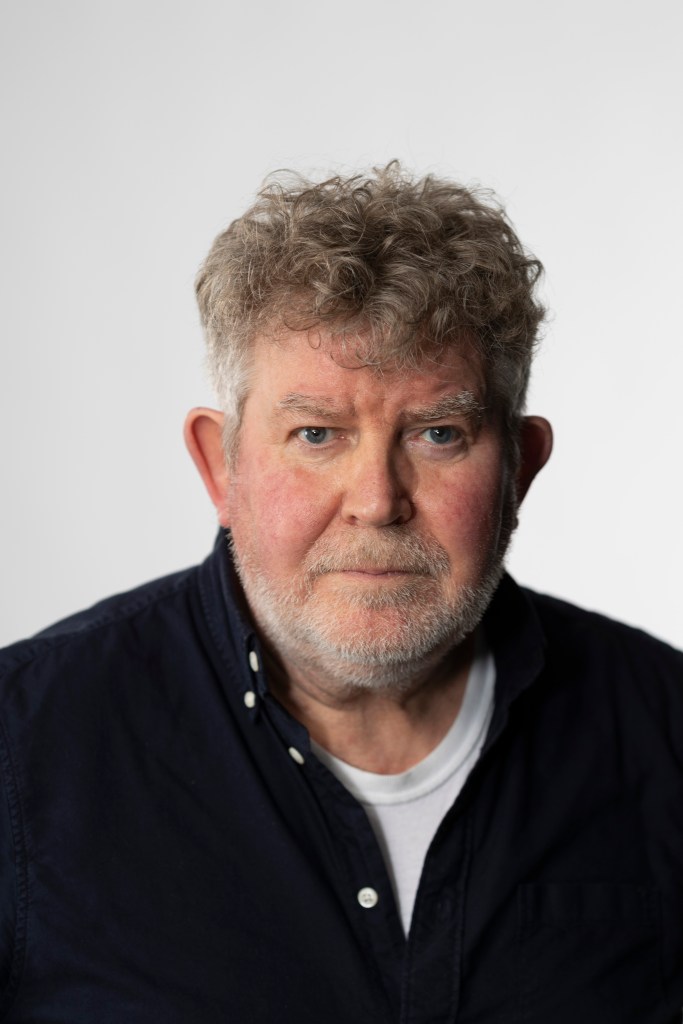
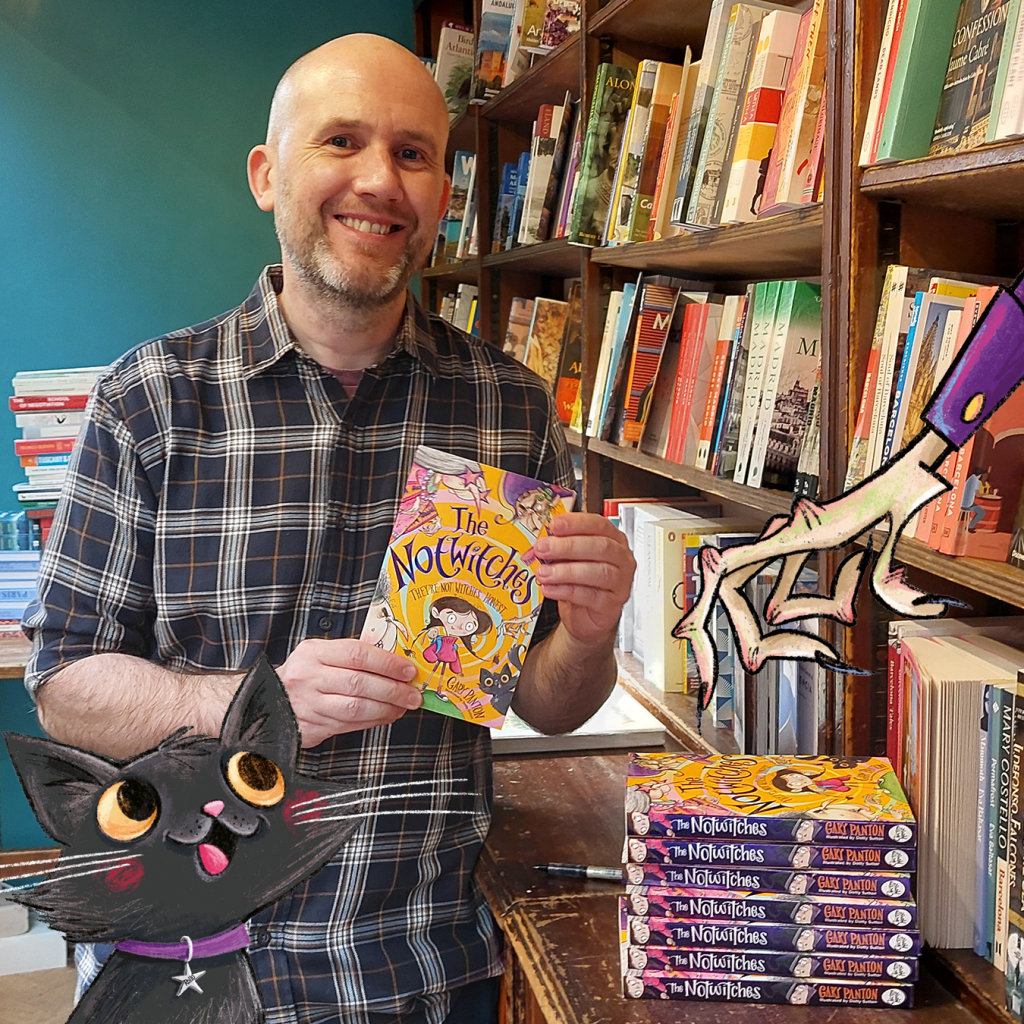
It’s forty years since Moray Hunter’s career as a writer for television and radio got underway, with his writing collaborator John Docherty (later known as Jack Docherty*). The pair were already part of the Edinburgh sketch troupe The Bodgers, along with Pete Baikie and Gordon Kennedy, who all graduated to their own Radio 4 series in 1985.


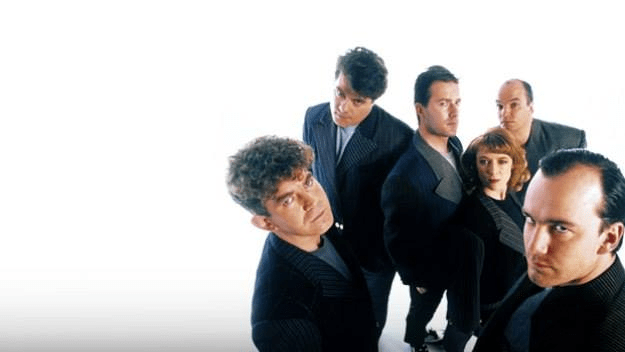
With the addition of two more writer-performers, Morwenna Banks and John Sparkes, the sextet formed a company to make television’s Absolutely (Channel 4, 1989–93), establishing a cast of memorable, quotable and occasionally grotesque characters: Little Girl, Don and George, Frank Hovis, Stoneybridge Town Council, The Nice Family, Denzil and Gwynedd, and Moray’s own star turn, the pedantic but cheerful Calum Gilhooley.


As Absolutely Productions diversified into numerous spin-off projects and nurturing talents including Armstrong & Miller and Dom Joly’s Trigger Happy TV, Moray continued writing with John/Jack Docherty on mr don and mr george, The Creatives and The Cup. The Absolutely team minus Docherty reformed in 2013 for three more radio series, while Moray has devised and scripted four series of Alone for Radio 4, starring Angus Deayton.


I’ve been a fan of Moray’s work for, well, 40 years, so was delighted he agreed to participate in First Last Anything, one morning in June 2023. I hope you enjoy our chat.


[*In 1988, John Docherty became Jack Docherty for professional performing purposes due to Equity union rules (there was already a performer called John Docherty), but Moray calls him John throughout our conversation. Fellow Absolutely collaborator John Sparkes will be referred to by his full name to avoid any confusion.]


—-


MORAY HUNTER

My dad sang in the church choir and did light opera, amateur opera with a company called Southern Light Opera Company in southern Edinburgh. He was good, he was usually the comedy foil. They’d do a show once a year in the King’s Theatre, and it was always sold out because it was filled with family and friends.


I’ve not really followed any interest in musicals or light opera, but I did love those shows at the time, usually great romantic stories: The Desert Song, and then My Fair Lady and The Merry Widow. So those records were in the house, and maybe something like ‘100 Best Classical Tunes’? Unlike those Top of the Pops compilations you used to get back then, these were played by proper people. [Laughter]


—-

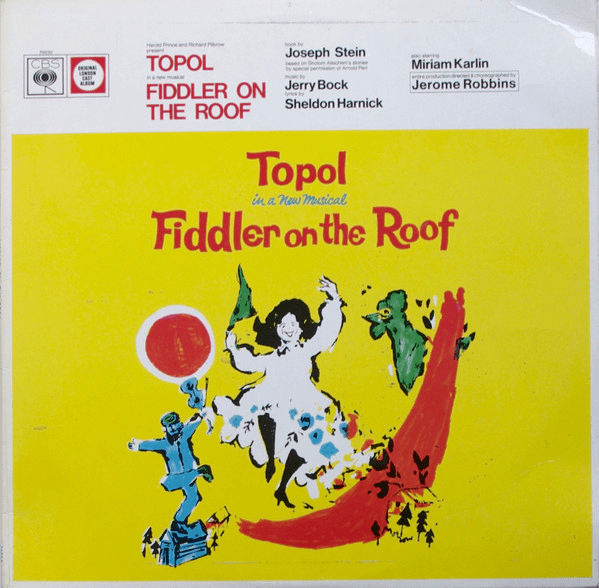
FIRST: BENNY HILL: ‘Ernie (The Fastest Milkman in the West)’ (Columbia Records, single, 1971)

JUSTIN LEWIS

The Christmas number one of 1971, and your first single.


MORAY HUNTER

Okay. I was feeling slightly awkward about this one…


JUSTIN LEWIS

I watched him as a kid a lot because he did TV parodies and I loved anything like that. He was clever on that front in the 50s and 60s with television techniques and playing all the parts in the sketches. 


MORAY HUNTER

Yeah, although there was always that end-of-the-pier thing going on, and the scantily-clad women got harder to defend. But ‘Ernie’ did make me laugh.


JUSTIN LEWIS

Strange to think now that ‘Ernie’ was much played by Junior Choice.


MORAY HUNTER

Ignoring the double entendres. Was Junior Choice hosted by Ed Stewpot Stewart? One week, he read out this request from Edinburgh, a message from a guy in Pilton for another chap in Drylaw nearby. These two gangland areas basically, with young boys running around in gangs. And the message was: ‘I’d like you to play “This Town Ain’t Big Enough for Both of Us” by Sparks.’ A threat on the airwaves – and Stewpot was like, ‘What a lovely message.’ [Laughter]


JUSTIN LEWIS

‘Ernie’ is kind of a Western pastiche, isn’t it? Certainly in its accompanying promo.


MORAY HUNTER

Yeah, that was kind of ahead of its time as well, the video.


JUSTIN LEWIS

Novelty records back then all seemed to be story songs and someone dies at the end. They all seemed to do that. Well… okay, ‘Lily the Pink’ by the Scaffold did it as well. That makes two. [Laughter]


[I thought of other examples afterwards. ‘Paddy McGinty’s Goat’. ‘The Old Lady Who Swallowed A Fly.’ ‘Hole in the Ground’ by Bernard Cribbins.]


—-


MORAY HUNTER

We got an Alba stereo in 1971 – it was like a Dansette, but a bit bigger than that with one separate speaker. Our parents got us The Best of Andy Williams and The Best of the Seekers. But we had some money put aside and we could go out and get our own records.


I had Bridge Over Troubled Water. I bought the lyrics book for that which had the chords – like ‘El Condor Pasa’, which I wasn’t particularly a fan of, but it was quite an easy play for a guy learning guitar. ‘The Only Living Boy in New York’ is probably my favourite track on that. The harmonies, just beautiful. That great story about that song when Art Garfunkel went off to film Catch 22, and Paul Simon was a bit pissed off: ‘What am I doing? I’m here on my own. And why aren’t you here?’


JUSTIN LEWIS

The cracks in the relationship, I guess.


MORAY HUNTER

They didn’t last that much longer.


JUSTIN LEWIS

Obviously they did the odd gig after that. But before the album was even released, they knew they were done.


—-


MORAY HUNTER

I love singer-songwriters, and the acoustic guitar. That’s been the basis of everything for me musically, really, and James Taylor, with Mud Slide Slim and the Blue Horizon, was one of the first for me.


JUSTIN LEWIS

He’s interesting, because he’d signed to the Beatles’ Apple label initially, and then became the biggest singer-songwriter of the time. Has everyone covered ‘You’ve Got a Friend’ now?


MORAY HUNTER

Not even his song, of course! It’s Carole King! It’s his ex, his first ex-wife, so…


JUSTIN LEWIS

Yeah, who plays on the record.


MORAY HUNTER

And then recorded it on Tapestry. But I don’t think she released it as a single.


JUSTIN LEWIS

Another early purchase: Piledriver by Status Quo, from 1972. I don’t think I had ever actually heard a Quo album from start to finish, apart from greatest hits sets. This one fully establishes them with the 12-bar boogie era, after their first couple of years in psychedelia. Apparently they heard ‘Roadhouse Blues’ by The Doors somewhere in Germany, and they thought, ‘Oh – we could do something like that’, and that was the basis for the Quo sound. And they cover ‘Roadhouse Blues’ on this record.


MORAY HUNTER

I remember going to see them. My first gig had been a Strawbs gig (21 March 1973), at Usher Hall in Edinburgh, and they’d just brought out that awful single…


JUSTIN LEWIS

‘Part of the Union’?


MORAY HUNTER

Yeah, but the previous album, Grave New World (1972) had been great. So I went to see them, but the next night (22 March 1973), a lot of mates went to see Status Quo at the Caley Picture House, and that sounded like much more fun: ‘Okay, I’ll get my denims out.’ Quo was always a good night. You’d go and see them playing at the Apollo in Renfield Street in Glasgow, and catch the last train home – and the balcony would famously go up and down when folks were jumping up and down. Quite worrying, if you’re underneath it. Or on top of it.


JUSTIN LEWIS

I wish I’d heard them properly at that time, because by the 80s when I was 14, 15… they were brilliant at Live Aid, of course… but they were almost showbiz rock by then. And I once shared a house at university with someone who had a Quo greatest hits which had this terrible medley single on it [‘The Anniversary Waltz Parts I & II’, 1990], which seemed to be their attempt to cover every song ever written.


MORAY HUNTER

Their nadir, really. But I went to see them a few years after that – John Doc and Pete are also fans – and they’d obviously worked out they should be playing the earlier stuff again.


JUSTIN LEWIS

Next, Bowie’s Ziggy Stardust – was it seeing ‘Starman’ on Lift Off or Top of the Pops?


MORAY HUNTER

I was living a sheltered life in Edinburgh, so never mind the make up and when he’s draping himself around Mick Ronson – I was simply amazed by a blue guitar. So I got into Ziggy Stardust, then Aladdin Sane… I remember a pal of mine, Al, always very up-to-date musically, and him playing me ‘Time’ – ‘Time falls wanking to the floor’… and then I went back and listened to Hunky Dory, which came out before those two. Someone asked on Twitter the other week, ‘run of best three Bowie albums’, and I think those would be mine.


—-


JUSTIN LEWIS

How did you begin writing comedy, then?


MORAY HUNTER

Growing up in Edinburgh, there were lots of single sex schools and my parents went to a church called Greenbank Church. I wasn’t terribly religious, but there was a youth fellowship there, which was a place to meet girls, really. It was called the Junior Quest when you were about 15 or 16 and then you went on to Senior Quest, but both versions joined forces for an annual show at the Churchill Theatre, the highlight of the Quest year. And we’d write our own material. I think the first-ever sketch I’d written was this Robin Hood item, with lots of gags probably from a joke book, and I cast myself as Robin Hood, but I was told afterwards I’d been mouthing everyone’s lines, because I’d written it. So that was a habit I had to break. And by Senior Quest, I was directing that show a couple of times, writing lots of it.


JUSTIN LEWIS

The four members of the Bodgers – you, Pete Baikie, Gordon Kennedy and John Docherty – were all at the same school, right? In different years, admittedly.


MORAY HUNTER

We were, we were. Pete and I were in the same class aged five, although we weren’t mates then, but this Quest thing brought us together, because we got him to take over the folk group, and he mentored me through it, because he’s obviously an accomplished musician. I could get by on guitar.


Then I wrote lots of our sixth form revue at school, and after university, I was working as an apprentice lawyer, and watching Not the Nine O’Clock News, looking at the writers’ list and thinking, ‘Who’s this Richard Curtis who’s writing every week, and Colin Bostock-Smith? I’d like to be on that list one day’, and I really started getting the bug. I also realised [the legal profession] was not for me.


JUSTIN LEWIS

Didn’t John Docherty also study law, or start studying it at least?


MORAY HUNTER

He was at Aberdeen University, and like me, he knew that this just wasn’t for him. I think he wrote on his last exam paper the words ‘Parting is such sweet, sweet sorrow’.


JUSTIN LEWIS

Just as you were noting who wrote Not the Nine O’Clock News, I was also interested in who wrote things. So seeing you and John in the end credits of various shows – Radio Active, In One Ear, Spitting Image – meant that I tuned in specially for In Other Words… the Bodgers (BBC Radio 4, 1985), your first series. And quite a few sketches would turn up from that when you began doing Absolutely in 1989. ‘This is radical television… We’re behind the set… Beat this! I’m still in the dressing room!’


MORAY HUNTER

We first did that sketch in the theatre, in the Pleasance in Edinburgh. It worked well, but the best bit was we found that John, if we gave him enough time, could rush upstairs, get into the roof, and there was this well, this trapdoor where he could stick his head out and surprise the audience, having been on stage a minute before.


JUSTIN LEWIS

Apparently, Angus Deayton gave you and John your break as writers for radio and TV.


MORAY HUNTER

Angus had seen us in Edinburgh in 1982, although it was John Gorman who contacted us. He’d been in the Scaffold, but had been working with Chris Tarrant on Tiswas, OTT and now this new late-night show called Saturday Stayback (Central/ITV, 1983). Angus had contacted Stayback about us because he was going to script edit the series. We sold a lot of our best sketches to Stayback and it wasn’t quite our cup of tea, but it paid very well.


JUSTIN LEWIS

A strange show. A sort of variety sketch show with live music, but set in a real Midlands pub with what appears to be real customers.


MORAY HUNTER

But it led to us working with Angus on Radio Active [for three series, 1983–85]. So all this was his doing. God bless him.


JUSTIN LEWIS

It’s back to ‘who wrote things’, isn’t it? I’d watch Alas Smith and Jones, see twenty writers’ names flash by and then the long game was trying to work out who had written what. Like discovering you and John had written the ‘Hi-Fi Sales Conference’ sketch, a favourite of mine: ‘What do all the buttons do?’ [Alas Smith and Jones Series 3, Episode 1: 18 September 1986]:

MORAY HUNTER

That’s probably the best thing we ever wrote for them. When Mel and Griff did the sketch, it was a studio night, we were in the audience, it got a decent reception, and they announced, ‘The two guys that wrote this are actually here’ and they made us stand – though we were a bit shy – and we got a round of applause. Which was a nice touch.


LAST: WILLIAM THE CONQUEROR: Maverick Thinker (Chrysalis Records, 2021)

Extract: ‘Maverick Thinker’

MORAY HUNTER

A gang of us go up north every September, for a few days carousing and maybe some golf, some fishing, some drinking. I was going up with one of the guys, Doug, in his car, with his music on, and I had my Shazam out. That’s how I discovered William the Conqueror, a trio with Ruarri Joseph from Edinburgh originally but now living in Cornwall, plus Naomi Holmes (bass) and Harry Harding (drums). They’re indie rock, with a slight Americana feel to it. Ruarri had made three solo albums – more acoustic – but now it’s more electric guitar.


Ruarri’s lyrics are quite imperceptible at times, very poetic and a great read, but  it’s more a mood thing with him. He’s got a great voice – half-sings, half-speaks. In fact, one of his songs, ‘Maverick Thinker’, starts with him saying about how he spoke to his mum: ‘I phoned my mum and she says you don’t sing like you used to.’ I’m sure that’s autobiographical because he’s just telling a story or talking, but then gradually singing it. It just works.


Doug also put me on to Peter Bruntnell, also a bit Americana, although I don’t know where he’s from…  


JUSTIN LEWIS

New Zealand apparently. But he’s been settled over here quite some time.


MORAY HUNTER

I recently saw him in the Voodoo Rooms in Edinburgh, in a room with about fifty people packed in. Absolutely brilliant, and there was a three-piece group, with this local guy, Iain Sloan, on steel guitar, and a bass player called Peter Noone, but not the Herman’s Hermits guy.


Another mate of mine put me onto Colin Hay. There’s a fascinating Netflix documentary about him: Waiting for My Real Life (2015). He emigrated with his family to Australia. He started Men At Work. Huge success. Things fell apart. He’s on his uppers, he ends up moving to LA, and the documentary joins him as he’s gigging again. He’s just one man with a guitar turning up at a venue with maybe a hundred people, and he’s got three or four well-known hits from Men at Work, and his new stuff. He’s very witty. I saw him recently at the Fruit Market in Glasgow, a really special night. And that song, ‘Waiting for My Real Life to Begin’… I’ve always felt like that myself.


JUSTIN LEWIS

That’s a good philosophy – your attitude is still active: ‘Okay, what’s next?’


MORAY HUNTER

Yeah, things could be better. He was rags to riches, and he’s not rich again, but he’s a really contented man. You can tell that he’s just so comfortable in himself, and happy with what he’s doing.


JUSTIN LEWIS

It’s about having creative control. It bothers me when people accuse young people of wanting to be famous – I think the majority of them want some kind of success in doing something interesting.


MORAY HUNTER

That’s what Colin Hay looks like. A man in control when he turns up. He knows that’s all he needs and that’s it. He’s stripped his life down to that.


JUSTIN LEWIS

And in the same vein, perhaps: Rab Noakes. Now, I know you must have seen him live quite a lot, you’ve been a big fan for many years, and I remember seeing your tweet when he died, only last year.


MORAY HUNTER

My older brother who was at Dundee University, was into him. He went to one of his gigs at the University Union, ‘71 or ‘72, and he grabbed a few friends to come along, none of whom knew who Rab was. And there was a raffle for his new album [Rab Noakes, 1972].


JUSTIN LEWIS

The one with ‘Drunk Again’ on it.


MORAY HUNTER

Yeah. My brother won the raffle, and probably deserved to because he brought a few folk along. It was a signed album, but he got Rab to sign it again. There was a little dog in the photo and he signed it ‘Pony’ for the dog. I think it must have been the dog’s name. Anyway. Three years later, I’m at Dundee University, Rab Noakes is playing the Union again, and I grab a few people to There’s a raffle for the new album [Never Too Late, 1975], and I win it. I go backstage and try and explain to him how amazing it is because my brother had won another raffle three years earlier…


Luckily, later on, I got to know Rab a bit. Doing The Bodgers in Edinburgh in 1984, we took over the Calton Studios, and we had a few slots to sell – and Rab came and did a few late-night slots, and he came and saw us and was very nice. And [in the late 1980s] when he became a radio producer [at BBC Radio Scotland], I ended up doing some shows for him, like our St Andrew’s Day show.


I have another memory of Rab. In the 90s, I was working in Glasgow for a few weeks, and on my day off, I couldn’t find his latest album – Standing Up (1994) – in any of the shops. As I came out of HMV in Argyle Street, standing in front of me was Rab. He said, ‘What are you doing here?’ And I said, ‘I’m looking for your new album and I can’t find it anywhere.’ So, being Rab, he asked me for my address, and two days later, it came through my letterbox.


JUSTIN LEWIS

That’s lovely.


MORAY HUNTER

They say never meet your heroes, but that does not apply in this case.


JUSTIN LEWIS

That career path of becoming a radio producer made me think of Pete Atkin who’d been in that duo with Clive James, writing and performing songs, and then he became an entertainment producer at BBC Radio in London. In fact, when Rab became a producer at Radio Scotland, there was a youth programme on the station called Bite the Wax. With a young guy called Armando Iannucci and another guy called Eddie Mair.


MORAY HUNTER

In fact, Rab became Robert Noakes for a period because he felt he wanted to separate the singer-songwriter Rab from Robert. It never took, the Robert thing! A great man.


JUSTIN LEWIS

I found a Melody Maker gig review from 1970, in London. It mentions that the audience, who had probably never seen Rab before, had a rapport with him and the songs, and were already able to join in on choruses. Clearly there’s a real warmth in the performances from the get-go.


MORAY HUNTER

Very self-effacing and I think that endears him to people. He wasn’t a showman, but very egalitarian – just as likely to come in lugging an amp as anyone else. Folk pick up on that. And there are catchy tunes, which help.


JUSTIN LEWIS

And what about the Jackson Browne choice. ‘Late for the Sky’? Which is in Taxi Driver, of course. When Bickle’s watching the TV.


MORAY HUNTER

This one is because of my mate Jem, who I was pals with at university, who had good taste in music. This would have been my second year, 1976. I still adore Late for the Sky. That was my introduction. I realise there’s quite a lot of maudlin stuff in my choices, do you think?


JUSTIN LEWIS

You don’t strike me as that kind of person!


MORAY HUNTER

I was looking at the list, and I think I am ‘glass half full’, but I vary. I have a darker side.


JUSTIN LEWIS

Is that the comedy writing, though?


MORAY HUNTER

A bit of that, yeah. The sad clown thing.


JUSTIN LEWIS

And then there’s Decemberists. I was very lucky to see them live some years ago, at the Brixton Academy.


MORAY HUNTER

Oh, did you?


JUSTIN LEWIS

I didn’t know much of their stuff, I was stunned to discover they’d made about five albums.


MORAY HUNTER

I only really know this album. ‘June Hymn’ so beautifully evokes summer… there’s the line about summer coming to Springville Hill, which is near where they are in Portland, in Oregon. It just makes me think of those endless summers when you’re a kid and you think, ‘I’m never going back to school, this is life now.’ I love the harmonies and Colin Meloy’s got such a great voice.


—-


JUSTIN LEWIS

How did you and John Docherty become mainstays in the Spitting Image writers’ room?


MORAY HUNTER

We had applied for the annual writers’ contract at BBC Radio, encouraged to do so by Angus Deayton, him again, and we got the gig. We started in April 1984. We were hanging around the Radio Light Entertainment corridor, writing for various shows. At the meeting with [head of Radio LE] Martin Fisher, he said, ‘If you get offered BBC telly, we’d understand – but what we don’t want, is if you wrote for The Other Side, [meaning ITV and Channel 4].’ We went, ‘No problem’, never thinking that only six weeks later, we’d be hired for what was the second series of Spitting Image. Rob Grant and Doug Naylor had taken over script editing the show, and if memory serves, our radio producer Alan Nixon (who had worked with them on Son of Cliché) had talked us up to them. And then ‘Spit” offered us about the same amount of money for the series that we were getting for the whole year of writing for radio. It was a big, big show. We felt we had no option but to go for it.


JUSTIN LEWIS

I remember going to school the Monday morning after the first ever episode [February 1984], and everyone was a bit ‘Hmm, not sure’ – but by the second run that summer, it was absolutely unmissable.


MORAY HUNTER

We loved it when Chris Barrie got hold of how to do the voice of the sports commentator and presenter David Coleman.


JUSTIN LEWIS

Yes, the Question of Sport host then.


MORAY HUNTER

We didn’t really do much politics, John and I, we were kind of ‘the silly department’. We had this idea about Coleman getting confused and commentating on the opening title graphics for Sportsnight by mistake. At the time, the titles for Sportsnight had a clip of the Boat Race, with Oxford and Cambridge sinking, and the previous clip was Everton winning the League. They cut to the Boat Race and ‘Coleman’ is going, ‘Oh my god, and Everton are sinking.’


JUSTIN LEWIS

I love that ‘Coleman’ item where he’s doing the athletics commentary, and the bell sounds for the last lap, and he just goes absolutely bananas: ‘I’ve gone too soon, there’s a whole lap to go. Disaster for Coleman!’ And he ends up exploding.


MORAY HUNTER

That was a favourite trick on the show. Like the death at the end of the comedy song, having the puppet explode was our equivalent.


JUSTIN LEWIS

‘Coleman’ is immediately hilarious on Spitting Image. What Chris Barrie gets right is that detail from time to time that he had the faintest remnant of a north country accent.


MORAY HUNTER

I never knew he was from the north.


JUSTIN LEWIS

He was born in Cheshire [Alderley Edge, it transpires]. It was still the days when BBC presenters had their regional accents smoothed out.


Absolutely, 1989 (l-r): Moray Hunter, Gordon Kennedy, John Sparkes, Morwenna Banks, Pete Baikie, Jack Docherty

JUSTIN LEWIS

What was the thinking behind setting up an independent production company to make Absolutely? You just wanted to do it yourselves?


MORAY HUNTER

Basically, that. And Alan Nixon at BBC Radio Light Entertainment really pushed us to do that. After including us in a few Pick of the Fringe radio shows, Alan had asked us to do the Bodgers radio series [In Other Words… The Bodgers, 1985], after which there were some complaints that we all sounded the same, and they didn’t know how many Scottish guys were in it. So for a second series, we got some extra voices, our pals Morwenna Banks and John Sparkes, so it became Bodgers, Banks and Sparkes (BBC Radio 4, 1986). So then, there was a woman from Cornwall, a Welsh guy and there’s still ‘is it four or five Scottish guys’?  


When we tried to sell Absolutely, for television, STV were briefly keen on the idea. But when Channel 4 expressed interest, Alan Nixon said, ‘You know, we could do it.’ Absolutely was a funny company at the start because the six of us set it up with Alan, and two other producers, Jamie Rix and David Tyler. But clearly to begin with, the company was mainly going to be about the Absolutely show. So Alan became the sole producer until some of us started producing shows ourselves further down the line. But yes, it was really to get control. Once we got a couple of production fees, we could get an office, and see what else we could do. It was a good model.


JUSTIN LEWIS

And obviously Don and George, which was you and John Docherty, had some TV exposure before Absolutely. Friday Night Live (Channel 4, 1988), of course, but also on a variety show in Scotland a year earlier called The Terry Neason Show


MORAY HUNTER

Oh god, that’s right. We first did Don and George as a couple of tweed-suited peak-capped buffers.


JUSTIN LEWIS

As much older characters?


MORAY HUNTER

For some New Year Hogmanay shows. We did one with Craig Ferguson and Peter Capaldi, we’re all just starting out really, and the next year with [Alan Cumming and Forbes Masson’s] Victor and Barry characters. They’d written a song for the four of us, and I had about a day to desperately learn these lyrics. If you catch the clip of it, I lose it for about a whole verse – much to John D’s amusement later on – which reminds me, oddly enough, of what my dad used to do on stage with Southern Light Opera.


JUSTIN LEWIS

I’ve heard you and Gordon, and John all mention that you were trying to avoid certain types of comedy with Absolutely – so no TV parodies or celebrities or overt politics. Some armchair psychology here, but is that partly because you’d just done four years on Spitting Image? And also, almost nobody’s doing character comedy in ’88. Harry Enfield is, Barry Humphries, and a few others. But almost everyone else is doing sitcom, stand-up or impressions.


MORAY HUNTER

A lot of political comedy stand-up, yeah. We weren’t very political, we didn’t want to be. I think ‘no parody’ was John Docherty’s suggestion initially. I hadn’t thought about the Spitting Image thing – it could have been that. But doing characters helped place it in the real world, somehow, even though we were doing some surreal stuff in that real world. It was a good rule, although it was very annoying at times, if you had a good parody sketch and you couldn’t do it.


JUSTIN LEWIS

All this is to Absolutely’s advantage – it remains remarkably fresh all these years later.


MORAY HUNTER

It’s contemporary but not topical.


JUSTIN LEWIS

Because the trouble with leaning on personalities and impressions is that, 30 years on, nobody knows who most of them are. Interesting from a social and historical perspective, perhaps, but not always in terms of the comedy.


MORAY HUNTER

Though we did cheat once, with that U2/Simple Minds spoof video. I think it was a Pete and John D thing. [Absolutely, Series 2 Episode 8, final item]


JUSTIN LEWIS

I always saw that as a composite parody. There were so many bands making videos like that at the time! On the subject of Absolutely music, was Pete writing all the song lyrics himself?


MORAY HUNTER

Sometimes we’d write with him, they’d toss the lyrics around, but he did a lot of them himself – in the Absolutely Radio Show more recently, just about all of them. He’s a brilliant songwriter.


JUSTIN LEWIS

It strikes me that a lot of the humour in Absolutely is not coming from television, but from other places: absurdist cinema or theatre, or even literature.


MORAY HUNTER

Yeah. Pete’s always tried to do something a bit unexpected, it’s just in his nature – John D too, probably. John Sparkes had trained as an actor and had done a lot of physical comedy, so he wanted to bring that to bear. But we had a lot of time to fill in the early series, a longer slot than half-an-hour, so we’d have these epic 10-minute sketches… like a battle outside a pub with the Salvation Army… But by series four, which was six half-hours, we were doing three-minute sketches. In a way, I preferred the longer stuff because we were really letting go.


After series four (1993), Channel 4 wanted another series, and we had an idea of having a town where all our characters lived, but we never had quite the nerve to do it. And a wee while later, the League of Gentlemen did that and absolutely bloody nailed it! For years I thought we had made a mistake by not doing another series, but we had been running on empty a bit by series four, and I was certainly writing less material by that series.

JUSTIN LEWIS

How did the writing sessions work? I picture a situation rather like Monty Python where the six of you would read stuff out to the group.


MORAY HUNTER

At the start of a new series, we’d go away for a couple of days, an excuse to get in a room together with lovely food and nice drink. We’d put a whiteboard up and discuss things. In the early days, John and I were actually still writing together, mostly physically in a room. Later we’d write separately and bring things in. But also John D would work on stuff with Morwenna, as would I.


A lot of stuff we’d read out would be quite messy, though you could see the kernel of an idea and where it was going. John Sparkes’ stuff, though, was really tight, handwritten scripts – it was finished, basically. Those Denzil and Gwynedd sketches – they are absolutely packed, two and a half minutes. And that room of theirs being slightly askew is a good metaphor for Absolutely. Everything is leaning a slightly different way.


I’m about the words, really, I wasn’t so much into the surreal although John D and I did take Don and George in a very surreal direction in Absolutely and then in their own series [mr don and mr george, Channel 4, 1993]. I like ‘real’ stuff, but obviously there’s a big chunk of me that’s happy doing big and silly.


JUSTIN LEWIS

Was there meant to be a second series of mr don and mr george? You were certainly writing it, I believe.


MORAY HUNTER

We had big plans for it, and they commissioned a couple of scripts because they weren’t sure. and the story we got was it was nixed because [then Channel 4 boss] Michael Grade’s son didn’t get into it. Whether that’s true or not, I don’t know. It was a shame. It’s one of my regrets that we didn’t get to do more of that. The success of Father Ted shows that going surreal can work.


JUSTIN LEWIS

I always thought Don and George had the potential to cross over to a much younger audience. I could imagine kids liking that show.


MORAY HUNTER

That’s a very good point. We were going out at [half-ten on a Wednesday] with that first series and that turned into a hard slot. You could do edgier, racier stuff there, and we were not doing that! It should have been out at 7 or half-seven.


JUSTIN LEWIS

When you revived Absolutely for Radio 4 in 2013, John D wasn’t involved. I know he was doing Scot Squad, a semi-improvised sitcom for BBC1 in Scotland, very successful. I’m presuming you hadn’t fallen out…


MORAY HUNTER

No, we hadn’t fallen out. He didn’t really fancy doing Absolutely again. I think he just felt it was ‘going backwards’. It could withstand one member not being involved, although in a way John was almost the unofficial leader of the group – he wrote loads of material and was also good at developing other people’s ideas. Initially I wasn’t sure, but I thought maybe we could survive without him. It’s not the same without him, but I still think it stood up as a show. When Python lost Cleese [for Monty Python’s Flying Circus series four], they could still do a decent Python show.


JUSTIN LEWIS

Interesting parallel because Cleese was often described as the unofficial leader of Python.


MORAY HUNTER

‘The tall one with the silly legs.’ It was funny to do Absolutely without John D but, apart from anything, it was a good social thing, getting the gang back together. It was still slightly nerve-wracking to read out stuff to the group, but it’s not a bad process.


JUSTIN LEWIS

Returning to some of those characters, were you wondering where they were in their lives? Had they aged in your minds?


MORAY HUNTER

Definitely. All this technology had been happening in the meantime, so much for the likes of Calum to get to grips with – or not get to grips with. So it was joyous to revisit those characters, and find there’s still life in them, talking about the issues of the day and contemporary life.


JUSTIN LEWIS

Is it true that you’ve written a pilot for the Calum character?


MORAY HUNTER

I wrote a sitcom script for him. I should have done it years ago. There’s a lot more depth to that character, I think, than was initially suggested. I’ve just written about four and a half thousand words of what would be a Calum book, which I’m quite keen to try and get someone interested in. Partly to bring him up to date, but also include some favourite sketches from over the years. That could also be quite a nice audiobook.


JUSTIN LEWIS

A Calum autobiography! I’ve always found him endearingly cheerful.


MORAY HUNTER

Yeah, he’s positive, actually.


JUSTIN LEWIS

He’s not a stock ‘nerd’ character. Just as Frank Hovis’s redeeming feature is he’s incredibly apologetic about his predicaments, and Morwenna refuses to do Little Girl as ‘cute’. They’re not clichés.  


MORAY HUNTER

Calum has changed, though. John D invented him for our Edinburgh show in 1987 (The Couch), and he said, ‘You’ve got to play this guy’, and I said, ‘Fair enough’ – one of the biggest gifts I ever got. At that stage he was just an annoying friend of John’s – funny in itself.


But over the years, because Calum’s pedantic and annoying, he can point out when other people are being boring and annoying. Like the coffee shop sketch in the radio series where they say, ‘Do you want anything else with that?’, which they always do, even though you haven’t asked for anything. And so he says, ‘Okay, well, what else have you got? Can you list everything…?’ He’s more on our side of it now. Sometimes he’s making a good point.


JUSTIN LEWIS

When we were talking about Benny Hill earlier, it reminded me that he was Tony Benn’s favourite comedian, while Elvis Costello was a big fan of the Peter Tinniswood sitcom I Didn’t Know You Cared. Nicola Benedetti, the violinist, would – according to one interview – watch Seinfeld on a loop. Does Absolutely have any surprising celebrity fans that you know of?


MORAY HUNTER

See, I would put Seinfeld on a loop too. In fact, I have done. Recently, I was doing a scene with Miranda Richardson in Good Omens 2, which is coming up this summer. Don’t make a cup of tea or you’ll miss me, but I’m in there. She was great, really charming, and I couldn’t believe I was working with Queenie from Blackadder II – and so much else of course – but yeah, it turned out she was a fan of Absolutely, so that was nice!


JUSTIN LEWIS

Is that it for Absolutely, then? I know there’s no more radio series, but could there ever be a tour?


MORAY HUNTER

We’ve always failed to get a tour sorted. There’s too many naysayers! I don’t think John D would come back for a start. We thought about it during the original run on TV, and again a few years ago, in the midst of the radio show. But there was always one person going, ‘I’m not in the mood, I don’t want to do it’. That is a regret. We should have done it when we’d just done the TV series.  

—–

ANYTHING – RADIOHEAD: OK Computer (Parlophone, 1997)

[Extract: ‘Let Down’]

MORAY HUNTER

OK Computer by Radiohead was a real game-changer for me. Beautiful melodies… but quite rocky as well. It’s just a masterwork, particularly ‘Let Down’, which I love. And then I worked backwards with them: The Bends and then Pablo Honey. As with the Bowie albums, three albums in a row. But then, for me, I’m not sophisticated enough, musically, with Kid A and Hail to the Thief, when they started getting experimental.


JUSTIN LEWIS

I did respect Radiohead for choosing to do something different at a time when they didn’t have to. That takes real nerve.  


MORAY HUNTER

Although I just wish they’d done something else differently from what they did. [Laughter] But it’s like Bowie, always coming back, reinventing himself.


JUSTIN LEWIS

Yeah, see, I think my three Bowie albums in a row would be Station to Station, Low, Heroes. A little bit later.


MORAY HUNTER

Another song from recent times: I was watching Guilt, Neil Forsyth’s series. Not only can he write, he’s also got great taste in music. There’s a song in it called ‘My Backwards Walk’ by Frightened Rabbit, which has a sad story behind it, because the lead singer, Scott Hutchison…


JUSTIN LEWIS

He died, is that right?


MORAY HUNTER

Yeah, a troubled guy. You can hear it in his lyrics, and in his voice. But he was also hugely talented. ‘My Backwards Walk’ is about a break-up and he wishes he could do a backwards walk, go back and sort things out.


JUSTIN LEWIS

I’ll have to look that up.


MORAY HUNTER

It’s a beautiful song. What else did I have on my list? ‘I’ll Take You There’ by the Staple Singers. I’m a Hearts fan and when they won the Scottish Cup Final for the first time in my lifetime, in 1998, I set the video to record the game on BBC, in case we won, and went to the game. And during the little video montage afterwards, they played that song. So I fell in love with that, and of course now it evokes a very good day.


JUSTIN LEWIS

Do you still have a deep connection with the Edinburgh music scene?


MORAY HUNTER

I’ve been listening to Adam Holmes, a singer-songwriter. ‘Edinburgh’, from his most recent album, Hope Park, is a love song to the city. As I’m living back up north now [near Berwick], I’m spending more time there, and appreciating it more and more. And there’s Blue Rose Code, which is Ross Wilson, Edinburgh-born but now based in London. He writes some achingly beautiful songs and feeds my need for melancholy. ‘Denouement’ was the first I discovered, again on that journey to the Highlands. The travel was every bit as good as the arrival in this case.


What else have I been listening to lately? I’ve always loved The Cure, a great mix of some poppy songs, and also some ark, brooding melodies – like ‘Lullaby’. ‘So Here We Are’ by Bloc Party, who I don’t know much about, but this is a mesmerising blend of rock and electronica. Similarly addictive is ‘Changes’, not a Bowie cover, by Antonio Williams featuring Kerry McCoy.


I play in a fun band, The Strawmen, with some pals, most of us fairly new to our instruments – I’m learning bass. Our first song was ‘Strawman’ by Lou Reed, hence our name. Our leader, the proper muso in the group is a guy called Marcus Paine, who, apart from his missionary work with us keen amateurs, also heads up a band called Roark – and he’s just released an album, Pelforth Poolside Dusk. So my last song is my current favourite off that: ‘Gone, But Not Forgotten’. He’s a man who knows how to write a hooky chorus and I really enjoy his voice.


—-


JUSTIN LEWIS

One final Absolutely question. If all six of you were in a pub, as I believe you often were when making the show…


MORAY HUNTER

Still are sometimes!


JUSTIN LEWIS

…what would each of you put on the jukebox? Were you all aware of each other’s musical taste?


MORAY HUNTER

Pete Baikie would put on something by The Beatles. No question about that.

John Docherty would put on Talking Heads. Gordon Kennedy… Gordie’s quite a good singer, he was in a band with Pete called There’s An Awful Lot of Coffee in Brazil, who then changed their name to the Hairstyles. They were a half-serious, half-comedy band. So Gordon might play something by Free or Bad Company. Morwenna, she might play Belle and Sebastian, she’s a big fan. John Sparkes, I have no idea. Basically the Welsh national anthem, although he’s not sporty either, so…


JUSTIN LEWIS

He could hum ‘Greensleeves’.


MORAY HUNTER

Actually, yes. It would be something off the wall with John Sparkes. What was the one he used to do, as Frank Hovis, with a beer glass, spilling the beer everywhere? ‘Tears’ by Ken Dodd. But his version, it has to be ‘Tears’ by John Sparkes.

—–

The Absolutely Radio Show, featuring all three runs of the BBC Radio 4 series plus extra material, is out now, published by BBC Audio.


The television incarnation of Absolutely is available to stream via the Channel 4 website, and is also still available on DVD on the Absolutely Everything set (which contains many many extras).


mr. don & mr. george, TV series is also available to stream via the Channel 4 website.


Many episodes (currently series 3 and 4)  of Moray’s Radio 4 sitcom, Alone – starring Angus Deayton, Abigail Cruttenden, Pierce Quigley, Kate Isitt and Bennett Arron – can be heard on BBC Sounds. All 25 episodes (including the pilot episode) are also available to buy via BBC Audiobook.

You can follow Moray on Bluesky at @morayh.bsky.social.

 —-

FLA 19 PLAYLIST

Moray Hunter


(For the time being, this site and project uses Spotify for the conversation playlists, but obviously I disapprove that Spotify doesn’t pay artists and composers properly, and other streaming platforms are available, as are sites to buy downloads and buy recordings. For consistency, you can also listen to the selections via YouTube (where available), and links are provided in each case, below.)

Track 1: KATHRYN GRAYSON AND TONY MARTIN: ‘One Alone’ [from The Desert Song]: https://www.youtube.com/watch?v=F7kDbG1WKuA

Track 2: KITTY CARLISLE: ‘Vilia’ [from The Merry Widow, original 1934 recording]: https://www.youtube.com/watch?v=MWoK2scz7m8

Track 3: BENNY HILL: ‘Ernie (The Fastest Milkman in the West)’: https://www.youtube.com/watch?v=8e1xvyTdBZI

Track 4: SIMON AND GARFUNKEL: ‘The Only Living Boy in New York’: https://www.youtube.com/watch?v=5biEjyXNa2o

Track 5: JAMES TAYLOR: ‘You Can Close Your Eyes’: https://www.youtube.com/watch?v=t4XGEQmT3eM

Track 6: STATUS QUO: ‘Don’t Waste My Time’: https://www.youtube.com/watch?v=CwQHDZYX3ao

Track 7: DAVID BOWIE: ‘Five Years’: https://www.youtube.com/watch?v=2ObjtVdsV3I

Track 8: WILLIAM THE CONQUEROR: ‘Maverick Thinker’: https://www.youtube.com/watch?v=QcwxdSeeJ6U

Track 9: PETER BRUNTNELL: ‘Handful of Stars’: https://www.youtube.com/watch?v=PpORe23Jcrw

Track 10: COLIN HAY: ‘Waiting for My Real Life to Begin’: https://www.youtube.com/watch?v=Ko5isS9JQKM

Track 11: RAB NOAKES: ‘Just Away’: https://www.youtube.com/watch?v=E-nq2ItlY20

Track 12: JACKSON BROWNE: ‘Late for the Sky’: https://www.youtube.com/watch?v=n3SJz9jujEA

Track 13: DECEMBERISTS: ‘June Hymn’: https://www.youtube.com/watch?v=EnP5hRYp6uI

Track 14: RADIOHEAD: ‘Let Down’: https://www.youtube.com/watch?v=-Z_NvVMUcG8

Track 15: FRIGHTENED RABBIT: ‘My Backwards Walk’: https://www.youtube.com/watch?v=yKH-YEhzuvA

Track 16: STAPLE SINGERS: ‘I’ll Take You There’: https://www.youtube.com/watch?v=IhHBr7nMMio

Track 17: BLUE ROSE CODE: ‘Denouement’: https://www.youtube.com/watch?v=96CaPpkLVAU

Track 18: ADAM HOLMES: ‘Edinburgh’: https://www.youtube.com/watch?v=0kSm-9tQIjM

Track 19: THE CURE: ‘Lullaby’: https://www.youtube.com/watch?v=oGyqB3yC87k

Track 20: BLOC PARTY: ‘So Here We Are’: https://www.youtube.com/watch?v=dzZQJZdcCU4

Track 21: ANTONIO WILLIAMS FEATURING KERRY MCCOY: ‘Changes’: https://www.youtube.com/watch?v=ip6P1do1__c

Track 22: ROARK: ‘Gone But Not Forgotten’: https://www.youtube.com/watch?v=SurUs9Zx0C4

FLA 18: Penny Kiley (18/06/2023)

The writer and journalist Penny Kiley was born in Kent, and studied English at Liverpool University, where she found herself at the epicentre of the city’s musical and cultural scene during punk, post-punk and beyond. In 1979 she became a regular contributor to Melody Maker and a little later on, Smash Hits. In the late 1980s, she became the music columnist for the Liverpool Echo, while also covering the Merseyside arts scene for other local publications.

Latterly, Penny continues to write about music, books and culture on her blog Older Than Elvis, and has now written a terrific memoir, Atypical Girl, about her life, career and belated diagnosis of autism. I was delighted that she agreed to come and discuss all of this with me on First Last Anything, and choose some favourite and significant records too. Our conversation took place on Zoom one evening in May 2023. We hope you enjoy it.


—-


JUSTIN LEWIS

So what records did you grow up with in your house before you started buying music yourself?


PENNY KILEY

It’s interesting, that one. When I was reading series 1 of First Last Anything, I felt there was some sort of dialogue going on between the different interviewees and between the interviews and the audience. And David Quantick [see FLA 6] was the one that said ‘old musicals’, and I guess I’m a similar age to him.


My dad was a Londoner, and he used to go to the theatre all the time in London because in those days normal people could afford to go. So we had Oklahoma! and Gigi and Carousel in the house. And I guess that gave me a grounding in really good songs. Over the years, that’s what I’ve always come back to, particularly now, when you get old and cranky and you don’t want to listen to the latest new sound: ‘I don’t care – I just want good songs, songs with stories.’


JUSTIN LEWIS

Musicals often seem to be about history or culture or identity, those elements.


PENNY KILEY

They have to be, because there’s a narrative anyway. But yes, I just like people putting thought into songs and not doing the obvious rhymes or references or allusions.


My parents weren’t hugely into music otherwise, but then schools were good. Everybody played the recorder when they got to a certain age, you know? And we had Singing Together (BBC Radio, 1939–2001), this schools radio programme.


JUSTIN LEWIS

Yes, I remember. We’d had Time and Tune (BBC Radio, 1951–) at infants school…


PENNY KILEY

I don’t remember that!


JUSTIN LEWIS

…but then at junior school, Singing Together. We’d all sit on the floor, cross-legged, in the school hall. There was a whole Archive on 4 documentary with Jarvis Cocker about Singing Together [broadcast November 2014, on BBC Sounds].


Did you play any instruments then at school, or were you in bands at all, anything like that?


PENNY KILEY

I played the recorder and then when I left junior school, I learned piano for about a year, but didn’t really get on with it. I did enjoy singing, though. I was in the school choir, in the back row, at grammar school, and we did Handel’s Messiah with the boys’ school down the road. That was a big kick. That was the first time I realised you can do a performance and get this huge adrenalin rush at the end of it.

—- 

FIRST: T REX: ‘Jeepster’ (Fly Records, single, 1971)

JUSTIN LEWIS

It’s also Johnny Marr’s first single, or so he told Smash Hits back in the day. Was this the first you knew of Bolan?


PENNY KILEY

I must have heard ‘Get It On’ before then. I didn’t buy records very often, because I was thirteen, I didn’t get much pocket money.


JUSTIN LEWIS

To buy a record was a big deal, wasn’t it?


PENNY KILEY

Round about 1970, my parents bought a new stereo, so we had the opportunity to play records, and you’d see Cliff Richard or the New Seekers on the telly and that was a kind of entry-level stuff. But T Rex was the first thing that was mine.

Nobody else in the family got it apart from me.


JUSTIN LEWIS

Did you stay with their stuff for long?


PENNY KILEY

For a few years. After ‘Children of the Revolution’ [autumn 1972], I got a bit bored. The peak was quite short. I mean, my husband owns everything Marc Bolan ever made and 50% of it is actually unlistenable. Although he will dispute that.


JUSTIN LEWIS

Is this the earlier stuff, the long album titles, or the later stuff?


PENNY KILEY

The earlier stuff and the later stuff! The earlier stuff is just like just the hippy-dippy stuff. And then the later stuff is just frankly substandard because the quality control had gone out of the window. But the peak’s so good – enough to hang a legacy on.


JUSTIN LEWIS

And what is that peak? ‘Ride a White Swan’ [late 1970] to… ‘20th Century Boy’ [early 1973], I guess. Two and a bit years? And he becomes part of the light entertainment fabric, guesting on the Cilla Black Show [Cilla, BBC1, 27 January 1973], doing ‘Life’s a Gas’ on Saturday night television.


PENNY KILEY

‘Life’s a Gas’, the other side of ‘Jeepster’. That was like buying two singles. Of course, we always played B-sides in those days, but this was like having a double-A side because they were both so good. Both songs are on the Electric Warrior LP which I bought later – now seen as a classic. My first record has stood the test of time! I still play it, and I still hear new things in it all the time. Bolan had talent, obviously, but credit also to Tony Visconti, as producer, for bringing out the best in the songs.


I should also mention that, around this time, a lot of 50s and 60s stuff was getting reissued – the Shangri-Las, Phil Spector, doowop – and that fed into my musical education. There was also the rock’n’roll revival, another genre that’s stayed with me. The soundtrack LP to That’ll Be the Day (1973) was a big influence.


—-


JUSTIN LEWIS

Reading your memoir [Atypical Girl], my first surprise – given that I associate a lot of your work so much with Liverpool – is that you’re not from there at all. You’re actually from Kent.


PENNY KILEY

Yes, a place called Sittingbourne. Everybody knows the name because it’s on the railway. But there’s no reason to get off.


JUSTIN LEWIS

So what was it about the city of Liverpool that appealed to you? It’s worth saying that punk hadn’t happened at this point.


PENNY KILEY

I went there because of the university. I wanted to do English Language and Literature and not many universities did both. The English department had a good reputation and one of my teachers had a daughter who’d done English there a few years before me. I knew nothing about the North whatsoever. But it became like this whole new world. It was amazing because there was stuff happening all the time.


JUSTIN LEWIS

You say in the memoir how you’d prefer not to mention the music you were listening to before you got to Liverpool. Why do you think there’s this awkwardness about pre-punk? Was punk such a seismic event because of what happened next, did it follow a period where it was all rather dull – or were there things that you secretly still like?


PENNY KILEY

There was a real ‘Ground Zero’ attitude about punk. Everybody threw away lots of their records, or gave them away, or hid them in the back of cupboards, because they were embarrassed. We all had to pretend that we’d only ever liked certain things. I was listening to a mixture of stuff and some of it I would still listen to now, like The Who or Dylan. There was a lot of soft rock stuff that you just listened to because your friends had it. Quite pleasant, but it becomes dull after you’ve heard the Ramones.


JUSTIN LEWIS

When those Top of the Pops repeats started running on BBC4 [7 April 2011] with the episodes of April 1976, I remember thinking, ‘Okay, so it’s before punk rock, what’s going on?’ Even knowing the state of the charts at the time – lots of oldies and novelty records – doesn’t prepare you for quite how bad an episode is going to be. They had to fill 40 minutes at short notice. And it seemed to be the days before they’d invented onscreen captions, because anonymous bands would start playing with no lead-in from the presenter and you wouldn’t have a clue who they were. It’s a cliché, but ABBA turn up and it’s, ‘Oh, thank god – one we know.’ Even though you’d heard it a billion times.


PENNY KILEY

I still remember the early 70s Top of the Pops era as a ‘golden age’, mainly because of glam rock. But by the mid-70s it had got a bit dire. There was one shown again last week, from ’77, and I was thinking, This is so middle of the road. The entire programme, wall to wall.


JUSTIN LEWIS

Punk rock still hasn’t quite happened, unless you were reading the music press.


PENNY KILEY

The Sex Pistols were having hits, but it didn’t change that culture straight away. All that awful middle of the road stuff carried on for so long because punk didn’t really get mainstream. And at the time, I was probably watching Old Grey Whistle Test, with Bob Harris, more than Top of the Pops.


JUSTIN LEWIS

And Whistle Test didn’t really do punk, did it? You had to make an album to be on that.


PENNY KILEY

It was so serious about everything. And then you’d get something like Alex Harvey on [BBC2, 7 February 1975], and you’d go, ‘What the fuck is this?’


JUSTIN LEWIS

Oh, was that the ‘Next’ clip? I saw that quite a bit later. Terrifying!


PENNY KILEY

Yes, the Jacques Brel song. I was like 17, 18, and I didn’t really understand it at all. It felt way too grown up for me.


JUSTIN LEWIS

Once you know a bit more Alex Harvey, it kind of explains itself, but at the time… It’s so intense. When BBC4 started repeating Top of the Pops, I remember thinking, ‘Why not repeat some Whistle Test in full?’ But when you see one in full, it could often be terribly earnest.


PENNY KILEY

That anniversary programme they did a few years ago was all from the Bob Harris perspective! I got really cross because of Annie Nightingale being sidelined. Obviously, that’s a feminist issue, but also they made it sound like a really dull programme, even duller than it actually was.


JUSTIN LEWIS

I love Annie. People always talk about the Peel show being important for their musical education, but I didn’t really listen to Peel till I was at university. Throughout my teens, I listened to Annie every Sunday night, because even though it was, ostensibly, a request show after the Top 40 show, she would play increasingly left-field music as the evening went on.


PENNY KILEY

The first time I heard ‘Wuthering Heights’ was on her show, when it was a Sunday afternoon programme. A real ‘what is this?’ moment.


JUSTIN LEWIS

Tell me about getting to Liverpool, then, because your experience of music changes dramatically, within weeks.


PENNY KILEY

I arrived autumn ’76, and I went to all the gigs that were on – a huge mix of stuff. The most forward-looking one was Eddie and the Hot Rods at the Students Union [16 October 1976]. I loved that. They’re written out of the picture now, a bit, but I think they were an important link. I mean, that Live at the Marquee EP [recorded July 1976] is brilliant, even though they’re standing there on the cover with terrible flares. The actual music has so much energy.


But like you, I didn’t really know about John Peel, he was on past my bedtime when I’d been living at home. You’d read about stuff in the music papers, but you didn’t really hear it. I think there was one boy who lived upstairs in the halls of residence who had ‘Anarchy in the UK’ when that came out [November 1976] but he would play that alongside Jimi Hendrix and it didn’t really seem that different. I guess if you’d seen them live, it would have been an entirely different experience. They did play in Liverpool but hardly anybody went.


JUSTIN LEWIS

It was around this time that you met Pete Wylie.


PENNY KILEY

We were doing different courses – he was doing French, and I was doing English – but we both did classical literature in translation. That’s how I got to know him, we pretty much hit it off straight away. And Pete told me I should go to Eric’s, this was the beginning of ’77. It was a lot more than a punk club, although that’s what it got known for. The booking policy was pretty broad. It also had a lot of old rockabilly on the jukebox. It gave us all our musical education.


JUSTIN LEWIS

Could you see the potential even then, that Pete was going to be a musical giant? Was the charisma evident?


PENNY KILEY

There was definitely charisma. Somebody wrote an article about Liverpool in the Baltimore Sun [‘After the “Merseybeat”, 20 April 1979]. I don’t know why, or how we even saw it. But it mentioned Pete Wylie, and the picture was Pete Wylie walking down the street – and you know, ‘everybody knows him’. Liverpool was a village [in terms of the music scene at the time]. And he was one of the faces at Eric’s. The strapline on his website, even now, is ‘Part-time rock-star, full-time legend!’.


—-


JUSTIN LEWIS

How did you get into journalism, then? Had you always been interested in writing?


PENNY KILEY

I’d wanted to be a writer since I was five, but I was so obsessed with music, I just wanted to write about that. I knew how to write, and I was reading the music papers. I thought: I could do this. I sat on the idea for a bit, then in my final year, I started writing for the university mag. And then Melody Maker advertised for people, because the NME had some young writers and they thought they’d better get some too. So I became one of their young writers and I think Paolo Hewitt started around the same time as well.


JUSTIN LEWIS

Had there been particular journalists you always looked forward to reading, people you made a note of?


PENNY KILEY

There were people at the NME when I was a teenager in the 70s like Charles Shaar Murray, kind of stars in their own right. Obviously, Julie Burchill when she started. There were very few women doing it.


JUSTIN LEWIS

Jumping ahead a little bit, I think I had seen your name in Smash Hits, reviewing concerts – I always made a mental note of who was writing the pieces, not just who they were writing about – but I properly became aware of you when I switched to reading Melody Maker, around late 1985. And you did a piece on Half Man Half Biscuit, who maybe I had heard of but not quite heard. But it was a very funny piece, and so I thought: Oh, must hear some Half Man Half Biscuit, but also: must read more Penny Kiley. 


PENNY KILEY

Oh, that’s good!


JUSTIN LEWIS

So when you joined the Maker, ’79, Richard Williams was still the editor? An amazing writer and editor, obviously. It goes through a lot of phases between then and when I properly started reading it.


PENNY KILEY

It was always ‘the poor relation’ compared to the NME, and obviously both were produced by the same company (IPC) – so it struggled, really, to find its own identity. When I started writing for it, one of its strengths was that it was very eclectic – it had a folk section and a jazz specialist, and there was (famously) the classified section at the back where musicians found people to be in their bands. It should have stayed with that and just moved everybody over a bit to make space for the new stuff.


JUSTIN LEWIS

I get the feeling you could be quite broad in what you could pitch. Presumably they wanted people outside London to give a flavour of what was going on?


PENNY KILEY

Yes, that’s why Richard hired me. I was in the right place at the right time, there was a lot going on in Liverpool that was worth covering. And when I started out, there were people who gave me the space to learn what I was doing: Richard Williams, and also Ian Birch who was the reviews editor before he moved to Smash Hits. I remember Allan Jones, who became the Maker’s editor, would give me pointers like, ‘You don’t write a 1,000-word review, that’s too long.’ But he would still give me the work. So I was learning my trade as I went along.


JUSTIN LEWIS

I switched to the Maker partly because by ’85, I felt a bit jaded with Smash Hits. I was fifteen, I’d been reading it for five years, and I was also interested by then in what was outside the Top 40. At the time, I figured I’d just slightly lost interest in the music, but when I revisited that patch of issues more recently, I realised, ‘Actually, for me, the writing isn’t as good as it had been either.’ It all got a bit wacky, everybody wanted to be Tom Hibbert. Fine if you’re Tom Hibbert, and there were still a few other great writers (Chris Heath, Sylvia Patterson and Miranda Sawyer a little while later), but if the whole magazine is trying to do that kind of joke, it gets a bit wearing.


PENNY KILEY

When it first started out, it was a lot straighter, but then it got a bit in-jokey and annoying.


JUSTIN LEWIS

Yeah. I got bored with all the brackets and exclamation marks. But you’re right, at the turn of the 80s, they’d have like an indie section, where there’d be a piece on Crass or the Young Marble Giants. And there was a disco page with a club chart.


PENNY KILEY

Yeah, they’d cover anybody.


JUSTIN LEWIS

And the rule seemed to be if it was a new band, they would get priority. Whereas an established act that predated the existence of Smash Hits would get a slightly sniffy reception. Like a perfectly alright Paul McCartney album. It was about ‘the new’. In fact, that period must be one of the few in pop history where just about everything of interest, certainly in the mainstream, was coming out of Britain. The US charts in that patch – turn of the 80s – were deathly. But the British charts were really varied.


PENNY KILEY

There was so much at the time that felt different. And I don’t listen to much new music now, but what comes my way doesn’t feel different.


JUSTIN LEWIS

I’ve been trying to work out, for a while now, about why the charts were so important to me when I was 10, 11, 12 – and some of that is undoubtedly that I’m a bit of a stat nerd. But it was also that sense of variety. You’d have a Saxon record next to a Soft Cell record in the top 40 and Tony Blackburn would play both of them, right next to each other. And of course loads of great records weren’t charting at all, but that chart show was like an education, every week: ‘There’s some stuff you’re not going to like, but it’s a wide range.’ There was this incredible sense of democracy about it all.


But what was it like for you to revisit your journalism from that period? Was writing Atypical Girl the first time in a while you’d read it again?


PENNY KILEY

I still had all the cuttings books in the cupboard, but I hadn’t really done anything with them. I started looking at stuff when I was writing the book and then I looked at them again when I started my Substack of archive cuttings.


JUSTIN LEWIS

Reading some of the pieces again, they’re quite prescient. There’s that review of OMD when they’re well known in Liverpool but haven’t yet broken through nationally.


PENNY KILEY

I think I said, ‘They’re going to be big.’ You just knew.


JUSTIN LEWIS

Are you reviewing the room, though, as well as the performance? You’re spotting what’s happening.


PENNY KILEY

Yeah, there’s all that: OMD, The Teardrop Explodes, the Bunnymen, out of the Eric’s lot. They were all on the verge of breaking through – it was just obvious. They did so many gigs, and the gigs got bigger and bigger and there was more of a buzz about them. And inside, you become aware of that.


And I was doing some interviews… I was really lucky, actually, getting The Cramps as my first interview [June 1979]. I mean it sounds nuts, because of that image they had, but actually they were so easy.


JUSTIN LEWIS

It’s often the way, isn’t it? It belies the image, the idea that the outlandish people might be the most difficult.


PENNY KILEY

First of all, they are actually quite nice people. But secondly, they had things they wanted to say. So, basically, you press the buttons and off they go, it’s fine, but you are so dependent on people wanting to do it, and play the game. If they don’t do that, you’re a bit screwed.


I see some old interviews on the TV and I look at the bands lined up on one side of the table and the interviewer on the other side and the band’s giving them a really hard time and I think, I know what you’re doing there ‘cause I’ve been there. You know: ‘We’re the gang and we’re not comfortable with this situation, so we’re going to just become this tight unit and take the piss out of anybody that wants anything from us.’ Once that dynamic is set up, it’s hard to break.


But I was so shy that I hated interviews. So I’m looking back at my cuttings now for Substack and realise, Oh, there’s not really that many interviews. That’s a shame. But they did scare me.


JUSTIN LEWIS

So you did… ten years at the Maker?


PENNY KILEY

It petered out in the mid 90s, but there wasn’t any kind of big finish.


JUSTIN LEWIS

By which time you were working on the Liverpool Echo and the Daily Post, writing about music and arts as well.


PENNY KILEY

The Echo was one of the biggest regional papers in the country then. It turned out to be a bit of a dead end, career-wise, but it felt like the job had my name on, so I went for it. I was freelance, but the contract was to write two columns a week. It changed a lot over time – I won’t say it ‘evolved’ because it wasn’t really me making the changes, but whoever was in charge of the paper at the time. So, I was reviewing records and whichever big name was coming to the Empire Theatre – but quite a lot of grassroots music stuff, which I was most interested in pushing, and was how I developed a name for myself. I had a lot of run-ins with various people at the Echo who didn’t think I should be doing that sort of thing because I was writing about people their children hadn’t heard of.


JUSTIN LEWIS

Which is surely the whole point, though! To introduce readers to new people!


PENNY KILEY

Yes, it’s not about whether you’re famous or not, it’s about supporting what’s going on in your city. So there was a bit of a mismatch of vision for quite a long time. Liverpool was just an amazing place for the arts. It’s kind of embarrassing because I’m living in the shires now, and when I tell people who aren’t from Liverpool how good it is, you can see them thinking, ‘That doesn’t compute.’ They’ve got their image of Liverpool.


JUSTIN LEWIS

It’s fascinating in your book to see these names of people on the rise, not just the people in music, but names like Jimmy McGovern and Alan Bleasdale having plays on at the Everyman.


PENNY KILEY

We had LOTS of theatres! The Everyman, the Playhouse, the Empire, the Neptune, and the Unity. And little odd venues on top of those.


JUSTIN LEWIS

And having this new serial, Brookside (1982–2001) on the new Channel 4.


PENNY KILEY

And going back to music, Radio Merseyside, the BBC local station, in the 80s, was a really big part of the music scene’s infrastructure. Janice Long, obviously, and there was a guy called Roger Hill who did the longest running alternative music programme on UK radio – 45 years – and it’s just been axed in the latest BBC cuts.


JUSTIN LEWIS

Obviously, we’re having this conversation just as the BBC is chipping away at its local radio output, seemingly to almost nothing, and one thing that’s undervalued about local radio is discovering new talent. All those stations, commercial and BBC, were uncovering new bands, because there’s more to local radio than phone-ins. Shows like On the Wire on Radio Lancashire. Every station had one of those, but increasingly no longer.


PENNY KILEY

When I see Top of the Pops, or From the Vaults on Sky Arts, I spot so many Liverpool acts. They just keep coming, and when I was writing for the Echo, it was taken for granted that there’d be a handful of Liverpool acts in the charts at any given time.


—-


JUSTIN LEWIS

Atypical Girl is also partly the story of your autism diagnosis. How long ago were you diagnosed?


PENNY KILEY

Five years ago now.


JUSTIN LEWIS

I’m in the early stages of investigating all this myself at the moment, and it really makes you re-examine your life. Has your diagnosis made you review your life in journalism in a different light? Had you already started writing the memoir before it, and did that change your method in writing it?


PENNY KILEY

I can’t remember when I started thinking about writing it. It’s been years. At first, it was going to be ‘woman in a man’s world’, the usual thing. It was a midlife crisis book for a while, because I’ve been doing this blog, Older Than Elvis, about coming to terms with being middle-aged.


So I was writing it in stops and starts because of circumstances, and then I went on an Arvon writing course with Laura Barton, one of my favourite music writers, as one of the tutors. (She did the brilliant ‘Hail, Hail, Rock’n’Roll’ column in The Guardian.) I saved up all my pocket money for it, specifically because it was Laura doing it. (The other tutor was Alexander Masters and he was great, too.) It was hugely expensive, but great fun, and during that week I realised that my book was actually about reinvention. This was still a couple of years before I got the autism diagnosis. One of the things about autism, as you probably know, is about masking and not knowing, not having a solid sense of identity, and of who you are, and trying on different identities.


JUSTIN LEWIS

Because you’re trying to emulate other people, or the behaviour of other people, at least.


PENNY KILEY

Partly, you’re trying to fit in; partly, it’s just trying on things for size and seeing what works. And that’s why there are chapters in the book called things like ‘how to be this’, and ‘how to be that’. Because that’s the story of my life. And then alongside the personal stuff, there’s the whole thing about regeneration, the way Liverpool’s changed. So it might not be obvious, but the overall theme is reinvention.


When I started pitching it, I wondered if there was enough music in it, or too much music. And it suddenly dawned on me that it’s an autism memoir disguised as a music business book.


JUSTIN LEWIS

The title – it’s a Slits reference, isn’t it? ‘Typical Girls’.


PENNY KILEY

It is. But ‘Atypical Girl’ is still a working title. We’ll see what happens.


JUSTIN LEWIS

Reading it, I was thinking about how books on music written by women have always ‘had’ to be about more than the music. I was thinking about Sylvia Patterson’s book a few years back, I’m With the Band, and she mentioned in an interview that she just wanted it to be a book about being a journalist, and she was persuaded to write about her background and her mother.


PENNY KILEY

I saw a talk that she gave where she said exactly that thing. And her book ended up as a mixture of the personal and the professional and it won an award, so it does work.


When I first started reading music journalism memoirs, they were all by men. It all seemed to be ‘rifling through cuttings books’, and it was always people with a really middle-class background, so there was a lot of ‘Oh I’m so self-deprecating…’


JUSTIN LEWIS

Yes, they can afford to be. ‘How did I get here?’


PENNY KILEY

‘Oh, I just fell into it.’ Yeah yeah.


JUSTIN LEWIS

I liked how unapologetic you are about applying to Melody Maker. That it was a calculated approach.


PENNY KILEY

I didn’t fall into it, no. I wanted to do it. There haven’t been many times in my life where I’ve known what I’ve wanted, but that was one of them.


JUSTIN LEWIS

There’s also a section about what is punk and what isn’t punk. Blogging is punk, Facebook isn’t. Television isn’t punk, radio is. 


PENNY KILEY

That list was on my blog. I stole the idea from Frank Cottrell-Boyce.


JUSTIN LEWIS

It’s still so relevant now, even more so perhaps. People used to say that punk was about being yourself, but in those days, it wasn’t quite as simple as that. We live in an age now where actually, it’s much more possible to be yourself than it used to be. Because – sorry to rub this in – but I was too young for punk. In that I don’t really remember the records. I remember new wave, the Boomtown Rats and Blondie, that wave, but my perception of punk itself was ‘blokes with Mohican haircuts and safety pins’, so not about originality.


PENNY KILEY

No, I hate all that.


JUSTIN LEWIS

And hopefully, at a time when there are millions of podcasts, First Last Anything has a punk edge to it.


PENNY KILEY

It’s DIY.


JUSTIN LEWIS

It’s DIY! Thank you. How long have you been doing the Older Than Elvis blog, then?


PENNY KILEY

I started to blog on the night before my 50th birthday because I promised myself I would do it before I was 50, and I always meet deadlines. So that’s 15 years now.

—-

LAST: MARGO CILKER: Pohorylle (2021, Margo Cilker/Loose Music)

Extract: ‘That River’

JUSTIN LEWIS

I just checked pronunciation and her surname is apparently pronounced ‘Silker’.  


PENNY KILEY

I particularly don’t know how you pronounce the name of the LP.


JUSTIN LEWIS

It may be a reference to the birth surname of the war photographer Gerda Taro (1910–37). I’ll pretend I didn’t just Google that. I really liked this record. This seems to be somewhere between country and western, or roots and Americana anyway. Have you liked this kind of music for a long time?


PENNY KILEY

Yeah, a long time. I don’t really listen to much new music, but I picked up on this because Allan Jones, who used to be my editor at Melody Maker, is now a Facebook friend, and he goes to gigs all the time. And he posted that he’d been to see her in London. He said, ‘She’s a bit like Lucinda Williams’, and I thought, ‘Well, I really like Lucinda Williams’, so I gave it a listen, and thought, ‘I might buy this. I like it.’

ANYTHING: HANK WILLIAMS: ‘I’ll Never Get Out of This World Alive’ (1952, single, MGM Records)

PENNY KILEY

I chose this because, like discovering T Rex, it was another pivotal moment: in this case, when I stopped listening to music for work, and started listening to what I chose. Also, I think you have to have lived a bit to ‘get’ country music. I’m reading Lucinda Williams’ memoir at the moment (Don’t Tell Anybody the Secrets I Told You); she made her breakthrough LP in her mid-thirties (Lucinda Williams, 1988) – and I discovered it a bit later (she’s older than me) in my mid-thirties. Also, when I discovered it, alt-country was big at the time, and someone described that as what punks listen to when they get old.


I got into country in a big way when I was going through a divorce in the 1990s. Which is a bit of a cliché. Somebody asked me how I was coping after we separated and I said, ‘A bottle of Jack Daniels and the Hank Williams box set.’ And that was actually the truth. We were talking at the start of this about writing songs, and Hank Williams… he’s such a great songwriter. And the sound is really interesting because it’s on the cusp, it’s hillbilly, but music is about to morph into rockabilly and rock’n’roll and all the rest of it. So he is a bit of a missing link as well, but what a brilliant writer. I just love his writing.


JUSTIN LEWIS

And this one in particular, ‘I’ll Never Get Out of This World Alive’, it’s a funny song in its own way.


PENNY KILEY

Yeah, it’s really funny and clever. I chose it because he’s known for sad songs but there’s another side to him.


JUSTIN LEWIS

But it’s overshadowed by the fact that it’s almost the last thing he recorded.


PENNY KILEY

And it was a posthumous hit. I mean, with a title like that, it just all falls into place, doesn’t it?


JUSTIN LEWIS

I think country music, country and western was almost the last music I got to of the main genres because my dad had a reasonably sizeable but very eclectic record collection, but it lacked country and western – we might have had a Dolly Parton compilation, I think, but that was about it. And obviously with some country music, there is this connection with the Republican Party. Not always the case, of course.


PENNY KILEY

Yeah, going back to Lucinda Williams’ memoir, she’s starts off with: we’re not all racist in the South, you know.


JUSTIN LEWIS

See also the Chicks, as they’re now called. And a number of others.


PENNY KILEY

You say ‘country and western’ and I always cringe a bit at that term. I would always say ‘country’.


JUSTIN LEWIS

Funnily enough, I was reading an interview with Margo Cilker, who’s from Oregon, I think, and she describes her music as ‘West’.


PENNY KILEY

That’s fair enough. Every track’s different on this album – the word ‘different’ keeps coming up. But they’re all her, and they’re all ‘West’ – in a way.


—-


JUSTIN LEWIS

I know that we share a frustration with music documentaries with all the same talking heads on them.


PENNY KILEY

The same men. Because women aren’t supposed to know about music, according to the BBC. I can’t watch that stuff anymore, although Women Who Rock on Sky Arts was an amazing series, because all the talking heads were women. The musicians themselves, a few commentators, music writers, journalists – all women. It was just so refreshing. It was made by women with a woman director, and – okay – it was a bit of a statement, it would be nice if we were just integrated. We’re still not. And every time I write to the BBC about it, they give me stupid replies. They don’t understand the concepts of representation or marginalisation.


JUSTIN LEWIS

One of your notable interviewees in the first few years of your career was the Marine Girls in 1982, featuring Tracey Thorn.


PENNY KILEY

Everything But the Girl had done one single, ‘Night and Day’ (1982). Tracey had met Ben at Hull University, they’d done the single together, and the Marine Girls were about to split up (which I didn’t pick up on at the time). I enjoyed doing that piece. I got  this massive spread in the Melody Maker and Janette Beckman took these amazing photographs so it worked out really well.


JUSTIN LEWIS

Didn’t it get the front cover?


PENNY KILEY

I’ve only had two front covers and that was the second one. First one was The Cramps!


JUSTIN LEWIS

In your book, you mention a quote of Tracey’s about the 1980s, and how all the things that are now supposed to sum up the 80s – Royal Wedding, Live Aid, yuppies, Duran Duran – weren’t really relevant to our lives. And I found this interesting – obviously I became a teenager in the 80s, and remember all those things. But the 80s are important to me because they were slightly weird. I wasn’t going out that much – almost no bands came to Swansea and if they did, they’d play an over-18s venue. So I relied on television and the music press and radio, so got close to a lot of this stuff. But the nostalgia of the 80s removes the offbeat and the underground. It just becomes this triumphalist thing about MTV videos. Being that little bit older, and you were going out a lot more, did the 80s feel like a bit of an anti-climax after the late 70s?


PENNY KILEY

Everything in my entire life has been an anti-climax since then! That makes me sound like a real saddo, and actually I did still get excited about my new favourite bands, like Orange Juice or James. But the thing about the 80s and the way people talk about it, the way it’s portrayed… It’s very dependent on where you were living at the time. So, people who were in London, part of the big financial boom and everything, were having a lovely time, and they cared about Princess Diana’s frock. And those of us who were trapped on the scrapheap by Thatcherism were living in an entirely different country. I have never forgiven the Conservatives for that, and I never will.


JUSTIN LEWIS

Well, we’re still seeing the effects of it, aren’t we?


PENNY KILEY

The legacy is still there indeed. I don’t want to talk about politics but growing up in Liverpool in the 80s did politicise me, because how could it not? Nobody had any money, but we made our own fun. It was an incredibly bohemian culture. There were people doing music, theatre, or film, or visual art, and a lot of the time, the same people were doing all that stuff. You could sign on and not get hassled too much. And with the Enterprise Allowance Scheme you could actually get money for being in a band. So Liverpool was a very exciting place to be, and I’d much rather have been there than somewhere where everyone was just running around with loads of money.


—-

Penny Kiley’s memoir, Atypical Girl, will be published by Birlinn on 5 February 2026. Further details here: https://birlinn.co.uk/product/atypical-girl/

She continues to blog at olderthanelvis.blogspot.com

Her Substack, a growing archive of her press work and interviews, can be found at pennykiley.substack.com

 You can also find Penny at various other places via this link: https://linktr.ee/pennykiley


FLA PLAYLIST 18

Penny Kiley

(For the time being, this site and project uses Spotify for the conversation playlists, but obviously I disapprove that Spotify doesn’t pay artists and composers properly, and other streaming platforms are available, as are sites to buy downloads and buy recordings. For consistency, you can also listen to the selections via YouTube (where available), and links are provided in each case, below.)

Track 1: RICHARD RODGERS AND OSCAR HAMMERSTEIN II: Oklahoma!:

‘The Farmer and the Cowman’

Gordon Macrae, Gloria Grahame etc: https://www.youtube.com/watch?v=tUJLVUTJSF0

Track 2: T REX: ‘Jeepster’: https://www.youtube.com/watch?v=U8kGuZMHycU

Track 3: T REX: ‘Life’s a Gas’: https://www.youtube.com/watch?v=G4z8Wi-5uwY

Track 4: THE SHANGRI-LA’S: ‘Give Him a Great Big Kiss’: https://www.youtube.com/watch?v=0KLJaoAGXTY

Track 5: FRANKIE LYMON & THE TEENAGERS: ‘Why Do Fools Fall in Love’

[from That’ll Be the Day soundtrack]: https://www.youtube.com/watch?v=DXJ6mo7aeUw

Track 6: MOTT THE HOOPLE: ‘The Golden Age of Rock’n’Roll’: https://www.youtube.com/watch?v=XEM3T7kT4JI

Track 7: EDDIE AND THE HOT RODS: ‘Gloria (Live at the Marquee)’: https://www.youtube.com/watch?v=iNI39woKbxY

Track 8: OMD: ‘Electricity’: https://www.youtube.com/watch?v=XXNF4KoVyoU

Track 9: THE TEARDROP EXPLODES: ‘Read It in Books’: https://www.youtube.com/watch?v=Bd3OM4mWSCw

Track 10: ECHO AND THE BUNNYMEN: ‘Pictures on My Wall’: https://www.youtube.com/watch?v=f2DSO7gYD3Y

Track 11: PETE WYLIE: ‘Hey! Mona Lisa’: https://www.youtube.com/watch?v=62-Bs3cHBbw

Track 12: THE CRAMPS: ‘Human Fly’: https://www.youtube.com/watch?v=WK5Xe1SK0r8

Track 13: ROBERT GORDON AND LINK WRAY: ‘Red Hot’: https://www.youtube.com/watch?v=tNm0IzwKcqs

Track 14: THE MARINE GIRLS: ‘Honey’: https://www.youtube.com/watch?v=aPk4sUH6Uf0

Track 15: ORANGE JUICE: ‘Falling and Laughing’ (Postcard Version): https://www.youtube.com/watch?v=13Gdj_jOQEc

Track 16: JAMES: ‘Johnny Yen’: https://www.youtube.com/watch?v=8qAg6sI36Rs

Track 17: WACO BROTHERS: ‘Bad Times Are Coming Round Again’: https://www.youtube.com/watch?v=2iMOelbLm2M

Track 18: LUCINDA WILLIAMS: ‘Passionate Kisses’: https://www.youtube.com/watch?v=dEqXV9hGk-I 

Track 19: MARGO CILKER: ‘That River’: https://www.youtube.com/watch?v=8Wp1CEExUxo

Track 20: HANK WILLIAMS: ‘I’ll Never Get Out of This World Alive’: https://www.youtube.com/watch?v=19vApPwWqh8

Track 21: ELVIS PRESLEY: ‘Blue Moon’: https://www.youtube.com/watch?v=MiY5auB3OWg


FLA 17: Bernard Hughes (11/06/2023)

Born in London, the composer and educator Bernard Hughes studied Music at St Catherine’s College, Oxford during the 1990s, where he also was in the Oxford Revue with amongst others, a young Ben Willbond. After graduating, Bernard studied composition at Goldsmiths College and was awarded his PhD by the University of London in 2009. As well as his work as a composer, he is Composer-in-Residence at St Paul’s Girls’ School in London.


Although Bernard is probably now most renowned for his work in choral music – I particularly have enjoyed the Precious Things collection released by Dauphin in 2022, with the Epiphoni Consort – much of his canon of piano works has been recorded and newly issued by the soloist Matthew Mills, on a CD called Bagatelles.


To coincide with the release of Bagatelles, Bernard and I had an exhilarating and fascinating conversation one morning in April 2023 to discuss that, his long association with the BBC Singers, his formative years in London and Berlin, and some of his favourite recordings, as well as his first, last and anything selections. We hope you enjoy this first instalment of First Last Anything’s second series. 


BERNARD HUGHES

When I was a child, my dad conducted the choir at the Catholic Church at the end of our road. So I would be in the organ loft a lot, hearing him conducting and singing various pieces, a couple of which in particular, as an adult, I can think: Yes, my judgement as a five-year-old was spot on. They were Mozart’s ‘Ave verum corpus’, a very late a cappella piece [1791, the year of Mozart’s death], and a brilliant anthem by Henry Purcell, ‘Rejoice in the Lord, alway’ [c. 1683–85].


My dad had trained as a singer, and had been offered a contract with what became the English National Opera. He didn’t pursue the singing career, but he had a very, very fine voice, and as he conducted, he would sing the bass line of the hymn. I think that’s been very influential on my understanding of harmony – hearing the whole thing but particularly him coming through on the bass line.


JUSTIN LEWIS

I remember my own father doing that. He had a record with that Purcell anthem on it, by the way. He loved lots of different types of music, but he liked church music very much and he used to harmonise a bass part underneath a piece of music quite often.


BERNARD HUGHES

I think that’s a useful music skill – see what the bassline is going to do, that’s always been a thing I can hear. My son is extraordinary, he has perfect pitch, and he can just play chords because he’s hearing those pitches. Whereas I’m working out the bassline in abstract terms from the degrees of the scale, of the qualities, as opposed to specifically D flat, you know. Having perfect pitch is a two-edged sword. It’s not an unalloyed blessing in that sense. It makes me work a bit harder, because I don’t listen and think, That’s an F.


BERNARD HUGHES

I’m absolutely not a religious person, but it’s worth mentioning something about church music at that time. In the 1960s, the Second Vatican Council had opened up and got rid of the Latin mass and the mass in the local language, and this applied to music as well: there was a vacancy, if you like, in the 1970s for new Catholic and liturgical music in English. So there was a new generation of composers around – in fact, there was someone writing this stuff who my dad had worked with in that choir.


I didn’t know that a lot of what I was hearing was quite new. I’ve pieced it together retrospectively. The harmonies are kind of modal, and there are elements of dissonance. So the Catholic Church is not the most progressive organisation, but if it was progressive in any sense, it was in its approach to music in the 70s and 80s.


JUSTIN LEWIS

That’s really interesting, piecing it together later, and connecting these things. Back in the day, I was trying to work out where I belonged in listening to classical music. I was in a state comprehensive, and we were lucky to have a music department, we had quite a good school orchestra, which I was in, but nothing quite felt fully connected up or explained. Also, mine was the last but one year of O level before they changed to GCSE. It’s really weird it modernised slightly for the GCSE because it was under a Conservative government. 


BERNARD HUGHES

They brought in this three-part of Listen Perform Compose.


JUSTIN LEWIS

Right. There was no composing when I did O level.


BERNARD HUGHES

Exactly. I was the first year of GCSE (1988), and obviously that suited me down to the ground in terms of writing music. But a generation of music teachers had got well established in their careers without ever teaching composition – and suddenly it was one-third of the GCSE course. Subsequently, when I did A level music, it was an option, you could do it as an option – and then from 2000 it became compulsory. So again, A level students who would previously have got A level without doing a note of composing, found it a compulsory part of the course.


JUSTIN LEWIS

It makes me smile when people are a few years younger and did GCSE rather than O level: they’ll say, ‘Oh well, of course we studied The Works by Queen’, whereas for us, there was no pop; there was barely acknowledgement that jazz existed.


BERNARD HUGHES

When I was teaching GCSE Music around 2008, they introduced a Britpop option for teaching as a history topic. And I was having to explain – in 2008! – the Labour government of 1997, because by 2008 the people’s perception of Tony Blair, for example, was very different.


JUSTIN LEWIS

I always felt when I was at school, the teachers were good but there didn’t seem to be so much explanation of context and history, why some of these pieces came to be, what caused them.


BERNARD HUGHES

My degree was quite history-based, and my teaching now has that dimension: ‘What was happening in the wider world at this time?’ These things didn’t happen in a vacuum. And as a school music teacher, you can’t shrug off pop music – and in fact I’ve picked up a lot of things over the years from my students. One lent me a cassette of the second Ben Folds Five album, Whatever and Ever Amen. I looked at the cover and thought, Oh god it’s a boy band, this is gonna be really awkward. But obviously I fell in love with it within the first two bars [of ‘One Angry Dwarf and 200 Solemn Faces’], it’s got these brilliant openings. And Ben Folds has gone on to be one of my absolute favourites.


JUSTIN LEWIS

I find it so interesting he was a drummer originally.


BERNARD HUGHES

Yeah, he had that autobiography out during lockdown [A Dream About Lightning Bugs]. A very interesting character, extraordinary musician and pianist. But I came to him through a recommendation from a student. I like to keep an open mind. That’s how you find things.


BERNARD HUGHES

I got started on piano lessons when I was about five or six. This really cranky old machine, which the convent round the corner were getting rid of, but it got me started. And then, when I was about seven, there were these blank manuscript sheets which I would start writing on, without anyone suggesting to me that I should. Quite odd, because they were four-line staves rather than five – they were used for chants. So I would add in a fifth line with a ruler, and start writing music. I would write a key signature where I did a mixture of sharps and flats within the key signature. And my dad would say, ‘You’re not allowed to do that!’ Although I found out later that somebody like Bartók would write an F sharp next to an E flat. So I was writing music with not much idea of how it sounded, before knowing what a composer was, or that I should be a composer.


When I was about eight or nine, we had a cassette player in the car for the first time. We got four cassettes from WHSmiths, which went round and round for the next ten years:

Buddy Holly’s Greatest Hits, an album called Elvis Sings Leiber and Stoller, a Louis Armstrong tape, and this cassette of Revolver by The Beatles… in an unusual order.


JUSTIN LEWIS

Yeah, they often rejigged the track listings for the cassettes, so that side one and two had roughly equal running times.


BERNARD HUGHES

For me, to this day, Revolver should begin with ‘Good Day Sunshine’, as opposed to ‘Taxman’, because that was the first song on that cassette copy. Although it still finished with ‘Tomorrow Never Knows’.


[NB: Compare the cassette running order of Revolver, with its LP original:


CASSETTE                                                    LP      


Side One:                                                        Side One:

Good Day Sunshine                                   Taxman

And Your Bird Can Sing                           Eleanor Rigby

Doctor Robert                                             I’m Only Sleeping

I Want to Tell You                                       Love You To

Taxman                                                          Here, There and Everywhere

I’m Only Sleeping                                       Yellow Submarine

Yellow Submarine                                       She Said She Said


Side Two:                                                       Side Two:

Eleanor Rigby                                              Good Day Sunshine

Here, There and Everywhere                   And Your Bird Can Sing

For No One                                                  For No One

Got to Get You Into My Life                  Doctor Robert

Love You To                                                 I Want to Tell You

She Said She Said                                        Got to Get You Into My Life

Tomorrow Never Knows                         Tomorrow Never Knows

 —-

FIRST: LONDON PHILHARMONIC ORCHESTRA: Favourites of the London Philharmonic (Music for Pleasure, 1980)

Excerpt: Litolff: ‘Concerto Symphonique No 4 in D minor: II. Scherzo’

BERNARD HUGHES

My aunty Celia, my mum’s sister, gave me this compilation cassette and I found it again when my parents cleared out their house. I just played this over and over again, found it very inspiring. It’s hard to tell now whether I love them because they’re ingrained on me – many of them stand up as really great pieces.


JUSTIN LEWIS

Long deleted, I think, but I found it on Discogs. The photograph is not a very good reproduction of the cover and inlay but I managed to squint at the liner notes, and it seems it was compiled based on melodic strength. And all 19th century – I think the Weber is the earliest, about 1820. 


BERNARD HUGHES

Yes, clearly it’s a collection of lollipops: here’s some fun things to get you into music.


JUSTIN LEWIS

Compilations can be very helpful, especially when you’re just starting to get into something.


BERNARD HUGHES

And if you said to the compiler to this, ‘There’s a child out there who’s gonna hear this compilation and it’s gonna change their life…’, they’d be delighted. I had trouble tracking down some tracks for years.


But the one in particular that grabbed me then was by this guy called Henry Charles Litolff (1818–91), who’s completely obscure now. It’s called ‘Concerto symphonique: Scherzo’. It had been huge in the 1940s – it’s about five minutes long, so I think it fitted well on to records in the early days of the very short 78rpm records. On this compilation it’s played by Peter Katin (1930–2015). I think the radio used to play it when it was ‘Well, we’re slightly early for the news’, you know. For whatever reason, it’s not even one piece, but just one movement of one piece. And it never gets played as a piece anymore – if I’d known it had been programmed for a concert in the UK in the last 30 years, I’d have dropped everything to be there.


I absolutely love it, it’s full of energy, it’s fun, and one bit suddenly goes very simple: Ding. Ding. Ding. I remember thinking at that young age, ‘I could play that bit’, but recently I found a YouTube film where it scrolls through the sheet music and even ‘the easy bit’ is phenomenally hard. But it made me specifically think: I want to grow up and be able to play that piece. And I have never got anywhere remotely close to it.

FIRST (Part II): PRINCE AND THE REVOLUTION: Purple Rain (Warner Bros, 1984)

Excerpt: ‘Let’s Go Crazy’ 

JUSTIN LEWIS

Fast forward a few years, and you first hear this. Purple Rain. Tell me about this.


BERNARD HUGHES

This would have been ’85 or so. We were living in what was then West Germany [of which more, later]. My friend Patrick got the tape of it first. And I had no concept of it at the time, because we still had Elvis and Buddy Holly in the car, so I had no idea if it was old or just a collection like my London Philharmonic cassette. But we listened to this album over and over in his parents’ house.


JUSTIN LEWIS

In the UK, it felt – with ‘When Doves Cry’ – that he became famous very suddenly. ‘1999’ had made the charts before that, but not particularly high (#25, early 1983), and then with Purple Rain, he became very famous. Whereas in America, he’d done it more incrementally – it was his sixth album, and each one had made him that bit more prominent. It felt weird that there was a film behind it, that felt massive, although admittedly it’s not a great film. Apart from the performances… there’s that really long version of ‘Let’s Go Crazy’ (on the 12” single) which they edited down for the LP.


BERNARD HUGHES

They had to go back and re-record a lot of that live footage, because it wasn’t quite right when they recorded it. And bits of it are from the day they launched it, when they went to the club.


JUSTIN LEWIS

Yes, the last three songs on the album: ‘I Would Die 4 U’, ‘Baby I’m a Star’ and ‘Purple Rain’ itself. Before I ever saw the film, I thought, ‘Why is there applause at the end of “Baby I’m a Star”?’ And of course it was because they recorded those three songs live on the same day.


BERNARD HUGHES

It does have an incredible energy. When the deluxe release of it came out, with most of the stuff they had cut, I think they had been right to. Except for the 10-minute version of ‘Computer Blue’ which is brilliant – the version on the original LP is horribly edited, there’s a real clunky jumpcut. But of course that editorial sense was what he lost later, in the 90s… that sense of quality control – when he just released everything that came into his head. Although lately, through a friend who lent me the CD, I have come round to Chaos and Disorder.


JUSTIN LEWIS

Oh yes, the last contractual obligation for Warners (1996), so it was seen as a ‘cupboard’s nearly bare’ record.


BERNARD HUGHES

I’d always written it off as that, but he’s got together with his pals and they just absolutely jam. It’s brilliant.


But going back to Purple Rain, and listening to that over and over again… When I went away to university, I knew far less music than any of my students do now, or than my son does now. I knew a small amount, but I knew it really, really well. And I’m not sure now whether people listen so heavily to something: you listen to something, then it’s ‘Let’s move on to something else, what’s next?’


JUSTIN LEWIS

So how did you develop your composing into a career?


BERNARD HUGHES

I was just always writing. When I was about 15, the teacher at school got me to write the incidental music for a school production of A Midsummer Night’s Dream. And I had a composition teacher, but I didn’t really meet any other composers my age. I didn’t know much about contemporary music. At university, I didn’t really take it very seriously, I got a third in the composition paper in my finals because I was doing comedy stuff with the Oxford Revue.


But when I did a Masters in London and started taking it more seriously. If at any stage I’d stopped, nobody would particularly [have noticed]. You know, lots of people write music and then don’t anymore. I think I just never stopped.


JUSTIN LEWIS

It’s interesting you’re most associated, or at least I associate you, with choral music. But it wasn’t what you were composing early on, is that right?


BERNARD HUGHES

Having said that my dad was a singer, I was very sniffy about people singing. I never sang in a choir myself, or wanted to sing, and so I had no interest in the big choral scene around the chapel choirs of Oxford. But then, very late, I accidentally got into it. In about 2002, my late twenties, I wrote and sent in a piece for a BBC Singers workshop. That led to a commission from them, which led to another workshop and so on.


JUSTIN LEWIS

What was that first commission for them?


BERNARD HUGHES

There was this big contemporary music festival, the Huddersfield Festival in 2003, and I wrote this very ambitious piece based on 150 aphorisms. I spent ages researching and getting permission for these aphorisms, everything from Francois de La Rochefoucauld right up to Spike Milligan and Jeanette Winterson. This massive 15-minute tapestry only ever had one performance, but the next workshop with the BBC Singers led to the idea of a piece called ‘The Death of Balder’. It was this Norse myth from a book of translations which I inherited from my godfather.


I proposed this piece as five to seven minutes but it became clear it was more like 25 minutes. This big choral piece, and in fact, it’s had quite a lot of outings, considering new pieces often get done once and never again. But this one did, and it ended up as the backbone of the first of my albums, I Am the Song.


This was 2006, 2007 – and from there I became a choral composer. Once I started doing it, I realised I loved doing this, working with choirs and the sounds they make. It was something I could do. I could sometimes feel with an instrumental piece that I didn’t know where to start or what to write, but I’ve never really been stuck on a choral piece.


JUSTIN LEWIS

What’s your starting point, then, with a choral piece?


BERNARD HUGHES

I often go for a little walk before I start, just hear them in the abstract. I get away from the keyboard as quickly as I can and on to the computer. Writing for a choir, you don’t want to be too influenced by what you happen to be able to play on a piano. When you’re singing, you can have one low note down there, and one high note up there. You don’t have to be able to play it.


Also, I collect texts… I’ll skim books of poetry, looking for texts. One thing I do with text, almost a kind of trademark, is I use a lot of changeable time signatures which will often go with the rhythm of the words – and often the rhythm of words is uneven. On my Precious Things album of choral music (2022), there’s a piece called ‘Psalm 56’, which goes, ‘My enemies will daily swallow me up’ – that’s an example of letting the text actually drive the rhythm, rather than imposing an artificial rhythm on it. Or on the BBC album, ‘The Winter It is Past’, which is a Robert Burns poem. It is strictly metric, but I put it into 5/4, which can sound quite jagged and uneven, but when you’re dealing with text, you wouldn’t say that sounds odd or out of kilter.


JUSTIN LEWIS

The BBC Singers have been much in the news this year. Do you think everyone understands the full extent of why these cuts made by the BBC on their Singers and also their Orchestras need to be taken seriously?


BERNARD HUGHES

When the news came out, I thought, This is terrible news for me in my niche – but will it have cut through to people who aren’t in this world? And it has done – all this amazing work the Singers have been doing for years is now being publicised. They’ve not been doing anything different [since March], but now they’re out there tweeting about it, they’re getting some coverage.


There’s a 50/50 gender split in their commissions. I don’t know this for sure, but over the past three years, I think the BBC Singers, as a group, has performed more music by women composers than any other group in the world. They do a concert every Friday, and 50% of every concert will be by women composers. But then they’ve been doing that anyway; they’ve just not had the recognition for it.


So some of it made a splash and it needed to. It was partly people like me saying ‘The BBC Singers need to be saved’, because that’s my world, devastating for people within it. And it was partly people saying, ‘If we don’t put our foot down or do something now, one thing after another will go, like the orchestras, until there’s nothing left.’


I started out in a workshop with the BBC Singers, which led to commissions, having a full album by them in 2016, then in 2020 there was a portrait concert that was 75% my music, and that culminating in a Proms commission in 2021. I am a shining example of that process working well, and closing the BBC Singers means that no-one else follows that path.


And even for people who aren’t looking to follow that path: they do workshops with undergraduates where they sing undergraduates’ music and workshop it. And if you’re an undergraduate who’s got no plans to go on and become a composer, you’ve had your piece sung by the BBC Singers, you’ve got a record of that piece – that’s incredible, and the idea that would be taken away from future generations is awful. So while I know a lot of the Singers personally, I’m friendly with them, in a broader context, culturally, this is something that the BBC should be shouting about proudly, and not [hiding it] shamefully.


JUSTIN LEWIS

While it’s not just the BBC’s responsibility to keep something like this alive, I do think one of the roles of the BBC is to do what nobody else would do.


BERNARD HUGHES

Exactly, yeah.


JUSTIN LEWIS

And they have less money than they used to, and we know why that is!


BERNARD HUGHES

That is full stop the fault of Nadine Dorries, who froze the licence fee, when they put the World Service on to the licence fee, when it used to be paid by the Foreign Office, when they made all the licence fees for the over-75s free… All of those things. Those are all governmental decisions that the BBC have had to deal with.


JUSTIN LEWIS

Radio still tries but I find television has basically given up on the arts in general, and I’m really struck by how you mostly only really get music coverage on television now when it’s a competition, when there’s a competitive element.


BERNARD HUGHES

There’s a British classical music writer, Andrew Mellor, who now lives in Denmark. And when the BBC Singers story appeared, he wrote a piece for Classical Music, in which he said that in Denmark, there’s an equivalent of the BBC Singers, the Danish Radio Vocal Ensemble. They have a slot, every weekday, three minutes before the six o’clock news, [called Song for the Day] where they’ll sing something, like a traditional Danish folk song, recorded and filmed. So everybody in Denmark is aware of their existence and of what they do and what they sound like. Whereas here, recently, lots of cultured and educated people have said to me, ‘I didn’t really know who the BBC Singers were or what they did.’

At the moment, the jury’s out on the ultimate decision, but I owe my career as a choral composer, that I am one at all, to the BBC Singers, to their current producer Jonathan Manners, and the producer who originally took a punt on me, Michael Emery, and who gave The Death of Balder a chance. So I’m really exercised about this, and really want it to be resolved, not just for me, but for the wider ecosystem.


JUSTIN LEWIS

So it’s not just a question of money.


BERNARD HUGHES

No, it’s not, it’s a lack of awareness of what they do – if they got rid of them, no-one would really notice. The BBC head of music who made the decision comes from a pop background – not in itself a problem, but they have zero understanding of what the singers do, presumably sees them as a bunch of old fuddy-duddies in suits singing old music, whereas they do a phenomenal range of stuff, from the very old to the contemporary. But I think on their part, it was ignorance of a) what the singers do, and b) what the singers mean to people.


JUSTIN LEWIS

Absolutely. My question was more a general one about cuts, in that it seems to me music coverage is now events-led. So they’ll do the Proms, they’ll do Glastonbury, and very well, but there’s barely any regular music series on television now. Later’s about the only thing left, and that isn’t year-round. Certainly very little serious music.


BERNARD HUGHES

Although, like you say, there is a stronger argument for there being classical programming than pop music because other people aren’t putting out classical concerts and that’s what they should be doing.

—- 


ANYTHING: ANNA MEREDITH: Varmints (Moshi Moshi, 2016)

Extract: ‘Nautilus’

BERNARD HUGHES

I had been aware of Anna Meredith, a very successful Scottish classical composer, who had written a piece for First Night of the Proms. And then about five or six years ago now, she suddenly brought out this hybrid of dance, electronic, classical and rock music.


JUSTIN LEWIS

It really does defy categorisation.


BERNARD HUGHES

Absolutely. My son and I have this category of music we call ‘love at first sight music’. Things that, within a few bars, you just know. There’s a few other things like that: the first Scissor Sisters album, Ben Folds, and also my other great enthusiasm, The Divine Comedy, which I loved within five bars. And it’s true of this too: Anna Meredith’s Varmints. I thought: ‘This is where it’s at.’


JUSTIN LEWIS

So was this the opening track, ‘Nautilus’? I think I either first heard it on Radio 3 or 6Music, because both stations made a point of championing it.


BERNARD HUGHES

It was ‘Nautilus’, yeah. She’d actually introduced that piece about two years before, although I hadn’t heard it then, but it was an incredible statement of intent. You think you know what the pulse is – and then halfway through, the drums kick in.


JUSTIN LEWIS

Oh yes!


BERNARD HUGHES

And it’s a completely different pulse. Astonishing and it answers a question I’d always had which is: ‘Could a classical musician do pop?’ You get certain crossovers the other way, but this shows her classical thinking: ‘What kind of polyrhythm can I pull out of this?’ And yet it still sounds like dance music. It’s got an extraordinary opening.


JUSTIN LEWIS

I saw Frank Skinner live a couple of years ago and he came on to that intro.


BERNARD HUGHES

There’s a phenomenon in pop music where intros have got shorter. They cut to the vocals quicker, and now it’s not 25 seconds, or 20, it’s now 5 seconds. And ‘Nautilus’ starts with the same chord for about a minute before anything else happens, it’s like: ‘This is my territory, and if you don’t like it, go away, because this is what it is.’ It’s an amazing courageous statement of intent which I just love.


On the same album, ‘The Vapours’, which I love [JL agreement], and which partly inspired a piece I wrote for my school orchestra concert band called ‘Gooseberry Fool’ which we released as a charity single. We meant it to have the same joyous kind of energy.


I took my son to a live concert, with orchestra, of Varmints, and it was one of those nights, which you don’t often get from classical music, where we walked out really buzzing from it. And her next album, Fibs (2019), again has some beautiful, wonderful, extraordinary songs on it. So in terms of not getting stuck in my ways, there’s something. Sometimes I hear people and I think, ‘That’s great, but that’s the kind of thing I could do.’ I couldn’t do Anna Meredith’s stuff – I love it, and I couldn’t do it.


JUSTIN LEWIS

I really need to see her live.


BERNARD HUGHES

I was lucky to be at the launch concert of Fibs. The band are phenomenally tight, because there are all these time signature changes and counterrhythms and polyrhythms. It’s virtuoso stuff. She plays the clarinet and bashes her drum… and there’s one brilliant bit, in ‘The Vapours’ where it’s in 7/4, so she bangs her drum and she’s on the beat, and then when it goes to the next bar, she’s suddenly off the beat. So she’s just doing a semi-beat, but it becomes the off-beat and then it gets back on the beat. It’s a mind-blowing trick.

LAST: BJARTE EIKE / BAROKKSOLISTENE: The Alehouse Sessions (Rubicon Classics, 2017)

Extract: ‘I Drew My Ship’

JUSTIN LEWIS

And while we’re on the subject of defying categorisation, that could be said about another of your selections – The Alehouse Sessions.


BERNARD HUGHES

I’ve never been a fan of what you might call folk music. The younger me might have turned my nose up at this, but I heard this first during one of those lovely Radio 3 mixtapes they play from 7 to 7.30 before their evening concerts. So I went and looked this up afterwards, and it was this Purcell overture – not actually the track I’ve specified, but I got the whole album. It’s not only a brilliant fresh way of looking at music, mixing folk songs with more classical material, like Henry Purcell, but it’s also a nod to the fact that Purcell would have been in the ‘proper’ theatre, and had his posh performance, and then would have gone to the bar and played his popular stuff.


I find ‘I Drew My Ship’ just unbelievably moving. First of all, it’s so bare. Maybe it’s a young man thing to throw everything, bells and whistles, at a piece of music, but as I get older… [I love] the sheer simplicity of that beginning, with just those harmonics on the strings and then about four-fifths of the way through the playing stops and there are all these singers who are not trained singers, they’re just the instrumentalists who happen to be singing. It’s that untrained dimension that’s so captivated, so touching.


JUSTIN LEWIS

It’s very striking and with the vocals, there’s this interesting way of using the voices that are off-mic sometimes.


BERNARD HUGHES

I haven’t seen them live yet, but they apparently perform it like a kind of happening or jam session. They wander around, singing from whenever they are. I believe they don’t particularly plan what they’re going to do in what order. It’s just very freestyle. And Bjarte, the violinist leader of the group, is brilliant.


I did an arrangement of this, actually, for my choir at school, which we’re doing at the moment. It works really well for unaccompanied voices – very different from that recording.


As a musician, studying and working in music for 35 years, and still having an enthusiasm for it, I can still get home from my job teaching music, and find exciting new music that I like. [I never want to lose that feeling. ‘I Drew My Ship’ can reduce me to tears, quite, quite easily – and I’m not someone who weeps very often.


—-

BERNARD HUGHES

As I mentioned, when we were talking about Prince, when I went to university I knew very little, but I knew it very well, and my enthusiasm got me through that process as much as knowing anything! At my interview, the interviewer who went on to be my tutor said, ‘Tell me about a piece you’ve found recently that you really love.’ And I must have gone off on one about The Rite of Spring (premiered 1913). But I’d struggle to choose between that and another Stravinsky piece in my desert island discs: I first heard Symphony of Psalms (1930) when I was about eighteen, around Christmas time, this James O’Donnell performance at Westminster Cathedral.


JUSTIN LEWIS

Symphony of Psalms is perhaps the lesser-known piece.


BERNARD HUGHES

They’re very different, [hard to believe] they’re by the same composer. It seems quite unlikely, but it’s an astonishingly powerful piece. And since then, Stravinsky has been my absolute guiding star, in musical terms, I must have read every book about him, from Stephen Walsh’s to Richard Taruskin’s. If I did a specialist subject on Mastermind, it would be Stravinsky – although he’s a bad one to choose because he lived to be about ninety and lots happened to him.


JUSTIN LEWIS

As I was listening to Symphony of Psalms, I was thinking, Something about this sounds particularly unusual, and I suddenly realised there are instruments not present. There’s no upper strings, for instance – no violins, no violas. There’s no clarinet.


BERNARD HUGHES

And it has two pianos – and two harps! And the pianos particularly give that ‘Dunk! Dunk!’ sound at the very beginning – which Leonard Bernstein described as ‘two gunshots’. 

Who starts a religious piece with two gunshots?! Yes, it’s a unique sound, lots of flutes and oboes, and then this choir coming in… Stravinsky really could make a piece sound his own. There’s another Bernstein quote: ‘When you’re listening to a Stravinsky piece: “YES, this is the best Stravinsky piece.” And then you listen to another Stravinsky piece and you think: “YES, this is the best.”’ Whichever piece you’re listening to by him, that’s the best one. 


JUSTIN LEWIS

Symphony of Psalms has made me think of the connection with Prince’s ‘When Doves Cry’.


BERNARD HUGHES

Which is what?


JUSTIN LEWIS

There’s no bass part on ‘When Doves Cry’.


BERNARD HUGHES

Of course. The upside-down version!


BERNARD HUGHES

When I’m reviewing, for the Arts Desk, I like to go to smaller or lower profile events – often with younger musicians, or things that just don’t get covered in mainstream coverage. Especially since lockdown. I’m by no means a straightforward cheerleader, but I do go in with a view to not slagging people off. I will be honest, but I’ve chosen which things I’m gonna go to, so they’re things I’m expecting to enjoy.


The reason for this is I’d been going to concerts which were just washing over me. So when I have to give an opinion, I sit there in a different way. Not just about the music, but how the concert is being presented.


Last week, I saw this screening, with a live orchestra, at the Barbican of this Alexander Korda sci-fi film Things to Come (1936), with a score by Arthur Bliss. It had been the first fully orchestral score for a film, the first soundtrack album, and the first film the London Symphony Orchestra did, who went on to a huge tradition of soundtracks, things like Star Wars. So, with Things to Come, I was thinking: Am I at a film screening which happens to have a live orchestra, or am I at an orchestral concert which happens to have a screen? At times, they had to project the dialogue as subtitles on to the screen, because the music was too loud – because obviously in a film, you can’t turn down the [volume on the] orchestra. And there’s a limit to how low you can turn down an orchestra.


So I’ve found it’s really increased my enjoyment of going to things, with a friend, either a musical or general friend because you can bounce ideas off them. ‘What did you think?’, you know.


JUSTIN LEWIS

Your new album is not one of choral music, but of piano music: Bagatelles.


BERNARD HUGHES

Matthew Mills, a long-time friend and colleague, and a wonderful pianist, had offered to record my complete piano music. It’s nearly the complete piano music – I realised I left one thing off the list I sent to him, and then in the recording sessions, we decided to ditch one item because it was just too much.


But it’s a real range of pieces, some really virtuosic, some very avant-garde and quite dramatic, and then some very simple melodic pieces: a couple of pieces I wrote for my children before they were born, when they were in utero, and I played them to them when they were little. There’s one piece that’s a sequence of pieces from beginner to Grade 5 in the course of eleven pieces. I like writing complex music, but I like writing simple music. I don’t have a style.


There’s also a new suite of pieces where I’ve reworked some old pieces – I’m always interested in repackaging, transforming, rewriting old pieces of music, often in quite inappropriate ways. So, the final movement of JS Bach’s St Matthew Passion (1727) – this great statement of religious faith, this shattering last movement at the end of three hours of music, and I’ve turned it into a little cheeky kind of piano tango. That new piece, the Partita Contrafacta, is entirely made-up of reimaginings of old pieces of music, by Baroque composers. As with Precious Things, it’s varied. That’s my watchword. I don’t want to be doing the same thing over and over again.


JUSTIN LEWIS

And do you strive for that variety when composing for your secondary school pupils too?


BERNARD HUGHES

Yes, I always do. I know them, I know what they can do, and so I can place their strengths. If there’s a particularly strong singer who can do a solo…


JUSTIN LEWIS

And you can learn from them as well.


BERNARD HUGHES

Absolutely. There’s nothing quite like that feedback. Sometimes you can write something you think will be really obvious in terms of what you want from it, and then the players play it, and you realise that you’ve not communicated accurately what you want, it’s your fault. The players aren’t being difficult.


It’s difficult to predict what people are going to find hard, but as you get older, you get better at knowing the pitfalls, particularly in choral writing. There are some things that are hard to do, and then there are some things that sound impressive, but actually aren’t that hard to do. I really like writing for the school, I’ve been there eight years, and just about every single ensemble in the school has had something by me during that time. It’s a real privilege.


JUSTIN LEWIS

As we mentioned earlier, you spent some of your childhood in Berlin.


BERNARD HUGHES

The family moved over in 1983, me and my two sisters, for three years, so when I was between nine and twelve. It was in the middle of the Cold War.


JUSTIN LEWIS

Of course! The Wall was still there.


BERNARD HUGHES

Absolutely, a very heavily militarised city, big military presence. I went to the British military school there. My big regret is I didn’t really learn German, although in the last five years, I’ve been properly learning it as a hobby.


JUSTIN LEWIS

Are you using Duolingo?


BERNARD HUGHES

I am, and I have an online teacher as well. My Duolingo streak is 1169 days [by the time this piece was edited: 1216!]. I’m grateful that I have a perspective on my time in Germany. You can read all you want about the Wall, but I was there, I saw it. You could look up and see a watchtower with an East German guard, carrying a gun, looking around. Even as I describe it, I can’t capture what that was like. We’d do school trips to East Berlin, and see the greyness and bleakness of it, buildings with bullet holes in them. It was a very formative few years, and I could have stayed another year, but me and my big sister were approaching secondary school age, and my parents wanted to come back and get us into schools in the UK.


JUSTIN LEWIS

You went to some quite noteworthy concerts in that period.


BERNARD HUGHES

Yes, Herbert von Karajan (1908–89) was still conducting the Berlin Philharmonic, and my parents would have regular tickets. My dad took me on several occasions. And I had no real concept at the time that Karajan was quite as famous as he was, but he was a very old man by then. He would be helped to the podium and he sat down when he conducted, and would barely move. He was just about keeping going, just by force of will. But he had a charisma, even at that age.


This would have been ’86-ish… What would I have seen? I can remember hearing the Mendelssohn Violin Concerto, Daniel Barenboim playing Beethoven… admittedly, I equally remember hearing a Shostakovich symphony and absolutely hating it. But the really memorable one was Mozart’s 21st Piano Concerto (1785), with Walter Klien (1928–91) as the soloist. And in those days, at the Berlin Philharmonie, on your way out you could buy the cassette and the score of what had been played in the concert.


I was absolutely seized by this piece, and I’m sure my dad must have noticed. So on the way out, he brought me the score of it and the cassette of Walter Klien playing it. Number 21 is known as ‘Elvira Madigan’, because the second, slow movement was in the film of the same name (1967).


With that cassette, I worked out something and no one told me to do this. I had a double cassette player. I played one of the parts in, recorded it on to the cassette, played that cassette out loud, and bounced it across to the other cassette player, while playing the next part in. I built this score up, bouncing it backwards and forwards between the two cassettes, adding a line at a time on the score – and then, when I had the full orchestral backing, I could play the solo piano part over the top. I’m kind of impressed, looking back, that I worked out how to do that all for myself.


JUSTIN LEWIS

That’s really ingenious.


BERNARD HUGHES

I also used to record myself improvising, on to cassette, these long 15-minute improvisations. Sadly, those are lost – although maybe they were terrible!


But the other thing about Berlin: my mum was in this local circle of parents and they put on a concert of their kids playing music in this judge’s front room. I wrote a piece for that, for piano. I’ve still got the programme. It’s 13 January 1985 [see below].

JUSTIN LEWIS

How fantastic!


BERNARD HUGHES

But I had a big panic on the day. It was around the time that ‘Together in Electric Dreams’ came out, and my piece had the same chord pattern with the descending arpeggio. Now, none of these people would ever have heard of this song, my parents wouldn’t have known, so they weren’t going to point any fingers. And it’s a very standard chord progression, I now know. But I remember having a genuine panic, thinking, God, people are going to think I’ve stolen this tune, and I’ll be publicly unmasked.

Bagatelles – Piano Music by Bernard Hughes, performed by Matthew Mills (piano), is out now on Divine Art.

For more information on Bernard, see his website at www.bernardhughes.net

You can follow him on Bluesky at @bernardhughes.bsky.social.

FLA PLAYLIST 17 

Bernard Hughes

(For the time being, this site and project uses Spotify for the conversation playlists, but obviously I disapprove that Spotify doesn’t pay artists and composers properly, and other streaming platforms are available, as are sites to buy downloads and buy recordings. For consistency, you can also listen to the selections via YouTube (where available), and links are provided in each case, below.)

Track 1: WOLFGANG AMADEUS MOZART: ‘Ave verum corpus’, K. 618

Roger Norrington, Schütz Choir of London, London Classical Players: https://www.youtube.com/watch?v=hW4px6avEwg&list=PLcZMzs1nkFiv6fFQJEqSa6NUM5QUcm53b&index=20


Track 2: HENRY PURCELL: ‘Rejoice in the Lord Alway’

Edward Higginbottom, Choir of New College, Oxford: https://www.youtube.com/watch?v=_a27JP_6yI4


Track 3: BEN FOLDS FIVE: ‘One Angry Dwarf and 200 Solemn Faces’: https://www.youtube.com/watch?v=GwFBshjGe8I

Track 4: THE BEATLES: ‘Good Day Sunshine’: https://www.youtube.com/watch?v=R9ncBUcInTM

Track 5: HENRY CHARLES LITOLFF: ‘Concerto Symphonique No. 4 in D minor, Op. 102: II. Scherzo’

Peter Katin, London Philharmonic Orchestra, Colin Davis: https://www.youtube.com/watch?v=FxBX3pu1D4g

[NB The Katin recording on the original album dates from 1970, and was conducted by John Pritchard, but that recording is currently neither on Spotify nor easily traceable on the web. Bernard would also recommend the recording by Peter Donohoe and the Bournemouth Symphony Orchestra, conducted by Andrew Litton, released in 1997, and available on the Hyperion label, cat. no. CDA 66889. You can find it here: https://www.youtube.com/watch?v=JAPucIV6Pa4]

Track 6: PRINCE AND THE REVOLUTION: ‘Let’s Go Crazy’: https://www.youtube.com/watch?v=WGtCC7bUkIw

Track 7: PRINCE: ‘Chaos and Disorder’: https://www.youtube.com/watch?v=6bQmVk4Otw8

Track 8: BERNARD HUGHES: ‘The Death of Balder: Interlude’

BBC Singers, Paul Brough: https://www.youtube.com/watch?v=1gmIKXrQG34

Track 9: BERNARD HUGHES: ‘Psalm 56’

The Epiphoni Consort, Tim Reader: [Currently not on YouTube]

Track 10: BERNARD HUGHES: ‘The Winter It Is Past’

BBC Singers, Paul Brough: https://www.youtube.com/watch?v=xqETmNZaa9w

Track 11: ANNA MEREDITH: ‘Nautilus’: https://www.youtube.com/watch?v=b7Ak8PBlO4I

Track 12: ANNA MEREDITH: ‘The Vapours’: https://www.youtube.com/watch?v=bdjHrahr2XY

Track 13: BERNARD HUGHES: ‘Gooseberry Fool’

St Paul’s Girls’ School: https://www.youtube.com/watch?v=sZ3RJKFtfYk

Track 14: TRAD/BJARTE ELKE/BAROKKSOLISTENE/THOMAS GUTHRIE:

The Alehouse Sessions: ‘I Drew My Ship’: https://www.youtube.com/watch?v=4S_hHg0CFfY

Track 15: IGOR STRAVINSKY: ‘The Rite of Spring: Part I, The Adoration of the Earth – Dance of the Earth’

Esa-Pekka Salonen, Los Angeles Philharmonic Orchestra: https://www.youtube.com/watch?v=iB4Jd42vyLM

Track 16: IGOR STRAVINSKY: ‘Symphony of Psalms: Exaudi orationem meam’

John Eliot Gardiner, London Symphony Orchestra, Monteverdi Choir: https://www.youtube.com/watch?v=_PgtW3IS2AU

[Bernard also recommends the James O’Donnell recording with the Westminster Cathedral Choir and City of London Sinfonia. Again, it is on the Hyperion label, released in 1991, with the cat. no. CDA 66437. You can find that here: https://www.youtube.com/watch?v=0BeRtgg0br0]

Track 17: ARTHUR BLISS: ‘Things to Come: I. Prologue, Maestoso’

Rumon Gamba, BBC Philharmonic Orchestra: https://www.youtube.com/watch?v=HWrHdUhCZmI

Track 18: BERNARD HUGHES: ‘Partita Contrafacta: II. Tango – instead of an Allemande (after JS Bach)’

Matthew Mills: https://www.youtube.com/watch?v=gjbia46Qwps

Track 19: BERNARD HUGHES: ‘Song of the Walnut’

Matthew Mills: https://www.youtube.com/watch?v=Bx9gm00otwQ

Track 20: WOLFGANG AMADEUS MOZART: Piano Concerto No. 21 in C., K. 467: II. Andante

Alfred Brendel, Academy of St Martin in the Fields, Sir Neville Marriner: https://www.youtube.com/watch?v=TLyD9oHbz7E

[In our chat, Bernard mentioned Walter Klien’s interpretation, a recording of which can be found on YouTube: https://www.youtube.com/watch?v=EKOFyabRbfc]

FLA 16: Jonathan Coe (25/09/2022)

(c) Josefina Melo

Jonathan Coe, born in Bromsgrove near Birmingham in the early 1960s, is one of the great contemporary comic chroniclers of British life and society. His highly enjoyable, incisive and thoughtful novels frequently include material about films, television, politics, the media – and from time to time, music, of which he is an enthusiastic listener and sometime participant.


He read English at Cambridge University’s Trinity College at the turn of the 1980s, before completing an MA and PhD at the University of Warwick. His first novel, The Accidental Woman, was published in 1987, and his subsequent acclaimed titles have included What a Carve Up! (1994), The House of Sleep (1997), The Rotters’ Club (2001) and its sequel The Closed Circle (2004), The Rain Before It Falls (2007), The Terrible Privacy of Maxwell Sim (2010), Expo 58 (2013), Number 11 (2015), Middle England (2018) and Mr Wilder and Me (2020).


I should also mention here that Jonathan wrote one of the most remarkable literary biographies I have ever read: Like a Fiery Elephant: The Story of BS Johnson (2004), which won the Samuel Johnson Prize for Non-Fiction the following year.


Jonathan is one of my favourite authors, and I have met him in person a few times, so you can imagine what a thrill it was for me when – with the impending publication of his fourteenth novel, Bournville, this autumn – he accepted my invitation to come on First Last Anything. We discuss his love for progressive rock and French classical music, as well as how he began creating music of his own in his teenage years, and why music can be more powerful than words.


It felt like the ideal way to end this first run of FLA, although may I assure you it will return, in 2023. I hope you’ve enjoyed all these conversations. Thank you for reading them. And thank you to all my guests.


—-


JUSTIN LEWIS

When you were growing up, before you started buying music yourself, what music did your parents have in your house?


JONATHAN COE

My main memory is easy listening. Radio 2 would be on – this is in the 60s.


JUSTIN LEWIS

Was this pre-Radio 1, when it was still the Light Programme?


JONATHAN COE

I suppose so. Radio 1 started 1967. But the first piece of music I can remember my parents having on single and me liking, was ‘Tokyo Melody’, the theme music – probably the unofficial theme music – for the 1964 Tokyo Olympics, by a German guy called Helmut Zacharias. That was on heavy rotation in our house at that time. So I would have been three.


I also have a memory, probably my earliest memory, of being in a pushchair, and my mother singing a Beatles song as she pushed me down the street, but maddeningly, I can’t remember whether it was ‘I Wanna Hold Your Hand’ or ‘She Loves You’. It was one of those two – probably ‘I Want to Hold Your Hand’.


The first piece of music that I can really remember getting excited about, which was as much a visual as a musical thing, was seeing Arthur Brown singing ‘Fire’ on Top of the Pops in the summer of ‘68, when I was seven. That just blew my mind. I’d never seen or heard anything like that.


JUSTIN LEWIS

It’s quite an arresting sight, that ‘Fire’ clip, one of the very few Top of the Pops extracts from the 60s that still exists in the archive. I’m trying to imagine seeing that at the age of seven.


JONATHAN COE

Yes, it was the sight of Arthur Brown in his flaming helmet, but also the music as well – the heavy organ sound, that sinister Gothic sound, which I suppose set me on the road to prog, in a way.


JUSTIN LEWIS

There’s a fork in the road in popular music around 1968, isn’t there: pop or rock. There was another fork in about 1986: house and hip-hop or everything else. But there definitely seemed to be that crossroads in ’68.


JONATHAN COE

Although I then did go into pop, because I became a huge Marc Bolan and T Rex fan in the early 70s, my first real musical love. My first gig, in fact, was T Rex at the Birmingham Odeon in ’74. Just on the decline, after his glory days.


JUSTIN LEWIS

I guess by ‘74, the mass of teen pop had moved on to… The Osmonds, David Cassidy, and then the Bay City Rollers a little bit later.


JONATHAN COE

‘71–‘73 was the peak for T Rex but I worshipped them during those years. When I saw them [28/01/1974], Marc’s trousers were so tight that they split on stage, causing great excitement in the audience.


JUSTIN LEWIS

Given you saw T Rex in Birmingham, it made me think about the closing ceremony of the Commonwealth Games recently, and how they had a really wide range of Midlands bands from down the years: Black Sabbath, Dexys, Goldie, Musical Youth…


JONATHAN COE

UB40?


JUSTIN LEWIS

Of course. But it made me think how Birmingham isn’t necessarily viewed as this big musical hub, the way Liverpool or Manchester or Sheffield are.


JONATHAN COE

Well, all the names you’ve mentioned there, from Birmingham, have nothing in common really, musically. Richard Vinen has just published this big book about Birmingham, Second City and he devotes quite a few pages to the musical scene in the 70s and 80s, and it’s just very heterogenous, you know? I was never a Sabbath fan, but I would have liked The Moody Blues. And later on, Duran Duran, Dexys… there’s no real ‘movement’ there. More a coincidence that they all came from the same city.


One local musical celebrity who doesn’t get talked about much anymore was Clifford T. Ward (1944–2001), the singing schoolteacher who taught at the same school as my mum for a while. He had a hit with ‘Gaye’, and he was a really good singer-songwriter. There’d be stories about him in the Bromsgrove Messenger.


I grew up in Worcestershire, in the Lickey Hills, and didn’t know then that Roy Wood, from The Move and briefly one of the ELO’s founder members, before forming Wizzard, literally lived a mile away from us, down the road in Rednal. I would not even have known that the ELO came from Birmingham.


FIRST: THE ELECTRIC LIGHT ORCHESTRA: ELO 2 (Harvest, 1973)

Extract: ‘From the Sun to the World (Boogie No. 1)’

JONATHAN COE

At the age of 10, or so, I was a retro rock’n’roll fan. My grandparents had an original 78 of Bill Haley’s ‘Rock Around the Clock’, and this was a kind of sacred object in our family mythology, which we assumed was worth thousands and thousands of pounds. So I bought a Bill Haley compilation on Hallmark Records [Rock Around the Clock, 1968] and I also got into Chuck Berry, just buying greatest hits albums, so I knew his song ‘Roll Over Beethoven’. And then [in early 1973] I heard this weird version of ‘Roll Over Beethoven’ which started with that clip from Beethoven’s Fifth, which turned out to be by the ELO.


So I thought, Great, I love this, I’ll buy the whole album on cassette – my preferred format back then. I had no idea that what I was buying with ELO 2 was a full-blown prog album, just five tracks, all about ten minutes long, and with lots of time signature changes. And all this did something strange to my ears. I thought, ‘I want to hear more music like this’, and ‘Roll Over Beethoven’ quickly became my least favourite track on the album. So I got into all the other stuff, and I suppose I was a bit disappointed when Jeff Lynne took the band in a much poppier direction.


JUSTIN LEWIS

One of the earliest memories of TV I have – and I’ve never been able to confirm it – is that one afternoon, for some reason, there was an ELO concert on BBC1. Maybe they’d cancelled something at the last minute, sports coverage or something, because I’ve never found what it was or why it was on. This was 1975, maybe ’76. I was five or six.  


I don’t think I’d ever seen a rock concert on television before, actually. I know now that ELO had done a live LP in America, and there’s something on YouTube they did for German television, but how on earth would that have been on BBC1 in the afternoon? It’s one of those half-memories you can’t nail down. I feel like that character in your novel Number 11.


JONATHAN COE

The one who’s looking for the lost film, yeah.


JUSTIN LEWIS

So how did you fall for prog? I think you particularly gravitated towards the Canterbury Scene, right?


JONATHAN COE

The big prog bands I never particularly liked. I never had any Emerson Lake and Palmer album or Yes album – although my brother was into Rick Wakeman, so we had his solo albums. I immediately went for the fringes of prog, and in a way that chimes with my taste anyway. I always seem to be drawn to the fringe figures, who seem to then become the major figures for me.


I suppose my entry point there was The Snow Goose by Camel (1975). I can’t remember how that became such a desired object for me. I think there was a buzz around it at school. I can remember seeing it in the local WHSmiths in Bromsgrove, and I circled it for weeks and weeks thinking, Am I going to buy this album or not? Eventually I did. I really liked that record and still do.


On Radio 1, I was listening to John Peel, but also the Alan Freeman Saturday afternoon rock show which played a lot of Gentle Giant, Soft Machine, Caravan. Like a lot of people, my gateway drug to the Canterbury Scene was Caravan because they were popular and more melodic and more accessible. I heard ‘Golf Girl’ one night on the John Peel show and a Caravan compilation album had just come out, Canterbury Tales (1976), which included ‘Memory Lain, Hugh’, a particular favourite. Around that time, Pete Frame did a ‘Rock Family Tree’ of the Canterbury Scene, which suggested so many connections that it gave me my record-buying programme for the rest of the 70s.


JUSTIN LEWIS

Those incredibly detailed, beautifully realised Pete Frame Rock Family Tree illustrations were like a forerunner of the Internet, a way to make musical connections.


JONATHAN COE

Yes, you could piece it together, I suppose, by reading the music press, but those Family Trees were the only places where all the information was gathered in one place. Another thing that gave you a lot of information in one place was a book called The NME Book of Rock (1975, edited by Nick Logan and Rob Finnis), which was sort of the first British pop reference book, as far as I remember. I had a couple of paperback editions of that.


But yeah, as you say, otherwise, your findings and your quests for this kind of music were very random and haphazard, which in itself was part of the pleasure, of course. There’s this perpetual debate about whether it’s better to be able to find things within five seconds with one click, or whether it’s more exciting and romantic to have to traipse around half a dozen record shops looking for something.


JUSTIN LEWIS

It’s been interesting for us to have both those experiences. They both have good points and bad points.


JONATHAN COE

Generally speaking, I think, as consumers, as punters, we’re better off now. It’s probably not as good for the musicians, of course.


JUSTIN LEWIS

I’m trying to avoid analysing anything in your novels as autobiographical, but I was thinking about that section in The Rotters’ Club, itself named after a 1975 Hatfield and the North album lest we forget, where Benjamin visits the NME building. Did you ever do anything like that in your teens, try and get into the music press in that way?


JONATHAN COE

No. Absolutely not. I’ve seen it reported that I was one of the people who applied for the NME ‘hip young gunslinger’ job that resulted in them hiring Julie Burchill and Tony Parsons, but it’s not true. I was so untrendy back in the 70s – still am, really. I wasn’t even an NME reader or a Melody Maker reader. I was a Sounds reader. Before it turned into a kind of full-blown heavy metal paper in the late 70s, Sounds was good for Canterbury Scene stuff. It wasn’t as snobby about that as the NME was, or as serious and muso-ish as the Melody Maker was. And John Peel had a column in Sounds back then, which I have to say was a big influence on my writing style. It was one of the highlights of my reading week.


JUSTIN LEWIS

And he used to review the singles in Sounds quite often, didn’t he? He backed quite a lot of singles you might not expect him to have done. You may remember he had a nickname for Tony Blackburn, ‘Timmy Bannockburn’…


JONATHAN COE

That’s right.


JUSTIN LEWIS

Once he reviewed ‘I Can’t Stand the Rain’ by Ann Peebles, and mentioned it had been ‘Timmy Bannockburn’’s Record of the Week on the Radio 1 breakfast show, and with some sincerity said something like, ‘Quite right too’.


JONATHAN COE

One single I was obsessed with in the 70s was ‘I’m Still Waiting’ by Diana Ross, which I also heard on the Tony Blackburn show. He used to play that a lot.


JUSTIN LEWIS

That came out as a single because of him. He’d been playing it as an album track and persuaded the Motown label in Britain to put it out as a single. Funnily enough, that single wasn’t a success in America at all, and nor was her other British number one, ‘Chain Reaction’.


JONATHAN COE

I had a real fascination for those rare, occasional, slightly melancholy minor key songs that made it into the British charts. ‘Long Train Running’ by the Doobie Brothers is another song I’ve always loved – again, there’s a minor key.


JUSTIN LEWIS

On the subject of ‘I’m Still Waiting’, those records in the early 70s where they use orchestras, especially woodwind. You hear lots of oboes on American soul records. That Stylistics record, their best one really, ‘Betcha By Golly Wow’.


JONATHAN COE

I bought very few singles in the 70s. I was an album buying person, but you’ve just reminded me, I did like ‘The Poacher’ by Ronnie Lane, precisely because it has a beautiful oboe figure, running, running through the song that grabbed my attention immediately.


Though clarinet and bassoon, there’s not so much of those on pop records. ‘Tears of a Clown’, that’s got a bassoon.


JUSTIN LEWIS

I’m trying to think. [During the editing of this piece, I discovered that the bassoon on ‘Tears of a Clown’ was played by Charles R. Sirard (1911–90), from the Detroit Symphony Orchestra. I also suddenly remembered a second number one hit featuring a bassoon: ‘Puppet on a String’. It feels a shame that there aren’t more bassoons in pop music.]


JUSTIN LEWIS

You mentioned in one piece of writing, a while back, that your ideal early profession was ‘composer’. Obviously, that’s interesting given that you write novels, have done for decades. I’m struck by the similarities and differences between composing and writing. They can both liberate you in different ways. They can both do something that the other cannot. Is that how you feel about the two things, and were you composing in the early days, as well as trying to write novels?


JONATHAN COE

The key thing is that I was intensely shy as a teenager. Part of the reason I went for fringe music, I think, was to sidestep all the musical arguments that were going on at school, and not be a part of that. I could like bands that no-one could criticise me for liking because they’d never heard of them and they didn’t know what they sounded like. The other kids at school were forming bands, but I couldn’t really handle that social dimension of rehearsing together in a room and asking people to join.


I was having classical guitar lessons, and my teacher wanted us to play a duet, so I started wondering how to practise for it, between the lessons. I had an ITT portable cassette player, recorded my teacher’s part on the tape, and then played along with it. As soon as I did that, I realised: Wow – even if I can’t play in a band, I can play with a tape recorder. And then if I get another tape recorder, and recorded those two parts, then I could bounce them down and then start multitracking. So I started working on these ever more elaborate duets – at first – and then trios, and then quartets. And then my mother traded in her piano for an electric home organ, so we had one of these terrible home organs in the corner of the sitting room.


I never composed, really, because although I can read and write music on paper, I find it a very difficult, time-consuming process. But when I started multitracking, in the mid-70s, and I was modelling myself on Mike Oldfield – who wasn’t one of my favourite artists, but I did like his records. And that’s what I realised I was doing: solo composed and solo performed music. I carried on doing that for years, until the late 80s when my first novels started getting published. And I still have all these recordings from that period, which I’ve digitised, so there’s about 40 or 50 hours of music there – in terrible sound quality. [Laughs]


JUSTIN LEWIS

And there are three albums of your compositions that are out there now.


JONATHAN COE

On my bandcamp page, there are two albums, if you like: Unnecessary Music and Invisible Music. And there’s a little EP of other pieces an Italian producer heard and remixed. But what I must talk about for a few minutes is something incredible that’s happened in the last couple of years:


Those bandcamp albums are mainly digital re-recordings of some of those old pieces, and an Italian musician, a drummer and bandleader called Ferdinando Farao, heard them and liked them. He runs a twenty-piece orchestra in Milan called the Artchipel Orchestra, and they specialise in doing big band arrangements of Canterbury music, Robert Wyatt and Soft Machine tunes and so on. And to my amazement, they took half a dozen of these pieces and did new arrangements of them – and they’ve performed them four times in concert now. The last time was in Turin in June this year. They even persuaded me to come on stage and play keyboards with them. So finally, in my sixties, I’ve become a live performer. There’s a little clip of the Turin show on YouTube. It was a fabulous night, one of the best nights of my life:

JONATHAN COE & ARTCHIPEL ORCHESTRA at Torino Jazz Festival, 12 June 2022

JUSTIN LEWIS

The first novel of yours I ever read was The House of Sleep in May 1998. I was given the beautiful hardback edition of that as a birthday present, and tore through that, and then I quickly worked backwards, bought and read What a Carve Up!, and then your much earlier, first three novels – which were quite hard to find at that point.


I wanted to ask you about two of those very early novels because they both touch on the subject of music. In your first novel, The Accidental Woman (1987), there’s a footnote near the end of the book which says, ‘Instead of reading this section, you should just play the end of the first movement of Prokofiev’s Violin Sonata in F Minor.’ Now, at the time, I didn’t see this as a joke at all – but I was not in a position to take it completely seriously, on the grounds that I had no immediate access to this piece of music! [JC chuckles] More recently, I’ve been able to read it again and play that sonata – thanks to the Internet. Does it feel strange to look back at your pre-Internet work with the sense that things were out of reach at the end of the last century?


JONATHAN COE

Well, there’s a couple of things there. It’s very interesting that you read that passage in The Accidental Woman in 1998. Soon after that, Penguin bought the rights to those books and reissued them, in 1999 or 2000.


JUSTIN LEWIS

Yes, I think my copy was published by Sceptre.


JONATHAN COE

And for those Penguin editions, which are the editions now still in print 22 years later, I changed that passage; I looked at it again and thought that was a bit pretentious and wanky. But now I’d like to change it back because I kind of stand by it! In the Penguin edition, it just says something like ‘At this moment, what was running through Maria’s head was the last movement of Prokofiev’s Violin Sonata.’ Whereas, in the (original) Duckworth version and Sceptre version, it actually says to the reader, in a footnote, ‘Don’t read this, just listen to this piece of music instead.’ Which is more what I really meant, because of the tone of the book – it sounds like a kind of arch joke. But actually, I was perfectly serious about it.


What I was trying to express there, was that you can say something much purer and more powerful in music than you can in words. It’s as simple as that, really. Words get in the way because they carry meaning, they’re semantic, whereas music brings you much closer to the emotion that the composer is trying to express. So the music that I play or improvise – because I’m kind of embarrassed to use ‘compose’ – and the books that I write are actually completely separate from each other. As you may know, I’ve made attempts over the years to combine words with music, working with the High Llamas and with Louis Philippe, always fascinating, enjoyable and fruitful collaborations. But in the end I decided that didn’t really work for me, because the two things, I think, are so different that it’s best to keep them apart.


JUSTIN LEWIS

I must admit, I always sigh with relief slightly when other people who work with words say that they prioritise music over lyrics. [Agreement] Am I right in saying that it’s the music you go for first?


JONATHAN COE

If I’m listening to a song which engages me musically, I just don’t hear the lyrics – the singer might as well be singing ‘lalala’. I don’t notice the words at all. It’s not that I don’t like Bob Dylan, but it’s why I didn’t listen to Bob Dylan because everybody said, ‘He’s a genius lyricist’…


JUSTIN LEWIS

I didn’t get him for years – I do now – on the grounds that he was ‘lyrics first’. But the lyric is the thing I get to last. I probably get the arrangement sooner.


JONATHAN COE

I listen to quite a bit of French pop music – Orwell, for instance – and one thing I like about that is I don’t really know what they’re saying. [Laughs]


JUSTIN LEWIS

It’s incredibly liberating, that. Well, hopefully, they’re not saying something terrible! But you get a sense that really you’re reacting to the sound.


Another of your early novels that I revisited recently, having not read it for a long time, was The Dwarves of Death (1990). And that one was written when you’d actually been in a band in London.


JONATHAN COE

We were called The Peer Group, a band I formed with some student friends in the mid-80s. The idea was to play a jazzy Canterbury, Caravan-y kind of music, but for various reasons, that didn’t work out. We weren’t really skilful enough musicians, I think that was the problem. Because I was writing quite tricksy music in odd time signatures, which I thought was a clever thing to do – so we mutated into sounding a bit like Aztec Camera or Prefab Sprout or The Smiths at their most melodic. Melodic, jangly guitar music, I guess. We did very few gigs, really, I don’t even know whether they got into double figures, actually. We just seemed to rehearse endlessly in cold, draughty South London rehearsal studios, which was the atmosphere I was trying to capture in The Dwarves of Death.


JUSTIN LEWIS

In that novel, you write about the detail of music in a humorous way, without trying to get too bogged down in technicalities. What were some of the challenges there, and do you think you’ll ever write a directly musical novel again?


JONATHAN COE

It’s a long time since I read The Dwarves of Death. I always think of it as my weakest novel, so I don’t like to look at it. But what you’re saying rings a distant bell with me now. There is quite a lot of technical stuff about the writing of music in there, and I think there’s a tune called ‘Tower Hill’, which is threaded throughout the novel, [and which appears in the form of musical notation]. I was very young, you know, and I thought I was being very adventurous and doing something terribly interesting by putting a lot of technical stuff about writing a jazz tune into a novel. It just feels a bit gauche to me now.


If I was to do something like that again, I would do it differently. For instance, Calista in Mr Wilder and Me is a composer, but you hear very little about the kind of music she writes, or how she writes. I think it’s better really to leave it to the reader’s imagination – but I remember being quite insistent at the time with Fourth Estate, the publishers of The Dwarves of Death, that they should include the musical notation in the text, and they were very accommodating about that. Because really I was an unknown writer, it was a low print run, and there was nothing much to lose by doing it. When I met and interviewed Anthony Burgess around that time, I had a copy of The Dwarves of Death with me, and when I showed him the musical notation, he was very jealous: ‘My publishers won’t allow me to put music in my books! How did you persuade them to do that?’ I think it was because, you know, I was just Jonathan Coe; he was Anthony Burgess and there was probably more at stake in his publications!


JUSTIN LEWIS

Not long after I read that book, I discovered BS Johnson, because a friend gave me his novel Christie Malry’s Own Double-Entry as a birthday present, and of course that led me not only to his other books but your terrific biography of Johnson’s life and work, Like a Fiery Elephant (2004). Which I urge everyone to read! In its introduction, you talk about how novelists can put anything into a novel, the form determines it. I used to be obsessed by form, even more than I am now, perhaps. I suspect had Johnson written about music in depth, he might have tried to do something like you did in The Dwarves of Death. I know you were very influenced by him in your early novels – was formal experimentation at the forefront of your mind with that one?


JONATHAN COE

Yeah, subconsciously, that was very much going on, I think. Also, I was young, still in my twenties, and kind of hilariously, I thought of myself as a slightly rebellious literary figure who was going to shake things up. And throwing a whole lot of stuff about music into a novel was part and parcel of that aesthetic for me.


For me, though, what is more significant about The Dwarves of Death: it was the first time I wrote a book where some of the passages read a little bit like stand-up routines. I know this isn’t an interview about comedy, which is my other great love aside from music, but although I was never really going to shake up the form of the novel the way BS Johnson had done – I was never as adventurous as that – I knew I was trying to bring some of the energies of British pop culture, and especially comedy, into the literary novel. Which I think I continued with the next novel, What a Carve Up!, basing it on an old early 60s Kenneth Connor movie  of the same name. That was my little stab at doing something new and radical.


JUSTIN LEWIS

One of my favourite things you did in terms of form was the footnotes section in The House of Sleep.


JONATHAN COE

I remember the spur for that. It was about 1996, I was doing some research for The House of Sleep in the British Library, reading a book about sleep. And I just jumped from the number in the text to the footnote at the bottom of the page, and landed on the wrong footnote – and what I read was comically inappropriate. So I thought it would be funny if that happened again and again and again.


JUSTIN LEWIS

It’s brilliant. It feels in a similar spirit to that Two Ronnies ‘Mastermind’ sketch written by David Renwick [BBC1, 01/11/1980] where the contestant keeps answering the question before last.  


JONATHAN COE

I never thought about that sketch when I was writing it. I can see the similarity now. But the thing I’ve done that is closer to a Two Ronnies sketch, or was more consciously influenced by them, is the crossword scene in The Rotters’ Club. The character named Sam is trying to do the crossword and his wife is reading the love letter from the horny art teacher, and they’re working at cross purposes. And there is a great Two Ronnies sketch [Christmas special, BBC1, 26/12/1980] – they’re in a railway compartment with the bowler hats on and everything, and Barker is doing The Times crossword, and Corbett is doing The Sun crossword, and the two things keep getting mixed up. Do you not know that sketch?


JUSTIN LEWIS

I should know it. It’s been a while since I’ve properly watched them back.


LAST: LOUIS PHILIPPE & THE NIGHT MAIL: Thunderclouds (2020, Tapete Records)

Extract: ‘When London Burns’

JUSTIN LEWIS

You’ve worked with Louis on and off for many years, and indeed you cited a section of his lyrics in What a Carve Up!


JONATHAN COE

I did, yes.


JUSTIN LEWIS

A song called ‘Yuri Gagarin’.


JONATHAN COE

In the late 80s, when I was in The Peer Group, the student group I mentioned earlier, we were sending demo cassettes around to record labels. And we sent one to Cherry Red, because we thought we sounded like a Cherry Red band. But for some reason, it fell into the hands not of the main label, but to Mike Alway at él records, which was a division of Cherry Red. And he gave a curious kind of response to this; he said, ‘I think you’re trying to sound like a few artists on my label, so here’s a bunch of their records.’ I think he was trying to say, ‘Try and sound a bit more like this.’ The artists were Marden Hill, Anthony Adverse… and Louis Philippe.


I listened to this Louis Philippe record, Appointment with Venus, and just thought it was beautiful. I could hear in it not just the pop sensibility that I loved, but lots of echoes of Ravel and Fauré and Poulenc – my favourite classical composers. So I started following his career and then I wrote to him and asked, ‘Can I use these lines from your song, as an epigraph to What a Carve Up!’ He was very happy about that, said yes, and then a few years later we met at one of his gigs, and became good friends. I wrote some lyrics for a couple of songs on his albums, and then we did a record together for Bertrand Burgalat’s Tricatel label called 9th and 13th (2001). He also made an album called My Favourite Part of You (2002), for which I wrote the lyrics for a song called ‘Seven Years’. He’s now joined up with a band called The Night Mail, and a couple of years ago they made this beautiful album, Thunderclouds.


JUSTIN LEWIS

I’m so glad you’ve recommended this, because I’ve been playing little else, these past few days.


JONATHAN COE

He’s a great songwriter. The strange thing is, he now has this parallel career as a football journalist and this huge following on Twitter.


JUSTIN LEWIS

Football is not something I follow, so I knew nothing about that side of his career!


JONATHAN COE

I’m just so glad that he’s back making records and doing gigs again – as is he, I think.


JUSTIN LEWIS

How do you discover new music now?


JONATHAN COE

I was thinking about this. You know, for everything that the Internet offers us, for me it doesn’t seem to work as a way of discovering new music, unless it’s personal recommendations that people have passed my way on Twitter. But I’m a bit sad and ashamed that I’ve discovered so little new pop music in the last 10 or 15 years really, and a lot of what I have discovered is old stuff that I’ve just never heard before. For instance, I just started listening to Brian Auger – how have I never heard him before? There’s this vast discography to explore, but a lot of it is, you know, 50 years old now. So I rely a lot on the kindness of strangers, really, and people just sometimes sending me CDs that they think I might like. A journalist in Spain a few years ago pressed into my hands a CD by the Montgolfier Brothers. Do you know them?


JUSTIN LEWIS

It rings a bell, but…


JONATHAN COE

Roger Quigley (who died in 2020) and Mark Tranmer, You’d really like them, I think.


JUSTIN LEWIS

Must check them out.


JONATHAN COE

That led me to discover all their records. The person who wrote the music for them is called Mark Tranmer, who also had a band called gnac, who do ambient instrumentals… But it was just a chance encounter with a journalist in Spain who was kind enough to read some of the things I had written about music and think, Oh, maybe Jonathan would like this.


I use the Spotify algorithm and if I like an album on there I will scroll down and click on the other things that it recommends. Sometimes it works – sometimes it doesn’t.


JUSTIN LEWIS

In the past, you’ve described music you listen to when you’re writing, and that’s ranged from Steve Reich to drum’n’bass instrumental music like LTJ Bukem. What seems to work for you during that writing process now, or do you now in fact prefer silence sometimes?


JONATHAN COE

It’s kind of stopped working for me, the idea of listening to music while I write. I nearly always write with silence. Sometimes a piece of music, usually a piece of classical music, will get me into a mood which is appropriate for the scene or the chapter that I’m writing next – but I will then turn it off and write the scene in silence. The way music and writing combine for me now is, I sit here at this desk to write and I have a piano [to my right] so I can swivel around to play the piano if I get bored with writing. So those two activities complement each other, but I rarely listen now to music while I’m writing.


You know, I’ve even become increasingly grumpy about the whole idea of having music on in the background anywhere. Even muzak, library music, lounge music. A lot of thought and creativity and talent and inventiveness goes into that music. And you should sit and listen to it, rather than just using it as background.  

ANYTHING: HELGA STORCK: The Harp and the French Impressionists (1969, Turnabout Records)

Extract: Claude Debussy: Sonata for Flute, Viola and Harp in F Major, L. 137: II. Interlude. Tempo di Minuetto (Wilhelm Schwegler (flute), Fritz Ruf (viola), Helga Storck (harp))

JONATHAN COE

I went to King Edward’s School in Birmingham, quite a posh school, and we had a dedicated music building which was full of practice rooms and a concert hall. And upstairs, there was a place called the Harold Smith Studio. I don’t know who Harold Smith was! But that had a library in it, a record library, and that was where I lived really, for two years in the sixth form, even though I wasn’t studying music at A level or anything like that. Which is where I discovered this record called The Harp and the French Impressionists, which included Ravel’s ‘Introduction and Allegro’ and Debussy’s ‘Sonata for Flute, Viola and Harp’.


I put this on, and just thought it was the most beautiful thing I’d ever heard. And also, all these records I had been listening to, like The Snow Goose by Camel or certain Genesis albums… I thought, they’d basically been ripping off all their best bits from these guys, these French classical composers from the turn of the 20th century. And at the same time, I discovered Erik Satie’s Gymnopedies, via an album by the group Sky, remember Sky?


JUSTIN LEWIS

I do, my dad had one of their albums.


JONATHAN COE

My mum had one of their albums. I didn’t think much of it really, but in the middle of one side, there was this one tune, which was just fantastic and I thought, wow, one of the guys in this band is a really good composer. So I looked at the credits, and it was someone called Erik Satie, who apparently had written this piece 100 years before, but which still sounded incredibly modern.


JUSTIN LEWIS

I knew the ‘Gymnopedie No. 1’ because I was studying it for flute. Thinking about it, that might have been my introduction to French classical music. I think the Debussy sonata is meant to be the first prominent work for that specific combination of three instruments, flute, viola and harp – it’s not absolutely the first, but the first major work. A real breakthrough.


JONATHAN COE

Yeah, it’s just an absolute masterpiece. I mean, I have lots of big blind spots in music, I hardly listen to 19th century classical music at all, but from 1888, as soon as Satie uses those major seventh chords in those Gymnopedies… everything starts to make sense for me again, and then that led me into Poulenc and into Honegger and all those other French composers of that period. And it always makes perfect sense to me that Vaughan Williams studied with Ravel in France, because although there’s a kind of a deep-rooted Englishness in his music, through the folk tunes and so on. I also hear a kind of Ravel-like delicacy in a lot of his orchestrations. So I fell in love with Vaughan Williams’ music at that time as well, and have been listening to him constantly ever since.


JUSTIN LEWIS

Your next novel, Bournville, is out shortly, right?


JONATHAN COE

There’s almost nothing about music in that book! A bit of Herbert Howells and that’s it. No, actually – I tell a lie – there’s a huge section about Messiaen and his Quartet for the End of Time.


JUSTIN LEWIS

If you’re into music, you can’t help it!


JONATHAN COE

I can’t. It’s everywhere, isn’t it?


—-

Bournville was published by Penguin Books in November 2022.

Jonathan’s fifteenth novel, The Proof of My Innocence, was published by Viking in November 2024.

Jonathan’s website, with further details of all of his books, can be found at jonathancoewriter.com

To hear some of his music, you can visit his bandcamp page: sparoad.bandcamp.com

You can follow Jonathan on Bluesky at @jonathancoe.bsky.social.


FLA PLAYLIST 16

Jonathan Coe

(For the time being, this site and project uses Spotify for the conversation playlists, but obviously I disapprove that Spotify doesn’t pay artists and composers properly, and other streaming platforms are available, as are sites to buy downloads and buy recordings. For consistency, you can also listen to the selections via YouTube (where available), and links are provided in each case, below.)

Track 1: HELMUT ZACHARIAS: ‘Tokyo Melody’: https://www.youtube.com/watch?v=ZteHNQZcQQM

Track 2: CRAZY WORLD OF ARTHUR BROWN: ‘Fire’: https://www.youtube.com/watch?v=RLG1ys2CGcI

Track 3: T REX: ‘Get It On’: https://www.youtube.com/watch?v=FyzWDl0nz00

Track 4: CLIFFORD T. WARD: ‘Wherewithal’: https://www.youtube.com/watch?v=pBMGg6dNT90

Track 5: THE ELECTRIC LIGHT ORCHESTRA: ‘From the Sun to the World (Boogie No. 1)’: https://www.youtube.com/watch?v=wVGv-avRA64

Track 6: CAMEL: ‘The Snow Goose’: https://www.youtube.com/watch?v=cs0cJVEtxJo

Track 7: CARAVAN: ‘Memory Lain, Hugh/Headloss’: https://www.youtube.com/watch?v=-7ReI3YpEzs

Track 8: DIANA ROSS: ‘I’m Still Waiting’: https://www.youtube.com/watch?v=gTAZh4Sccsk

Track 9: RONNIE LANE: ‘The Poacher’: https://www.youtube.com/watch?v=hFvN1i8m4bU

Track 10: SMOKEY ROBINSON & THE MIRACLES: ‘The Tears of a Clown’: https://www.youtube.com/watch?v=4heHLbchPKk

Track 11: SERGEI PROKOFIEV: Sonata for Violin and Piano in F Minor, Op. 80: I. Andante

Viktoria Mullova, Piotr Anderszewski: https://www.youtube.com/watch?v=Pe76VJ1NsIk

Track 12: THE HIGH LLAMAS: ‘Green Coaster’: https://www.youtube.com/watch?v=54XhZYSYv4c

Track 13: LOUIS PHILIPPE: ‘Seven Years’: https://www.youtube.com/watch?v=Tha_vQz_ZBA

Track 14: ORWELL: ‘Courbes’: https://www.youtube.com/watch?v=-0YxqCew8_Q

Track 15: JONATHAN COE: ‘Tower Hill’: https://www.youtube.com/watch?v=7e8AFPk2wp8

Track 16: LOUIS PHILIPPE & THE NIGHT MAIL: ‘When London Burns’: https://www.youtube.com/watch?v=oQi4hpr8f2s

Track 17: THE MONTGOLFIER BROTHERS: ‘Be Selfish’: https://www.youtube.com/watch?v=zag2USOkcOA

Track 18: MAURICE RAVEL: ‘Introduction and Allegro’, M.46

Gerd Starke, Helga Storck, Konrad Hampe, Endreas Quartet

Track 19: CLAUDE DEBUSSY: Sonata for Flute, Viola and Harp in F Major, L. 137:

II. Interlude. Tempo di Minuetto

Wilhelm Schwegler, Fritz Ruf, Helga Storck:

Track 20: ERIK SATIE: Gymnopedie No. 1, Lent et douloureux

Anne Queffélec:

Track 21: JONATHAN COE: ‘Empty Mornings’


FLA 15: Helen O’Hara (18/09/2022)

(c) Natacha Horn

In the spring of 1982, the violinist Helen O’Hara had two job offers. One was to join the Bilbao Symphony Orchestra; the other was to join Kevin Rowland’s Dexys Midnight Runners as part of their string trio, the Emerald Express. The release of the single ‘Come On Eileen’ and album Too-Rye-Ay made up her mind; the single alone would sell well over a million copies in Britain, and top the charts all over the world, even in the United States. Helen became Dexys’ musical director for their third album, Don’t Stand Me Down (1985), which received a mixed reception on release but has become widely and justly regarded as a masterpiece.


Though best known for her work with Dexys, Helen has had a busy life and career in music both before and after. For five years in the mid-1970s, she was an integral part of the Bristol music scene in bands like Gunner Cade and Uncle Po, but then turned her back on pop to study at the Birmingham School of Music (now the Birmingham Conservatoire). After the dissolution of Dexys, she went on to work extensively with Tanita Tikaram – most famously on her breakthrough single ‘Good Tradition’ – and most recently with Tim Burgess. In the summer of 2022, Helen and Dexys returned to the spotlight, performing ‘Come On Eileen’ at the closing ceremony of the Birmingham Commonwealth Games.


Helen has an excellent new memoir published this autumn, entitled What’s She Like, and I was delighted that she accepted my invitation to come on First Last Anything to choose some milestone recordings. As well as talking about her experiences in both the classical and pop worlds, she reveals why she stopped playing music for 20 years – and why she resumed.


JUSTIN LEWIS

In the opening chapter of What’s She Like you mention singles in your house that your siblings had and so on. But what records did your parents have when you were growing up?


HELEN O’HARA

Mainly classical records. Nothing unusual – Beethoven, Mozart… Tchaikovsky – whose Piano Concerto No 1 played by Van Cliburn was a particular favourite of mine. Nobody has beaten that version for me. Not just because it was very good, but because I heard it so much, it becomes ingrained in you at a very young age that ‘this is the best’.


My brother Tony, seven or eight years older than me, was the one buying the records and a big influence on what I heard. And Top of the Pops was on telly so I was exposed to other pop music which was making a huge impression on me, over classical music.


FIRST: PJ PROBY: ‘Maria’ (Liberty Records, single, 1965)

JUSTIN LEWIS

So the first record you bought yourself: PJ Proby. A kind of forgotten name now, really, but in his time, an absolutely massive pop star.


HELEN O’HARA

I can see why I was drawn to it. It really stuck out, mainly because of the orchestration but also because of his voice. He’s very theatrical. In fact, he was an actor for a while, I think, so his diction is absolutely amazing, but he’s got this drama in his voice, and he sings it as if he’s in a musical or an opera, telling the story. And of course, the song is from West Side Story.


It just blew me away really. Because I hadn’t heard anything like that before. Because my brother was already buying music like the Stones and the Pretty Things, which were my favourites anyway, I could buy this because it was more unusual.


I would have been nine, which is quite young to wander down to a record shop that’s about a mile away, with your pocket money and buy a record by yourself. It was just that incredible, proud feeling of owning this record – and he was a very good-looking bloke as well, so maybe that was part of it too! He had his hair in a ponytail, didn’t he? And then he got banned – from TV, radio, theatres – for splitting his trousers onstage, twice.


JUSTIN LEWIS

There’s a few versions of that story, but I read that apparently it was ‘accidental’ the first time, and perhaps ‘not so accidental’ the second time.


HELEN O’HARA

So he was well ahead of his time in terms of ‘how do I get publicity and censure?’


JUSTIN LEWIS

I think it was the ABC theatre chain that threw him off the package tour, but his replacement was some bloke, then unknown, called Tom Jones.


HELEN O’HARA

And Tom was pretty wild, wasn’t he? Probably didn’t deliberately split his trousers, but came close to it!


JUSTIN LEWIS

So you started playing the violin when you were about nine?


HELEN O’HARA

Nine, yeah.


JUSTIN LEWIS

You say in the book that you didn’t find it easy to play early on, indeed, have never found it easy. Presumably part of the appeal with the instrument is that that you can’t really take your eye off the ball. It requires commitment. It requires constant practice.


HELEN O’HARA

I think I just accepted that it was my instrument, and it was going to be difficult. I was so sure of it. It is a difficult instrument to play well, but I’m also extremely critical of myself. I wish I wasn’t, because I beat myself up an awful lot about any performance I do. And then when I listen to other people, I never have that criticism of them, I can be objective! Because it’s live, it’s human. 


JUSTIN LEWIS

Obviously you started in the classical world, and you were in youth orchestras as a teenager. It sounds like you were already interested in ensemble playing, but perhaps individual expression within a group of some kind. Did you ever think you would be a solo violinist, in the classical world?


HELEN O’HARA

No, never. Never thought that. I always thought of myself within a group, preferring to be embedded in the group. I mean, if you’re the leader of an orchestra, as I sometimes was, you might have to take a little solo or something. But I much preferred being part of an ensemble.


JUSTIN LEWIS

And clearly you still love classical music, but I sensed in What’s She Like that the classical world back in the 60s and 70s could be a bit stifling, with little tolerance for any other type of music.


HELEN O’HARA

That’s how it felt, especially later at music college, because nobody seemed to listen to pop music. It was very rigid – it was just classical. Now music colleges, from what I can see, are open to all sorts of music – for example, they might have a jazz department. They recognise that instrumentalists could go in many directions – as much as anything, it’s about getting work, and so you’d be encouraged to play in musicals, or opera, or be a session violinist or whatever. I think they’re a lot more open minded now. I was still at college when I was recording Too-Rye-Ay with Dexys [in spring 1982], and we never mentioned it to the college, partly because they wouldn’t have given us the time off to do it, but another was that they’d have been horrified. Now, it’s very different.


JUSTIN LEWIS

It’s interesting how your memoir reflects these compartments of your life. You’re fully committed to something for two to three years, and then you move on to something else completely different. And that’s the pattern. But there’s still this sense of continuity throughout – you go back to things, to work with people again, after a long period of time.


HELEN O’HARA

I think you’ve got it. Yeah. Hadn’t thought of it like that, but yes, although not intentionally.


JUSTIN LEWIS

What also occurred to me: you come from quite a large family anyway, but all your musical exploits for years came with groups, large groups, orchestras. I might even suggest Dexys was an orchestra, certainly at the point you joined, with all the different sections.


And you write a lot about the people in music who have inspired you – some of them famous names, but others are fellow students, teachers… In fact, I don’t know if you remember this, but when you first got into the charts with ‘Come On Eileen’, you did a Q&A with Smash Hits magazine and they asked you your biggest musical inspiration. And most people in those Q&As would say David Bowie or Bryan Ferry or whoever. And you said Andrew Watkinson, your violin teacher. Who’s gone on to quite a career himself.


HELEN O’HARA

Oh, that’s really sweet. He was a real inspiration. Yes, he plays with the Endellion String Quartet now.


JUSTIN LEWIS

It really chimed with me at the time because I loved pop music, loved reading Smash Hits, but I also was in orchestras, I was a flautist, and I used to wonder how I could be in a pop group playing an orchestral instrument. But I thought that was such a cool answer – you didn’t choose a pop star, but your teacher. And to see you on Top of the Pops playing an instrument associated with the orchestra, I thought it was so cool.


In fact, in your book, you recall being about 13, trying to imitate the violin part on ‘Young Gifted and Black’ by Bob and Marcia. Well, when I was 13, I would – on the flute – try and imitate your violin parts on Dexys records, especially ‘Come on Eileen’ and ‘Let’s Get This Straight From the Start’.


HELEN O’HARA

Oh wow, that’s amazing.


JUSTIN LEWIS

I would try and bend the notes the way you would, try and work out how to do that. I’ve waited forty years to tell you that!


HELEN O’HARA

Ah, thank you so much, Justin. But it’s a great way to learn, isn’t it? When you play along. I remember playing along to some Roxy Music when Eddie Jobson was on violin.


JUSTIN LEWIS

Yes! The Country Life album.


HELEN O’HARA

I was even doing that in the 80s when The Waterboys’ Fisherman’s Blues came out, trying to imitate Steve Wickham, who’s a very different player to me. I still do it now, play along, because you can always learn a lot from somebody else’s style, can’t you?


JUSTIN LEWIS

Absolutely. What also comes across very clearly in What’s She Like is the importance of communality in music. How at secondary school, your music teacher ensured that all 600 pupils took part in the school concert, not just the really musical ones. Do you agree there’s musical potential in everyone?


HELEN O’HARA

Yes, I do. We’ve all got a heartbeat. Some people will be more musical than others, but often it’s whether you get the chance. I was also very lucky, when I was growing up, that we had free peripatetic music lessons, and everybody was offered a free lesson on whatever instrument, so that was amazing. My secondary school music teacher was quite young, probably in his mid-20s when he took on the job as head of music and he just seemed to spend all this time at school, encouraging everybody, and he would get cross with us if he thought we weren’t giving 100%. But that was cool, he was showing his passion for the subject. So, everyone had to sing in the concert we did, at the Colston Hall in Bristol. A lot of the boys didn’t like it – but they still all turned up! However, I think everyone admired him, and it felt good in that ensemble. It’s like being at a football match – you feel good when everyone sings together.


JUSTIN LEWIS

All the while, you were influenced by violinists in bands: Jimmy Lea in Slade, Don ‘Sugarcane’ Harris in Frank Zappa’s Mothers of Invention. And when you joined bands in Bristol, in your late teens, long before Dexys, where each album would be radically different from the last, you were already in groups that would change their style a lot. For instance, Uncle Po – with our mutual friend Gavin King… you’re a soul band (under the name Wisper), then you’re jazz rock for a bit, and about 1977 you become a new wave band. Did it feel easy to reinvent the band’s sound like that?


HELEN O’HARA

Very easy, very easy. Uncle Po were good musicians, good singers, good harmony singers – and we were very serious about what we did. We rehearsed for long hours, and we played live so much, and if you’re a good musician, you can adapt to different musical styles. I mean, it wasn’t like we had to be outright jazz or something, but within the different genres of pop or rock, we didn’t find that difficult. When punk and new wave happened, it shook everybody up, didn’t it? It was really exciting, people seemed to come out of nowhere, venues were packed and there was a real energy from the crowd. I’m very grateful that I was around at that time, and all that touring with Uncle Po prepared me for what was to come later, with Dexys, and gave me confidence. I would otherwise have been a bit nervous. I also learned a lot from the other guys in these bands, who were older and more experienced than I was.


JUSTIN LEWIS

So then in 1978, you enrol at the Birmingham School of Music. Suddenly you’re back in the classical world. What elements of the classical world do you think have helped you in the pop world, and vice versa?


HELEN O’HARA

From youth orchestras, I learned to work as part of a team, and to listen, but also to take directions from the conductor. I suppose Kevin in Dexys was like a conductor in many respects, with the ideas he was asking us to play. Because as you know, one piece of classical music can sound very different depending on who the conductor is. I’ve just finished making a playlist of all the music mentioned in my book – 209 pieces. What I found fascinating was deciding which version of a Beethoven symphony or violin sonata I should use. I went to Spotify and there are loads of different versions, so finding the ‘right one’ that touched me… It was extraordinary how different they all were, different tempos, different moods. And working with different conductors and different teachers as well also taught me about various approaches, to respect differences, and be open to trying things.


Also, in classical music, focusing on detail is absolutely crucial – dynamics, subtleties… and so when I came into the Dexys world, it really was like a pop equivalent of classical music in how they approached rehearsing. Incidentally, I did notice in college that a lot of classical musicians didn’t have a very good sense of rhythm. I remember in violin sections, people speeding up a lot, and finding that quite irritating. I think I probably had a pretty good sense of rhythm – drummers in Uncle Po and before them Gunner Cade helped to solidify that.


At the School of Music, I did feel different to the other students. I went in at 21, 22, and I hadn’t played with an orchestra for five years, and that’s quite a long time. I wasn’t feeling very confident, and I was aware of having to do a lot of work beforehand to catch up. I didn’t know what the standard was going to be like, so I was practising for hours and hours – I had this real fear I would be rubbish compared to everybody else. And I was fine, actually, but you don’t know that when you’re going into the unknown. And I hadn’t been reading music for four or five years – I’d been playing by ear. There were things that surprised me there – some musicians found it hard to do things like put chords to a melody. I thought everybody could do that, but obviously not!


I learned so much from other students, particularly one called Adrian, who I shared a desk with in my third year, who was the most beautiful player. I was really lucky going to Birmingham – it wasn’t too daunting. I don’t know whether I’d have got into the Royal Academy of Music or the Royal College of Music, but say I had, I think I would have found that quite intimidating, because they apparently had the best players, and the standard might have been so incredible. Birmingham, I felt I could fit in, the staff and students were lovely, so I’m really grateful about that.


JUSTIN LEWIS

And you felt you could be yourself?


HELEN O’HARA

I kept my past very secret, really, because I didn’t think anybody would get it. I really felt I had to be in the classical world to improve, and I didn’t want to be tempted back into pop music. I had made this decision to do three years of hard study.


JUSTIN LEWIS

In your final year, 1981/82, out of the blue, there was a knock on your door, and it was two guys from the Blue Ox Babes, the Birmingham band, and who had an affiliation with Dexys Midnight Runners. Did what happen next, in those two bands, come as a surprise to you? Because presumably you were thinking you might stay in the classical world?


HELEN O’HARA

I kept an open mind, but the reality of it was, by that post-graduate year, the fourth year, I hadn’t been playing or even listening to any pop music, and I knew I would have to try and earn a living through music. I didn’t want to teach, and so the obvious course was to get a job in an orchestra. That’s why I started doing auditions. I’d have probably been quite happy doing that, being the sort of musician I am. I would have probably tried to engineer situations where the music was interesting and stimulating. I was offered a job from the Bilbao Symphony Orchestra, and had I gone to Spain, it would have been great, I think. I’d have probably played a lot of Spanish music, learned Spanish, seen a bit of the country, and travelled through music. In that fourth year, I bought a Teach Yourself German book. That was my thinking: learn different languages, travel the world playing my violin.


But the Blue Ox Babes and then Dexys a little while later just blew everything out of the window. Because I am a pop musician. The music I mostly listen to is pop music. I absolutely love classical music and I go to classical concerts, but in my heart… if I had to choose… it would be pop music.


Sometimes I think you put yourself in situations where these things can happen, and the doors open, and you seize the moment and go with your gut feeling. Even if people are saying, ‘Don’t do that’, or ‘I’m not sure’, you listen to your heart and make a reasoned judgement.


JUSTIN LEWIS

And even if things don’t work out the way you expected, or how you wanted, you still learn something along the way.


HELEN O’HARA

Exactly, Justin, exactly. For instance, my first teacher at music college was a guy called Felix Kok [1924–2010] who was the leader of the City of Birmingham Symphony Orchestra. A great teacher, and he offered me a gig with some members of the CBSO and other players, a freelance gig playing songs from films like Star Wars, at the Town Hall in Birmingham. I accepted. At the rehearsal, I realised I was way out of my depth. It was a three-hour rehearsal, sight-reading the music, and you might remember in those days, music for films and musicals were handwritten, not printed out – so it was very hard to read handwritten music for the first time.


JUSTIN LEWIS

I remember that very well!


HELEN O’HARA

After the rehearsal, I stayed on at my music stand to work on the music a bit more, and the conductor came over and said something like, ‘You could do with a bit more practice’. And it was such a horrible way he said it, but he was right, and that was a very hard lesson, but one that made me really think about what I should accept in the future. That is what the professional world was like with orchestras. I grew up a lot that day.

LAST: DEXYS MIDNIGHT RUNNERS & THE EMERALD EXPRESS: ‘Come On Eileen’ (Mercury/Phonogram, single, 1982)

HELEN O’HARA

Dexys’ record label at the time, Phonogram, was in New Bond Street, in London, and we’d get a bunch of copies of ‘Come On Eileen’ – but I would end up giving them away to friends or family. And then one day I realised I didn’t have any myself! Which I thought was a bit of a shame. I mean, I could have bought one on eBay, I suppose.


But one day, recently, I went into my local Oxfam shop in Greenwich, to buy a birthday card. On the way out, I saw this rack of albums and singles and for some reason – because I don’t do it normally – I flicked through them. And halfway through, there was the ‘Come On Eileen’ single sleeve staring at me. And I smiled, it just felt so amazing. I picked it up, it was in perfect condition. And it was weird, because you know, it’s 40 years on, and there’s also a remix of it out now as well. It felt magical. So, I’ve got my ‘Come On Eileen’ single back.


JUSTIN LEWIS

We’re so familiar with this song now, but I can distinctly remember when I first saw and heard it. It was on Top of the Pops, 15 July 1982, it was number 31 in the charts, and would soon be number one. I was already aware of Dexys from a previous few hits: ‘Geno’ and ‘Show Me’, although I somehow hadn’t heard ‘Celtic Soul Brothers’, your debut with the group.


But I had never heard ‘Come On Eileen’ and that Top of the Pops, in the best possible way, was a complete shock. Years later, one journalist wrote that ‘Come On Eileen’ had now joined the pantheon of songs – like ‘Good Vibrations’ and ‘Bohemian Rhapsody’ – that are so familiar you forget how unusual they are. Was there a moment when you thought, ‘This is it, then’?


HELEN O’HARA

When we got that first Top of the Pops, I think, the one you saw. Everything did happen very fast then, became a bit of a whirlwind. Yeah, it is an extraordinary record when you really start analysing it. 


JUSTIN LEWIS

In terms of structure, especially.


HELEN O’HARA

The music is so orchestrated, cleverly written. The use of instruments… it could be a modern piece of classical music. Kevin is a genius, really, and Jim [Paterson] and Billy [Adams] and Mickey [Billingham], they wrote it too. But I don’t think any of us thought it was going to be a hit. We wanted it to be!


JUSTIN LEWIS

I know everyone says pop music was brilliant when they were twelve, but I was twelve in 1982, when some fairly leftfield records could become unexpected massive hits. Did you ever think of yourself as a pop star? Because to me, you were one.


HELEN O’HARA

You know, I never really thought of myself as a pop star. I was a musician in a band, that’s always what came first. I’ve always found the issue of clothes and image quite hard, and I was glad that Kevin took control of that.


JUSTIN LEWIS

It actually takes a lot of energy, that side of thinking.


HELEN O’HARA

It’s a huge amount of energy, and I admire people like Kevin and Roxy Music, who come up with these amazing clothes and outfits and things – it’s part of their art.


JUSTIN LEWIS

With pop, it is about the music, but with so many bands I’ve loved over the years, it’s also about the record sleeve and the band’s attitude, and so on. In the book, you mention how you kept sending back the Don’t Stand Me Down album sleeve again and again because it wasn’t quite right, and this kind of thing really does matter, I think. Because you’re making something that people are going to treasure.


HELEN O’HARA

Especially in those days, absolutely, Justin – because we were mainly buying albums then, as it was pre-CD. It’s like those covers the Stones did – the 3D cover of Their Satanic Majesties’ Request, or Sticky Fingers with the zip. But yes, it was great to be a part of a band where, as well as the music, all the visual aspects – the clothes, the artwork, the choreography – were very important. Equally, you can play music with somebody who says, just wear what you like – and that’s fine too.


JUSTIN LEWIS

Another thing with Dexys – the mythology. I remember the story that was ‘designed’ for you, that Kevin saw you at a bus stop in Birmingham holding your violin case, and he asked you to join the band. And I bought into that completely at the time.


HELEN O’HARA

Did you? Oh, that’s amazing. Brilliant.


JUSTIN LEWIS

And obviously it didn’t happen like that, although the way you joined the Blue Ox Babes the year before was pretty out of the blue. That there was a knock on the door and two guys asking if you’d like to join a band. It’s not what you expect.


HELEN O’HARA

With me resisting initially. 


JUSTIN LEWIS

What did it feel like to be famous, so suddenly?


HELEN O’HARA

I found it very strange. When ‘Come On Eileen’ was number one, I was still living in my student flat in Birmingham, still getting the bus, and you find people talking about you and pointing at you. I felt extremely awkward in that situation.


JUSTIN LEWIS

Because what do you do?


HELEN O’HARA

Exactly. Really, all you can do is get out of where you are. It didn’t feel like a threat, but it’s a very different sort of attention to when people are at a concert, listening to you, even if they might be shouting or screaming or whatever… But when it’s ‘real life’ and you just popped out to get some milk… It wasn’t the kind of attention Kevin was getting, but the bits I did experience felt uncomfortable. And I felt it again much later, when my boys were at primary school and I was anonymous. I’d agreed to do this interview for a TV documentary [Young Guns Go for It: Dexys Midnight Runners, BBC2, 13/09/2000]. The next day I went into school, and people were bringing albums in [to be signed]. I was totally shocked they’d found out, and they were also beginning to treat me slightly differently and I just thought, I’m the same as I was yesterday.


JUSTIN LEWIS

It must be weird. There’s a version of you out there that is you, but it kind of isn’t you. It’s not even a distortion… it’s just that you were in that video, but that’s not the full, real you.


HELEN O’HARA

It’s one reason some people can’t cope and why they get out of this business, I suppose. But I liked that theatrical element that Kevin had created – the Emerald Express name for the string section, the fact we had all different names. It was a bit like being in a musical. It was just a slightly different character, but nothing too different.


JUSTIN LEWIS

People rather like stories like the bus stop story, because of that idea that anything could happen.


HELEN O’HARA

It’s quite romantic, isn’t it, as well. You can meet anyone at the bus stop.


JUSTIN LEWIS

In August this year, you were performing ‘Come On Eileen’ at the closing ceremony of the Commonwealth Games. What keeps it fresh, playing it, do you think? You’ve rearranged it a number of times now, right? It’s in a different key, for a start.


HELEN O’HARA

Yes, it’s a bit lower, when we did it in Birmingham, we took it down a few tones. ‘Eileen’ is incredibly high originally, something Kevin said he hadn’t considered when he first wrote it. He didn’t really consider the keys for his voice when he wrote anything in the old days, so to suit his voice now, we re-recorded the track. Kevin was the only one performing live, at the Commonwealth Games. I went into a studio to record the three violins for the track. And you know what, Justin? When I played, I felt like I was twentysomething again. When I came home, I sent a message to Kevin and to Pete Schwier, the engineer, telling them I just couldn’t help playing with the same energy and excitement that I felt when I originally recorded it. And it will always be like that. I was on a high after that concert for days afterwards.


What’s interesting is that Tanita Tikaram has changed a lot of her keys as well. Exactly like Kevin. They’re mostly lower keys but with one song, she’s moved it up a tone, interestingly.


JUSTIN LEWIS

We’ll talk a little bit more about Tanita in a moment, but I wanted to just ask you about Don’t Stand Me Down. And what becomes clear, reading about the making of that album, was despite the length of time it took to make – and obviously your relationship with Kevin ended during its making – it still sounds like there was an immensely harmonious working relationship with that record. And it was completely different to everything else in 1985.


HELEN O’HARA

I think a lot of people were probably not surprised that it was a bit different, but it was radically different. And the conversation thing, the talking, having a 12-minute song [‘This Is What She’s Like’]. We knew it was different, but it just felt right. We were so immensely proud of it, and still are. So when it came out, and didn’t get the reaction we’d hoped for, it was disappointing.


JUSTIN LEWIS

And you did a fair bit of promotion too for it. You were on Wogan, big live BBC1 show, 7 o’clock [13/09/1985. Fact! The other guests were Jackie Collins, Penelope Keith, Fascinating Aida and Kenneth Williams].


HELEN O’HARA

We played ‘Listen to This’ on Wogan, which in hindsight, perhaps should have been the single because it was three minutes, and a great song. I had to count it in to Kevin – I had a little earpiece – because it starts with Kevin singing before the band comes in. I had to give him a count-in, on live television. I remember thinking, I’ve got to get this right!


JUSTIN LEWIS

And am I right in saying that on Don’t Stand Me Down, you were Dexys’ musical director as well as their violinist? Can you outline what that role entailed?


HELEN O’HARA

Apart from co-writing some of the songs with Kevin and Billy [Adams], I would discuss the arrangements with them, and rehearse the band before Kevin came to rehearsals, to go through the basics of each song, to run through the parts and write out parts for musicians. Kevin didn’t have to be there all the time, he was often doing promotion, so the MD could often get a lot of the work done, fine-tuning things. It also meant that Kevin didn’t wear his voice out.


Often Billy and I auditioned musicians without Kevin being there. We had problems finding the right drummer for the album. We went to America, to Nashville at one point. After rehearsals, in the evenings, I would listen back to recordings I made that day and pick up on points where I thought we could improve the next day. And because it was a big band, with musicians from America, I would help to answer their queries. I took on a liaising role as well, between musicians and the management, which wasn’t my job, but that was fine. And then with live work, the MD’s job is to make sure everyone’s on it every night. Anything that wasn’t quite right the night before, you might rehearse in the next soundcheck. Kevin gave me a lot of responsibility and trusted me to look after the music.


JUSTIN LEWIS

And how did you start working with Tanita Tikaram, a few years later?


HELEN O’HARA

Paul Charles had been Dexys’ agent, and he had discovered Tanita at the Mean Fiddler, in Harlesden, a really great music club. After I left Dexys, he called me up to tell me he’d found this amazing singer/songwriter and they wanted violin on her single called ‘Good Tradition’. I was working on my own album project, and I wasn’t a session player as such, because you just didn’t do that with Dexys, but I thought, This does sound exciting. Paul sent me her demo and I really liked the song. So I agreed to the session. It was recorded at Rod Argent’s studio, he of Argent and the Zombies, who was producing it with Peter Van Hooke, the drummer from Mike and the Mechanics. I played my parts, made up a solo which they liked, and they liked all the other parts I’d written for it. From there, ‘Good Tradition’ became a hit, and then Tanita and Paul put a band together. I was with her for two to three years, and I played on her next two albums.


Then after the hiatus of my not playing for 20 odd years, and getting back with Dexys, Tanita asked me if I would be musical director and violinist for her Ancient Heart retrospective show at the Barbican. So it came back full circle. She’s great, it’s like when I work with Tim Burgess now. With both of them, when they walk into the room, the sun comes out. I can be myself when I work with them.


JUSTIN LEWIS

So why did you stop playing for 20 years? Was it a case of ‘all or nothing’?


HELEN O’HARA

There was an element of that. When I had my first son. I was still doing a little bit of playing in the first few months, for example with Graham Parker. And then, quite quickly, a few months later, I was pregnant with my second son, Billy, and I was exhausted. There were only 15 months between my two sons. I was tired, and work had been very intense for many years, but also, I just wanted to be home with them. I didn’t want anyone else looking after them or bringing them up. I didn’t want to tour and be apart from them for weeks on end. The other reason is that when I was in my 30s, I was beginning to feel a bit old being in a group, a weird thing to say now, but it’s how quite a lot of us felt at the time. Also, the violin is difficult, particularly if you’re not practising it a lot, and I felt every day I was losing more and more of my ability.


JUSTIN LEWIS

And what was the catalyst that made you go back to the violin?


HELEN O’HARA

Both my sons went to the Guildhall School of Music and Drama. My elder son Jack studied technical theatre and my younger son Billy was studying the drums. I was going to watch shows that they were involved in. Billy had been in bands at school, so I was seeing teenagers in bands again, which brought back memories, of course. So, I was missing it, but not really admitting it.


Then I went with Billy to see a Dexys show at the Barbican, for the One Day I’m Going to Soar album. It was great, but I felt like I could be back on stage because I knew all the old songs. It just made me think, I’m really missing this, my children are doing what I used to do. I heard a song before the gig, The Band’s ‘The Night They Drove Old Dixie Down’. Back at home, I put that CD on and that was the point when it got beyond my control; I got the violin out, and I sort of knew then that I was ready to embark on a slow journey back. But it also felt really exhilarating. I knew I’d be rubbish and I was rusty but, in my heart, I was still that musician. It was about muscle memory and confidence. I don’t regret stopping for a minute. Every second I was with my kids, I just really treasure that, and maybe – as you suggested earlier – I do compartmentalise stuff in my life. Maybe that’s just how I operate. I had been doing other things as well, part-time jobs – and studying a humanities degree for the Open University. That made me come out of my shell a bit more and meet people, as I’d lost confidence with people as well. It was a bit of a slow comeback, but I knew I’d be alright.


ANYTHING: PHILIP GLASS: Akhnaten: ‘Hymn to the Sun’ (Decca Gold/UMG, 2018)

Anthony Roth Costanzo, Jonathan Cohen, Les Violons du Roy

HELEN O’HARA

An opera singer I know was singing in the chorus of Akhenaten a few years ago. And she said, it’s really great, I can get you a cheaper ticket in a good seat. I didn’t know anything about it, but it sounded interesting. Within the first few minutes, I was just knocked out, I couldn’t believe this wash of sound. I was just mesmerised, under a spell. But also, this particular production used the Gandini Jugglers. They are part of the rhythm and they’re juggling in interesting ways, in time to the music. And then there are the costumes and the beautiful countertenor voice of Anthony Roth Costanzo. The opera hasn’t got any violins in it – it’s violas, cellos, double basses, so it’s this very dark, rich sound. That’s part of the incredible scoring. Anyway, it’s coming again, early 2023. I thoroughly recommend it, Justin, it’s at the Colosseum, English National Opera. The same production, with jugglers.


JUSTIN LEWIS

That sounds fantastic, I must make a note of that. And you’ve also selected ‘Belle’ by Al Green, and I believe this was a big influence on how you approached creating and writing Don’t Stand Me Down.


HELEN O’HARA

Yes, in 1983, when Kevin and I were going out together, he played me ‘Belle’ and some other Al Green songs, and I really started to understand the groove, and the sort of drummers that he was using, and that style of playing. There’s a lot of space in the music, and so when we were working on Don’t Stand Me Down, Kevin was saying, ‘Well this is the rhythm section we want, we want that style of drumming.’ It was a real eyeopener for me. I’d always been into drummers – Charlie Watts was one of my favourites, he’s not really an Al Green-type drummer, although he sort of is because he plays behind the beat. I think I had a natural disposition towards that sort of playing, rather than – say – heavy metal drummers which is not really my thing, much as I admire that style of playing.


So that’s how that came about. And then we were lucky enough to find Tim Dancy who had played with Al Green, when we saw them at the Royal Albert Hall [13/07/1984, with the London Community Gospel Choir]. I said to Kevin, ‘That’s our drummer’, and Tim came over, recorded a few songs with us, and did the tour as well.


JUSTIN LEWIS

What’s so clear throughout What’s She Like is you remain a fan. When you remember encounters or meetings with people or collaborations, whether it’s Willie Mitchell or Vincent Crane or Nicky Hopkins, your excitement and awe really comes over.


HELEN O’HARA

I still can’t believe that Nicky and I worked together. It’s almost like two lives. ‘Did I really play with him?’ I still pinch myself. Now I’m working with Tim Burgess! I’ve never taken it for granted. I still feel the same excitement I felt when I first heard ‘Get Off Of My Cloud’ in the sixties, and I hope it continues.


Helen’s memoir, What’s She Like, was published by Route on 1 October 2022.


You can access her related 209-song playlist on Spotify at https://open.spotify.com/playlist/55tJslj4iEEvdX2X4hIgcz?si=0b9498e1cc804c8a


To mark the 40th anniversary of Dexys Midnight Runners’ Too-Rye-Ay, a remixed version of the album, subtitled As It Should Have Sounded, was released by Mercury Records on 14 October 2022. 


Helen continues to collaborate, on record and live, with both Tim Burgess and Tanita Tikaram.


You can follow Helen on Twitter at @oharaviolin, and on Bluesky at @oharaviolin.bsky.com.

FLA PLAYLIST 15

Helen O’Hara

(For the time being, this site and project uses Spotify for the conversation playlists, but obviously I disapprove that Spotify doesn’t pay artists and composers properly, and other streaming platforms are available, as are sites to buy downloads and buy recordings. For consistency, you can also listen to the selections via YouTube (where available), and links are provided in each case, below.)

Track 1: PYOTR ILYICH TCHAIKOVSKY: Piano Concerto No. 1 in B-Flat Minor, Op. 23:

Allegro non troppo e molto maestoso

Van Cliburn/Kirill Kondrashin: https://www.youtube.com/watch?v=frxZjSG8lMs

Track 2: PJ PROBY: ‘Maria’: https://www.youtube.com/watch?v=OX1wDV3ENF8

Track 3: FRANZ SCHUBERT: String Quartet No. 14 in D Minor, D 810:

‘Death and the Maiden’: I. Allegro

Endellion String Quartet: https://www.youtube.com/watch?v=CNULkV5lyHE

Track 4: BOB AND MARCIA: ‘To Be Young Gifted and Black’: https://www.youtube.com/watch?v=yscozSAumgs

Track 5: DEXYS MIDNIGHT RUNNERS: ‘Let’s Get This Straight from the Start’: https://www.youtube.com/watch?v=BqJlhXcW8X4

Track 6: SLADE: ‘Coz I Luv You’: https://www.youtube.com/watch?v=ONQPB9HTP5c

Track 7: MOTHERS OF INVENTION: ‘Directly From My Heart to You’: https://www.youtube.com/watch?v=KB3HdC-Iums

Track 8: UNCLE PO: ‘Screw My Friends’ – Demo: https://www.youtube.com/watch?v=GGNeg0beo4s

Track 9: BLUE OX BABES: ‘Walking on the Line’ – 1981 Demo: https://www.youtube.com/watch?v=XFkDGkyLZQI

Track 10: DEXYS MIDNIGHT RUNNERS AND THE EMERALD EXPRESS: ‘Come On Eileen’: https://www.youtube.com/watch?v=6BODDyZRF6A

Track 11: DEXYS MIDNIGHT RUNNERS: ‘Listen to This’: https://www.youtube.com/watch?v=1fRW4g52a7w

Track 12: TANITA TIKARAM: ‘Good Tradition’: https://www.youtube.com/watch?v=SAbgrq4TPT8

Track 13: TANITA TIKARAM: ‘Thursday’s Child’: https://www.youtube.com/watch?v=3RRCXqO8i9M

Track 14: THE BAND: ‘The Night They Drove Old Dixie Down’: https://www.youtube.com/watch?v=w69ZVHpjYAk

Track 15: PHILIP GLASS: Akhnaten: ‘Hymn to the Sun’

Anthony Roth Costanzo/Jonathan Cohen/Les Violons du Roy: https://www.youtube.com/watch?v=s8dEk1KXu0g

Track 16: AL GREEN: ‘Belle’: https://www.youtube.com/watch?v=kjEHoz1r3bs

Track 17: DEXYS MIDNIGHT RUNNERS: ‘Old’ (As It Should Have Sounded 2022): https://www.youtube.com/watch?v=UtWtJbelz7o

Track 18: DEXYS MIDNIGHT RUNNERS: ‘This is What She’s Like’: https://www.youtube.com/watch?v=o94-YJlyCa4

FLA 14: Lynne Phillips (11/09/2022)

Lynne Phillips is a piano teacher who for over 25 years has guided students – both beginners and restarters – through rudimentary, intermediate and advanced lessons. Born in Swansea (as was I), she was raised in High Wycombe and studied Music at Cardiff University and the Royal Welsh College of Music and Drama – and indeed still lives and works in the Cardiff area. I first met Lynne in the mid-1990s when we were both working in the same record shop and she was our go-to classical music expert.


One of Lynne’s core beliefs in teaching is inclusivity and flexibility, notably with neurodivergent pupils. We talked about this, as well as musical self-expression, the problems with memorising music, why musical study is about enjoyment, and – of course – her particular First Last Anything musical favourites.


—–


JUSTIN LEWIS

What music did you have in your house when you were growing up, before you started buying music yourself?


LYNNE PHILLIPS

My dad was quite into jazz, and my mum liked the classical side of stuff, so there was that mishmash. We used to go to concerts – I went to see Nina Simone, can you believe? She must have been like, ninety! Did I just imagine that? I think she came to High Wycombe. I must have been 14 or 15.


JUSTIN LEWIS

It’s amazing when you remember seeing these legends. I saw Buddy Rich with my dad in the early 80s. And I was watching TV one night with my mother, there was a clip of Ella Fitzgerald and my mother suddenly said, ‘Your father and I went to see her in Cardiff once.’ In about 1964.


LYNNE PHILLIPS

Humphrey Lyttelton and Helen Shapiro, I remember seeing them. Every time I’d see a jazz band, I’d focus on the pianist. That would have been my dad’s influence. And my mum was more, ‘Let’s go to the Barbican and hear pianists.’


JUSTIN LEWIS

Can you remember who you saw there?


LYNNE PHILLIPS

I can’t, apart from Joshua Rifkin playing ragtime. And I loved Vladimir Ashkenazy, I’ve always had a big thing about him playing.


FIRST: CAMILLE SAINT-SAENS: Carnival of the Animals (1975, Classics for Pleasure/Music for Pleasure)

Scottish National Orchestra, conducted by Alexander Gibson

Extracts: ‘Pianists’

NB: This recording that Lynne bought is not currently available on Spotify, so we’ve gone with the Kanneh-Masons’ recording from Carnival, released in 2020.

JUSTIN LEWIS

Something I never knew about Carnival of the Animals. It was never performed publicly during Saint-Saëns’ lifetime. Only private performances. He thought it might be considered a bit frivolous.


LYNNE PHILLIPS

I didn’t know that. 


JUSTIN LEWIS

It’s like it was his novelty album. So how old would you have been when you got this? Everyone of our generation knows this music, I suspect.


LYNNE PHILLIPS

I remember going into Woolies and being told I could have a cassette and my brother could have one too. This is before we had record players, we had these little cassette decks. And I remember picking Carnival of the Animals – I suspect because it had animals on the cover.


JUSTIN LEWIS

Were you already learning the piano when you got this?


LYNNE PHILLIPS

Yes, because I started playing the piano when I was in America, and this would have been after we’d been back here a couple of years. I was still quite young. I used to listen to this a lot. I love the idea that you’ve got this Carnival of the Animals, and then you have a section for Pianists! As one of the Animals! [Laughs] Animals who just play scales!


JUSTIN LEWIS

It’s a perfect suite for aspiring musicians really because all the orchestra’s represented. So whether you want to be a pianist or you like strings or the brass or whatever, you know there’s something in all of those things. ‘The Swan’ is probably the most famous thing from it now. This sort of music was used on children’s TV programmes like Play School a lot – ‘Aquarium’ would be used as background music for anything to do with fish and water. Weirdly, I half-associate ‘Albatross’ by Fleetwood Mac, this guitar blues instrumental from the late 60s, as a distant relative of Carnival of the Animals. And the finale of course got used for a while as the end theme to A Bit of Fry and Laurie.


—–


LYNNE PHILLIPS

Once I got to university in Cardiff, there were cheap concerts everywhere. Me and a friend used to sell raffle tickets for Friends of the Welsh National Opera. They’d go in, we’d see a little bit of the first act, but we’d have to hang around the front for latecomers, then we’d come out for the interval, and then in the second half, we could go and sit down properly. So I have seen an awful lot of last halves of operas.


Remember lunchtime concerts at Cardiff University? I remember seeing Rolf Hind and he was quite young then. And I don’t remember what he played, except for the encore, which was Liszt’s ‘La Campanella’ which is just fiendishly difficult.


JUSTIN LEWIS

I was watching some of the Proms coverage, the other week, and it was Kian Soltani playing the Elgar Cello Concerto, which is obviously associated now with two or three particular soloists – Jacqueline du Pré famously. And he was brilliant, and afterwards they had that roundtable panel and Steven Isserlis was on it, saying how striking it was hearing somebody who had not leant on the recordings so much but had gone back to the score. It made me think a lot about how, before recordings there was almost certainly a greater variation of performances. I would imagine, as a performer, it takes quite a while to move away from that, and make something that’s your own interpretation while sticking to what is written on the page.


LYNNE PHILLIPS

Yeah. And getting that across to people is really hard. The score is the skeleton and it’s your job to pad it out. It’s not that there’s a right and a wrong way to play it, although there is ‘a wrong way’ obviously!


JUSTIN LEWIS

But it’s about finding your own personality, isn’t it?


LYNNE PHILLIPS

Very much. When I’ve got a student who I’ve taught for quite a while, and they’ll still play things differently to how I would play them, I think that’s good, because they’re not just copying exactly what I do.


JUSTIN LEWIS

Is that quite hard to get people to do that, to find their own way?


LYNNE PHILLIPS

Yes, and I think it’s harder with exams as well because the exam board puts out recordings. So there’s this [feeling] that you’ve got to play it like the recording to get a good mark. I really appreciate them putting out those recordings – they should and it’s really useful for a lot of students.


But at the same time, some of them worry that, say, if they put a crescendo in there which is not written in the score, they might lose marks. Whereas if I was helping them prepare for a school concert or a festival, there’s no way they’d say, Would I be kicked off stage for putting that crescendo in there? There’s this weird sort of mentality with exam play, and even for students who only do the odd kind of exam are happy to experiment with lots of stuff, but when it comes to exam music, they see it as ‘there’s a right way to play this’ because it’s an examination. It’s quite a hard mindset to get out of.


JUSTIN LEWIS

I used to find, when I was learning the flute, I was doing Associated Board exams, and I used to almost see those exams as concerts.


LYNNE PHILLIPS

I think that’s a good thing.


JUSTIN LEWIS

I never did brilliantly. A couple of Merits, I seem to remember getting 108 quite a lot. [Out of 150]. 


LYNNE PHILLIPS

I got Distinction [above 130] at Grade 1, and a ton of Merits [above 120], but you know… I scraped 105 on my Grade 8. That was just before I got into Cardiff University, and they needed Grade 8 and A level results.


JUSTIN LEWIS

I still hear pieces of music that I studied for Grade 8, and – even allowing for the fact they’re often edited and shortened for exam boards – I can’t believe I used to be able to play them. But exams – it didn’t help that the place where they held the exams were above a shop – still in business, I shan’t name it – where you couldn’t even browse, they’d snarl at you if you just wanted to browse the sheet music as a distraction.


—-


JUSTIN LEWIS

I wanted to ask you how you got started on the piano and how quickly did you progress and what were your ambitions?


LYNNE PHILLIPS

I was about five, and I was taught in America initially because I was living in Vermont at the time. Very few of us can actually remember our early lessons now. We’ve got no context to go on. So it’s all about learning as you go.


I’m not sure to what extent music college teaching courses go into individual teaching of that age group. When I was working as a study skills tutor, I used to see essays about things like ‘how do you get someone to keep their arm up like that?’ or ‘how do you get a specific tone?’ but not so much something like ‘how do you teach a five-year-old without making them cry?’ Or ‘how do you teach a six-year-old who’s come to you, who can’t read properly yet? How do you get them to the point where they’re enjoying just sitting at the piano?’


So that seems to be the big gap [in knowledge], I think – the very beginning. But a lot of teachers won’t even take pupils under the age of 7 or 8.


JUSTIN LEWIS

For that very reason? That children under that age can’t read properly yet.


LYNNE PHILLIPS

Yeah, a lot of it’s that. Which is fair enough, if that’s who you [prefer to teach]. My starting age is 4. I don’t teach under 4.


JUSTIN LEWIS

I was quite an early reader, and I don’t remember the process of learning to read. So I wonder if I’d be any good as a teacher who would be teaching reading skills because I can’t remember the struggle of learning them.

—–

LAST: VARIOUS ARTISTS: Parade of Disney Hits (MFP, 1972)

Extract: ‘When You Wish Upon a Star’

(NB: Again, this album could not be found uploaded anywhere online, so for now, here’s a link to the original Cliff Edwards and Disney Studio Chorus version of ‘When You Wish Upon a Star’ from Pinocchio.)

LYNNE PHILLIPS

I spent a long, long, long time when I was younger, especially at university and just afterwards, feeling I would be judged not just for my playing ability and my teaching ability, but also what I enjoy listening to. So it was interesting when you sent the email about this, and asked what the last thing I bought was, and it was that Disney album… Because at one time I’d have not admitted to that, and said something else.


JUSTIN LEWIS

Were you always a Disney fan, or is it that these are nostalgic pieces?


LYNNE PHILLIPS

When we were young, if you didn’t see Disney films in the cinema, you had very, very little chance of actually seeing it elsewhere anyway.


JUSTIN LEWIS

They weren’t shown on television. I still don’t think Snow White has ever been shown on British television. It’s probably on Disney+, no doubt.


LYNNE PHILLIPS

Snow White’s got some of my favourite music. But Jungle Book is my absolute favourite.


JUSTIN LEWIS

Fantasia?


LYNNE PHILLIPS

I like Fantasia, but it’s not new music.


JUSTIN LEWIS

Doh, course it isn’t! It isn’t original music.


LYNNE PHILLIPS

So I don’t tend to think of that as Disney music as such, as the kind of the animation that fits in with the music.


I’ve got a score that I bought on eBay years ago that I found recently when I was tidying up. It’s like a mishmash of songs from Snow White, a medley for piano and it’s just brilliant fun. I was playing it for weeks. It starts with ‘Some Day My Prince Will Come’ and then it goes into ‘Heigh Ho, It’s Off to Work We Go’, and there’s a great finale where all these different bits come in at the end. It’s just wickedly good fun to play music that’s so camp. But this particular record is a Parade of Disney Hits, it’s not actually officially from the films.


JUSTIN LEWIS

I just noted the MFP label, Music for Pleasure. We had an MFP album when I was growing up called The Geoff Love Orchestra Play the James Bond Themes, all instrumentals.


LYNNE PHILLIPS

So ‘The Bare Necessities’, ‘When You Wish Upon a Star’, ‘Whistle While You Work’, ‘Winnie the Pooh’, ‘Heigh Ho’, ‘The Siamese Cat Song’. It’s got all those. But they’re not the original Disney versions.


JUSTIN LEWIS

And you recently also got a forties compilation, Favourites of the Forties (MFP, 1982). I notice Carmen Miranda’s on it, Ella Fitzgerald too.


LYNNE PHILLIPS

Doing ‘My Happiness’. And [pianist] Eddie Heywood, and I don’t know who that is, but he’s doing ‘Begin the Beguine’ which I love. Nat King Cole. So I picked it up because there were a couple on there I liked. I like 40s/50s music anyway. It was 50p! You can’t go wrong.


—-


JUSTIN LEWIS

Did you have a vision early on of being a pianist?


LYNNE PHILLIPS

It was just something I enjoyed. Up until 18 or whatever, I don’t remember thinking, I want to do that as a career. I liked the piano, I liked drawing, I liked horse-riding…


JUSTIN LEWIS

I never quite understood why you had to make these big decisions at such a young age.


LYNNE PHILLIPS

Sometimes I have conversations with parents who don’t say, ‘My child will only have lessons if they want to be a concert pianist’, but they do say things like ‘We’re thinking about her starting piano because she’s been plonking around on the neighbours’ piano, so can we bring her along and then let us know if she’s any good?’ And I think, ‘Who cares if she’s any good?’


JUSTIN LEWIS

So it’s more, ‘Does she enjoy it?’


LYNNE PHILLIPS

Yeah. When you take a kid along to football classes, you’re not thinking of playing in the Premier League. Or with swimming lessons… although, actually, that’s more something people do so their kids don’t drown.


Going back a few years, I joined a choir, which was more like a chamber [ensemble] really because there were only about eight of us. A couple of us were professional musicians, but none of us were professional singers or had any intention of ever being so. We just wanted to get together.


JUSTIN LEWIS

Does that make things less ‘competitive’ then?


LYNNE PHILLIPS

It’s not so much about ‘less competitive’. Really, there’s less perfectionism. As professionals we kind of know what we’re aiming towards and there’s a difference in performance quality, perhaps, between a professional group of eight singers and an amateur group of eight singers, right? And there’s also a difference in what’s expected. So as amateurs, we were in it for the enjoyment of it – which professionals are also in it for. But there was never any point where we’d get ‘Well, you haven’t done your practice’ or ‘You can’t reach that note’. We all did what we needed to do, but there wasn’t this kind of high pressure to perform something really brilliantly. There was a pressure to perform something well.


JUSTIN LEWIS

So you were doing concerts?


LYNNE PHILLIPS

Yeah, it was connected to a church, and me and this other guy were the only heathens there, so we would joke about that! [Laughs] So a lot of the concerts weren’t concerts as such. We would always sing sacred music in things like Christmas services, Easter services and we’d prepare for these kind of other things, which I never knew what they were, because I don’t really do ‘religion’.


JUSTIN LEWIS

But you like a lot of religious music, right?


LYNNE PHILLIPS

I really do.


JUSTIN LEWIS

So piano teaching. How did you start doing that?


LYNNE PHILLIPS

I started teaching when I was about 14 which, in hindsight, was a terrible thing to do, and I don’t think I did my students any favours. My piano teacher at the time had some work she couldn’t take on, and she asked me if I would. I charged two quid a lesson or something ridiculous.


JUSTIN LEWIS

And this was… younger kids?


LYNNE PHILLIPS

One was six, one was seven, and it turned out the elder one was dyslexic, which is why she was really, really struggling to read music. I was having trouble with getting her to read anything at all, and then about six months later, I bumped into her mum who told me she’d been diagnosed with dyslexia. Which was quite a rare diagnosis back then. I think I was nice to the pupils, but I didn’t really have a clue what I was doing.


JUSTIN LEWIS

Your teaching methods really do seem to prioritise inclusivity. Looking at your website, you teach anyone who is interested in learning. So that’s you know, kids of four and upwards, as you mentioned. Adults who can be beginners or restarters. And crucially, not just neurotypical pupils – or who are defined as neurotypical anyway. So you make a point of saying that you teach pupils with dyslexia, dyspraxia, ADHD etc. How quickly did it become apparent to you that neurodivergence could be better recognised and nurtured in music teaching?


LYNNE PHILLIPS

Quite early on, actually. I would often get students who’d come from other teachers. And those teachers had said they were slow or couldn’t play well, and the kids had been getting frustrated, and the parents had wanted a change of teacher. And I was teaching them, thinking, I wonder if they might be dyslexic. This was, god, nearly 25 years ago, when my daughter was 11 months old. There was a nursery down the road, and so I put her there for one afternoon a week, and I’d have two students. That’s how it started – and then when I got another load of students, I’d [teach for] another half a day.


I don’t think it took very long for me to have this reputation where I could have a way with students who other teachers had either upset or dismissed. That gradually developed into my being regarded as someone who could teach the ones who didn’t get on with other teachers because they were autistic or dyslexic or the rest of it…


JUSTIN LEWIS

Do you think everyone has the potential to be musical? Or can innately appreciate music, at least?


LYNNE PHILLIPS

I think everybody does. The question is whether the instrument they’re learning is the right instrument for them. Which it isn’t always. And also, how far they can go; how far they want to go. You especially find adults saying, ‘I’m tone deaf, I can never play anything.’ And I’m like, That’s bullshit. Let’s start with Middle C and we’ll go from there.


JUSTIN LEWIS

Do you think when people say that, that it’s borne out of a lack of confidence?


LYNNE PHILLIPS

A lot of it is that. And with much older people, they’ve come from schools where they were just told they were no good at music. I mean, our generation were as well, probably. I don’t remember, although I was told I was no good at sport.


JUSTIN LEWIS

Oh yeah, I had that! But my dad went to piano lessons as a boy, and his teacher, and I’m sure this was not uncommon then, would rap your fingers with a ruler if you played the wrong notes.


LYNNE PHILLIPS

I’ve still got students now who remember that happening when they were little.


JUSTIN LEWIS

With music lessons, it does require a lot of hard work and practice, but you still want to feel comfortable in order to be able to express yourself. I had good teachers when I was younger, but I had confidence problems. My flute teacher – who was lovely and brilliant – would sometimes say, especially in the early days, ‘Justin, you have to play louder.’ I would see ‘f’ on a score or ‘ff’ and think ‘well, how loud should that be?’ It was quite nerve-wracking for a while, and it took a bit of time to get past that.


So, in terms of accommodating difference in your teaching methods, with the kids at least, you’re probably talking to their parents. And the parents can sit in on the lesson with their children if the children wish, is that right?


LYNNE PHILLIPS

Yes, with a lot of the autistic students, some of the parents do sit in. We’ve just come out of the pandemic – supposedly – and having come out of that ‘everything is online/nothing is face to face’ world… I only started teaching face to face again a term ago. So [with online teaching], parents were there a lot of the time anyway, because they kind of had to be. A lot of kids need help with getting the right book out, finding the right page, being shown what I’m talking about. And also the size of many people’s houses being what they are…


JUSTIN LEWIS

Yes, there are only so many rooms.


LYNNE PHILLIPS

And you need the parent there for safety. But they don’t really have to be sitting next to the child a lot of the time.


Sometimes, though, my expectations of behaviour of specially autistic children is different from those of their parents. I will be very chilled out, generally speaking, when I’m teaching. So if I’ve got a kid who doesn’t want to do something, I’ll say, ‘OK, let’s do something else.’ But then the parent might interject: ‘You must do that because your teacher asked you to.’


JUSTIN LEWIS

I guess it’s a difficult balance to strike because obviously, the parent is probably thinking, ‘We’re paying the teacher to teach’, and so they might have good intentions of wanting their child to co-operate.


LYNNE PHILLIPS

I think they’re trying to be helpful, yeah, but it’s difficult then for me to say, ‘Okay, can you not do that?’ Because I know that they’re trying to be helpful, but in the end they’re not, because the kid gets stressed out. A lot of the time, if I ask a student to do something, and they do something else, I kind of like that because it shows that either they’re being creative – they’re playing a different part of the music, for instance – but also, what’s the problem anyway? There are all sorts of reasons why I’ll just sit there and listen, even if what I’m listening to is nothing like what I asked them to do.


JUSTIN LEWIS

So the unexpected can be the interesting thing. They might find something you might not have thought about?


LYNNE PHILLIPS

Exactly. I’m quite happy to listen to somebody playing not what I asked or the wrong bit. Or the communication breakdowns that can happen with autistic children, especially when you’ve only there for half an hour, especially when you’re online. I’m fine: ‘Let’s just do that.’ But really, what we just discussed, that’s as bad as it ever really gets in terms of parental expectations.


JUSTIN LEWIS

I was thinking also about how teachers can often learn something new and valuable in a lesson, often from an unexpected source. It suggests that there’s real communication going on there. Or when a pupil asks a question and the teacher says, ‘I actually don’t know, but let’s see if we can find out the answer.’


LYNNE PHILLIPS

Yeah, exactly. Yeah.


JUSTIN LEWIS

And surely this is what curiosity is all about.


LYNNE PHILLIPS

I completely agree, and I see the difference between kids from either home or school environments where they’re allowed to explore stuff, and kids from environments where they lack imagination and initiative and are scared to try things. It can get really frustrating because you’re asking people really simple stuff:


‘You know that says piano on the score, do you think you played quietly?’

‘I don’t know.’


It’s like I’ve got to tell them. Or:


‘Did you play a crescendo through that bit?’

‘I don’t know.’


There’s this fear that I’m trying to trap them, or that there’s a right and a wrong answer. But there isn’t. Even a question like:


‘Did you find that bit easy?’

‘I don’t know.’


JUSTIN LEWIS

Even as a child who loved listening to music, I found early instrumental lessons hard, and making a cluster of notes on a page sound like a piece of music. I wasn’t very good at things like phrasing then, so I would read something absolutely literally on the page, but it would take a while for it to become music in my playing.

——

ANYTHING: STEVE REICH: Works 1965 – 1995 (Nonesuch, 2005)

Extract: ‘Piano Phase (1967)’

LYNNE PHILLIPS

Many of my favourites have been favourites for years. Although Steve Reich… I only started properly listening to about ten years ago.


JUSTIN LEWIS

‘Piano Phase’, which I think I already knew a little bit, really grabbed me.


LYNNE PHILLIPS

The score for it is really bizarre. It’s like a phrase, the same twelve notes, and then you play them over and over and over again. Somebody else is playing them. And then one piano starts playing it very slightly faster until it kind of loops around and it’s it lands on the next note in the phrase and it just keeps and then it loops round again, and it gets slightly faster and faster until the first note is the third note.


JUSTIN LEWIS

Sounds quite mathematical!


LYNNE PHILLIPS

Yes, it’s really hypnotic to listen to, really bizarre, and I actually love it. I just remember quite a few years ago somebody showed me a YouTube video, which I’ll try and find of one guy [Peter Aidu] and he’s got two grand pianos.

LYNNE PHILLIPS

He’s doing one phrase with his left hand, and one phrase with his right hand, starting both together, and then his right hand has to speed up very, very slightly and then come back down at the same time and I’ve tried to play it, not with two grand pianos (because I don’t have two), but I can do about three phrases before I collapse in a heap and say, I can’t do this anymore. It is crazy hard. The concentration on his face.


And I also love listening to ‘It’s Gonna Rain’, might have come out when I was at university. I remember a friend of mine saying, oh, he’s found this amazing new music, but he’s using sampling. There’s something quite genius about the way he like splices it and it reattaches itself and splices it, and you can hear the beats of the pigeons’ wings.


—-


LYNNE PHILLIPS

I can’t memorise stuff. Every time I’ve tried to perform from memory, it’s gone horrifically badly. So I just don’t, now – and I’ve made my peace with that. I can memorise certain things. I’m really good at remembering things faster on a score. So I don’t have to have everything written in, by me. I can remember phrasing. But I tend to think of the score as like a script for an actor. All it is, is the words, some basic stage directions. You need to get away from it, either doing it from memory or – as I do – doing it from half-memory, where you’re sort of reading it, but you’re not really reading every note. You’ve got the shape of it…


JUSTIN LEWIS

You know it in your head…


LYNNE PHILLIPS

And again, if it’s a script, it doesn’t say everything on it. So if you were reading it out, there’d be certain inflexions you’d include. Sometimes, naturally, you need a little bit of help, but you turn what is quite basic, like text, into something much more meaningful. But the point where that happens in music, I think, is so, so very different for everybody. Some people are like me, they can say ‘It’s there’ very quickly, I can see the phrases straight away. Or, as I’m playing it, I can kind of work out on the first run-through… I might make some changes, juggle things around a bit. But basically, I can instantly see, for instance, a hidden melody, or where phrases are, even if they’re not actually marked. And most people I teach know when they’re like that, so either they have to learn every single note, and have to be playing it well before they can start phrasing it like somebody who’s reading a script… Some people are instant, and some need to learn the words first before you can start inflecting it.


JUSTIN LEWIS

I can remember, in the early days of learning the flute, my teacher would have to sometimes pencil in accented lines across certain notes, particularly in a run of semiquavers: ‘These are the important notes to emphasise’, when I was just playing them all equally.


LYNNE PHILLIPS

Yes, it’s about the musical narrative, and about finding that journey. You start at Point A and you need to get to Point B and then from that point to Point C, to know where you’ve been, and where you’re going. Some people can do it straight away, and some can’t, and that’s fine. Some people need to have listened to the music in its entirety first, before they can even begin thinking about what the notes are.


JUSTIN LEWIS

And how to interpret them?


LYNNE PHILLIPS

Or just that they need the whole picture first before they can start breaking it up, whereas other people need to work on the broken-up bits before they can start. I’ve got a student who’s Grade 7, and she’s really talented and she’s one of the ones who needs to find the notes before she can build up. At the point she starts building up, that’s when it gets really good. So I think it’s all very different for different people and a lot of it I think depends on how well you read as well and that’s something that I’ve always found really easy. Not necessarily sight reading, because there’s a whole coordination thing there. I’m a good sight reader with certain things, but not with others. I’m fairly good if you give me a little bit of time to look it over, to process things.


JUSTIN LEWIS

So longer than an exam, say, where you have about 30 seconds to look over something.


LYNNE PHILLIPS

You’ll never find that in the professional world! You’d never be asked to sight-read something with 30 seconds’ notice. It’s so ridiculous.


JUSTIN LEWIS

I seem to remember you saying once that all this ‘playing from memory’ was Liszt’s fault!


LYNNE PHILLIPS

Yeah, the bastard! [Laughter]


JUSTIN LEWIS

And so students were then expected to memorise everything all the time.


LYNNE PHILLIPS

Yes – why is there this kind of intense thing. You see concertos, at the Proms, and you see the orchestra and they can read from their scores, but the poor bloody soloist has to do it from memory. But the problem is, if you’re a good pianist, but you’re not a good memoriser, you never get to those heights of performing, because of convention. From a certain level, you start doing things from memory, but if you’re no good at doing that – which I wasn’t – it starts to cause big performance anxiety. Looking back at the times when I’ve done best in performance, I’ve had the music in front of me.


I mean when I think back to the hours and hours and hours I spent at uni trying to memorise little things so that I could perform them in a concert where it would be playing from memory. There was no point. If you can memorise, brilliant. But I just do not get this kind of obsession that we have to be able to play from memory.


JUSTIN LEWIS

I didn’t have to do that very often in studies. Presumably you did, though.


LYNNE PHILLIPS

We had to play from memory sometimes, and I remember my final practical exams weren’t from memory. But there is a big pressure of being able to play stuff from memory because there’s this idea that if you need the music, you don’t know the music well enough.


Funnily enough, talking about memorising stuff, I could memorise John Adams’ ‘China Gates’. But I can’t memorise stuff like a Mozart sonata, which you’d think would be easier because it’s got a nice melody.


JUSTIN LEWIS

Do you know why that is?


LYNNE PHILLIPS

I think I’m just weird. [Laughter]


—-


LYNNE PHILLIPS

I remember, in high school, around GCSE time, somebody came in about careers advice, and they had these questionnaires that you fill out, and then it comes back with your ideal career. And mine came back with ‘teacher’. I thought, ‘I don’t want to teach – horrible job.’ So that was that.


JUSTIN LEWIS

Was that because of how you felt as a pupil, though?


LYNNE PHILLIPS

No. I think, even now, the thought of doing school teaching fills me with such [dread]. One to one teaching, fine. Teaching very small groups, if I’ve got somebody else there as well. But oh god, otherwise… I know people who finished their university degree and went off to do their PGCE… And I was like, No. But yeah, careers advice. My friend got ‘ratcatcher’. [Laughter] And she’s now a teacher and school governor.


JUSTIN LEWIS

I suppose it beats the other way round!


Lynne’s website is at www.lynnephillips.com

You can follow her on Twitter at @teachypiano, and on Bluesky at @teachypiano.bsky.social.

FLA PLAYLIST 14

Lynne Phillips

(For the time being, this site and project uses Spotify for the conversation playlists, but obviously I disapprove that Spotify doesn’t pay artists and composers properly, and other streaming platforms are available, as are sites to buy downloads and buy recordings. For consistency, you can also listen to the selections via YouTube (where available), and links are provided in each case, below.)

Track 1: NINA SIMONE: ‘Strange Fruit’ – Live in New York: https://www.youtube.com/watch?v=BnuEMdUUrZQ

Track 2: SCOTT JOPLIN: ‘Solace – A Mexican Serenade’: https://www.youtube.com/watch?v=7KsF8-32rwI

Track 3: SERGEI RACHMANINOFF: Piano Concerto No 2 in C Minor – 2: Adagio sostenuto

Vladimir Ashkenazy/London Symphony Orchestra/Andre Prévin: https://www.youtube.com/watch?v=OEU4HTmx6Ak

Track 4–5: CAMILLE SAINT-SAENS: Carnival of the Animals:

The Kanneh-Masons

[‘Pianists’: https://www.youtube.com/watch?v=XoGwRZRlqxI /

‘Aquarium’: https://www.youtube.com/watch?v=KOx7zmO5ppw ]

Track 6: FLEETWOOD MAC: ‘Albatross’: https://www.youtube.com/watch?v=fXeKi6ZkbOw

Track 7: CAMILLE SAINT-SAENS: Carnival of the Animals: ‘Finale’

The Kanneh-Masons: https://www.youtube.com/watch?v=b43tnmCxFMY

 [NB: The LP of Carnival of the Animals that Lynne actually bought – the 1975 recording featuring the Scottish National Orchestra conducted by Alexander Gibson – will be uploaded to this if it becomes available in the future. Lynne chose the Kanneh-Masons’ Carnival (2020) as a favourite recent recording.]

Track 8: OLIVIER MESSIAEN: Vingt Regards sur l’Enfant-Jesus: I. Regard du Père

Rolf Hind: https://www.youtube.com/watch?v=t1gJkIeNIFc

Track 9: CLIFF EDWARDS/DISNEY STUDIO CHORUS: ‘When You Wish Upon a Star’: https://www.youtube.com/watch?v=2QA039irFZE

Track 10: PHIL HARRIS & BRUCE REITHERMAN: ‘The Bare Necessities’: https://www.youtube.com/watch?v=OkozKQibnPA

[NB: These are the original Disney recordings. Lynne recently bought the Parade of Disney Hits (MFP, 1972) with ‘When You Wish Upon a Star’ by The Mike Sammes Singers and ‘The Bare Necessities’ by Ken Barrie. These recordings are not online, so for now, with Lynne’s agreement, we’ve gone with the original versions.]

Track 11: EDDIE HEYWOOD: ‘Begin the Beguine’: https://www.youtube.com/watch?v=GP2KzNNJ2v4

Track 12: STEVE REICH: ‘Piano Phase’ (1967): https://www.youtube.com/watch?v=6MArl7T-_As

Track 13: STEVE REICH: ‘It’s Gonna Rain, Part 1’: https://www.youtube.com/watch?v=X1zuX6nRHNk

Track 14: JOHN ADAMS: ‘China Gates’

Nicolas Hodges: https://www.youtube.com/watch?v=S3EdxdrZa-c

FLA 13: Juliet Brando (04/09/2022)

Juliet Brando is an artist, illustrator, copywriter, scriptwriter, journalist and author, with credits on publications such as Bizarre, Maxim, Huffington Post, Forum magazine (for which she wrote a regular humorous agony column), NewsThump and the BBC Radio comedy show Newsjack.

We first encountered each other online in the early noughties on various comedy and TV forums, although unbeknown to me at the time, she was actually also working as a singer and songwriter, doing a fair amount of gig and session work. We talk about that in this conversation, which we recorded in late August 2022, along with Juliet’s own First Last and Anything memories, and chats about earworms, mashups, and the safe space of cheerful music. Sadly, because this is a textcast and not a podcast, there is no way of fully reflecting the background contributions of Juliet’s endearingly vocal parrot, Digby. But he does make one particular cameo in the text!

Juliet was, as ever, terrific and amusing company in this, and I would particularly recommend her playlist as one of my favourites in the series so far.

JULIET BRANDO

When I was very, very small, maybe a baby or toddler, apparently I used to dance to ‘Super Trouper’. My mum had been a massive ABBA fan, when she was younger, and a massive Beatles fan too. She had loads of Beatles memorabilia that would probably be worth millions these days. But when she was a teenager, she decided that she’d grown out of The Beatles. So she had a big Beatles bonfire and burned every last bit of it.


JUSTIN LEWIS

What?


JULIET BRANDO

I know. Yeah, she regrets it now. She decided she was too old for the Beatles. Very much a teenage girl thing.


JUSTIN LEWIS

This brings to mind the Disco Demolition Night in Chicago [12/07/1979] where there was this mass burning of disco records.


JULIET BRANDO

Oh really?


JUSTIN LEWIS

There was this big hatred rock fans had for disco in the US, particularly, and it was all egged on by some radio station


JULIET BRANDO

I’ve kind of inherited this slash and burn mentality. I’ve never burned any music, but things like old writing, old diaries, old drawings, things like that. I’ve not done this in years, but certainly in my teens and twenties. Every so often I’d have a big old ‘oh fuck it all’ moment and just burn everything I’ve written or drawn. I think it’s like a snake shedding its skin. When you’re doing anything creative like writing, every so often, you have this massive impostor syndrome moment where you go, ‘It’s all shit’. And then start again from scratch.


JUSTIN LEWIS

There’s a healthy element in that, sometimes, or can be. Although I think it’s not so much about destroying but wanting to forget it a little bit. That whole thing of, how do you compartmentalise things a bit? I’m quite bad at change, I’ve realised, because I see it all as a continuous thread, everything is connected to everything else.


JULIET BRANDO

I’ve got a younger sister, two years younger than me, and I can remember when I was probably about seven years old, we had a 60s night in the house, because my parents had a lot of 60s vinyl, especially French music. We dressed up in 60s clothes and makeup – or some kind of child approximation of it – and we were allowed to drink some wine and, yeah, listen to music my parents put on.


JUSTIN LEWIS

What sort of French music was it, can you remember?


JULIET BRANDO

Stuff like Richard Anthony, Françoise Hardy, Sylvie Vartan… Hugues Aufray, and Marie Laforêt. Although not Johnny Hallyday, they thought he was naff! But even before my parents got together, they both really loved French culture, especially in the 60s, and then when they got together in the mid-70s, found they had a lot of shared interests.


JUSTIN LEWIS

Radio 3 on Saturday morning, about 7.15, do a sequence called ‘Croissant Corner’, where listeners can request French music of all kinds, so they play three in a row. They’ve had Françoise Hardy, Charles Trenet, stuff like that. Very sad music, some of it, but really great.

—-

FIRST: TASMIN ARCHER: Great Expectations (EMI, 1992)

Extract: ‘In Your Care’

JUSTIN LEWIS

Now, I’m presuming it was ‘Sleeping Satellite’, its big number one single, that got you into this album.


JULIET BRANDO

It definitely was. I didn’t have my own money before that, so I’d have to rely on birthdays and Christmases to get music. But when Great Expectations came out, I had my own money, bit of pocket money, babysitting money…


JUSTIN LEWIS

It’s a good album as a whole, actually, isn’t it. What were your impressions of it at the time, then?


JULIET BRANDO

The song I used to play on repeat was ‘In Your Care’. Certainly as a teenager, having problems at school, and so on, that song really was one that I played over and over, in my own little world. A lot of her lyrics seemed to have a depth to them.


JUSTIN LEWIS

‘In Your Care’ was the follow-up single to ‘Sleeping Satellite’ – I’m not sure it got played very much on the radio, what with a chorus that started ‘son of a bitch, you broke my heart’. All the royalties for that single went to ChildLine.


JULIET BRANDO

I didn’t even realise it was a single! But it was the track on the album that really grabbed my brain.


—–


JULIET BRANDO

At middle school, we had very basic music lessons, but they didn’t really have a lot of equipment. So if people wanted to learn piano or violin or anything like that, they had to…


JUSTIN LEWIS

Go private, effectively?


JULIET BRANDO

Yes. But I always loved music, listening to it. By secondary school, a lot of my friends were into boy bands, very poppy stuff, which wasn’t really my thing. 


JUSTIN LEWIS

Bros, New Kids on the Block?


JULIET BRANDO

That kind of thing. I was a bit of an outcast at school anyway. I was the weird kid with an off-brand Walkman listening to Kate Bush, and early 80s Depeche Mode. But when Tori Amos first appeared on the music scene, I was obsessed.


JUSTIN LEWIS

Yes, that first album, Little Earthquakes, was a big album for me as well.


JULIET BRANDO

And then I had to buy everything she did, you know. I’d go to the back pages of Melody Maker and Record Collector and see if I could track down anybody who could get me bootlegs or live recordings on cassette tapes. I was about 13 or 14. I’d found this artist that I loved so much, whose lyrics I found so meaningful. And I just had to kind of follow that as far as I could go.


JUSTIN LEWIS

I take it you discovered her Chas and Dave covers? (She really did cover ‘London Girls’ and ‘That’s What I Like’ as B-sides in 1996.)


JULIET BRANDO

Oh, definitely. All the singles, all the B-sides. There was a guy, I think he was based in Wales somewhere, who used to somehow get loads and loads of bootlegs, live recordings. I’d send him a cheque through the post and he’d send me all these cassette tapes and packages.


JUSTIN LEWIS

Are you still buying Tori Amos records?


JULIET BRANDO

I am, but the latest one [Ocean to Ocean, 2021] has got so much grief and sadness in it, a lot of it is about the loss of her mother… it’s beautiful and so good, but a bit too raw for me.


—-


JUSTIN LEWIS

You were talking on Tim Worthington’s podcast Looks Unfamiliar about ‘Breathe’, the cover version you made of the Télépopmusik song. But it does sound remarkably close – a compliment by the way, because I really like that version as well.


JULIET BRANDO

Well, it took ages in the studio to try and get the tone of my voice to sound exactly the same as Angela McCluskey’s voice on the original. According to Last FM, I didn’t exist, so I put it up on my YouTube channel.


JUSTIN LEWIS

I’m so glad you did!


JULIET BRANDO

I worked with a lot of producers back then on various iterations. Most of them never saw the light of day at all, but ‘Breathe’ ended up being used on everything. It was a whole day in the studio, but I was never told where the song would end up. And I kept hearing it. Chill out compilations, even TV shows. It’s on Six Feet Under! I think it was cheaper to licence it out. I only got paid £150!


JUSTIN LEWIS

If only you’d held out for a percentage!


JULIET BRANDO

I had no bargaining power. I was young, I was skint!


JUSTIN LEWIS

But presumably you were pursuing this work for a while.


JULIET BRANDO

I just wanted to make my own music. I worked with some really good producers for my own stuff, even though I didn’t have a great voice, and I wasn’t massively musically talented. But basically I got picked up by a manager at a gig I was doing when I was a teenager and he said he’d manage me. So he set me up with some really good producers, but also to get to make demos with them for free. A lot of that involved doing things like testing vocals for songs for much bigger artists. Demos for all sorts of stuff… So yeah, ‘Breathe’ was one of the rare ones where I got paid at all!


JUSTIN LEWIS

Given you weren’t learning instruments, how did you get into songwriting, and how did it that process work when you were collaborating?


JULIET BRANDO

It was instinctive. Whenever I was working with musicians, I’d sing the vocal line, and I’d tap out the rhythm, and I had very basic, slightly clumsy keyboard skills. So I could figure out chords in my head, but it just took a while to make them into something other people could hear or understand. And often when I was working with producers, they’d have some sort of backing track already, or some semblance of one in mind. And I’d put lyrics over it. But mostly we’d jam until music came out.


JUSTIN LEWIS

So were you a solo artist or in a band, or was it a bit of both?


JULIET BRANDO

A little of both. I was in a band when I was about 18, and that’s when I got picked up by the manager who wanted to work with me as a solo artist. I had to have ‘the conversation’ with the other members of the band, two other guys, and they both had other stuff going on anyway.


JUSTIN LEWIS

And how would you describe what the music sounded like?


JULIET BRANDO

It was a bit like trip-hop, which I loved. Portishead, Tricky, Moloko, Morcheeba… Ruby…


JUSTIN LEWIS

Oh agreed on all those. Ruby were great. That was the woman out of Silverfish, wasn’t it? Lesley Rankine.


JULIET BRANDO

I’ve got all Ruby’s stuff, I love it so much and they’re still putting out music now and it’s brilliant. Their first album definitely was one of my really big influences. With my first band, I wanted to push our sound in that direction, but the other guys… one was driving towards house music, and the other towards guitar rock. So it ended up being a clash of all of those things, and we didn’t really have a direction as such.


When I was doing solo stuff, I was trying to push it towards dark trip-hop roots, you know?

But it was just before Evanescence and that sort of scene… Nine Inch Nails, nu-metal, away from that trip-hop style. So we ended up being more metally. I had a backing band by that point.


JUSTIN LEWIS

What were you called?


JULIET BRANDO

I was called Fae Magdalene. I’ve actually googled myself just to see if there was any trace of me. I did some big gigs in Germany, in Manchester, a lot around the south coast of England. Sometimes record company people would be in, but that was a nightmare. It was in the early noughties when all these Simon Cowell-type programmes had first become popular. There’d be these A&R people, standing at the back with their arms folded, looking angry and unimpressed, and then smug and dismissive. It was the worst possible audience and as somebody in my early twenties, I was not very emotionally resilient at the time. I was just trying to do something I loved, to make a living wage out of it, but I was just not strong enough for the music industry.


JUSTIN LEWIS

Very few people are, really, I think. And the experiences of the last couple of years where nobody could go and do gigs for a long time really did expose a lot of vulnerabilities, especially as very few people were making money out of recordings in the first place. I mean, I think streams have probably killed the pop band, at least in the British/American world. It’s all solo artists at the top end.


JULIET BRANDO

Yeah, it’s really strange how much the industry has changed – even without COVID – just in the space of a few years. But I remember in the early 2000s, on the motorway with my then manager, I was playing a recording of a live gig by PJ Harvey. And he just scoffed at it. ‘Well, she wouldn’t get signed now.’ She should always have been signed. Always. She’s a genius.


JUSTIN LEWIS

I think people just got a lot more cautious and conservative. The thing about all those things like Pop Idol and X Factor. They’re never really about music. They’re about television. [Agreement] I mean, some talented people have gone through that machine, but the trouble is, the whole thing is predicated on a guarantee that people will buy the music at the end of the series, and even that is prone to all sorts of variables. And you can’t guarantee that because, really, nobody can predict what will take off. The public can get behind some quite unusual things sometimes, which completely derails the idea that there’s some magic formula.


JULIET BRANDO

Yeah, and because those TV shows are so gladiatorial… that kind of influence, the way musicians and music were talked about behind the scenes… that all spilled over into where I was making music. There was so much pressure to be thin enough, and confident enough. It became all about the saleability of it, not about the music itself. And I just fell to pieces a bit when I was about 23. I thought, This really isn’t for me. This is not something I can keep doing. And I mean, I genuinely wasn’t talented enough, either musically or my singing voice. I loved writing music, but I think I would have been better placed to write it for other people.


JUSTIN LEWIS

Music isn’t always directly about pure musical talent. Which is not to do her down, but take Madonna. Not the greatest voice in the world, but it’s about the determination and concentration on image. All of which is obviously valid.


JULIET BRANDO

 My sister went through a brief Madonna phase. I bought a single on tape for her! ‘Crazy for You’ [the slightly remixed version, 1991].


And it’s like going back to the Beatles and bonfires. Madonna sheds her skin every now and then. She just reinvents herself, constantly keeps moving.


JUSTIN LEWIS

Working with whoever the up-and-coming producers are.


JULIET BRANDO

As well as keeping up with what’s going on in the queer scene and underground scene. I like it when people do this. I’m thinking maybe Taylor Swift will go down this route, but also people like Björk who got really big and poppy but then went down these weird musical corridors and made whole albums of throat singing.


JUSTIN LEWIS

I was just thinking of the Medulla album! I seem to remember she did a song from that (‘Oceania’) at the Athens Olympics (2004).


JULIET BRANDO

I love her weird stuff. Just a really unusual sort of experiment that goes to really unexpected places. And I’m not a big Taylor Swift fan, but I can see that she’s very talented and good at what she does. I like that she drops an album occasionally that’s totally not her usual style. I have a lot of respect for that.


JUSTIN LEWIS

I wonder if that’s what Billie Eilish is going to do as well.


JULIET BRANDO

Everything I’ve heard by her has been really good. I know little about her music or about her, but I know that if I got into it, I think I’d be a really big fan.


—-


JULIET BRANDO

Because I’ve been going through some tough times, there are a lot of songs that would make me cry, like that new Tori Amos album I mentioned earlier. My safe space is Cuban music, which I first got into via Kirsty MacColl.


JUSTIN LEWIS

Oh yes, ‘Mambo de la Luna’. What’s that album called?


JULIET BRANDO

Tropical Brainstorm (2000). I love everything she did. I got into her music fairly late, and through a series of coincidences which are gonna sound really, really odd. Her music was always around in the background, but I’d never really properly listened. And one day, years ago, near Christmas, I was sitting in a pub with my sister, and ‘Fairytale of New York’ [with the Pogues] came on the jukebox, it was just on autoplay as it was the afternoon, nobody else was in there. And suddenly, we just stopped talking. As soon as Kirsty’s voice kicked in, as if we were hearing her voice for the first time. It was kind of revelatory: ‘Fuck, she’s amazing.’

It was like a sort of weirdly religious experience. And then we got home and it was on the news that she’d died [18/12/2000].


And that was the start of a whole series of events and really, really weird coincidences that led me to buy everything she’d ever done. I ended up being friends with various friends of hers and family members of hers, and her sons… even down to one of her best friends ending up as my lodger last year. The world is a small and strange place, and somehow Kirsty is in the algorithm, and all the strange coincidences led me down a kind of rabbit hole.


JUSTIN LEWIS

She had lots of label trouble, especially in the 80s, she was on so many different record labels in the end [Polydor, Stiff, Virgin, ZTT, V2]. The first time there was a compilation of her stuff was Galore, which was a great compilation (Virgin, 1995). Unfortunately, you still tend to hear her cover versions (‘A New England’, ‘Days’) rather than the stuff she wrote herself.


JULIET BRANDO

She was an amazing writer. [Agreement] Lyrically, she inspired me more than anybody, certainly in my twenties. Her lyrics were so clever and funny, on the verge of being comedy songs, but with equal depth and heartbreak. People have compared her to Dorothy Parker and it’s a good comparison: funny, sharp, cutting lyrics.


JUSTIN LEWIS

I suspect she would have been an amazing tweeter. But the roots of her interest in Cuban music seem to stem from ‘My Affair’, from the Electric Landlady album (1991). Not a big hit, but it was a surprise, a very unlikely direction for her to go in.


JULIET BRANDO

I don’t use Spotify, and so for my car, I just put a load more songs on a USB stick every few months, so my car playlist has been growing and growing and growing. And it’s mostly Cuban music, or Afro-Cuban music, or upbeat, tropical Kirsty songs. And a record I recently got into was this:

LAST: VARIOUS ARTISTS: Putumayo Presents: Congo to Cuba (2002, Putumayo World Music)

Extract: ‘Canto a la Vueltabajera’ by Alfredo Valdes

JUSTIN LEWIS

It’s impossible to feel downhearted with this sort of music, isn’t it?


JULIET BRANDO

That’s exactly it. A deliberate shove to my own mental health, to try and listen only to music that will make me feel more upbeat and happy.


JUSTIN LEWIS

Cheerful music is seen as a little unfashionable, isn’t it? Pop music in general, there’s something uplifting about it. Anything that’s seen to cheer you up is not really viewed as great art. It’s like the eternal question: Why do so few comedy films win Oscars?


But you were telling me before we started that you don’t know what the lyrics are. And I think, more than a book or a film, once we hear a song, our own experience colours what that song is, and what it means. You can’t necessarily do that with a film, but you definitely can do it with a piece of music because the moment of that music completely and instantly associates itself with something in your life, whether it’s that holiday, that person you fell in love with… Sometimes it’s a bad experience. But even just hearing one line, one word of it, can take you right back.


JULIET BRANDO

It’s fascinating. When I was growing up, and certainly all the way through most of my 20s, I always felt that lyrics were the most important part of a song, the part that spoke to me the most. But I think it’s because I had quite severe clinical depression and anxiety – it’s sort of hearing me cackling in the background – but I could relate to it in such a way, it spoke to the heartbreak and anxiety I was feeling. I don’t know whether you’d call it a breakdown, but I went through a really bad time towards my late twenties. I found I couldn’t listen to music with lyrics at that point because it would just hit me too hard.


More recently, I’ve been going through something similar – different sorts of fears and bereavements. I could only listen to instrumentals for a while. I think there’s a sort of mass trauma with all of us at the moment. We’re going through some really strange times and I think my safe space is delightful, happy sunshiny music with lyrics in Spanish. Even though I know some Spanish, I almost don’t want to be able to understand fully what they’re saying. They all feel like summertime and fun and serotonin and dopamine. Good brain chemicals.


JUSTIN LEWIS

I almost was tempted to put some of the lyrics into Google Translate to see if I could work out what the songs were about. And then I thought, ‘Maybe Juliet would prefer not to know what they mean.’


JULIET BRANDO

I actually have done that with some of them. They seem to be about quite nice things anyway. But I love that I’ve slightly misheard them in some cases. You know Buena Vista Social Club? There’s a song called ‘Pueblo Nuevo’, a song about a ‘New Town’. But I slightly misread it, so when it came up on my car playlist, I thought it was about ‘New Paul’. Somebody called Paul! [Laughter]


JUSTIN LEWIS

It’s all about Pablo, almost!


JULIET BRANDO

I misread it as Pablo! [Laughter]


JUSTIN LEWIS

Congo to Cuba, as the title suggests, by the way, seems to reflect this passing of a musical baton back and forth between Latin America and Africa. As I understand it, it’s some Latin melodies got taken to Africa, that music then became Africanised, and then that version gravitated back to Latin America. So it’s like this ongoing conversation where the music kept getting embellished.


JULIET BRANDO

I love that about it because listening to so many of those tracks has got me into different African music that’s just amazing. Like there’s this Congolese band called Mbongwana Star. They have a song called ‘Malukayi’. I still haven’t been able to find a whole album by them, because it’s the only song by them that I’ve got.


JUSTIN LEWIS

I have established there is an album. It’s called From Kinshasa (released 2015, World Circuit Limited Records).


JULIET BRANDO

I found ‘Malukayi’ on YouTube, put it on in my car, and the bass on it is so strong that it makes the whole car rattle. I’m pretty sure I’ve blown my speakers now because that bass is just so odd.


JUSTIN LEWIS

It’s got that great electronic pulse underneath it.


JULIET BRANDO

Exactly.


JUSTIN LEWIS

It appears that some of the group is French, so they’ve mixed Congolese and European music.


JULIET BRANDO

I know very little about them, but that song… As soon as I heard it, it just hit me so hard. It made me want to dance. There’s something so powerful and fizzy about it, it reminds me of when you put an Alka-Seltzer in a glass. There’s something so delicious and energising about the sound.

 —–

ANYTHING: VAN McCOY: ‘The Shuffle’ (1976, single, H&L Records)

JULIET BRANDO

I remember this distinctly from very early childhood. I must have been very, very, very young at the time because it was a post-natal exercise class my mum went to, maybe after my sister was born. And this woman was instructing these mothers to do all these exercises. Like doing the bicycle legs… all these exercises to prop your belly and your pelvic floor back together. So I remember ‘The Shuffle’ as a song they were exercising to, as a tiny child. The notes in it, the way the chords move in it, it’s like audible serotonin. [At this point Juliet’s pet parrot, Digby – a sporadic contributor to quite a bit of our conversation – voiced what sounded like approval!] That’s Digby shouting!


JUSTIN LEWIS

He’s a big fan of Van McCoy! With ‘The Shuffle’ I have two massive associated Proustian rushes. One is a family holiday at Amroth Castle, Pembrokeshire, when I was seven, when the single was originally out. And the second Proustian rush I get is of the 1990s, when it was the theme tune, improbably, to Sport on 4 with Cliff Morgan on Saturday morning Radio 4. It used to be on after the Today programme, about nine o’clock, and before Loose Ends, I think.


But what amuses me about that is that, generally, with themes to sports programmes, the theme tunes, are punchy, urgent, epic, lots of brass. Whereas with this: what sport is it meant to be accompanying?


JULIET BRANDO

Could be dressage!


JUSTIN LEWIS

[Laughs] Unless the footage is meant to be all in slow motion. Or maybe for bowls coverage.


JUSTIN LEWIS

You mentioned you are prone to earworms, and I get them too, in a big way. Do you understand how all these fragments assemble in your head? Sometimes they turn into collisions, which fascinate me, and sometimes irritate me.


JULIET BRANDO

Often it’s a brain glitch for me. I actually have had to just mix and make some of these in real life, but often my earworms are two songs overlaid with each other. My brain is always trying to make mashups that don’t yet exist. I seem to do it subconsciously, but then I think the only way to kind of get this out of my head is to mix it in real life. One I made was the Grandmaster Flash vs. Peter Gabriel. Every time I heard ‘White Lines’ I would hear ‘Solsbury Hill’ and vice versa. I couldn’t understand why my brain was doing this, but every time I would hear one, I’d hear the other. Simultaneously in a mashup that doesn’t yet exist, so during one of the lockdowns I had to create this as a mashup. And it works. It really works.


JUSTIN LEWIS

That’s specifically impressive because they’re not even in the same time signature! ‘Solsbury Hill’ is in 7/4, I think?


JULIET BRANDO

I know! I had to make it because it was like some sort of mental glitch!

JUSTIN LEWIS

Sometimes with earworms, I find myself joining two songs together. Like Mariah Carey’s ‘All I Want for Christmas is You’, when she sings the title, I find myself adding ‘In the summertime…’ from ‘Sunny Afternoon’ by The Kinks. They’re not even in the same key, but I find myself singing it anyway.


JULIET BRANDO

Bruce Springsteen. Every time he sings ‘Baby we were born to run’, my head goes into the Blockbusters theme.


JUSTIN LEWIS

I can definitely hear that! On the EggPod Beatles podcast, it came up that someone had done a mashup of ‘Come Together’ and the Grange Hill theme. It works perfectly.

JUSTIN LEWIS

But it makes me think, as you’re talking about these examples, especially when you’re actually putting these mashups together, you’re a producer, essentially. It’s almost like how a producer works in the studio.


JULIET BRANDO

I stopped doing mainstream music industry stuff back in about 2003, I was burnt out, but I was a jazz singer for a while, did some gigs in Germany with a band. But then I started making stupid mashups and weird songs, sampling weird things, just not for any commercial gain.


JUSTIN LEWIS

It’s a creative exercise, isn’t it?


JULIET BRANDO

I’ve got a whole YouTube channel full of silliness. You know that period of Covid, early 2021, when everybody got into sea shanties? I realised how well some of the sea shanties fit with the backing tracks from Nineties 90s rap and hip hop. This is ‘Wellerman’s Paradise’:

Juliet’s website is at julietbrando.com

You can follow Juliet on Twitter at @sliderulesyou, and on Bluesky at @sliderulesyou.bsky.social.

—–

FLA Playlist 13

Juliet Brando

(For the time being, this site and project uses Spotify for the conversation playlists, but obviously I disapprove that Spotify doesn’t pay artists and composers properly, and other streaming platforms are available, as are sites to buy downloads and buy recordings. For consistency, you can also listen to the selections via YouTube (where available), and links are provided in each case, below.)

Track 1: ABBA: ‘Super Trouper’: https://www.youtube.com/watch?v=BshxCIjNEjY

Track 2: Françoise Hardy: ‘Il Voyage’: https://www.youtube.com/watch?v=3Iw8uCAbejw

Track 3: Tasmin Archer: ‘In Your Care’: https://www.youtube.com/watch?v=g5r8QlX_Eqo

Track 4: Depeche Mode: ‘Waiting for the Night’: https://www.youtube.com/watch?v=vyrpRzdvp5U

Track 5: Kate Bush: ‘Waking the Witch’: https://www.youtube.com/watch?v=ZlZmpe-svno

Track 6: Tori Amos: ‘Silent All These Years’: https://www.youtube.com/watch?v=HSYr0etDzRM

Track 7: Moloko: ‘Dominoid’: https://www.youtube.com/watch?v=5y8vmDxpTUI

Track 8: Ruby: ‘Paraffin’: https://www.youtube.com/watch?v=SifLUDfEGJ8

Track 9: PJ Harvey: ‘The Wind’: https://www.youtube.com/watch?v=GmOMuBYEejc

Track 10: Björk: ‘Oceania’: https://www.youtube.com/watch?v=thnTE2e341g

Track 11: Kirsty MacColl: ‘My Affair’: https://www.youtube.com/watch?v=zjRyZcePVoI

Track 12: Alfredo Valdes: ‘Canto a la Vueltabajera’: https://www.youtube.com/watch?v=_FY7cpDWVmo

Track 13: Balla Tounkara: ‘Le monde est fou’: https://www.youtube.com/watch?v=II0w1JAh-ns

Track 14: Buena Vista Social Club: ‘Pueblo Nuevo’: https://www.youtube.com/watch?v=OagCWe_oer8

Track 15: Mbongwana Star featuring Konono N°1: ‘Malukayi’: https://www.youtube.com/watch?v=OJCwfjl_sXc

Track 16: Van McCoy: ‘The Shuffle’: https://www.youtube.com/watch?v=RO5NZMwfTDg


FLA 12: Ian Greaves (28/08/2022)

Fifteen years ago, the writer and editor Ian Greaves and myself were going mad. We were spending most spare minutes of our lives researching and eventually writing a 700-page book about the long-running BBC Radio 4 topical sketch series, Week Ending. We know. The BBC Written Archives Centre at Caversham, Berkshire, became a semi-regular workstation for our frankly ludicrous project.


Prime Minister You Wanted to See Me? – A History of Week Ending took us a whole year to complete. Two things, I believe, kept us going. One was the knowledge that we were undertaking a subject that genuinely interested us – how do you find new and exciting creative talent in radio comedy? The other was the amusement that we were obsessively cataloguing and analysing every single episode (1132 of them) of a programme that we never actually liked that much. The writer and critic David Quantick (FLA 6) was kind enough to give it (we think) a glowing review for it in The Word magazine in early 2009, ending his piece with the phrase, ‘makes the Domesday Book look like Baby Spice’s autobiography.’ There’s one for our headstones.


I first met Ian Greaves, online and then in person, in 2000. He was and is much younger than I am, and was already frighteningly well-informed on broadcasting in particular. He appeared to have seen far more television than even I had. We would work together regularly over the next decade or so, on articles, doomed book pitches and ultimately Prime Minister, You Wanted to See Me? We often take the piss out of ourselves for writing that book, but we remain immensely proud of it.


Together we also worked as consultants on Lucian Randall’s acclaimed Chris Morris biography, Disgusting Bliss (2010), and separately we contributed chapters for No Known Cure (2013), an assembly of new, exclusive essays on all things Morris.


Subsequently, Ian has contributed to many Radio 4 documentaries and series, and to BFI Screenonline. Plus he has compiled and edited some magisterial anthologies. The Art of Invective (2015, with David Rolinson and John Williams) presents highlights and curios from the playwright Dennis Potter’s extensive archive of non-fiction, while One Thing and Another (2017) is an incredible collection of Jonathan Miller’s writing on everything from humour to opera to surgery to theatre. ‘This stunning collection is a must,’ was US talk show legend Dick Cavett’s reaction. Dick Cavett!  


One subject Ian and I have always chatted about sporadically, although we’ve rarely written collaboratively on the subject, is music, and so I knew I wanted Ian as a guest on First Last Anything. Partly because I’ve often wondered how he became so immersed in what can be some of the noisiest and most uncompromising music around. But also because he is forever tremendous company and makes me laugh a lot.


In August 2022, one Sunday, we spent about 90 minutes exploring Ian’s itinerary from novelty childhood records, through pop epics, towards what you might call The Music of Sound. Enjoy!


——

IAN GREAVES

My persistent memory of the first record I had was ‘The Birdie Song’ [by The Tweets]. I’ve got a cousin, Mark, who’s a few years older than me and my elder sister, and I know him very well these days, but back in the Eighties he was this sort of distant figure who would ask for a Tom Waits album at Christmas from the family. He’s remained good on music ever since, but I’m sure he delivered ‘The Birdie Song’ to me. Maybe he didn’t want it in the house!


I’d listen to the charts with my sister. Keith Harris and Orville, ‘Orville’s Song’, that was a record we very much approved of. I’ve never really had any snobbery about novelty records, and I’ve always quite liked comedy records.


JUSTIN LEWIS

You’ve got to start somewhere, as a listener. Hardly anyone at the age of four is going to be at the 100 Club watching The Clash or whoever.


IAN GREAVES

And my parents had records. A great bone of contention in my dad’s life was that his dad got rid of all his Beatles albums as a sort of punishment – and he was a fan throughout, although I think he went off them a bit when the drugs kicked in.


But if my dad is reading this, the Beatles album in our house was Rock & Roll Music, the original double LP from 1976. And I’ve got that copy right here! [holds aloft] A weird collision of stuff. But I’ve always had sympathy with Alan in I’m Alan Partridge where he says his favourite Beatles album is ‘The Best of the Beatles’. I always say, ‘Oh I don’t own any Beatles records’ in a slightly posturing way, as if to suggest that the scenic route is more enjoyable. But it’s really because I nicked this off my dad. I think I only heard Abbey Road two years ago. They’re fine. [Laughs] I hear they’re good.


JUSTIN LEWIS

They’ll go a long way.


IAN GREAVES

So my dad had The Beatles and Ray Charles, I adore Ray Charles, my first connection with jazz really. I was slanted to the poppier end of my parents’ collection early on: ABBA, Queen, Motown compilations, there was a great 60s rock and pop CD collection… wish I could remember the name of that. Later, as a student, I was hoovering up mood albums. People like Al Caiola, who I still really love. But it transpired that my mother actually had things like George Shearing albums, Dave Brubeck. I imagine I was put off by the covers when I was younger but later I would put them on to minidisc and take them back to university with me.


JUSTIN LEWIS

Did anything happen with musical instruments and tuition?


IAN GREAVES

I probably lasted two piano lessons. Back then, if it was something I was really interested, I’d be really good at it. Anything so-so tended not to get that treatment.


JUSTIN LEWIS

What sort of age are we talking there?


IAN GREAVES

About 12.


JUSTIN LEWIS

An age where it could go either way: obsession or apathy.


IAN GREAVES

And because I was 12 in 1990, we’ve neatly arrived at the year of my first record.

——

FIRST: FRANKIE GOES TO HOLLYWOOD: Welcome to the Pleasuredome (ZTT Records, 1984, released on CD, 1985)

Extract: ‘Two Tribes (Annihilation)’

[NB: During the early years of Trevor Horn’s Zang Tumb Tuum label, especially 1983–85, numerous versions of its releases appeared in the shops, with different mixes, sleeves and contents. Frankie Goes to Hollywood’s singles and first album was no exception – the CD version of Welcome to the Pleasuredome, which came out nearly a year after the LP and cassette versions had a noticeably different running order, including this first 12” version of ‘Two Tribes’ rather than the three-minute single. More recent CD reissues of Welcome to the Pleasuredome have reverted to the running order of the original LP, and so this 12” version (subtitled ‘Annihilation’) can only currently be found on compilations.]


JUSTIN LEWIS

It’s interesting that you bought a copy of Welcome to the Pleasuredome on compact disc in 1990. Holly Johnson had been a fairly big solo artist a year earlier… but why this, and why then?


IAN GREAVES

My memory is that my dad had definitely subscribed me to the local record library. You had to be registered by an adult for some reason, so whether they were stocking Derek & Clive albums, I don’t know. But that’s how I discovered The Goons, borrowing things like Tales of Old Dartmoor, those 70s issues with loads missing off them. And I definitely heard Holly’s Blast by borrowing that, too.


But the reason for ‘Two Tribes’ is very specific. On 1 January 1990, Radio 1, they broadcast The Top 80 of the 80s, the best-selling singles of the decade, all in a six-hour block, hosted by Alan Freeman and Mark Goodier. I taped the whole thing and it was a good way of consuming pop music cheaply. A real mixed bag. Like, ‘Coward of the County’ by Kenny Rogers was number 78.


JUSTIN LEWIS

One of the darkest number ones ever.


IAN GREAVES

And very near the top was the ‘Annihilation’ mix of ‘Two Tribes’… Nine minutes. I listened yesterday to what I think is the standard version of ‘Two Tribes’, and it sounded a little ordinary. But when I listen to the ‘Annihilation’ 12-inch mix, there is no other version as far as I’m concerned.


JUSTIN LEWIS

Just before it came out as a single, in 1984, Frankie said something like, ‘Radio 1 will play it to death’, as if to over-compensate for the banning of ‘Relax’ a few months earlier. And they did. In one week alone, in July 1984, ‘Two Tribes’ was played by Radio 1 twenty-five times.


IAN GREAVES

I bought the CD of Pleasuredome with a voucher for my twelfth birthday, so this is March 1990. I dragged my dad down Woolworths, to help me use this voucher. Which I assumed entitled me to the CD automatically, but it actually entitled me to something like one-tenth of the price. My dad was slightly annoyed by this point, but we’d got this far, so he just bought it for me anyway.


I don’t know what happened to that original CD, but for recent reissues they’ve changed the running order: just the single version.


JUSTIN LEWIS

Yes, now it just duplicates the running order of the original LP and tape. But the first time I heard that ‘Annihilation’ mix of ‘Two Tribes’ was on Peter Powell’s show on Radio 1 because he used to count down the new Top 40 on a Tuesday teatime, and when he got to number one, he played this much longer version instead. Quite often, it was common with 12” versions back then to hold back the main song for as long as you possibly could – and it’s five and a half minutes before the main vocal arrives.


IAN GREAVES

I wasn’t used to remixes, and it’s actually a terrific way of discovering the art.


JUSTIN LEWIS

As a teenager I was obsessed with how things worked, how they fitted together, and the 12” mix is like laying bare the components of the song. The bassline is there, uninterrupted, there’s that guitar riff exposed, which is buried when you hear the song on the radio. And some of this was merely a way of extending the track for the sake of it, to fill the space, but it’s like an inventory of sound.


IAN GREAVES

Like an Airfix kit. It’s perfect for that age, really. Also, it was tapping into all the things that would interest me in music. It’s such a clatter of a record, so busy, so much happening that you can’t really take it all in at once. It’s got samples in it but they’re not samples.


JUSTIN LEWIS

Yes, it’s Patrick Allen re-reading or reading slightly different versions of his own commentary from the Protect and Survive government information films.


IAN GREAVES

Panorama had covered them earlier [If the Bomb Drops, 10/03/1980], they were public knowledge, and so there was nothing to stop Patrick Allen revoicing them, but it has the effect of being a sample, so it’s also commenting on something that was emerging in music at that time.


JUSTIN LEWIS

And having Chris Barrie from Spitting Image and A Prince Among Men doing his Reagan impression, but using that impression to read out extracts of statements from Castro and Hitler.


IAN GREAVES

And getting it on to Radio 1 without any citation. You either know or you don’t. I may have done more homework for this than I needed to, but I listened to the whole album again, and it is not a good album. And there’s also this 3-CD Frankie collection called Essential, which came out this year, but it’s already in the bargain bins. So many mixes. It’s got all but the last two tracks from [the second album] Liverpool which by any measure does not reflect the meaning of the word ‘essential’.


JUSTIN LEWIS

No.


IAN GREAVES

Also, I never want to hear ‘Warriors of the Wasteland’ ever again. But Welcome to the Pleasuredome’s four singles are all great, even if the title track tends to get forgotten.


JUSTIN LEWIS

Way too many covers on it.


IAN GREAVES

‘Born to Run’ is like: Can we expose ourselves to the fact that we do not have Clarence Clemons, because boy does it show.


JUSTIN LEWIS

One of ZTT’s big ideas in the early days was to have a cover version on the B-side of every single, an experiment which lasted until ‘The Power of Love’, when Frankie reportedly flat-out refused to cover The Velvet Underground’s ‘Heroin’.


IAN GREAVES

The first Frankie session for Peel, end of ‘82, is a sort of primitive funk-punk. And the early version of ‘Two Tribes’ – everything about the arrangement is all there. I wish I could hear more of that side of them because the song structures are really interesting.


JUSTIN LEWIS

The big question with ‘Relax’ was ‘how much did Frankie play on it?’ and I’ve seen Trevor Horn quoted as saying that because ‘Relax’ ‘needed to be a hit’ – because the label was getting started – it needed to have this epic production sound, and I suspect the real ‘Frankie group sound’ would not have been as big a hit.


IAN GREAVES

No, they’d have been a cult band like 23 Skidoo or something. I don’t know what my dad thought he was doing, really, letting me have this album! All the sleeve art – I’d forgotten the ‘bang’ symbolism is sperm. I wonder if that made it easier for me later to get into bands like Psychic TV and Throbbing Gristle and Coil…  who used sexual energy – and often gay sexual energy – as a central theme.


But the other thing about Frankie Goes to Hollywood, and what you said about quotations – they’re putting in references for you to work out. A more obvious version of that would be the Manics who are like a reading list with guitars. Take The Holy Bible, the only album of theirs that I really really love. Probably my first awareness of Pinter is on that album, and Sylvia Plath – and I was the right age for all of that stuff too. [“I spat out Plath and Pinter”¸ ‘Faster’]


And musical threads. If you discover The Fall, as I did when I was sixteen, then you will discover Beefheart, the Monks, Can, the Groundhogs (god help you if you get Groundhogs albums), Henry Cow…  They covered Henry Cow… How many people have covered Henry Cow?


JUSTIN LEWIS

I think I first knowingly heard The Fall in about ’84, doing ‘C.R.E.E.P.’. You were telling me that this festive John Peel Session from December 1994 was the moment you fell for them.


IAN GREAVES

I tuned in because Elastica had a session, that was pretty good, they were doing Christmassy stuff. And it was the first Festive Fifty I heard.


JUSTIN LEWIS

Which was the sort of listeners’ poll Peel held every Christmas.


IAN GREAVES

Where I first heard ‘Dirty Epic’ by Underworld, which was obviously thrilling. But above all, in that show I heard The Fall, with Brix Smith who I love, returning to the band and being fantastic. (I was there the night after she walked out again. My first Fall gig, and they didn’t even make it to the stage.) But no-one can truly be prepared for their Peel Session version of ‘Hark the Herald Angels Sing’ because, outside of Brix, it’s not often you hear a female voice on a Fall record. Which is Lucy Rimmer.


I put that Fall session on a tape for John, my mate, who I’ve known since ’89, and we’d swap records all the time. He became as much of a Fall fan as I did, and I do not judge him for this, but the next day he thrust the tape back in my hands and said, ‘That was shit.’ [Laughter] This horror that anyone considered that to be music. But eventually he realised that The Fall is as much a sort of organised chaos at its best as [Beefheart’s] Magic Band ever were.


JUSTIN LEWIS

Together, you will remember, we interviewed Stewart Lee live on the radio, on Resonance, nearly 20 years ago. And he said something like, ‘The first time you hear The Fall, you think, “Oh my God, what’s that? It’s awful”, and then a few weeks later you hear the same record again, and you think, “Oh my god, what’s that? It’s brilliant.”’ It’s like getting used to a cold bath.


IAN GREAVES

I did like The Fall immediately, but I thought it was absurd. I stuck with this rule for years, and it’s always true: if a Fall album doesn’t make you laugh, then it’s not a good Fall album, and sadly that began to happen in the 2000s. I think there’s still great stuff in that period, and I saw loads of gigs, but it does kind of drift for me.


JUSTIN LEWIS

So the humour is the key to it?


IAN GREAVES

Yeah, because Mark E. Smith’s a contrarian, isn’t he? So you either get into that or you don’t. But his phrasing is funny. His choice of words is funny. The noises he makes are funny. For my dissertation at university, I did ‘Lyricists from Manchester’ so I interviewed John Cooper Clarke, Howard Devoto, Vini Reilly – and eventually Mark. That was an experience. I tried to get answers from him about a couple of songs and he just refused. He could be a bit of a self-caricature at times in interviews, but it was a game for him because he wanted you to work a bit.

 —-

LAST: DEREK BAILEY: Domestic Jungle DAT (2022, Scatter)

Extract: ‘DAT Edit 5’

JUSTIN LEWIS

I had a number of thoughts on this.


IAN GREAVES

Can you tell me what you made of it?


JUSTIN LEWIS

I listened to bits and pieces. The ones I especially enjoyed was the Guitar, Drums ‘n’ Bass album he made (1996). I was just fascinated by the idea of this guy who would have been – what? – in his sixties by this point…


IAN GREAVES

He had a bus pass by the time of recording, yeah. 


JUSTIN LEWIS

…And improvising guitar over pirate radio stations in London playing drum and bass. Is that about right?


IAN GREAVES

Essentially. That album was done in a studio, and he’s playing against tapes done by someone in Birmingham to get around the whole kind of white label copyright grey area. With the release I’ve picked, Domestic Jungle DAT, no-one seems to care about that! [Laughter] And also, Shazam helps these days so we know what things are. I’m not sure if Guitar, Drums ‘n’ Bass is the first Derek record I bought, but it’s one of the earliest. It’s still got the receipt in it. It’s on John Zorn’s label Avant. I bought it in Virgin in Leeds, so I’d just started university. 4 October 1997, one minute past four. £17.99. And still to this day, if I see a first pressing of a Derek Bailey album in a shop, I just buy it. Regardless of the price, almost. I just want everything by him.


JUSTIN LEWIS

When we were setting up this conversation, you used the word ‘elemental’, so it obviously really made a fundamental impression on you.


IAN GREAVES

It cuts to the heart of my non-musicality, while also being very interested in music. You know when Blur came to John Peel’s house and he said the reason he hadn’t played their records before that was ‘dangerous amounts of melody’. [Laughter] I’m not against melody, that would be a ridiculous position, but my default is kind of noise, I suppose, and sound.


Derek Bailey, early in his career, used to work in the orchestra pit playing for Morecambe & Wise. But when I first heard him, he was playing with a very noisy Japanese group called Ruins on Radio 3’s Mixing It, recorded at the Purcell Rooms [03/04/1997, transmitted 14/04/1997]. There was this exoticism, and implied seriousness, and also people were being allowed to do this. [Laughs] And I’d listened to metal, I’d loved Iron Maiden as a kid and all that sort of thing, so that was fine, but in the middle of this maelstrom, there was this man outdoing them. And then I found out: Oh, it’s this old guy from Yorkshire. I instantly know when it’s him playing.


I am aware that people hear improvised music, and think, ‘It’s just a load of noise, they’re just making it up.’ But that line ‘between thought and expression’, as Lou Reed said – it’s such a short line with Bailey. There’s loads happening, and instantly. He joked somewhere that he’d spent almost 50 years of his life tuning up in public. [Laughs] Which is what it may sound like to people. Here he’s listening to those pirate stations, playing jungle, and remember this is a 65-year-old man in his living room in Hackney. There’s no artifice here. Later on, he referred to jungle as ‘fast as fuck and really shifting’.


There’s two things there. The ‘fast’ – that’s the speed his brain still works at. But the ‘shifting’ – he loves to perform with other people, not to trip them up or argue with them. A lot of improvisation is quite conversational, but often with Derek, he’s trying to drag everyone out of habit. There were very few musicians he would continue to play with over many, many years.


JUSTIN LEWIS

So was the frustration that collaborators would lapse into their default way of playing, and he would get impatient or bored?


IAN GREAVES

Totally, totally. He was going off to Japan in the 70s, finding guitarists, and other new people to play with. Evan Parker, the saxophonist, would do that as well. They ran a label together, were touring together. Bailey’s discography is enormous. There’s lots of good solo records, but I think his best stuff is with percussionists, and probably his best records are with Han Bennink, his most enduring collaborator, because Han would play anything. Ostensibly, he’s a drummer, but whatever happens to be in his vicinity gets played as well, so when I started to hear those records, it freed up all my notions of what music was. And it wasn’t jazz either. I think there’s this kind of interchangeability when people say ‘improvisation’ and ‘free jazz’, and they’re not necessarily the same thing. We need Philip Clark [FLA 4] here to explain that properly!


JUSTIN LEWIS

I’ve found a few really great quotes about Bailey, or from him. He wrote a book, you will know, around 1980 called Improvisation.


IAN GREAVES

A brilliant book. Based on the radio series [Tuesday afternoons, Radio 3, Feb/Mar 1974].


JUSTIN LEWIS

Aha! Like Hitchhikers Guide.


IAN GREAVES

Exactly like that.


JUSTIN LEWIS

This is from The Guardian review of the book, and it says of him, ‘He’s not interested in the competitive spirit, which drives so many jazzmen now.’ So it’s not ‘Right now I’m in the spotlight, it’s my turn’, fine as that can be, but he appears to have no interest in that. It’s all about ‘the conversation’, rather than a soliloquy.


IAN GREAVES

Yeah, and it’s important to say ‘conversation’ rather than ‘argument’. Sometimes if it’s loud, it’s assumed it’s hostile. But it’s often not.


JUSTIN LEWIS

This quote is from the LA Times, in the 1980s, which describes him as ‘pursuing sounds and textures, rather than melody and rhythm’. Melody and rhythm are prioritised in music, but the sounds, the textures, are also key, whether or not they’re connected with the melodies or the rhythms. I mean, some of the most famous pop songs ever written have all sorts of splurges of noise in them, but we don’t necessarily think about those things.


Phil Oakey once said that when they first got synthesisers in the Human League, the equipment didn’t come fully programmed or even constructed so they had to work out how to get a sound out of them.


IAN GREAVES

You know Robert Rental and Thomas Leer made this album The Bridge (1979), which got reissued by The Grey Area earlier this year. That came originally from Industrial Records: Throbbing Gristle, I think just for a laugh, gave them some money and equipment and sent them off to the studio for a week. And they literally had no idea how to get the thing to make noise. They ended up making a fairly good album at the end of it.


I should just say, by the way, because there may be pockets of Derek Bailey Twitter, who will be appalled. Guitar, Drums ‘n’ Bass is a divisive record among the fanbase because it’s not the purest stuff. And we’ve waited until 2022 to get the real thing – Domestic Jungle – which are tapes that he’d either send out to friends or make for himself of him playing along to jungle stations.


The point is: I’ve chosen a Derek Bailey record with a tune on it. And that’s unusual – he didn’t do much in the way of tunes. Gavin Bryars managed to get him to play one every now and again. But that was about it. Derek’s on ‘Jesus’ Blood Never Failed Me Yet’.


But Domestic Jungle is not just a 65-year-old keeping up with jungle. On that track I’ve picked out, ‘Edit 5’, he’s saying, in a broad Yorkshire accent, ‘Come on, lad, faster!’ [Laughter] He’s infuriated, because this kid is keeping him back. When Derek speaks on his records, and sometimes it’s him just chatting to the audience or plugging his record label, you get such a powerful sense of his personality. And he has an often comic way of playing guitar against his speech as well.


JUSTIN LEWIS

You kindly sent me a copy of the interview he did with The Wire in 1998, for the feature ‘Invisible Jukebox’, where the guests get played records with no context, or identification, and have to react… He gets asked about what it would be like to hear his own work in a lift, I think [Laughter], and he says: ‘Imagine you’ve got to pass a bit of time. It would be nice to play this in a railway station. It’s just something to listen to instead of being reminded of something.’


Now that made me think about how we react to art of all kinds. Do we react to art as ‘something new’, or as ‘this is like that other thing we know’. So much of my approach to hearing new music centres around ‘what are my reference points’, because I have so much past music in my head all the time. It’s very hard to get past that. Do you have that, or have you been able to free yourself?


IAN GREAVES

No, I haven’t freed myself from that and I think it happens retrospectively as well. I have this awful habit of listening to older music at the moment just because I’m buying so much older stuff. It sort of worries me that I’m not listening to enough new stuff. I listened to something this morning and I just thought, ‘Oh this is just that, that and that’, a combination of three things, and when I was 18, I thought that album was the bee’s knees. Which is unfair, because, you know, Bowie was a magpie. That’s pop and it’s how it goes. You could listen to, say, LCD Soundsystem’s Sound of Silver, which I think is a terrific album – and you could say, grumpily, ‘Oh, that’s just Bowie’s Lodger, and that bit’s Liquid Liquid’, but it’s a DJ trying to turn the music he plays into an original piece of music. It’s turntablism through the prism of a band. And you can ruin this kind of stuff for yourself if you overthink it.


People just have influences, and it comes through and it’s inevitable. And yeah, one thing that is increasingly obvious as I get older – and you’ll know this – is that my reference points mean nothing to anyone half my age.


JUSTIN LEWIS

Yes, this has been happening to me for some time now!


IAN GREAVES

The alarm bell was when I realised I was writing books about things that appealed to mostly people who’d be dead… So… that was a problem. I thought, I might need to just wind this back about 30 years.


JUSTIN LEWIS

And that’s going to get even weirder for the people behind us, believe me.


IAN GREAVES

It’s a common culture thing as well, isn’t it? You can’t help but key into all the stuff that you and lots of other people your age have enjoyed over the years: songs, films, catchphrases… And popular art feeds other popular arts. I don’t think this has really addressed your original question! But I still react to the past all the time, and it’s fine. I don’t get upset about it.


JUSTIN LEWIS

I find it harder to work out what I think on one listen now. Which reminds me of a direct Derek Bailey quote where he said he hated records. Once you’ve done it, what’s the point of listening to it?


IAN GREAVES

One thing missing from that Wire piece, because he hadn’t quite started doing it then, was that at the turn of this century, he was just making too much music. He would mail out CDRs to friends of him playing and talking, instead of letters, and then he started to do print-on-demand CDRs of concerts and whatever else. And I think he’d be mortified – he died in 2005 – that those CDRs still work!


JUSTIN LEWIS

That they’re supposed to have obsolescence.


IAN GREAVES

Yeah, and he probably quite contentedly used poorer resources for them as well. I just think that’s funny. But yeah, these CDRs go for a fortune, and you buy them, thinking, ‘…Is this gonna play?’ [Laughs] But then, maybe in this case, a CDR that skips and jars is fitting.


JUSTIN LEWIS

He’d probably love that.


IAN GREAVES

Yeah. I love it when people say what dead people would love! [Laughter]


—-


JUSTIN LEWIS

So roughly when did you start to explore this very different direction of music?


IAN GREAVES

I was at college. It was 1996/97. And I got a job in a record shop. A couple of years earlier, when I was getting into other bits of Radio 1, going to second hand shops… I went to a record fair, and they had a collection for sale of the first 90 issues of Q magazine [covering autumn 1986 to early 1994]. So I bought them, and honestly, I think I read them all within six months, and then – like a firecracker – I was off.


JUSTIN LEWIS

You had your map.


IAN GREAVES

I had my map, and I’m pretty sure the reason I got a record shop gig was because I now had a working knowledge of a lot of different music. I don’t think I’ve listened to George Thorogood and the Destroyers since Live Aid, but I could wing that conversation, you know?


JUSTIN LEWIS

Record shops before computers: it required a lot of knowledge from us underpaid staff.


IAN GREAVES

A copy of Music Master [big doorstop of a catalogue], that was it.


JUSTIN LEWIS

And your own memory.


IAN GREAVES

And your opinions.


JUSTIN LEWIS

And between you all, you could work out most things.


IAN GREAVES

Our folk section was very strong, Blues and prog, all that sort of thing in our back catalogue, but I was there as the young guy who knew about the ‘young stuff’. I’d get all the college kids chatting to me. One of them brought in a comic strip of me once – it was of me getting annoyed about them not knowing enough about industrial music. [Laughter] They did it in such a way that they probably thought, ‘This will wind him up.’ I actually loved it. Still got it somewhere. I was like Douglas Hurd buying a cartoon of himself.


I worked in that record shop when Be Here Now came out, and I took the day off, because I couldn’t stand the idea of serving people who’d be buying it. I went to Newcastle for the day, to my favourite record store, Surface Noise – and we just listened to Ivor Cutler and Beat Happening and whatever else. So my idea of a ‘day off’ was to go to another record shop! That’s fairly dysfunctional.


Meanwhile, I was reading The Wire magazine, listening to Mixing It. And both the Derek Bailey and the next record are sort of cheats, as my ‘Last’ and ‘Anything’ came to me – as artists – at about the same time. I like your premise for this series: what’s changed your listening, or what’s changed the way you listened. Which I think is what Tim Gane of Stereolab said about Nurse With Wound.

——

(Link to Scatter page at Bandcamp.)

https://scatterarchive.bandcamp.com/track/dat-edit-5?from=twittercard

—–

ANYTHING: STEREOLAB/NURSE WITH WOUND: Crumb Duck (1993, single, Clawfist) 

Extract: ‘Animal or Vegetable (A Wonderful Wooden Reason…)’

JUSTIN LEWIS

Now, as I understand it, you are – certainly were – a big Stereolab fan anyway. But then you’ve become perhaps a bigger Nurse With Wound fan.


IAN GREAVES

Oh god, yeah.


JUSTIN LEWIS

And we should probably give a content warning here about some of their music and certainly some of the artwork, particularly if someone is hunting down sleeve designs.


IAN GREAVES

Yeah, don’t do what I did, in the 90s, before the Internet. I asked my parents one Christmas for two Nurse With Wound albums, in amongst all the other presents and the Terry’s Chocolate Orange.


JUSTIN LEWIS

No!


IAN GREAVES

Innocently! One was A Missing Sense (1986) which has quite an odd cover, but it looks like a painting I guess so it was just about acceptable. But the other was The 150 Murderous Passions (1981), which was a collaboration with Whitehouse, and I can’t fully describe the cover. I think you’re just going to have to find it for yourself in the comfort of your own home, and definitely not on a work laptop. And that Christmas Day, I don’t think we even had a conversation about it. I think we just moved on very quickly.


JUSTIN LEWIS

Did they wrap it?


IAN GREAVES

Well, they must have done! Honestly, you’re unwrapping it, you’re thinking, ‘This isn’t very Christmassy…’ But ‘Animal or Vegetable’ is another record I’ve chosen for potential conversation purposes. This is not the best Nurse With Wound record, or the best Stereolab record, and it isn’t my favourite record of all time. But I think it does connect to a lot of things.


My first Stereolab record was Refried Ectoplasm (1995), which was a collection of seven-inch tracks and rarities, and the rarities had all had handmade sleeves or been in very limited runs and were consequently very hard to get hold of. In the middle of this compilation there are two songs. One is ‘Exploding Head Movie’, a kind of remix of part of ‘Jenny Ondioline’, which had been on the album Transient Random-Noise Bursts with Announcements (1993). What a title. And the B-side is ‘Animal or Vegetable (A Wonderful Wooden Reason…)’, the bit in brackets being a quotation from Faust’s ‘It’s a Rainy Day Sunshine Girl’.


I don’t think I’d heard of Nurse With Wound. I heard this, this 13-minute thing, and then Steve Stapleton (who essentially is Nurse With Wound) was on the cover of The Wire pretty soon after [Issue 160, June 1997], my first issue of The Wire. I was still somehow absorbing everything and hunting down everything that was being mentioned, and he sounded like an incurable record collector who was more than twice my age, so I thought, ‘Well, he’s probably alright.’ Then I was down on the Darlington town market record stall one Saturday and they happened to have this Nurse With Wound collection called Crumb Duck which also featured these two tracks from the Stereolab collaboration. So it was like this divorce, basically, with the same tracks on two separate artist collections!


Again, some Nurse With Wound fans will be very disappointed that I’ve chosen Crumb Duck because it’s got rhythm, and when Steve Stapleton had started to use rhythm, around 1992, lots of the fans thought, ‘I’m not having this’ because it had been very noisy or very weird or very cut-up music for a long time. I mean, my favourite NWW record is The Sylvie and Babs Hi-Fi Companion (1985), which is 40 minutes of just relentless cut-up – and very funny with it. It’s my ultimate record because – even though I’ve probably heard it 100 times and know it really well now – a lot of the appeal of this kind of music is that it’s so overwhelming, and it’s often so tuneless [Laughs] that you can never feel like you’ve drawn the map of it in your brain. You can’t recall it exactly, and so it always has this ability to surprise you.


JUSTIN LEWIS

It sounds like a puzzle you can’t solve, perhaps?


IAN GREAVES

A very big jigsaw, but it’s taking you ages, and every time you get up in the morning, some poltergeist’s taken all the pieces apart again and you have to put it back together. [Laughter]


JUSTIN LEWIS

You’re like Sisyphus pushing that rock up the hill every day.


IAN GREAVES

That is me getting through a Merzbow box set, that’s right.


JUSTIN LEWIS

We met in the early 2000s because of our interest in comedy, and broadcasting, and so on, and it struck me how much of 90s comedy on the fringes – late night radio and TV in particular – traded in the surprising, even the unsettling. Was that part of the appeal with this kind of music?


IAN GREAVES

It all goes back to the Goon Show records. I think you’re onto something, mainly that I have never been of the view that all avant-garde music is serious. I like it when it’s got a glint in the eye or a sense of humour, and you’ll have heard in ‘Animal or Vegetable’ those two minutes of complete madness, which are just obviously meant to be funny and astonishing. It’s not that boring Paul Merton whimsy, it’s rooted in dada. It’s got a kind of intellectual edge. It scalped me. Changed me forever.


We’ll get back to your question [Laughter], but it drives me mad when people are at concerts for this kind of stuff at places like Café Oto, where it’s a full house, and I’ve heard things that I think are hilarious yet no-one else there is laughing. Jandek – how do you describe Jandek? Every album sounds like a suicide note, but he was doing a show at Oto once where he had this kind of John Shuttleworth big keyboard, and he was playing it the way Leonard Cohen does it on I’m Your Man [the album]. There was something in his phrasing, and I just said to my mate, ‘This is clearly supposed to be funny.’ But for everyone else it was ‘We’re watching Jandek, we’re not supposed to laugh.’ No! We’re supposed to be having fun.


JUSTIN LEWIS

Music is often sold to us as relaxing, reassuring, familiar, benign – all well and good. But it tends to be written off if it’s funny, perhaps because people don’t quite know what to do with humour and music, or with the disruptive in general. It might not be for everybody, but nobody questions cinema’s role in reflecting the unsettling aspects of life.


IAN GREAVES

Loads of film music nowadays is like Nurse With Wound or industrial, quite strange or directly avant-garde music. We went to see Nope last night and that’s terrific. Mica Levi, the stuff she does, Cristobal Tapia de Veer who scored Utopia – the Channel 4 series. For a long time, we went through a period in film and television where soundtracks were ostensibly classical music. But way before that, when I was growing up, it was radiophonics… Anyone from about… 1958 onwards was subjected to that in the mainstream of the BBC. You ask the KLF and the Orb and that generation, and that’s what they were all listening to. That’s the music that corrupted them. It was the Doctor Who and the Sea Devils music – Malcolm Clarke.


David Stubbs, who wrote that book Fear of Music asked ‘Why do people get on with Rothko but they’re scared of Stockhausen?’ I think in truth people accept this stuff osmotically, but they don’t necessarily know it. What about cartoon music in the 50s and 60s! Pierre Henri would fit in on those, you know.


—-


IAN GREAVES

I don’t think I’ve told you, or anyone, this before. I was nearly blinded by a seven-inch single when I was twelve or thirteen. We were in the school assembly hall. There was a teacher at the other side of the hall. There were six or seven of us just arseing around in that pointless destructive way that children do. And there was a box of scratched seven-inch singles, which I think had been used for country dancing lessons. So already a relic of a thing to be doing. Screamadelica was out; we were doing country dancing.


There was a lad who shall not be named and also, I can’t remember his name. They’d already been snapping the edges off the records, and some of them still had airborne potential. And he just started throwing them, not in a deliberate [targeted] way like a bully would. But he just span it towards me, and it was probably one of the snapped-off bits on the edge that caught me, as near as you could have got just under the eyebrow… It cut me, not that badly, but the teacher was horrified, realised they hadn’t been paying attention. I never told my parents, I don’t think. They would have just gone spare.


I wish I could tell you what the record was. [Laughter] Does that count as my first single?


—-

Ian’s forthcoming book promises to be an utter treat: Penda’s Fen: Scene by Scene, about the 1974 Play for Today written by David Rudkin and directed by Alan Clarke, is published on 23 June 2025 by Ten Acre Films publishing. You can order it here: https://tenacrefilms.bigcartel.com/product/pendas-fen-scene-by-scene

Prime Minister, You Wanted to See Me?: A History of Week Ending is published by Kaleidoscope.


Dennis Potter: The Art of Invective: Selected Non-Fiction 1953–94 (edited by Ian with David Rolinson and John Williams) is published by Bloomsbury.


Jonathan Miller: One Thing and Another: Selected Writings 1954–2016 is published by Bloomsbury.


You can follow Ian on Twitter at @GreavesIan. He is also to be found on Bluesky at @greavesian.bsky.social, and on Instagram as @greavesian78.

FLA PLAYLIST 12

Ian Greaves

(For the time being, this site and project uses Spotify for the conversation playlists, but obviously I disapprove that Spotify doesn’t pay artists and composers properly, and other streaming platforms are available, as are sites to buy downloads and buy recordings. For consistency, you can also listen to the selections via YouTube (where available), and links are provided in each case, below.)

(NB: Derek Bailey’s ‘Edit 5’ from the Domestic Jungle album is not currently on Spotify, but should that change in the future, it will be incorporated into this playlist. Meantime, you can access it on YouTube here: https://www.youtube.com/watch?v=xdRxUvrWUPQ&t=531s)

Track 1: THE TWEETS: ‘Birdie Song’: https://www.youtube.com/watch?v=eNcUPje_0hk

Track 2: THE BEATLES: ‘Drive My Car’: https://www.youtube.com/watch?v=alNJiR6R5aU

Track 3: GEORGE SHEARING: ‘One Note Samba (Samba De Una Nota So)’: https://www.youtube.com/watch?v=qi4rcF0Vkw4

Track 4: FRANKIE GOES TO HOLLYWOOD: ‘Two Tribes (Annihilation)’: https://www.youtube.com/watch?v=XHFPuH5iEww

(Currently not available on Spotify.)

Track 5: COIL: ‘The Anal Staircase’: https://www.youtube.com/watch?v=YH9zK8tvK6s

Track 6: MANIC STREET PREACHERS: ‘Faster’: https://www.youtube.com/watch?v=rl2Jv4dzFqg

Track 7: UNDERWORLD: ‘Dirty Epic’: https://www.youtube.com/watch?v=phWYWpu5KUQ

Track 8: THE FALL: ‘Glam-Racket/Star’ (Peel Session, TX 17/12/1994): https://www.youtube.com/watch?v=5FHpf_7SIug

Track 9: THE FALL: ‘Hark the Herald Angels Sing’ (Peel Session, TX 17/12/1994): https://www.youtube.com/watch?v=hGMpTuHSEL4

Track 10: DEREK BAILEY: ‘N/Jz/Bm (Re-Mix)’: https://www.youtube.com/watch?v=ah0MQm1Qe4w

Track 11: THE HUMAN LEAGUE: ‘Morale…/You’ve Lost That Lovin’ Feeling’’: https://www.youtube.com/watch?v=tSbLpd-SSvI

Track 12: LCD SOUNDSYSTEM: ‘Get Innocuous!’: https://www.youtube.com/watch?v=0GpLkFv-CKU

Track 13: STEREOLAB/NURSE WITH WOUND: ‘Animal or Vegetable (A Wonderful Wooden Reason…)’: https://www.youtube.com/watch?v=h56tXx8JHMI

Track 14: MALCOLM CLARKE: ‘Doctor Who: The Sea Devils’: https://www.youtube.com/watch?v=NwhTqTiOkG8

(Currently not available on Spotify.)


FLA 11: Jenny Landreth (21/08/2022)

(c) Joe Thomas

When I started this series, one of the things I was aiming for when approaching guests was to escape from ‘the canon’, the stuff we ‘ought’ to like, in favour of music we love, where we can’t help ourselves. And in this episode, my guest and I tackle, head on, the issue of naff vs cool.


Jenny Landreth is a writer, script editor and friend. In recent years, she has written two excellent books in which she combines her beloved interests with autobiography and social history. Swell, a Waterbiography, is a memoir about her love for swimming, and her fascination with the history of women’s swimming. Break a Leg, meanwhile, is about amateur theatre, the world in which her own parents met in 1950s Birmingham.


Jenny’s career in television has spanned thirty years. She worked at Spitting Image Productions in the 1990s, and then in animation development at the BBC. Latterly, she has been head writer and script editor of the award-winning, charming and very funny CBeebies series, Hey Duggee.


One afternoon, in August 2022, Jenny and I had a characteristically lively chat for about 90 minutes on Zoom, and here are some of the things we discussed.


JENNY LANDRETH

My dad lived in a family with five women, so he would often retreat to the front room. He had a very expensive stereo system and huge speakers which my mother hated, and loads of records, and was quite up to date with what people really liked and what was going on. But he liked Benjamin Britten, Sibelius, Norwegian… Anything that was vaguely gloomy, slightly dark, he liked that shit. [Laughter]


If you were going to do stereotypical gender divides, there was my father with the kind of Ibsen-like, dark, heavy, anything moody, thundery, difficult to understand. And then my mother liked the much lighter sound of Handel or Mozart… Which brings me on to Handel’s ‘Arrival of the Queen of Sheba’, which relates to both my mum and dad, and belongs to various bits of my life.  


JUSTIN LEWIS

I know that you might not necessarily be from a musical family, but you are from a performing or theatrical family, right?


JENNY LANDRETH

Yes, my father was the head of sound at the Highbury Theatre [in Sutton Coldfield, Birmingham] for many, many years, which means he made all the show tapes for the plays – the opening music, interval music, and all the sound effects. He’d be up late into the night, just before dress rehearsals – and so I have very fond memories of splicing tape together. You’d go through that very satisfying Revox clunk as the spliced tape went through and so he was really interested in, and engaged in, music.


So my father had various compilation albums because he had to find music to play during intervals. And I loved this album of classical hits from the St Martin in the Fields Orchestra so much that when I went to uni, I nicked it and had it as one of my very few albums. I still have it somewhere, tucked away in a box – and my favourite track on it is ‘Arrival of the Queen of Sheba’. Now, I suspect my mum would like this piece of music more than my dad because it’s not moody or difficult – it’s so cheerful!


When I hear this, I feel like I am performing it – not conducting it, exactly, but performing with my interpretative dance skills, Justin. [Laughter] When my oldest son was born, and my youngest sister Madeleine and my mum heard the news, early in the morning, they put that piece of music on. I’d been in labour for 36 hours, and they’d been waiting by the phone for that length of time.


So that gives it a sense of continuity to me: I can see my front room from childhood. I can see my dad. I can hear that piece of music playing in the Highbury Theatre – the curtains open on some amateur production they were working on, or some regal onstage scene. And I can also see the birth of my son and my mum and sister receiving the news with such huge elation, because it is a piece of music that engenders that kind of heart-swelling pomp.  


JUSTIN LEWIS

Do you find that all your choices lean towards performance, a little bit?


JENNY LANDRETH

That’s interesting, it hadn’t occurred to me, but when I think of the people I really like… One of my current favourites is Christine and the Queens.


JUSTIN LEWIS

One of mine too.


JENNY LANDRETH

My youngest and I are going to see her soon, at the South Bank. That has a very theatrical element, but if you said to me, ‘Do you like theatrically performed music?’, I’d just go, ‘Oh Christ, no.’ Because that’s showing off. And showing off is really uncool – instantly. Whenever people have tried to create a sense of theatricality rather than developed it more organically, perhaps.


JUSTIN LEWIS

So that slightly less is slightly more? I was thinking about this idea of how to interpret a song, and unfortunately this has been debased a bit by Louis Walsh saying ‘You’ve made that song your own’ and by John Lewis adverts slowing down 80s hits and taking the tunes out. But obviously when it works, there’s an art to it. And particularly a song that you don’t hear covered very often is always good like that.


JENNY LANDRETH

As I say, I do love a bit of interpretative dance. So maybe if a song is not providing it for me, I will provide it for myself. You know, I like flinging myself around the kitchen.


JUSTIN LEWIS

Going back to your parents and your early life: Did your dad like any of the poppy stuff or the kind of lighter stuff as well?


JENNY LANDRETH

I come from a Catholic family and my dad particularly had nine older brothers and sisters. So there were lots of nuns and priests in our family and I had one cousin who was a member of a silent order of monks. But he and my dad had an interesting correspondence about music, and my dad prided himself in liking and being quite racy in what he’d try. Like Focus [Dutch prog-rock band]… We thought this was so avant-garde. And he bought me my first LP. Getting my dad’s attention had a real value to it, and one way was to go and do sound with him at the theatre, sit at his shoulder, turning the pages of the script. And the other way was to play backgammon with him, in one of the family tournaments he’d organise. One year, when I was about 14 or 15, I won, and the prize he bought me was The Dark Side of the Moon.


JUSTIN LEWIS

Which was something you’d asked for?


JENNY LANDRETH

It was something I was interested in. It was quite an extravagant gift, to me.


JUSTIN LEWIS

It was so beautifully packaged, wasn’t it? It’s got that allure.


JENNY LANDRETH

It has, and [as a gift from my dad], it felt quite symbolic: ‘We could talk about this’, you know? And we didn’t have money for albums, we had little tiny bits of money, but…


JUSTIN LEWIS

Albums were really expensive then.


JENNY LANDRETH

They were, and we were a red bill household. There just wasn’t money for sloshing around, so that felt like, Whoa, he’s really gone crazy… he’s bought me an album. You know how, when you only had four albums, you’d play the first side, then you flip it and play the second side. Then you flip it… and you’d know every beat, every breath, every microsecond, and there’s something really brilliant about listening to something, even if you haven’t heard it for ten years, and still holding that knowledge of it.


FIRST: LEO SAYER: The Show Must Go On (1973, single, Chrysalis Records)

JUSTIN LEWIS

And a year or two before you were bought Dark Side of the Moon, there was this single that you bought. It was the beginning of 1974, it was the three-day week, the telly went off early, you were in the dark, and this single, ‘The Show Must Go On’, was at number two in the UK charts behind ‘Merry Xmas Everybody’ by Slade. So I guess people were longing for colour and flamboyance.


JENNY LANDRETH

Yes – but it had a dark undertone.


JUSTIN LEWIS

Leo Sayer became regarded as a bit naff, but when he started… Do you know who he opened for, who he supported on their 1973 tour? Roxy Music.


JENNY LANDRETH

I knew I was cool all along. You say ‘he became naff’. I thoroughly disagree with that. I didn’t think he’s naff.


JUSTIN LEWIS

Well, perhaps ‘was perceived as naff’.


JENNY LANDRETH

Not until much later, and we’re looking with hindsight at this time. I don’t think the same level of cynicism existed then. Maybe when punk came along – maybe by 1980 you wouldn’t say you were listening to Leo Sayer, but at the time he was big, I just think people were much less cynical. They might have looked askance at his performance, but I don’t think they were cynical about his ‘naffness’.


JUSTIN LEWIS

He always had a great voice. And something like ‘You Make Me Feel Like Dancing’ – I can hear the roots of Saturday Night Fever in that, I’m convinced. Maybe I’m saying he became viewed as ‘middle of the road’, but that’s not how he began.


JENNY LANDRETH

I agree, I don’t think he started off that way either. But let’s bring up somebody else who’s been ‘naff’ for a million years, who I’ve always really loved. Gilbert O’Sullivan. I loved him at the same time as I loved Leo Sayer, but I think I was much more aware of him becoming extremely ‘naff’.


JUSTIN LEWIS

Some of it, I think, was how they were presented on TV. You probably wouldn’t see Gilbert O’Sullivan on, let’s say, the Old Grey Whistle Test. But you might see him on, say, some Saturday night variety show. Doing ‘Nothing Rhymed’ which is brilliant.


JENNY LANDRETH

It is brilliant, yeah. And then there’s another dude I’ve loved for years, from when I was 16 and a bit of a hippy: James Taylor.


JUSTIN LEWIS

And James Taylor would have been on the Old Grey Whistle Test. But here’s the weird thing about those Saturday night variety shows – some quite unusual guests would turn up. Seaside Special, for instance. Ian Dury was on that, 1978. Doing, I think, ‘What a Waste’.


JENNY LANDRETH

Jesus, great, yeah.


JUSTIN LEWIS

On a bill with Plastic Bertrand, Boney M, and Sacha Distel. And in the case of Leo Sayer, he got his own variety show after a while. Although Dusty and Sandie Shaw also had those in the 60s, at the height of their fame.


JENNY LANDRETH

But with Leo, I was looking back at the whole clown makeup. It’s horrifying, Justin.


JUSTIN LEWIS

It is a bit, yeah. His vocal performance is pretty intense as well.


JENNY LANDRETH

I happily watched that, I think it was a formative influence on me, and now I think, ‘Jesus, that should have a warning on it’, because it’s really disturbing.


But the thing about it is: early 1974, I was nearly 13. That seems so late now in terms of music buying, in terms of having access to things. My kids were buying music from a much earlier age, but as I say, we didn’t have that. I did get pocket money and I always had Saturday jobs.


JUSTIN LEWIS

You had older siblings, right?


JENNY LANDRETH

I have one older sibling and two younger. So you know there was very little spare cash, but certainly until I was 13… apart from listening to Ed Stewpot’s Junior Choice, or watching Seaside Special-type things, but I didn’t have a record player of my own, so the need to own things… I mean, we’ve just come full circle ’cause again the need to own physical things isn’t present among young people now. My youngest buys CDs; they love Sonic Youth and Nirvana, and just bought Lou Reed’s Transformer, but also recent ones like Schlagenheim by black midi and MOTOMAMI by Rosalía. A mix of old and new.


JUSTIN LEWIS

And as I understand it, they’ve introduced you to something that I hadn’t heard before, and it’s one of my favourite discoveries in this series so far. How had I never heard this before? The Roches, ‘Hammond Song’. It’s got something like 5 million streams on Spotify, but I had never knowingly heard it until a couple of weeks ago. It’s from 1979.


JENNY LANDRETH

Doesn’t it sound super contemporary? I just love that kind of folk vibe, but without that sense of earnestness that lots of it has. It has an edge to it. It’s slightly churchy, Quakery. There’s lots of things going on in it. You could imagine that little travelling circus… If I was going to run away and join a band, that’s who I’d have chosen.


As you mentioned, it’s very much aligned with my youngest, Joe, and we play that in the car on whatever journey we’re going on. They went up to Leeds a couple of years ago to start a degree there – dropped out, and now on a very happy path as an art student – but we made a Leeds Playlist for the car journey there. A mix of things they like – so, Mitzki, Self Esteem, Caroline Polachek – and things I like. And then, things we like together, so Harry Styles, of course, and  all the classics – Stevie Wonder, Tracy Chapman, and we do a fine, fine singalong to ‘Goodbye Yellow Brick Road’.


But ‘Hammond Song’ is one of our absolute favourites. It’s like Our Song. Lots of close harmony, some discordant harmony, not quite going where you think it’s going. Little bit of guitar coming in…


JUSTIN LEWIS

By Robert Fripp, it turns out! Who also produced it.


JENNY LANDRETH

I didn’t flippin’ know that!


JUSTIN LEWIS

I would love to be able to sing like the Roches.


JENNY LANDRETH

I don’t play that song every day, that would be really foolish, but I play it a lot, choosing a different harmony line to take, and I love to get the harmonies absolutely spot on – if I get it wrong I have to go back to the beginning. It all feels like reading a book to your kids and having all the accents off pat, with a different accent for each character. It feels like a very satisfying piece of expression, and I absolutely love it. It’s so classy.


JUSTIN LEWIS

It made me think of Kate and Anna McGarrigle a little bit. Harmony and sparse instrumentation.


JENNY LANDRETH

Fabulous, I’m very glad to have introduced you to it.

——

LAST: PARCELS: Day/Night (2021, Because Music)

Extract: ‘Comingback’

JUSTIN LEWIS

I knew they were Australian, but I did not know they have relocated to Berlin.


JENNY LANDRETH

The fact they have gone to Berlin, it’s an odd cultural combination, but it clearly really works. My beau played them to me, thinking I’d like them, and he was absolutely right. He’d heard them described them as ‘Chic meets Steely Dan’. But they sound like neither of those things. It’s more ‘Daft Punk slash Scissor Sisters’ to me.


JUSTIN LEWIS

The singer, oddly enough, made me think of Morten Harket, he’s got that purity.


JENNY LANDRETH

That’s a very fine comparison. Hardly anyone else I know has heard of this band, so I have no markers, and it’s not that I need them. I mean, I’ve talked about Gilbert O’Sullivan, Leo Sayer, James Taylor… clearly I’m not fussed about being cool, but with Parcels, I don’t know where they fit on any scale.


JUSTIN LEWIS

Yes. I wonder if they have a particular demographic, to use that awful term.


JENNY LANDRETH

Am I going to be horribly naff or terrifically cool, liking this? I have no idea, but what I do know is I absolutely love it. I’m seeing them in Amsterdam, and I’m quite excited because it’s going to be a great big performance, loads of backing singers…


JUSTIN LEWIS

There’s a real warmth to the Parcels’ music, though, makes me think of summer… well, I guess it is summer.


JENNY LANDRETH

They’re just great songs. They’re a bit Daft Punk-y, and I know we take the piss out of Daft Punk now.


JUSTIN LEWIS

Do we? Where’s this come from?


JENNY LANDRETH

There’s that kind of ‘oh you’ll be liking THAT song next’.


JUSTIN LEWIS

Is that because of ‘Get Lucky’? Is that what’s done this?


JENNY LANDRETH

I think it has. And we all know that hearing something too much can kill it.


JUSTIN LEWIS

Well, yes.


JENNY LANDRETH

But secretly, if you heard it now, you’d be happier for it.


JUSTIN LEWIS

Oh, I think so. But then, what do you do with new pop music when you get to a certain age? You’re damned if you do, and you’re damned if you don’t. If you announce you like something new, you get the ‘How do you do fellow kids’ meme, and if you continue to just listen to what you liked in 1980, you get, ‘Oh keep up Grandad’. What are you supposed to do?


JENNY LANDRETH

We’ve worked that out quite well in my house because both the kids listen to things, very often with headphones on, and I hate that I don’t know what they’re listening to. So I’ll say to them, Let’s hear what you like, because I want to know. And my oldest son listens to a very eclectic range of stuff – he introduced me to the El Michels Affair and Faruz, for instance – but equally, he will say, ‘Mum, have you known about Kate Bush for years?’ Or, when I went to see Pet Shop Boys in Berlin, recently, he said, ‘Do I know any of their songs?’ And I said, ‘Yes, you know some of them,’ so I played them. And he said, ‘Yes, of course.’ But because he hasn’t sat and listened to it being played in that considered way, he’s just heard it in clubs and pubs without absorbing it or choosing specifically to listen to Pet Shop Boys.


JUSTIN LEWIS

I guess there isn’t really one entertainment system that plays all main pop music.


JENNY LANDRETH

Actually, I listen to FIP Radio. A friend introduced me to it. Do you listen to that?


JUSTIN LEWIS

It’s a French station, isn’t it? I have heard it a bit. It does play a lot of different stuff, doesn’t it.


JENNY LANDRETH

And also you can have, jazz, world music, I think they have to play a certain amount of French music. When you said you listened to Radio 1, I tried that, and I really really liked it for about two hours, spread over a couple of days, and then, I thought, I’m really tired. It’s alright to be sixty-one and not listen to Radio 1 all the time. But I’d much rather have Radio 1 than Radio 2. Even though I’m in the Radio 2 demographic.

ANYTHING: MATHILDE SANTING: Breast and Brow (Megadisc, 1989)

Extract: ‘Torch Song’

JENNY LANDRETH

In the late 1980s, I used to work for a music promoter called Serious/Speakout in London and at various festivals. In those days, world music was a thing, and there’d be the Palmwine Singers, Sweet Honey in the Rock, lots of Richard Thompson, the Glenn Branca Symphony for 100 Guitars. So quite an interesting range of musicians and Mathilde – this gorgeous Dutch singer, big in Europe but not so huge here – was one of those people.


I also [from 1986] used to run a women-only club night, at the time the biggest in Europe, at the Brixton Fridge called Eve’s Revenge. It was really successful, so lots of women performers would come and do gigs there.


Anyway, Mathilde fitted into that kind of world, and I used to publicise her tours because I had contacts with a kind of wider audience of women… I used to write for a magazine called Everywoman [launched 1985], and I used to do occasional bits for Spare Rib and City Limits. So I used to publicise her tours, and I just absolutely love her stuff. I think some people might describe it as ‘quirky’, which makes me feel slightly ill. Maybe she’s a ‘torch singer’, I find it hard to categorise her.


JUSTIN LEWIS

I used to see her mentioned in magazines a lot, but I can’t remember hearing the music on anything on the radio at the time.


JENNY LANDRETH

She’s got a really beautiful, clear, striking voice, and a couple of albums were just absolutely my soundtrack from the 80s onwards, and I still play them all the time, try and introduce her music to people. Some of it’s a little bit cute for me now, but there’s a distinctive edge to it that I absolutely love. She just did a set of covers of Joni Mitchell songs and I think she’s one of the few people that I would say could do that, partly because she’s an older performer now – I think she’s slightly older than me, perhaps. I think it needs that sense of gravitas to allow you to be free enough to make something your own, yes? Oh God, I just absolutely love her.


JUSTIN LEWIS

Breast and Brow has some interesting choices of material for her to record. It’s interesting how nearly all the songs either have a North American background or a British background. But it has a European sound, it’s got some very sparse arrangements, which I really like. And not quite exclusively songs written by men – you’ve just pointed out the Joni covers album – but most of the covers she’s done are written by men. She’s done a Randy Newman covers album. She’s covered ‘The Word Girl’ by Scritti Politti, which I was unaware anyone had ever covered. ‘Wonderful Life’ by Black. Lots of things, aren’t there? And not just pop songs, but standards from the Great American Songbook.


JENNY LANDRETH

That’s what I love about her, that kind of eclectic dipping in and out. But my song that makes me cry, even just thinking about it, is ‘Torch Song’, a cover of a Todd Rundgren song. I’ve tried listening to his version: ‘Is his version better?’, and it’s just not. She turns the song into something so different.


JUSTIN LEWIS

Yes, I agree. I mean, I love Todd Rundgren’s version, but I know what you mean entirely.


JENNY LANDRETH

I can listen to his version and go, Oh yeah, that’s nice. Perhaps it’s all that emotional connotation and connection and meaning. You know, that’s been my heartbreak song forever. I think it’s a heartbreaking song and you can feel that in the way she sings. Did it make you want to cry?


JUSTIN LEWIS

It definitely moved me, I didn’t actually cry. But then, do I cry at music as often as I used to? I’m not sure. I think it does move me more nowadays.


JENNY LANDRETH

I’m the reverse, I cry so much to music now, but this is because my youngest child would say, Mum you only listen to really sad songs. This is all reminding me of how much I love women singing Fado, these sad Portuguese songs. Do you know that?


JUSTIN LEWIS

I don’t. I must make a note of this.


JENNY LANDRETH

It’s so heartfelt. Can I recommend Mariza to you? She’s a huge Portuguese star. But anyway, I listen to that Mathilde song and I know that’s about heartbreak that I’ve experienced. And this sounds really self-indulgent, but I occasionally like to wallow in that, you know: ‘Let’s refresh those really sad feelings not because they’re great feelings to have, but it’s like, That was kind of emotional.


JUSTIN LEWIS

I mean there are things that I do play, where I feel very sad listening to them, melancholic. But sometimes music hits you from different angles anyway – sometimes, you just think: that’s incredibly beautiful; other times, they sadden you. In a previous episode of this [FLA 2], Suzy Norman chose Purcell’s Dido and Aeneas, and we ended up talking about how ultimately some of the saddest music ever is strangely uplifting. You’re alive, and you’re here to celebrate the fact that you can even hear this sad music at all.


JENNY LANDRETH

Just that kind of expression, the kind of vocalisation and physicalisation of that music leaves you feeling really satisfied, so you might start in one position, you might have a really good cry all the way through, but having experienced it and expressed it and physicalised it in some way…


JUSTIN LEWIS

It’s cathartic, you’ve been somewhere with it.


JENNY LANDRETH

Sometimes it’s about reflecting on sad things that have happened, not that are happening, you know. I don’t think it’s bad to sometimes get in touch with those feelings, however painful they were at the time. And now you’re dealing with a homeopathic version of them: memories of feelings, rather than the feelings themselves. When I heard ‘Torch Song’ this time last year, I would have had to stay in for a week with the curtains shut, and now I’m remembering that from a completely different place – and I think that’s really valuable. It’s fine to say, I’ve cried so much to that song, and I’m still crying to it. From a homoeopathic place – I do hate homoeopathy, but you know what I mean.


JUSTIN LEWIS

Let’s reclaim the word.


JENNY LANDRETH

It’s a useful word. The memory of things, rather than the things themselves.


—-

JUSTIN LEWIS

When I initially asked you to come on this, and you were one of the first people I approached, you were a little hesitant. And I wondered how much of this is about having one’s opinions or preferences judged when it comes to music.


JENNY LANDRETH

I’ve been thinking about this a lot, with a sense of personal shame. I’m sure, if I was to explain this situation, this feeling of being judged, I’d get, ‘Oh, you’re really over-dramatising, that never happened, that’s on you, that’s nothing to do with me’ – and I have to take some of that on board; I do have a tendency to nail myself up on the cross and go, Don’t mind me. But all through this conversation, I’ve been saying, ‘Is this cool? Is this not cool? Is this terrible? Is it not alright?’


It’s quite upsetting to not have the confidence to say, ‘I really like James Taylor’, without thinking, ‘Oh my god, that’s horribly naff’ because through lots of my life, that’s [been judged]. When you put stuff you like on in the car, you hear a sigh [from the family], and they say, ‘Oh just let her have that for half an hour, and then we can have what we want.’ Which would be something aggressive… might be Sleaford Mods, who would be my absolute most hated band. That wall of male aggression coming at me. You know me, Justin. I’m a political person. I’m not a softy. I don’t require being treated like a delicate lady. But there are just some things that I find super-aggressive, and they would be one. So it would be, ‘Let her have this, and then we can have Sleaford Mods, the proper music.’


JUSTIN LEWIS

Ah yes, ‘the proper music’.


JENNY LANDRETH

And I’m sure that’s not done deliberately, consciously, manipulatively. But there was definitely a sense of ‘my taste being naff’, and I would indeed say, ‘My taste is naff’, maybe as a way of defending myself. When George Michael died, it was Christmas Day [2016], and we were with my neighbour Nina – both of our families had got together – and we were having a Wham! session because, fucking hell, George Michael and Wham! were tremendous. [Agreement] And the guys at the table and our sons were all, like, ‘How long do we have to tolerate this for?’ Now, maybe I’d have done the same if it had been something that was not to my musical taste. Maybe if one of the Sleaford Mods had died and they wanted to have a half-hour session of their greatest hits, I’d have done the same thing.


JUSTIN LEWIS

There’s no Sleaford Mods Christmas classic, I don’t think.


JENNY LANDRETH

I feel like my musical taste has had to be under a rock, and so I’m often at a loss to know what to play: what I like, what I don’t like, and judge myself with it being cool or not cool, as I have done many times during this conversation. Being able to say ‘I don’t like Sleaford Mods’ feels like quite a radical thing to say, ridiculously.


But what’s really hit me – and I’ve been contemplating this only this week – is that I do exactly the same thing to my mother. The stuff that she likes, I’m like ‘Oh let her have it’ – she’s a huge Cliff Richard fan. I did a compilation for her 90th birthday last year, so I made a playlist for her party, and it’s fucked up all my algorithms. Lots of Cliff Richard, but some Dolly, lots of ABBA, you know. Her favourite song is ‘Yes Sir I Can Boogie’ and that’s the song she wants at her funeral.


JUSTIN LEWIS

It’s a great tune.


JENNY LANDRETH

Oh it’s a terrible tune, Justin, come on!


JUSTIN LEWIS

I was seven when that came out; that is always going to be a part of my life.


JENNY LANDRETH

My mum, who is a tiny person, if ever that comes on, she’ll start jogging, doing her little dance, and all of us – her four daughters – kind of do that ‘eyerolling thing’ too. And so, when I’ve had that done to me, I’m just a generation away, really.


JUSTIN LEWIS

It’s funny how when people talk about their formative experiences with music, if they have the two parents, it’s nearly always through their dads: what their dads liked, what their dads played. You don’t hear about their mums quite so much, and what the mums liked. I remember my mother being given the Barbra Streisand album Guilty for Mother’s Day one year, when I was a kid. The album the Bee Gees wrote for Streisand. And, for shame, we just took the piss relentlessly. And even though I was a child, at the time, I still feel terribly guilty we did this. Especially as we didn’t do this with music my dad liked.  


JENNY LANDRETH

Yeah, the dads like the ‘difficult’ – as in ‘interesting’ – stuff, whereas the mums liked the fluff? That’s been my experience, in my adult life. I used to try and initiate this rule that the driver chose the music. So there were times [when if I put something on] that it wasn’t to everybody’s taste, but there was a kind of general eye-rolling, but if I eye-rolled about anything else…  There’s one rule for them, another rule for me. But now I can play terribly naff things if I want and it’s completely fine. And maybe a small part of that is because my beau now is much more open about what constitutes ‘taste’, so I feel much freer.


I’m not a fan, you see. I really have a scattergun approach to what I like. If someone said, ‘What’s your favourite band?’, I don’t have an answer, and I’ve never really done deep dives into one thing.

I just like what I like, it’s like the approach to art: I don’t know much but I know what I like. Whereas people who are fans, who can state with confidence, ‘Actually, I think you’ll find, the third album was their best album’, and you think, ‘I don’t fucking know. I don’t really give a shit.’ And they think that you’re placing yourself beneath them, but really you’re looking at things in different ways. I don’t have a top ten list of my favourite films or books, because I like a whole swathe of things. My brain doesn’t make lists.


JUSTIN LEWIS

Once you have a favourite top ten, or a favourite anything, maybe by putting a lid on that, you’re stopping yourself from discovering something new? Because tomorrow, you might hear something else new that’s amazing.


JENNY LANDRETH

How can you have the same list every day? You’d get bored. My top ten list today would be totally different from my top ten tomorrow. Because I haven’t filed it all away in a filing cabinet, I’ve experienced it in a more visceral kind of way. I haven’t catalogued my likes and dislikes.


JUSTIN LEWIS

That’s honest! You’re not really supposed to say, ‘I like a little bit of everything’, that’s seen as a bit of a cop-out.


JENNY LANDRETH

I’m not presenting myself as the expert on X, Y or Z. I love listening to music. Sometimes I prefer silence. I love songs for reasons that will be different from your reasons because they will have resonated in a different part of my body to the way they’ve resonated in yours. Because we were different from the minute we took our first breath.


JUSTIN LEWIS

One of my bugbears was that ‘guilty pleasures’ scene about 20 years ago where the tastemakers suddenly bigged up mainstream but not very fashionable pop hits that a lot of us had liked for years.


JENNY LANDRETH

It’s quite entertaining to watch people who have been quite disparaging about your choices suddenly discovering artists that you’ve quietly loved for a very long time. Like when Gilbert O’Sullivan was on Tim Burgess’s Listening Party, and everyone was like, ‘It’s safe, I can come out now.’


JUSTIN LEWIS

Better late than never. Obviously you could go the other way and say, Nobody’s opinion counts for anything, you could take that too far. But another reason I wanted to start these conversations was to put myself in a slightly vulnerable position by putting myself at risk with not always knowing about something, and being faced with the unfamiliar by guests.


JENNY LANDRETH

And potentially not liking things. I mean, if you hated one or more of my choices, I wouldn’t have gone, ‘You’re wrong’, but ‘We feel differently’, and I think there’s a lot of people ready to go, ‘You’re wrong’. I know that people will read this and go, ‘You don’t like Sleaford Mods, you’re wrong’. But I like knowing what critics think, it helps me to work out what I think, and I like to know where things fit. Throughout this whole conversation I have shed all vestiges.


JUSTIN LEWIS

Let there be no shame about any of this ever again!


JENNY LANDRETH

Let’s never be ashamed of things that move us or stir us. Even if somebody else might judge them.


Swell, a Waterbiography is published by Bloomsbury.

Break a Leg is published by Penguin Books.

You can follow Jenny on Twitter at @jennylandreth. She is also on Bluesky as @jennylandreth.bsky.social.

FLA PLAYLIST 11

Jenny Landreth

(For the time being, this site and project uses Spotify for the conversation playlists, but obviously I disapprove that Spotify doesn’t pay artists and composers properly, and other streaming platforms are available, as are sites to buy downloads and buy recordings. For consistency, you can also listen to the selections via YouTube (where available), and links are provided in each case, below.)

Track 1: GEORG FRIEDRICH HANDEL: ‘Arrival of the Queen of Sheba’

Academy of St Martin in the Fields/Neville Marriner: https://www.youtube.com/watch?v=ghRhnaOIB9M

Track 2: CHRISTINE & THE QUEENS: ‘5 dols’: https://www.youtube.com/watch?v=9fqIumOsWYw

Track 3: CHRISTINE & THE QUEENS: ‘Tilted’: https://www.youtube.com/watch?v=9RBzsjga73s

Track 4: PINK FLOYD: ‘Us and Them’: https://www.youtube.com/watch?v=h90j3lOXNvU

Track 5: LEO SAYER: ‘The Show Must Go On’: https://www.youtube.com/watch?v=O6gEkfwozhE

Track 6: GILBERT O’SULLIVAN: ‘Nothing Rhymed’: https://www.youtube.com/watch?v=OGE6gzkMAfw

Track 7: GILBERT O’SULLIVAN: ‘Alone Again (Naturally)’: https://www.youtube.com/watch?v=gU3ubk8u7dA

Track 8: JAMES TAYLOR: ‘Sweet Baby James’: https://www.youtube.com/watch?v=k2x0fPgAj_Y

Track 9: JAMES TAYLOR: ‘Fire and Rain’: https://www.youtube.com/watch?v=EbD7lfrsY2s

Track 10: THE ROCHES: ‘Hammond Song’: https://www.youtube.com/watch?v=EA-U5H4VoX8

Track 11: HARRY STYLES: ‘Sunflower, Vol 6’: https://www.youtube.com/watch?v=tUUElxEGo0U

Track 12: PARCELS: ‘Comingback’: https://www.youtube.com/watch?v=Kj0kFlrUNm0

Track 13: PARCELS: ‘Outside’: https://www.youtube.com/watch?v=2JRReZlLzrU

Track 14: EL MICHELS AFFAIR: ‘Ala Vida’: https://www.youtube.com/watch?v=v4xl23QMXLQ

Track 15: MATHILDE SANTING: ‘Torch Song’: https://www.youtube.com/watch?v=fEA5uoMj1Vw

Track 16: MATHILDE SANTING: ‘It May Not Always Be So’: https://www.youtube.com/watch?v=foNTNV4b5Jk

Track 17: MATHILDE SANTING: ‘Too Much’: https://www.youtube.com/watch?v=ywovR0e6heE

Track 18: MARIZA: ‘Melhor de mim’: https://www.youtube.com/watch?v=2UDZH_Htpq8

Track 19: GEORGE MICHAEL: ‘Heal the Pain’: https://www.youtube.com/watch?v=GwGlhJV75Vc

Track 20: WHAM!: ‘Wake Me Up Before You Go-Go’: https://www.youtube.com/watch?v=pIgZ7gMze7A

FLA 10: Peter Curran (14/08/2022)

I am forever telling Peter Curran that the BBC’s Greater London Radio, for which he presented daily shows for most of the 1990s, is probably my favourite pop radio station of all time. Even though I only lived in London for the last three years of its existence. You never knew what record it would play next, always a compliment in my book.


In Peter’s thirty-year broadcasting career, notably for GLR and BBC Radio 4, he has interviewed an estimated 10,000 people. As well as narrating and producing documentaries on a variety of subjects, and producing a wealth of audiobooks, he has teamed up with the playwright, director and former stand-up Patrick Marber for eight series (so far) of Radio 4’s very funny nocturnal conversation, Bunk Bed. Peter has also been a drummer in rock bands, most enduringly for PiG in the late 70s and for much of the 80s.


One afternoon, and evening, in June 2022, we chatted over Zoom about his career and musical tastes. And here’s some of what we discussed – beginning with what was playing in the Curran family home back in 1960s and 1970s north Belfast.


—-


PETER CURRAN

Growing up, we had lots of Frank Sinatra, and my mum was a big fan of Neil Diamond, but my parents were also cursed with Music for Pleasure and Top of the Pops albums, which cost a pound. Myself and my five sisters would buy them for Christmas, and my parents would manage to summon a smile as they tore open the wrapper of another ageing crooner from the 1950s bought from the bargain bucket. That was basically how their Christmases were spent.


But they had some quite interesting records – they had this Reader’s Digest box set which I suppose a lot of families might have had in the 60s. There were albums called Music for Dining, Music for Cocktails, Music for Relaxing, Music for Mornings. It was sort of pre-Brian Eno kind of ambient music for absolutely every moment of your day [Laughs].


JUSTIN LEWIS

That’s how Music for Airports must have got its title! And on Spotify, you get all these mood playlists now: Chillout. Music for Running. Not a million miles away from these Reader’s Digest records.


PETER CURRAN

Yes. They were definitely selling a kind of aspirational lifestyle. The covers were very vivid: women in these wasp-waisted skirts and men in these lounge suits, smoking a fag. So it was a combination of reassuring people who were worried that they maybe didn’t have the ‘right’ furniture or the ‘right’ carpets or the ‘right’ food or whatever. A bit like an Abigail’s Party vibe – by sticking on this album, it would suddenly create the mood for cocktails, and then you’d change it over for your dinner. And then I suppose at the end of the night you’d play Music for Relaxing.


JUSTIN LEWIS

Previous guest David Quantick’s parents were also in the Reader’s Digest book and record club. So there was clearly a wave of… well, okay, there was you, there was David, that’s two households. [Laughter]

 —-

FIRST: DAVID BOWIE: Aladdin Sane (1973, RCA)

Extract: ‘Time’

PETER CURRAN

This was the first album I bought without adult supervision, I was 13, and I was just enchanted. The cover was so sexy, he was this sort of androgynous creature, obviously nude, and they airbrushed out his privates. And then I put it on, and it was just a seductive, strange place. It had echoes of stuff I’d heard as a kid on old black and white films that my parents would watch, a bit Jacques Brel, sort of German Weimar, you know, that sort of piano. A little bit ‘Lili Marlene’. And yet there was this alien-looking character doing this with crunching guitar riffs and lyrics of soiled glamour.    


It’s funny how the lyrics have developed over the years, why it’s always been with me, sort of my whole life because I didn’t understand fully what he was writing about until later on. That first track, ‘Watch That Man’. ‘There was an old-fashioned band of married men/Looking up to me for encouragement…’ I just thought, Wow, wouldn’t it be brilliant to have [that] instead of adults giving you orders? Looking up to you to give you encouragement. It just sounded an impossibly powerful world.


JUSTIN LEWIS

I’m trying to imagine what it would have been like to hear at the age of 13, because I didn’t hear this for a long time. My version of Bowie in the 80s was a very different thing, and I always feel slightly fraudulent in that I can never quite call myself a Bowie fan, because that would suggest I had this moment of revelation and I didn’t really have that. Only in the 90s did I properly investigate, and Low is my big one, but obviously all the 70s stuff is fascinating – and actually the 90s stuff too.


PETER CURRAN

Everyone talks about their moment of first seeing David Bowie on telly, but mine isn’t the usual one of him and Mick Ronson putting their arms around each other. It was a bit later – I was watching Top of the Pops [BBC1, 18/05/1973] and there was a specially recorded video for ‘Drive-In Saturday’ which has disappeared. I’ve never seen it again, I’ve searched for it. But I remember these incredible Californian bright colours, all saturated and bleeding into each other, and a boy looking very pale in the back of convertible. And there might even have been a TV in the car or a video player. ‘Like the video films we saw’? Nobody had a clue what those would have been.


JUSTIN LEWIS

When you were just saying now about all the little motifs from films and old music, I suddenly realised when I was listening to the title track – is Mike Garson in his piano solo referencing ‘Rhapsody in Blue’? There’s one bit where he gets really close to it. You know the bit?


PETER CURRAN

Yeah, yeah.


JUSTIN LEWIS

Maybe that’s something all Bowie superfans already have discussed into the ground…


PETER CURRAN

Because it was recorded in between American tours, and the songs were written on American tours, I think when he got Mike Garson in the studio, he wasn’t sure what he wanted him to do. He wanted him to do something and I think he started doing this sort of, you know, tasteful jazz Blues American songbook accompaniment. Which was quite sort of slinky, and then [buck daft] with the improv stuff at sort of Bowie’s behest. I suppose the other thing was, it was one of those records that was quite subversive because the surface shimmered a bit but there was much dirtier stuff, more interesting stuff musically and lyrically underneath it.


JUSTIN LEWIS

It feels like a really tense record, moreso than Ziggy Stardust, to me, although maybe that’s just hindsight, the thought that he might not do this kind of thing for much longer, and move on to something else.


PETER CURRAN

It’s all about what it’s like to be a rock star. He’s now officially David Bowie Superstar, and there’s the sex and drugs and he’s already sounding jaded even though he’d been ultra-famous for not that long.


JUSTIN LEWIS

You’re not supposed to do that in a pop group, really – once you start writing about ‘being on tour’…


PETER CURRAN

But I think it was sort of the role play. The fact that he was playing a role could have entitled him so you don’t know if it’s Aladdin Sane… I think Bowie described it as ‘Ziggy goes to Hollywood’. So in a way, yeah, it’s through the prism of this rockstar character, but also through him as well.


I mean ‘Cracked Actor’ was the rudest song. For me, at 13 years old. ‘I’m stiff on my legend… crack, baby crack’. It’s really, really rude. But you could just see that this is why he wanted to be a star. It’s so full of arousal but also insincerity. ‘Before you start professing that you’re knocking me dead.’ It’s like these amazing things are happening, and yet he’s really cynical about why people are doing these things.


JUSTIN LEWIS

I wonder if it’s partly because he had those years before he was famous. I wonder, had he become a big star at 17, would he have been able to write that? He knew what it had been like to be obscure before ‘Space Oddity’ – and actually even after ‘Space Oddity’. For a couple of years, there weren’t any more hits.


PETER CURRAN

Yeah, as my friend and colleague Patrick Marber remarked, he had these try-outs, everything from folk to English whimsy and psychedelia, which all failed, and then suddenly in ten years just knocked out these classics, one after the other.


I remember speaking to Lindsay Kemp, the great mime artist, designer and choreographer. He was a huge influence on Bowie and he was saying that he really got that ‘time is not on my side’ idea that he and Bowie had talked about. You know, the fleeting nature that the art’s what people will remember, you will be dead comparatively soon, compared to how long your art might last. So make the art matter.


But the song ‘Time’ itself – I’m still kind of marvelling at it. You know, he’s waiting in the wings – it’s dramatic. It starts with that little piano – when you expect Liza Minnelli to come on in a spotlight for Cabaret, that sort of burlesque-ish parody, that barrelhouse piano.


JUSTIN LEWIS

Well, in fact, Cabaret had just happened, hadn’t it? The film, that was ‘72 so that would fit in terms of influence.


PETER CURRAN

Aladdin Sane is connective tissue to so many other musical and cultural references. Even just the song ‘Time’, aside from the rudeness: ‘Time, in quaaludes and red wine/Demanding Billy Dolls/And other friends of mine.’ I didn’t know what that meant for years until I read about the New York Dolls, and discovered that Billy Dolls is a reference to the death of their drummer Billy Murcia (1951–72).


But it also connects with the artist I’ve loved since I was a little kid and that’s Elvis. I love the way Bowie does an Elvis impersonation. Because ‘Time’, aside from the deeper meditation, it’s about standing at the side of the stage, waiting: ‘We should be on by now.’ But in the line before that, he goes [Elvis voice], ‘Well, I looked at my watch/It’s at 9:25/I think, oh god/[Dylan voice] I’m still A-live.’ So he references Elvis and Dylan. To know that Bowie was still a massive fan of the artists he loved, and wanted to do nods to them, even though he was being looked up to as a great artist himself.


JUSTIN LEWIS

The early 70s seems to establish that first wave of postmodern pop music, drawing on its own back catalogue and creating something new out of it. It’s made me think of the first Roxy Music LP, and the opening track (‘Re-Make/Re-Model’) where it stops dead, and there’s the ‘Day Tripper’ bass riff. And then it stops again and there’s Andy Mackay on sax quoting ‘The Ride of the Valkyries’ and then, there’s a little bit of the ‘Peter Gunn’ riff. And Bowie does something similar in drawing on this archive from his formative years.


PETER CURRAN

The playfulness of Bowie doing an Elvis impersonation – I know lots of people have done it since, but that was the first time – apart from on ‘Donald Where’s Your Troosers’ by Andy Stewart – the gold standard. And when you’re a kid, you think artists are all individual and very distinct from each other – yet here’s what felt like this lovely fraternal nod.


And I must mention Mick Ronson here, his musical director and guitarist on the album. the sound of his guitar was just out of this world – particularly on ‘Cracked Actor’. That sort of distorted grunt, like an old Spitfire engine starting up… I’m going to use a terrible phrase Justin, and will only use it once, but in terms of melodic rock, he was just an absolute screamer on guitar. He was brilliant – did all the arrangements and produced most of Lou Reed’s Transformer album too, and died skint because he got no share of the proceeds from his incredible work with Bowie.


JUSTIN LEWIS

I’m sure you’re still a big Bowie fan, but have you dipped in and out over the years?


PETER CURRAN

Unfortunately, I’m one of those tedious people who thinks that Tin Machine were awful. But his late flourish was fantastic, and the last album, Blackstar, was amazing. I’d heard he was really ill. But it was quite something, for this arch stylist to go out with just a bigger heart and a more soulful impact than many artists would ever manage. His philosophy and soul was writ large. What a way to sign out.


JUSTIN LEWIS

It’s almost forgotten now that there was this two-day window, when Blackstar came out, and Bowie was still alive. I’m glad I got to hear it (only once, admittedly) while he was still around. And I didn’t immediately clock its full significance, even though I knew he wasn’t well. But because there’d been The Next Day, which I’d also liked, I still somehow didn’t think of this one as The Last One. I wasn’t listening as closely as I probably should have been. But it meant, that waking up on that Monday morning (11/01/2016), it was like, Jesus Christ. Especially because it had just been his birthday.


PETER CURRAN

Just having those few days to hear it with him still on the planet was beautiful, you know – rather than being overburdened with the epitaph.


—–


JUSTIN LEWIS

Going back to your teenage years, presumably, you were going to see gigs in Belfast?


PETER CURRAN

Absolutely, that sense of occasion and coming together. I mean, that certainly existed in Belfast, you would literally go and see anybody. I think the first band I saw was Dr Feelgood, when I was fifteen. [Ulster Hall, 19/10/1976] A guy in my class’s father ran a little print shop in Belfast and I think we’re at a safe enough distance now to say that his big brother who worked there would run off another sheet of tickets which were not to be resold, but were discreetly handed out to friends and family… [Laughter]… So we saw a lot of people at a heavy discount.


JUSTIN LEWIS

You’re fifteen, you haven’t got a lot of money…


PETER CURRAN

And it was a very limited number! He wasn’t doing it as a racket. But in Belfast, during the Troubles, at a time when you were swivel-eyed most of the time, avoiding particular streets or parts of town, a gig was like this anonymous communion, it was ironically quasi-religious. There was nothing hippyish about it, though. You could come together.


JUSTIN LEWIS

You also had a new commercial radio station in Belfast: Downtown Radio. Did that cater for new bands, because I’m just wondering how you started on that itinerary as a drummer?


PETER CURRAN

In about 1978, there was suddenly lots of really interesting music – Gang of Four, and Public Image Limited, particularly – so I took to the kitchen stools with a pair of drumsticks, and joined a friend who was quite an accomplished singer, and piano player, and a 14-year-old bass player, so we formed a band, called PiG, and various other people joined and left. But our first live performance came out of sending a demo to Downtown Radio. They used to have a DJ called Davy Sims, who’s still on the go, and who subsequently became a production executive. He used to have a show where he’d get local bands sending in tapes for session. He was kind of a cross between John Peel and Mike Read, which is more appetising than it sounds.


JUSTIN LEWIS

In PiG, you all had names ending in Pig. Something Pig. You were Deadly Pig, right?


PETER CURRAN

That was our homage to the Ramones, who we loved. So we also just used Pig like a surname. We were nothing if not derivative, Justin! But we got to be in the same room as some great bands, regardless of our own failings, musically. We got some support gigs because we played virtually for free. We got to support Dexys Midnight Runners when they played Belfast [Queen’s University, 07/03/1980], and we had to share a dressing room with them. We were spotty teen herberts and there were all these men in there…


JUSTIN LEWIS

That’s the other thing, there were a lot of them in Dexys Midnight Runners.


PETER CURRAN

There were nine or ten of them, but even though they were only a few years older than us, they were definitely men. I just remember the sight of Big Jim Patterson, the trombone player, just putting a bottle of Bushmills Whiskey to his mouth, and taking a couple of hefty glugs. And they were so intense. That was the shocking thing. We were just shuffling in the corner, like we were outside the headmaster’s office or something. But with them, the room crackled with the degree of focus – they were going out to play, there was no messing around, and there was just this fantastic, visceral, athletic musical performance. And at that moment, you realise: We are never gonna be a band like that. That is a band.


JUSTIN LEWIS

Are there any PiG recordings online? I couldn’t find any. It’s the hardest band name in the world to Google. You can’t even put ‘PiG John Peel’ into Google, because obviously Peel had the nickname ‘The Pig’ for his wife – on the grounds that she snorted when she laughed.


PETER CURRAN

Well, we were fairly well aware of that, and also that he loved Public Image, and we loved Public Image.


JUSTIN LEWIS

How would you describe the sound of the group? Did it change over time?


PETER CURRAN

It changed a lot. I’ll give you a sort of timeline. A bit like Public Image; a bit like a punky Ben Folds Five; a kind of Jam-type band; and then into a Chic/Talking Heads area.

And then into a kind of amorphous, undistinguished, noodly… we had a brilliant flute and keyboard player. The closest we ever got [to making it] – I went to see Geoff Travis at Rough Trade because he got one of our demos, and he used the deathless phrase, ‘Are you determined to keep that singer?’ And out of misguided loyalty we said, ‘Yeah, we certainly are.’


JUSTIN LEWIS

And you kept going quite a while.


PETER CURRAN

Yeah, we had lots of different line-ups. It was just a nice way of seeing the world, playing the Edinburgh Festival, doing the music for a few plays, so it was just thrilling, playing live music. That strange weightlessness – suddenly, you feel that if you’re on stage playing with people, space and time open up and you can walk around inside seconds… it’s a lovely kind of suspended reality. Even you know, if you’re sweating your guts out behind a drum kit in some stinky pub in West London, like the Fulham Greyhound.


After PiG split up, around 1986, I was asked by Terry Bickers to play drums in a new band called The House of Love. They weren’t even called that at the time; they’d just started. I was living in Brixton, in Coldharbour Lane, and they were rehearsing in a kind of clothing warehouse down the bottom of the road. Maybe this is the reason why they asked me – I was the convenient drummer! I turned them down, and it was probably a lucky escape really, although I really loved Terry and some of the music was great.

—-

LAST: BIG THIEF: Dragon New Warm Mountain I Believe In You (Big Thief/4AD Records, 2022)

Extract: ‘Change’

JUSTIN LEWIS

I didn’t know this at all. It’s one of these times where I discover a new group, to me, and find they’ve made five albums.


PETER CURRAN

I was in a similar position. It’s got an infuriating title but it’s a lovely album. They recorded it in, I think, four different contrasting places around the United States, and they would check into studios or cabins, and try and be fed by the atmosphere and the vibe of the place, and allow that to inform the songs. You get different shades of America in it and I just like the way it’s quite inventive and innocent, without being twee.


JUSTIN LEWIS

When I first put it on, I was thinking, ‘Oh this is quite folky, sounds a bit Nanci Griffith, quite nice’, and then the next track is not that, it’s a bit scuzzier, and then the track after that is a bit more countrified, almost with a kind of cajun influence… So when you just said now about its different recording locations, that makes sense, because it’s not just different styles, they actually sound different. 


PETER CURRAN

Absolutely. It reflects those different (I’m going to use that terrible word) ‘textures’, that location can bring. You normally don’t get that on an album, but it’s very distinctive here. They went to small, intimate, downbeat places. There was one in Colorado, one in New York – and I can’t remember the other two locations, but there were different recording engineers, so they brought their own [identity] to the overall sound.


JUSTIN LEWIS

So how did you come across it, and how do you find new music generally?


PETER CURRAN

A lot of stuff is by chance. Just reading about bands in the traditional manner. To be honest, I think I was slightly ruined by playing songs on the radio for 10 years every day – that it became an actual job. I mean, the fan is still there, and I’m still buying music. But I don’t do it with the sort of zeal that I once had because I don’t have to be across everything.


JUSTIN LEWIS

They strike me as exactly the sort of group that Greater London Radio would have gone for, back in the day [PC agrees]. What were your beginnings at GLR like, back in ‘91?


PETER CURRAN

I was Tommy Vance’s programme assistant on drivetime, lighting his cigars, and so on, and then the first regular gig I got was doing the classic rock show in the evenings, sitting in for a few people. But instead of concentrating on the job in hand, I would flip a switch so I could overhear the feed from downstairs in the basement studio. And down there, Chris Morris would be editing together his GLR show, with all the brilliant cut-up interviews, and archive and music. Unprofessional of me, but what a thrill.


JUSTIN LEWIS

And then, you moved to Sunday nights – I think on one edition you had both some lot called Radiohead doing an early session, and some bloke called Tim Berners-Lee – and then it was daytime. I didn’t live in London then, I was way too late for the era where it was Chris Evans and Danny Baker and Chris Morris, although Baker had come back to GLR by ’97… but you were a key part of that daytime schedule right through the 90s. It was Gideon Coe at breakfast, Robert Elms mid-morning, Fi Glover and then Andi Oliver after lunch, and you at drivetime.


And as a station in general, you had a very eclectic and unusual music policy. This was pre-6Music, and even pre-XFM for a while, but I remember one afternoon you came out of the 4pm bulletin with your first record which was a Pixies record, ‘Gigantic’, and it was still quite a shock to hear that on daytime radio. This doesn’t sound extraordinary anymore because 6Music do this kind of thing all the time now, but in 1997, it still did. And even the playlisted records were interesting; it felt like a complement to Radio 1, which I also liked.


PETER CURRAN

The playlist was an A, B and C-list, and we’d only have to play two playlist records an hour.


JUSTIN LEWIS

My god, was that all?


PETER CURRAN

Yeah, we were allowed to pick the rest of the rest of the records ourselves.


JUSTIN LEWIS

Even only a decade later, that had flipped round completely. I remember Adam Buxton being asked about his 6Music Saturday show with Joe Cornish, and he said, ‘We get two free choices an hour.’ Even Mark and Lard on Radio 1 afternoons used to have a jingle voiced by Kylie Minogue which announced, ‘Mark and Lard. At least four good records a show!’ In other words: four records they could choose themselves. But it’s nice to hear that with GLR, it wasn’t an artificially adventurous set up, it sounded like you really could bring in a box of records spontaneously and play mostly what you wanted.


PETER CURRAN

Absolutely. When I started off at GLR, I was bringing in and playing my own records from home, because they didn’t have a lot of them in the library. I wasn’t exactly youthful when I started, but believe it or not, I was seen as having a more youthful kind of collection than most of the other people there. So I had the advantage of having comparatively young people’s records that weren’t in the charts: new wave, electronic, reggae, disco, indie or experimental.


JUSTIN LEWIS

I was always a little surprised GLR didn’t do better with the listening figures, because I assumed people wanted to hear that variety of music. But I have a feeling that most people really do prefer to hear the same songs. One theory I have now is that people like singing in the car to songs they know.


PETER CURRAN

Yeah, with life being so unpredictable, you want the comfort of familiarity. And also, GLR didn’t fit the template of BBC local radio, so when it died [March 2000], it rebranded and there was a lot less music, more chat and phone-ins. And the figures went up. BBC London gets around half a million now, has done for years, and GLR was more like… 300,000, and that was when they were the only game in town. But unfortunately, the BBC didn’t appreciate who was listening to it. As well as the music, the current affairs and local news aspect was really strong. GLR should have been a kind of exception to the norm in BBC terms, in terms of the local radio rule. 


JUSTIN LEWIS

Bearing in mind, I didn’t really hear GLR till 1997 when I moved to London, so I only heard the last three years.


PETER CURRAN

You were very kind to give it the time of day! [Laughs]


JUSTIN LEWIS

But what I liked particularly was the way it said: Here’s a city where lots of things are happening every day. It felt like Time Out: arts, music, comedy, films. But it didn’t assume you had lots of money, so even though you couldn’t go to everything, you felt like you were being given a sample of what London was like that day. The interviews were diverting enough so that even if you didn’t manage to get that book or you didn’t get to the exhibition or the play, you got some insight anyway. I bought a lot of books out of the interviews in your programme. And it actually sounded like you had all read the books.


PETER CURRAN

I think the station wore its duties as a public service broadcaster quite lightly, but at the same time was very aware of listeners. I certainly saw myself as a fan of music and films and books, so could act as a conduit for the listener who might be into the same sort of things. It was civilised stalking of people whose work I was fascinated by. What a thrill to provide a service of getting to be in the same room as these wonderful artists and creators.


JUSTIN LEWIS

Did you get a sense of who your audience was?


PETER CURRAN

There’s no point in pretending not to blow the trumpet. Lots of guests who came in said they listened to the shows. There was Peter Cook, Terry Jones, Derek Griffiths from Play School, and Hugh Laurie. The first time I interviewed Michael Palin, a total hero from childhood so I was almost trembling, he said, ‘I’m one of your regular listeners.’ [Laughs]


And when GLR was threatened with closure (1999), Michael was really kind. He agreed to be the subject of this Time Out campaign to get well-known people to champion it all. It was a lovely sort of endorsement, especially because it was our duty to do playful, well-researched interviews with people and celebrate their work. Despite our small listenership, we could sometimes get big names because we appreciated what they did.

—–

ANYTHING: THE O’JAYS: Back Stabbers (1972, Philadelphia International)

Extract: ‘When the World’s at Peace’

PETER CURRAN

I was nineteen, and I was working in America, as a maintenance man in motels, in Wildwood, New Jersey. One of the motels was called the Bristol Plaza and it was run by this lovely old Jewish couple, Sam and Clara, who still had their numbers from the concentration camp stamped on their arms, and they actually met when they were teenagers, and the camp was liberated just before they would have died. So Sam was very lively and very aware of how life is fleeting, and so he was always shouting at people to hurry up.


I worked alongside a guy called Julius who was a Vietnam vet, and as a Black guy who grew up in Chicago, he had quite an interesting take on American pride in the military and stuff. He had been in the underwater demolition squad and so there were a few interesting tales there, but he and I used to stand for hours folding towels in the laundry for the motel. He introduced me to The O’Jays’ music. We had this little cassette player and I would bring cassettes and play him music and he played me music. And he would play me ‘long hair music’ as he called it. And I’d be, ‘I didn’t think you’d be into hippy stuff!’ – but no… ‘Long hair music, like Beethoven and Tchaikovsky and stuff’, because classical composers had long hair. [Laughter]


He was brilliant. He introduced me to The O’Jays’ music and he played me this album. It’s fantastic for lots of reasons. For people who don’t know it, it’s got a few hits: the title track, and ‘Love Train’. It’s got Gamble and Huff songwriting and production – that Philadelphia soul sound, very lush strings, different from the Detroit Motown sound. There’s an element of the Philadelphia sound that was ‘leisure songs’, but this album created the illusion of lush, sumptuous soul records that you could get down to with ‘your lady’, or leave for a loved one to listen to. To really understand how you felt, but couldn’t put into words. And you imagine tonnes and tonnes of people doing that when that album came out.


It came out just after What’s Going On by Marvin Gaye and some of the songs have that same concern about racial violence and inner-city deprivation and so forth, but also you get the broken-hearted loverman stuff as well. Eddie Levert, the lead singer, had been a big fan of Mario Lanza when he was a kid, and he once said, ‘I’m going to hold the notes till their whole heart breaks’ in tribute to Mario Lanza. I love that.


The way they break down the vocals into stabs and yelps is quite arresting, even worrying – and obviously a lot of it is technique – but it really brings you up short. It’s so courageous to not just keep the song rolling along, keep the arrangement going, keep the orchestra going. I love when they hit upon some repetitive vocal phrase that can work: here it is again, here it is again. Eddie Levert does this ‘The song is moving on, but no, I’m staying to reiterate this phrase, I’m gonna reiterate this phrase, I’m gonna bang it home…’. It becomes this powerful, mini-mantra in the middle of a song, and it takes such confidence to be able to do that. Never did anyone wallow with such power and broken-heartedness as Eddie Levert and his co-conspirators in the O’Jays.


—-


JUSTIN LEWIS

With Bunk Bed, in the grand tradition of radio comedy shows, you have a catchphrase of sorts. But instead of ‘Can I do you now, sir?’ or ‘Stop messing about’, it’s you or Patrick saying to the other, ‘I’ve got something to play you on my phone.’ [Laughter] It’s a really interesting approach, surprising the other person and surprising the listener too. ‘What’s it going to be this time? Kingsley Amis on Monitor? “God Save the Queen” by the Sex Pistols?’ It feels like the one element of the programme that you can pre-plan.


PETER CURRAN

I do love the archive element. It’s good stimulation for us, and good for the listener, just to widen the frame of the conversation. If I play Patrick something he won’t have heard it before, and I won’t have heard what he plays me. Sometimes, it dies horribly and prompts nothing except a sort of grunt, but in fact even the grunt of dissatisfaction works and so we leave it in the edit. I remember playing Patrick ‘There Ain’t No Pleasing You’ by Chas and Dave, and I suddenly said, ‘I’m sorry, I’ve changed my mind, that isn’t producing a sense of delight’, and then he goes on to dig into that and is superbly condescending about it… That kind of loss of confidence and belief is always a joy to witness, if not experience!


It’s just an interesting way of sharing strange stuff with the listener, but also we’re genuinely sharing it with each other because it’ll hopefully prompt something and we never know. I think that’s the thing ‘cause because it is improvised.


JUSTIN LEWIS

And as you’ve said, you can’t see each other’s expressions because you’re in the dark. One of my favourite moments in it comes when Patrick plays you ‘Cinderella Rockefella’ by Esther and Abi Ofarim, a number one hit from 1968, and I enjoy that about 30 seconds in, you say, ‘Yes, I think we’ve got the idea there.’ [Laughter] I think you said your parents had this record.


PETER CURRAN

That’s right. There’s a really horrific video of them miming the song, while touring around the West End of London, Piccadilly Circus, with bowler hats and doormen, and this faded swinging London air. When Patrick played it to me, I felt a certain terrible heaviness, even though I was lying in the bed. I felt like I had a weight on top of me.


JUSTIN LEWIS

It’s very difficult to feel relaxed to that record, isn’t it? I first heard it in the early 80s, I was 11, and we were on holiday in Snowdonia in a camper van, and this was on… it must have been Radio 2. And I can remember hearing it and thinking, ‘I want to get out, but we’re in a moving vehicle.’ [Laughter]

—-

Bunk Bed‘s eleventh and final series was broadcast by BBC Radio 4 during February and March 2025. Most of its episodes can still be heard on BBC Sounds: https://www.bbc.co.uk/sounds/brand/b060cdyj. From time to time, Peter and Patrick have been joined by some special guests on the spare mattress, who have included Kathy Burke, Cate Blanchett, Harry Shearer, Don Warrington, Jane Horrocks, Andi Oliver, Rhys Ifans, Benjamin Zephaniah, and Guy Garvey & Rachael Stirling.

Peter is the founder and executive producer of Foghorn Productions, and its website has links to several of its other documentaries and series.

Peter continues to work on BBC Radio 4 regularly, via Pick of the Week, Saturday Live and various documentaries. In March 2025, his hour-long collaboration with Tony Phillips, No Blacks No Irish, about the history of the notorious ‘No Blacks, No Irish, No Dogs’ sign was broadcast as part of the excellent Archive on 4 series. You can find that here: https://www.bbc.co.uk/programmes/m0028kwb

You can follow Peter on Twitter at @curranradio. He can also be found on Bluesky at @petercurran1.bsky.social.

—-

FLA 10 Playlist

Peter Curran

(For the time being, this site and project uses Spotify for the conversation playlists, but obviously I disapprove that Spotify doesn’t pay artists and composers properly, and other streaming platforms are available, as are sites to buy downloads and buy recordings. For consistency, you can also listen to the selections via YouTube (where available), and links are provided in each case, below.)

Track 1: DAVID BOWIE: ‘Time’: https://www.youtube.com/watch?v=GDP9jLwzh0g

Track 2: DAVID BOWIE: ‘Drive-In Saturday’: https://www.youtube.com/watch?v=WABWNOEwC9A

Track 3: ROXY MUSIC: ‘Re-Make/Re-Model’: https://www.youtube.com/watch?v=m-zSnO7sbXg

Track 4: ANDY STEWART: ‘Donald Where’s Your Troosers’: https://www.youtube.com/watch?v=uZ7Izh2dOUM

Track 5: DR FEELGOOD: ‘She Does it Right’: https://www.youtube.com/watch?v=oDFshGOUb-g

Track 6: DEXYS MIDNIGHT RUNNERS: ‘There There My Dear’: https://www.youtube.com/watch?v=3ZwWnXuB_eg

Track 7: BIG THIEF: ‘Change’: https://www.youtube.com/watch?v=MTIzsTv1ENY

Track 8: BIG THIEF: ‘Time Escaping’: https://www.youtube.com/watch?v=CkIvGej2WyI

Track 9: PIXIES: ‘Gigantic’ (Single Version): https://www.youtube.com/watch?v=R0id6tY9AY8

Track 10: THE O’JAYS: ‘When the World’s At Peace’: https://www.youtube.com/watch?v=4dP3ik52Gqg

Track 11: THE O’JAYS: ‘Back Stabbers’: https://www.youtube.com/watch?v=YRyh2s1oWwM

Track 12: PETER CURRAN AND PATRICK MARBER:

‘Bunk Bed: Series 4 Episode 1 – HG Wells’: https://www.bbc.co.uk/programmes/b091wb3b