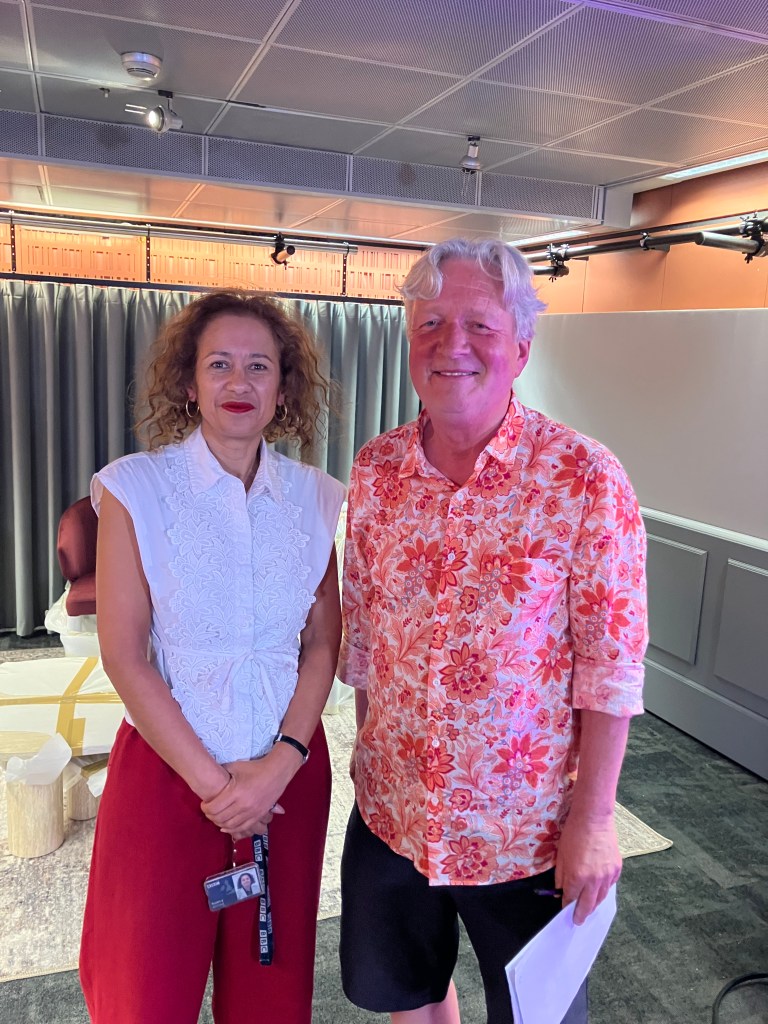
Samira Ahmed with Squeeze singer and songwriter Glenn Tilbrook, Front Row, BBC Radio 4, June 2026
It was such a pleasure to welcome Samira Ahmed to First Last Anything, and invite her to talk about her earliest, most recent and wildcard record purchases. Samira will be familiar to many British viewers and listeners: she has been a journalist and broadcaster for well over 30 years, working in news at the BBC and Channel 4, and latterly in arts journalism – since 2014, she has been a regular presenter of BBC Radio 4’s nightly magazine Front Row. And I was able to tell her – slightly to her surprise! – that in March 2026, she had hosted her 750th edition of the programme.
Samira also presents the BBC News Channel’s Newswatch programme, in which viewers can comment on the Corporation’s news and current affairs coverage of national and world events. In addition, she co-hosts (with Graham Kibble-White) Through the Square Window, a most entertaining monthly podcast about television history.
Now, there’s a book: Samira’s excellent overview and analysis of The Beatles’ first film: A Hard Day’s Night, directed by Richard Lester, and first released in July 1964. Samira is well known as a Beatles devotee, having been a regular guest on Chris Shaw’s superb I Am the Eggpod podcast, and she has estimated that, in childhood, after the film was broadcast on BBC Television at Christmas 1979, she must have watched her off-air video recording at least once a week.
Samira and I had a chat on Zoom on Easter Monday morning 2026 for about ninety minutes and, as you’d expect, The Beatles and television were never far away from our thoughts. But we also talked about why the 1960s continues to have such resonance – and of course about music in general. We hope you enjoy it.
–—–
JUSTIN LEWIS:
How did you first discover your own taste in music?
SAMIRA AHMED:
Top of the Pops on television was very important – and in fact, my parents did have some of the terrible Top of the Pops records with the girls on the cover in long socks and not very much else. I just remember putting one of them on, thinking, Great, this has got all the chart hits… but this doesn’t sound like them – and knowing that was not right.
Luckily, we had really good commercial radio in London, and I used to listen to Capital Radio all the time from the moment I woke up. I used to record the chart show at weekends, would write all the chart positions down in a notebook, and I did that religiously. That was a way in.
And then, around 1979, I started buying records of my own, properly. I know we’re going to talk about albums I bought, but the first single I bought, from the local Woolworths, was ‘Heart of Glass’ by Blondie.
JUSTIN LEWIS:
By coincidence, the first album I bought of my own – although I didn’t get it until 1980 – was Parallel Lines.
SAMIRA AHMED:
That was the first album I remember going out and buying as a new thing, and I got Debbie Harry to sign it when I met her.
—-
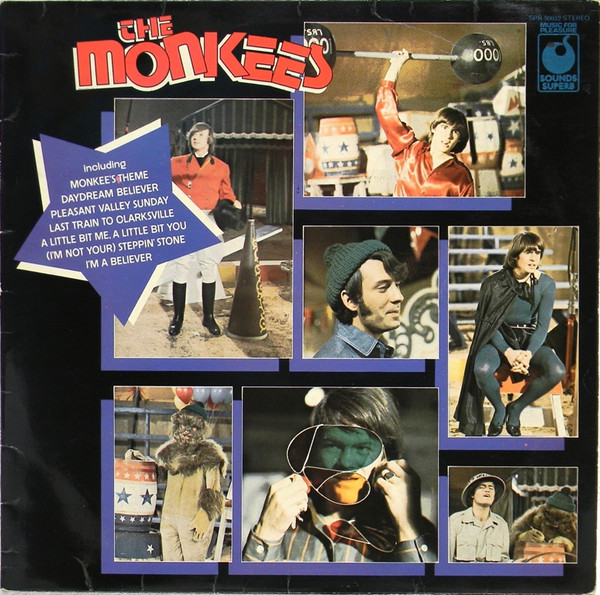
FIRST (1): THE MONKEES: The Best of the Monkees (MFP, 1974)
Extract: ‘Daydream Believer’
JUSTIN LEWIS:
So let’s talk about the very first records you bought yourself.
SAMIRA AHMED:
One year, just before Christmas, ’76 or ’77, my mother took me and my brother and sister up to central London, and we went to the big original HMV store on Oxford Street, the one that’s near Bond Street tube station. And I just remember rummaging through the bins and finding the Monkees – which I loved, that TV series was on all the time – and it was a sort of tie-in compilation album, with a lot of their greatest hits, but with photographs from the TV show.
JUSTIN LEWIS:
Obviously we’re both too young to have seen the original series go out in Britain [BBC1, 31 December 1966 – 13 June 1968]. By the time we were watching them – repeats in the children’s afternoon schedules began in 1972 and ran for many years – they’ve been restructured. Songs would be shifted from one episode to another…
SAMIRA AHMED:
I didn’t know this!
JUSTIN LEWIS:
Yes, when the show went into syndication, they moved the songs around. And the title sequence that we all remember – the action-packed clip-heavy one with the bit where they run into the sea but it’s too cold so they run out again – came from the second series, and they just tacked that sequence on to many of the first series episodes when they were repeated. So they were substantially re-edited. But it was a very limited number of episodes that were reshown.
SAMIRA AHMED:
And was that everywhere or was that just the UK?
JUSTIN LEWIS:
I believe, in America as well – when it went on to Saturday mornings there next to all the cartoons. I used to find it weird why some of the episodes had the Monkees theme over the end titles, but on some of them, they had ‘For Pete’s Sake’ on them.
SAMIRA AHMED:
Yeah, so what’s the story about that?
JUSTIN LEWIS:
‘For Pete’s Sake’ was the end theme tune for the second series episodes, but not the first series. But the strangest tracks ended up in the show. In one episode, which they repeated quite a bit, they included the song ‘Randy Scouse Git’ – which they had to call ‘Alternate Title’ over here for it to be a hit. And it’s so odd to hear that before you know anything about it. Because it’s a terrifying record in some ways.
SAMIRA AHMED:
I’ve been listening to a lot of Monkees recently. There’s a special edition of Headquarters (1967) which has got all the alternative versions of things like ‘The Girl I Knew Somewhere’. It’s just magnificent. And I keep thinking about their relationship to the Beatles. It’s like the Beatles in a parallel universe, isn’t it? Rather than being themselves and then others cottoning on to how good they are, it’s four people thrown together at random who all turn out individually to be talented, capable. Some of them are professional actors and comedians, and eventually they manage to prove that they can play and write. But it’s a battle. They’re having the same story as The Beatles, but it’s sort of inverted.
JUSTIN LEWIS:
Well, the Monkees clashed quite a bit with the guy who was the music supervisor on the series, Don Kirshner, because they wanted more creative control. So he went off and supervised the music for the animated series The Archies – ‘Sugar Sugar’ and all that. In other words, make a television series where you can manipulate your act, because with animation you can do what you want.
SAMIRA AHMED:
It’s like the Beatles animated series [ABC (US), 1965–67], which was never shown here in the sixties.
JUSTIN LEWIS:
A couple of ITV regions did show them, later, in the 1980s, I think.
SAMIRA AHMED:
I’ve watched snippets of the Beatles animated series on the internet and it’s so horrifyingly awful. People have said to me, ‘You should cover that in your book.’ But no – there’s no reason I should. This phenomenon that emerged in America of making terrible child-focused content, often animated or near animated, just destroys the image. It’s lucky that Beatles cartoon series wasn’t shown more widely because it was terrible.
And the other comparison was the Bay City Rollers who signed up with for Sid and Marty Krofft from HR Pufnstuf for that show with Witchy Poo [Krofft Superstar Hour – Bay City Rollers, NBC, 1978]. I’ve watched an episode of that when I was writing a piece about the Bay City Rollers some years ago and it was just, My God, they’d been like the Beatles in Britain in the mid-70s and suddenly they’ve signed this terrible deal that’s going to consign them to hell.
JUSTIN LEWIS:
I also thought – nothing to do with music – of the Laurel and Hardy cartoons [Hanna-Barbera, 1966], and the two of them were dead by then.
SAMIRA AHMED:
I think for us, for Generation X, the repeats of these things were both a blessing and a curse. The blessing was you got exposed to things like The Monkees, and the old Flash Gordon serials and Robinson Crusoe – they had a great power – and the great original black and white early slapstick films from Buster Keaton and Harold Lloyd and Laurel & Hardy. Yet the downside is we also got all these terrible, really mediocre animations like the Laurel and Hardy ones.
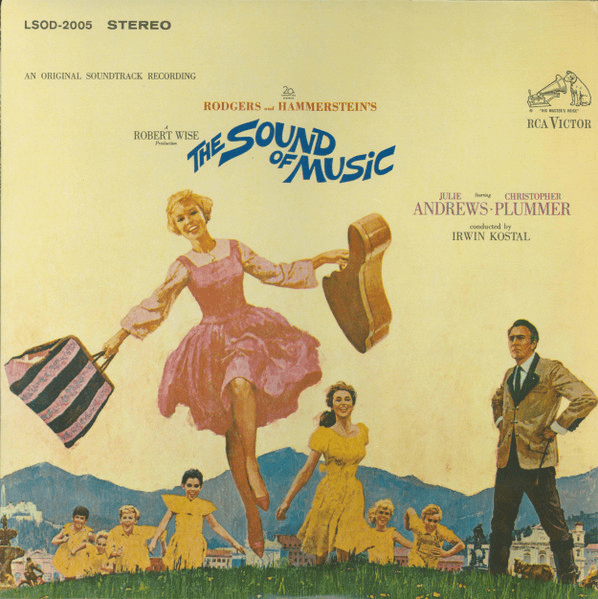
FIRST (2): ORIGINAL SOUNDTRACK: The Sound of Music (RCA Victor, 1965)
JUSTIN LEWIS:
Back to HMV Bond Street, 1976 or 77, and while you were buying that Monkees compilation in HMV…
SAMIRA AHMED:
…I saw the soundtrack to The Sound of Music. Now, I had never seen it, but I had just started at a brand new, quite posh girls’ day school, and everyone there knew it, and everyone used to talk about it. They used to put on the soundtrack in the music lessons, and we used to sing ‘Do Re Mi’. And I was fascinated by this image of Julie Andrews on the cover. I had no idea what this film was about, but ‘Do Re Mi’ doesn’t feel like it was written for a film, you just think it’s a song that’s always been there, like a nursery rhyme. So I wanted to own the record, because it felt like everyone at school owned it, or their parents owned it, and I felt I needed to fill in these gaps in my knowledge. If you didn’t know The Sound of Music, it was like not knowing who Jane Austen was, or not knowing who Enid Blyton was. I felt I was an outsider, so I bought it for that reason. I read the sleevenotes, and it was very interesting listening to the soundtrack of a film that you’ve never seen and not quite making sense of it. And It was a while before I saw it.
JUSTIN LEWIS:
The film was first shown on British television on Christmas Day 1978, but I first saw it on its second showing: Easter Sunday, 6 April 1980, on BBC1.
SAMIRA AHMED:
That might have been the first time I saw it, because I started senior school in 1979 and I still hadn’t seen it then.
JUSTIN LEWIS:
It may be the only time it was ever screened in the evening rather than the afternoon because it’s such a long film. I saw it again a few days ago, I hadn’t seen it for many years. It has this real resonance, because apart from possibly Sgt Pepper, it’s the best-selling LP of the sixties. It’s actually quite a short soundtrack considering the film is so long, although there are huge swathes of the film with no music (part of the point of the film, I think) but also many of the songs reappear later in the film, in very different circumstances obviously…
SAMIRA AHMED:
Yeah, well, that singing concert at the end… We did tape it off television, possibly in 1980. In fact, I’ve realised I must have bought this album as early as ’76 or ’77 because when I started at the new school, I was eight years old – I started in year 4. And we had to have a recorder, and everyone else already knew how to play the recorder, so I used to teach myself to try and keep up. And that’s when everyone was obsessed with The Sound of Music.
JUSTIN LEWIS:
It occurs to me that ‘Do-Re-Mi’ must have felt like the building blocks of music education for at least 10 years after, because it is a song about how to create music.
SAMIRA AHMED:
I was reading about a new Radio 3 series starting up about the history of music, Key Changes, and I’m sure they’re going to feature ‘Do-Re-Mi.
[Indeed they did! You can listen to the episode in question (first broadcast on BBC Radio 3 on 1 April 2026) , and access the whole series, from here: https://www.bbc.co.uk/sounds/brand/m002tdbv]
JUSTIN LEWIS:
By the way – did you ever, in your formative years, get into being in bands yourself?
SAMIRA AHMED:
I can dream of being in a band, but no, I was never cool enough. I played the piano, that was very much a solitary instrument in my case – and it was classical piano. But one Christmas, I did actually ask my parents for the Sound of Music songbook and instead, my mother got me The Beatles Illustrated Lyrics [published 1969, 1971] with those really weird photographs of naked women spraypainted to look like Helter Skelter by Alan Aldridge. And I thought, Well, this isn’t what I asked for, but I’m interested in The Beatles, I do like The Beatles. And I learned to play a lot of their songs from that book before I’d ever heard them.
JUSTIN LEWIS:
Interesting. Did it then surprise you when you heard the songs to discover what they sounded like?
SAMIRA AHMED:
No, not entirely, because the songs that I tended to play, the ones that were playable, were things like ‘Fool on the Hill’, which were very playable as piano solos, and similarly, ‘Little Child’ – some of the waltzy ones actually work quite well. I couldn’t possibly have heard all those songs for real, before I started playing them. But when I heard them, there was a sense of: I know this. It was a really nice feeling. This already existed, like it was in the folk ether.
JUSTIN LEWIS:
I’m the same generation as you, two school years behind I think, and you don’t always know where you’ve heard these things before.
SAMIRA AHMED:
And nothing of it comes through being exposed to the later music at a very young age. So the first time I heard ‘Octopus’s Garden’ was Brian Cant or someone like Brian Cant singing it on Play School. And those songs, the ‘Yellow Submarine’ era of songs, a lot of the slightly psychedelic ones with all that imagery, were like fairy tale songs and you did encounter them at school, having them sung to you or having them sung to you on television.
JUSTIN LEWIS:
Yes, children’s television really did seem to sort of break into that – psychedelic music worked well with it, it was colourful and fantastic. It was as if some people working in children’s television had been young people in the sixties and had grown up with this stuff themselves.
SAMIRA AHMED:
I think there were two different levels going on. I suspect a lot of people who were working in children’s television had all been, young people in the 60s and had kind of grown up with this stuff themselves. Maybe some of the presenters were of that generation, but I think a lot of the people making the commissioning decisions were older and they didn’t see the psychedelic references. They just saw it as a colourful song with lovely imagery.
—–
JUSTIN LEWIS:
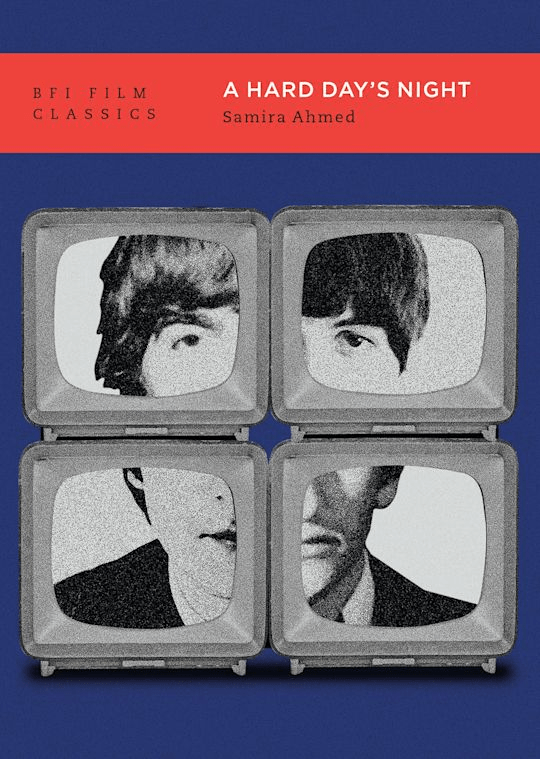
Let’s talk about your new book on A Hard Day’s Night. It’s obviously on record what a big Beatles fan you are. And you say in the introduction to the book, that you ummed and aahed a bit about whether the world needed any more Beatles books. But you offer many good reasons why it needs yours. Had you been considering writing such a book for a while?
SAMIRA AHMED:
I’d been approached about writing a book and I had thought of writing something about Mary Whitehouse and the culture wars. Publishing is a strange place right now, and it was felt there might be trouble getting anyone to want to publish a book about Mary Whitehouse, whatever you might have to say about her. But I’d done a lot of research on her diaries, and I had a real sense of how you dig into archives, and what you look for and what you find, and how you make all these connections.
What’s always really interested me is joining the connections between pop music, the culture people enjoy, social history and politics. What’s changing in Britain at a particular time, and how do politicians regard it? Even in my own career, when I was a young reporter at the BBC [in the 1990s] I had done a lot of reporting on some of the rows about rave culture, when the government was trying to crack down on all these raves in fields, and were sending in heavy-armed police, and the big crackdown on the crusties at Stonehenge and all that stuff.
So all that was in the background.
And because I had lived in Marylebone in the 90s, very close to Marylebone Station, I used to visit the locations in A Hard Day’s Night. I loved that you could talk about psychogeography and how these places have a resonance, that this film was filmed in London, but it was a worldwide success – and so I started to think about writing something about it.
There was a volume of stuff about A Hard Day’s Night out there, and a lot out there in print which is not actually accurate. There’s a whole article about the night of the film premiere, it has all this stuff about who took who, and Patti Boyd just misremembered, confused it with something else – maybe the Help! premiere…
JUSTIN LEWIS:
Was that in a recent article, or one published at the time?
SAMIRA AHMED:
It was written in the early 2000s, I think. As a journalist, my attitude is that what you put in a book should be the absolute truth, and if we’re not 100% sure, if we haven’t got really verifiable sources, then it shouldn’t be in there. So Mark Lewisohn kindly agreed to be a consultant, and spent time looking over the manuscript and saying, ‘I don’t think this is true and this is why.’ I’m very pleased that this book is the whole picture – it’s not just the Beatles, it’s not just the music, and it’s not just the film, although obviously those are the three most important things.
JUSTIN LEWIS:
There’s always something new to know about the Beatles, which is quite unusual about a band.
SAMIRA AHMED:
I know there are fans with such a deep level of knowledge and I couldn’t compete with that, but writing as a journalist, where you’re trying to appeal to a general audience and a specialist audience at the same time… I tried to make sure that there was information there which people perhaps hadn’t put together. For instance, the scenes that were in the original script – there was a racist scene which I don’t think the Beatles ever got to see, and the producer said, ‘We’re not putting that scene in the film.’ When Ringo goes into the shop, when he’s parading and buys the hat and coat, there was a whole section where the script mentions a ‘typical Jewish proprietor’ as well a whole scene with him selling stuff to East Indian sailors and obviously making fools out of them. And Bud Ornstein [European head of production for United Artists] said, ‘That’s not going to go down well in the United States’, thinking about an African–American audience. And obviously that wouldn’t have dated the film well, for any of us.
Some of those things are documented because they’re included in Alexander Walker’s excellent book, Hollywood England (1974), the history of the film industry in the sixties, and he’d interviewed Bud Ornstein and Richard Lester, and so we’ve got a real sense of how that film was made. But also I got to talk to people like David Janson, who played the boy by the river in that scene with Ringo… and there was a whole other scene he was supposed to be in, and wasn’t, but which I think would have made the film even better. Sometimes, rushing to get things done on time, you miss a great moment of poetic completion.
I didn’t want to bother Richard Lester and he’s done so many great interviews, I had no shortage of material – interviews at the time, the Steven Soderbergh book in the 2000s. But I have sent him a proof copy and will send him a finished copy because the book is about him. Without him, this wouldn’t have happened. And I’d like to think the book gives some due recognition to his talent because the only major prize he’s won for his films has been the Cannes Palme d’Or for The Knack and How to Get It, ironically a film that’s dated really badly in one specific way only – the rape jokes.
JUSTIN LEWIS:
One thing I went and checked out was The Beatles’ love for Richard Lester’s early television work because they’d seen the stuff with Milligan and Sellers, things like A Show Called Fred and Son of Fred, and oddly, although A Show Called Fred began on ITV the same month that Granada first went on the air in the north of England region – May 1956 – that first series wasn’t shown in that region. They did later show Son of Fred, due to public demand and that must have been what the teenage Beatles would have seen. But Granada believed that A Show Called Fred wouldn’t have worked with the audience in the north, apparently.
SAMIRA AHMED:
How sad because Son of Fred, of course, got cancelled early.
JUSTIN LEWIS:
In the book you describe the film of A Hard Day’s Night as ‘like a wildlife documentary’. And you’re absolutely right. I don’t know if it’s a subconscious pun on ‘beetles’!
SAMIRA AHMED:
I didn’t go into detail on this, but it’s relevant: at that time, current affairs programmes like This Week [on ITV] would send a crew to spend half an hour with the Beatles on their way from the airport to a train station and just film them talking and then put that out as a half-hour current affairs documentary because they were that fascinating to people. I thought of that wildlife analogy when they arrive at the Scala Theatre for their press conference and the camera is locked off on the side and they walk into the foyer. And the image I had in my head was of turning a jar of stick insects upside down, and then you lift it, and they all wander off in different directions. And the camera watches them do that.
Coincidentally, if you look at all the Hard Day’s Night reviews which are quoted in the book, the number of contemporary newspaper critics’ reviews which describe them in animal metaphors… you know, they’re like as frisky as young colts or as charming and dangerous as jaguars compared to Cliff Richard, just like the cat who had too much cream. Some of these animal analogies are almost Freudian, the critics are obviously fascinated and quite sexually aroused by them – including some of the men, you know.
—–
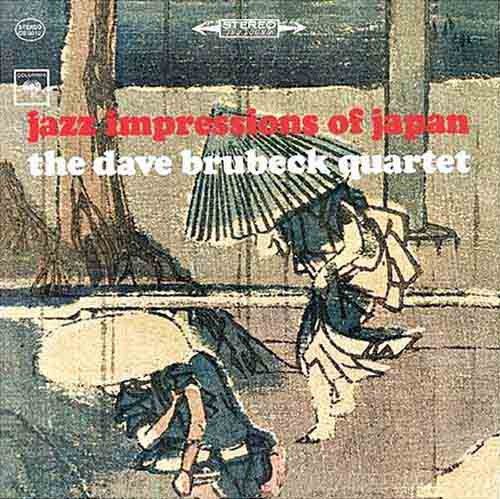
LAST: DAVE BRUBECK QUARTET: Jazz Impressions of Japan (Columbia, 1964)
Extract: ‘Koto Song’
JUSTIN LEWIS:
I’d love to know how you came across this.
SAMIRA AHMED:
I started listening to a huge amount of jazz while writing the book, because you can’t listen to the Beatles while you’re writing, you have to concentrate. And it’s not that I regard jazz as background music, but the more I read about Richard Lester, and the fact that he loved jazz, it kind of makes sense. Apple have these great playlists, and so the Dave Brubeck playlist picked out this album, Jazz Impressions of Japan. Interestingly, it’s from 1964, the year that A Hard Day’s Night is being made.
I just love how unafraid this album is to say: ‘As an American, this is my American impression of Japan.’ It’s a bit like the soundtrack to You Only Live Twice – we know it’s not a Japanese soundtrack, but it does capture something through an outsider’s eye. Particularly the final track on that album, ‘Koto Song’, it’s just magical.
JUSTIN LEWIS:
That’s the one from that album they continued to play live quite a lot over the years. In fact, the Brubeck Quartet went to Japan, 4 May 1964, in those couple of months in between the Beatles shooting A Hard Day’s Night and the Beatles releasing A Hard Day’s Night. And Jazz Impressions was recorded in June. So they’d come back from Japan, and they’d had some ideas while they were there. For instance, the opening track, ‘Tokyo Traffic’ came about because when they arrived, they had to have a police escort through the city just so they could do the first concert. Brubeck was clear about it, that this wasn’t supposed to be them doing Japanese music, it’s simply, ‘These are the impressions we got’, from hearing Japanese pop music on the radio for instance.
SAMIRA AHMED:
Yeah, when I stumbled across ‘Koto Song’, straight away you’re listening to something that’s connected to Japan. You get a sense it’s an impression. It’s just so brilliantly playful. I also thought: I’ve been to Japan a couple of times, and there’s a really interesting amount of modernist architecture there. They embraced a lot of it. There’s the Hotel Akura, which I think may have been pulled down now, but it was certainly there when I went in the spring of 1998. It’s one of those hotels that was built in about 1960, and it had this great modernist bar, like something out of a Rock Hudson/Doris Day rom-com, but in Japan. All the furniture and the setting of it was fabulous. So that place came to mind as I was listening to this album. I have very fond memories of my various trips to Japan.
JUSTIN LEWIS:
My father’s many years gone now, but my mum once happened to drop into conversation that they saw the Dave Brubeck Quartet live, at what is now called the Bristol Beacon. 1 June 1964, and it turns out they saw the Quartet just after that visit to Japan, they were on a world tour. So the Quartet must have come to Britain, then gone back to America and recorded Jazz Impressions of Japan. They never did a Jazz Impressions of Britain, which might have been interesting. Lots of Beatles covers or something!
SAMIRA AHMED:
[Laughs] Well, you could argue that the best jazz impressions of Britain are, again, by an ‘outsider’: Sonny Rollins’ soundtrack to Alfie, which is probably my favourite jazz soundtrack. And the more you listen to it, the more you get out of it, the more you hear all the different countermelodies.
JUSTIN LEWIS:
Are you familiar with Brubeck’s work generally? Because this wasn’t one of the famous albums at all. It didn’t come out on CD till this century. It was very buried.
SAMIRA AHMED:
No, I own a fair amount of Sonny Rollins, Miles Davis, Charlie Parker – and some of that is because my ex-husband actually had a lot of jazz records. He never used to play them, interestingly enough, but he left them all, and I love them. And my very first boyfriend was very into jazz, and he introduced me to Miles Davis’s Birth of the Cool. So there’s certain albums that I hear, and I have really positive associations with my discovery of music and the world.
But my first proper love of jazz came earlier – the jazz vocalists like Billie Holiday, Ella Fitzgerald, Sarah Vaughan, and through them, Duke Ellington and all those great jazz composers and arrangers. More recently, really only in the last 10, 15 years, I’ve really come to know players like Sonny Rollins better. The soundtrack to Alfie is just amazing, the title track is the obvious one, but there’s a track called ‘Street Runner with Child’, and – like we were just saying about impressions of Britain – you’ve got all these different sounds going on in there. Someone running down the street and then suddenly at some point well into it, you’ve got two different melodies going on and they’re kind of crashing and then suddenly at the very end, the familiar theme suddenly comes in. It’s like a jazz equivalent of the Goldberg Variations.
JUSTIN LEWIS:
Sometimes, I wonder how unwitting jazz quotations of things are. On ‘Tokyo Traffic’ on Jazz Impressions of Japan, Paul Desmond the sax player, for some reason, starts playing the melody of God Rest Ye Merry Gentlemen. It comes out of nowhere, but it’s there.
SAMIRA AHMED:
The Beatles are doing that in their own way, like how they’re quoting bits of a trumpet oratorio on ‘It’s All Too Much’ [Jeremiah Clarke’s ‘Prince of Denmark March’, aka ‘Trumpet Voluntary’, written c. 1700], a piece they use as a wedding march sometimes, or the ‘Marseillaise’ at the beginning of ‘All You Need is Love’, on which they’re also quoting ‘She Loves You’, aren’t they?
JUSTIN LEWIS:
They quote themselves, yes, which I don’t think had been done before on a big pop hit.
——
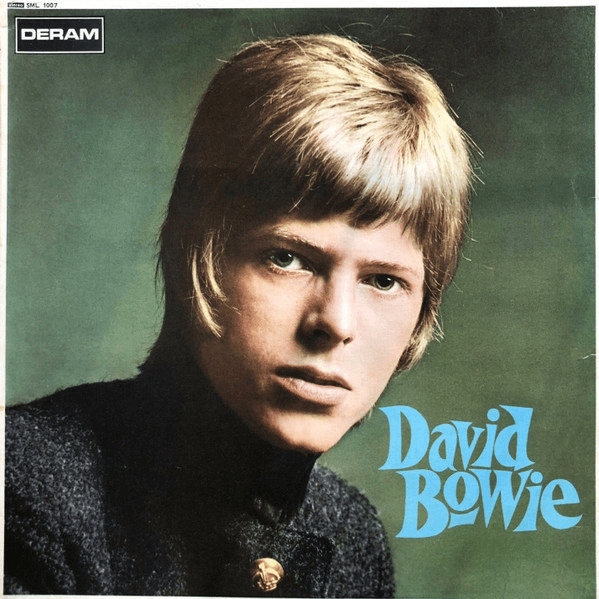
ANYTHING: DAVID BOWIE: David Bowie (Deram, 1967)
Extract: : ‘Come and Buy My Toys’
JUSTIN LEWIS:
So – your wildcard choice.
SAMIRA AHMED:
I’m trying to think where I first heard this. Even though I’m a big David Bowie fan, I never bought the albums, I always knew him by the songs and the singles. And I didn’t realise there were two albums called ‘David Bowie’. I got given the second one [sometimes called Space Oddity, released in 1969], the cover with his curly hair, as a present. And then I realised that the first album was actually something quite different.
I did an event at the British Library a few months ago about David Bowie. I was chairing a panel, with Paul Morley on it, and he had just written a really brilliant new book about David Bowie, in which there were all these insights into the influence of Anthony Newley. Anthony Newley is such an interesting presence in the early 60s, with his impact on all sorts of things.
After I read Paul’s book, I started listening to this album again. There’s an overlap with Oliver! and the musicals of Lionel Bart and the Anthony Newley sound. I’m just really intrigued by it. I’ve said this in connection with The Beatles – in a weird way, I always have a special love of ‘the early stuff’ because it’s the bud before the rose blooms. That’s more interesting to me. And this David Bowie album, it’s got the seeds of so much.
JUSTIN LEWIS:
He later said of this period, ‘I’m more Anthony Newley than Anthony Newley.’ And I remember as a kid, hearing ‘The Laughing Gnome’ [also from 1967] and trying to work out how he got from that to Ashes to Ashes or whatever, and thinking, ‘Can that be the same person?’ Once you hear this album, it makes a lot more sense.
SAMIRA AHMED:
It does make a lot more sense. I love that it’s somehow unashamed of being heartfelt in a very, very non-cool way. The magnificence of David Bowie is that he’s doing these things that don’t always land well at the time, but they’re unique and they’re original. And thinking about the jazz connection: Paul Morley’s book talked a lot about him listening to a chap called Joe Harriot, who did these amazing jazz tie-ups with Indian music, with Amancio D’Silva. There’s an album they did, which I nearly chose for this, called Hum Dono, which means ‘The Two of Us’, from 1969. There are all these jazz albums that influenced Bowie, that I’ve discovered through reading Paul’s book, and I think that jazz influence on his sound emerges very clearly much more, later on. He’s got all these different strains of music from different traditions, he absorbs everything and then he produces his own new… not versions exactly, but it’s like eating something and then what you create comes out of what you digested.
Joe Harriott & Amancio D’Silva Quartet: Hum Dono (1969). Not currently on streaming services, but you can hear the whole album via that link on YouTube.
JUSTIN LEWIS:
There’s also that element of spontaneity on those early Bowie records where he seems to be enjoying himself quite a lot as well. It’s sort of humorous and yet not humorous at the same time.
SAMIRA AHMED:
Yeah. And I just like seeing the David Bowie who is much closer in time to the era of the Beatles and the Monkees. Because we think of him so much as a creature of a new era that’s to come from 1969, 70 onwards. He’s trying to take off in this era. He doesn’t quite manage it, but he looks a bit like other pop stars at the time. It’s not enough to be David Bowie. It’s got to be the right moment. It’s got to be the right music.
JUSTIN LEWIS:
And he’s an actor as well. He’s already reinventing himself every couple of years.
SAMIRA AHMED:
One thing that came out of that day at the British Library: there were these great films that were made about David Bowie by Francis Whately, a wonderful producer who was there to talk about them. He’s making another one now. They’re all on the BBC iPlayer. He interviewed Lindsay Kemp, the mime artist who David Bowie worked with, and Lindsay Kemp said, Oh, David Bowie was a terrible mime artist. So it was quite refreshing to hear that – we think to ourselves, ‘Oh he learned mime, and he used it, he was very skilful, and he was a trained actor’, but actually, the master that he adored thought he was terrible at it. I thought it was hilarious.
JUSTIN LEWIS:
The singing style got me thinking, too. I can hear a bit of Jarvis Cocker in this, I think. The vibrato is quite similar.
SAMIRA AHMED:
Well, the song ‘Uncle Arthur’ makes me think of early solo Paul McCartney.
JUSTIN LEWIS:
Oh, ‘Uncle Albert’, isn’t it! Writing songs about uncles – Uncle Arthur, Uncle Albert, Uncle Ernie – you don’t really get that anymore, do you?
SAMIRA AHMED:
In the future, who will write songs about uncles and aunts when there are so many fewer multi-child families, people having fewer kids? You don’t have that big extended family, that colourful collection of characters in the hinterland.
—-
JUSTIN LEWIS:
I think you’re the first FLA guest where all your choices are from the same decade…
SAMIRA AHMED:
That wasn’t intentional(!)
JUSTIN LEWIS:
No, but everything’s sort of from those three or four years before you were born.
SAMIRA AHMED:
Yes, because Sound of Music is ‘65. The Monkees are ‘66 to ‘68, aren’t they? Dave Brubeck is from ’64.
JUSTIN LEWIS:
And Hard Day’s Night is from ’64. There seems to be something about the 60s before your birth, that you keep coming back to. What do you think it is? Is it because some of the stuff is genuinely lost from that era? Or is it about joining the dots with memories?
SAMIRA AHMED:
The first thing I’d say is, people are very nostalgic about the 90s in the same way. I find that funny because, of course, you and I both were very much around. I was in my twenties, and I do remember it being an exciting time. And I remember thinking how self-conscious everyone was, [saying things like] ‘Oh, this is like the 60s’, you know – so the 60s remains that kind of golden moment. Though I suspect people in the 60s, if they were old enough, would have said the 20s was the time, you know, when all these women could vote and there was this new freedom in the air and there’s all kinds of illicit drugs and all that stuff going on in Britain.
When I talk to people who were making their careers in the 60s, I hear just how much economic opportunity was part of it. There’s a lot of employment: sixteen-year-old school leavers can walk into a job, and there are all these new crafts opening up. When I was looking at A Hard Day’s Night, I looked at how there were all these makeup artists with a new career opening up, they could train on the job and have status and are part of this major new creative industry of television. And television is at its peak – and there all these shows and formats have been developed. That show, Colour Me Pop, that experimental show to showcase colour on BBC2 (1968–70) where they were basically shooting beautiful on-location pop videos for bands – they look like art poems, don’t they? And they knew they weren’t competing with the Internet or any of that nonsense – there’s books, there’s theatrical happenings, but everything is experienced in real time and in the moment – and that’s part of what makes it feel intense.
Those people who were there have also told me that it felt like going from black and white into colour. But so much did change with the 60s and affluence, and those who remembered sweet rationing and all the rest of it, was exciting.
I also think the other part of the economic picture is the investment that went into civic structure of things. People can argue all they like about whether grammar schools were a good or a bad thing, but it is interesting how many working-class children got an amazing education through that system and went to art school or went to university. And people like Eric Idle, whose father died in the war, he went to boarding school, and had a hideous experience. But, you know, he got into Cambridge. I’m fascinated by this generation who had opportunities undreamed of, 20 years before they were born. In that era, they became great pop stars, artists, writers, filmmakers whose work still influences us so much today. So I think it’s about Britain investing in itself and it all reaping huge dividends.
The thing about the Beatles: yes, three of them went to grammar school – I think John’s the one who went to art school, wasn’t he? – but all of them grew up in a sense of a new world. They were all products of the welfare state and the new Education Act, and they didn’t have that sense of knowing your place. You could argue, that’s who they were, but this was a new world, and they weren’t the only ones who felt that way. You could have confidence in your own ability and things were cheap. You could get across town on a cheap bus to learn a new chord. I do keep coming back to how would anyone of that background have the chance to prove themselves today. Student debt, all those things, that’s so terrifying.
JUSTIN LEWIS:
It’s not easy to be a young person now, I suspect, because you just, because yeah, the economics are not good. In our day, if you got to university, you’ve got a few years afterwards to try and work out what to do next.
SAMIRA AHMED:
Or you could get a job straight away as a school leaver, you didn’t have to have loads of qualifications. And then the new industries were opening up. I just think there was an exciting sense of the country discovering itself, in different classes and backgrounds talking to each other. And I know there’s huge issues, you know, with racism and sexism and homophobia and all the rest of it, but they were starting to be challenged in the big cities, these great places of escape from some of those small-town attitudes. My parents came to London in 1960, and it was a really exciting time.
JUSTIN LEWIS:
There’s also the breakthrough of television, and it seems to me A Hard Day’s Night is partly about television and mass exposure. By the 1960s, it seemed to be the one thing that most people had – I think it was Dennis Potter, who started off as a TV critic, who described it as the great equaliser, because nearly everyone had access to it. The kids at school who didn’t have television at home… you felt so sorry for them because it felt like that’s where the information was coming from a lot of the time.
SAMIRA AHMED:
Although, I do wonder how far we’re selective about what we choose to remember because I think there was so much dross as well. A lot of really bad entertainment, things like The Black and White Minstrel Show. [JL agrees] That was obviously aimed at people who remembered the pre-First World War period, people who were born in 1900. I still find it hard to believe how long that show was allowed to continue. It’s really interesting how early on there was opposition to it and how often there was an opportunity to say, you know what, we could just not commission another series of this. And it somehow became a sort of symbolic fight, but between who and quite for whom I don’t understand, because people who really cared about that show would have been dead surely by the late 1970s.
JUSTIN LEWIS:
You’d have thought, wouldn’t you? I mean, I watched all sorts of rubbish, but I drew the line at that. I’ve since changed my mind slightly on The Good Old Days.
SAMIRA AHMED:
At least with The Good Old Days, you could argue that was an entertainment programme that represented this longer tradition. The Black and White Minstrel Show used to do more modern songs, with modern dancing. It wasn’t claiming to be in the past, it was claiming to be in the now! It was so anachronistic and out of time.
—–
JUSTIN LEWIS:
In your younger days, were you thinking about arts journalism? Because you did 20 years of what they used to call ‘hard news’. You mentioned that rave story for the BBC, but how often did you get to do arts and culture stories in those days?
SAMIRA AHMED:
I didn’t get to do them that often. I always loved arts and things. I did a degree in English literature. I did a big set of reports for BBC News about the first Star Trek convention to be held in the UK, in ’95. The producer I made those with, Stuart Buckman… he and I were huge Star Trek fans, and we looked at things like the social change that it documented and the business angles on it.
And then I did a great story in about ‘96 or 7 with Miranda Sawyer, who was quite a young journalist then, about girl power. I was produced by BBC World Service Television to do a piece about what is ‘girl power’ – is this the new feminism? So I was quite good at doing this.
At Channel 4 News there was more scope to pitch your own ideas and do longer films. And that’s where I really started to do some of the arts films I wanted. So I did a film about Robert Brownjohn, the big advertising man who designed the title sequences for Goldfinger and From Russia with Love, the projections. There was a big exhibition about his life and career [Design Museum, from Oct 2005], because he died quite young [forty-four, in 1970].
So I had great fun with that. I did one about Alan Fletcher (1931–2006), who was his friend, who was a very big figure in the design world as well, designed the V&A logo and things like that.
Then I started to interview quite a lot of film directors there, sometimes because they would come through London. And in the same way that people try and go on Front Row, a lot of people would want to go on Channel 4 News because you get a decent-length interview. So I interviewed people like Tim Burton while I was there.
When I did go freelance, I went to the BBC, starting in about 2012, and the first thing I did was present the Proms on BBC Four. And even though I was initially presenting shows like The World Tonight or PM [on Radio 4], if there was an arts story that I spotted in the paper, you’d certainly make the case for it. I think a lot of people want to pursue their own passions, don’t they – if you’ve got an expertise in economics or sport, and you spot a story, that’s likely to get on to that day’s show because you’re the presenter.
JUSTIN LEWIS:
So you could pitch these things quite easily then?
SAMIRA AHMED:
Well, at Channel 4 News, I was staff anyway, so there were enough people, enough shows, enough airtime, where you could work on these items as extras. When Smash Hits magazine folded [2006], I remember in that day’s morning meeting saying, ‘This is a really important magazine, this is what it meant to my generation – it was singles, not LPs… it was singing along, not analysing the lyrics.’ And they said, ‘Go ahead, make a piece about it for tonight.’ So some of it was just spotting a story and being able to bring it to the table – and then there was a willingness to commission it because it was airtime.
But it’s the same for you, isn’t it? You turn the passions that you’ve enjoyed all your life into something that you can articulate and express and share with others that isn’t just ‘closed’, there’s a general fandom which I guess I would describe myself as being part of.
JUSTIN LEWIS:
When you came back to the BBC, one interview I particularly remember vividly was the one you did with John Waters for Night Waves on Radio 3.
SAMIRA AHMED:
I was obsessed with John Waters. One of my favourite films of all time is the original Hairspray (1988). I taped that off television when it was shown in the early 90s. I used to watch it the way I used to watch A Hard Day’s Night – at least once a week, usually a couple of times a week. It just always cheered me up, and there’s just so much going on in there. We did the interview in London, in Studio 80A, the big studio upstairs [the largest music studio at BBC Broadcasting House]. And Ian Christie, the film historian, came in with some of his graduates and film students from Birkbeck, so we had a little audience to make it a bit more of an event. Like writing this Hard Day’s Night book, I prepared by watching every film John Waters had ever made, some of which were quite hard to get hold of. And some of them were still so outrageous to watch – it’s amazing and exciting what he was doing in the 60s and early 70s in Baltimore. I love that John Waters was on Radio 3 talking about his aesthetic of trash.
JUSTIN LEWIS:
In your twelve years on Front Row, do you sense a shift in the approach to arts coverage in broadcasting over that time?
SAMIRA AHMED:
We have 45 minutes per show [it used to be half-an-hour]. So my freedom’s certainly not decreased – if anything it’s grown. I’ve always tried to bring in interesting arts stories, I certainly push to say we should do more pop music. Some of that is about new acts, and we do people I’ve not necessarily heard of but have discovered – that’s very exciting. But equally, Tears for Fears, or on a forthcoming episode, The Damned. They’ve a new album, and I met some of them at the unveiling of the Marc Bolan blue plaque in Maida Vale, and thought they’d be brilliant on Front Row.
JUSTIN LEWIS:
Yes, their first-ever telly was guesting on Marc Bolan’s Granada series, wasn’t it? Pretty much the last thing Bolan did.
SAMIRA AHMED:
And he’d invited them to join his tour after they got sacked from the Sex Pistols’ Anarchy tour. I keep thinking, ‘How do you get sacked from an Anarchy tour?’ And there’s such a lovely story about what Marc Bolan meant to The Damned – how he’d personally inspired Captain Sensible, who was a cleaner at the Fairfield Hall, and who saw Bolan and T Rex performing there, and thought, ‘This is what I want to do.’ So he went out and bought a guitar. You can spot the stories that I bring because they tend to be a lot of pop acts. I’ve interviewed Duran Duran twice. I didn’t expect that to happen.
JUSTIN LEWIS:
Were you a fan back in the day?
SAMIRA AHMED:
Yes, and as we said earlier, I do unashamedly take in my records and ask them to sign them. With Stewart Copeland, I brought in all my Police records. I asked Matt Johnson from The The… and I had singles as well as albums. They just like that you know their work, going way back, you’re not just some johnny-come-lately.
But I think the programme’s changed in that we’re trying to cover more. I made a big thing when I first joined that we should cover graphic novels, video games, even though I’m not a video gamer and I don’t read as many graphic novels as I did 10 years ago. Equally, I didn’t watch much opera, which I do a lot more now.
Our audiences are people who read books, go to the films, listen to music… it’s liberating because you’re making it for people who care about this stuff already.
JUSTIN LEWIS:
Were you somebody who used to watch all the arts programmes when you were growing up?
SAMIRA AHMED:
I’d watch certain episodes. I taped the Kenneth Williams South Bank Show (1994) which had John Sessions reading from the Joe Orton diaries, and Robert Stephens reading as Kenneth Williams. It was just so well cast.
JUSTIN LEWIS:
Of your own journalistic work, what would you say you’re most proud of?
SAMIRA AHMED:
At Channel 4 News, for the 90th anniversary of the Armistice in 2008, I interviewed three or four survivors of the First World War. I remember we were sharing a crew with ITV, and we had a limited amount of time. But I suggested that when they lined up at that moment of the last post at the Cenotaph, that we could insert dream sequences, of flashes of what they’d experienced. One of them had been involved at the Battle of the Somme, so we inserted some footage from that. One of them had been at sea – might have been the Battle of Jutland – but we made sure we matched footage. So we had this black and white footage that would just appear silently during the film – we weren’t trying to be overly arty, but just trying to give you a sense of what these men had lived through and what their memories might be. And they had very different approaches to memory. One of them said, ‘I’ve told you people, I don’t like to talk about it, it was a long time ago’, and another one was very happy to share his memories. You had a real sense of them as individuals, as well as symbols.
So I guess I brought artistic technique to things I made, and some of that I must have absorbed from watching programmes growing up. But from arts programmes, I tended to look out for subjects I was interested in, rather than just watch anything and everything in a series.
Perhaps the story I did which I’m proudest of – not that it changed things in the long term – was a report I did for Channel 4 News in 2009, about so-called ‘corrective rape’ in South Africa. It was this phenomenon there where there was a lot of homophobia, and lesbian women were being targeted and raped and murdered. In one case, there was a football player called Eudy Simelane, who had been in the national women’s team and who was training to be the first female referee at the men’s World Cup in South Africa that year. And she was raped and murdered in the township just near her home, on her way back from a night out.
I had heard about the story from the charity ActionAid, and I set up the whole thing, and I flew out there for a week. I met the activists, the family, went to the place where she died, and I thought, how many women in South Africa… I mean, people like Reeva Steenkamp, Oscar Pistorius’s girlfriend. You know, it’s not about race, it’s about male violence and a particular kind of male violence about lesbian women. When I did that story, everyone suddenly noticed. They said that no-one had wanted to cover that story in South Africa because there was already so much rape, and so it’s ‘just another rape’ and it’s the rape of a Black woman from a township, so it was going to get even less coverage.
After I did the story – not that it matters by itself – it mattered to Eudy Simelane’s family that suddenly CNN and the BBC and every major network from around the world was covering the story. When the trial came up of her attackers, they covered it. Not all of them got convicted, but it was a start to have the crime acknowledged. So I was proud of having done my bit. I’ve had other stories like that, those are the ones you remember as being important.
—-
JUSTIN LEWIS:
We have to mention your Beatles scoop for Front Row, which came out of your visit to Stowe School.
SAMIRA AHMED:
In the summer of 2022, August Bank Holiday, my partner and I went on holiday to Northamptonshire on a mini-break. He knew the development team at Stowe School because he used to run a charity which donated a lot of money to Stowe. And he said, ‘Do you want to go and visit because it’s still the school holidays and they’d show us around?’ So we did, and I spotted this blue plaque on their theatre building, saying, ‘The Beatles played here, April the 4th, 1963.’ I thought, I hadn’t really known that – though somewhere I probably did, but it hadn’t really registered – but also I realised the sixtieth anniversary was coming up, in about eight months. I figured it would have been a concert like no other, because it would have been an all-male audience. And it was a private gig, and they never really did those kinds of things, they didn’t appear before toffs for money.
So I followed it up with the school, who put me in touch with two students who’d been there, and in the email exchange it was mentioned that ‘someone recorded the concert, but is this a Stowe myth?’ And within 12 minutes, one of those former students John Bloomfield replied, ‘Twas no myth, ‘twas I. I shall see if I can dig out the tape and see if it’s playable.’ He obviously knew he had the tape, but when we made the programme for Front Row, he told me that he had discussed it with his son, and he knew Front Row, knew me, and felt he could trust me. So I was hugely touched, but we didn’t know for sure, until the day we went to record at the school, that he had brought the tape and that he was willing to play it and share it. And I knew that tape was going to be a big deal, so I had a private WhatsApp chat with my editor and producer on Front Row, to discuss the developments. Then I let Mark Lewisohn know, and John played us the whole tape. And that became a half-hour segment on Front Row, which was the most downloaded episode ever, and I got so much feedback from around the world. Even from people who said, ‘I never really bothered or cared about the Beatles, but I really enjoyed this because it put the Beatles into a social context.’ You don’t have to love something to want to know about it, it’s just an important part of our history.
JUSTIN LEWIS:
What did it feel like, hearing the tape yourself?
SAMIRA AHMED:
You have a real sense of how the audience over the course of that hour are just transported, you know, and you can hear the songs, you can hear them playing… there’s no other concert like it.
JUSTIN LEWIS:
And probably one of the last times the Beatles can hear themselves playing. Because they’re not yet quite in a position where people are just going to scream all the way through.
SAMIRA AHMED:
That’s another reason why the films and the TV appearances are so important – that’s where you get to really meet the Beatles. In those concerts, you’re part of a kind of cult phenomenon, but apart from being able to see them, it’s all about being caught up in the moment. I would have hated it. I’m one of those people I never liked being in crowds and I’ve never, ever been one of those girls who would scream. You know, it’s all been in my thoughts, written down in my diary at home.
JUSTIN LEWIS:
I find crowds quite difficult.
SAMIRA AHMED:
Yeah, and I’ve never wanted to be part of a crowd like that. So I think television and cinema were really important to helping the Beatles conquer the world because you didn’t have to be at one of their gigs.
—–
JUSTIN LEWIS:
In your formative years, were you buying the music press at all?
SAMIRA AHMED:
I have the very first issue of Smash Hits [1978]. I have a collection of them, and I remember bringing that first one in to show Miranda Sawyer [who first came to prominence as a Smash Hits journalist, from 1988] because she also had a great collection and we photographed them all.
After I read Smash Hits in the early 80s – and it was really fun and entertaining – I stopped. And then when I went to university in 1986, I think pop music went through a very bad phase. I might have changed my opinion in some ways, but I just remember I hated Radio 1 – there was an awful lot of Stock Aitken Waterman stuff that I didn’t like… some of it I did like, but most of it I didn’t. And so I retuned my radio and found Radio 4. So I didn’t buy any music press for that period at all.
Then when I moved to London, in ’89, ’90, I started buying Q magazine, bought loads of those, and one of my great regrets is having to move house at quite short notice, thinking, ‘I can’t keep all these’, and putting them all in the recycling.
JUSTIN LEWIS:
British Library have still got them all, I think.
SAMIRA AHMED:
Exactly. British Library have got everything. And then, in ’94-’98, the ‘good Britpop years’, I started buying the NME and Melody Maker, and enjoyed that. And now, I’ve started a subscription to Mojo, and Classic Pop – in fact, I have more magazine subscriptions now than ever before: Sight and Sound, the Art Newspaper, Architect’s Journal – because I’m president of 20th Century Society, which is all about modern design… I’m a 20th century girl in every sense!
———–
Samira Ahmed’s marvellous book on A Hard Day’s Night is out now, as part of the BFI Film Classics series, published by the BFI and Bloomsbury. https://www.bloomsbury.com/uk/hard-days-night-9781839029394/
Samira continues to present Front Row, usually though not exclusively on Mondays. The programme is broadcast on BBC Radio 4 at 7.15–8pm, Mondays to Thursdays, and is also available on the BBC iPlayer. Listen to current and past editions via the programme page here: https://www.bbc.co.uk/sounds/brand/b006qsq5
The two Front Row editions about the Stowe School Beatles concert and tape can be found here:
Front Row, 3 April 2023: https://www.bbc.co.uk/sounds/play/m001kpq1
Front Row, 19 June 2023: https://www.bbc.co.uk/sounds/play/m001n1lr
Newswatch is broadcast on the BBC News Channel on Friday evenings, and repeated as part of BBC Breakfast on Saturday mornings. You can also watch episodes on iPlayer. https://www.bbc.co.uk/programmes/b00qjrk2
Through the Square Window, the monthly podcast which Samira presents with Graham Kibble-White, and which I highly recommend, if you have any interest in television and social history, can be found here: https://squarewindow.co.uk/
There is so much more that Samira has done in her career – and her website collects other articles, clips, blogposts and so on. Plenty to read, watch and hear, and also latest news on her book promotion itinerary: https://samiraahmed.blog/about
You can follow Samira on various platforms: @SamiraAhmedUK on what used to be called Twitter, and on Bluesky (@samiraahmeduk.bsky.social).
—-
FLA Playlist 37
Samira Ahmed
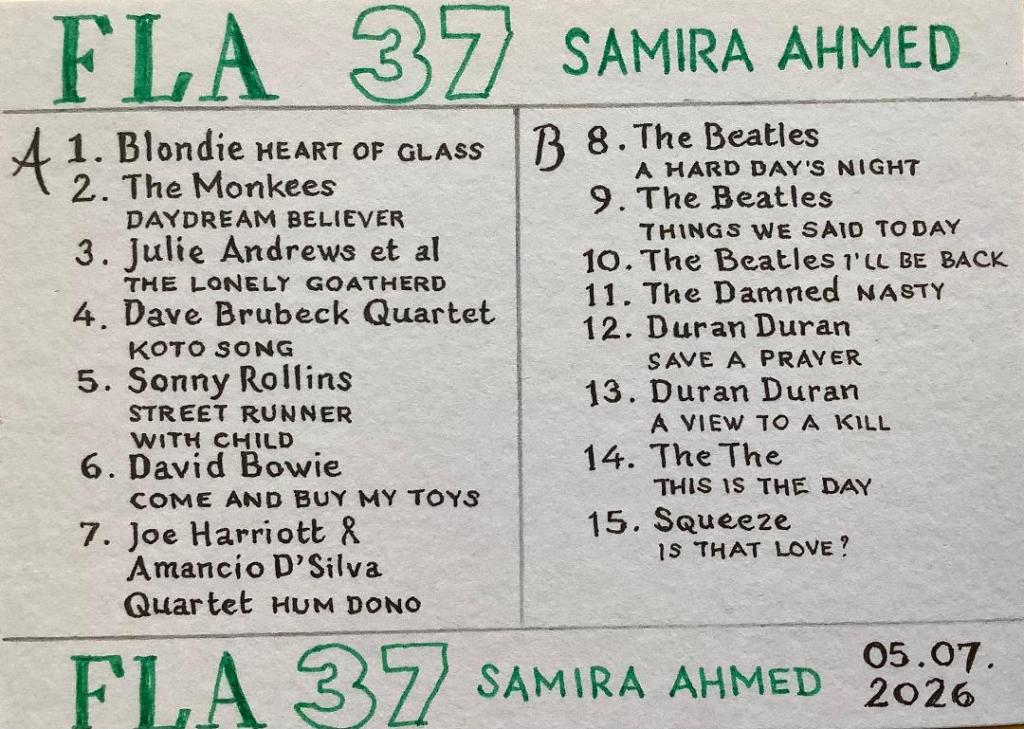
(For the time being, this site and project uses Spotify for the conversation playlists, but obviously I disapprove that Spotify doesn’t pay artists and composers properly, and other streaming platforms are available, as are sites to buy downloads and buy recordings. For consistency, you can also listen to the selections via YouTube (where available), and links are provided in each case, below.)
Thanks to Tune My Music, you can also transfer this playlist to the platform or site of your choice by using this link: https://www.tunemymusic.com/share/weRUWYsljr
Track 1:
BLONDIE: ‘Heart of Glass’:
https://www.youtube.com/watch?v=M6zdLTfH-As&list=RDM6zdLTfH-As&start_radio=1
Track 2:
THE MONKEES: ‘Daydream Believer’:
https://www.youtube.com/watch?v=vsWrp9car78&list=RDvsWrp9car78&start_radio=1
Track 3
JULIE ANDREWS ET AL: ‘The Lonely Goatherd’:
https://www.youtube.com/watch?v=o_6ioe2PQIA&list=RDo_6ioe2PQIA&start_radio=1
Track 4:
DAVE BRUBECK QUARTET: ‘Koto Song’:
https://www.youtube.com/watch?v=ixU3_8tLZTw&list=RDixU3_8tLZTw&start_radio=1
Track 5:
SONNY ROLLINS: ‘Street Runner with Child’:
https://www.youtube.com/watch?v=W94X3gMCLIc&list=RDW94X3gMCLIc&start_radio=1
Track 6:
DAVID BOWIE: ‘Come and Buy My Toys’:
https://www.youtube.com/watch?v=9VpH8WyoChk&list=RD9VpH8WyoChk&start_radio=1
Track 7:
JOE HARRIOTT & AMANCIO D’SILVA QUARTET: Hum Dono:
https://www.youtube.com/watch?v=86TffDdUJDk&list=RD86TffDdUJDk&start_radio=1&t=37s
[This album is not currently on streaming services but will be added to the playlist, should it appear in the future.]
Track 8:
THE BEATLES: ‘A Hard Day’s Night’:
https://www.youtube.com/watch?v=zx2TFk0vh1I&list=RDzx2TFk0vh1I&start_radio=1
Track 9:
THE BEATLES: ‘Things We Said Today’:
https://www.youtube.com/watch?v=NItAlTsPuQg&list=RDNItAlTsPuQg&start_radio=1
Track 10:
THE BEATLES: ‘I’ll Be Back’:
https://www.youtube.com/watch?v=fJSTBNTac6k&list=RDfJSTBNTac6k&start_radio=1
Track 11:
THE DAMNED: ‘Nasty’:
https://www.youtube.com/watch?v=gMQvYiSPy-Q&list=RDgMQvYiSPy-Q&start_radio=1
Track 12:
DURAN DURAN: ‘Save a Prayer’:
https://www.youtube.com/watch?v=NCoxQna0JNo&list=RDNCoxQna0JNo&start_radio=1
Track 13:
DURAN DURAN: ‘A View to a Kill’:
https://www.youtube.com/watch?v=ga9r_yaftY0&list=RDga9r_yaftY0&start_radio=1
Track 14:
THE THE: ‘This is the Day’:
https://www.youtube.com/watch?v=7ZYgKCbFbWY&list=RD7ZYgKCbFbWY&start_radio=1
Track 15:
SQUEEZE: ‘Is That Love?’:
https://www.youtube.com/watch?v=0sigJ1DCyiI&list=RD0sigJ1DCyiI&start_radio=1
 Andrew O’Hagan’s new book,
  Maybe because it’s felt like the 24-hour news media has been laughing at us for months, but I’ve started to be plagued by the memory of a most disturbing record.
 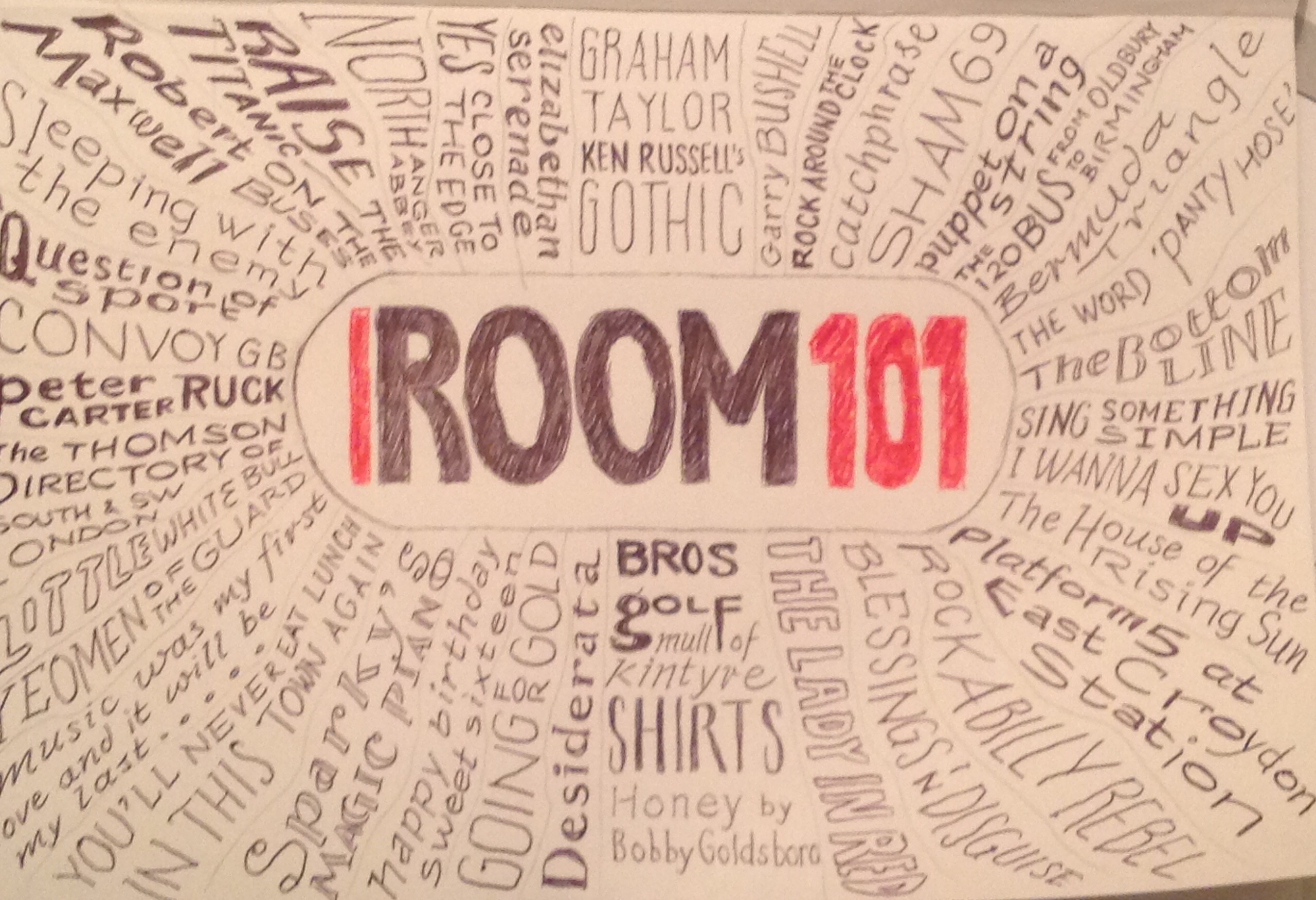 In early 2015, Len Goodman off Strictly Come Dancing and the Farm Foods advert was on the TV panel show Room 101, more than ably hosted by Frank Skinner, in which celebrities and sometimes comedians compete to have their pet hates consigned to oblivion. Len’s selections included ‘all foreign food’, ‘the Metric system’ which was introduced in the UK forty-six years ago, and, most remarkably of all, ‘too much choice’. I’m guessing he voted Remain.
 In a radio tribute to George Michael earlier this week, there was an extract from some old interview where he recalled how, with little contemporary music in his family home, he was compelled to rely on Radio 1 in his youth. And then I remembered an interview from Saturday morning TV in the mid-80s, when Wham! were probably the biggest group in Britain, and when a fellow pop star (perhaps Gary Kemp – equally perhaps not) marvelled at his enthusiasm for, and knowledge of all pop: ‘He knows the lyrics to everything.’ That was the thing with George Michael: he really was one of us. He was a pop fan.
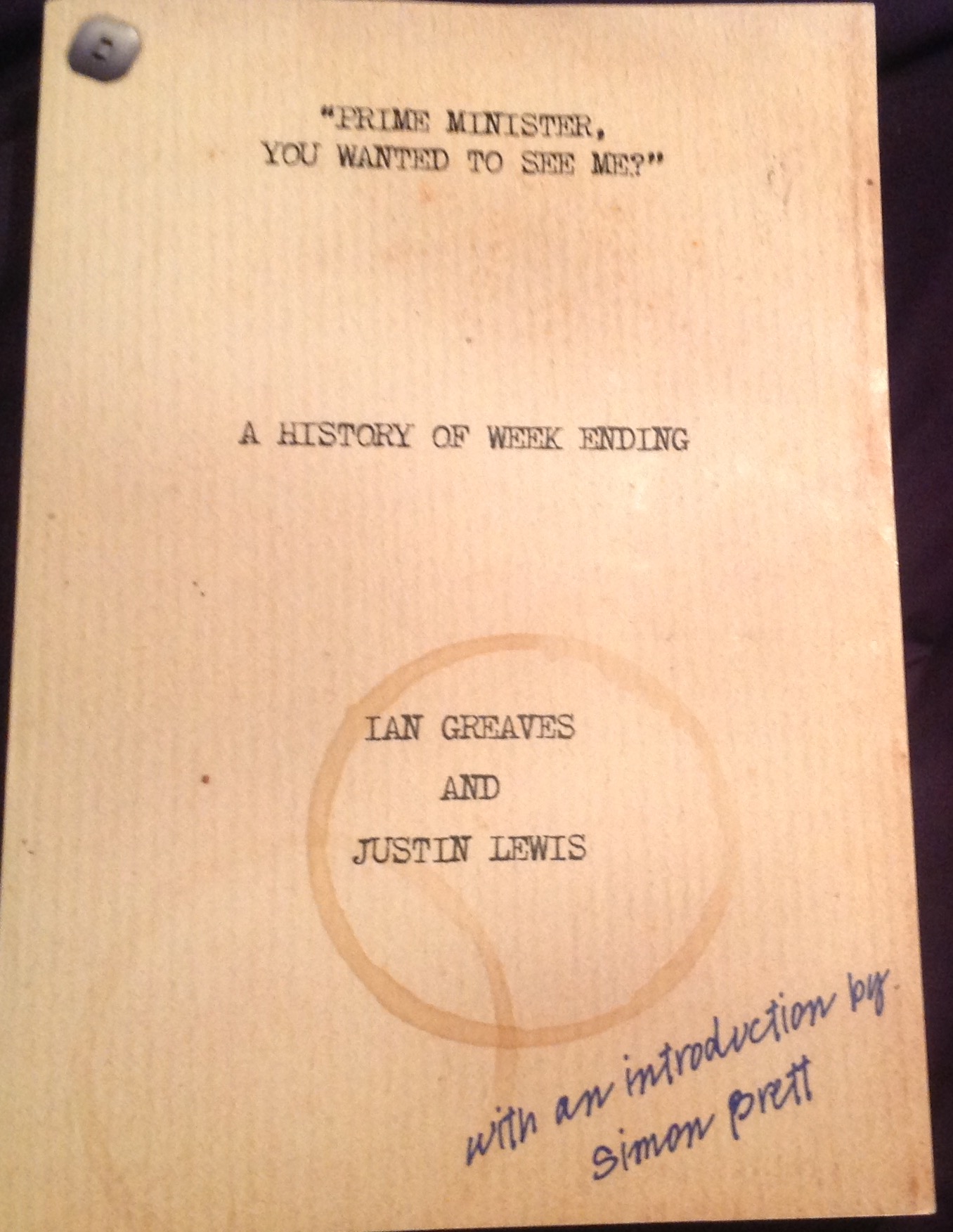 Desolation Jests is a new Radio 4 sketch comedy series which reunites the actor David Jason and the writer David Renwick. The last time the two worked together for radio was in 1980. Back then, Jason was a guest performer in the final episode of The Burkiss Way, a tirelessly inventive series in the vein of Monty Python, and scripted by Renwick and Andrew Marshall. It was, incidentally, the teenage Armando Iannucci’s favourite radio show. Jason’s one-off role in Burkiss was as an oleaginous continuity announcer who persisted with grovelling links regarding the Queen Mother’s eightieth birthday. Radio 4 panicked after its first broadcast, and the repeat a few days later snipped out all of Jason’s royal links, consequently running several minutes short.
