FLA 37: Samira Ahmed (05/07/2026)

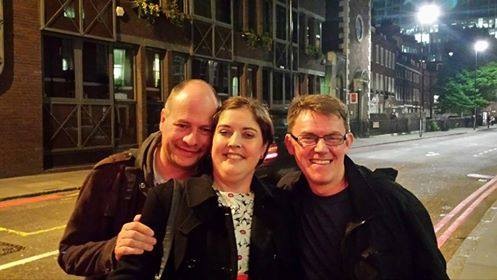
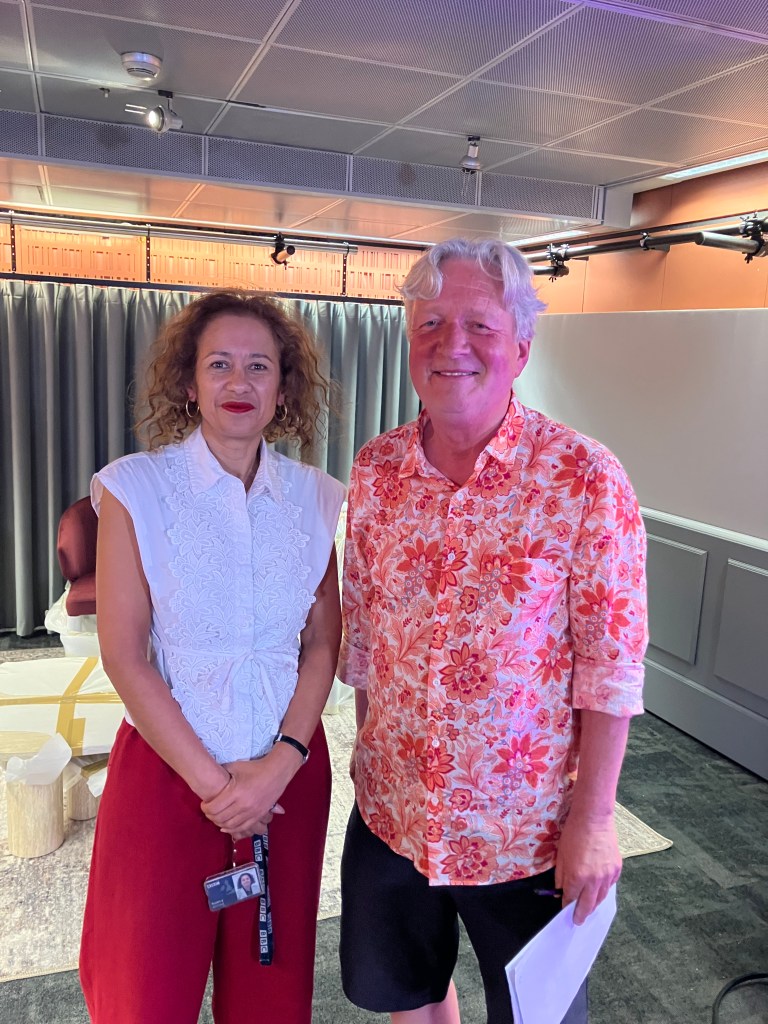
Samira Ahmed with Squeeze singer and songwriter Glenn Tilbrook, Front Row, BBC Radio 4, June 2026

It was such a pleasure to welcome Samira Ahmed to First Last Anything, and invite her to talk about her earliest, most recent and wildcard record purchases. Samira will be familiar to many British viewers and listeners: she has been a journalist and broadcaster for well over 30 years, working in news at the BBC and Channel 4, and latterly in arts journalism – since 2014, she has been a regular presenter of BBC Radio 4’s nightly magazine Front Row. And I was able to tell her – slightly to her surprise! – that in March 2026, she had hosted her 750th edition of the programme.

Samira also presents the BBC News Channel’s Newswatch programme, in which viewers can comment on the Corporation’s news and current affairs coverage of national and world events. In addition, she co-hosts (with Graham Kibble-White) Through the Square Window, a most entertaining monthly podcast about television history.

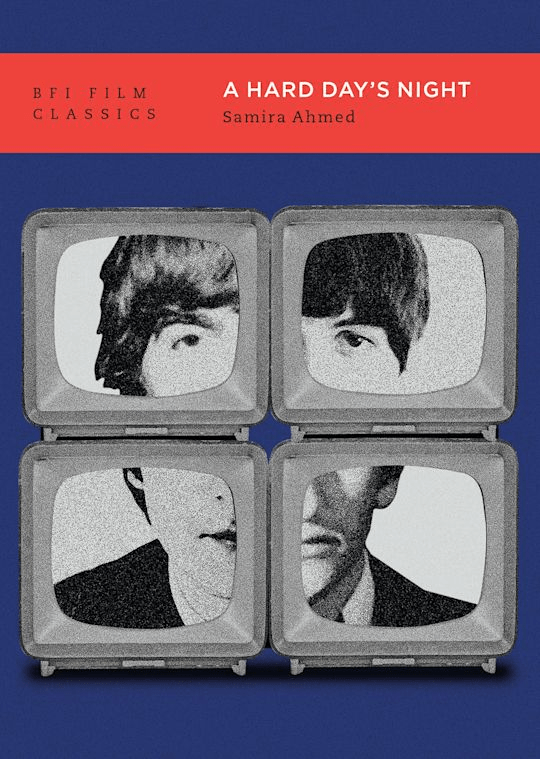
Now, there’s a book: Samira’s excellent overview and analysis of The Beatles’ first film: A Hard Day’s Night, directed by Richard Lester, and first released in July 1964. Samira is well known as a Beatles devotee, having been a regular guest on Chris Shaw’s superb I Am the Eggpod podcast, and she has estimated that, in childhood, after the film was broadcast on BBC Television at Christmas 1979, she must have watched her off-air video recording at least once a week. 

Samira and I had a chat on Zoom on Easter Monday morning 2026 for about ninety minutes and, as you’d expect, The Beatles and television were never far away from our thoughts. But we also talked about why the 1960s continues to have such resonance – and of course about music in general. We hope you enjoy it.  

—–

JUSTIN LEWIS:

How did you first discover your own taste in music?

SAMIRA AHMED:

Top of the Pops on television was very important – and in fact, my parents did have some of the terrible Top of the Pops records with the girls on the cover in long socks and not very much else. I just remember putting one of them on, thinking, Great, this has got all the chart hits… but this doesn’t sound like them – and knowing that was not right.

Luckily, we had really good commercial radio in London, and I used to listen to Capital Radio all the time from the moment I woke up. I used to record the chart show at weekends, would write all the chart positions down in a notebook, and I did that religiously. That was a way in.

And then, around 1979, I started buying records of my own, properly. I know we’re going to talk about albums I bought, but the first single I bought, from the local Woolworths, was ‘Heart of Glass’ by Blondie.

JUSTIN LEWIS:

By coincidence, the first album I bought of my own – although I didn’t get it until 1980 – was Parallel Lines.

SAMIRA AHMED:

That was the first album I remember going out and buying as a new thing, and I got Debbie Harry to sign it when I met her.

—-

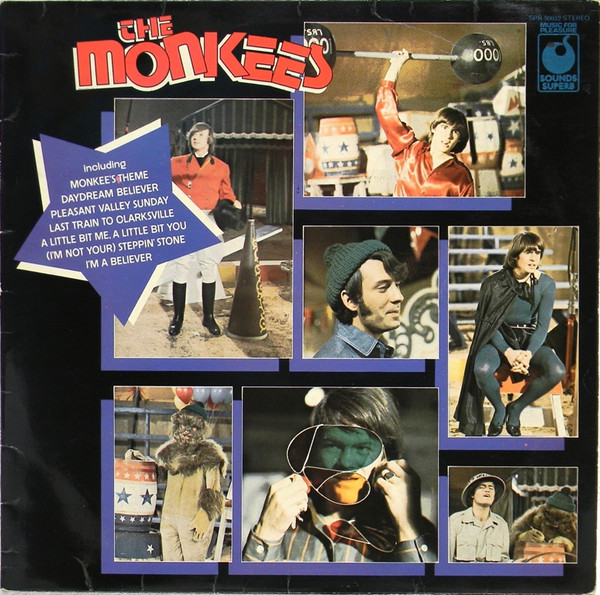
FIRST (1): THE MONKEES: The Best of the Monkees (MFP, 1974)

Extract: ‘Daydream Believer’
JUSTIN LEWIS:

So let’s talk about the very first records you bought yourself.

SAMIRA AHMED:

One year, just before Christmas, ’76 or ’77, my mother took me and my brother and sister up to central London, and we went to the big original HMV store on Oxford Street, the one that’s near Bond Street tube station. And I just remember rummaging through the bins and finding the Monkees – which I loved, that TV series was on all the time – and it was a sort of tie-in compilation album, with a lot of their greatest hits, but with photographs from the TV show.

JUSTIN LEWIS:

Obviously we’re both too young to have seen the original series go out in Britain [BBC1, 31 December 1966 – 13 June 1968]. By the time we were watching them – repeats in the children’s afternoon schedules began in 1972 and ran for many years – they’ve been restructured. Songs would be shifted from one episode to another…

SAMIRA AHMED:

I didn’t know this!

JUSTIN LEWIS:

Yes, when the show went into syndication, they moved the songs around. And the title sequence that we all remember – the action-packed clip-heavy one with the bit where they run into the sea but it’s too cold so they run out again – came from the second series, and they just tacked that sequence on to many of the first series episodes when they were repeated. So they were substantially re-edited. But it was a very limited number of episodes that were reshown.

SAMIRA AHMED:

And was that everywhere or was that just the UK?

JUSTIN LEWIS:

I believe, in America as well – when it went on to Saturday mornings there next to all the cartoons. I used to find it weird why some of the episodes had the Monkees theme over the end titles, but on some of them, they had ‘For Pete’s Sake’ on them.

SAMIRA AHMED:

Yeah, so what’s the story about that?

JUSTIN LEWIS:

‘For Pete’s Sake’ was the end theme tune for the second series episodes, but not the first series. But the strangest tracks ended up in the show. In one episode, which they repeated quite a bit, they included the song ‘Randy Scouse Git’ – which they had to call ‘Alternate Title’ over here for it to be a hit. And it’s so odd to hear that before you know anything about it. Because it’s a terrifying record in some ways.

SAMIRA AHMED:

I’ve been listening to a lot of Monkees recently. There’s a special edition of Headquarters (1967) which has got all the alternative versions of things like ‘The Girl I Knew Somewhere’. It’s just magnificent. And I keep thinking about their relationship to the Beatles. It’s like the Beatles in a parallel universe, isn’t it? Rather than being themselves and then others cottoning on to how good they are, it’s four people thrown together at random who all turn out individually to be talented, capable. Some of them are professional actors and comedians, and eventually they manage to prove that they can play and write. But it’s a battle. They’re having the same story as The Beatles, but it’s sort of inverted.

JUSTIN LEWIS:

Well, the Monkees clashed quite a bit with the guy who was the music supervisor on the series, Don Kirshner, because they wanted more creative control. So he went off and supervised the music for the animated series The Archies – ‘Sugar Sugar’ and all that. In other words, make a television series where you can manipulate your act, because with animation you can do what you want.

SAMIRA AHMED:

It’s like the Beatles animated series [ABC (US), 1965–67], which was never shown here in the sixties.

JUSTIN LEWIS:

A couple of ITV regions did show them, later, in the 1980s, I think.

SAMIRA AHMED:

I’ve watched snippets of the Beatles animated series on the internet and it’s so horrifyingly awful. People have said to me, ‘You should cover that in your book.’ But no – there’s no reason I should. This phenomenon that emerged in America of making terrible child-focused content, often animated or near animated, just destroys the image. It’s lucky that Beatles cartoon series wasn’t shown more widely because it was terrible.

And the other comparison was the Bay City Rollers who signed up with for Sid and Marty Krofft from HR Pufnstuf for that show with Witchy Poo [Krofft Superstar Hour – Bay City Rollers, NBC, 1978]. I’ve watched an episode of that when I was writing a piece about the Bay City Rollers some years ago and it was just, My God, they’d been like the Beatles in Britain in the mid-70s and suddenly they’ve signed this terrible deal that’s going to consign them to hell.

JUSTIN LEWIS:

I also thought – nothing to do with music – of the Laurel and Hardy cartoons [Hanna-Barbera, 1966], and the two of them were dead by then.

SAMIRA AHMED:

I think for us, for Generation X, the repeats of these things were both a blessing and a curse. The blessing was you got exposed to things like The Monkees, and the old Flash Gordon serials and Robinson Crusoe – they had a great power – and the great original black and white early slapstick films from Buster Keaton and Harold Lloyd and Laurel & Hardy. Yet the downside is we also got all these terrible, really mediocre animations like the Laurel and Hardy ones.

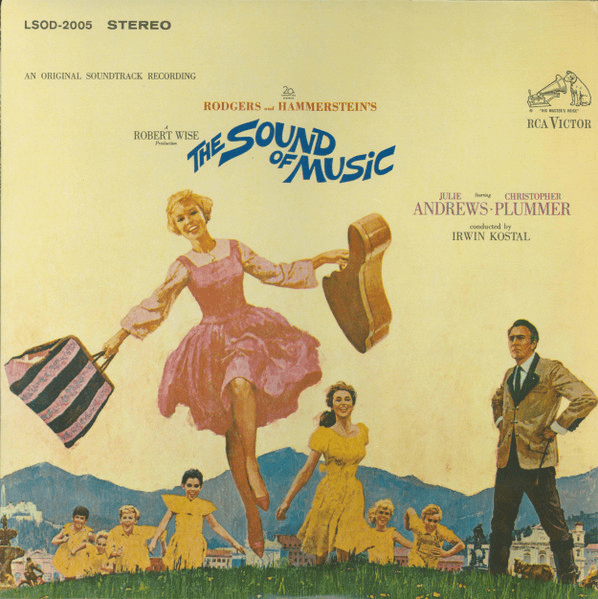
FIRST (2): ORIGINAL SOUNDTRACK: The Sound of Music (RCA Victor, 1965)
JUSTIN LEWIS:

Back to HMV Bond Street, 1976 or 77, and while you were buying that Monkees compilation in HMV…

SAMIRA AHMED:

…I saw the soundtrack to The Sound of Music. Now, I had never seen it, but I had just started at a brand new, quite posh girls’ day school, and everyone there knew it, and everyone used to talk about it. They used to put on the soundtrack in the music lessons, and we used to sing ‘Do Re Mi’. And I was fascinated by this image of Julie Andrews on the cover. I had no idea what this film was about, but ‘Do Re Mi’ doesn’t feel like it was written for a film, you just think it’s a song that’s always been there, like a nursery rhyme. So I wanted to own the record, because it felt like everyone at school owned it, or their parents owned it, and I felt I needed to fill in these gaps in my knowledge. If you didn’t know The Sound of Music, it was like not knowing who Jane Austen was, or not knowing who Enid Blyton was. I felt I was an outsider, so I bought it for that reason. I read the sleevenotes, and it was very interesting listening to the soundtrack of a film that you’ve never seen and not quite making sense of it. And It was a while before I saw it.

JUSTIN LEWIS:

The film was first shown on British television on Christmas Day 1978, but I first saw it on its second showing: Easter Sunday, 6 April 1980, on BBC1.

SAMIRA AHMED:

That might have been the first time I saw it, because I started senior school in 1979 and I still hadn’t seen it then.

JUSTIN LEWIS:

It may be the only time it was ever screened in the evening rather than the afternoon because it’s such a long film. I saw it again a few days ago, I hadn’t seen it for many years. It has this real resonance, because apart from possibly Sgt Pepper, it’s the best-selling LP of the sixties. It’s actually quite a short soundtrack considering the film is so long, although there are huge swathes of the film with no music (part of the point of the film, I think) but also many of the songs reappear later in the film, in very different circumstances obviously…

SAMIRA AHMED:

Yeah, well, that singing concert at the end… We did tape it off television, possibly in 1980. In fact, I’ve realised I must have bought this album as early as ’76 or ’77 because when I started at the new school, I was eight years old – I started in year 4. And we had to have a recorder, and everyone else already knew how to play the recorder, so I used to teach myself to try and keep up. And that’s when everyone was obsessed with The Sound of Music.

JUSTIN LEWIS:

It occurs to me that ‘Do-Re-Mi’ must have felt like the building blocks of music education for at least 10 years after, because it is a song about how to create music.

SAMIRA AHMED:

I was reading about a new Radio 3 series starting up about the history of music, Key Changes, and I’m sure they’re going to feature ‘Do-Re-Mi.

[Indeed they did! You can listen to the episode in question (first broadcast on BBC Radio 3 on 1 April 2026) , and access the whole series, from here: https://www.bbc.co.uk/sounds/brand/m002tdbv]

JUSTIN LEWIS:

By the way – did you ever, in your formative years, get into being in bands yourself?

SAMIRA AHMED:

I can dream of being in a band, but no, I was never cool enough. I played the piano, that was very much a solitary instrument in my case – and it was classical piano. But one Christmas, I did actually ask my parents for the Sound of Music songbook and instead, my mother got me The Beatles Illustrated Lyrics [published 1969, 1971] with those really weird photographs of naked women spraypainted to look like Helter Skelter by Alan Aldridge. And I thought, Well, this isn’t what I asked for, but I’m interested in The Beatles, I do like The Beatles. And I learned to play a lot of their songs from that book before I’d ever heard them.

JUSTIN LEWIS:

Interesting. Did it then surprise you when you heard the songs to discover what they sounded like?

SAMIRA AHMED:

No, not entirely, because the songs that I tended to play, the ones that were playable, were things like ‘Fool on the Hill’, which were very playable as piano solos, and similarly, ‘Little Child’ – some of the waltzy ones actually work quite well. I couldn’t possibly have heard all those songs for real, before I started playing them. But when I heard them, there was a sense of: I know this. It was a really nice feeling. This already existed, like it was in the folk ether.

JUSTIN LEWIS:

I’m the same generation as you, two school years behind I think, and you don’t always know where you’ve heard these things before.

SAMIRA AHMED:

And nothing of it comes through being exposed to the later music at a very young age. So the first time I heard ‘Octopus’s Garden’ was Brian Cant or someone like Brian Cant singing it on Play School. And those songs, the ‘Yellow Submarine’ era of songs, a lot of the slightly psychedelic ones with all that imagery, were like fairy tale songs and you did encounter them at school, having them sung to you or having them sung to you on television.

JUSTIN LEWIS:

Yes, children’s television really did seem to sort of break into that – psychedelic music worked well with it, it was colourful and fantastic. It was as if some people working in children’s television had been young people in the sixties and had grown up with this stuff themselves.

SAMIRA AHMED:

I think there were two different levels going on. I suspect a lot of people who were working in children’s television had all been, young people in the 60s and had kind of grown up with this stuff themselves. Maybe some of the presenters were of that generation, but I think a lot of the people making the commissioning decisions were older and they didn’t see the psychedelic references. They just saw it as a colourful song with lovely imagery.

—–
JUSTIN LEWIS:

Let’s talk about your new book on A Hard Day’s Night. It’s obviously on record what a big Beatles fan you are. And you say in the introduction to the book, that you ummed and aahed a bit about whether the world needed any more Beatles books. But you offer many good reasons why it needs yours. Had you been considering writing such a book for a while?

SAMIRA AHMED:

I’d been approached about writing a book and I had thought of writing something about Mary Whitehouse and the culture wars. Publishing is a strange place right now, and it was felt there might be trouble getting anyone to want to publish a book about Mary Whitehouse, whatever you might have to say about her. But I’d done a lot of research on her diaries, and I had a real sense of how you dig into archives, and what you look for and what you find, and how you make all these connections.

What’s always really interested me is joining the connections between pop music, the culture people enjoy, social history and politics. What’s changing in Britain at a particular time, and how do politicians regard it? Even in my own career, when I was a young reporter at the BBC [in the 1990s] I had done a lot of reporting on some of the rows about rave culture, when the government was trying to crack down on all these raves in fields, and were sending in heavy-armed police, and the big crackdown on the crusties at Stonehenge and all that stuff.

So all that was in the background.

And because I had lived in Marylebone in the 90s, very close to Marylebone Station, I used to visit the locations in A Hard Day’s Night. I loved that you could talk about psychogeography and how these places have a resonance, that this film was filmed in London, but it was a worldwide success – and so I started to think about writing something about it.

There was a volume of stuff about A Hard Day’s Night out there, and a lot out there in print which is not actually accurate. There’s a whole article about the night of the film premiere, it has all this stuff about who took who, and Patti Boyd just misremembered, confused it with something else – maybe the Help! premiere…

JUSTIN LEWIS:

Was that in a recent article, or one published at the time?

SAMIRA AHMED:

It was written in the early 2000s, I think. As a journalist, my attitude is that what you put in a book should be the absolute truth, and if we’re not 100% sure, if we haven’t got really verifiable sources, then it shouldn’t be in there. So Mark Lewisohn kindly agreed to be a consultant, and spent time looking over the manuscript and saying, ‘I don’t think this is true and this is why.’ I’m very pleased that this book is the whole picture – it’s not just the Beatles, it’s not just the music, and it’s not just the film, although obviously those are the three most important things.

JUSTIN LEWIS:

There’s always something new to know about the Beatles, which is quite unusual about a band.

SAMIRA AHMED:

I know there are fans with such a deep level of knowledge and I couldn’t compete with that, but writing as a journalist, where you’re trying to appeal to a general audience and a specialist audience at the same time… I tried to make sure that there was information there which people perhaps hadn’t put together. For instance, the scenes that were in the original script – there was a racist scene which I don’t think the Beatles ever got to see, and the producer said, ‘We’re not putting that scene in the film.’ When Ringo goes into the shop, when he’s parading and buys the hat and coat, there was a whole section where the script mentions a ‘typical Jewish proprietor’ as well a whole scene with him selling stuff to East Indian sailors and obviously making fools out of them. And Bud Ornstein [European head of production for United Artists] said, ‘That’s not going to go down well in the United States’, thinking about an African–American audience. And obviously that wouldn’t have dated the film well, for any of us.

Some of those things are documented because they’re included in Alexander Walker’s excellent book, Hollywood England (1974), the history of the film industry in the sixties, and he’d interviewed Bud Ornstein and Richard Lester, and so we’ve got a real sense of how that film was made. But also I got to talk to people like David Janson, who played the boy by the river in that scene with Ringo… and there was a whole other scene he was supposed to be in, and wasn’t, but which I think would have made the film even better. Sometimes, rushing to get things done on time, you miss a great moment of poetic completion.

I didn’t want to bother Richard Lester and he’s done so many great interviews, I had no shortage of material – interviews at the time, the Steven Soderbergh book in the 2000s. But I have sent him a proof copy and will send him a finished copy because the book is about him. Without him, this wouldn’t have happened. And I’d like to think the book gives some due recognition to his talent because the only major prize he’s won for his films has been the Cannes Palme d’Or for The Knack and How to Get It, ironically a film that’s dated really badly in one specific way only – the rape jokes.

JUSTIN LEWIS:

One thing I went and checked out was The Beatles’ love for Richard Lester’s early television work because they’d seen the stuff with Milligan and Sellers, things like A Show Called Fred and Son of Fred, and oddly, although A Show Called Fred began on ITV the same month that Granada first went on the air in the north of England region – May 1956 – that first series wasn’t shown in that region. They did later show Son of Fred, due to public demand and that must have been what the teenage Beatles would have seen. But Granada believed that A Show Called Fred wouldn’t have worked with the audience in the north, apparently.

SAMIRA AHMED:

How sad because Son of Fred, of course, got cancelled early.

JUSTIN LEWIS:

In the book you describe the film of A Hard Day’s Night as ‘like a wildlife documentary’. And you’re absolutely right. I don’t know if it’s a subconscious pun on ‘beetles’!

SAMIRA AHMED:

I didn’t go into detail on this, but it’s relevant: at that time, current affairs programmes like This Week [on ITV] would send a crew to spend half an hour with the Beatles on their way from the airport to a train station and just film them talking and then put that out as a half-hour current affairs documentary because they were that fascinating to people. I thought of that wildlife analogy when they arrive at the Scala Theatre for their press conference and the camera is locked off on the side and they walk into the foyer. And the image I had in my head was of turning a jar of stick insects upside down, and then you lift it, and they all wander off in different directions. And the camera watches them do that.

Coincidentally, if you look at all the Hard Day’s Night reviews which are quoted in the book, the number of contemporary newspaper critics’ reviews which describe them in animal metaphors… you know, they’re like as frisky as young colts or as charming and dangerous as jaguars compared to Cliff Richard, just like the cat who had too much cream. Some of these animal analogies are almost Freudian, the critics are obviously fascinated and quite sexually aroused by them – including some of the men, you know.

—–

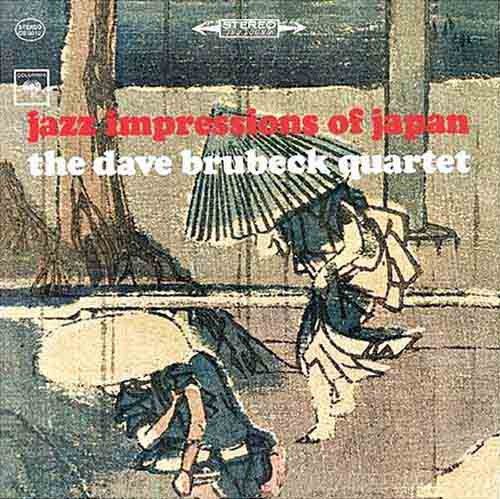
LAST: DAVE BRUBECK QUARTET: Jazz Impressions of Japan (Columbia, 1964)

Extract: ‘Koto Song’
JUSTIN LEWIS:

I’d love to know how you came across this.

SAMIRA AHMED:

I started listening to a huge amount of jazz while writing the book, because you can’t listen to the Beatles while you’re writing, you have to concentrate. And it’s not that I regard jazz as background music, but the more I read about Richard Lester, and the fact that he loved jazz, it kind of makes sense. Apple have these great playlists, and so the Dave Brubeck playlist picked out this album, Jazz Impressions of Japan. Interestingly, it’s from 1964, the year that A Hard Day’s Night is being made.

I just love how unafraid this album is to say: ‘As an American, this is my American impression of Japan.’ It’s a bit like the soundtrack to You Only Live Twice – we know it’s not a Japanese soundtrack, but it does capture something through an outsider’s eye. Particularly the final track on that album, ‘Koto Song’, it’s just magical.

JUSTIN LEWIS:

That’s the one from that album they continued to play live quite a lot over the years. In fact, the Brubeck Quartet went to Japan, 4 May 1964, in those couple of months in between the Beatles shooting A Hard Day’s Night and the Beatles releasing A Hard Day’s Night. And Jazz Impressions was recorded in June. So they’d come back from Japan, and they’d had some ideas while they were there. For instance, the opening track, ‘Tokyo Traffic’ came about because when they arrived, they had to have a police escort through the city just so they could do the first concert. Brubeck was clear about it, that this wasn’t supposed to be them doing Japanese music, it’s simply, ‘These are the impressions we got’, from hearing Japanese pop music on the radio for instance.

SAMIRA AHMED:

Yeah, when I stumbled across ‘Koto Song’, straight away you’re listening to something that’s connected to Japan. You get a sense it’s an impression. It’s just so brilliantly playful. I also thought: I’ve been to Japan a couple of times, and there’s a really interesting amount of modernist architecture there. They embraced a lot of it. There’s the Hotel Akura, which I think may have been pulled down now, but it was certainly there when I went in the spring of 1998. It’s one of those hotels that was built in about 1960, and it had this great modernist bar, like something out of a Rock Hudson/Doris Day rom-com, but in Japan. All the furniture and the setting of it was fabulous. So that place came to mind as I was listening to this album. I have very fond memories of my various trips to Japan.

JUSTIN LEWIS:

My father’s many years gone now, but my mum once happened to drop into conversation that they saw the Dave Brubeck Quartet live, at what is now called the Bristol Beacon. 1 June 1964, and it turns out they saw the Quartet just after that visit to Japan, they were on a world tour. So the Quartet must have come to Britain, then gone back to America and recorded Jazz Impressions of Japan. They never did a Jazz Impressions of Britain, which might have been interesting. Lots of Beatles covers or something!

SAMIRA AHMED:

[Laughs] Well, you could argue that the best jazz impressions of Britain are, again, by an ‘outsider’: Sonny Rollins’ soundtrack to Alfie, which is probably my favourite jazz soundtrack. And the more you listen to it, the more you get out of it, the more you hear all the different countermelodies.

JUSTIN LEWIS:

Are you familiar with Brubeck’s work generally? Because this wasn’t one of the famous albums at all. It didn’t come out on CD till this century. It was very buried.

SAMIRA AHMED:

No, I own a fair amount of Sonny Rollins, Miles Davis, Charlie Parker – and some of that is because my ex-husband actually had a lot of jazz records. He never used to play them, interestingly enough, but he left them all, and I love them. And my very first boyfriend was very into jazz, and he introduced me to Miles Davis’s Birth of the Cool. So there’s certain albums that I hear, and I have really positive associations with my discovery of music and the world.

But my first proper love of jazz came earlier – the jazz vocalists like Billie Holiday, Ella Fitzgerald, Sarah Vaughan, and through them, Duke Ellington and all those great jazz composers and arrangers. More recently, really only in the last 10, 15 years, I’ve really come to know players like Sonny Rollins better. The soundtrack to Alfie is just amazing, the title track is the obvious one, but there’s a track called ‘Street Runner with Child’, and – like we were just saying about impressions of Britain – you’ve got all these different sounds going on in there. Someone running down the street and then suddenly at some point well into it, you’ve got two different melodies going on and they’re kind of crashing and then suddenly at the very end, the familiar theme suddenly comes in. It’s like a jazz equivalent of the Goldberg Variations.

JUSTIN LEWIS:

Sometimes, I wonder how unwitting jazz quotations of things are. On ‘Tokyo Traffic’ on Jazz Impressions of Japan, Paul Desmond the sax player, for some reason, starts playing the melody of God Rest Ye Merry Gentlemen. It comes out of nowhere, but it’s there.

SAMIRA AHMED:

The Beatles are doing that in their own way, like how they’re quoting bits of a trumpet oratorio on ‘It’s All Too Much’ [Jeremiah Clarke’s ‘Prince of Denmark March’, aka ‘Trumpet Voluntary’, written c. 1700], a piece they use as a wedding march sometimes, or the ‘Marseillaise’ at the beginning of ‘All You Need is Love’, on which they’re also quoting ‘She Loves You’, aren’t they?

JUSTIN LEWIS:

They quote themselves, yes, which I don’t think had been done before on a big pop hit.

——

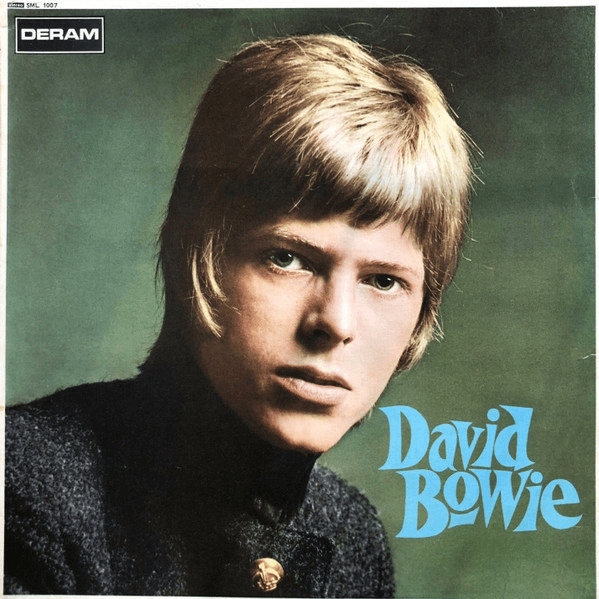
ANYTHING: DAVID BOWIE: David Bowie (Deram, 1967)

Extract: : ‘Come and Buy My Toys’
JUSTIN LEWIS:

So – your wildcard choice.

SAMIRA AHMED:

I’m trying to think where I first heard this. Even though I’m a big David Bowie fan, I never bought the albums, I always knew him by the songs and the singles. And I didn’t realise there were two albums called ‘David Bowie’. I got given the second one [sometimes called Space Oddity, released in 1969], the cover with his curly hair, as a present. And then I realised that the first album was actually something quite different.

I did an event at the British Library a few months ago about David Bowie. I was chairing a panel, with Paul Morley on it, and he had just written a really brilliant new book about David Bowie, in which there were all these insights into the influence of Anthony Newley. Anthony Newley is such an interesting presence in the early 60s, with his impact on all sorts of things.

After I read Paul’s book, I started listening to this album again. There’s an overlap with Oliver! and the musicals of Lionel Bart and the Anthony Newley sound. I’m just really intrigued by it. I’ve said this in connection with The Beatles – in a weird way, I always have a special love of ‘the early stuff’ because it’s the bud before the rose blooms. That’s more interesting to me. And this David Bowie album, it’s got the seeds of so much.

JUSTIN LEWIS:

He later said of this period, ‘I’m more Anthony Newley than Anthony Newley.’ And I remember as a kid, hearing ‘The Laughing Gnome’ [also from 1967] and trying to work out how he got from that to Ashes to Ashes or whatever, and thinking, ‘Can that be the same person?’ Once you hear this album, it makes a lot more sense.

SAMIRA AHMED:

It does make a lot more sense. I love that it’s somehow unashamed of being heartfelt in a very, very non-cool way. The magnificence of David Bowie is that he’s doing these things that don’t always land well at the time, but they’re unique and they’re original. And thinking about the jazz connection: Paul Morley’s book talked a lot about him listening to a chap called Joe Harriot, who did these amazing jazz tie-ups with Indian music, with Amancio D’Silva. There’s an album they did, which I nearly chose for this, called Hum Dono, which means ‘The Two of Us’, from 1969. There are all these jazz albums that influenced Bowie, that I’ve discovered through reading Paul’s book, and I think that jazz influence on his sound emerges very clearly much more, later on. He’s got all these different strains of music from different traditions, he absorbs everything and then he produces his own new… not versions exactly, but it’s like eating something and then what you create comes out of what you digested.

Joe Harriott & Amancio D’Silva Quartet: Hum Dono (1969). Not currently on streaming services, but you can hear the whole album via that link on YouTube.

JUSTIN LEWIS:

There’s also that element of spontaneity on those early Bowie records where he seems to be enjoying himself quite a lot as well. It’s sort of humorous and yet not humorous at the same time.

SAMIRA AHMED:

Yeah. And I just like seeing the David Bowie who is much closer in time to the era of the Beatles and the Monkees. Because we think of him so much as a creature of a new era that’s to come from 1969, 70 onwards. He’s trying to take off in this era. He doesn’t quite manage it, but he looks a bit like other pop stars at the time. It’s not enough to be David Bowie. It’s got to be the right moment. It’s got to be the right music.

JUSTIN LEWIS:

And he’s an actor as well. He’s already reinventing himself every couple of years.

SAMIRA AHMED:

One thing that came out of that day at the British Library: there were these great films that were made about David Bowie by Francis Whately, a wonderful producer who was there to talk about them. He’s making another one now. They’re all on the BBC iPlayer. He interviewed Lindsay Kemp, the mime artist who David Bowie worked with, and Lindsay Kemp said, Oh, David Bowie was a terrible mime artist. So it was quite refreshing to hear that – we think to ourselves, ‘Oh he learned mime, and he used it, he was very skilful, and he was a trained actor’, but actually, the master that he adored thought he was terrible at it. I thought it was hilarious.

JUSTIN LEWIS:

The singing style got me thinking, too. I can hear a bit of Jarvis Cocker in this, I think. The vibrato is quite similar.

SAMIRA AHMED:

Well, the song ‘Uncle Arthur’ makes me think of early solo Paul McCartney.

JUSTIN LEWIS:

Oh, ‘Uncle Albert’, isn’t it! Writing songs about uncles – Uncle Arthur, Uncle Albert, Uncle Ernie – you don’t really get that anymore, do you?

SAMIRA AHMED:

In the future, who will write songs about uncles and aunts when there are so many fewer multi-child families, people having fewer kids? You don’t have that big extended family, that colourful collection of characters in the hinterland.

—-

JUSTIN LEWIS:

I think you’re the first FLA guest where all your choices are from the same decade…

SAMIRA AHMED:

That wasn’t intentional(!)

JUSTIN LEWIS:

No, but everything’s sort of from those three or four years before you were born.

SAMIRA AHMED:

Yes, because Sound of Music is ‘65. The Monkees are ‘66 to ‘68, aren’t they? Dave Brubeck is from ’64.

JUSTIN LEWIS:

And Hard Day’s Night is from ’64. There seems to be something about the 60s before your birth, that you keep coming back to. What do you think it is? Is it because some of the stuff is genuinely lost from that era? Or is it about joining the dots with memories?

SAMIRA AHMED:

The first thing I’d say is, people are very nostalgic about the 90s in the same way. I find that funny because, of course, you and I both were very much around. I was in my twenties, and I do remember it being an exciting time. And I remember thinking how self-conscious everyone was, [saying things like] ‘Oh, this is like the 60s’, you know – so the 60s remains that kind of golden moment. Though I suspect people in the 60s, if they were old enough, would have said the 20s was the time, you know, when all these women could vote and there was this new freedom in the air and there’s all kinds of illicit drugs and all that stuff going on in Britain.

When I talk to people who were making their careers in the 60s, I hear just how much economic opportunity was part of it. There’s a lot of employment: sixteen-year-old school leavers can walk into a job, and there are all these new crafts opening up. When I was looking at A Hard Day’s Night, I looked at how there were all these makeup artists with a new career opening up, they could train on the job and have status and are part of this major new creative industry of television. And television is at its peak – and there all these shows and formats have been developed. That show, Colour Me Pop, that experimental show to showcase colour on BBC2 (1968–70) where they were basically shooting beautiful on-location pop videos for bands – they look like art poems, don’t they? And they knew they weren’t competing with the Internet or any of that nonsense – there’s books, there’s theatrical happenings, but everything is experienced in real time and in the moment – and that’s part of what makes it feel intense.

Those people who were there have also told me that it felt like going from black and white into colour. But so much did change with the 60s and affluence, and those who remembered sweet rationing and all the rest of it, was exciting.

I also think the other part of the economic picture is the investment that went into civic structure of things. People can argue all they like about whether grammar schools were a good or a bad thing, but it is interesting how many working-class children got an amazing education through that system and went to art school or went to university. And people like Eric Idle, whose father died in the war, he went to boarding school, and had a hideous experience. But, you know, he got into Cambridge. I’m fascinated by this generation who had opportunities undreamed of, 20 years before they were born. In that era, they became great pop stars, artists, writers, filmmakers whose work still influences us so much today. So I think it’s about Britain investing in itself and it all reaping huge dividends.

The thing about the Beatles: yes, three of them went to grammar school – I think John’s the one who went to art school, wasn’t he? – but all of them grew up in a sense of a new world. They were all products of the welfare state and the new Education Act, and they didn’t have that sense of knowing your place. You could argue, that’s who they were, but this was a new world, and they weren’t the only ones who felt that way. You could have confidence in your own ability and things were cheap. You could get across town on a cheap bus to learn a new chord. I do keep coming back to how would anyone of that background have the chance to prove themselves today. Student debt, all those things, that’s so terrifying.

JUSTIN LEWIS:

It’s not easy to be a young person now, I suspect, because you just, because yeah, the economics are not good. In our day, if you got to university, you’ve got a few years afterwards to try and work out what to do next.

SAMIRA AHMED:

Or you could get a job straight away as a school leaver, you didn’t have to have loads of qualifications. And then the new industries were opening up. I just think there was an exciting sense of the country discovering itself, in different classes and backgrounds talking to each other. And I know there’s huge issues, you know, with racism and sexism and homophobia and all the rest of it, but they were starting to be challenged in the big cities, these great places of escape from some of those small-town attitudes. My parents came to London in 1960, and it was a really exciting time.

JUSTIN LEWIS:

There’s also the breakthrough of television, and it seems to me A Hard Day’s Night is partly about television and mass exposure. By the 1960s, it seemed to be the one thing that most people had – I think it was Dennis Potter, who started off as a TV critic, who described it as the great equaliser, because nearly everyone had access to it. The kids at school who didn’t have television at home… you felt so sorry for them because it felt like that’s where the information was coming from a lot of the time.

SAMIRA AHMED:

Although, I do wonder how far we’re selective about what we choose to remember because I think there was so much dross as well. A lot of really bad entertainment, things like The Black and White Minstrel Show. [JL agrees] That was obviously aimed at people who remembered the pre-First World War period, people who were born in 1900. I still find it hard to believe how long that show was allowed to continue. It’s really interesting how early on there was opposition to it and how often there was an opportunity to say, you know what, we could just not commission another series of this. And it somehow became a sort of symbolic fight, but between who and quite for whom I don’t understand, because people who really cared about that show would have been dead surely by the late 1970s.

JUSTIN LEWIS:

You’d have thought, wouldn’t you? I mean, I watched all sorts of rubbish, but I drew the line at that. I’ve since changed my mind slightly on The Good Old Days.

SAMIRA AHMED:

At least with The Good Old Days, you could argue that was an entertainment programme that represented this longer tradition. The Black and White Minstrel Show used to do more modern songs, with modern dancing. It wasn’t claiming to be in the past, it was claiming to be in the now! It was so anachronistic and out of time.

—–

JUSTIN LEWIS:

In your younger days, were you thinking about arts journalism? Because you did 20 years of what they used to call ‘hard news’. You mentioned that rave story for the BBC, but how often did you get to do arts and culture stories in those days?

SAMIRA AHMED:

I didn’t get to do them that often. I always loved arts and things. I did a degree in English literature. I did a big set of reports for BBC News about the first Star Trek convention to be held in the UK, in ’95. The producer I made those with, Stuart Buckman… he and I were huge Star Trek fans, and we looked at things like the social change that it documented and the business angles on it.

And then I did a great story in about ‘96 or 7 with Miranda Sawyer, who was quite a young journalist then, about girl power. I was produced by BBC World Service Television to do a piece about what is ‘girl power’ – is this the new feminism? So I was quite good at doing this.

At Channel 4 News there was more scope to pitch your own ideas and do longer films. And that’s where I really started to do some of the arts films I wanted. So I did a film about Robert Brownjohn, the big advertising man who designed the title sequences for Goldfinger and From Russia with Love, the projections. There was a big exhibition about his life and career [Design Museum, from Oct 2005], because he died quite young [forty-four, in 1970].

So I had great fun with that. I did one about Alan Fletcher (1931–2006), who was his friend, who was a very big figure in the design world as well, designed the V&A logo and things like that.

Then I started to interview quite a lot of film directors there, sometimes because they would come through London. And in the same way that people try and go on Front Row, a lot of people would want to go on Channel 4 News because you get a decent-length interview. So I interviewed people like Tim Burton while I was there.

When I did go freelance, I went to the BBC, starting in about 2012, and the first thing I did was present the Proms on BBC Four. And even though I was initially presenting shows like The World Tonight or PM [on Radio 4], if there was an arts story that I spotted in the paper, you’d certainly make the case for it. I think a lot of people want to pursue their own passions, don’t they – if you’ve got an expertise in economics or sport, and you spot a story, that’s likely to get on to that day’s show because you’re the presenter.

JUSTIN LEWIS:

So you could pitch these things quite easily then?

SAMIRA AHMED:

Well, at Channel 4 News, I was staff anyway, so there were enough people, enough shows, enough airtime, where you could work on these items as extras. When Smash Hits magazine folded [2006], I remember in that day’s morning meeting saying, ‘This is a really important magazine, this is what it meant to my generation – it was singles, not LPs… it was singing along, not analysing the lyrics.’ And they said, ‘Go ahead, make a piece about it for tonight.’ So some of it was just spotting a story and being able to bring it to the table – and then there was a willingness to commission it because it was airtime.

But it’s the same for you, isn’t it? You turn the passions that you’ve enjoyed all your life into something that you can articulate and express and share with others that isn’t just ‘closed’, there’s a general fandom which I guess I would describe myself as being part of.

JUSTIN LEWIS:

When you came back to the BBC, one interview I particularly remember vividly was the one you did with John Waters for Night Waves on Radio 3.

SAMIRA AHMED:

I was obsessed with John Waters. One of my favourite films of all time is the original Hairspray (1988). I taped that off television when it was shown in the early 90s. I used to watch it the way I used to watch A Hard Day’s Night – at least once a week, usually a couple of times a week. It just always cheered me up, and there’s just so much going on in there. We did the interview in London, in Studio 80A, the big studio upstairs [the largest music studio at BBC Broadcasting House]. And Ian Christie, the film historian, came in with some of his graduates and film students from Birkbeck, so we had a little audience to make it a bit more of an event. Like writing this Hard Day’s Night book, I prepared by watching every film John Waters had ever made, some of which were quite hard to get hold of. And some of them were still so outrageous to watch – it’s amazing and exciting what he was doing in the 60s and early 70s in Baltimore. I love that John Waters was on Radio 3 talking about his aesthetic of trash.

JUSTIN LEWIS:

In your twelve years on Front Row, do you sense a shift in the approach to arts coverage in broadcasting over that time?

SAMIRA AHMED:

We have 45 minutes per show [it used to be half-an-hour]. So my freedom’s certainly not decreased – if anything it’s grown. I’ve always tried to bring in interesting arts stories, I certainly push to say we should do more pop music. Some of that is about new acts, and we do people I’ve not necessarily heard of but have discovered – that’s very exciting. But equally, Tears for Fears, or on a forthcoming episode, The Damned. They’ve a new album, and I met some of them at the unveiling of the Marc Bolan blue plaque in Maida Vale, and thought they’d be brilliant on Front Row.

JUSTIN LEWIS:

Yes, their first-ever telly was guesting on Marc Bolan’s Granada series, wasn’t it? Pretty much the last thing Bolan did.

SAMIRA AHMED:

And he’d invited them to join his tour after they got sacked from the Sex Pistols’ Anarchy tour. I keep thinking, ‘How do you get sacked from an Anarchy tour?’ And there’s such a lovely story about what Marc Bolan meant to The Damned – how he’d personally inspired Captain Sensible, who was a cleaner at the Fairfield Hall, and who saw Bolan and T Rex performing there, and thought, ‘This is what I want to do.’ So he went out and bought a guitar. You can spot the stories that I bring because they tend to be a lot of pop acts. I’ve interviewed Duran Duran twice. I didn’t expect that to happen.

JUSTIN LEWIS:

Were you a fan back in the day?

SAMIRA AHMED:

Yes, and as we said earlier, I do unashamedly take in my records and ask them to sign them. With Stewart Copeland, I brought in all my Police records. I asked Matt Johnson from The The… and I had singles as well as albums. They just like that you know their work, going way back, you’re not just some johnny-come-lately.

But I think the programme’s changed in that we’re trying to cover more. I made a big thing when I first joined that we should cover graphic novels, video games, even though I’m not a video gamer and I don’t read as many graphic novels as I did 10 years ago. Equally, I didn’t watch much opera, which I do a lot more now.

Our audiences are people who read books, go to the films, listen to music… it’s liberating because you’re making it for people who care about this stuff already.

JUSTIN LEWIS:

Were you somebody who used to watch all the arts programmes when you were growing up?

SAMIRA AHMED:

I’d watch certain episodes. I taped the Kenneth Williams South Bank Show (1994) which had John Sessions reading from the Joe Orton diaries, and Robert Stephens reading as Kenneth Williams. It was just so well cast.

JUSTIN LEWIS:

Of your own journalistic work, what would you say you’re most proud of?

SAMIRA AHMED:

At Channel 4 News, for the 90th anniversary of the Armistice in 2008, I interviewed three or four survivors of the First World War. I remember we were sharing a crew with ITV, and we had a limited amount of time. But I suggested that when they lined up at that moment of the last post at the Cenotaph, that we could insert dream sequences, of flashes of what they’d experienced. One of them had been involved at the Battle of the Somme, so we inserted some footage from that. One of them had been at sea – might have been the Battle of Jutland – but we made sure we matched footage. So we had this black and white footage that would just appear silently during the film – we weren’t trying to be overly arty, but just trying to give you a sense of what these men had lived through and what their memories might be. And they had very different approaches to memory. One of them said, ‘I’ve told you people, I don’t like to talk about it, it was a long time ago’, and another one was very happy to share his memories. You had a real sense of them as individuals, as well as symbols.

So I guess I brought artistic technique to things I made, and some of that I must have absorbed from watching programmes growing up. But from arts programmes, I tended to look out for subjects I was interested in, rather than just watch anything and everything in a series.

Perhaps the story I did which I’m proudest of – not that it changed things in the long term – was a report I did for Channel 4 News in 2009, about so-called ‘corrective rape’ in South Africa. It was this phenomenon there where there was a lot of homophobia, and lesbian women were being targeted and raped and murdered. In one case, there was a football player called Eudy Simelane, who had been in the national women’s team and who was training to be the first female referee at the men’s World Cup in South Africa that year. And she was raped and murdered in the township just near her home, on her way back from a night out.

I had heard about the story from the charity ActionAid, and I set up the whole thing, and I flew out there for a week. I met the activists, the family, went to the place where she died, and I thought, how many women in South Africa… I mean, people like Reeva Steenkamp, Oscar Pistorius’s girlfriend. You know, it’s not about race, it’s about male violence and a particular kind of male violence about lesbian women. When I did that story, everyone suddenly noticed. They said that no-one had wanted to cover that story in South Africa because there was already so much rape, and so it’s ‘just another rape’ and it’s the rape of a Black woman from a township, so it was going to get even less coverage.

After I did the story – not that it matters by itself – it mattered to Eudy Simelane’s family that suddenly CNN and the BBC and every major network from around the world was covering the story. When the trial came up of her attackers, they covered it. Not all of them got convicted, but it was a start to have the crime acknowledged. So I was proud of having done my bit. I’ve had other stories like that, those are the ones you remember as being important.

—-

JUSTIN LEWIS:

We have to mention your Beatles scoop for Front Row, which came out of your visit to Stowe School.

SAMIRA AHMED:

In the summer of 2022, August Bank Holiday, my partner and I went on holiday to Northamptonshire on a mini-break. He knew the development team at Stowe School because he used to run a charity which donated a lot of money to Stowe. And he said, ‘Do you want to go and visit because it’s still the school holidays and they’d show us around?’ So we did, and I spotted this blue plaque on their theatre building, saying, ‘The Beatles played here, April the 4th, 1963.’ I thought, I hadn’t really known that – though somewhere I probably did, but it hadn’t really registered – but also I realised the sixtieth anniversary was coming up, in about eight months. I figured it would have been a concert like no other, because it would have been an all-male audience. And it was a private gig, and they never really did those kinds of things, they didn’t appear before toffs for money.

So I followed it up with the school, who put me in touch with two students who’d been there, and in the email exchange it was mentioned that ‘someone recorded the concert, but is this a Stowe myth?’ And within 12 minutes, one of those former students John Bloomfield replied, ‘Twas no myth, ‘twas I. I shall see if I can dig out the tape and see if it’s playable.’ He obviously knew he had the tape, but when we made the programme for Front Row, he told me that he had discussed it with his son, and he knew Front Row, knew me, and felt he could trust me. So I was hugely touched, but we didn’t know for sure, until the day we went to record at the school, that he had brought the tape and that he was willing to play it and share it. And I knew that tape was going to be a big deal, so I had a private WhatsApp chat with my editor and producer on Front Row, to discuss the developments. Then I let Mark Lewisohn know, and John played us the whole tape. And that became a half-hour segment on Front Row, which was the most downloaded episode ever, and I got so much feedback from around the world. Even from people who said, ‘I never really bothered or cared about the Beatles, but I really enjoyed this because it put the Beatles into a social context.’ You don’t have to love something to want to know about it, it’s just an important part of our history.

JUSTIN LEWIS:

What did it feel like, hearing the tape yourself?

SAMIRA AHMED:

You have a real sense of how the audience over the course of that hour are just transported, you know, and you can hear the songs, you can hear them playing… there’s no other concert like it.

JUSTIN LEWIS:

And probably one of the last times the Beatles can hear themselves playing. Because they’re not yet quite in a position where people are just going to scream all the way through.

SAMIRA AHMED:

That’s another reason why the films and the TV appearances are so important – that’s where you get to really meet the Beatles. In those concerts, you’re part of a kind of cult phenomenon, but apart from being able to see them, it’s all about being caught up in the moment. I would have hated it. I’m one of those people I never liked being in crowds and I’ve never, ever been one of those girls who would scream. You know, it’s all been in my thoughts, written down in my diary at home.

JUSTIN LEWIS:

I find crowds quite difficult.

SAMIRA AHMED:

Yeah, and I’ve never wanted to be part of a crowd like that. So I think television and cinema were really important to helping the Beatles conquer the world because you didn’t have to be at one of their gigs.

—–

JUSTIN LEWIS:

In your formative years, were you buying the music press at all?

SAMIRA AHMED:

I have the very first issue of Smash Hits [1978]. I have a collection of them, and I remember bringing that first one in to show Miranda Sawyer [who first came to prominence as a Smash Hits journalist, from 1988] because she also had a great collection and we photographed them all.

After I read Smash Hits in the early 80s – and it was really fun and entertaining – I stopped. And then when I went to university in 1986, I think pop music went through a very bad phase. I might have changed my opinion in some ways, but I just remember I hated Radio 1 – there was an awful lot of Stock Aitken Waterman stuff that I didn’t like… some of it I did like, but most of it I didn’t. And so I retuned my radio and found Radio 4. So I didn’t buy any music press for that period at all.

Then when I moved to London, in ’89, ’90, I started buying Q magazine, bought loads of those, and one of my great regrets is having to move house at quite short notice, thinking, ‘I can’t keep all these’, and putting them all in the recycling.

JUSTIN LEWIS:

British Library have still got them all, I think.

SAMIRA AHMED:

Exactly. British Library have got everything. And then, in ’94-’98, the ‘good Britpop years’, I started buying the NME and Melody Maker, and enjoyed that. And now, I’ve started a subscription to Mojo, and Classic Pop – in fact, I have more magazine subscriptions now than ever before: Sight and Sound, the Art Newspaper, Architect’s Journal – because I’m president of 20th Century Society, which is all about modern design…  I’m a 20th century girl in every sense!

———–

Samira Ahmed’s marvellous book on A Hard Day’s Night is out now, as part of the BFI Film Classics series, published by the BFI and Bloomsbury. https://www.bloomsbury.com/uk/hard-days-night-9781839029394/

Samira continues to present Front Row, usually though not exclusively on Mondays. The programme is broadcast on BBC Radio 4 at 7.15–8pm, Mondays to Thursdays, and is also available on the BBC iPlayer. Listen to current and past editions via the programme page here: https://www.bbc.co.uk/sounds/brand/b006qsq5

The two Front Row editions about the Stowe School Beatles concert and tape can be found here:

Front Row, 3 April 2023: https://www.bbc.co.uk/sounds/play/m001kpq1

Front Row, 19 June 2023: https://www.bbc.co.uk/sounds/play/m001n1lr

Newswatch is broadcast on the BBC News Channel on Friday evenings, and repeated as part of BBC Breakfast on Saturday mornings. You can also watch episodes on iPlayer. https://www.bbc.co.uk/programmes/b00qjrk2

Through the Square Window, the monthly podcast which Samira presents with Graham Kibble-White, and which I highly recommend, if you have any interest in television and social history, can be found here: https://squarewindow.co.uk/

There is so much more that Samira has done in her career – and her website collects other articles, clips, blogposts and so on. Plenty to read, watch and hear, and also latest news on her book promotion itinerary: https://samiraahmed.blog/about

You can follow Samira on various platforms: @SamiraAhmedUK on what used to be called Twitter, and on Bluesky (@samiraahmeduk.bsky.social).

—-

FLA Playlist 37

Samira Ahmed
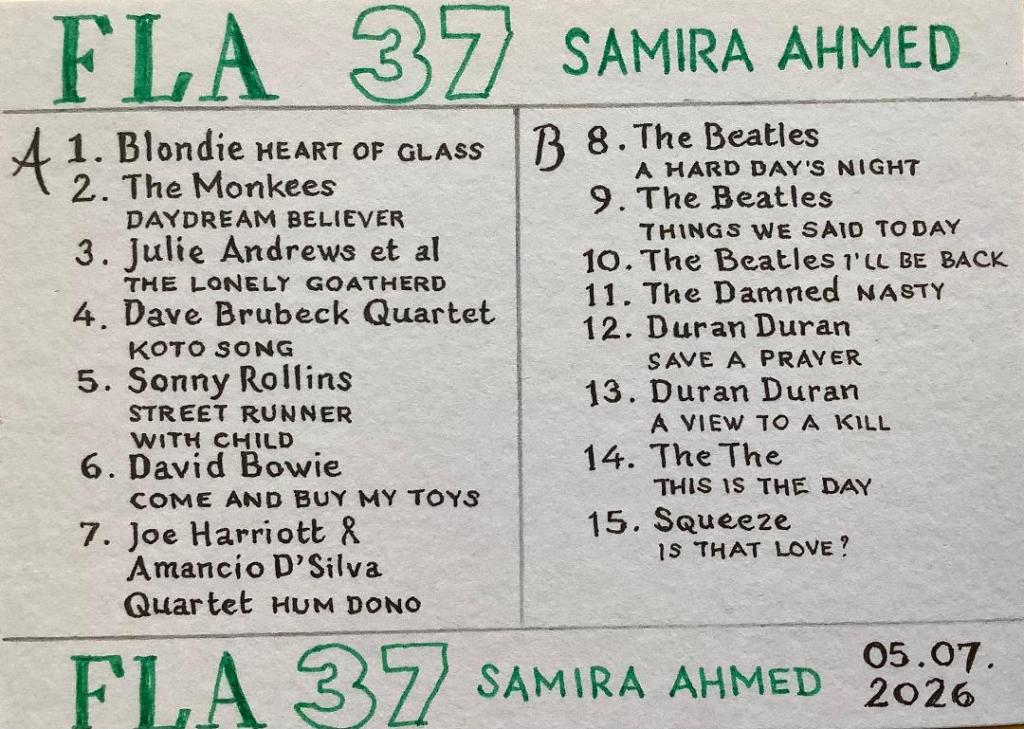
(For the time being, this site and project uses Spotify for the conversation playlists, but obviously I disapprove that Spotify doesn’t pay artists and composers properly, and other streaming platforms are available, as are sites to buy downloads and buy recordings. For consistency, you can also listen to the selections via YouTube (where available), and links are provided in each case, below.)

Thanks to Tune My Music, you can also transfer this playlist to the platform or site of your choice by using this link:  https://www.tunemymusic.com/share/weRUWYsljr

Track 1:

BLONDIE: ‘Heart of Glass’:

https://www.youtube.com/watch?v=M6zdLTfH-As&list=RDM6zdLTfH-As&start_radio=1

Track 2:

THE MONKEES: ‘Daydream Believer’:

https://www.youtube.com/watch?v=vsWrp9car78&list=RDvsWrp9car78&start_radio=1

Track 3

JULIE ANDREWS ET AL: ‘The Lonely Goatherd’:

https://www.youtube.com/watch?v=o_6ioe2PQIA&list=RDo_6ioe2PQIA&start_radio=1

Track 4:

DAVE BRUBECK QUARTET: ‘Koto Song’:

https://www.youtube.com/watch?v=ixU3_8tLZTw&list=RDixU3_8tLZTw&start_radio=1

Track 5:

SONNY ROLLINS: ‘Street Runner with Child’:

https://www.youtube.com/watch?v=W94X3gMCLIc&list=RDW94X3gMCLIc&start_radio=1

Track 6:

DAVID BOWIE: ‘Come and Buy My Toys’:

https://www.youtube.com/watch?v=9VpH8WyoChk&list=RD9VpH8WyoChk&start_radio=1

Track 7:

JOE HARRIOTT & AMANCIO D’SILVA QUARTET: Hum Dono:

https://www.youtube.com/watch?v=86TffDdUJDk&list=RD86TffDdUJDk&start_radio=1&t=37s

[This album is not currently on streaming services but will be added to the playlist, should it appear in the future.]

Track 8:

THE BEATLES: ‘A Hard Day’s Night’:

https://www.youtube.com/watch?v=zx2TFk0vh1I&list=RDzx2TFk0vh1I&start_radio=1

Track 9:

THE BEATLES: ‘Things We Said Today’:

https://www.youtube.com/watch?v=NItAlTsPuQg&list=RDNItAlTsPuQg&start_radio=1

Track 10:

THE BEATLES: ‘I’ll Be Back’:

https://www.youtube.com/watch?v=fJSTBNTac6k&list=RDfJSTBNTac6k&start_radio=1

Track 11:

THE DAMNED: ‘Nasty’:

https://www.youtube.com/watch?v=gMQvYiSPy-Q&list=RDgMQvYiSPy-Q&start_radio=1

Track 12:

DURAN DURAN: ‘Save a Prayer’:

https://www.youtube.com/watch?v=NCoxQna0JNo&list=RDNCoxQna0JNo&start_radio=1

Track 13:

DURAN DURAN: ‘A View to a Kill’:

https://www.youtube.com/watch?v=ga9r_yaftY0&list=RDga9r_yaftY0&start_radio=1

Track 14:

THE THE: ‘This is the Day’:

https://www.youtube.com/watch?v=7ZYgKCbFbWY&list=RD7ZYgKCbFbWY&start_radio=1

Track 15:

SQUEEZE: ‘Is That Love?’:

https://www.youtube.com/watch?v=0sigJ1DCyiI&list=RD0sigJ1DCyiI&start_radio=1

FLA 36: Jamie Muir (14/12/2025)

To round off series three of First Last Anything conversations, it was an utter delight to chat to producer, director and filmmaker Jamie Muir. Jamie has worked for fifty years in television, joining ITV company London Weekend Television in the mid-1970s as a researcher on the weekly arts series Aquarius. He was part of both the respective teams that created and developed Aquarius’s successor, Melvyn Bragg’s The South Bank Show for LWT from 1977, and The Late Show, a nightly BBC2 arts magazine that ran for six years from 1989–95. He also produced Book Four, a regular books series in the early years of Channel 4, hosted by Hermione Lee.

Since 1992, Jamie has made a wide variety of documentary films and series, for BBC, ITV and Channel 4, on arts, factual and history, fronted by figures including Lucinda Lambton, Simon Schama, Alan Yentob, Tom Holland, and David and Jonathan Dimbleby.

There was a lot to ask Jamie, as you can well imagine – and there was the small matter of discussing music as well, plus early family life, especially with his dad Frank Muir, the extraordinary comedy writer and executive with a notable broadcasting career of his own. But over Zoom, one afternoon in late November 2025, we talked about some of Jamie’s notable record purchases, as well as the power of photojournalism, why humour in arts television is underrated, and even music that turns up too often in documentaries. We hope you enjoy our chat – and wish you the merriest of Christmases. See you in 2026.

—–

JUSTIN LEWIS:

What music do you remember first hearing at home? You mentioned when we were setting this up things like comedy records, musicals.

JAMIE MUIR:

Yes, definitely comedy records, so Peter Sellers, Songs for Swingin’ Sellers, and then things like Bernard Cribbins’ ‘Hole in the Ground’, Lance Percival’s ‘Riviera Caff’: those kind of things which we found hilarious. And then probably My Fair Lady, Oliver!, Carousel – those were the kinds of records my parents had. They also loved French chanson, so Edith Piaf, Charles Trenet… which they had on old 78s until I used them for target practice, and shot them up with an air rifle.

JUSTIN LEWIS:

You were how old at this point?

JAMIE MUIR:

Ten.

JUSTIN LEWIS:

This is about the time you’d have started buying records yourself, if I’ve got the maths right. It’s interesting you mention Peter Sellers. Your dad Frank co-wrote things with Denis Norden, like ‘Balham – Gateway to the South’, a very famous sketch Sellers did on record.

JAMIE MUIR:

Yes he did, he wrote two or three things for Sellers with Denis, and there’s one about a young pop star [Twit Conway], ‘So Little Time’, which is sort of based on Elvis. It’s got some great jokes in it:

‘Now I’ve got some money I’ve been able to move my old mum and dad into a small house.’

‘I bet they’re delighted.’

‘No, they ain’t, they was in a big house.’

JUSTIN LEWIS:

Your dad was one of the most familiar faces on TV when I was growing up in the 70s and 80s: Call My Bluff, My Music, all sorts of things. As with Denis Norden: I didn’t know there was this whole writing career that came before it. How aware were you as a child of all this?

JAMIE MUIR:

I was very small, but every Sunday afternoon, he would disappear, to record the weekly episode of Take it From Here for radio. And then during the week, he would go and write with Denis, who we knew as children. They were incredibly long runs, something like 35 or 40 episodes.

JUSTIN LEWIS:

For twelve years!

JAMIE MUIR:

Yeah, for twelve years. It was a ridiculous, extraordinary work rate. Then in summer breaks, they’d go off and script-doctor Norman Wisdom films.

JUSTIN LEWIS:

Oh my god, so it didn’t stop.

JAMIE MUIR:

No, it didn’t. And of course, because nothing was recorded… jokes had no long tail.

Talbot Rothwell was in the same writing stable, and when the series was over, he asked if he could borrow some jokes. Someone had typed all their jokes up in a book, they lent them to him, and that’s how ‘Infamy, infamy, everyone’s got it infamy’ ended up in Carry on Cleo.

JUSTIN LEWIS:

So that started in Take It from Here?

JAMIE MUIR:

They just said, ‘Sure, we don’t need it anymore.’

JUSTIN LEWIS:

There was probably this thought back then that this was all ephemeral.

JAMIE MUIR:

[With Denis], my dad also wrote something for television that’s a bit dubious, I suppose: Jimmy Edwards [from Take It from Here] as the headmaster of a school, who was very free with the cane.

JUSTIN LEWIS:

Oh yes, Whack-O!

JAMIE MUIR:

Which I remember loving as a child. And one of the boys in the film spin-off of that [Bottoms Up, 1960] went on to be a member of the Jimi Hendrix Experience. Mitch Mitchell, the drummer.

JUSTIN LEWIS:

What I was going to say about your dad’s connection with television and pop is that he was on things like Juke Box Jury [1962].

JAMIE MUIR:

He did quite a lot. When television came back after World War II [in 1946], I think he was an announcer. I’ve always meant to ask John Wyver about this because he’s about to publish a book called Magic Rays of Light: The Early Years of Television [out on 8 January 2026].

JUSTIN LEWIS:

Which I must get!

JAMIE MUIR:

I think Dad worked at Alexandra Palace really quite early on. And we were certainly unusual amongst my friends growing up. We were a telly household very early on too, I think late 50s.

JUSTIN LEWIS:

Oh, so ITV was up and running.

JAMIE MUIR:

Yup, and because Dad was an executive [in comedy] at the BBC in the 60s, he would watch everything, and we’d sit and watch with him and he’d ask us what we thought of it. So we were a family that watched television critically which was, again, quite unusual. [One night], I’d gone to bed and he got me up and said, ‘There’s a play on you might enjoy. It’s by a writer called Harold Pinter. And it’ll be quite strange, but it’ll also quite funny. So we watched the Tea Party [BBC1, 25 March 1965, repeated BBC2, 30 April 1965]. And that was magic.

And we’d also seen a production of Hamlet Live from Elsinore [BBC1, 19 April 1964, the night before the chequered launch of BBC2], with Christopher Plummer [and Michael Caine as Horatio]. That is etched in my memory as an early example of watching grown-up television.

JUSTIN LEWIS:

One thing I remember Denis Norden saying about his writing partnership with Frank: he recalled that Frank thought comedy was essentially a kindly medium whereas Norden, in his own words, ‘liked the bastards, the WC Fields and Larry Sanders’, the untrustworthy characters.

JAMIE MUIR:

There was a sort of slight Lennon and McCartney thing about the two of them. But what we sometimes forget is that back in those days, the comedy had to suit all ages, eight to eighty. Dad used to say, ‘It would have been nice to have been able to write for my peers.’ He was quite envious of the freedoms that came with alternative comedy later.

JUSTIN LEWIS:

I had often wondered what he thought of that era. Did he keep up with all that too?

JAMIE MUIR:

Oh god, yes. He loved Steve Coogan, The Young Ones, The Fast Show. He just didn’t like anything that he felt was a bit lazy – recycling old gags.

—-

JUSTIN LEWIS:

When did you start to think you’d like to work in television yourself?

JAMIE MUIR:

A bit later on – once I’d started watching arts programmes, I think, because I’d watch Monitor and then one presented by James Mossman called Review [BBC2, 1969–71], with this exploding television screen in the opening titles.

JUSTIN LEWIS:

And were you watching pop shows, entertainment shows?

JAMIE MUIR:

Absolutely. That Hughie Green show…

JUSTIN LEWIS:

Opportunity Knocks

JAMIE MUIR:

That’s right: ‘Sincerely, folks!’ Crackerjack, obviously.

JUSTIN LEWIS:

Well, that’s where a lot of the pop groups would go.

JAMIE MUIR:

And then Sunday Night at the London Palladium on ITV. And I was there watching at home when John Lennon said on the Royal Variety Performance [4 November 1963]: ‘Those of you in the posher seats, rattle your jewellery.’ I saw those kinds of things go out, rather than see them in clip form later on.

JUSTIN LEWIS:

Because you wouldn’t have known, you couldn’t have known, that would happen.

JAMIE MUIR:

Yes, so that was incredibly exciting, to grow up in a household where something like television was just taken as a really valuable experience in terms of educating us.

JUSTIN LEWIS:

And did your parents observe what was going on in pop music because the generation gaps in those days were wider than they might be now? Were your parents up for rock’n’roll, generally?

JAMIE MUIR:

Yeah, they absolutely loved it, because the big influence – The Beatles – happened when I was nine or ten. I remember hearing ‘Love Me Do’ on a tiny little transistor radio. They kind of lived pop music through our enthusiasm.

And then very touchingly, Justin, after my sister and I left home, for many years, they’d carry on watching Top of the Pops because it had been part of our family life, sitting around commenting on the bands. So they just carried on. Dad, he died when he was 77 [in 1998], but even in those last few years, he could name all the members of Oasis. He had no kind of hierarchies in terms of knowledge, he was interested in everything. Each day, he’d get the Times, the Daily Mail and the Daily Mirror for the TV reviewing. So he would know what the poshos thought and also what the Mirror thought. Again, a big influence on my sister and I – the photojournalism in the Mirror. Taking the news in through images, rather than through masses of text.

JUSTIN LEWIS:

Well, in those days, with television, you’d see something and the chances are you wouldn’t see that again, or at least nobody expected to. So a photograph in a newspaper, that would be important. Which leads us neatly into the first record you bought, then…

FIRST: ELVIS PRESLEY: ‘Wooden Heart’ (1961, single, RCA Records)

JUSTIN LEWIS:

…because obviously Elvis never came to Britain – save for that ten-minute stop at Prestwick Airport – so how did you first become aware of Elvis? Did you see him on television somehow, was footage being shown there?

JAMIE MUIR:

Do you know, I think it was in either Egham or Virginia Water, in the newsagents, seeing Elvis Monthly, a little fan booklet, and I think I started asking Mum to buy me copies of that. And I possibly knew of Elvis through that magazine, these strong images – and then hearing ‘Wooden Heart’ on the radio. I fell in love with that and went out and bought it. So I think I came to Elvis through images rather than hearing the music. Then later on, my sister Sal and I became big fans of the films, and we’d go and see Girls, Girls, Girls or whatever.

JUSTIN LEWIS:

Because ‘Wooden Heart’ is from GI Blues, the first film after he left the army, isn’t it?

JAMIE MUIR:

Exactly. It’s quite interesting, because this song is safe, exactly what you would buy when you’re eight or nine, rather than ‘Jailhouse Rock’.

JUSTIN LEWIS:

It’s that middle section of his career where he’s an all-round entertainer, in between the rock’n’roll period and the Vegas period. It’s the in-between bit, not often discussed now, but he was selling absolutely zillions of records.

JAMIE MUIR:

I’m absolutely sure this was the first thing I bought with my own money. The next stage came when I bought ‘Concrete and Clay’ by Unit 4 Plus 2 (1965) – I just thought the lyrics to that were wildly romantic. Of course, The Beatles were romantic, but somehow, they were inextricably a part of my childhood. ‘Concrete and Clay’ was the beginning of my understanding older adult emotions in song, I suppose.

JUSTIN LEWIS:

I think Salman Rushdie heard this in his formative years too – you know he wrote a novel called The Ground Beneath Her Feet (1999), which led to a collaboration with Bono, but which started as the inspiration from ‘Concrete and Clay’. But you never know what records will cut through and stay with you, do you?

JAMIE MUIR:

I’m trying to be as honest as one can be all these years later.

JUSTIN LEWIS:

It’s a series of accidents, really. [JM agrees] And for once in this series, we’re going to switch round the order of Last and Anything, because I’m intrigued to know how you get from ‘Concrete and Clay’ to this, just a couple of years later?

ANYTHING: THE DOORS: Strange Days (1967, Elektra Records)

Extract: ‘Strange Days’

JUSTIN LEWIS:

It must have been incendiary to hear this at the time.

JAMIE MUIR:

The Beatles were becoming more and more surreal, but because I had grown up with them, they were never shocking. Not even Sergeant Pepper because it was clearly a continuum, and these were people you heard about through the newspapers or the telly – you were familiar with them as characters, and so the surrealism of the lyrics didn’t really strike me as something outrageously new.

JUSTIN LEWIS:

Also, the Beatles and George Martin have that connection with The Goons, the British sense of absurdism. George Martin even produced the Peter Sellers records we talked about earlier. But this, from America – that’s a different thing altogether.

JAMIE MUIR:

Probably through friends at school, I heard about this band called The Doors, and I asked for it for Christmas. The lyrics were something close to poetry, a poetry that you couldn’t quite understand.

JUSTIN LEWIS:

That feeling of ‘What does it mean?’ but also ‘Does it matter if I don’t know?’

JAMIE MUIR:

And that was kind of thrilling.

JUSTIN LEWIS:

Would you have gone to the Roundhouse concert (1968), because they didn’t play Britain very often?

JAMIE MUIR:

I saw the film [The Doors Are Open, Granada, December 1968], not at the time, I don’t think, but I do remember seeing a proto-pop video for ‘Five to One’ off the next album, Waiting for the Sun.

JUSTIN LEWIS:

I really hadn’t listened to The Doors for a long time before preparing for this interview, but I was at college when the film came out in 1991, the Oliver Stone film.

JAMIE MUIR:

Oh, where he shoots rock concerts like they’re battlefields.

JUSTIN LEWIS:

I always think of that bit where they’re noodling around, trying to come up with the ‘Light My Fire’ organ riff, and we chuckled a lot at that back then. Although watching Get Back, I’ve realised that sometimes that is exactly how a riff comes about. But some of Strange Days is absolutely terrifying.

JAMIE MUIR:

The spoken word interlude, ‘Horse Latitudes’, is so odd.

JUSTIN LEWIS:

That’s exactly the track I was thinking of.

JAMIE MUIR:

‘When the still sea conspires an armour…’

JUSTIN LEWIS:

Which Jim Morrison wrote at high school.

JAMIE MUIR:

Oh did he?

JUSTIN LEWIS:

I gather. So over here, this record must have seemed terribly exotic.

JAMIE MUIR:

And kind of adult, as opposed to the Beatles – who obviously were adult but came out of childhood… They were something you were beginning to grow out of. And after the Doors came Cream and Jimi Hendrix…

JUSTIN LEWIS:

On Strange Days, you get the Moog synth, the idea that the studio itself becomes an instrument. Apparently, they’d heard an acetate of Sergeant Pepper and decided, ‘We should do something like that’ because their first album had not been like that.

JAMIE MUIR:

Often people’s second album is a pale version of the first, but there really is a shift of gears with this, isn’t there?

—-

JUSTIN LEWIS:

So how did your career in TV start? Was Aquarius at London Weekend Television your first thing, ’74, ‘75ish?

JAMIE MUIR:

I did a history degree at University College in London and had no idea what I wanted to do, but right at the end of my time there, I was a kind of roadie for a poetry festival at Southbank [1973 at the Young Vic], just putting the leaflets on chairs. And Aquarius did an omnibus edition [eventually broadcast on ITV, 25 May 1974] where they took the best acts from the festival. I met the team then, and Humphrey Burton, the programme editor and presenter, was about. I said, ‘I’d love to work on Aquarius.’ And he said, ‘Well, I never take people straight out of university.’ I could see why, so I went off and got a job as an archaeologist – even though I don’t have any theoretical knowledge – working on Roman timber waterfront sites on the banks of the Thames.

Literally a year later, I rang up Aquarius and Humphrey said, ‘Okay, well you’d better come and have lunch, then. Can you come now?’ Which was kind of impressive. I said, ‘I’m not really dressed for it.’ He said, ‘No, come on, we’re very broad minded.’ I literally went in gumboots, and a jersey with a great hole in it. And he said to me, ‘Actually, we could do with some extra help with picture research.’ So I went in to do that once a week.

From there, I went to three days a week, and then full time for a couple of months. But then, to carry on, I had to be formally boarded, go through that process, because obviously it was very unionised in those days. But I got through that, and that’s when I joined properly as a researcher [1975] and had a fantastic 18 months with Humphrey and Russell Harty, and Peter Hall as well.

JUSTIN LEWIS:

What’s the earliest Aquarius film you can remember working on? The other day, I was watching a really nice little feature (via YouTube) about Erik Satie where LWT’s graphic designer Pat Gavin had made this animation [ITV, 2 July 1977].

JAMIE MUIR:

I wrote the script for that!

[Pat Gavin’s animation in full on Satie, Passing Through, can be seen here: https://www.youtube.com/watch?v=3Xa4gGXE7YQ&list=RD3Xa4gGXE7YQ&start_radio=1]

JUSTIN LEWIS:

And that led me to other Aquarius items. I saw the Kyung Wha-Chung interview with Humphrey, after which she plays the Bruch Violin Concerto [ITV, 29 September 1974], which I feel almost certain I saw at the time. Because it had a spell on Sunday afternoons, that series, rather than late Saturday nights.  And I even found this send-up of sports commentators that John Cleese and Eric Idle made for the strand [ITV, 14 August 1971). It’s interesting how arts programmes could be quite irreverent. People can often misunderstand arts TV, I think, they assume nobody involved has a sense of humour.

JAMIE MUIR:

Yes, later on [in the 1990s] I was able to make humorous documentaries with Lucinda Lambton, which were good fun to do, to have the licence to make something that was intentionally light-hearted and funny.

JUSTIN LEWIS:

People rightly talk up the Jonathan Meades documentaries, but Lucinda Lambton was also making a lot of things in that same spirit.

JAMIE MUIR:

I made a series with Lucy called Alphabet of Britain.

JUSTIN LEWIS:

I was watching the episode about concrete last night! [BBC2, 27 February 1995].

JAMIE MUIR:

‘These are stirring times for concrete…’ – it’s great being able to do a documentary where you can just put silly puns in. But anyway, in the early days, at LWT, I was taken on, along with a researcher called Nigel Wattis. And one of the early films the show made was about Andrew Lloyd Webber’s album Variations [made with his cellist brother Julian]. And we – Alan Benson the film’s director and I – suggested to Melvyn that it would make a good theme for The South Bank Show.

JUSTIN LEWIS:

Yes, one of the many variations of Paganini’s 24th Caprice.

[The Lloyd Webber film appeared in the second-ever South Bank Show, broadcast on ITV, Saturday 21 January 1978]

JUSTIN LEWIS:

It’s interesting how The South Bank Show made a virtue of popular arts – it might do abstract art one week, but pop another week. I mean, Paul McCartney’s in the opening episode. Was that the intention, to make the spectrum as broad as you could?

JAMIE MUIR:

Yes, but us researchers were quite amused by the Paul McCartney choice because although it was a huge thing for Melvyn’s generation to make a gesture by interviewing McCartney first, really there was punk rock by 1978 [in fact Wings were at number one with ‘Mull of Kintyre’ as The South Bank Show premiered], so quite soon we had Patti Smith in the studio, my fellow researcher David Hinton worked on a film with Talking Heads and also a film about Rough Trade Records.

In that first year of South Bank Show, there was a slightly uneasy mixture between a shortish film of 20–25 minutes, and a panel review, like Saturday Review or Late Review later on. Melvyn and guests would review a book or play or something, and then he’d introduce the film. And, actually, none of us could manage that balance, we needed a bigger team for something like that.

JUSTIN LEWIS:

What would happen at the start of a series, then? You’d meet up and all suggest people or subjects to make films about?

JAMIE MUIR:

Exactly. That was interesting – there were four or five researchers on the team. Melvyn suggested we should hire consultants to feed what was going on into the programme. But I said, ‘I think we should be your consultants’, because I thought we’d be doing ourselves out of a job otherwise. So we divided the subject areas up between us and we made ourselves authorities in the different subject areas.

And then we’d have these seminars where we’d go up to the meeting room, there’d be cheese, grapes, a bit of wine, and we’d pitch ideas. It was a terrific process that Melvyn devised, because we’d be pitching against each other, and he’d say, ‘Don’t just suggest Spielberg, what’s the angle?’ So you were bringing him an idea, but also trying to conceptualise it. We had really good discussions out of that, he built a wonderful team – and we’re all still friends to this day. Because it wasn’t silly competitiveness, it was genuine intellectual competitiveness. ‘Is this the right moment to do William Golding or should we do a film on Coppola?’

JUSTIN LEWIS:

The other night, I was watching the film on Philip Larkin, screened [ITV, 30 May 1982] to mark his 60th birthday, but actually made a year earlier. And Larkin refused to be shown on camera, right?

JAMIE MUIR:

It was funny. Melvyn went up to see him in Hull. There was a lot of correspondence about where they were going to meet. They settled on the Station Hotel. And they had a bottle or two. Of course, in those days, closing time was rigorously enforced, and Melvyn said, ‘Come on, you’ve got to let us finish’, and Larkin said, ‘I do have a professional reputation in the town.’ I think the publican said he was going to call the police. Anyway, Larkin said he’d take part, but he didn’t want to appear. Though in fact, if you notice, the tip of his nose is in shot.

JUSTIN LEWIS:

I was thinking about how arts programmes would often be on after comedy shows. I think of Arena being on after Fry & Laurie. And The South Bank Show more often than not seemed to be on after Spitting Image on Sunday nights. There was something about both arts programmes and comedy shows that had this kind of playfulness, striving for innovation.

JAMIE MUIR:

I had a real salutary lesson early on with that. If you worked after a certain time, you were allowed to get a cab home, and cab drivers pulling into London Weekend were always interested in what shows we made. One asked me, ‘What show do you work on?’ I said, ‘The South Bank Show’, perhaps thinking maybe he wouldn’t watch it, and he said, ‘Oh! I saw the programme about Harold Pinter – I didn’t know he grew up in Hackney!’ So, never try to match people to subject matter. There are an infinite variety of ways in to a subject. And as a young person, that was a really important lesson. I often found that with The South Bank Show, people watched it for a whole variety of reasons.

JUSTIN LEWIS:

You’d be working on, what?, four or five films a series, because there seemed to be 26 a year.

JAMIE MUIR:

It felt like hard work, certainly.

JUSTIN LEWIS:

You’d be working on more than one at once, though.

JAMIE MUIR:

And they were pretty thoroughly researched. We didn’t have the internet then. It was all books and going to talking to people, and writing a careful brief, and then being on hand in the cutting room for any stills or extra visual material the director wanted. So it was a very rich and fulfilling role, researching in those days.

JUSTIN LEWIS:

Do you have particular favourite films that you worked on from those days?

JAMIE MUIR:

I think the most exciting was the programme with William Golding [broadcast on ITV, 16 November 1980 – his first interview in 18 years]. Because he’d sort of vanished. And I’d read Lord of the Flies, when I was about 13, 14, but hadn’t read anything else, and [in my mid-twenties] I read my way through the others. It was a fantastic body of work, and because I was working on the programme, I decided to ring up and see what he was up to. And Faber said, ‘He’s just finishing a novel, but he doesn’t want to do any publicity for it’ – it was a book called Darkness Visible [1979]. There’d been a ten-year gap before that one. And then they said, ‘But he has just started on a new novel, set on a ship [which became Rites of Passage, 1980], and he’s very upbeat about it – keep in touch.’

So every four months, I’d ring up: ‘How’s he getting on?’

‘Oh, he’s motoring away.’

And then, at one of these pitching sessions for the next series, I said to Melvyn, ‘Golding’s got a new novel out. I think this is the one we should cover.’

And Melvyn said: ‘Yes, but Anthony Burgess has got Earthly Powers. He’s a great talker.’

‘Yes, but Golding hasn’t done interviews for ages. He’s like a lost figure.’

So Melvyn wrote to him and Golding wrote back this brilliant letter: ‘What it amounts to is this.  I’ve no objection to being filmed down here in what are my own surroundings so to speak; and no objection to talking in general terms on general topic (whither China, whatever happened to flying saucers, waterlilies, dragonflies and Homeric poetry,) but a quarter-of-a-century of churning out dreary answers to the dreary examination questions on my books or book has made me determined to give it, give it, up up up.’

Melvyn could see that he wasn’t actually objecting to a programme, so he went down to see him, and they got monumentally pissed. When he came back, I asked, ‘What have you agreed?’ And he said, ‘I can’t remember. All I remember is he dared me to walk along the wall around the pond in his garden.’

From the letter, we appreciated that he didn’t want to talk about the books, so I constructed a shape for the programme that would take them to places [around Wiltshire] which would then provoke discussion of the themes of the novels. We’d go to Stonehenge, Marlborough, and then Salisbury [which inspired The Spire]. And then the night before filming began, he said, ‘I will talk about the books as well.’ So I quickly had to prepare some questions about the books too. It was great because he wasn’t on the publicity circuit, and he responded incredibly openly to Melvyn’s questions. And then he went on to win the Booker Prize for Rites of Passage. I was personally extremely proud of landing a programme at exactly the right time.

JUSTIN LEWIS:

And also getting a kind of trust from the interviewee, not so much that their guard is down, but they’ve worked out this could be a different kind of interview.

JAMIE MUIR:

We really got to know contributors through their work, which I suppose is flattering for most artists. We’d done a programme on Scorsese in the States quite early on [22 February 1981 – there was a second profile in September 1988] and he then told other filmmakers, ‘Oh, The South Bank Show is a good place to go, if they contact you.’

[From 1988, the Bravo cable channel in the USA began broadcasting selected editions of The South Bank Show.]

JUSTIN LEWIS:

As we’re having this conversation [in late 2025], Melvyn Bragg has retired from In Our Time on Radio 4 after 26 years and over a thousand episodes – Misha Glenny is succeeding him as host in January. He’s had an incredible career what with that and decades of The South Bank Show and so many other things. What do you think you learned about programme making from Melvyn in those early days at LWT and from the team he assembled for the series?

JAMIE MUIR:

He was a hard task master – at one time or another we all got a bollocking, particularly in the first year when the programme was finding its feet. But he believed in teams, in working collaboratively.  I think he consciously modelled The South Bank Show on Monitor where he had thrived. The big lesson we researchers learned from him was to think through the elements of a programme rather than just shout out names of possible interviewees. That and the value of research, which was a very LWT thing. Because there was also John Birt and Peter Jay on programmes like Weekend World and in newspaper articles [for The Times], developing the ‘Mission to Explain’ – [giving a subject context, less emphasis on sensationalism and presenting a greater understanding of a story’s issues]. That was influential.

—–

JUSTIN LEWIS:

How did it feel to be producing a programme on the opening night of Channel 4 in 1982?

JAMIE MUIR:

Bloody terrifying.

JUSTIN LEWIS:

You were like the fifth programme ever on Channel 4. This was Book Four, with Hermione Lee, just before the first ever Channel 4 News.

JAMIE MUIR:

It was scary because there were so many different publicists involved and we were just trying to steer our way through it. It had to be a studio-based show, although actually, it would have been better if we’d gone to authors’ homes, I think. It was quite formal, being in the studio, in a way that was beginning to seem old fashioned.

JUSTIN LEWIS:

It feels incredible to think how books coverage was once such an integral part of television, and how that’s mostly gone now.

JAMIE MUIR:

I resolve not to be bitter, or nostalgic about the past, but it’s true.

JUSTIN LEWIS:

It’s such a shame, because if you look at the archive from the sixties to the nineties, that extraordinary inventory of arts television, you wonder how the arts of the 2020s will be represented in the archives. I know we still have radio, and podcasts, but the visual content is vital too.

JAMIE MUIR:

What is the Adam Curtis of thirty years’ time going to draw on? That’s the sadness, that richness of archive isn’t going to be there.

—-

JUSTIN LEWIS:

In 1988, you moved from LWT to the BBC, and began working as a producer on a new nightly format for BBC2, The Late Show. How did that come about?

JAMIE MUIR:

It had been a very fixed world in arts television, there’d been Omnibus and Arena on the BBC, us on LWT, and then that summer Signals had begun on Channel 4. So the plates started to shift, and Kevin Loader – who’s gone on to be a film producer – rang up several of us at LWT. I think Mary Harron, who also went on to make feature films, was the one he rang first – a good friend of mine. And then Kevin rang me, and I thought, ‘This is the time to make a move’. Because the way the union worked, in order to direct, everyone had to go on a formal directing course either at LWT or at the Short Course Unit at the National Film School. And because I’d been doing Book Four, I was the last to get this kind of formal training. I’d managed to make one film, about Eric Gill, through the religious department at Channel 4 because they had slightly more money – and that had been a tremendous experience.

So after Kevin rang me, I joined the team that was conceptualising The Late Show. We spent an autumn devising it.

JUSTIN LEWIS:

Because Alan Yentob had just become BBC2 controller, a particularly rich period for the channel.

JAMIE MUIR:

It was a fantastic time, and the launch editor Michael Jackson [future BBC2 controller and also later head of Channel 4] was an inspiring person to work with. I was a nightly producer on The Late Show, a tough job, but I got the opportunity to make films and I made as many as I could.

JUSTIN LEWIS:

What you were saying earlier about the early multi-item era of The South Bank ShowThe Late Show was four or five items a night wasn’t it? A film report, studio interview, bit of live music… So you were producer one night a week?

JAMIE MUIR:

Yeah, although it was mostly going into cutting rooms and saying to people, ‘Could you cut two minutes out?’ And they’d say, ‘Which two minutes?’ And I’d say, ‘Any two minutes, we’re going on air in six minutes.’ The pace was so hectic, compared with The South Bank Show. It was often quite difficult to work out what the elements of that night’s show would be – because somebody could die and [you’d have to react to that].

JUSTIN LEWIS:

And you were on straight after Newsnight.

JAMIE MUIR:

I think I would have benefited from a spell on Newsnight first.

JUSTIN LEWIS:

You also helped bring back Face to Face, with Jeremy Isaacs in the John Freeman role.

JAMIE MUIR:

Yes, I did two or three, and then Julian Birkett produced them thereafter. There was a studio producer called John Bush [another South Bank Show producer/director] who worked out the direction, because there’s a very small number of angles that they used in Face to Face. So that was learning from the past.

JUSTIN LEWIS:

You pointed me towards the Late Show film on Julian Cope [BBC2, 6 March 1991], which you made with Mark Cooper. And I remember seeing it at the time. I’ve always enjoyed him in interview mode – he goes from grand pronouncement to humorous to self-effacing to sincere and back again. An absolutely perfect interviewee because you’ll always get something different.

JAMIE MUIR:

I’d loved the Teardrop Explodes, ‘Treason’ and things like that. We made it just up the road from where I lived.

JUSTIN LEWIS:

I recognised the Brixton streets!

JAMIE MUIR:

He seemed very home-based. So I thought I’d make it as close to a home movie as possible, and not stray too far from his area.

JUSTIN LEWIS:

That’s a wonderful version of ‘Las Vegas Basement’ in that. Why do you think The Late Show came to an end? I know you’d already moved on.

JAMIE MUIR:

I suspect it was cost. It was expensive to run, and by then, I think the BBC was starting to think it needed to be competing with the output of the Discovery Channel. So the trend in arts programmes was to go for big CGI epics, do you remember that? The thing that was deemed to be incredibly successful was Jeremy Clarkson’s film about Isambard Kingdom Brunel [in Great Britons, 2002], and that was perceived to have cut through on a much bigger scale. Arts programmes were retooled to try and emulate its success.

JUSTIN LEWIS:

A bit like how if you make a science film, not to denigrate the people who make them, you have to have someone standing next to a volcano. Or something. You have to have the thought, ‘How’s this going to look spectacular on television?’

JAMIE MUIR:

Yes. There was also a fascination with that man who used to do lectures about storytelling, Robert McKee. And trying to get documentaries to conform to the three-act structure. I thought it would have been nice to have a crack at making that kind of thing, but then it vanished because of the banking crash in 2007, and the BBC was back to the middle ground again, which is where I flourished, the presenter-led programmes, that kind of thing.

JUSTIN LEWIS:

One thing that’s definitely increased in documentaries is the amount of music. It used to be that music was used quite sparingly, even in documentaries that were already about music. Were you choosing a lot of music clips yourself?

JAMIE MUIR:

Yes, both LWT and the BBC had these music departments with fantastic resources where more or less anything was available in physical form to listen to, but they’d also done these deals…

JUSTIN LEWIS:

There were blanket agreements?

JAMIE MUIR:

Yes, that was kind of thrilling. You could discover a favourite composer or song and work them in.

JUSTIN LEWIS:

Can you isolate one or two particularly special examples?

JAMIE MUIR:

A friend recommended a contemporary classical composer called Howard Skempton. His work, anything he did, worked so beautifully with images. I loved working with his music. He wrote a piece called ‘Small Change’ that has got the inevitability of a Beatles tune, it’s so perfect. You feel it’s existed forever. He also wrote a magnificent orchestral piece called ‘Lento’ (1991).

When I made a film for Imagine… about Barbara Hepworth (BBC1, 18 June 2003)…

JUSTIN LEWIS:

Oh that was an excellent film, was rewatching it in preparation for this…

JAMIE MUIR:

…I rang him up to ask if I could use a piece of music he had written in memory of Barbara Hepworth. When I called he said, ‘Oh I know you! You’re the one who’s always using my music.’ I said, ‘Oh God, has it always been appropriate?’ And he said, ‘That doesn’t matter. It’s just good that it’s in circulation.’

JUSTIN LEWIS:

Oh, that’s nice.

JAMIE MUIR:

He was so generous. I wish I’d pushed it a bit further and asked him to compose original music for a project.

What was funny was the people who worked in the BBC music department put up this list, pinned to the wall, of Music We’d Like to Ban [from documentaries etc]. It said, ‘All Michael Nyman.’

JUSTIN LEWIS:

I was about to ask, is Philip Glass on that list? Who I love, but I’m sure his work has been in everything by now.

JAMIE MUIR:

Yeah, all Philip Glass. ‘Ferry Cross the Mersey’ for any programme about Merseyside. ‘Let’s Make Lots of Money’ for any consumer programme about the 80s. It was so accurate, that list. I hope somebody keeps that list when they close the department.

——

LAST: LAURA CANNELL: The Rituals of Hildegard Reimagined (2024, Brawl Records)

Extract: ‘The Cosmic Spheres of Being Human’

JUSTIN LEWIS:

I know a little about Laura Cannell, I bought one of her albums a little while back, The Sky Untuned (2019), which was quite violin-centric. And this, which I’ve come to late, but which I’ve been playing a lot, is much more recorder-centric. How did you discover this? Did you know her stuff?

JAMIE MUIR:

No – it was good old BBC Radio 6 Music. I heard it when I was cooking one evening. I love the fact this draws on the past but is contemporary. I thought that balance of the two is tremendously appealing. And as well as the music, the fact it was recorded in an old church. I love that sort of gesture.

JUSTIN LEWIS:

It occurred to me, as with The Doors earlier but in a different way, it’s got that element of sound distortion, the treatment of the instrumentation… You’ve got her playing a bass recorder, a twelve-string knee harp, a delay pedal. And that’s it. And as on The Sky Untuned, the instruments start to sound quite otherworldly, not like themselves.

JAMIE MUIR:

Yes, it could have strayed off into New-Agey yoga music, but I found that weight of history behind it very attractive.

JUSTIN LEWIS:

It’s quite ghostly, isn’t it.

JAMIE MUIR:

It is. I am drawn to that kind of Ghostbox sound.

JUSTIN LEWIS:

Me too.

JAMIE MUIR:

I love the wit of it, I think. But I do also have a kind of seasonal taste in music. In autumn and winter, I’ll listen to more classical, more English folk-rock – the music of my teenage years, like Shirley Collins. I love her album Heart’s Ease, especially ‘Locked in Ice’. Then in the spring and summer, I’ll listen to ska – The Skatalites’ version of ‘I Should Have Known Better’ is a favourite – and reggae, and the things that my children recommend. It’s quite a profound yearly cycle.

JUSTIN LEWIS:

What are your children recommending you at the moment?

JAMIE MUIR:

They’re very big Harry Styles fans, I love playing that in the car. My middle one is a big fan of Florence and the Machine and she grew up quite near where I live, so we all recognised quite a lot of the references in a song like ‘South London Forever’. What else do they like? Quite a lot of jazzy things at the moment.

JUSTIN LEWIS:

Ezra Collective?

JAMIE MUIR:

Exactly. Oh, and that band Haim.

JUSTIN LEWIS:

When you were saying earlier about how your parents carried on watching Top of the Pops for many years… you’re also keeping that connection going, of keeping up to date. How old are they?

JAMIE MUIR:

They’re 33 to 26.

JUSTIN LEWIS:

And what are you working on now? Because you’ve done fifty years of television.

JAMIE MUIR:

I thought I’d reinvent myself as a small-scale filmmaker. I bought a Blackmagic camera, which is the price of a laptop, but actually, it’s quite difficult to operate and you spend all your time fiddling with it rather than talking to the person you’re filming. And while you could shoot a feature film on it, it seemed to be taking me forever to learn the camera.

So at the moment, I’m making things on my phone, which is fantastic because it’s quick. My neighbour is a historian called Tom Holland, who does The Rest is History.

JUSTIN LEWIS:

You’ve made some films with him before, haven’t you?

JAMIE MUIR:

Yeah. And he led the campaign to try and stop the Stonehenge tunnel going through the World Heritage Site. We shot this thing in half a day, and there was an article in The Times that linked to this tiny little film. Which was extraordinary. And I also made a film on my phone with my wife –Caroline’s a fundraiser – who wanted a short video for the charity she works for. So that kind of thing is what I’m doing now. Learning how to do that, doing charity videos, things with Tom, a range of bits and pieces.

—–

JUSTIN LEWIS:

Just looking at my questions list. We’ve covered most of it, I think. What’s left?

JAMIE MUIR:

The other Jamie Muir!

JUSTIN LEWIS:

Oh yes – have you ever been confused with the Jamie Muir in King Crimson?

JAMIE MUIR:

Yes, all the time. Because I was doing programmes about books, I was in a pool of people who’d be invited to book launches by Faber & Faber. And I was invited to the launch of the Faber Book of Political Verse, which had been edited by the then-Home Secretary, Kenneth Baker. Joanna Mackle at Faber introduced us:

‘So this is Jamie Muir who works on The South Bank Show.’

Kenneth Baker says, ‘Jamie Muir? My brother-in-law’s called Jamie Muir. He’s the percussionist with a band called King Crimson. Do you know Larks’ Tongues in Aspic?’

JUSTIN LEWIS:

It’s not a sentence you’re expecting from the Home Secretary, really. Especially not then.

JAMIE MUIR:

There’s been a film quite recently about King Crimson, a really good one [In the Court of the Crimson King, 2022]. The director Toby Amies rang me up, wondering whether I was that Jamie Muir, and I suggested he included a section on people who were mistaken for him. Sadly, he’s died now, but I wondered if people had ever asked him what it was like working with Simon Schama.

——

You can follow Jamie Muir on Bluesky at @jamiembrixton.bsky.social.

——

FLA Playlist 36

Jamie Muir

(For the time being, this site and project uses Spotify for the conversation playlists, but obviously I disapprove that Spotify doesn’t pay artists and composers properly, and other streaming platforms are available, as are sites to buy downloads and buy recordings. For consistency, you can also listen to the selections via YouTube (where available), and links are provided in each case, below.)

Thanks to Tune My Music, you can also transfer this playlist to the platform or site of your choice by using this link: https://www.tunemymusic.com/share/xj8YbZXFOI

Track 1:

PETER SELLERS: ‘So Little Time’:

https://www.youtube.com/watch?v=FacRB8U0xiI

Track 2:

ELVIS PRESLEY: ‘Wooden Heart’:

https://www.youtube.com/watch?v=k5RO_RSI8QM&list=RDk5RO_RSI8QM&start_radio=1

Track 3:

UNIT 4 PLUS 2: ‘Concrete and Clay’:

https://www.youtube.com/watch?v=1CEQ640sHr8&list=RD1CEQ640sHr8&start_radio=1

Track 4:

THE DOORS: ‘Strange Days’:

https://www.youtube.com/watch?v=tHOK87ozcho&list=RDtHOK87ozcho&start_radio=1

Track 5:

THE DOORS: ‘Horse Latitudes’:

https://www.youtube.com/watch?v=oVWNkW21BeA&list=RDoVWNkW21BeA&start_radio=1

Track 6:

THE DOORS: ‘Five to One’:

https://www.youtube.com/watch?v=oOzpncIHCLs&list=RDoOzpncIHCLs&start_radio=1

Track 7:

ANDREW LLOYD WEBBER: ‘Theme and Variations 1–4’ (based on Paganini’s 24th Caprice in A Minor):

https://www.youtube.com/watch?v=0WnX5zYznIc&list=RD0WnX5zYznIc&start_radio=1

Track 8:

THE TEARDROP EXPLODES: ‘Treason’:

https://www.youtube.com/watch?v=cn9zRk_2-GE&list=RDcn9zRk_2-GE&start_radio=1

Track 9:

JULIAN COPE: ‘Las Vegas Basement’:

https://www.youtube.com/watch?v=Sdeu37Focqc&list=RDSdeu37Focqc&start_radio=1

Track 10:

HOWARD SKEMPTON: ‘Small Change’:

https://www.youtube.com/watch?v=ZQIoW_iFPlE&list=RDZQIoW_iFPlE&start_radio=1

Track 11:

HOWARD SKEMPTON: ‘Lento’:

https://www.youtube.com/watch?v=BCGhH_N_Ovc&list=RDBCGhH_N_Ovc&start_radio=1

Track 12:

LAURA CANNELL: ‘The Cosmic Spheres of Being Human’:

https://www.youtube.com/watch?v=uCy6y8VKwYI&list=RDuCy6y8VKwYI&start_radio=1

Track 13:

LAURA CANNELL: ‘The Rituals of Hildegard’:

https://www.youtube.com/watch?v=Fb8GXhsDBRs&list=RDFb8GXhsDBRs&start_radio=1

Track 14:

SHIRLEY COLLINS: ‘Locked in Ice’:

https://www.youtube.com/watch?v=ekmpu0ippKY&list=RDekmpu0ippKY&start_radio=1

Track 15:

THE SKATALITES: ‘I Should Have Known Better’:

https://www.youtube.com/watch?v=p7SL5iO0x1c&list=RDp7SL5iO0x1c&start_radio=1

Track 16:

HARRY STYLES: ‘Golden’:

https://www.youtube.com/watch?v=enuYFtMHgfU&list=RDenuYFtMHgfU&start_radio=1

Track 17:

FLORENCE & THE MACHINE: ‘South London Forever’:

https://www.youtube.com/watch?v=lua-N4OrPKA&list=RDlua-N4OrPKA&start_radio=1

Track 18:

KING CRIMSON: Exiles:

https://www.youtube.com/watch?v=nMeFafKx7GI&list=RDnMeFafKx7GI&start_radio=1

FLA 31: William Ham Bevan (14/09/2025)

Journalist, travel writer and editor William Ham Bevan has worked for nearly every national newspaper in Britain at some point over the past 30 years, plus a raft of magazines and other publications. When I first met him, about 45 years ago, when we lived in the same street and our mums were best friends, we used to talk endlessly about our twin obsessions: pop music and ridiculous TV programmes. His perceptiveness and wit has only grown since then. On the one hand, he is one of the most brilliantly professional journalists I’ve known. He is also the first person I knew who posted something on the world wide web: in around 1996, when we hadn’t seen each other for a while, I happened to find a post by him in a discussion about the scariest TV logo, and he nominated the Yorkshire TV chevron. Especially when it moved, at the start of the Ted Rogers game show 3-2-1. Don’t have nightmares.

We talked over Zoom one afternoon in early September 2025, covering such conversational terrain as: being lucky enough to have parents who are open-minded about music, keeping old tapes of the top twenty, synthesizers, schools TV soundtracks, and why sometimes humour should belong in music.  

—-

JUSTIN LEWIS:

So what’s the first music you remember hearing? What sort of music was being played in your home?

WILLIAM HAM BEVAN:

Well, it would almost certainly have been on Swansea Sound. When I was living with my Mum and my grandfather, from 1974 till 1980 when we moved to Mumbles, I remember music being on in the background pretty much all the time. It was almost always Swansea Sound – commercial chart music. I was always quite aware of tunes that were in the charts: ABBA, the Bee Gees, or the songs from Grease. And Showaddywaddy obviously, because they never seemed to be off the charts.

JUSTIN LEWIS:

Always available.

WILLIAM HAM BEVAN:

Top of the Pops would be the other thing, which we watched each week. Mum would have been in her mid-thirties at the time. Grandpa would watch it too – he’d come in, and he’d have three stock phrases. One would be: ‘Why do they keep dancing around? They’d be able to play a lot better if they stood still.’ When Legs and Co or whoever the troupe was at the time came on, he’d say, ‘God, I’ve seen more meat on a skewer.’ And then, at some point, he’d excuse himself and go out to roll a fag, saying, ‘Well at least they look as though they’re enjoying themselves.’

I reckon he looked forward to those five minutes of performative bemusement every Thursday night. Look at the costumes, shake your head, go out to the kitchen.

JUSTIN LEWIS:

Pop TV now has this understanding that pretty much everyone alive has a connection with pop as we know it because rock’n’roll is seventy years old, so if you’re aware of that tradition, you’re familiar with it. But back then, there were these very wide generation gaps.

WILLIAM HAM BEVAN:

Back in those early years, I don’t remember much pop on TV beyond Top of the Pops, Tiswas, Swap Shop… and obviously those fillers on HTV when they’d play videos of ‘Wuthering Heights’ or whatever because a live broadcast had finished three minutes early.

JUSTIN LEWIS:

Or they hadn’t sold enough advertising.

WILLIAM HAM BEVAN:

Indeed. But record collections… Grandpa was very much into big band stuff like Count Basie, but he was quite open-minded, as were Mum and Dad. There was no real consideration of genre – if they saw something or they heard something they liked, then they’d get it.

When it was the US bicentenary in 1976, there were a lot of broadcasts from the States of military parades and tattoos. Gramps actually wrote to the US embassy saying he really enjoyed some of this music that was played, and wondered what it was and how he could buy it. About two weeks after that, a huge package wrapped up in ribbons turned up on the doorstep, from the US embassy: it was about seven or eight box sets of LPs, some of them pressed on red, white and blue vinyl. I’ve still got some of them – things like ‘A Bicentennial Salute to the Nation from the United States Guards band’.

JUSTIN LEWIS:

There’s going to be a lot of Sousa, isn’t there?

WILLIAM HAM BEVAN:

Yeah, I think the Monty Python theme [‘The Liberty Bell March’, composed 1893] is probably in there somewhere.

JUSTIN LEWIS:

So did your grandfather’s interest in big band music lead to this amazing interest in music in his children?

WILLIAM HAM BEVAN:

I’m not sure how the Hams came to be such a musical family – although we were really only two-thirds of a musical family. My Mum had two brothers: John was a jazz trumpeter, had a music shop in town, and had a jazz radio show on Swansea Sound. And then you had Pete, who’d been in Badfinger, and tragically ended up taking his own life. But Mum was the cuckoo in the nest. I mean, she tried learning violin when she was at school. She was a bit of a tearaway, apparently – I used to have one of her old end-of-term school reports, and the headmistress had written, ‘Wicked without malice’. She fell off the roof of the school – no idea what she was doing up there – and she injured both of her arms. Her violin teacher said, ‘Well, let’s take that as a sign from God.’ That was the end of her musical ambitions, and I’m afraid I’ve taken after her, rather than John or Pete.

JUSTIN LEWIS:

Didn’t you do some keyboard playing, though? I seem to remember, though this was after my time, that you were in a band at school.

WILLIAM HAM BEVAN:

I did muck about with synths. We used to cover ‘The Perfect Kiss’ by New Order, because if you look at the Jonathan Demme video, quite a lot of it is close-ups of Peter Hook’s fretboard and Gillian Gilbert’s keyboards. So it actually shows you how to play it. And yes, we did do one gig at the Bishop Gore Comprehensive school hall. There’s one surviving tape of it, and I keep it under lock and key.

JUSTIN LEWIS:

What else was in your set, then?

WILLIAM HAM BEVAN:

We did ‘Everything Counts’ by Depeche Mode. And then we did ‘Tainted Love’ and something very odd happened to the sequencer, halfway through. It started hammering out tom-toms on the drum machine, turning the song into a mash-up of something not far off ‘Atrocity Exhibition’ by Joy Division. Our set was followed by two heavy metal acts, and that was a salutary tale, because people had been politely sitting down in the hall during our set, but once the metal band came on, the whole stage was swamped and there were people moshing in the front. And we thought, Oh, okay…

JUSTIN LEWIS:

It’s always been a big rock town, has Swansea. But your mum, who was a great friend of my mum’s – this is how we know each other – and who I was terribly fond of, had worked in telly for a bit, at Thames Television in London.

WILLIAM HAM BEVAN:

She didn’t spend a long time at Thames, but she did hang round with a lot of people from that scene… a Fleet Street crowd. People like the This Week presenter Llew Gardner – she was his PA for years – the Parkinsons, Michael and Mary, and Hugh McIlvanney. And she’d been part of that quote-unquote Swinging London world. There were so many tales that she’d start telling me and would then say, ‘I’ll tell you the rest when you’re older’; sadly, she died when I was 17, so she never had the chance to. She’d mention stuff like having been present at the party where Germaine Greer’s husband walked out on her – apparently everybody was smashed out of their heads – or going to see the England v Scotland football international with Telly Savalas. It turns out he was a sports producer and reporter before he got into acting.

But to bring it back to music, she knew a lot more than she let on about. She didn’t often volunteer it, and I think that had a lot to do with what happened to Pete. I think she almost felt guilty, and didn’t like to think too much about what she used to listen to, because she loathed what the music business did to her brother and it was bound up in all of that.

JUSTIN LEWIS:

Actually, I can remember being about 11 or 12, this was the early 80s, and being this curious pop obsessive, and trying (innocently, I think) to ask your mum about Pete and his career – I knew he’d died tragically young but I didn’t know how it had got to that – and she understandably changed the subject very abruptly.

WILLIAM HAM BEVAN:

What did connect us, though, was The Rock’n’Roll Years [a presenter-free programme using news footage, music clips and captions, running on BBC1, 1985–87, and covering the years between 1956 and 1979*), one of the few programmes we’d watch religiously as a family – it was that, M*A*S*H and Ski Sunday. But things would come on The Rock’n’Roll Years, and Mum would make remarks… a band like Nazareth would appear and she’d say, ‘Oh I went to see them once’, and you’d think, Hm, that doesn’t strike me as being very you.

[*A further Rock’n’Roll Years series covering the 1980s aired on BBC1 in 1994.]

JUSTIN LEWIS:

I think as a young person, though, you quite often go and see all sorts of things, just because you go out. Regardless of what it is.

WILLIAM HAM BEVAN:

That programme was a massive piece of my education in rock and pop music – probably second only to coming over your house, reading Smash Hits and hearing your latest purchases. It was so well put-together, and not all the musical choices were obvious. you even had some album tracks, like ‘Hairless Heart’ by Genesis or ‘Medicine Jar’ by Wings, which I didn’t identify till years after.

I genuinely believe The Rock‘n’ Roll Years should be part of the National Curriculum. The downside is that even now, some songs are firmly linked in my mind with the news images played over them. ‘Life on Mars?’? That’s the Russian Concorde blowing up at the Paris Air Show. ‘Tubular Bells’? The IRA bombing Oxford Street. And unfortunately, Cyril Smith winning the Rochdale by-election for Alice Cooper’s ‘Elected’.

—–

JUSTIN LEWIS:

Something we both had as kids, now, but we didn’t know about at the time because we didn’t know each other: we each had one tape of the Radio 1 top 20. Yours is from Sunday 18 September 1977, when the number one is Elvis’s ‘Way Down’. Mine is from Sunday 2 April 1978, when the number one is ‘Wuthering Heights’.

(The dates above refer to the Sunday broadcasts for that week’s top 20 singles chart, but are officially dated for the previous day, ie the Saturday. You can find the full chart for that week in September 1977 here, and the full chart for that week in April 1978 here.)

JUSTIN LEWIS:

When I spoke to Ian Wade for the last episode [FLA 30], he described this multi-artist K-Tel compilation he owned as a small child as having ‘all the food groups’ in music, it had lots of different genres present. And these top 20s we had on tape, before we started buying our own records, have that same sort of air. I would say my tape has about fourteen belters on it out of twenty, and even the novelty records have a charm to them. I had my favourites – Blondie, Kate Bush, Costello, Nick Lowe, Darts – but I would often put the tape on and play all of it, no skipping ‘Ally’s Tartan Army’ or Brian and Michael. I’d just leave it running.

WILLIAM HAM BEVAN:

Yeah, I felt like it was cheating to skip songs. This sounds such a very odd thing to say in the streaming era – where, in one click, you can get just about and track you want – but I was insanely superstitious about cassettes. I always felt as though if you listened to one side, you had to listen to the other. Even if I didn’t particularly like one side of the cassette, I would force myself to listen, because the artist had put as much effort into side two as side one. It’s such a bonkers way of thinking.

JUSTIN LEWIS:

But it’s listening to an album as an album, though – as a complete piece of work.

WILLIAM HAM BEVAN:

It’s the same with this chart cassette. I’ve still got it, with all Tom Browne’s links. Terrible sound quality, as the tape has degraded, but you can just about make it out. And at the end of the one of the sides, my grandfather managed to tape over the end with a recording of the three-year-old me singing ‘A Bonnet Made of Lace’, which I think cuts off part of ‘Float On’ by the Floaters.

Inevitably, I’ve made that top 20 into a Spotify playlist. A few months back, one song – Carly Simon’s ‘Nobody Does it Better’ – suddenly became unavailable, and it really pisses me off when anything like this happens. It drives home to you that not only do you not own any of this music, you don’t even own the rights to listen to it. It’s entirely at somebody else’s whim whether you’re permitted to or not. Entirely my own fault for using Spotify, of course. I hate myself for it, but I’m a heavy Spotify user, and I was an early adopter.  

JUSTIN LEWIS:

Space’s ‘Magic Fly’ in there, the nostalgia rush for me there was just ludicrous.

WILLIAM HAM BEVAN:

Having ‘Magic Fly’ at number two in that top 20, and ‘Oxygène’ by Jean-Michel Jarre at number four, very similar in some ways – both gateway drugs for me and electronic music. And there’s another synth-tinged instrumental in that chart, ‘The Crunch’ by the Rah Band.

JUSTIN LEWIS:

Which is a bit like an electronic cover of ‘Spirit in the Sky’.

WILLIAM HAM BEVAN:

Yes, now you mention it.

——

FIRST: 10cc: The Original Soundtrack (Mercury Records, album, 1975)

Extract: ‘Une nuit à Paris’

WILLIAM HAM BEVAN:

I’d had other records bought for me before I bought this 10cc album. The first one I remember was ‘Mississippi’ by Pussycat (1976), so I’d have been about two when it came out – I’d probably tried to sing along with it once, and then Mum thought, Oh I’ll get this for him. Pink Floyd’s ‘Another Brick in the Wall (Part II)’ – that was another one.

But Original Soundtrack was the first tape that I went and paid cash money for – probably with a fiver from a Christmas card. Phonogram had a low-price reissue series in the mid-80s called ‘Priceless’ and all the early 10cc albums were in that range. Dad already had the 10cc Greatest Hits [1972–78] compilation, which I absolutely loved. But I wanted the cassette of this. I didn’t like handling vinyl records – media people lionise vinyl, but I hated it, I was paranoid about scratching them.

In terms of getting hold of old stuff, reissue labels were an absolute boon, something that’s been quite forgotten. That EMI bargain imprint, ‘Fame’ – we had loads of those tapes in the house. You could buy them from filling stations and newsagents, along with all sorts of other weird and wonderful stuff on the Music for Pleasure label. In places like Lewisnews in Mumbles, there’d be a carousel of tapes by the counter.

JUSTIN LEWIS:

Can you remember where you bought this from, then?

WILLIAM HAM BEVAN:

I can’t, I’m afraid. I can tell you where I got my third-ever cassette, which was 10cc’s previous album, Sheet Music (1974). I know I got that from the David Morgan’s department store in Cardiff, because I still have the till receipt from February 1986 in the cassette sleeve – you kept those in case the tape got chewed up. Original Soundtrack would have been the year before that. And my second purchase, in between Original Soundtrack and Sheet Music, was Jean-Michel Jarre’s Oxygene.

JUSTIN LEWIS:

So you’d have known the 10cc singles from your dad’s compilation, but can you remember how you reacted to something like the ‘Une nuit à Paris’ suite that opens The Original Soundtrack?

WILLIAM HAM BEVAN:

I was about eleven when I bought this, and before that, I thought albums were just collections of singles or songs. I didn’t realise they are things that are supposed to work together, or have suites that could take up an entire side of tape. But this cassette also lacked a lyric sheet, and generally early on with cassettes, the packaging was an afterthought. If you wanted the big sleeve with all the artwork, you had to opt for the LP.

JUSTIN LEWIS:

Yes, a convenience thing when it came to the cassette format.

WILLIAM HAM BEVAN:

It was a couple of years later that I saw the proper gatefold sleeve of the LP, which had the lyrics inside. The lyrics for ‘Une nuit a Paris’ are presented like a rock operetta, with all the characters’ names and lines. Now, one factoid you tend to see all over the Internet is that it was the inspiration for ‘Bohemian Rhapsody’ [released in October 1975, seven months after Original Soundtrack], but I’ve never seen reliable evidence for that. I think it’s just that they sound similar – they’re trying to achieve similar things and they were quite close in time.

JUSTIN LEWIS:

I’ll tell you who I thought of when I was listening to ‘Une nuit a Paris’ yesterday: vocally it sounds like Neil Hannon! But reading around, I found some interesting quotes about this record. I’m sure you know all these, I know you’re a very big 10cc fan. The band’s Eric Stewart said this: ‘When “Une nuit a Paris” first came out, it was passed off as a “10cc trying to be funny again” track.’ And then Kevin Godley is quoted as saying that it was supposed to be ‘a serious piece of music… but someone dismissed it as an extended piece of fun which pissed me off.’

Now – 10cc often got accused of ‘cleverness for the sake of it’, and if you are creative and imaginative in how you make records, it leaves you open to a charge of cleverness. What are your feelings about that, and how do you process their serious tracks and their more frivolous work?

WILLIAM HAM BEVAN:

Maybe it goes back to that Frank Zappa album title, Does Humour Belong in Music? I think it does, but it’s something that really seemed to fall out of fashion from the late 80s into the dreary, earnest 90s – this idea that you can be humorous, arch, witty, and still be writing serious and credible music. Anything that’s lyrically funny almost gets written off as throwaway.

Some of 10cc’s songs are absolutely beautiful: things like ‘Fresh Air for My Mama’ on the first album (10cc, 1973) or ‘Old Wild Men’ and ‘Somewhere in Hollywood’ on the Sheet Music album (1974). That one’s Godley and Crème par excellence. I mean that’s probably them pushing godleyness and cremeliness as far as it can go.

JUSTIN LEWIS:

Cremeliness is next to Godleyness.

WILLIAM HAM BEVAN:

Yes, I thought we’d get round to that one. And another thing that’s all over the Internet with 10cc: they’re forever compared to Steely Dan. OK, they have the studio perfectionism in common and the musicianship – though that’s something often overlooked with 10cc…

JUSTIN LEWIS:

There’s a bit more jazz in the influence with Steely Dan, I think.

WILLIAM HAM BEVAN:

But where it falls down for me is that both Steely Dan and 10cc had spent time as songwriters for hire. Both paid their dues in Brill Building, Tin Pan Alley-type settings – having to come up with quotas of songs, quickly. Steely Dan loathed having to do that, they felt they were degrading themselves. Whereas all four members of 10cc did it, but there’s still this residual affection about that pop sausage machine – even if they did satirise it in stuff like ‘Worst Band in the World’.

As for the humour with 10cc, a lot of it sailed over my head at the time. I didn’t have any knowledge of the common tropes of Jewish humour, and they are a very Jewish group, when you look at the set-ups and pay-off lines: ‘Art for art’s sake/Money for God’s sake’. But it’s also very British. It’s like I’m Sorry I Haven’t a Clue: they can’t resist the obvious pun or the cheesy joke. That’s something I love. Lines like ‘It’s me that’s been dogging your shadow/It’s me that’s been shadowing your dog’ [from ‘Iceberg’, 1976] or ‘Waiters mass debating my woman’ [from ‘Don’t Hang Up’, 1976]. Part of me thinks, ‘Oh for God’s sake’, but I also find it endearing – that they probably know it’s terrible but they can’t resist it.

JUSTIN LEWIS:

There’s often this thought process with pop: don’t put anything in that will jar, or which could put people off you. Better to have something bland and beige rather than ‘what the hell are they on about?’ Which is sometimes a shame, because the mystery is part of the allure.

WILLIAM HAM BEVAN:

With 10cc, if you counted up all the songs, the majority of them are written from the point of a view of a fictional protagonist. That’s one aspect where the Steely Dan comparison does hold water. It’s generally someone very unsavoury, a low life. You have stalkers, voyeurs, even a talking timebomb that’s about to blow up a jumbo jet [‘Clockwork Creep’, off Sheet Music]. It’s always risky, because there are people keen to take lyrics at face value, and assume it’s the singer venting their own sentiments. Why can’t music be dramatic in that sense of the word? When Hamlet’s giving a soliloquy, you don’t think ‘That’s what Shakespeare thinks.’ That’s a terrible analogy, but you know what I mean.

—–

LAST: RON GEESIN: Basic Maths (Trunk Records, album, 2024)

Extract: ‘Welcome to Mathematics’

JUSTIN LEWIS: This might be a contender for the most niche choice so far in our 31 episodes… and yet, to anyone who watched or experienced schools television in the UK around the turn of the 1980s, they will know this. This is a collection of theme and incidental music from the ITV schools series Basic Maths (ATV, 1981, Central 1982–86ish) by the Scottish-born experimental musician and composer Ron Geesin. And the only disappointment about this is it led me to see if Ron’s soundtrack for the earlier ITV maths series Leapfrog (ATV, 1978–81) was out on there on streaming. But it isn’t. At least, not yet. I mean, the Leapfrog theme is kind of nightmarish.

WILLIAM HAM BEVAN:

Yeah. We were both at Mumbles Junior Mixed School, though not at the same time. It’s only with the passing of time that I’ve realised how bizarre that school was. Parts of it were absolutely Edwardian – stuff like the teacher blowing a series of four whistles to pipe you in from the schoolyard, like it was a parade ground; segregation of the sexes at playtime; and of course, corporal punishment administered in front of the whole class with a bloody cricket bat. And then in the middle of all that, you’d have the TV wheeled in for these very progressive and whimsical schools programmes. Two that we watched were Starting Science and Basic Maths, and both of those were scored by Ron Geesin.

JUSTIN LEWIS:

Wow, he did Starting Science as well.

WILLIAM HAM BEVAN:

Yes. Starting Science had a track called ‘Twisted Pair’, which has been my ringtone for about the past ten years.

JUSTIN LEWIS:

It’s funny how maths and science schools series in particular seemed to go with classical music for a while and then changed tack. There was a show called Maths Workshop, made before colour came in, but was still being repeated in 1978 with the same theme as Face the Music… you know, ‘Popular Song’ from William Walton’s ‘Façade’. Then there was Maths Topics which had no presenter, all animation, but which had JS Bach’s ‘Badinerie’, which had also been the Picture Book theme in the 50s and 60s. If you go and check these out, they’re immediately recognisable. But then you had this influx of radiophonic electronic output, it was everywhere. And I had assumed that Ron Geesin was part of the Radiophonic Workshop for a while, but he had an entirely different sort of career, as you will probably know. I’d imagine you’re something of a connoisseur of his by now.

WILLIAM HAM BEVAN:

Yeah, though at the time, I don’t know if we even saw the credits of this – the teacher had probably already switched off the television and was wheeling it out of the room on its sturdy metal trolley. But yeah, he was a sort of one-man ITV Radiophonic Workshop. I’ve been following his stuff for a while, he’s not a particularly prolific composer. He’s done a few soundtracks… Sunday Bloody Sunday

JUSTIN LEWIS:

And also this strange documentary film from 1970 called The Body, about the human body, made by Tony Garnett and Roy Battersby. Geesin did the soundtrack with Roger Waters, who’d been a golfing opponent of Ron’s, apparently, this was just before Geesin helped out on Pink Floyd’s Atom Heart Mother – and it had lots of experimentation on it, to the point where one track, ‘Our Song’, basically consists of lots of fart noises. He put a mic down the toilet pan and it was a pun on ‘stereo panning’. So there you have it.

WILLIAM HAM BEVAN:

I caught him live just before COVID hit, in what he said on stage would be his last ever gig. I think it was the 50th anniversary of the Chapter Arts Centre, in Cardiff. Originally when they were raising money to start Chapter [founded in 1971], he was on the bill at a gala concert at Sophia Gardens. So he came back to Chapter Arts – and it was literally just him on stage with a tack piano and a Steptoe’s yard of other stringed, keyed and skinned instruments. And he just improvised for an hour and a half. I mean, it was absolutely compelling, the most bizarre concert I’ve ever been to. I’ve always bracketed him with Ivor Cutler, probably for no more complicated a reason than ‘they’re both Scottish’. But anyway, at the end, he said – and I’m not going to attempt the accent [let the record state he did not attempt the accent], ‘Well, this is my last gig, because I’ve found doing live concerts now interferes with my bowels too much.’ I don’t know if he’s actually held to that, or if he’s done any more performances since.

JUSTIN LEWIS:

As with 10cc, I do find myself wondering if it’s meant to be funny sometimes.

WILLIAM HAM BEVAN:

Have you read his books?

JUSTIN LEWIS:

There are books?

WILLIAM HAM BEVAN:

He’s produced a two-volume encyclopaedic history of the adjustable spanner. He’s the world authority on the adjustable spanner. And it’s entirely earnest.

JUSTIN LEWIS:

Oh that’s right. I read an interview with him in The Wire. Seems he acquired the collection of the previous world authority on the adjustable spanner after he died.

WILLIAM HAM BEVAN:

But anyway. When I heard that this Basic Maths album existed, there was no question, I was bloody well going to get that. A nice bit of nostalgia, but also a chance to work out if it’s as good or as strange as I recalled. Obviously I’d seen odds and sods of these programmes uploaded on YouTube. But this album… I was blown away. I really think some of it stands comparison with Wendy Carlos and Vangelis.

JUSTIN LEWIS:

There’s loads of ideas in it.

WILLIAM HAM BEVAN:

It’s amazing that all that musical inventiveness and effort went into a TV schools series that must have been produced on a shoestring – animations produced using scissors and sticky-back plastic, and Fred Harris and Mary Waterhouse just talking over a few building blocks and stencilled shapes.

JUSTIN LEWIS:

I find myself thinking of how Look Around You, Robert Popper and Peter Serafinowicz’s schools science pastiche in the early 2000s used their own specially composed music [under the name Gelg] to evoke that early 80s period, but actually the music in this is weirder. And obviously one immediately thinks of things like Boards of Canada…

WILLIAM HAM BEVAN:

Well, I’m not really on board with the whole hauntology trope. I think it’s a really reductive way of looking at things. The idea that everything back in this earlier era was uncanny, eerie… I just don’t think that holds water with Ron Geesin. I find his music very human, very humane if you like, very joyful, very playful. I can’t bracket it with that ‘spirit of dark and lonely water lurking behind you’ or ‘chucking a frisbee into the substation’.

JUSTIN LEWIS:

Yes, I do wonder if public information films have a lot to answer for there. I think some of that is just because the technology was still evolving. Television back then was generally a comforting presence with the proviso that something could come on that might scare the crap out of you, whether an electronic sound or the nightmarish face of a puppet. But that fear could be quite momentary, and then you’d be on to the next thing. I think the reason the hauntology thing took off is that, on television now, everyone’s a bit too keen to be your mate, whereas back in the day, it wasn’t quite that simple.

But one thing I really didn’t know about Geesin… I’d assumed he had a classical background or something, but not at all, seems it was jazz, he was a big Louis Armstrong fan, loved Black American jazz.

WILLIAM HAM BEVAN:

There’s a sort of general ease, a looseness, that’s quite human. A lot of the electronic music I like does colour outside the lines a bit. I think I read in one of the muso mags once that Pet Shop Boys’ ‘West End Girls’ didn’t work until they stopped sequencing the bassline and decided to play it live in the studio. Because the previous versions just didn’t have that feel. It needed that looseness.

JUSTIN LEWIS:

I once heard Brian Eno on some podcast – might have been Adam Buxton’s – saying that he thought Superstition by Stevie Wonder is actually quite sloppily played. But that’s part of the appeal, I think, it means it swings.

WILLIAM HAM BEVAN:

Absolutely. When I listen to 70s Kraftwerk now, which was branded ‘robot music’ at the time, they use things like the Vako Orchestron – actually an electromechanical device, with a spinning playback disk inside it. What stands out is the wow and flutter on it. It’s not precise. It may be a robot, but it’s a very analogue, sloppy robot, with dials and clockwork gears, working to fuzzy tuning signals rather than digital pulses.

—–

ANYTHING: TANGERINE DREAM: Exit (Virgin Records, album, 1981)

Extract: ‘Exit’

JUSTIN LEWIS:

I note this album was released in September 1981, the very same month Basic Maths debuted on television.

WILLIAM HAM BEVAN:

I did not know that!

JUSTIN LEWIS:

So why this one in particular? Because obviously Tangerine Dream has quite a back catalogue.

WILLIAM HAM BEVAN:

Well, two things really. One is perfectly simple. When I get my end-of-year Spotify report, it always tells me this is the album I’ve listened to the most, by a quite extraordinary degree.

JUSTIN LEWIS:

Do you put this on when you’re working?

WILLIAM HAM BEVAN:

Yeah. I find, when I’m working, that I can only listen to familiar music. I can’t do new stuff, particularly if I’m doing close work such as editing. If it’s new music, I end up getting wrapped up in it. But on to the other reason for choosing this. I got into electronic music in the mid-80s – Jean-Michel Jarre first of all, as I mentioned earlier – and it was difficult to know where to go from there. There weren’t other people in school who liked this stuff. So I could take a punt on spending my pocket money on something, but that’d be a gamble.

By chance, my dad worked with someone who was into this kind of thing, and he happened to mention to him once that his son liked Jarre. So this bloke taped the entire Jarre catalogue that I didn’t have – Equinox, Zoolook and Magnetic Fields – plus a Tangerine Dream compilation, which was the first I’d heard of them.

Having got all that, Christmas was coming up, and I went into HMV, looked at all the cassette sleeves of Tangerine Dream albums and wondering which was the best introduction to this group after that compilation. This one, Exit, is the one I chose. And so I got that for Christmas, but that year, I also got a yellow Sony sports Walkman.

JUSTIN LEWIS:

I remember those looked rather stylish at the time!

WILLIAM HAM BEVAN:

Oh, it was amazing. It was the first Walkman to have in-ear headphones. They weren’t like the ear buds you have now – they still had the band that went around the top, but not those horrible foam rubber earpieces that perished into tacky gloop. Instead they had these little discs that went sideways into your lugholes. And the sound was absolutely amazing. I mean, my yardstick at the time was the JVC mono boom box I had in my room, so it didn’t have to clear a particularly high bar, but you know… Christmas morning that year, Tangerine Dream and the yellow Walkman, and when I shoved that tape on, it really was one of those ‘Dorothy lands in Oz’ moments when everything suddenly goes into colour.

But even without the nostalgia kick, I think this is a genuinely great album – it’s the soundtrack to the greatest 80s sci-fi movie never made. At the time, Tangerine Dream had just scored Thief, the Michael Mann film, originally called Violent Streets. That was all right. But it’s a measure of how good Exit is that it’s been used so much for TV and film. Part of it got used in Risky Business, which the group mostly scored using bits of their old albums. More recently, ‘Exit’ cropped up on Stranger Things, and was supposedly a big influence on the original music created for it.

There’s something about this era, the early 80s, that I love. It’s that early digital sound – those really brittle, crunchy tones. One thing you may notice at the start of ‘Kiew Mission’, the first song: it uses the same sound as the start of Michael Jackson’s ‘Beat It’ (released at the end of 1982), which was apparently a stock sound from the Synclavier.

That spell when people were using early digital stuff like the PPG Wave synthesizer, really speaks to me. There’s also Larry Fast, Peter Gabriel’s keyboard player, who made a series of albums under the name of Synergy, and used the Bell Labs digital synthesizer; and Wendy Carlos was making very similar sounds, too. It just evokes this mood I like to wallow in – this sort of dystopic, rainy, neon-lit Middle-European soundscape, although that may just be me projecting Tangerine Dream’s German-ness on to it.

After that, everyone discovers digital systems like the Fairlight and the Synclavier, but they only use them for sampling – why bother laboriously adding up harmonics when you can just sample the sound of someone banging a lampshade? And OK, you do get some fantastic stuff out of that avenue, like Jarre’s Zoolook and the Art of Noise. And Yamaha launches the DX7 [in 1983] with its wipe-clean digital sounds, and that took over pop as we knew it. Suddenly everything sounded like a DX7.

JUSTIN LEWIS:

Where would you suggest people start with Tangerine Dream if they’re unfamiliar with the oeuvre?

WILLIAM HAM BEVAN:

Well, 80s Tangerine Dream is very different from their 70s stuff, and it’s dictated by the technology. I wouldn’t start with the earliest albums, on the Ohr label in Germany. They’re quite hardcore. The start of their period on Virgin Records, 1974, you’ve got albums like Phaedra and Rubycon, dictated by these sequencers that can only play eight or sixteen notes, so you get these repetitive, hypnotic pieces. Gradually they became more melodic and then, the turn of the 80s, there’s a revolution in the technology. Until around 1980, I think, most of their concerts were almost entirely improvised. After that, you get whole 40-minute suites that are pre-programmed.

Both 70s and early 80s Tangerine Dream throws up some fantastic stuff. But I suppose the golden rule is this: don’t listen to anything they did after 1986. That’s when they became terrible – what you’d now call a new age group. There’s one interesting thing around that time, one of the big what-ifs: they very nearly did the Miami Vice soundtrack, and they only didn’t because they’d already signed up to do Street Hawk [which lasted just 14 episodes in 1985]. I wonder if Miami Vice would have had an entirely different feel had it been scored by Tangerine Dream rather than Jan Hammer? And would [Tangerine Dream frontman] Edgar Froese have ended up on a NatWest advert?

—-

WILLIAM HAM BEVAN:

I’m hugely grateful to Mum and Dad for this idea that there should be no barriers to entry with music. If you hear something you like, get it. I can visualise the stack of tapes in the kitchen, and there’d be Jacqueline du Pre, Enya, John Cougar Mellencamp, Gershwin… as you said, all the food groups. There was one episode of [the eclectic BBC2 music programme] Rapido that I watched with Mum – she liked Voix Bulgares, the Bulgarian choir, and I liked Front 242, and we both bought the albums. Dad, who’s now 88, got into Propaganda and Frankie Goes to Hollywood in his retirement.

One other thing sticks in my mind. I remember playing Depeche Mode’s Violator in the car shortly after it came out, 1990. We were driving through France, and Dad said, I like this because it reminds me of The Moody Blues. Not a link I would ever have made, but I realised after a while that he was absolutely right: some of the production flourishes are a dead ringer for Moody Blues at the height of their prog era.

JUSTIN LEWIS:

I wonder if the song was ‘Sweetest Perfection’ because the rhythms in the vocal line are exactly ‘Nights in White Satin’.

WILLIAM HAM BEVAN:

You’re right! And listen to the orchestral segues in ‘I’m Just a Singer in a Rock and Roll Band’ next to ‘World in My Eyes’ – or compare the endings of ‘Legend of a Mind’ and ‘Policy of Truth’. What Alan Wilder was doing with millions’ worth of digital sound technology, Mike Pinder had managed by twiddling the tape-speed knob on a Mellotron.

Incidentally, Mum’s phrase when I was listening to slightly more challenging music in my teenage years… if I put something like Einstürzende Neubaten on the downstairs stereo, Mum would poke her head round the door and say, ‘Can you put something on that we can all enjoy?’ For all my parents’ open-mindedness, there were limits, and the sound of a load of half-naked Germans banging the walls of an underpass crossed the line for them. I suppose we all have our red lines.

—–

William now looks after the content agency Flong (www.flong.wales), providing editorial services for creative studios, businesses, universities and public bodies. 

You can follow William on Bluesky at @hambevan.bsky.social.

—-

FLA 31 PLAYLIST

William Ham Bevan

(For the time being, this site and project uses Spotify for the conversation playlists, but obviously I disapprove that Spotify doesn’t pay artists and composers properly, and other streaming platforms are available, as are sites to buy downloads and buy recordings. For consistency, you can also listen to the selections via YouTube (where available), and links are provided in each case, below.)

Thanks to Tune My Music, you can also transfer this playlist to the platform or site of your choice by using this link: https://www.tunemymusic.com/share/BWo1ohOiiF

Track 1:

PUSSYCAT: ‘Mississippi’: https://www.youtube.com/watch?v=eGL07TLQ5hM&list=RDeGL07TLQ5hM&start_radio=1

Track 2:

NEW ORDER: ‘The Perfect Kiss (12” Version)’: https://www.youtube.com/watch?v=l_12gjuysec&list=RDl_12gjuysec&start_radio=1

Track 3:

RAH BAND: ‘The Crunch’: https://www.youtube.com/watch?v=hIxnshqW84c&list=RDhIxnshqW84c&start_radio=1

Track 4:

JEAN-MICHEL JARRE: ‘Oxygène, Part 4’: https://www.youtube.com/watch?v=_PycXs9LpEM&list=RD_PycXs9LpEM&start_radio=1

Track 5:

SPACE: ‘Magic Fly’: https://www.youtube.com/watch?v=TONnzySDbqk&list=RDTONnzySDbqk&start_radio=1

Track 6:

10cc: ‘Une Nuit a Paris (Part 1)’ / ‘The Same Night in Paris (Part 2)’ / ‘Later The Same Night in Paris (Part 3)’: https://www.youtube.com/watch?v=Dc7drqD4RtI&list=RDDc7drqD4RtI&start_radio=1

Track 7:

10cc: ‘Old Wild Men’: https://www.youtube.com/watch?v=4it5yrI1MsA&list=OLAK5uy_ludkI5Lr35_6CwakMigXibZnBmgjyLVM8&index=4

Track 8:

10cc: ‘Somewhere in Hollywood’: https://www.youtube.com/watch?v=GW76HfE_zm0&list=OLAK5uy_ludkI5Lr35_6CwakMigXibZnBmgjyLVM8&index=7

Track 9:

RON GEESIN: ‘Welcome to Mathematics’: https://www.youtube.com/watch?v=395GMpPlmME&list=RD395GMpPlmME&start_radio=1

Track 10:

RON GEESIN: ‘Soft Mirors’: https://www.youtube.com/watch?v=0zL__7YW_cU&list=RD0zL__7YW_cU&start_radio=1

Track 11:

RON GEESIN: ‘Twisted Pair’: https://www.youtube.com/watch?v=ISDv0hLGmjk&list=RDISDv0hLGmjk&start_radio=1

Track 12:

TANGERINE DREAM: ‘Exit’: https://www.youtube.com/watch?v=UCPF_4eJJME&list=RDUCPF_4eJJME&start_radio=1

Track 13:

TANGERINE DREAM: ‘Network 23’: https://www.youtube.com/watch?v=vyyq83h4808&list=RDvyyq83h4808&start_radio=1

Track 14:

THE MOODY BLUES: ‘I’m Just a Singer (in a Rock and Roll Band)’: https://www.youtube.com/watch?v=5Xvr5l8s4YY&list=RD5Xvr5l8s4YY&start_radio=1

Track 15:

DEPECHE MODE: ‘World in My Eyes’: https://www.youtube.com/watch?v=XY3e46pf03Y&list=RDXY3e46pf03Y&start_radio=1

Track 16:

EINSTÜRZENDE NEUBATEN: ‘Sehnsucht’: https://www.youtube.com/watch?v=cOk_8foS0BM&list=RDcOk_8foS0BM&start_radio=1

WHICH REMINDS ME

I firmly believe that the iPod Classic, introduced twenty years ago last month and scandalously now discontinued, is the finest invention of the 21st century, apart from obviously all the pioneering and lifesaving developments in medicine. For reasons that are best left to another post, I don’t want all my music on a phone, I don’t like being interrupted, so the Classic was the ideal format for storing a ton of music. And perhaps its greatest feature, apart from its portability, was its shuffle feature, very common on devices now, but not then.

I have usually been just as interested in current music as for what I suppose what is now called ‘heritage music’, oldies and classics, and so the iPod was an ideal fit for me, and the shuffle function performed an ingenious, new way to listen to music. It was like having one’s own radio station, where your whole collection lived on top of each other, and would interrupt each other, in an endless stream of unexpected segues. The juxtapositions used to amuse me, but they could often be moving – suddenly you’d be whisked back to a family holiday or that friend you’ve lost touch with or that person you fell in love with, or even a more troubling incident that you’ve more or less worked through now. In that circle of randomised tracks lies the inventory of your life – your constantly evolving memories and your continually unfolding present day.

As with nearly everything, I was fashionably late to the iPod Classic – it was 2008 when my brother Jonathan bought me one as a Christmas present, my name engraved on the back with love. And it seemed a logical present, given how deeply music lay in our bones. We had a father who filled the house with music, music of all genres, and while he was critical of so much, the one thing he was, was eclectic. And so were we.

The first two singles that Jonathan ever bought, if I remember correctly, were Dennis Waterman’s Minder theme, ‘I Could Be So Good for You’, and David Bowie’s ‘Fashion’ – both purchased in late 1980, when both were in the top ten. I don’t know if he’d thank me for listing some of his early singles and LPs, but I think there’s something enlightening about the randomness of record buying, pre-internet. Because records could be bought on a whim, or the sign of an obsession, or just a passing enthusiasm, or even just ‘it was reduced in a sale’. Record collections are often a series of accidents rather than a careful curation of taste. And this was never more true than when you’re ten or eleven, and have yet to cave in to peer pressure. ‘Pass the Dutchie’, ‘Ebony and Ivory’ and the first Wham! album were all things he bought and soon lost interest in (though I quickly nabbed that last one for my own collection).

And then, before I did really, he became interested in the album rather than the single. Tin Drum by Japan was a constant sound in our house – particularly ‘Canton’ for some reason – and soon, as he became involved in the local surfing culture, his often much older friends would lend him albums. It’s hard to remember now which albums in our house were bought and which ones were borrowed, but – to give you an idea – Talking Heads, Sex Pistols, the Clash, the Beat, INXS (the latter long before they had any hits in Britain).

And AC/DC, who along with Pearl Jam were possibly his all-time favourite band. There was a period in the mid-1980s, when we were teenagers, when you knew when Jonathan was getting up for school. You’d hear the slow tolling bell heralding “Hells Bells” by AC/DC. It was like the thrilling alarm of doom at about 7.45. But then we had a noisy house. Three of us had loud stereos, my dad’s being the loudest of the lot. And then on a Sunday, as a family, we’d listen to the Top 40 when we had our evening meal, and would argue about the merits or otherwise of the current hit parade. It was my idea, but I’m grateful they indulged me.

Jonathan died ten years ago. The day before he died, I was sitting in his room, next to his bed. An iPod playlist had been set up, on shuffle, all the mellow favourites. And everything set off a memory. Stevie’s ‘Pastime Paradise’, the soundtrack to West Wales holidays in the late 70s. ‘Is This Love?’ by Bob Marley, which was on a tape of the Radio 1 Top 20 we played endlessly around the same time, before we got round to buying our own music. And then ‘Our House’ by Crosby Stills Nash & Young, a song of quiet contentment, and an unwittingly cruel track to hear in such a context – ‘Life used to be so hard.’ I can never hear it in the same way again, and a few months after he died, some TV ad for a DIY store did their own abysmal cover version, which managed what I thought no piece of music could possibly achieve: it made me laugh and cry at the same time.

In those days I was still living in south London, but for a variety of reasons – and that was one – I soon moved back to Wales. But I continued to visit London, often to housesit for friends who were still there.

In April 2014, I was housesitting in south-east London, not far from Peckham, and was visiting a friend in Crystal Palace. As ever, I travelled around everywhere – bus, train, tube, on foot – with the iPod Jonathan had given me. That night, I caught a taxi ‘home’ to where I was staying. The following day, to my horror, I couldn’t find the iPod. I suppose it feels strange to call it an heirloom, but it certainly felt like a prized possession given by someone who was no longer around.

I phoned every place I’d been the day before: the pub, all the shops, Transport for London, even the cab company whose driver had taken me ‘home’. But to no avail. God bless my amazing friends – above all, Alasdair and Becky – who crowdfunded to buy me a replacement iPod for my birthday a few weeks later. When they presented it to me – with probably thirty people in the room – it was one of those evenings I will never forget. My incredible friends. X

I probably used to be less judgemental about music than I am now. Maybe it comes with age, it’s not just that you accept that people have different tastes; it’s more that music is a soundtrack to your life, and that includes stuff you thought you barely noticed, even stuff you thought you hated, even stuff you actually hated. It’s all part of your life.

Early June 2014. Another housesit – different house, same area of south-east London, though. I went out to central London that Saturday, and in the evening met Alasdair and Becky and several other friends in Crystal Palace. We asked the restaurant to call me a cab, as the others prepared to get their buses and trains. On the way back, I answered a few texts, and the driver and I exchanged a few words, but little more than that. Until we were nearly ‘home’, about two streets from my destination.

‘I think I’ve driven you before,’ he said.

‘Oh really? It’s quite possible.’

One street away.

‘Are you Justin?’

‘Err, yes?’

(Bit worried now.)

We had arrived. He pulled over and stopped the car.

He opened and reached into the glove compartment, and then he turned to me.

‘Is this your iPod?’

——-


I.M.

Jonathan Lewis 1971–2011

Rebecca Taylor 1980–2014

Vivian Lewis 19381994

AD 1977: MY DESPATCHES FROM THE FRONTLINE OF PUNK ROCK

As it is 40 years since that crazy 1977 summer of punk rock, I thought it was high time to exhume my diaries from the time to give you a sense of just what it was like to be at the epicentre of youth culture and fashion. It was quite literally a summer in which I was writing a diary, sometimes, if it was raining. From the very HQ of punk’s capital city: yes, a few short miles from Swansea. Here are some choice highlights. Strap yourselves in!

File_003

File_000File_001

File_002

IN PIECES

IMG_1657As we get older, we cannot help but look back more and more. It’s inevitable – life is mostly about memory, and it’s often not even for nostalgic reasons. We’re faced with endless revivals and reissues and reboots, and Facebook reminding you it’s exactly eight years since you wore that hat, but it’s also that, in the digital age, the present is full of the past. There has never been so much ‘past’ hanging around before, and even if you are determined to keep up with new albums, TV shows, books and films, elements of them will still ping inside your head: motifs, emblems, patterns, that unavoidably hark back to past experiences.

Two recent events I attended found their respective creators also wrestling with memory and how it floods their present day lives. David Baddiel’s My Family: Not the Sitcom, a jet-black but celebratory show about the eccentricities of his family background, has just completed its third theatrical run in London. I saw it two nights before it closed. Baddiel’s mother died just before Christmas 2014, when his father was already in the advanced stages of a dementia illness called Pick’s Disease, and the show finds Baddiel grappling with the dilemma of how to remember and portray those who are no longer ‘with us’, either literally or figuratively. It’s a complex show (but very funny), and it uses a variety of illustrative sources: photographs, documents, footage and correspondence.

I first encountered David Baddiel’s comedy on The Mary Whitehouse Experience in the early 1990s; his stand-up was a combination of pop culture and sport (much of it exhuming the forgotten flotsam of his 1970s boyhood) and a frank, often unflinching gaze into ‘difficult’ areas: death, sex, illness, and even occasional glimpses into his own family life when growing up in North London. I sometimes wondered how his parents might have reacted to this particularly confessional type of comedy, but as he outlines in the new show, they seemed fine with it – after all, they came to lots of recordings, especially his mum. But I also found myself thinking about how pop culture is not mere nostalgia in our formative years – it’s a kind of furniture around us, a way of connecting us to the wider outside world.

The night after I saw David’s show, I saw the pop trio Saint Etienne perform live at the Royal Festival Hall, the same day that they released a new album, Home Counties. As ever, they continue to blend the contemporary (glossy, tuneful, often danceable) with elements that yearningly evoke the past. In their case, they use folk elements, mood music, what used to be called ‘easy listening’, and a smattering of references to TV, film and trivia. The effect can be both delightful and haunting.

Like Baddiel, Saint Etienne also use evocative visual accompaniments in their live act: archive film, animation, montages and graphics. During one song, ‘I’ve Got Your Music’, complete with period footage of Sony Walkmans, I kept giggling – sometimes a little nervously – at the recurrent use of Cliff Richard on rollerskates from the ‘Wired for Sound’ video. You can’t get rid of memories, not even – in fact, least of all – trivial ones. Least of all trivial ones. They keep nudging and distracting you.

On Home Counties, there are some short interlude tracks which allude directly to broadcasting that celebrates the past: The Reunion (a Radio 4 discussion about a past event) and ‘Popmaster’ (Ken Bruce’s enduring phone-in quiz on Radio 2). But on some earlier records in the 1990s, they used lo-fi samples from television and film: Peeping Tom, Billy Liar, Brighton Rock, House of Games, a Chanel No. 5 TV advert from 1970, a record about understanding decimalisation, and a pioneering fly-on-the-wall documentary called The Family, about an ordinary suburban family in Reading.

The effect of these extracts was disorientating. It evoked the feeling of how, as young children, our encounters with popular culture – the world at one remove – are often accidental and out of our control. At some point, I suppose when school enters the picture, when we have to start remembering things, we progress beyond a few snapshots and start to find ourselves living a more or less linear experience. From there on, it’s not that we remember everything; it’s just that we start to piece things together, and try and make sense of our surroundings.

For me, this point would lie in the summer of 1974, the long break between nursery school and actual school. I had just turned four years old, an age when you’re still mastering the basics of early life and so you’re forever in the present. You have no idea what is going to register so strongly in your subconscious that you will never forget it. Quite often, it’s not the big events, but the trivia. Forty-three years later, I can isolate actual moments in my memory. And they’re nearly all related to television, or at least contexualised by television. Yet they’re not the big events. No memory of the World Cup in Germany, or a US president forced to step down in disgrace, or either of the two General Elections. I’d like to be able to claim that I recall Victoria Wood winning the talent show New Faces, or Abba winning the Eurovision Song Contest – but I don’t. And I didn’t see The Family either, at least not till the repeats in the late 1980s.

So I was fascinated by television – indeed, I cannot remember a time when I wasn’t watching television, just as I cannot remember a time when there wasn’t music in the house, or a time when I wasn’t reading books. And so, my early memories – even if they don’t feature TV or pop or books – are determined by those contexts. For some reason, I have an unusually vivid memory for date recall – not faultless, but I can usually work out to the day when something happened. And because the Internet now exists and there are sites like the remarkable BBC Genome project, which has every BBC TV and radio schedule between 1923 and 2009, it is actually possible to cross-check these kinds of early memories to the exact day. (If I were a child now, in the on-demand world, this would be practically impossible to monitor.)

It was relatively easy to be obsessed by television in the first half of the 1970s as there wasn’t that much of it. There was no CBeebies or Nickelodeon. There were three channels, there was at most about 12 hours of children’s television a week, mostly in the late afternoon, and there were lots of intermissions and interludes, a lot of waiting. You even had to wait a few minutes for the television to warm up when you switched it on.

I felt like I wanted to own television, the way I owned books. And, in the days before video, not everything had a spin-off book or LP record. So how did I do that? Well, the answer is obvious: I tried to reproduce logos, graphics from TV shows and station idents. (I did play with Lego as well, honest.)

My favourite programmes were mostly visually driven: cartoons, Sesame Street on Saturday mornings, and a lunchtime show on ITV called Pipkins, which was like a comic serial for the under-fives featuring actors and puppets, and which on 5 August that year dealt with the death of the programme’s lead actor George Woodbridge by confronting the death of his character head-on. Quite groundbreaking. Did I watch that one? Frustratingly, I’m not sure – that memory is not there.

But my very favourite programme was called Vision On, ostensibly for hearing-impaired children but which appealed to them – and consequently a wider audience – by disregarding verbal content and concentrating on visuals: short films, animation, mime, surreal and comic sketches, and art demonstrations by the brilliant Tony Hart. Any speech that did remain was accompanied by sign language from his co-host Pat Keysell.

At the heart of Vision On was, I guess, was an early exercise in interactivity. ‘The Gallery’ was an invitation for young viewers to send in original artwork to the BBC and be rewarded with five vital seconds or so onscreen. The accompanying music is now an obligatory soundtrack to anything to do with painting: to those of us of a certain age and above: ping, Vision On.

I wasn’t particularly good at drawing, but I was already somehow skilled at lettering – and I was fascinated by the Vision On logo. Tony Hart, who created it, named it ‘Grog’, a symmetrical cross between a grasshopper and a frog. I could have just painted Vision On on some paper or card, and then folded it over to get a mirror image, but that would have been much too straightforward. Instead, I actually tried to copy the Grog from memory, without the image in front of me. I now realise that trying to copy something exactly can be harder than creating something. I was so committed to getting it right that I momentarily considered sending my best result off to the programme, before reasoning that they probably wouldn’t have needed it. Vision On already have their own Grog, Justin. It’s a big one, on their wall, behind them, every week.

Sometimes I found television funny; sometimes it made me feel funny (Samantha off Bewitched, that woman off Hickory House, and a classical violinist I kept seeing on BBC2 – probably  the young South Korean virtuoso, Kyung Wha-Chung). At other times, in the blink of an eye, it could turn into something utterly anxiety-inducing. There were public information films straight after children’s programming which alerted you to a world of road accidents, rabies, drowning in lakes full of shopping trollies, glass on the beach. There were other alarming things in the world: people also seemed to find The Osmonds dangerous and kept screaming at them on TV. (You remember that public information film: BEWARE OF OSMONDS.) I didn’t like the look of the ATV logo at all, and it was hard to draw. The dubbed monkey shrieks on Daktari – horrid.

Furthermore, there was some frightening regional thing after Sesame Street on Saturdays called Orbit, in which a doubtless well-intentioned announcer called Alan Taylor pretended to be in space (rather than a weather forecast studio in Bristol) with only a buzzing gonk called Chester for company. Alan Taylor, for reasons I have never quite processed, absolutely put the fear of God into me. The three minutes of Orbit that survive here – and I defy you not to sing along with the opening theme – provides no clue about what they might have filled the rest of the half hour with. Cartoons from Spain? Showjumping highlights? It’s going to be birthday greetings, isn’t it?

This was all disorientating and scary and yet I couldn’t back out. I had joined a story I didn’t yet begin to understand, but was determined to make sense of. Is that Bernard Cribbins singing the Wombles theme? Why do we keep being told ‘watch out watch out watch out watch out there’s a Humphrey about’? Why is television closing down now with some music – is it tired? Why is Alan Taylor doing this programme as well? Does he ever go home, and please can he do that? And oh god, why ‘The Laughing Policeman’, at all, ever?

And then, somewhere in the background which perhaps should be in the foreground of these memories, there was real life. And I strangely don’t remember much of that. I’m sure I went to the beach a lot with my family, and shopping, and played games with my brother and so on. My twin cousins were born that summer – they lived nearby but I don’t remember the event itself. Maybe I was too busy watching Wait Till Your Father Gets Home to notice.

But all my early hazy memories have television in there somewhere. The first definite early memory I have is of my nursery school teacher, who owned two Labradors, telling us it was time to watch Play School. So that can’t be later than about June or July 1974.  I can remember being on the back seat of a relative’s car snoozing while they went into a shop, and for some reason I can remember it was a Wednesday, and for some even stranger reason I remember that I’d just watched an episode of the stop-frame animation series Barnaby. (Summer 1974, but no later.)

In late August 1974, one week before I started school, we visited Birmingham, partly to stay with friends of my parents, but also probably because my paternal grandfather lived nearby, in Sutton Coldfield. I remember arriving in Birmingham on the Sunday afternoon: 25 August 1974. You must remember!: The Golden Shot was about to start. Three days later, on Wednesday 28 August, after Teddy Edward and Derek Griffiths’s Ring-A-Ding and that’s how I can be sure, we visited my grandfather. Or at least we visited his house. I do not remember my grandfather – I just remember a rather messy house. I sat in some kind of living room area – the decor was brown as most things in the seventies were. My brother may have also been there. My mum definitely wasn’t. I don’t remember much else – perhaps it was because the television wasn’t switched on.

This is all a bit embarrassing. Maybe I had tunnel vision, and didn’t like people very much. Or maybe it’s just that it’s harder to put a timeframe around real life. Unless you were diligent enough to put a date on the back of a photograph back then, you’d have to guess, and that’s not always easy. But in fairness, television is a powerful medium: colourful, urgent even in those more languid days, and yes addictive. But it taught me a lot, and one thing it did was start to explain things to me. Like music, it has frozen memories in time, a counterpoint to everything else that was going on.

I started school on Monday 2 September 1974, but I still went home at lunchtime to watch Pipkins. My grandfather died on Saturday 19 October 1974. But I have no memory of that.

Saint Etienne’s Home Counties is out on Heavenly Records.

David Baddiel’s My Family: Not the Sitcom has completed its London run, but tours the UK in 2018 and 2019.


AND ANYONE ELSE WHO KNOWS ME

This week, BBC Radio 3’s always diverting Between the Ears series opened up an inventory of cassettes packed with the life and work of a man named Mark Talbot. For decades, Mark made his own radio shows, usually called ‘Second Side Up’, complete with records, phone-ins and interviews. But while the clips suggested him to be an articulate and slick host, he never became what you might call a ‘professional’ presenter on a national or even a local station. Instead, his programmes were specially and even individually made for members of his family, his friends and partners. It’s a melancholy but compelling half-hour about how the very act of communication can become an obsession. A kind of dialogue at one remove.

One piece of music I keep going back to is called “I’m 49” by Paddy McAloon, the songwriter and frontman with the group Prefab Sprout. It lies somewhere between electronic and orchestral music, with a yearning but resigned quality to it, but what gives it an extra devastating edge is in its use of speech samples, taken from late night radio conversations and phone-ins. The callers are unhappy and even desperate. At the close of the track someone (Paddy?) almost whispers ‘Just hold me’.

The genesis of the track, and indeed of the whole record, I Trawl the Megahertz, had come from a period of convalescence for McAloon; after eye surgery, he had to rest his sight, and so relied on radio and sound which sparked his creativity into making a solo record (his only one to date).

It’s a given that many radio listeners are lonely, especially at night. I find it a shame that more and more night-time radio is now automated or pre-recorded, even on a national station like BBC Radio 2 which recently dropped the much-loved Janice Long and Alex Lester.  There’s no shortage of stuff to listen to in the dead of night, but little of it is live and interactive. And in the small hours, people often need company. Even if it’s just to say hello to someone.

What the life and work of Mark Talbot suggests is that, sometimes, it’s not just a listener that needs support and an outlet. Sometimes it’s the presenter that might need it. And of course, you can’t award everyone national exposure but what ‘Second Side Up’ underlined is that everyone needs at some level to express themselves somehow and somewhere.

Thirty years ago or so, in my teens, I worked in radio for a bit, firstly as a volunteer at hospital radio and then at local radio. In the early stages of learning the ropes of broadcasting, you were advised to imagine you were addressing just one listener. At the time, I presumed this was to calm a novice’s nerves, but over time, I realised it was probably also to banish any delusions of celebrity that a budding presenter might be hoping for.

When it soon became clear, at least on hospital radio, that I had very few or indeed no listeners, I would occasionally amuse myself by making and recording programmes for my friends. Back then, I wasn’t sure why I did this, but I think I did it to sound more confident, or at least to find a context which gave me a reason to communicate. If it was just me, with no records or microphone, it felt like it wasn’t enough.

I was about to say that I don’t do that anymore, that those lonely years were a long time ago, but are they always? There are times when all that’s changed is the medium. Tweets have the concise economy of radio links, and you can be serious or silly, but sometimes I strain to come up with them because behind it is a terrible feeling of not being good enough, that everyone else is having a better time.

In a sense, on social media, we front our own shows: linking to playlists and video clips, announcing events, reacting, commenting. But what if we wake up in the morning and we have nothing to say, or nothing we can face admitting? You might be able to unleash one plaintive status update on Facebook, provided you offer the disclaimer that you’re over the worst now. But you can’t do it again. No-one, you assume, will want to read that.

At least with Twitter, you can do that a bit more often, but you feel it’s on the condition that you have to think of some witty metaphors along the lines of ‘I am wearing a grey hat made out of screaming wasps’. In other words, something that might distract people while you wear yourself out.

Maybe you need to talk to someone. In real life. Where ‘it’s really complicated’.


EXPLORING POP’S MAP: ON RECORD SHOPS (PART 1)

file_0004A long time ago now, I worked in record shops for nearly a decade: eventually for two nationwide chain stores, but before that, in a tiny independent shop which specialised in heavy rock and indie but which was on the list of shops for the Gallup charts as used by Music Week, Radio 1 and Top of the Pops. So every time someone bought something you scanned the barcode, or entered the catalogue number on the back.

My first day was Saturday, 25 June 1988. I had just left school, having performed disastrously in my A levels and knowing full well that I’d have to retake them. The main thing I remember about my first day, apart from writing up the masterbags for cassettes to be stored under the record racks, was having to listen over and over again to one of the week’s new releases: a plodding heavy metal instrumental version of ‘Somewhere Over the Rainbow’ from The Wizard of Oz. It sounded like some testcard music for when they lost the signal for Tommy Vance’s Friday Rock Show.

The worst thing about this tiny shop was that it was tiny. It was the size of someone’s living room. It was so tiny that we had no stock room area away from the shop floor to process deliveries. We had to crouch on the floor and open the boxes while the customers were there, squinting in panic at invoices while impatient youths stood over you wanting to be first with that copy of Iron Maiden’s new shaped twelve-inch picture disc of ‘Eddie on fire’ or something.

I ended up working there all the way through college and even university vacation. I rarely listened to metal at home, but I had to concede that it was refreshing to listen to something different at work (we didn’t just play ‘Somewhere Over the Rainbow’, we even stocked some other things). Plus I was undoubtedly a useful presence as I knew the poppier stuff, and we sold a lot of that too.

And, in every shift, more senior colleagues introduced me to stuff I didn’t know and hadn’t heard. We had no iTunes, or Spotify, or Wikipedia, where you could check What People Had Released. All that existed was a frantically well-thumbed Music Master catalogue behind the counter, there was a phone, and your own memory where you’d incrementally archived gobbets of info from the music press, radio and TV. And this was a time when a lot of long-deleted records were reactivated via this burgeoning new format: the compact disc. Every day, then, was an education, albeit a badly paid education, during which you might even be subjected to LPs by Helloween.

I would never claim to have an infallible working knowledge of music, but I would say I was – then, at least – brilliant at working in a record shop. Partly because I was polite and helpful, but also because I knew about music that I didn’t necessarily like but which customers did. You’re there to help, whether it’s someone who only visits a record shop once a year, or someone who is in every day, and yes we did have people who were in every day. Mainly, admittedly, the youth who wanted all thrash metal LPs ever and who wondered aloud who’d win in a fight between Joey Belladonna from Anthrax and Kerry King from Slayer.

All the while, in your head, you were absently continuing to fill in a rough exploratory map of music for your own use and pleasure. Facts, figures, tunes and lyrics were stored away for daily pop quizzes with customers. Their questions would be cryptic but usually could be boiled down to: ‘What is this song I’m looking for, and can I buy it, please?’ They would often sing bits of it at you while other, louder, different music was blaring from the speakers. Perhaps my finest achievement was being asked, ‘I heard it on the radio, it’s got a banjo on it, I think’ and replying, ‘Is it “Kiss This Thing Goodbye” by Del Amitri?’ It was. ‘Yes, we have it. Would you like the album?’ SALE. Kerching.

BBC4’s The Secret Science of Pop, shown this week, also began in a record shop, albeit a deserted one (it might have been the Record and Tape Exchange in Notting Hill, west London). In this rather annoying programme, the evolutionary biologist Armand Leroi was seen rifling through the racks while declaring that although he had little knowledge of pop, he had extensively studied fruit flies (‘earworms’, yeah, see what you did there), and so he was embarking on ‘a journey’ to measure pop through algorithms. He assembled a team of data scientists to analyse five decades of hits and sounds, to reduce pop to its bare essentials, aiming to try and make the ultimate pop song. In practice, what it did was suck all the mystery, joy and spontaneity out of recorded pop: the effect was akin to Johnny Ball on Think of a Number chewing some sheet music.

Although the programme was not made by BBC Music but by the science department, it felt as if this wasn’t just an attempt to make a mean/average pop song, but also an attempt to do the same with the whistle-stop tour of pop’s history documentary. I’ve lost count of how many versions we’ve had now of ‘When BBC4’s Ageing Demographic Slumbers Through The Bill Grundy Clip Again and Again’. It might be time to give these things a rest for a while.

For pop isn’t a science (and in any case, there wasn’t a lot of incisive scientific analysis in this programme either). Those who truly excel at pop are conscious of its past but always bring something new to the table. But this programme seemed to encourage the homogenous, the average, like getting a focus group to make a record. Inevitably, the weird and the unusual were left on the fringes. By the end, a young singer called Niké Jemiyo and the record producer Trevor Horn, who both agreed to participate in the process, looked as though their time had been royally wasted. Because it had. ‘Non-linear effects – they’re the hardest to get at,’ concluded the scientist presenter. ‘Given enough data, we will work it out.’ Nah, you’re fine.

Pop expressed as statistics and graphs and formulae is fun in passing, but it’s a bit like memorising Guinness Hit Singles books for trivia quizzes while never listening to the music. The amateur map I was internally constructing in my years in record shops is, I’m afraid to say, now out of date; I took my eye off the ball at some point in my mid-thirties, so to speak, and though I know the map’s changed, and I remain interested in new stuff, I know I could never really work in a record shop again. Because even though all the information is out there, what’s gone is my playful ability to connect it all up, even if those connections only made sense to me. My map is still full of landmarks, but I’ve never been so aware that it’s also full of holes.


MAN’S LAUGHTER

file_000Maybe because it’s felt like the 24-hour news media has been laughing at us for months, but I’ve started to be plagued by the memory of a most disturbing record. ‘The Laughing Policeman’ by Charles Penrose is the aural equivalent of being poked in the ribs by The Sun. You rarely hear it nowadays, but in my childhood in the 1970s, Junior Choice on Radio 1 was still playing it. It was already fifty years old, yet no child I knew liked or enjoyed it, and I suspected that grown adults were writing in to troll us by requesting it.
Even now, it makes me feel queasy for several reasons. As an infant, I shunned an ITV children’s show with the same title, even though it featured Deryck Guyler off Sykes and whom I liked, because of its inevitable theme tune. If it came on the radio, I would make a quick getaway, defeated by a mixture of embarrassment (‘Stop doing it, this isn’t funny’) and alarm: ‘Why is he laughing, again and again? He doesn’t sound happy. Why?’

What did this police officer, one presumably in busy full-time employment, find so uproariously funny? Miscarriages of justice? Assuming he was ‘always on the beat’, what sort of weekly targets was he expected to meet? Did his laughter impede his ability to arrest potential suspects? (We discover, at least twice, that yes, it did.) Did his colleagues in the force suffer from other behavioural quirks, like the Crying Desk Sergeant or the Petrified Superintendant?

Is this the ultimate example in comedy of ‘You had to be there’? Because nothing, not Duck Soup, not Seinfeld, not even Three Up Two Down, is that funny. Nothing warrants four ferocious choruses of whooping and barking that makes Kriss Akabusi sound like Droopy the Dog. And it brings to mind another tiresome record that Junior Choice patronised: ‘I’ve Lost My Mummy’ by a now-disgraced Australian entertainer, which replaced the machine-gun laughter with furious mock-sobbing. Who on earth was this rubbish for?

‘The Laughing Policeman’ has no sincerity. It’s the cabaret at Trump Tower. You can imagine Nigel Farage miming to it; it doesn’t laugh with its eyes, only its lungs, a kind of physical exertion like clearing your throat. It’s laughing at nothing – whereas at least David Bowie’s ‘Laughing Gnome’ attempted puns with an ‘-ome’ suffix. One of my favourite bits of laughter in pop, though, is Bernard Sumner on New Order’s ‘Every Little Counts’ where he splutters over the line ‘I think you are a pig/You should be in a zoo’. Here the laughter sounds genuine – because he’s trying not to laugh.

If only ‘The Laughing Policeman’ were an isolated offence by Charles Penrose (aka Charles Jolly). But no, for this was a self-styled ‘laughing comedian’. Its B-side on its 1926 release, ‘Laughter and Lemons’ is, disconcertingly, a barrage of forced mirth over the Open All Hours music. There were, still, others: ‘The Laughing Major’, ‘The Laughing Ghost’, ‘The Laughing Monk’ (sadly not a Trappist one), and – a sure sign that someone will not shut up – a sequel: ‘Laughing Policeman Again’ in which the policeman finds a girlfriend who also laughs inanely. As that Glasgow Empire heckler perceptively said of Mike and Bernie Winters, ‘Oh fuck, there’s two of them.’

It seemed appropriate, in the week that Desert Island Discs celebrates 75 years on the radio, to check if anyone had ever chosen ‘The Laughing Policeman’. Four people have, including Twiggy and Hugh Grant, and I shudder to think of having that in your list of eight for ever more. What is it there to do – maybe it was to remind company-starved hermits of how to laugh? And it reminds me why I dislike that laugh certain comedians do: not the laughter of amusement, more the laughter of existence, tediously and constantly reminding you they’re still in the room while other people are speaking. At least Paul Whitehouse’s Chuck Perry character on the radio phone-in parody Down the Line has a point to his relentlessness: formless laughter simply at the inappropriate or even mundane subject under discussion.

It has given me an idea for a new TV drama series, though:

‘The Laughing Policeman’: Like Midsomer Murders but set in the fictional village of Hillarity. DI John Lafferty (played by, I dunno, Robson Green, it often is) tries to solve crimes of murder, except he can’t because he’s laughing. We don’t know why yet. Theme tune is ‘The Laughing Policeman’ but slowed down, like off a John Lewis advert, and sung by Emeli Sande. Repeated Fridays on ITV3. Be there.


BASSLINES AND RAYS OF SUNSHINE

fullsizerender3In a radio tribute to George Michael earlier this week, there was an extract from some old interview where he recalled how, with little contemporary music in his family home, he was compelled to rely on Radio 1 in his youth. And then I remembered an interview from Saturday morning TV in the mid-80s, when Wham! were probably the biggest group in Britain, and when a fellow pop star (perhaps Gary Kemp – equally perhaps not) marvelled at his enthusiasm for, and knowledge of all pop: ‘He knows the lyrics to everything.’ That was the thing with George Michael: he really was one of us. He was a pop fan.

Before the Internet, if you had no disposable income or wealthy parents, you had two options if you were a kid into music. Either you latched on to one band and aimed to buy every record, poster and T-shirt they ever put out, or you generalised and sampled a bit of everything – a record collection of oddities is the truly honest record collection. I was struck by how, when first famous, George Michael reminisced about not only liking The Sweet in his formative years but also buying Carly Simon’s ‘The Right Thing to Do’ on holiday, almost as if by accident. To be a pop fan, I reckon – and I suspect George agreed – is to be open to anything. Even if you don’t like it, you hear it anyway – because who knows, thirty years later, a song you thought you detested brings back fond associations of that holiday, that job, that crush, that partner, that family member who perhaps did like it.

Memories occur by accident, and it has become commonplace for professional contrarians to tut away at our reactions to celebrity deaths, as if such things are cordoned off from our real lives. It is immature, it seems, to mourn someone’s life and celebrate someone’s passing, and instead we should return to the usual ten phone-in subjects, like revisiting the same ten stale farts you once locked away in the shed. I wonder if these contrarians secretly resent that few things they say or write will be remembered in a week, let alone after they pass on. Note too that even when they do recognise someone’s death, they rarely refer to the work, merely their behaviour or that they met them. Yet the detail of pop culture is what furnishes our recall, what intersects with our own lives, and are often the elements that help to bring our missed loved ones back to life in our imaginations, momentarily perhaps, but vividly.

As we grow older, so the power of nostalgia grows with us. It unlocks your past, and often makes sense of it. It reminds you of euphoria, of despair, of a need for escape, a craving for entertainment and colour. And for George Michael to die on Christmas Day itself, when we are already at our most nostalgic thanks to family members (both present and absent), is a haunting irony.

George’s death alone evoked several specific snapshots from my own life. I thought of my dad blasting out Wham!’s ‘Freedom’ (off The Hits Album) while he was working on the bathroom and saying how great it sounded – I know you’re meant to hate your parents approving of stuff in the charts, but I’ve always believed it shows they haven’t lost interest. I also thought of buying my first compact disc player at eighteen and choosing, amongst other things, a Wham! compilation – two years after they’d split up. In turn, that CD reminded me of being thirteen, and obsessively playing their Fantastic! LP, which I borrowed off my brother – he never asked for it back. A particular favourite track on that album was ‘A Ray of Sunshine’, a joyous song emphasising the power of pop music.

At the time, thirty-three Christmases ago, I was also a fan of Thriller and The Beatles’ ‘Blue’ compilation, and how I’m now struck by how we lost important contributors to those records too in 2016. And the memories and connections don’t stop there: That time your dad helped Paul Daniels in his live act by being stuck to a chair; when you scoured record fairs seeking twelve-inch import copies of ‘Mountains’ and ‘America’; when you were traumatised by Watership Down, ‘Frankie Teardrop’ and that bit in The Deer Hunter; when you all but wore out your VHS off-air tapes of the As Seen On TV special and Fawlty Towers.

Furthermore in this tapestry: the best Willy Wonka, the first cheery weather forecaster, what the producer said to Ronnie, Hilda Ogden wishing she didn’t live at number 13, the theme tunes to Soap and Diff’rent Strokes, ‘this is the theme to Garry’s show’, ‘down down deeper and down’, ‘‘Ello darling hahahaha’, The Liver Birds, Equus, Shoot the Damn Dog, ‘Nasty Girl’, Yes Minister, Shoestring, Postman Pat and Chigley, ‘first we take Manhattan then we take Berlin’, Skating to Antarctica, Hotel du Lac, ‘you spin me right round baby right round’, Unhalfbricking, ‘September’, The Brady Bunch, ‘I Scare Myself’, Postcards from the Edge, Singin’ in the Rain, ‘Wedding Vows in Vegas’, ‘What’s the recipe today, Jim?’, ‘it’s a wonderful, wonderful life’, ‘Sound and Vision’.

Sound and vision – the fabric of our lives. Once, when a celebrity passed on, if you were lucky, you got a repeat of something they were in, or a compilation of clips. As Spitting Image once put it in a parody of TV news obituaries, ‘The scheduled episode of Quincy has been postponed, unless it was Quincy who died.’ But online interaction now means we can celebrate how moments from their lives enriched ours. Because we lived through such an extraordinary age of popular culture, because we ourselves are ageing, our presents and pasts are going to keep colliding. But it is these passions that keep us young and lively – and in an era when apparently ‘Brexit Means Brexit’ is supposedly a grown-up maxim and where a President-elect wears a fucking baseball cap, we need all the rays of sunshine we can find. If that means seeking out comedy, music, literature and cinema that warms our heart one more time, so be it.