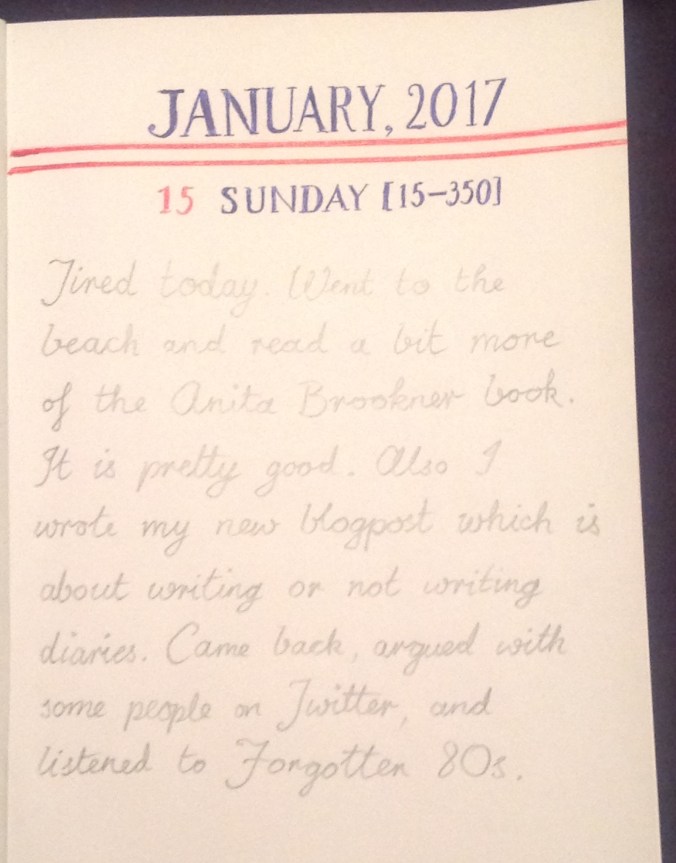
 It is strange to read of a time when, technically, you really were alive, yet remember nothing about it. I often wonder why no-one can consciously recall their early life. Perhaps it’s because, as infants, we are so busily absorbing the basics – of feeding, bathing, dressing, our surroundings, understanding and then adopting vocabulary and meaning – that there is no capacity in our mind to record even seismic events. We are so enthralled by the present that there is no space to look back. I can barely remember a thing before the spring of 1974, when I turned four years old, and so to read of 1971, in daily vivid detail, is disconcerting. I was in the world, after all. But what was I doing?
Sarah Shaw’s 1971 is wonderfully brought to life in her book, Portland Place: Secret Diary of a BBC Secretary, published last summer. It dutifully records every single day of her professional and personal life that year. She began the year aged nineteen, working at the BBC’s Schools Broadcasting Council at the Langham Hotel building. At the time, the BBC had just begun to experiment with sex education programmes on television and radio for primary school children, and it is startling to read some of the complaints and reactions that the SBC received. It feels like prehistoric times, and the kind of sexual politics that Sarah encounters often reflect that too.
Meanwhile, she writes about her own romantic education, after meeting an Irish lift attendant called Frank, who is much, much older and married. With empathy and humour, it nails the obsessive thought processes of what happens when you meet someone special, and details all the strategies of how far to go, like a chess game. It’s about falling in love, then out of love and back in again, at times even wondering if it’s love at all.
What gives Portland Place an edge over ‘celebrity diaries’ lies in its fearless openness, which stems from the teenage Shaw’s assumption that these contents of these entries would never be shared. When Alan Bennett and Michael Palin write their entertaining, thoughtful diary entries, deep down they know that this stuff will eventually connect with a wider public. There are no ‘Had lunch with Cleese at the Ivy’ entries in Shaw’s story, and though a TV personality or two brushes past, these are cameos that are barely at extras level. This is not a book about celebrities.
For most of 1971, Sarah lives in a hostel close to London’s Victoria station. She goes to see films and plays, listens to music, writes her own songs and plays the guitar, reads avidly, socialises with colleagues, and sometimes returns to suburbia at weekends to see her family. Even so, at times not much happens, and she describes watching Morecambe and Wise on TV with such relief that it reminds you how unforgiving and drab a Sunday could be in those days. Furthermore, when an entry appears like ‘My challenge today was to find out the date for Good Friday in 1973,’ it hammers home how tough it was to research something Wikipedia could clear up today in five seconds.
Meanwhile, the lift of the Langham acts as a secret compartment for her life with Frank. It is the starting point for their adventures, and offers them a freedom of sorts. On Monday 9 August she writes:
‘Is life like a lift? We are on ground floor when we are born, and reach the top floor when we die, and in between we go up and down at different speeds, stopping at different floors.’
It’s a striking observation. But the lift is also a metaphor for a confined space, and sooner or later, one she must escape from. (Fortunately, Shaw does reveal in two postscript chapters what did happen next.)
I have rarely kept a diary. I used to joke that there was no point; I can eerily recall to the exact date when something happened. I even once tried writing a diary in retrospect, trying to remember the content of each day of 1988. I can’t bring myself to tell you what that was like to revisit years later. But reader, I shredded it. With relief.
One’s diary is not an act of memory until you re-read it; writing a diary is about a near-instant reaction. These days I sporadically write a journal, for the downside of not writing about one’s life isn’t that events go unrecorded. It’s that they remind you of how you thought, and even more crucially, how you felt. I definitely had a squeamishness about emotions when younger, and had I bothered to keep a diary for when I was nineteen (1989–90), it would make for painful, lonely and needy reading: stumbling around university on an unsuitable course, longing for friendship and romance, but mainly hiding in the arts library reading back copies of The Listener, or shuddering in bed. That year felt like being in a trap: stifling and dangerous, but aware that admitting defeat and leaving would feel like regressing. So you stuck at it, somehow.
It is almost miraculous that Portland Place’s raw material survives at all. Sarah Shaw had never written a book before, and she only found the diary when clearing out her attic. It’s not just a compelling, novelistic account of someone’s life as an independent young woman, but it’s packed with detail, subtlety and humour. I’d like to read more by her.
Sarah Shaw’s Portland Place: Secret Diary of a BBC Secretary is published by Constable. Sarah Shaw also has an excellent blog, which you can find here.
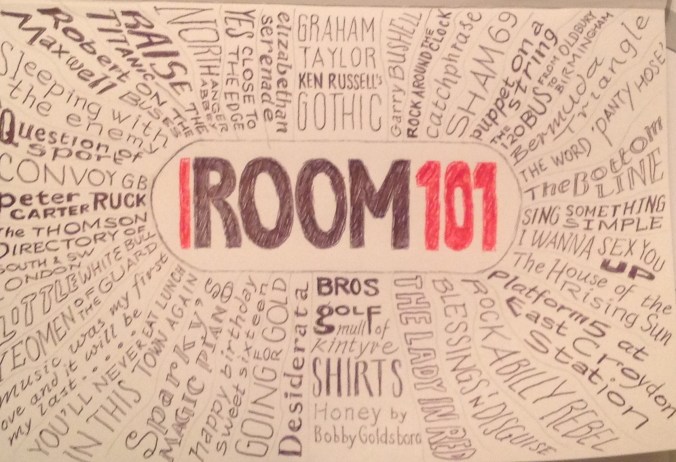 In early 2015, Len Goodman off Strictly Come Dancing and the Farm Foods advert was on the TV panel show Room 101, more than ably hosted by Frank Skinner, in which celebrities and sometimes comedians compete to have their pet hates consigned to oblivion. Len’s selections included ‘all foreign food’, ‘the Metric system’ which was introduced in the UK forty-six years ago, and, most remarkably of all, ‘too much choice’. I’m guessing he voted Remain.
 In a radio tribute to George Michael earlier this week, there was an extract from some old interview where he recalled how, with little contemporary music in his family home, he was compelled to rely on Radio 1 in his youth. And then I remembered an interview from Saturday morning TV in the mid-80s, when Wham! were probably the biggest group in Britain, and when a fellow pop star (perhaps Gary Kemp – equally perhaps not) marvelled at his enthusiasm for, and knowledge of all pop: ‘He knows the lyrics to everything.’ That was the thing with George Michael: he really was one of us. He was a pop fan.
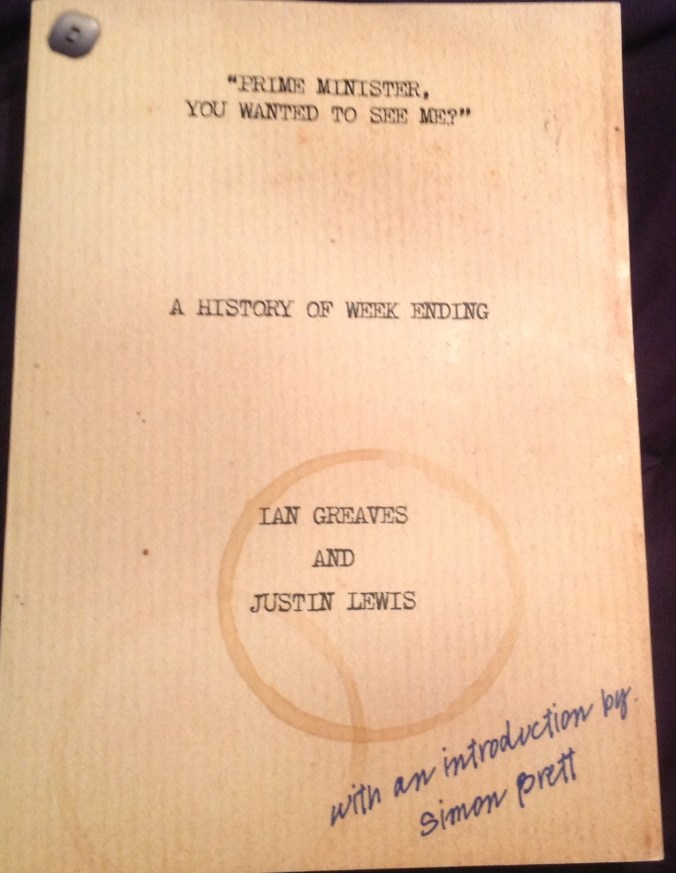 Desolation Jests is a new Radio 4 sketch comedy series which reunites the actor David Jason and the writer David Renwick. The last time the two worked together for radio was in 1980. Back then, Jason was a guest performer in the final episode of The Burkiss Way, a tirelessly inventive series in the vein of Monty Python, and scripted by Renwick and Andrew Marshall. It was, incidentally, the teenage Armando Iannucci’s favourite radio show. Jason’s one-off role in Burkiss was as an oleaginous continuity announcer who persisted with grovelling links regarding the Queen Mother’s eightieth birthday. Radio 4 panicked after its first broadcast, and the repeat a few days later snipped out all of Jason’s royal links, consequently running several minutes short.
  When I first went on Twitter, probably around the middle of 2009, livetweeting disposable TV shows was an attraction of the site. Question Time was undoubtedly one of these. But it gradually became an endurance test where not even Twitter accompaniment could detract from its deathly formula of rehearsed quips, point-scoring and gassy pub opinions you hoped had been silenced with the progress of civilisation.
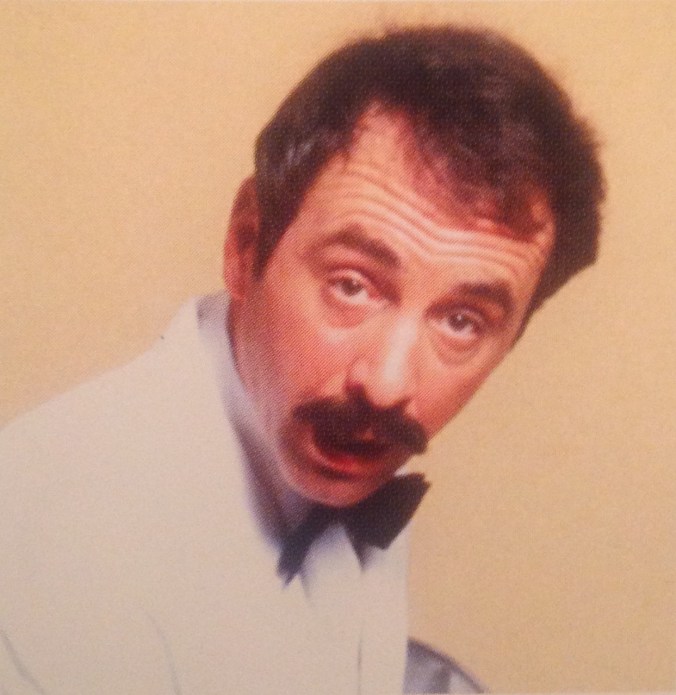 Andrew Sachs, who died last week aged eighty-six, was an actor of remarkable versatility and experience. Born in Berlin in 1930, he had lived in Britain since the age of eight, when his family fled Germany to escape the Nazis. From the 1950s onwards, he became a regular fixture on radio and then television, and his ability to inhabit a character so completely meant that he was perhaps not always immediately familiar. Much later, so ubiquitous was his voice on TV documentaries in the 1990s that he was an obvious choice for the role of a dry narrator on Peter Kay’s breakthrough television series. That Peter Kay Thing consisted of six individual pastiches of docu-soaps, the most famous of which – ‘The Club’ – spawned Phoenix Nights.
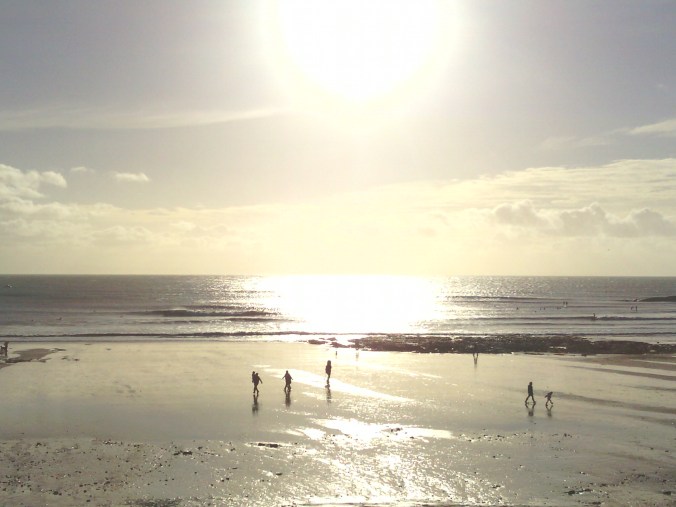 It’s still early days for this new blog. Design-wise, it’s far from ready – it’s like moving into a new house but you’re undecided on the decor or furnishings, and there’s that back room which urgently needs a floor. As for subject matter, I could have gone with a specific theme, but I felt uncomfortable with that. I decided that, after several years away from blogging, it would be best to just see what ideas came up and run with those. So, for a while at least, these pieces may have little in common. This in itself, though, feels exciting. You have to start somewhere, after all.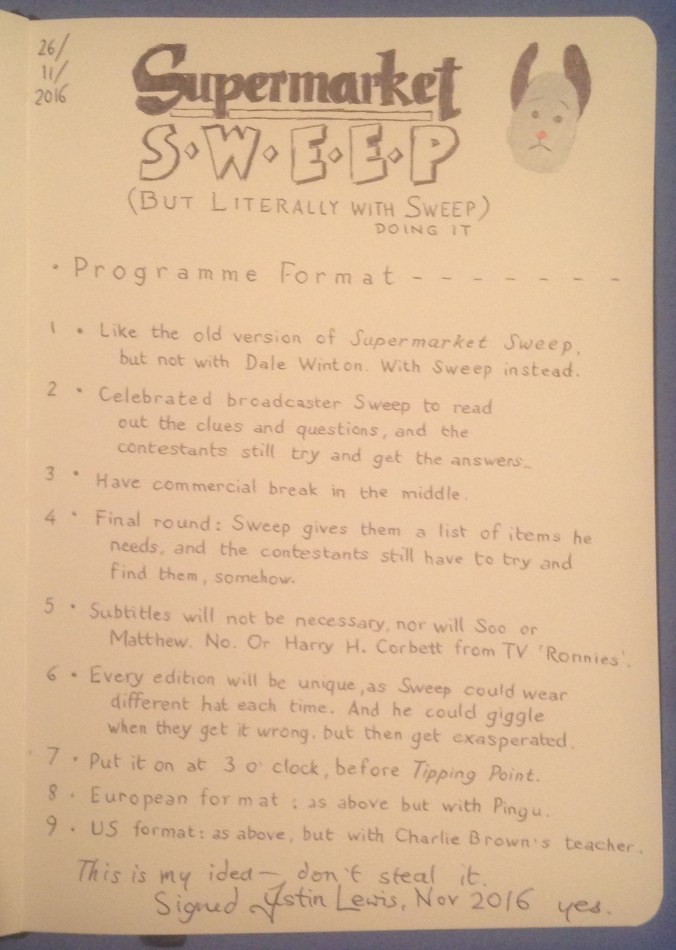
 FIRST LAST ANYTHING