FLA 26: Gary Panton (10/08/2025)

Additional artwork (c) Dotty Sutton

I never know what people are going to choose for FLA, and this is part of the joy of doing it. Even when I’ve known the guest for some time, as with this episode’s collaborator.

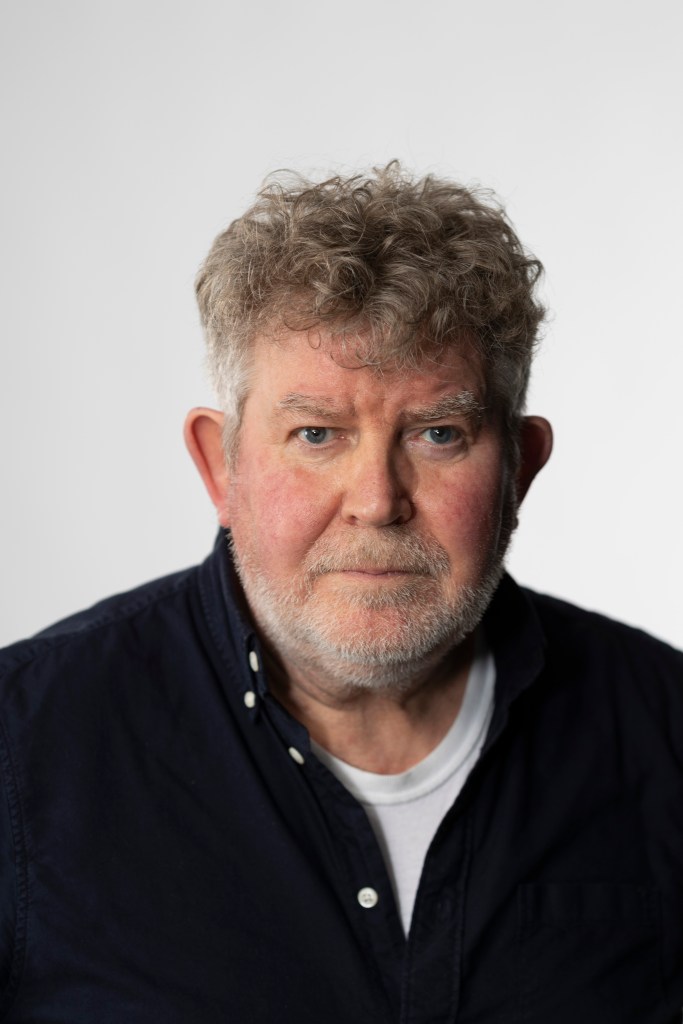
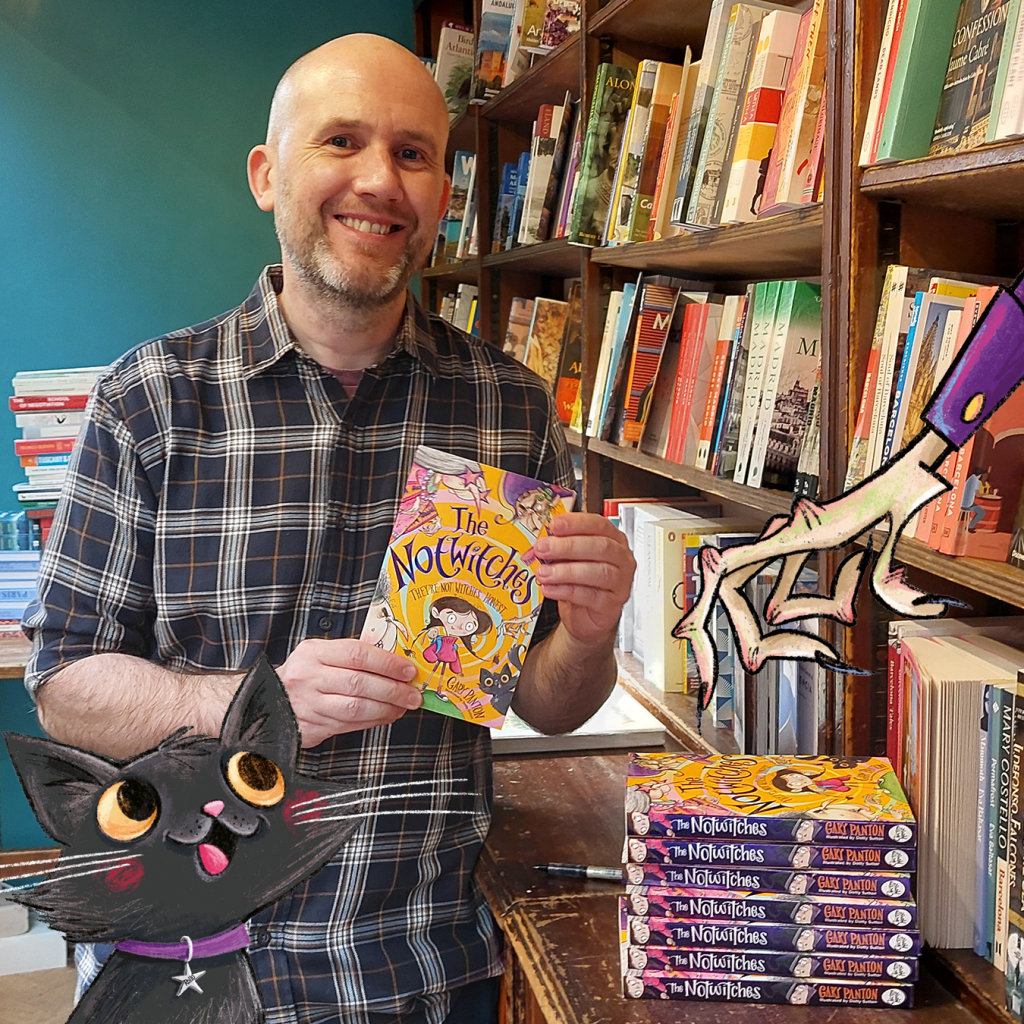
I met Gary Panton in the early summer of 2007, when we were working in the same office, compiling TV listings information. Subsequently, we both worked in publishing, though usually in different places. We shared a similar sense of humour, and so I’m so pleased to see that Gary’s career as a children’s author has taken off so well this year, 2025. His first book, The Notwitches, published in early 2025, has been warmly received by many younger readers. His flair for daft, surrealistic humour has been acclaimed by some grown-up critics too: The Times newspaper likened The Notwitches’ dialogue to that of Blackadder and Python, admiringly calling it ‘a triumph of nonsense’; The Scotsman summed it up as ‘a madcap adventure’ and also drew attention to the book’s ‘fun-filled illustrations’ by Dotty Sutton – as did the i Paper, who called the result ‘irresistibly fun’.
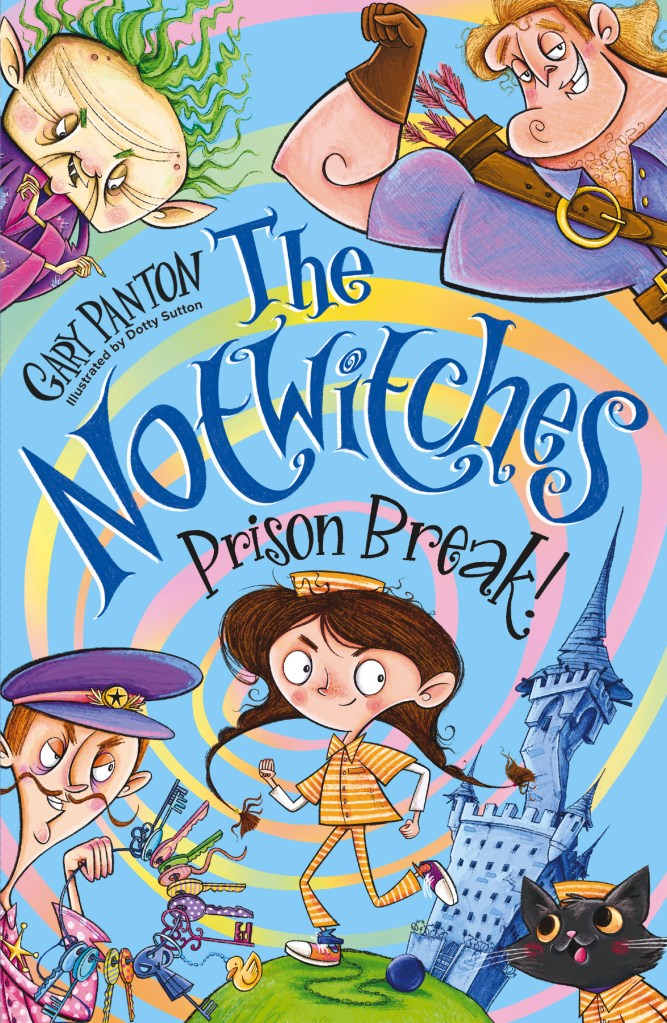
With August 2025 seeing the publication of Gary’s second Notwitches book, Prison Break, I spoke to him on Zoom in early July of that year, to discuss some of the music that has fired his imagination over the years. In the conversation that follows, we touch on the influence of music in popular cinema during the 1980s and early 1990s (during Gary’s formative years), what it’s like to be a fan of a band for many years, and ultimately talked about what everyone simply won’t shut up about during the summer months: Christmas music.

——

JUSTIN LEWIS:

What sort of music was playing in the Panton household in your early life?

GARY PANTON:

I can remember my dad had quite a big music collection, quite a lot of vinyl. He was into the sort of stuff that I guess would be called ‘dad rock’ now – Dire Straits, quite a lot of Bob Dylan. My mum, I don’t think was ever that into music, but – I was thinking about this earlier – she had this exercise cassette, that plays music and someone gives out instructions over the top of it.

JUSTIN LEWIS:

Oh yes, they were called ‘Shape Up and Dance’ albums, some of them.

GARY PANTON:

And this one came with a massive poster that she used to lay out on the floor, and you had to move all the furniture to make room for it. She’d play the cassette, and me and my sister would be a nuisance in the background while she did these exercises. But it was weirdly all mid-tempo-to-slow songs on this, which you wouldn’t really exercise to now.

JUSTIN LEWIS:

Everything’s a ‘running playlist’ now!

GARY PANTON:

I can remember it being quite Motown-y stuff, like Lionel Richie. I really remember the song ‘Being With You’ by Smokey Robinson being on there, and I loved that when I was quite young. So, I don’t really remember my mum having much actual music other than that, but I just always associate her musical taste with that tape.

JUSTIN LEWIS:

I wonder if it’s the Shape Up and Dance with Felicity Kendal album from 1981? Features soundalike covers.

GARY PANTON:

Having just listened to some of this on YouTube, there’s a very good chance it is this! Surprised to hear it’s covers, though very convincing covers.

[We couldn’t track down the accompanying poster, regrettably. Or maybe we did:]

JUSTIN LEWIS:

Dads seemed to control the stereo in those days. I think that’s changed. I’ve noticed a pattern just doing this series, where the music mums liked in the past was sometimes not taken very seriously.

GARY PANTON:

I do remember my mum telling me a couple of times that there’s loads of songs that she loves, but she wouldn’t really be able to tell you who they’re by. She doesn’t have a favourite artist, she just likes lots of things.

JUSTIN LEWIS:

My mum’s like that.

GARY PANTON:

Which is the complete opposite of how I am with music because if I like any song, I just immediately want to know who it’s by. I want to know all the information about it. When it was physical music, I’d want it in my actual collection.

—–

JUSTIN LEWIS:

You were born about ten years after me, and one thing that occurred to me: your earliest musical memories, in the 1980s, are associated probably more closely with visual accompaniment. I mean, I remember the ‘Bohemian Rhapsody’ video on Top of the Pops for weeks on end, but pop groups rarely made proper videos in the 70s. Whereas pop video in the 80s…

GARY PANTON:

I was definitely very attracted to songs that came with a good video. And when we got Sky TV, which I guess would have been in the early 90s, I suddenly had access to music channels: MTV and VH1. I used to watch them all the time – a lot of my music knowledge comes from that because when the video was playing, the year and the album title would come up on screen.

As a kid I used to particularly love any song that came with an animated music video. So things like ‘Sledgehammer’ by Peter Gabriel, ‘The Motown Song’ by Rod Stewart and the Temptations, ‘Club at the End of the Street’ by Elton John… and the ultimate one was ‘Opposites Attract’ by Paula Abdul.

JUSTIN LEWIS:

With that last one, I seem to remember you mentioning on Twitter, some years back now, that with ‘Opposites Attract’ they don’t ever seem to discuss that it’s a cat.

GARY PANTON:

The whole song is built around them listing their differences, but at no point do they mention the key difference – she’s a real-life woman and he’s an animated cat. In that sense, they have quite a big ‘opposite’ there, which is going to make the relationship very difficult.

JUSTIN LEWIS:

It’s kind of like: ‘Never mind the smoking, you’re a drawing.’

GARY PANTON:

‘You’re two-dimensional. This is not gonna work.’ I’ve always wondered if the song was written with the video in mind. Maybe it was originally just meant to be a duet between any two singers, in which case you wouldn’t mention one of them being a cat. But then the cat comes into it and neither of them ever acknowledge it.

JUSTIN LEWIS:

The album had been out for quite a while, before that was a single. Was it MC Skat Kat?

[After our conversation, I discovered Skat Kat was indeed in the video, but the vocals on the track itself were from The Wild Pair, ie Bruce DeShazer and Marvin Gunn, previously of the band Mazarati, and therefore also backing singers on ‘Kiss’ by Prince!]

GARY PANTON:

Yeah. I do still love that song. It’s on one of my playlists – it came on in the car the other day, and this very conversation we’re having happened between me and my wife. And it’s around that time [1990] that I started buying my own music.

—–

FIRST: ORIGINAL SOUNDTRACK: Teenage Mutant Ninja Turtles (SBK, 1990)

Extract: Partners in Kryme, ‘Turtle Power’

GARY PANTON:

I was already right in the prime target market for Teenage Mutant Ninja Turtles… or Teenage Mutant Hero Turtles as it was called here.

JUSTIN LEWIS:

Yes, it was like Top Cat becoming Boss Cat all those years. I’m going to be absolutely transparent here about Teenage Mutant Ninja Turtles. I don’t think I have ever seen it – even when I was a student and it used to get shown on Going Live! every Saturday, that would be the twenty minutes when I’d go and shower or make breakfast. But with ‘Turtle Power’ – because I promise you that I really do try and listen to everything before we discuss the records – I was playing the soundtrack, and I assumed I knew ‘Turtle Power’. But when it came up, I had no memory of it sounding like this at all. My memory of it is some hybrid of [Bobby Brown’s] ‘On Our Own’ from Ghostbusters II, ‘What’s My Name’ by Snoop Doggy Dogg, ‘Do the Bartman’ [by The Simpsons] and bits of DJ Jazzy Jeff and the Fresh Prince. And yet this was number one for a whole month when I was working in record shops.

GARY PANTON:

It’s funny how the songs you just listed are basically the other songs I was considering for this. Definitely ‘On Our Own’, which I bought as a single. Anything that was connected to a film or a TV series. And I was obsessed with the Turtles. I would have pestered my parents for the T-shirts and the action figures, so obviously when I started to get into music, it was, like, of course I have to buy this soundtrack when it comes out.

JUSTIN LEWIS:

And the film which I haven’t seen either, but it was directed by Steve Barron who’d done Electric Dreams but also the ‘Take On Me’ video for A-ha.

I’m sure MC Hammer was a draw as well because he’s on this soundtrack, as is Ya Kid K, who’d been with Technotronic.

GARY PANTON:

MC Hammer was definitely a draw for me at that time. I guess in a way, if you were a kid, you could feel like you were listening to serious hip hop: ‘I’m liking some real music here, this isn’t just kids’ music.’ The film’s a bit like that as well because it has a much darker, more brooding tone about it than the cartoon series. Which is quite clever because as a kid, you feel like you’re watching something that’s a bit grown-up.

JUSTIN LEWIS:

Which is kind of what the Tim Burton Batman film had done the previous year [1989].

GARY PANTON:

Yes, it’s very, very along those lines.

JUSTIN LEWIS:

So did you have this sort of visual appreciation of music at this time, that it was about the video or film as much as the record? Because I know soundtracks are important to you… Back to the Future, Ghostbusters, and you also mentioned Beverly Hills Cop.

GARY PANTON:

Yes, a lot of the early albums I bought were these 80s and 90s soundtracks. Even now, I love all that stuff. It takes me back. It’s a nostalgic thing, but it also takes me back to something that I don’t think really exists anymore. I don’t think movie soundtracks are as much of a thing now.

Another thing you don’t really get in films now, and ‘Turtle Power’ is just one example of this, is a rap over the end credits that basically summarises the whole plot of the film. I think that peaked with Will Smith doing it for Men in Black and Wild Wild West, and maybe then people started to think it was a bit cheesy and stopped doing it, but it coincided with that emergence of hip hop into the mainstream, and so every film thought it had to have a rap in it.

JUSTIN LEWIS:

As you mentioned Will Smith, doesn’t The Fresh Prince of Bel-Air also explain the premise of the show over the opening titles?

GARY PANTON:

It does, yes.

JUSTIN LEWIS:

So when did you last put on the Teenage Mutant Ninja Turtles soundtrack?

GARY PANTON:

I listened to the ‘Turtle Power’ song literally just before we started, but I haven’t listened to the full soundtrack in a long time. I don’t think it’s available in full on streaming platforms. There’s a song on there called ‘9.95’ [by Spunkadelic, written by Dan Hartman and Charlie Midnight, also writers of James Brown’s ‘Living in America’], which I maintain is one of my favourite songs ever, and you just can’t get it anywhere. There might be a version on YouTube, but it’s not on any streaming platforms. I tried to find it on Apple Music and there’s a Chinese cover version of it (I think, as the group are from Hong Kong), but the original is really hard to find. It’s the same with the Ghostbusters soundtrack, I tried to listen to that recently, and there’s just a lot of songs that aren’t available to listen to on platforms anymore. I think that’s where owning a CD really still has a lot of value, because those songs are always yours to listen to and you’re not reliant on platforms keeping the music up there for you.

Spunkadelic: ‘9.95’

JUSTIN LEWIS:

A lot of soundtracks now are existing hits, but in those days, soundtracks would have songs written for the film, or songs donated by artists which wouldn’t fit on their albums. But they’d also have, usually near the end of Side 2, incidental music from the film.

GARY PANTON:

I absolutely love the main theme on the Back to the Future soundtrack. ‘Axel F’ from Beverly Hills Cop was a great one too. I think I also had the Crocodile Dundee soundtrack, and that had a cracking score. And one thing about all this is they’ve started bringing some of this stuff back. I watched the new Beverly Hills Cop film quite recently, and it basically has all the songs from the soundtracks of the first couple of films. Same with The Karate Kid – there’s the Cobra Kai series on Netflix and particularly in the first season of that, they play a lot of the music from the original film. Same with Ghostbusters – there’s a big nostalgic feel to all this stuff.

JUSTIN LEWIS:

I guess it stands to reason that the people running film studios are probably somewhere between your age and mine, and so they’re saying, ‘Let’s go back and reboot things that I liked when I was young.’

—-

JUSTIN LEWIS:

Tell me about The Notwitches, then, which is your first book for children.

GARY PANTON:

The Notwitches is a story about a little girl called Melanda Notwitch, who lives with her three aunts, who are just the most horrible people you’ll ever meet. She’s basically trapped with them, so she has a pretty terrible life, until there’s a knock at the door from a girl who claims she’s a witch. The witch promises Melanda that she knows a magic spell that can help her out of her predicament, but to complete the spell, they need one special magic ingredient. So they go off on a little quest to find this ingredient.

Obviously, they have to confront the aunts along the way, but they also meet lots of weird characters, goblins and monsters. And there’s a cat that can talk, but it can only say three words.

JUSTIN LEWIS:

I really really enjoyed reading it.

GARY PANTON:

Thank you.

JUSTIN LEWIS:

It’s in that grand tradition of children’s literature in being about outlandish and grotesque and humorous storytelling. Was that the kind of book you enjoyed reading as a kid yourself? Also, it feels quite filmic.

GARY PANTON:

I think Roald Dahl’s probably the obvious one. I was obsessed with Roald Dahl, particularly The Witches. I now read quite a lot of horror and ghost stories for adults but I still think the bit in The Witches with the little girl trapped in the painting is probably one of the scariest things I’ve ever read. So I loved anything that was a bit scary. But I was also into anything that was funny and silly. I used to love reading the Asterix books, Dr Seuss… just anything that would make me laugh. I think the influences for The Notwitches are a combination of books I read, TV series, funny films. It’s interesting you say it’s filmic, because I always wanted the book to be quite visual. It was always important to me that we’d be able to do things like play around with different fonts, and have the art really integrated into the story.

JUSTIN LEWIS:

I don’t have children, and my nephew is now sixteen so there’s no reason for me to seek it out naturally, but – and I don’t know how common this effect is in children’s literature now – I enjoyed how, with each double page, there’d be some kind of illustrative effect, even if it was just a cobweb in the corner, your illustrator Dotty Sutton would contribute as well. You’re not just reading text, you’re reading images as well.

GARY PANTON:

That was definitely what I wanted from the book. When I first spoke to the publisher, Chicken House, I told them that I really wanted this to be a visual experience, and I wanted there to be something that makes you laugh on every page. I need to give a shout-out to Dotty because she’s done such an incredibly good job. She’s one of the best illustrators around, and it feels a real privilege to have been able to work with such a talent on my very first book.

JUSTIN LEWIS:

How did you make contact with her?

GARY PANTON:

I said to the publisher, I really want this to feel anarchic and silly. Maybe 10% sweet and innocent, but 90% energetic and over-the-top and laugh-out-loud funny. I basically wanted the visual equivalent of the humour of someone like Rik Mayall. We looked at a few different illustrators and they were all really good, but the thing that stood out with Dotty’s work was that it just had that humour. You can tell she’s a really funny person who understands comedy. I didn’t give her much instruction at all, she just knew how to make the art funny.

JUSTIN LEWIS:

So did you send her the text for her to illustrate around it?

GARY PANTON:

Basically, yes. There were maybe only two or three places where I had specific things that I asked for. Most of the rest of it just came out of Dotty’s own head, even down to how the characters look. Some of the characters don’t get described in much detail in the text, so she’s just come up with a lot of that herself.

JUSTIN LEWIS:

And when she came back with the illustrations, did it make you tweak the text at all, or made you rethink anything?

GARY PANTON:

That happened a couple of times. In Book 2, which is coming out shortly, one of the new villains has a quiver of arrows on his back. That wasn’t mentioned anywhere in the text, but when I got that sketch back from Dotty, I just found it so funny that he wears that for no reason. So I tweaked the text to mention that in the description of him. But for the most part, when I see Dotty’s art, I don’t want her to change anything. It goes straight into the book as it is.

JUSTIN LEWIS:

Not to be too restrictive about it, but did you have a readership age group vaguely in mind?

GARY PANTON:

Not at all. You know what? I wouldn’t even really say I wrote it specifically as a children’s book. I just wrote what I wanted to write. I wanted to write something funny and quite surreal, and for it to be illustrated, and the silliness of the humour makes it very child-friendly – so all of those things make it a children’s book. But I don’t particularly write with kids in mind or adults in mind. I just write what I find is funny. When I was first looking for an agent and I was showing it around, a couple of them actually said that they thought it was something adults would like to read. But the problem is that would put it in a genre that doesn’t really exist. Illustrated comedy stories for adults aren’t really a thing in literature, at least not in a big way.

Another big influence on The Notwitches was TV comedy, especially The Mighty Boosh. Originally I was trying to come up with a way for Melanda, as the lead character, to end up in a really weird, surreal world. But when you try to do that, you spend four or five chapters just having her finding a portal, going into a portal, getting sucked into this other world… and then you need to find a way for her to get back out of it. And then one night I was watching a few episodes of The Mighty Boosh, and I realised that those characters are already in this really ridiculous, surreal world, and it never needs to be explained. People just go with it. So I never really say in The Notwitches what this world is, or why it’s so weird, but kids just get it straight away.

JUSTIN LEWIS:

With a second Notwitches book, Prison Break, out imminently, did you write the first one realising that it might have legs and you might be able to write a sequel or even a series? Or did your publisher encourage you?

GARY PANTON:

A bit of both really. The first book works as a self-contained story, but it finishes with an open-ended suggestion that there’s another adventure coming, and that suggestion was always there from the very first draft. And I always had in mind that, if there was a second story, it would be about Melanda trying to find her parents. So the publisher made it a two-book deal with the agreement that Book 2 would be a second Notwitches book rather than a different story. And they delayed the publication of the first one to give me time to write the second one, so that I would be able to release them both quite quickly. Because obviously when you’re writing kids’ books, children are going to grow up quickly. And if I wait two or three years between books, the readers of the first book will have moved on to something else and they won’t be into it anymore. So speed is quite important with a children’s series.

I found writing the second book a lot of fun because I love re-visiting those characters. In this one, Melanda is trying to break her parents out of a prison for witches, but in order to do that she has to get into the prison first. So the first half of the story is about her trying to get into the prison, and the second half is about her trying to get back out of it. It gave me a lot of opportunity to riff on various prison movie cliches along the way, which I loved.

It’s a really interesting experience writing a sequel. I always thought it would be easier because you’ve established the world and its rules, but actually that’s what makes it harder because you have to stick to those rules and can’t just make it up as you go along in the same way that you did with Book 1.

JUSTIN LEWIS:

In the acknowledgements for the first Notwitches book, I noticed you said you’d originally taken this idea to a writing group. So what were you writing before that?

GARY PANTON:

I’ve written all sorts of things over the years. I started out as a football journalist for a while. That was when I was a student. I got paid £20 to go to Scottish Premier League football matches, and I used to sit and count shots on target, shots off target, all that stuff, so that they had the stats at the end of the game. And I’d write the little short match reports that would be used in Match magazine, if anyone remembers those. I also did a little bit of live music journalism for the Sunday Mail. My main memory of that is that they refused to give me any sort of press pass, which meant a couple of times I turned up to gigs and the people at the venue didn’t believe who I was. They thought I was just someone trying to blag my way in, which always made it really awkward. I also did a few celebrity interviews over the years, lots of writing for magazines, and I worked in TV listings for a while too.

JUSTIN LEWIS:

Which is how we met, working together!

GARY PANTON:

And then I ended up working in publishing, and through that I started doing a little bit of freelance children’s writing, which was mainly nonfiction, things like picture books, lift-the-flap books for preschool age. A little bit of activity stuff, books for The Beano and Hey Duggee, and that kind of thing. I still do freelance writing on Hey Duggee books, and also Bluey books. I did some Danger Mouse stuff as well when the series made a comeback a few years ago.

JUSTIN LEWIS:

It’s really weird to interview your friends and discover they’re working on things you didn’t know about!

GARY PANTON:

But I’d always really wanted to do my own thing. The thing is, when you’re writing for a brand, you have to follow their rules pretty tightly. You have to be respectful to other people’s characters. And I increasingly really wanted to create something of my own, that I could push a bit further. Something I could make a bit more disgusting and revolting and over-the-top – all that sort of stuff that I find funny.

JUSTIN LEWIS:

It sounds like you’ve had some very good write-ups for the book. You’ve done lots of school events for kids, is that right?

GARY PANTON:

Yeah, me and Dotty have been going around schools doing little shows and signings. We did the Borders Book Festival a couple of weeks ago, which was an amazing experience. It’s actually fairly rare for an author and illustrator to even meet, let alone do these things together, so it’s been really good that the two of us have formed this little partnership. Hopefully that will continue. I was reading an Amazon review of the book where someone described it as an author-illustrator partnership that reminded them of Roald Dahl and Quentin Blake and that was really the best compliment I think I could ever receive.

But to go back to your previous question about the writing group, working in children’s media definitely helped me with writing the book. You pick up so many little hints and tips about what kind of characters are going to be successful. And taking the Notwitches idea to that writers’ group was really good for me because I sometimes find writing with no deadline can be a bit of a struggle. With that group, we would meet up every couple of weeks and read each other’s work, and then we’d all discuss it together. Everyone was so nice that there wasn’t that much criticism, so I don’t know if creatively it helped that much, but it definitely helped from the point of view of getting me to actually sit and write a thing.

JUSTIN LEWIS:

I think that’s half the battle, though. I honestly do. If you’ve got a deadline.

GARY PANTON:

It must have been eight or nine years ago that I was in that group and first started writing what became The Notwitches. I abandoned it for a while after that, but during COVID I decided to give it a proper go because I was sitting at home a lot, and I thought, I might as well try to finish it. It was a struggle at times but I’ve learned to just keep writing until the ending comes to me. Once I get to that point I can always go back and edit the earlier bits so that they work with the ending. I don’t plan any of the stories that I write, because I find that when I try to plan, nothing comes to me. Whereas if I just write and keep going, the ideas will come. I don’t know if you’ve read On Writing by Stephen King…

JUSTIN LEWIS:

I have – although not for a while.

GARY PANTON:

I found that really useful. He says: don’t worry what the plot is, or what the themes are, or the meaning. Just write and see what comes out – and that’s very much what I decided to do. I think you’ve got to be finding out the story as you go along. It’s like reading someone else’s book or watching a film and not knowing what’s coming next – I don’t usually know what’s coming next when I write, but I have the power to control it, which is a brilliant feeling to have.

—–

LAST: DEACON BLUE: The Great Western Road (Cooking Vinyl, 2025)

Extract: ‘People Come First’

JUSTIN LEWIS: 

Obviously I knew Deacon Blue were still going and I knew they were still touring, and obviously we’re having this conversation only about ten days after the death of their keyboard player, James Prime. But they’ve been together for 40 years, and I hadn’t quite realised that they’ve made all these new albums especially over the past ten years.

GARY PANTON:

It’s quite hard now to know the last thing you either bought or listened to, because you’ve just got everything coming at you, but actually this was the last physical album I bought. Because I otherwise never buy physical albums anymore – I stream my music like everyone else. But I used to be really into collecting music. And the one concession I made when I left physical music behind was to carry on collecting Deacon Blue’s music. I have everything they’ve done – bootlegs, all the albums, all the singles, everything Ricky Ross has ever done as a solo artist, which is seven or eight albums. I’ve been to see them live more times than I can remember. And with this new album, although I’ve streamed it loads of times, I’ve not even taken the cellophane off the physical CD, because I don’t have a CD player now. But it’s just important for me to have it in that collection.

JUSTIN LEWIS:

So when did you first get into them, then?

GARY PANTON:

I probably didn’t discover them until they actually broke up, which was around ‘94.

JUSTIN LEWIS:

Yes, there was a greatest hits album at that time, called Our Town. And I’d known their first two albums quite well [Raintown, When the World Knows Your Name] but I didn’t really know the ones after that.

GARY PANTON:

In a lot of ways, I’m too young for Deacon Blue. When I go to the shows, I’m generally one of the youngest adults there. The audience tends to be people older than me and their kids, but I’m the generation in between. For a lot of people, Deacon Blue were their ‘student band’ in the 80s, but I’m about ten years too young for that. But yeah, that ‘greatest hits’ album you mentioned…

JUSTIN LEWIS:

That was your way in?

GARY PANTON:

Yeah, I played that a lot. Probably bought that before I knew they’d split up. But then, I often like music about 10 years after it’s been popular. It’s the same with Britpop – I was never into it in the 90s, even though I was a teenager at the time and I was probably right in the middle of the target market for it. Whereas now I actually quite like a lot of it. I don’t know what it is – it’s maybe similar to the movie thing in that it taps into my love of nostalgia … I like my music to be old!

In the late 90s, a few years after Deacon Blue split up, I was at uni in Stirling, and I started buying up their old stuff in the local record shops: second hand singles, previous albums. And then in 2001, they got back together, and I’ve been going to their gigs pretty regularly since then. They’re the band I always come back to, the one I listen to the most. The sound has changed quite a lot over the years, since the days of ‘Real Gone Kid’ and ‘Fergus Sings the Blues’. They’re not going to do that kind of thing again, I don’t think. But I think the new songs still do have quite a similar sound to Raintown, which was the first album.

JUSTIN LEWIS:

Raintown seems to be the one that everyone agrees on as the best one, or do you think there’s a better one?

GARY PANTON:

I would say so. I mean, it’s weird – Raintown didn’t really have any hit singles. Most of the hits were from the second album, When the World Knows Your Name – that’s got ‘Real Gone Kid’, ‘Wages Day’, ‘Fergus Sings the Blues’, the more uptempo poppy stuff. But now, if you watch them live, the ones that get the warmest reception are the Raintown ones, especially ‘Dignity’ obviously.

JUSTIN LEWIS:

Of course, and that did nothing when it first came out. Number one hundred and something! Eventually got in the top 20 when the greatest hits came out, but you still think of it as being much bigger, don’t you?

GARY PANTON:

Yeah, I believe their most successful chart single was the cover of Bacharach and David’s ‘I’ll Never Fall in Love Again’. Which I think got to number two.

JUSTIN LEWIS:

Behind Bombalurina!

GARY PANTON:

For a band who I generally think of as writing all their own stuff, it’s amazing that the biggest single was a cover.

JUSTIN LEWIS:

Although I think the reason for that is Deacon Blue are a good example of an ‘albums band’ and it was never on an album at the time, it was a stand-alone single EP. But it is interesting how a lot of people, when they first get into a band or like them belatedly, buy the greatest hits and decide that’s enough for them. Whereas you presumably heard something in those hits where you thought, I want to investigate more of this.

GARY PANTON:

Yeah, as someone who often got into bands after they were popular, a lot of the music that I’m into came through hearing greatest hits albums and then wanting more.

I think with Deacon Blue, with the new stuff, they’ve definitely matured a lot in their sound. But I would say there’s a sort of unique Deacon Blue sound – country meets blue-eyed soul meets what seems to be a very Scotland-specific yearning for better times. Quite similar to Del Amitri, who I also like.

JUSTIN LEWIS:

Did you know Justin Currie has a memoir coming out shortly? [The Tremolo Diaries, published by New Modern Books on 28 August 2025]

GARY PANTON:

Oh I’ll be up for that. One of me and my wife’s first dates was a Justin Currie concert.

JUSTIN LEWIS:

Oh how fantastic.

GARY PANTON:

I really love Justin Currie’s solo material in particular. In his solo shows he does a lot of the Del Amitri stuff, but just acoustically and on his own. Love love love Justin Currie.

Something I’ve just remembered is that my parents had an album of ‘the greatest Scottish hits’, and that had ‘Somewhere in my Heart’ by Aztec Camera’ – another favourite band – on there, and ‘Always the Last to Know’ by Del Amitri. There was probably some Deacon Blue on there too. I don’t think I was ever specifically liking music because it was Scottish, but I just seemed to gravitate towards a lot of these bands.

I have seen Roddy Frame once, I guess it must have been about 15 years ago. He actually did play ‘Somewhere in my Heart’ when I saw him. It was just him on his own in one of the West End Theatres in London, which was quite an unusual venue. But yeah, it was great.

JUSTIN LEWIS:

I was going to ask if the Scottish connection was important with these bands, because you’re from… is it Perth?

GARY PANTON:

I’m from Perth, yeah. Del Amitri are from Glasgow. Deacon Blue are basically from Glasgow, although Ricky Ross is from Dundee.

JUSTIN LEWIS:

Is there a famous band from Perth? I’m trying to think.

GARY PANTON:

There’s the Average White Band’s singer Alan Gorrie.

JUSTIN LEWIS:

That’s a good one!

GARY PANTON:

And also, Fiction Factory, who did ‘Feels Like Heaven’. That’s basically it as far as I know.

—–

ANYTHING: VARIOUS ARTISTS: It’s Christmas (EMI, compilation, 1992)

Extract: Cliff Richard: ‘Mistletoe and Wine’

JUSTIN LEWIS:

We’re recording this on the first of July, by the way. This is a Christmas hits compilation from 1992, which I remember well because I was working at HMV as a Christmas temp (and went on to be full-time there for a while). Now – why have you chosen this?

GARY PANTON:

I mean, to give it a bit of context, I’m a massive Christmas fan.

JUSTIN LEWIS:

You’ve got all its records. All its posters, everything.

GARY PANTON:

Yeah. I’m trying to collect everything Christmas ever did.

JUSTIN LEWIS:

You’re like that bloke in the papers who has Christmas dinner every day!

GARY PANTON:

I’m not a religious person at all. But the cultural side of Christmas is something I just love: Christmas movies, Christmas books, Christmas food, going to Christmas markets. All of that stuff, so I think Christmas music obviously goes hand in hand with all of that. I think this compilation was one that my parents had, and I remember me and my sister just playing it all the time. It’s kind of ‘ground zero’ in terms of Christmas collections because it’s before a lot of the other stuff has taken off. It’s a lot more common now for artists to bring out Christmas songs, but these feel like the original Christmas pop hits to me.

JUSTIN LEWIS:

It’s a very interesting selection. It’s before the Pogues were on all Christmas compilations ever. And it’s pre-‘All I Want for Christmas is You’ so there’s no Mariah. But the big selling point for me on this one is Kate Bush’s ‘December Will Be Magic Again’, which is not even on streaming as we speak.

GARY PANTON:

I think this was like my introduction to the idea of Christmas songs as being one body of work. You keep coming back to them every year, unlike any other music. There’s a specific time of year when you listen to these precise songs, and it’s like a genre of its own, even though it contains completely different genres. I would never listen to these outside Christmas, which actually can be a problem because I’ve got so much of this stuff on my Apple music account that if I ever have it play random favourites, it’ll throw things up like ‘Fairytale of New York’ in July, which I don’t want to hear. I want to keep it special for Christmas.

JUSTIN LEWIS:

So you don’t occasionally try and see if it works at another time of year? Because I have a Slade compilation on my iPod, and when I play it from time to time, I do not skip ‘Merry Xmas Everybody’. Because to me, for a lot of the year, it doesn’t sound like a Christmas record, it sounds evergreen.

And at Live Aid, and we’re speaking in the run-up to the 40th anniversary, the Wembley side of the concert ended with a group rendition of ‘Do They Know It’s Christmas?’ In July. And in fact, that Band Aid single nearly got back in the top 100 after that concert.

GARY PANTON:

One thing I love about Christmas records is there are songs that really have nothing to do with Christmas, but as long as they’re marketed in the right way, everyone just happily accepts them as being festive. Two of my favourites are East 17’s ‘Stay Another Day’, and ‘Never Had a Dream Come True’ by S Club 7, both of which are only Christmas songs, really, because they wear warm jackets in the videos.

JUSTIN LEWIS:

And they’re in the charts at Christmas. Or they overdub sleigh bells on to the backing.

GARY PANTON:

Even ‘The Power of Love’ by Frankie Goes to Hollywood – I’m not sure what’s Christmassy about that.

JUSTIN LEWIS:

The video, really, I think. So at what point do you bid farewell to Christmas music? Do you do as the radio does and stop on Boxing Day, or do you keep going till Twelfth Night?

GARY PANTON:

I have quite a long period of Christmas music, but it does basically stop on Boxing Day. I’ll introduce it in the last week of November, so that I can get a good four or five weeks out of it.

JUSTIN LEWIS:

So, with this compilation, if you had to choose one or two from it, what would you go for?

GARY PANTON:

You know what? You might hate this, but I quite like a bit of ‘Mistletoe and Wine’, and I quite like Shakin’ Stevens’ ‘Merry Christmas Everyone’. My general feeling is that Christmas is the great leveller for music, there’s not really any room for snobbery. I mean, if you look at this album, there’s Lennon and McCartney – both have got songs on here – but there’s Shakin’ Stevens too. At Christmas, it doesn’t really matter who these people are. They’re all just bunged together into one great big mix.

JUSTIN LEWIS:

So does that mean when you’re listening to this, are you thinking of the artists particularly or just thinking of it as being a particular mood?

GARY PANTON:

I’m not that fussed about who the artist is. I mean, for most of the year I can’t bear Cliff Richard, so I guess it’s definitely that Christmas association with ‘Mistletoe and Wine’ that turns it into a regular listen for me. I draw the line at ‘Saviour’s Day’, though.

JUSTIN LEWIS:

I often think with Cliff, he’s like Elvis and Diana Ross in that some of his records are great, and some of them are terrible but he seems to have no quality control at all. But do you think, as a whole, the Christmas pop songs have become the new Christmas carols? Because you don’t really hear Christmas carols so much now unless you actually hear the Nine Lessons and Carols or go to church.

GARY PANTON:

No, I mean, I really like Christmas carols. I really like brass bands at Christmas time as well. I love all that stuff.

JUSTIN LEWIS:

On the subject of playing Christmas records out of season: when Danny Baker used to present Morning Edition, the daily breakfast show on BBC Radio 5 (before it became Radio Five Live), there was one morning [25 May 1992] and it was a bank holiday and he was just playing records under the banner of ‘What if rock’n’roll had never been invented’. And he proceeded to play, on a warm early summer’s morning, with no announcement, no wink, nothing, the Ronettes’ ‘Sleigh Ride’, from off A Christmas Gift for You. And it sounded absolutely amazing. Sometimes these things work in any context, against the odds.

——

Gary Panton’s The Notwitches is available now as a paperback and ebook from Chicken House Books. The second book in the series, The Notwitches: Prison Break is published in the same formats on 14 August 2025.

You can order Gary’s books through this link to a variety of outlets: https://garypanton.co.uk/books/

Gary and Dotty will be doing book-signings and draw-alongs at the following Waterstones stores in Scotland:

  • Waterstones Perth, Saturday 16 August, 11am
  • Waterstones St Andrews, Saturday 23 August, 11am
  • Waterstones Edinburgh Fort Kinnaird, Saturday 6 September, 12pm

Keep an eye on Gary’s social media for other events that are yet to be announced:

Bluesky: @garypanton.co.uk

Instagram: @garypanton

FLA 26 PLAYLIST:

Gary Panton

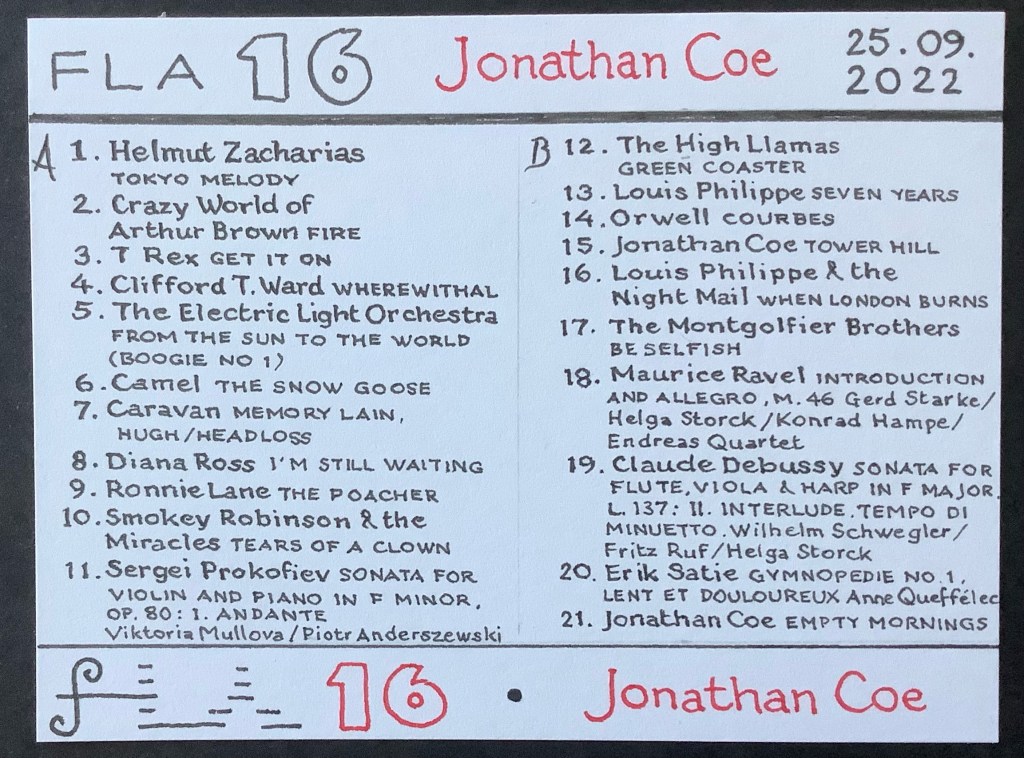
(For the time being, this site and project uses Spotify for the conversation playlists, but obviously I disapprove that Spotify doesn’t pay artists and composers properly, and other streaming platforms are available, as are sites to buy downloads and buy recordings. For consistency, you can also listen to the selections via YouTube (where available), and links are provided in each case, below.)

Thanks to Tune My Music, you can also transfer this playlist to the platform or site of your choice by using this link: https://www.tunemymusic.com/share/BdxXrgoAQI

Track 1:

SMOKEY ROBINSON: ‘Being With You’:

https://www.youtube.com/watch?v=KTC5NYSBhts&list=RDKTC5NYSBhts&start_radio=1

Track 2:

PAULA ABDUL WITH THE WILD PAIR: ‘Opposites Attract’:

https://www.youtube.com/watch?v=xweiQukBM_k&list=RDxweiQukBM_k&start_radio=1

Track 3:

PARTNERS IN KRYME: ‘Turtle Power’:

https://www.youtube.com/watch?v=uxHWm_bGScY&list=RDuxHWm_bGScY&start_radio=1

Track 4:

HI TEK 3 FEATURING YA KID K: ‘Spin That Wheel’:

https://www.youtube.com/watch?v=SrOVoplyjCI&list=RDSrOVoplyjCI&start_radio=1

Track 5:

HAROLD FALTERMEYER: ‘Axel F’:

https://www.youtube.com/watch?v=Qx2gvHjNhQ0&list=RDQx2gvHjNhQ0&start_radio=1

Track 6:

THE OUTATIME ORCHESTRA: ‘Back to the Future Overture’:

https://www.youtube.com/watch?v=w8ONn5GdwTs&list=RDw8ONn5GdwTs&start_radio=1

Track 7:

PETER BEST: ‘Theme from Crocodile Dundee’:

https://www.youtube.com/watch?v=-G8Jea83AVQ&list=RD-G8Jea83AVQ&start_radio=1

Track 8:

WILL SMITH: ‘Wild Wild West’:

https://www.youtube.com/watch?v=_zXKtfKnfT8&list=RD_zXKtfKnfT8&start_radio=1

Track 9:

DEACON BLUE: ‘People Come First’:

https://www.youtube.com/watch?v=iaYoU5lLMK0&list=RDiaYoU5lLMK0&start_radio=1

Track 10:

DEACON BLUE: ‘Dignity’:

https://www.youtube.com/watch?v=I1g32-9-OG8&list=RDI1g32-9-OG8&start_radio=1

Track 11:

JUSTIN CURRIE: ‘My Soul is Stolen’:

https://www.youtube.com/watch?v=Cmf5DTypcZg&list=RDCmf5DTypcZg&start_radio=1

Track 12:        

AZTEC CAMERA: ‘Somewhere in My Heart’:

https://www.youtube.com/watch?v=kbaF8jLCxtc&list=RDkbaF8jLCxtc&start_radio=1

Track 13:

CLIFF RICHARD: ‘Mistletoe and Wine’:

https://www.youtube.com/watch?v=rZCEBibnRM8&list=RDrZCEBibnRM8&start_radio=1

Track 14:

SHAKIN’ STEVENS: ‘Merry Christmas Everyone’:

https://www.youtube.com/watch?v=N-PyWfVkjZc&list=RDN-PyWfVkjZc&start_radio=1

Track 15:

BAND AID: ‘Do They Know It’s Christmas?’:

https://www.youtube.com/watch?v=RH-xd5bPKTA&list=RDRH-xd5bPKTA&start_radio=1
FLA 25: Matthew Rudd (03/08/2025)

Matthew Rudd pic (c) Jamie Stephenson

If you work Mondays to Fridays, Sunday nights don’t have a good reputation. They’re about winding down the weekend, and about preparing for another week of grindstone. Creeping into the late Sunday night routine in recent years, though, has been a reassuring but often adventurous radio show, tapping into a generation’s nostalgia for the 1980s. For two hours every week, from 9pm UK time, Forgotten 80s gathers together listeners’ requests for the underplayed and the undervalued from all kinds of pop music genres.

Forgotten 80s’ creator, presenter and producer is Matthew Rudd, who has worked in radio for 30 years, initially at stations in the North of England including Hallam FM in Sheffield, Viking FM in Hull, and Stockport’s Imagine FM.

But he has since reached a national audience via Q Radio and since 2013, Absolute 80s, the decade-specific offshoot of Absolute Radio, and it was my pleasure to invite him on to First Last Anything to launch this third series of conversations on music. Over two Zoom sessions in June 2025, we discussed how he puts Forgotten 80s together, how it all came about, and how it continues to link together a loyal band of listeners on a variety of social media platforms every Sunday.

Matthew also talked to me about how he first got into music, about a band who put his home city of Hull on the map, although Hull was already generally on maps obviously, and about some of the other acts who have floated his musical boat down the years. We hope you enjoy our conversation.   

—–

JUSTIN LEWIS:

Let’s start with the question I ask everyone. What music would have been playing in your house in your formative years?

MATTHEW RUDD:

I was raised in East Yorkshire and my parents are both from East Yorkshire. I love my parents dearly, but I’ve always felt they were brought up in a period where so much exciting stuff was going on and it completely passed them by. Either because they didn’t get access to it, but more likely because of the influence of their own parents; I think that they were told ‘this isn’t for you’ and therefore ‘stay away from it’.

My dad was born in 1940 and my mum in 1942, both still with us, and so both teenagers when Elvis Presley came along. The immediate reaction of their own parents was ‘this is not good’ – you know, like all parents are with new stars. But of course this was more than that – the advent of rock’n’roll, the beginning of what we would now call a modern world.

My dad’s only experience of music – I don’t know this for certain – was hearing a transistor radio while he was at work, as a motor mechanic, fixing a car. Most places where they’re providing a service and the customer has to stay for a while or the service involves the staff being in the same place for a long time, they’re going to have the radio on in the background, and I don’t think that was any different back in the 50s and 60s.

My mum, though, did notice stuff. Her parents were much more musically minded, they liked going dancing between the wars, when they first met and then, after the war when my mum and my auntie were little, they didn’t have a lot of money, but they treated themselves by going to a dance club. But also my granddad was always into Perry Como. And so, the very first record I remember in the house – I was preschool, so 76/77 – was a Perry Como LP. Couldn’t tell you what it was called, but it had ‘It’s Impossible’ on it.

JUSTIN LEWIS:

He had that revival, that second little run of hits in the 70s, didn’t he, that and ‘And I Love You So’.

MATTHEW RUDD:

Now my granddad died in 1991; he was nearly 80. We’re almost 35 years later and my mum who’s now in her 80s, still says, ‘Oh, my favourite was always Perry Como.’ And I’m like, ‘Yeah, but it was his music.’

Later, when I was a teenager, I found this 7-inch singles box stowed away somewhere. There was Elvis Presley’s ‘Rock-A-Hula Baby’, the double A-side with ‘Can’t Help Falling in Love’ (1961). Now, neither of my parents remembers buying it. So whose was it, where did it come from? And did they have anything to play it on? I’m convinced my granddad on my dad’s side, who died when I was ten, would not have had a record player. But there was also a copy of Louis Armstrong’s ‘What a Wonderful World’ (1968), and the other albums included a Leo Sayer album [Leo Sayer, 1978], with the Buddy Holly song ‘Raining in My Heart’ on it… and Arrival by ABBA (1976). And I remember my mum was particularly keen on one of that album’s tracks, ‘When I Kissed the Teacher’.

But, apart from that Perry Como LP, I’ve never known who owned these records. I’m guessing it’s my mother, though my dad is not a music ignoramus. He’s a good singer. And this is something that he will be known for, by every member of his family all his life – he knows the first line to every single song that’s ever been recorded – and no more.

So to answer your question about the music that I grew up with, I had to learn about it myself and I learned more from my elder brother – same age as you, born 1970, and a completely fervent and loyal rock fan – who went to a Motörhead gig at Hull City Hall at the age of 13.

He had a friend who was a year older, really into heavy rock. Motörhead were on tour. His mate got two tickets – and he wanted to go, obviously – but he’s 13 and it’s Motörhead, they’ve been massive with ‘Ace of Spades’ et al, and it’s Hull City Hall in the middle of the city centre, on a school night. And he was allowed to go on one condition: that my dad drove him there, parked outside the City Hall and stayed there for however long the gig was – two hours, whatever. And then, when the gig’s over, Dad expects his first-born son to be out of the door and straight back into the passenger seat immediately. And that’s exactly how it transpired.

That he was allowed to go to that, though, is amazing. My mum would have made the final decision, but it’s a tribute to my dad because he had a father who really did not rate anything about the modern world and didn’t actually rate his son very much. They had a very difficult, awkward relationship, which only got better when he left home and got married and produced grandchildren with his surname. That was important.

Meanwhile, my mum’s younger sister, my auntie, is a baby boomer, born in 1946. My granddad had been out to war. And like an awful lot of couples, as soon as my grandparents reunited, when the war was over, another child was soon on the way. So when The Beatles became really prominent, she was 16 years old.

In 1963 or ‘64, my auntie got tickets to go and see The Beatles, at the old ABC cinema on Ferensway. So she’s 17 or 18, but she’s living at home. And my grandma just said, ‘You’re not going’. And that was it. That was the end of the debate. Nowadays, there’d be bartering, bargaining, pleading, third party gets involved. But: no. My auntie’s always been quite generous about it – ‘Well, it’s just the way things were, so I didn’t go’ – but I can’t help but think she never forgave my grandma for that. Because the Beatles never came back to Hull.

——

FIRST (1): SHAKIN’ STEVENS: ‘This Ole House’ (Epic Records, single, 1981)

MATTHEW RUDD:

I was not quite eight years old, so clearly Shakin’ Stevens was going to appeal to me. I was the right age for purchasing this record, with the help of my parents. Every major city has a local record store of great repute, and ours in Hull was called Sydney Scarborough. The address was ‘under the City Hall, Hull’, and that was enough. And I think that’s where my mum had gone to buy it for me.

That was my first record that I had bought for me. And over the next year or two, Mum would continue to buy the odd record for me, from town.

——-

FIRST (2): HOWARD JONES: ‘What is Love?’ (WEA Records, single, 1983)

MATTHEW RUDD:

But the first record that I bought myself was Howard Jones, ‘What is Love?’, in January ’84-ish. It got to number two, his biggest hit. And 1984… I can’t put into words how important that year was for me.

JUSTIN LEWIS:

That sounds like my 1980. Pop music became everything.

MATTHEW RUDD:

Well, there is this phenomenal period between the summer of 1980 and the end of 1981 where so many artists who defined the whole decade had their first hits – it’s incredible. You’ve got UB40, Joy Division, OMD, The Cure, Spandau Ballet, Linx, Ultravox, Bad Manners, Adam and the Ants in the second half of 1980, and then look at 1981: The Teardrop Explodes, Toyah, Duran Duran, Visage, Kim Wilde, Altered Images, Level 42, Depeche Mode, ABC, Human League, Freeez, Echo and the Bunnymen, Japan, U2, Imagination, Haircut 100, Soft Cell, Fun Boy Three… it almost goes on forever. I was seven and eight years old, I only noticed bits and bats, and didn’t see any bigger picture, and just liked Shakin’ Stevens because I was a child. If I’d been 11 then I don’t know how I would have
kept up, but I’d have had a good go.

And by the beginning of 1984, I’d started to be quite obsessed with the Top 40. I’d listen to the new chart on Tuesday, six o’clock [Radio 1, Peter Powell]. And that obsession came from the first Now That’s What I Call Music album, which was incredibly heavily advertised at the end of ‘83. And on that album was Howard Jones with ‘New Song’, which I’d seen him do on Top of the Pops.

By the time I started secondary school in September ‘84, I began to become known for my pop obsession, and also get slightly teased for it – but in particular my Howard Jones obsession had gone through the roof. I got the Human’s Lib album on cassette for my birthday – my grandma, the one who wouldn’t let my auntie go to see The Beatles, still managed to get herself to HMV and buy that for me.

I interviewed Howard Jones, in 2013, not long after I joined Absolute 80s. I was such a fanboy. It’s a good interview, I’m pleased with it – but I sound like somebody who knows slightly too much about him! He’s a lovely man, which is one of the reasons I liked him – he wasn’t controversial, but for 1983, ’84, he still looked relevant. He was a bit older, of course – he was twenty-eight when he had his first hit. He was a classically trained musician who ditched his boring square piano, and got this massive synth stack. He ditched his normal hairdo from his prog rock days, and his music teaching days and spiked it and turned it orange. And he found this mime artist geezer, Jed, with a bald head and stuck some chains on his wrist and said, you know, ‘Act like a div in front of me and let’s see what happens’. What can I say? I was ten years old and looking for somebody to idolise, and there he was.

JUSTIN LEWIS:

And you have something in common with him. Because obviously you’ve worked on overnight radio shifts…

MATTHEW RUDD:

Yes. He used to go to Piccadilly Radio in Manchester and he wasn’t allowed to use his real name because of something to do with the Musicians’ Union or something like that.

JUSTIN LEWIS:

He was billed as John Howard.

MATTHEW RUDD:

Well, his real name is John Howard Jones. His real first name is John. He studied at the Royal Northern College of Music in Manchester… And he used to go into what was then called Piccadilly Radio – became Key 103 later – and do songs on the overnight show.

JUSTIN LEWIS:

Apparently a psychedelic version of ‘Lucy in the Sky with Diamonds’.

MATTHEW RUDD:

Well he was a big prog man.

JUSTIN LEWIS:

Tell me how you got into radio, then.

MATTHEW RUDD:

I had two obsessions as a child. One was music and one was football. I wasn’t a musician and I wasn’t a good enough footballer, [but I was] so determined that these things were going to rule my adult life as much as my childhood. So I decided to go into journalism, because in any case, I was also quite a news and current affairs junkie. I took A levels in both English subjects and then after sixth form I went to Darlington College of Technology and did the NCTJ pre-entry certificate in newspaper journalism.

Prior to that, in 1989, when I was sixteen, I joined Kingstown Hospital Radio in Hull, at the Kingston General Hospital, which isn’t there anymore, but which was the original hospital radio station in England, started by a guy called Ken Fulstow (1920–83), who came up with the idea of setting up a radio station within a hospital to play music and requests and give messages to patients. [In 1969, Fulstow helped to set up NAHBO (the National Association of Hospital Broadcasting Organisations) and became its vice-president.] I learned the craft there, eventually well enough to get onto Hallam FM in Sheffield [1996]. Meanwhile, after I did my newspaper journalism qualification, I was a newspaper journalist, living in Huddersfield, and I worked for a news agency doing news and sport. But I was also doing what they called RSLs, Restricted Service Licences, which were 28-day FM stations handed out by the Radio Authority to people who wanted to put on a station in a town where the Radio Authority were considering advertising a permanent licence. So you basically got this opportunity to run your own 28-day radio station, see if it works, see what the reaction was. And then when the licence was advertised, you could apply for it permanently.

JUSTIN LEWIS:

Isn’t that how the original XFM [now Radio X] got started?

MATTHEW RUDD:

Yeah, that’s right.

JUSTIN LEWIS:

So where did the format of Forgotten 80s, your Sunday night show, come from, then? Because it began – and this is how I first became aware of you – as something called Q the 80s.

MATTHEW RUDD:

At the turn of the 21st century, in commercial radio, most FM stations, certainly ones that were targeting the slightly older adult contemporary audience, 25-to-44 year olds, would always have an 80s show. Friday evening, kickstart the weekend, nonstop 80s for four hours. And it was: ‘Come On Eileen’, ‘Don’t You Want Me’, ‘Don’t Leave Me This Way’, ‘The Only Way is Up’, etcetera etcetera. Every week. Which was taking the piss out of the people with a liking and a memory of this era because they were just playing the stuff that got overplayed in the first place. I mean, most commercial radio to this day (outside the one I work for) still thinks that Depeche Mode only had one hit single in the 1980s.

JUSTIN LEWIS:

‘Just Can’t Get Enough’, presumably.

MATTHEW RUDD:

Yes. At the time, Q Radio was run by an old chum of mine from Hallam FM called James Walshe, who was also the programme director of Kerrang! Radio, and Q was in the same building. Some Kerrang! presenters used to host voicetracked shows on Q, their own little pet projects, because nobody was calculating who was listening so they could put on whatever they liked that fitted in with the idea of what a Q magazine reader was.

So I emailed James with a treatment for a three-hour eclectic 80s show, Q the 80s, listed about half a dozen 80s songs, and I promise you, I got an e-mail back within 45 seconds saying, ‘When can you start?’ There was no money in it. I never got paid for Q the 80s, and I did 138 shows [September 2010 – April 2013], Sunday nights 6 till 9. I was still working for a living as a full-time presenter on stations all around the north as a freelancer, but I had this chance now to put together my own 80s programme, showing my image of who I was as a listener and as an adolescent.

Because I had been obsessed with music in the 80s, listening to everything, but not necessarily liking everything. But with my radio sensibilities, I knew that what the presenter likes isn’t necessarily what the listener will like, and vice versa. I persuaded myself that you can put on what you don’t like because somebody out there will really appreciate it because they do like it.

In fact, the biggest influence on both Q the 80s and then Forgotten 80s was a brilliant local show called Good Times, Great Oldies, hosted by a guy called Tim Jibson, who passed away earlier this year. He did it on BBC Radio Humberside, then on Viking Radio when they launched in the mid-80s, and then with his wife producing, much later on KCFM, the station that he ran which launched in Hull in 2007 (and I was on the launch team of that). I have no idea how they actually picked the music from different eras, 50s through to 80s, maybe the odd 90s track… but there would be detailed research on the songs and that made all the difference, plus they were often choosing less obvious songs from quite well-known artists. I’ve always wanted to be somebody who wants to pass on the basic facts about a record, or something they didn’t already know about the song in question. I got that inspiration from this show, and it was a big precursor to what I’ve done since.

When we started Q the 80s, we had a tiny cult audience almost entirely on social media because, Q wasn’t using RAJAR, so it had no calculation of audience figures. It wasn’t on DAB, you could only listen to Q on Freeview and online, and this is before smart speakers and before apps – so it was only on Freeview and its own website.

JUSTIN LEWIS:

And this is when I started listening, quite soon after it began. It started to trend well on social media, especially Twitter – did that surprise you?

MATTHEW RUDD:

Yeah, massively. I mean it. It thrilled me to bits because it was the only type of radio I wanted to do at this stage. I was otherwise eking out a living covering other people’s programmes on standard commercial radio and just phoning it in, you know, show and go as they call it.

JUSTIN LEWIS:

Then, in 2013, the Q the 80s format was tweaked for Forgotten 80s, on Absolute 80s. Tell me how that came about. 

MATTHEW RUDD:

Q Radio was coming to a halt, but the format of Q the 80s was mine. My name was above the door as the producer, as well as the presenter – and I was desperate for that to continue. And Absolute said yes, you can continue that. I was giving up the industry at this point because I was retraining – and suddenly I’d been offered the biggest gig of my career.

Initially Forgotten 80s had no profile, it had to start somewhere – so I was quite cautious with music choices. When I joined in 2013, the station was only three and a half years old, and DAB was still fairly fledgling as a platform. We started to get more traffic when we put the show on a Mixcloud page after broadcast, and then eventually the app and smart speaker technology gave us more platforms to aid the show’s growth.

There’s only room for 24 tracks in a two-hour show, but I will get upwards of 150 requests a week, on e-mail alone, as well as all the stuff that comes in on social media during and after the show has been on. And then there’s all the stuff that comes in later, on the socials, with people who consume the show via Listen Again.

JUSTIN LEWIS:

For people who may not know the show, we should probably explain that it’s not just a standard 80s show, is it? Forgotten 80s, as its name suggests, treads a slightly different path.

MATTHEW RUDD:

It’s an 80s programme but it plays an awful lot that otherwise doesn’t get onto standard ‘80s radio. One or two selections scrape through on the Absolute 80s daytime schedule or during the rest of the weekend, but the vast majority of tracks don’t get on the station’s peak slots, and certainly not on other 80s stations, certainly not mainstream ones.

The opening night for Forgotten 80s was 26 May 2013, which was two days after my 40th birthday – the symmetry is wonderful. So every year, we do an anniversary show. This year, we’d done 12 years in May, we did songs that got to number 12 in the charts – a wide range of things… ‘Tower of Strength’ by The Mission; ‘Ever So Lonely’ by Monsoon; ‘Thinking of You’ by The Colour Field; ‘Easier Said Than Done’ by Shakatak.

But with Forgotten 80s I made sure I had features from day one. In fact, from the beginning of this year, I revived the one we started with, an hourly feature called ‘The Nobody’s Diary’, where we play singles from artists who charted between number 41 and number 100 but never actually made it to the Top 40, the route into the Radio 1 chart show and potentially Top of the Pops. ‘The Nobody’s Diary’ was the one feature I brought with me from Q the 80s.

JUSTIN LEWIS:

What are some of the other ones you’ve done? There have been several, haven’t there?

MATTHEW RUDD:

With ‘When Will I Be Famous?’, we’d play acts who became really big but whose initial singles flopped. ‘Dreaming of Me’ by Depeche Mode, for example, that sort of thing.

Then we did a couple of tie-ins with the retro chart shows that precedes us in the Absolute 80s schedules: Sarah Champion doing two 80s singles charts from 4 till 7, and Chris Martin doing the equivalent albums charts from those same two years from 7 till 9. So we’d find a couple of records that didn’t make those Top 40 singles charts or weren’t in the Top 20 album charts.

Another time, we did ‘Calling America’, selections from the Billboard Hot 100 from that week in two different years that never made the charts here – some of the stuff there never even got a UK release.

With ‘Flaunt the Imperfection’, people picked album tracks from two favourite albums of the 1980s. And finally last year, we did ‘Song for Whoever’ – cover versions released in the 1980s. Most of these features ran for two years at a time, though ‘Song for Whoever’ was just a year – and now we’ve gone back to ‘The Nobody’s Diary’.

JUSTIN LEWIS:

Do people suggest features to you from time to time?

MATTHEW RUDD:

They have done. ‘B-sides’ is one. I also get a lot of suggestions for ‘12-Inch Versions’.

JUSTIN LEWIS:

I remember suggesting that one myself, very early on! You explained why not, and I understood.

MATTHEW RUDD:

Because if you take a song that people already may not like very much, and then play the seven-minute version, which takes forever to start, you’re just going to piss people off. It’s too divisive.

JUSTIN LEWIS:

A surprising number of 12-inch versions are terrible, it must be said. Long for the sake of it, sometimes.

MATTHEW RUDD:

And we’ve had people suggesting a ‘novelty records feature’, which is a straight no. My first executive producer of Forgotten 80s, Martyn Lee, was incredibly supportive – he said: ‘As long as you’re not ridiculous.’ And by that, I think he meant: Don’t play any novelty records.

I get requests for novelty records all the time, but I’m not going to play them, partly because ultimately it’s my head on the block, but also because it’s counterproductive. The person who wants them: fine. But everyone else is going to go, ‘What’s he playing this shit for?’ And they’ll switch off. I can’t afford for that to happen. And I wouldn’t blame them for switching off, because I’d do the same. 

JUSTIN LEWIS:

What is a novelty record, then? How would you define that?

MATTHEW RUDD:

If it’s designed to make people laugh, or if it’s an obvious parody, or if the artist is very obviously not taking it seriously. I’ve played the odd one which people say is a novelty record – the one that always comes up which I’m now looking forward to seeing on your playlist at the end of this is ‘John Kettley (Is a Weatherman)’ by A Tribe of Toffs (1988). A teenage band having a go, mentioning lots of celebrities, and it’s all a bit playful. It’s not offensive, it’s funny but it’s not laugh out loud – just random celebrities and random rhyming.

But there’s a ‘mini campaign’ on Facebook for ‘Seven Tears’ by the Goombay Dance Band [#1, 1982]. [JL gasps] Yeah, exactly. Your reaction says it all. But generally, I’m not complaining. Long-time listeners know what I’m going to play and what I’m not and they get it completely.

——

LAST: BROTHERS OSBORNE: ‘Might as Well Be Me’ (from Brothers Osborne album, EMI Records Nashville, 2023)

JUSTIN LEWIS:

Not to be confused with the bluegrass act the Osborne Brothers, especially popular in the 60s and 70s, this is the Brothers Osborne, an entirely different act – and current, too.

MATTHEW RUDD:

I was listening to Planet Rock, and what I like about it as a radio station is that they take the word ‘rock’, and they look at every single subgenre with the word ‘rock’ in it – they’ll play hard rock, soft rock, prog rock, spandex rock, glam rock, Celtic rock, roots rock, a little bit of punk rock, and then they’ll play an awful lot of country rock. And that’s where these guys come in, because Planet Rock played this song, ‘Might as Well Be Me’. I thought it was great. I don’t know anything about them, it’s just two brothers, obviously American. Ultimately, with Planet Rock, if it’s got a guitar and a raucous vocal and a heartfelt lyric or whatever else, they think, ‘Our listeners are going to like it.’

JUSTIN LEWIS:

When we were setting this up, you acknowledged that you’re not listening to a lot of contemporary stuff, instead tending towards music that’s unfamiliar to you from different eras. And you mentioned that that started to kick in maybe about 15 years ago. It occurred to me that coincides with the creation of Q the 80s. So do you think that the 80s shows have necessitated you doing more listening research, or did you in any case find you were getting less satisfaction from new music – or both?

MATTHEW RUDD:

Well, certainly I was doing the research for the shows because it’s the professional thing to do. There are always going to be gaps in your knowledge and when somebody requests an unfamiliar song, you go off and look down the usual Spotify or YouTube rabbit holes and find a million other things at the same time…

But also, by 2013, by the time I came off daily commercial radio, it was my own choice. I lost a lucrative nightclub gig thanks to the premises closing which meant that my DJ work was no longer paying the bills on its own. I did love being on the radio, I loved prepping, the geeky side of it, working the desk, hitting the news on time, doing all the professional things. But the music – and a lot of jocks of this era will tell you this, depending on the station you’re on – was incidental. And repetitive. Your own taste never came into it – never does with formatted commercial radio, you play what you’re told, and you play it in that order…

JUSTIN LEWIS:

And with that frequency too.

MATTHEW RUDD:

Yes. And I was only forty, but I just felt too old for the majority of stuff. I didn’t mind most of it, but I can’t say I loved any of it. One genre that I’ve always found a struggle is R&B and that was dominating radio playlists. An awful lot of new music was R&B. Even the new music that wasn’t R&B was being pushed to one side. And there’s plenty of good R&B and I used to love playing it if I was doing a more modern club night – because I knew the audience would like it. There are records like ‘Yeah!’ by Usher, which I will always turn up if I hear it. But the majority of it was insipid, bland, boring – and I just didn’t like it. And unfortunately, it really dominated radio playlists at the turn of the century.

——

ANYTHING (1): THE HOUSEMARTINS: London 0 Hull 4 (Go! Discs album, 1986)

Extract: ‘Happy Hour’

MATTHEW RUDD:

I don’t know how much airplay they got before ‘Happy Hour’ – but that video became part of the psyche, and it became national as much as it became local. But I’d never seen them live – I was too young, and also, I always lived in the East Riding, so the city centre and the music venues were always at least a bus ride away. And I think my dad had, by now, gone beyond the stage of ferrying his lads into town to watch bands anymore. Plus, it was a different era for me, I was doing other things in the evening. I was a competitive swimmer and that dominated things.

JUSTIN LEWIS:

So how quickly did you get round to buying this album? It came out at the end of June 1986, just as ‘Happy Hour’ was in the top three. 

MATTHEW RUDD:

I’m pretty certain I saved my pocket money, and bought the cassette – cassettes were just handier and you could play them in the car. And I bought it in the summer holidays, so if it came out in June, I got it within a month or so. But I’d heard about the Housemartins not from the teenage music press that I read but from the local paper – they were in the Hull Daily Mail all the time, and were interviewed on BBC Radio Humberside. They were playing the Adelphi, still a very famous venue. Paul Heaton lived around the corner from it for years – even at his most famous in the Beautiful South, he was still living on Grafton Street and talking about the Grafton pub and the Adelphi Night, the Adelphi Music Club, still a brilliant going concern to this day.

JUSTIN LEWIS:

It’s very interesting to see, in that period, ’85–88, even at the height of their fame, they’re talking to the local press, the Hull Daily Mail, much more than the national press. When they decided to stop, Norman Cook did quite a long interview with the paper, and you get a completely different side of them to how they ended up being marketed in the national media, in which they were portrayed as first ‘wacky’ and then attacked for daring to have opinions on things. The ‘Happy Hour’ video, and it’s brilliant, does unfortunately and unwittingly pigeonhole them as The Wacky Housemartins. And of course, on this album – they’re not that at all.

MATTHEW RUDD:

No, they’re not. They’re ‘wacky’ because of that video, but that video is a massive pisstake of people in the City, making too much money and being obnoxious and being unpleasant to bar staff, especially female members of staff. London 0 Hull 4 is wonderful – nearly every song is brief but the lyrics hit you hard, and the musicality is fantastic. Only ‘Lean On Me’ goes on for any length of time, and that’s more an epic piano track.

JUSTIN LEWIS:

And ‘Flag Day’’s a very different arrangement on the album to how it was as the single, their first single which Norman wasn’t on. Ted Key, the original bassist, is on that. Norman joined after that.

MATTHEW RUDD:

‘Think for a Minute’ was like ‘Flag Day’ in that it was very different in arrangement when released as a single. I don’t remember hearing ‘Flag Day’ as a single – it didn’t chart, and therefore it fell by the wayside. ‘Sheep’, my first experience of them, nearly made the Top 40. But ‘Happy Hour’ was when I realised I liked them, and they remain a favourite band. And that album means so much to me because they’re ours.

Hull’s musical history – and there’s half a million people here – is not considered outstanding. That’s not to say there weren’t great people making music from here; they just never got the breaks or got the chance. Whatever, you know… life happened for them, presumably. We did have David Whitfield [light operatic tenor, was #1 for 10 weeks in 1954 with ‘Cara Mia’], whose granddaughter was in the year below me at school. Joe Longthorne, brilliant entertainer, was from Hull. Mick Ronson – now more revered in the city than I think he ever was when he was alive. There’s a stage in Queen’s Gardens named after him, a memorial in East Park and a mural on a wall in Cranbrook Avenue, in the middle of the student belt. 

JUSTIN LEWIS:

Do you claim Everything But the Girl as Hull, as obviously they were at university there?

MATTHEW RUDD:

Oh yeah, because they formed there. The Housemartins, similarly – Paul Heaton’s formative years were spent in Manchester, Peterborough and Sheffield – and then he moved to Hull where the Housemartins formed. But Everything But the Girl – who famously took their name from a local furniture shop in the city, a shop I used to walk past every week to get to the hospital radio station – are one of the three bands from Hull who Paul Heaton claimed were better than the Housemartins because they used to label themselves ‘the fourth best band in Hull’.

JUSTIN LEWIS:

Red Guitars were one of the other two, I think, and…?

MATTHEW RUDD:

The Gargoyles. I’m assuming Kingmaker hadn’t formed at that point. But also, the Housemartins called themselves Christian socialists. They had the little crucifixes shaved into their heads. How religious they really were, I don’t know. But they combined Christian values with left-wing politics. And whether you agreed with them or not, it was just completely infectious.

I can’t put into words just how much my class at school talked about that album over the rest of 1986. And at the end of the year, when ‘Caravan of Love’, which wasn’t on the album, got to number one… you could have asked the Lord Mayor of Hull to give everybody a day off work and he would probably have said yes. It was that important, Justin. I can’t emphasise it enough – their impact on the reputation of a city that still hasn’t got, hasn’t had for a long time, a good reputation, even though most people who say that Hull’s a shithole have never been there.

They’re still revered around here, the Housemartins. They’ll never get back together again – not properly anyway. I remember publicly saying I’d hope they would reconvene after Hull got awarded the City of Culture status for 2017, but it never happened, although Paul and Jacqui Abbott did a gig at Craven Park, home of one our rugby league teams, during that year. They were supposed to reform when the Adelphi had a big anniversary a couple of years ago and they nearly managed it. But Norman got delayed and had to pull out. Paul, Stan and Dave Hemingway were there. But then Norman did Glastonbury, didn’t he, last year, with Paul, playing ‘Happy Hour’. I’d have loved to have seen Stan and Dave there as well.

—–

ANYTHING (2): JESUS JONES: Doubt (Food Records, 1991)

Extract: ‘Trust Me’

MATTHEW RUDD:

The first time I knew about Jesus Jones was ‘Info-Freako’, great record, which just missed the Top 40 in ’89. And then ‘Real Real Real’ came out [spring 1990] and I just thought, What a brilliant song. It’s no more scientific than that! I bought this album, on CD, I had a CD player by then, early 91, while I was doing my A levels. I went to Sydney Scarborough again, and bought that and Mixed Up by The Cure on the same day. I had a part-time job in a pizza takeaway at this stage, so I had a little bit more money, bit more disposable income, and saved for a CD player and then started getting CDs.

Doubt is still a great album. It opens with this two-minute jam, ‘Trust Me’, which starts with this little sound of a door opening or something. And then in the background, a voice: ‘Trust me, I know what I’m doing.’ And then immediately this noise starts up. They actually put a warning on the album notes that some of the music could cause damage to speaker equipment! Some of the songs had been deliberately recorded slightly louder than the recommended level for recorded music played on stereo systems or hi-fis. And ‘Trust Me’ is so loud – it’s a noise but it’s a musical noise. Adrian Edmondson always said that the Sex Pistols were the best punk band because they made the best noise and I know what he means.

The second song is ‘Who? Where? Why?’, a much better version than the one that came out as a single. A guitar part that bangs you right between the ears. And that was a track that I could play at full volume on my hi-fi. I made a point of it, especially when I was a student in Darlington and had my own digs, I loved blasting that. And coming straight after ‘Trust Me’… it was a loud, relentless, unforgiving guitar song, but with a with a singer, with a melody, with an electronic element. I liked that Jesus Jones were a fusion band, electronic as well as guitar led, which attracted me more than bands like the Stone Roses, who I’ve never really had much time for. Although I also liked Inspiral Carpets because I love the organ motif on most of their records, and they had the best singer of the era in Tom Hingley.

Also, on Doubt, later on, you get ‘Right Here Right Now’, Mike Edwards’ effort at talking about the revolutions in Eastern Europe at the end of the 80s. The fall of Romania. The split of Czechoslovakia into two separate states. Lech Walesa had done his job in Poland, the fall of the Berlin Wall, and of course the breakup of the USSR in the early 90s.

JUSTIN LEWIS:

Which was not a particularly big hit here, but was massive in America [#2 on Billboard, in fact].

MATTHEW RUDD:

And at the end of the album there’s this song called ‘Blissed’, their kind of ambient track, with bleeps on it that sounds a bit like the pips on the radio.

JUSTIN LEWIS:

I was very interested to discover that while making this album they’d been listening to the KLF’s ambient album, Chill Out. That and Janet Jackson.

MATTHEW RUDD:

There’s not a lot of ambience on the album – ‘I’m Burning’ is one, ambient but still a sort of fusion track.

JUSTIN LEWIS:

But there are quite a few samples. And I think when they were doing remixes as well, they were really interested in all that, I think they got a lot of inspiration from Pop Will Eat Itself and people like that.

MATTHEW RUDD:

They were influenced by dance music, but they had guitars in their hands as well and as songwriters and as performers they could marry the two. In turn, Jesus Jones heavily influenced EMF, who were younger, a little bit less mature, more tabloid fodder.

JUSTIN LEWIS:

Also massive in America, briefly [‘Unbelievable’ was a US #1 single].

MATTHEW RUDD:

Yeah, at the same time – the two bands became sort of touring mates.

—-

JUSTIN LEWIS:

How do you put each Forgotten 80s together, then?

MATTHEW RUDD:

When it comes to picking the music, for the main body of the show, I have three rules.

The first rule – and it has to be my decision in the end – is that the record in question is underplayed. The show’s called Forgotten 80s, but if you’ve been listening for ten years or more, nothing’s forgotten anymore, because I’ve kind of played everything. So ‘underplayed’ is a better word now – a song from the 1980s that you think doesn’t get on the radio often enough, if at all. That’s the first rule, kind of the main rule.

The second rule: to guarantee that we don’t get too much repetition, so that the artists are spread around in the various genres and that the individual years are evened out, there’s always a thirty-show gap between each play of a song. Once I’ve played the song, I have to wait at least thirty shows – usually longer, depending on requests – before I’ll play it again.

And the third rule: no artist is repeated two weeks in a row. So I wouldn’t play, say, Ultravox two weeks running – although when it comes to solo careers of group members, I could play Midge Ure – or Visage for that matter.

But mainly, it’s about gut feeling: ‘Those two tracks will sound good together.’ It’s about mixing it up and representing as many people as possible who put requests in.

JUSTIN LEWIS:

And you really do mix genres up – not always to everyone’s satisfaction! There was a running joke that certain listeners would announce they were putting the bins out whenever a heavy metal record would start, but I quite enjoy that element, not least because it evokes what an 80s top 40 chart was like. Heavy metal was part of the mix.

MATTHEW RUDD:

Yeah, though I have a soft spot for those tracks because they bled through my bedroom walls throughout my childhood via my brother’s collection. People also do the bins joke with a lot of dance records from the end of the 80s. But I’ve got the nerve to play almost anything – as long as there are no obscenities – if it fits those three rules. I do like a mad segue, and they often get picked up by people on the socials – my most memorable one was putting The Fall next to Elaine Paige and Barbara Dickson, and then imagining the number of programme directors throughout my career who were obsessed with pigeonholing and compartmentalising music and presenters and audiences that would now be tearing their hair out! But nobody at Absolute has ever come to me after a show and told me not to do something again.

Generally, I’m not one who dislikes. Of 1980s bands, I’m known for not liking Simple Minds and New Order, but between them, they’ve been played on the show 124 times in over 600 shows. As we’re speaking, I’m putting show 627 together. So about a fifth of the shows have featured at least one of those two groups. Because people ask for them and I’m not quite so pompous to say, ‘Well, I don’t like that band, so I’m not going to play their record.’

JUSTIN LEWIS:

The request element of it is very important. Because, especially via social media… you’ve created a community through that show, there’s no question about it.

MATTHEW RUDD:

Well, we’ve had one Forgotten 80s wedding. I think at least two other couples have got together through the show, if not got married. But the weirdest thing, though, which I still can’t get my head around: every year, maybe twice a year, some listeners have a tweet-up or meet-up. They meet in a pub somewhere and do karaoke and quizzes – and these are all people who largely didn’t know each other. They’ve come together because they’ve met on social media through this tatty two-hour show that appears on their radios at the end of the weekend. It’s brilliant. It’s a huge, magnificent compliment – but it’s also a bit of a mindblower.

I count my blessings literally every week, because – something that isn’t always known and certainly isn’t common within the industry – not only do I present this show, I produce it as well. It’s the most privileged job in radio, as far as I’m concerned.

—–

You can hear Forgotten 80s with Matthew Rudd every Sunday on Absolute 80s between 9 and 11pm (UK time). You can stream Absolute 80s here: https://radioplayer.planetradio.co.uk/ab8, or tune in via your DAB radio.

Here’s how you can get involved in suggesting tracks for the show:

Via the Facebook page ‘Forgotten 80s – Requests.

Or email Matthew via Absolute Radio here: matthew.rudd@absoluteradio.co.uk

Before you do that, take a look at the Forgotten 80s blog, with details of every show’s set list since it began in 2013: https://forgotten80s.blogspot.com/.

And search ‘matthewjrudd’ on Spotify to find playlists of every Forgotten 80s feature, and most of the show’s special editions.

Check out the archive of Disco Dancing 80s, a show Matthew sold around commercial and community stations a few years back. The tracks chosen were selected from the Disco/Club charts in the music press during the 1980s. The shows (50 editions, arranged chronologically and all anniversary based) are available to listen to here: https://www.mixcloud.com/DD80s/

Matthew is also a columnist for Classic Pop magazine: https://www.classicpopmag.com/

Finally, please consider donating to Matthew’s favourite charity: Parkinson’s UK – https://www.parkinsons.org.uk

Follow Matthew on Bluesky at @matthewjrudd.bsky.social

——

FLA PLAYLIST 25:

Matthew Rudd

Spotify playlist link: https://open.spotify.com/playlist/5iv1pSVvbqiqpSuCPJ3yTu?si=e13576b945554b3d

(For the time being, this site and project uses Spotify for the conversation playlists, but obviously I disapprove that Spotify doesn’t pay artists and composers properly, and other streaming platforms are available, as are sites to buy downloads and buy recordings. For consistency, you can also listen to the selections via YouTube (where available), and links are provided in each case, below.)

Thanks to Tune My Music, you can also transfer this playlist to the platform or site of your choice by using this link: https://www.tunemymusic.com/share/KMEXs4aWEH

Track 1: PERRY COMO: ‘It’s Impossible’:

https://www.youtube.com/watch?v=X8yzk5wuNTk&list=RDX8yzk5wuNTk&start_radio=1

Track 2: ELVIS PRESLEY: ‘Rock-a-Hula Baby’:

https://www.youtube.com/watch?v=nMIdBzQcsy8&list=RDnMIdBzQcsy8&start_radio=1

Track 3: ABBA: ‘When I Kissed the Teacher’:

https://www.youtube.com/watch?v=8dW8XRt5-hY&list=RD8dW8XRt5-hY&start_radio=1

Track 4: MOTORHEAD: ‘Ace of Spades’:

https://www.youtube.com/watch?v=PMavhk16FJU&list=RDPMavhk16FJU&start_radio=1

Track 5: SHAKIN’ STEVENS: ‘This Ole House’:

https://www.youtube.com/watch?v=dRvcrWGUmR4&list=RDdRvcrWGUmR4&start_radio=1

Track 6: HOWARD JONES: ‘What Is Love?’:

https://www.youtube.com/watch?v=w34vnz_LEX4&list=RDw34vnz_LEX4&start_radio=1

Track 7: DEPECHE MODE: ‘Dreaming of Me’:

https://www.youtube.com/watch?v=DeRezaKB_os&list=RDDeRezaKB_os&start_radio=1

Track 8: A TRIBE OF TOFFS: ‘John Kettley (Is a Weatherman)’:

https://www.youtube.com/watch?v=XJRdsqMvBgE&list=RDXJRdsqMvBgE&start_radio=1

Track 9: BROTHERS OSBORNE: ‘Might As Well Be Me’:

https://www.youtube.com/watch?v=rCuNc3XfFVA&list=RDrCuNc3XfFVA&start_radio=1

Track 10: USHER featuring LIL JON, LUDACRIS: ‘Yeah!’:

https://www.youtube.com/watch?v=GxBSyx85Kp8&list=RDGxBSyx85Kp8&start_radio=1
Track 11: THE HOUSEMARTINS: ‘Happy Hour’:

https://www.youtube.com/watch?v=I9-_0RJYGl0&list=RDI9-_0RJYGl0&start_radio=1

Track 12: THE HOUSEMARTINS: ‘Caravan of Love’:

https://www.youtube.com/watch?v=ehfiQd7lcPY&list=RDehfiQd7lcPY&start_radio=1

Track 13: JESUS JONES: ‘Trust Me’:

https://www.youtube.com/watch?v=CK3C9XZcTbM&list=RDCK3C9XZcTbM&start_radio=1

Track 14: JESUS JONES: ‘Who? Where? Why?’ (Album Version):

https://www.youtube.com/watch?v=fidPRriWTrQ&list=RDfidPRriWTrQ&start_radio=1

FLA 24: Alison Eales (06/08/2023)

Alison Eales pic (c) Euan Robertson

Alison Eales is a musician, songwriter and arranger, whose splendid solo debut album, Mox Nox, is a captivating blend of folk, electronic music and found sounds of the city, namely the city of Glasgow where she has lived since the turn of the century. Released in Spring 2023, Mox Nox is already one of my records of the year.


Born in the south-east of England, Alison was raised in Berkshire, and then in Somerset. After university in Glasgow, she became the keyboard player and accordionist with Butcher Boy, who have made three studio albums to date, and released an anthology, You Had a Kind Face, in 2022. In addition, she has worked as a collaborator and arranger, has written a PhD on the Glasgow International Jazz Festival, and is currently working on a history of jazz in Scotland.


It was an absolute pleasure to talk to Alison on Zoom one evening at the start of August 2023, to hear about some of her working methods in composition and arrangement, her participation in choral music, and of course, some of the records which have inspired her, past and present. We hope you enjoy our conversation as much as we did.


—-


ALISON EALES

Until I was eight, we lived in Maidenhead, in Berkshire. I think my earliest memories of music in the house were the Carpenters, listening to ‘Goodbye to Love’ when I was really tiny, and my Nana was very into The Sound of Music – whenever we visited her, it was on – but my mum and dad were kind of folk singers who used to play guitar and sing. There was also quite a bit of stuff like Gordon Lightfoot and Tom Paxton. So lots of guitar-based, acoustic music at home.


But also, I’ve got a bit of a thing about old TV continuity, particularly idents. So there’s music from TV startups and jingles and things like that lodged in my head early on.


JUSTIN LEWIS

I often think of TV music from the past as being associated with waiting for things. When I first heard Air, who I love, it made me think of interludes and ‘Well, we’ll be back with children’s programmes later, but now here’s some music and Pages from Ceefax’. I seem to remember in the early days of the Internet, there was something called the Test Card Circle.

ALISON EALES

I was a member of that for a little while. They were based out of Edinburgh, I think. I’ve still got a load of the magazines somewhere. The main purpose of the Test Card Circle was to share trade test tapes of the start-up music and things like that. So there’s quite a lot of that library music that I really like now, and I think that goes back to when I was little.


There are composers and arrangers from that genre I love, like Brian Bennett, Alan Hawkshaw – and Keith Mansfield, who wrote the Granada TV start-up music [‘New Granada Theme’, 1979]. Granada didn’t have a jingle to accompany their logo, but he wrote that start-up music. And he wrote the Grandstand theme and the Wimbledon theme and ‘Funky Fanfare’, all that great library music. In the last few years, I’ve got very interested in the KPM Music Library.

JUSTIN LEWIS

Lots of it on streaming services now.

London Weekend Television: ‘River’ ident, 1970-78

JUSTIN LEWIS

Some genius uploaded a sequence of all the jingles considered for Thames Television before its launch in 1968 – and you can hear the variations which were considered. Really strange to hear the one they chose in amongst it, and you can hear they chose right.

Thames test idents, 1968 (the one at 1’20” is ‘the one’)

JUSTIN LEWIS

And there’s yet another one (1969–70), composed I believe by David ‘Jeans On/Channel 4’ Dundas, where they used this orange, white and black combination logo, which funnily enough made me think of your current album cover!

ALISON EALES

Maybe I stole it! Oh my god. [Laughter]

ALISON EALES

And there’s something so evocative about it. When I was very, very young, I remember thinking, ‘What does music mean?’ What does that sound mean when the LWT jingle comes into play on a Friday night: It’s the weekend! You know? They’re like time signals – ‘this little jingle tells you where you are in the week’ – so yeah, I love all that.


The LWT jingle was written by a guy called Harry Rabinowitz (1916–2016), who also did things like the soundtrack to Chariots of Fire. The jingle is, I think, meant to evoke the sound of Bow Bells – that little glockenspiel and then big fanfare.

ALISON EALES

Before they hit on the ‘river’ ident for LWT, they did one which was a Radiophonic Workshop-type jingle, and it’s crazy how you can think, ‘I can’t associate that with London Weekend. That’s not how it goes!’

London Weekend ident and jingle, 1968-69

JUSTIN LEWIS

But these colour schemes are very powerful, particularly when you’re young. And these associated bursts of music. Do you know of John Baker – I’m sure you do. [AE: Yes!] He did not only this Radiophonic Workshop arrangement of a Welsh folk song called ‘Tros y gareg’ for BBC Wales which was essentially ‘Programmes begin shortly’, but also the Harlech/HTV logo jingle.

ALISON EALES

Straight away, that HTV music – one of my favourites – is Robin of Sherwood to me. John Baker was on my mind when I made ‘Fifty-Five North’ because there’s a little ‘ding’ sound in it, that I sampled from the turnstiles on the Glasgow Subway. It reminded me of a piece of John Baker’s called ‘New Worlds’ which I saw the Radiophonic Workshop play about 10 or 15 years ago in Camden, and the very end of it got used as the jingle for Newsround. But there’s also all that melody made by John Baker striking bottles. So I’m absolutely delighted to have a little nod to John Baker in my own song, ‘Fifty-Five North’.

JUSTIN LEWIS

And we’ll come back to ‘Fifty-Five North’. There’s something quite haunting about a lot of that material.


ALISON EALES

I try not to wallow in nostalgia too much, but sometimes it can be a really sweet kind of melancholy.

FIRST: CULTURE CLUB: Colour by Numbers (Virgin Records, 1983)

Extract: ‘It’s a Miracle’

ALISON EALES

I was bought this by my mum and dad – I would have been three or four – because supposedly I just loved ‘Karma Chameleon’, would dance away to it whenever it was on Top of the Pops. But listening back to that album now, the song that strikes me as really underrated is ‘It’s a Miracle’.


JUSTIN LEWIS

Which is my favourite Culture Club single, I think. I used to presume ‘Karma Chameleon’ would be the one Culture Club would be remembered for, but it seems to have swung back to ‘Do You Really Want to Hurt Me’ of late. But this whole album is a great pop LP.


ALISON EALES

And I think the other thing that gets underrated about Culture Club is Helen Terry’s voice. On ‘It’s a Miracle’, she’s the driving force, what I love about that sort of 80s stuff, like Sarah Jane Morris with the Communards. These really soulful female singers coming through these bands. But Helen Terry gets relegated from Culture Club a little bit.


JUSTIN LEWIS

Yes, it’s never quite clear if she was a member of the group or not. Because she’s on lots of the records.


ALISON EALES

Her voice is such a big one. She’s like the Merry Clayton of Culture Club.


JUSTIN LEWIS

And it also makes me think of Alison Moyet’s records with Yazoo, that amazing combination, that tension between Vince Clarke’s electronics and her very bluesy voice over the top.


ALISON EALES

Yeah. Upstairs at Eric’s by Yazoo was also a key record in our house when I was growing up. It’s a very British response to disco – Vince Clarke came out of that post-punk landscape, a reaction to punk, the key elements of disco. Electronics and drum machines and a soulful female vocal.


JUSTIN LEWIS

And then selling that back to America. ‘Situation’ by Yazoo was a huge club record in America and all the DJs who would invent house music were listening to that and early Depeche Mode as well. And of course Vince Clarke was composing all the TV themes in the early 80s. All the pop shows.


—-


JUSTIN LEWIS

So how did you begin learning music yourself? Were you having lessons at school?


ALISON EALES

My mum and dad sent me for piano lessons when I was really quite young. But I think young children probably learn better by having fun with music. I’ve never really seen fully eye-to-eye with the piano. I never studied or practised very hard. I can read music, but I always preferred to learn things by ear. Later I had oboe lessons, which I hated even more, but I always enjoyed singing, so I used to sing in children’s choirs. You learn a lot in a choir, not just about music theory, but about musicality and musicianship and being able to interact with other musicians. I really valued that.


And because my mum and dad had both played guitar, there was always a couple of guitars lying around, and I did the typical teenage thing of picking up a guitar and playing Cranberries songs or whatever. This weekend just gone, I was in a charity shop and picked up a copy of Melanie’s first album, Born to Be (1968). I started listening to her in my mid-teens, just around that time I was picking up a guitar. There’s a particular song called ‘Close To It All’, and oddly enough I was in the studio a couple of weeks ago, playing it to my collaborator Paul Savage as a reference point, for something I wanted to sound like.


JUSTIN LEWIS

It’s funny, because when I hear the Mox Nox album, that you’ve released this year, I can hear folkier influences in there, but there’s electronics there too, and I guess I had assumed you were a bit of a keyboard whiz because there are keyboards all over that record.


ALISON EALES

I know my way around keyboards and around sounds, how to build sounds with a synthesiser. I’ve learned that from being in Butcher Boy because quite often John Hunt, who writes the songs, will have a particular sound in mind, usually a ‘movie sound’ – like ‘I want this to sound like John Carpenter’. The kind of music I play, in indie-pop circles, is not particularly challenging on any one instrument – which is good because I’m not particularly good at one instrument – but I think the skills needed are much more about what would work as a particular sound, or what would work in the arrangement.


I’d always thought of myself more as a songwriter, and in fact, the feedback I’ve had for Mox Nox has been, ‘You’re really good as an arranger.’ I’ll never be good enough to be a session musician, but I enjoy the process of thinking, ‘It’d be really nice to have this kind of synth sound,’ and then creating it from scratch.


JUSTIN LEWIS

How did the arranging begin, then? Because you were doing some in Butcher Boy, is that right?


ALISON EALES

That tends to be a group effort. John brings songs to the band, and we’ll all work on our own parts, and make suggestions to each other’s parts as well. But I’ve done vocal arrangements. There’s been a few things with multiple singers, and we did an EP (Bad Things Happen When It’s Quiet) with choral parts on it five or six years ago. It made sense for me to arrange those. I’ve done a little bit of string arrangement, but not that much as we’ve got two wonderful string players who are much, much better at that. And a couple of brass arrangements, although one of those ended up as a synth thing, actually. I just like getting stuck in, really.


JUSTIN LEWIS

How did you come to join Butcher Boy in the first place?


ALISON EALES

It was 2005. I used to go to a club night called National Pop League, a monthly indie-pop disco in Glasgow, that John used to run. It was at an old social club, and one night I got chatting to Garry Hoggan, who played bass in the band. And when he visited my flat, just off Byres Road, what caught his attention was that I had an accordion, because I think John had always wanted an accordion in Butcher Boy.


JUSTIN LEWIS

What had drawn you to the accordion, what was the appeal?


ALISON EALES

I think it goes back to being in my teens, getting into quite folksy stuff, and I remember saying to my parents, absent-mindedly, that I might like to play the accordion. So they got me one for my eighteenth birthday. I’ve never upgraded it – it’s nothing special but it sounds great.


JUSTIN LEWIS

As I understand it, they’re not easy to play.


ALISON EALES

Mine is a piano accordion. On one side, you’ve got a straightforward keyboard, and on the other, you’ve got buttons which play different chords and bass notes. Once you’ve worked out the pattern of the buttons, and learned how to control the flow of air, it’s quite intuitive.


JUSTIN LEWIS

I don’t think enough is made of arrangement in music. Because it’s not just about what you put in, it’s what you leave out too. And I’m interested in how someone like yourself makes those kinds of decisions. Were there particular arrangers who have inspired you?

ALISON EALES

Well, Angela Morley is the big one for me, a complete hero. Going back to the TV ident thing, she arranged the ATV ‘Zoom’ ident (1969-81) composed by Jack Parnell, ‘bing bing bing’.

When I hear a record I love, and I check the arranger’s name, I’m amazed by the number of times it’s her. Scott 4 by Scott Walker, one of my absolute favourite records. The soundtrack to Watership Down, which I don’t think she composed, but it’s such a beautiful arrangement. And going back to Keith Mansfield, he did the arrangements for some of my favourite pop songs – ‘No Stranger Am I’ by Dusty Springfield, with its staggering deployment of oboe, and ‘Peaceful’ by Georgie Fame.

JUSTIN LEWIS

The third track on your Mox Nox album, ‘The Broken Song’. I’ve read something you said about this one. ‘It was left deliberately unfinished to create room for experimentation in the studio.’


ALISON EALES

Yes.


JUSTIN LEWIS

So can you talk me through why that track in particular, and how you completed it for the record.


ALISON EALES

When I started writing that song, there were a couple of things happening in my life. One was that I’d fallen in love for the first time. The other was that I had started suffering with anxiety, which has characterised my whole adult life. And, you know, you can insert your own punchline here, about those two things being the same thing. I always thought that song was about my feelings towards this other person. I was happy with the song’s verses, but I could never settle on a chorus for it – I kept redrafting lyrics and in the end, before I went into the studio, I decided to just delete the choruses and see what was left.


I looked at the lyrics that were left, and they were all about anxiety. Not being able to concentrate, not being able to remember things. So I wrote some additional lyrics about the experience of what’s called derealisation, where you feel like you’re outside your body and disconnected from your senses. I wanted the song to sound queasy and uncomfortable, like two songs crashing together, and that’s why the verses and choruses sound so different.


JUSTIN LEWIS

Hence the title. ‘The Broken Song’.


ALISON EALES

Yes!


JUSTIN LEWIS

The first thing you did on your own, as far as I can tell, was an EP or single about ten years ago, ‘Land and Sea’. What did you learn from that, and how did that experience get you to the solo album, Mox Nox?


ALISON EALES

I like the Just Joans cover that I did, but I’m not so keen on the other two songs.


My main learning from that was about the limitations of home recording. At the time I was living in this big and echoey flat, but we had a little cupboard, a sort of walk-in wardrobe. So I sat on the floor inside that. Then I realised that I didn’t have a pop shield for the microphone, but I thought I could put a tote bag between me and the microphone. And I don’t know why it occurred to me to do this, but I put the tote bag over my head – I thought that was the best way to support this bit of fabric. An ingenious solution. So there I was, roasting hot, sitting on the floor of this cupboard singing these vocals with a bag over my head.


I got to the end and I thought: ‘I could have put this bag over the microphone.’ [Laughter]


JUSTIN LEWIS

With the recent Mox Nox, you’d just started making it, and then the first lockdown of 2020 happened, yes?


ALISON EALES

Yeah, I think I had two weeks in the studio, finished up on the Friday, took away all the rough mixes and backups of the files. And then the Monday was the first UK-wide lockdown. So it was quite fraught. And then trying to have those decisions about who’s coming into the studio. In the end, it was mostly just me and Paul Savage in the studio in the early days so it wasn’t too risky. We had a little recording bubble. I came away from the first recording session feeling a bit downhearted. I couldn’t imagine how it would all come together. But then around September 2020, I got Pete Harvey’s beautiful string arrangement for ‘Ever Forward’, and that fired me up again.


JUSTIN LEWIS

On one of the other tracks, ‘Goodbye’, I’ve read that you wanted a choir for that, but lockdown put paid to that, and so there’s something called a ‘robot choir’ instead.


ALISON EALES

Yeah. I wanted some of my colleagues from the Glasgow Madrigirls choir, of which I’m a long-term member, to come in and sing with me. Actually, they would have been on a few other tracks: ‘A Natural History of California’, ‘Mox Nox’, and ‘Through Hoops’, which has got little stacked harmonies at the end. But we couldn’t do it. It wouldn’t have been responsible to have half a dozen people in close proximity, breathing on each other.


So for the wee choir bit in ‘Goodbye’, I used a technique we use in the choir and which our director Katy calls ‘waffle’, which is when we are given a set of notes and we all sing around them in our own time. It makes a really lovely effect, so I did that. Tuning wise, it was awful, because I couldn’t hear anything by the end of it. So I said to Paul, ‘Why don’t we just pitch-correct this to within an inch of its life so that it sounds really artificial?’, so it sounds like a robot choir.


JUSTIN LEWIS

I love the album, and it’s really interesting to discover that it was made under lockdown, because I hadn’t clocked that at all. It sounds like a really open record.


ALISON EALES

I’m really glad you’ve said that, because my real fear was of making a record, doing it all myself and it ending up sounding suffocated. You need other people’s ideas and other people’s breathing space to avoid it sounding airless. I was particularly upset not to get the Madrigirls on it, and yeah, at times, it felt like it was just me and Paul in the studio in the middle of nowhere.

—-

LAST: LEMON TWIGS: Everything Harmony (Captured Tracks, 2023)

Extract: ‘Any Time of Day’

JUSTIN LEWIS

Lemon Twigs, now this was new to me. And the title tells you everything. Those harmonies which are so infectious must be heaven to you.


ALISON EALES

Yeah, I’m a complete sucker for anything with vocal harmonies, having sung in choirs all my life, but also thinking of all those acts I grew up with – ABBA, The Beach Boys, Carpenters… that’s a key selling point of all those acts. And like the Beach Boys and Carpenters, you know, they’re siblings.


JUSTIN LEWIS

They’re frighteningly young too, Lemon Twigs. I was a bit shocked.


ALISON EALES

They’re frighteningly young, and there’s only two of them and you’re like, ‘How are the two of you making all this noise?’ But they also have that wonderful thing of siblings singing together, like obviously the Beach Boys, their voices just blending together. Garry Hoggan, my co-writer, sent me a link to ‘Any Time of Day’, the first song of theirs that I had heard. But the Beach Boys wasn’t the first comparison I made – I thought, Steely Dan.


JUSTIN LEWIS

Todd Rundgren came to mind for me, and it came as no surprise that they’re massive fans.


ALISON EALES

I think the Guardian review of it said, ‘They’re trapped in a time loop and they keep going from, like, 1967 to 1976.’ That’s exactly it. But yeah. ‘Any Time of Day’ is a stand-out track for me, and ‘I Don’t Belong to Me’, and the title track. It’s really sophisticated stuff, and just gorgeous. I love it.


—–


JUSTIN LEWIS

Just one more question about found sounds. You bought a Pocket Operator?


ALISON EALES

Yeah, it’s amazing. It looks like a little calculator or game, made by a company called Teenage Engineering.


JUSTIN LEWIS

How much was it?


ALISON EALES

The one I bought was about £80.


JUSTIN LEWIS

That’s pretty reasonable, really.


ALISON EALES

Especially as a lot of their stuff is outrageously expensive. So you can record sound with this. And I tell you what got me thinking about it. I was on the Glasgow Subway one day, and I realised that one of the escalators was making a rhythmic noise that I’d have liked for ‘Fifty-Five North’. It was maybe not quite swingy enough for the track, in the end, but I had the idea to try and record something on the Subway. You can record up to 30 seconds of sound, and then you’ve got a little set of sixteen buttons, and you can capture this little fragment of sound, and pitch it up or down a bit. And I got the result I wanted in the end, because of the Glasgow Subway, for ‘Fifty-Five North’.


JUSTIN LEWIS

So the main beat is a sample of the train doors closing?


ALISON EALES

Yeah. There’s a drum machine as well, which I wasn’t sure about leaving in, but it does give a bit of weight to the sound.


JUSTIN LEWIS

It made me think of the source material for ‘Bad Guy’ by Billie Eilish.


ALISON EALES

Oh yeah, the [pedestrian] crossing in Sydney.


JUSTIN LEWIS

It also made me think of Art of Noise, because they had one of the first samplers in the early 80s, and you could only record one or two seconds of sound which is why their records had these big stabs of sound.


ALISON EALES

Well, Trevor Horn’s a complete hero of mine, and I love Art of Noise as well. Was it the Fairlight CMI they had? Kind of a digital version of the Mellotron, absolutely fascinating instrument.


JUSTIN LEWIS

Didn’t Trevor Horn have one of the first in Britain? I think Kate Bush had one as well – ‘Sat in Your Lap’ has that all over it.

ALISON EALES

And Peter Gabriel too. There’s a South Bank Show documentary (LWT/ITV, 31 October 1982) of him making one of his albums [Peter Gabriel 4: Security], and he sits and demonstrates, using the Fairlight. Amazing. The other great bit of footage of a Fairlight being used is Herbie Hancock on Sesame Street (c. 1983). With a very young Tatyana Ali. She says her name into it, and he samples it. It’s very sweet.

—-


JUSTIN LEWIS

Let me ask you a little more about the Glasgow Madrigirls then, and the repertoire you do. How did you become involved in that?


ALISON EALES

I’d wanted to sing in a choir as an adult for a few years, because I’d enjoyed it so much as a child, but I’d never found one I wanted to join. But then about 20 years ago, a couple of years after the Madrigirls started, I joined. I had seen adverts up around the Glasgow University campus, looking for people to join this female choir. I dithered about it, but I was doing finals, so I decided against. But Katy Cooper, one of the two directors of the choir, was my flatmate, and she suggested that I audition. I wasn’t singing publicly at all at that point, although I had a sort of pipe dream of doing something solo. But this was before Butcher Boy, I wasn’t working in music and didn’t really know how to get started.


It was really nice to join Madrigirls. Originally, as the name suggests, the repertoire was mostly mediaeval and renaissance music – part songs and plainsong – but now it’s a mix of sacred and secular music from all over the world. I’m not religious at all, but we tend to do an Advent concert in December, a lovely festive shebang, and then in the summer, we go into folkier stuff, which is also part of Katy’s musical background, so there are arrangements of traditional folk songs. And we’ve commissioned some pieces over the years that have been really lovely as well.


JUSTIN LEWIS

How many are in the group now?


ALISON EALES

When I joined, it was sixteen of us. We would usually sing four-part harmonies. It’s about forty now.


JUSTIN LEWIS

A few years ago, you wrote a PhD about the history of the Glasgow International Jazz Festival, an annual event that began in the late 1980s, a full decade before you moved to the city. What was it about that event that made you want to research it? Were you a fan of jazz?


ALISON EALES

In 2010, [some years after graduating in English] I suddenly found myself wanting to do something academic that I could be proud of. I got a scholarship, and I was very lucky to go back to Glasgow University to do a Masters in Popular Music Studies, studying the history and theory of popular music. It was one of the best years of my life, really stimulating. I got to meet lots of great people, and the guy who ran the course, Martin Cloonan, was friends with Jill Rodger, the director of the Glasgow Jazz Festival. She had an archive of 30 years of artist contracts and publicity and all sorts of stuff. Martin saw the opportunity to get some funding for someone to do a PhD, and he secured funding, and then I was interviewed and got the position. But to me, the appeal was that I didn’t know anything about jazz, and so this was a great opportunity to immerse myself in it.


JUSTIN LEWIS

So can you give an example of a breakout thing you heard where you thought, ‘Oh, I’m so glad I’m researching this’.


ALISON EALES

It’s funny. Having said earlier on that, as a musician, I didn’t get on with the piano terribly well, I love it as a listener. I struggle a little bit with things that are brass or sax heavy, I really prefer piano jazz, but the exception to that, and the person I saw at the Jazz Festival who blew me away was Evan Parker, who I saw at the Recital Room at Glasgow City Hall. I don’t think he was even on stage. Maybe he was standing on the floor, so it was like he was in this small room on a level with you. He was playing soprano sax, just circular breathing and fully improvising, for five or six minutes, this constant sound, and I think it fundamentally changed how I think about what music can do, and how melody works. It was just so inspiring. And he was interviewed as well, and his politics are obviously very left, so I felt he was a good guy!


It was mad, actually. I got to meet people like Pharoah Sanders. I did artist liaison for Ginger Baker – twice!


JUSTIN LEWIS

Wow, you went back.


ALISON EALES

Let’s just say there were highs and lows. But I came away from it afterwards feeling very depressed, because I think the story [of Glasgow International Jazz Festival] is a story of declining commitment of city authorities to culture as a driver for tourism. The aim was to position Glasgow as a European Capital of Culture, and other European Capitals of Culture (whether they had that official title or not) all had jazz festivals. At the beginning, the people who ran it were given a blank cheque, and as time went on… I have a metaphor for it. It’s like you’ve done up your house, you’ve made it all beautiful, you have a big housewarming party, you’ve put up lots of decorations, and then afterwards, you take those decorations down with slightly less care than how you put them up. And invariably there’ll be one tiny bit of tinsel sellotaped into a corner of a room, and people might absent-mindedly notice that when they come to visit.


I think the Glasgow Jazz Festival is this little remnant of a time when there was a real commitment to culture as a driver of tourism. That was the tourism sales pitch for Glasgow from the early 80s onwards. Now it’s shopping. In the early days of the Jazz Festival, it was popular enough that you could get retailers to piggyback on it and sponsor it. By the time I was going to the Jazz Festival for research, I’d see a jazz-funk trio playing in the St Enoch Centre to completely indifferent passers-by and I’d just think, that sums it up.


I’m writing a history of jazz in Scotland at the moment. I don’t think Britain is receptive to jazz, full stop, the way they are in mainland Europe. But those of us who grew up in Britain in the 60s, 70s, 80s were absolutely surrounded by it growing up because of that TV library music, and all those arrangers we mentioned earlier. Keith Mansfield, Alan Hawkshaw, John Barry, some of our greatest TV and film composers… jazz was their background! It’s funny how there’s this resistance to jazz in the UK, and yet… the theme to Coronation Street, for heaven’s sake. Some of the music we hear the most is based in jazz.  


JUSTIN LEWIS

Yes, jazz was massive in Britain once, in a mainstream way. There’s no real radio station that puts it front and centre anymore. And yet, once upon a time, in Britain, there were these three big musical areas: rock’n’roll, jazz, classical. (Four, actually. I forgot about folk.)  And each had their devotees with markedly different opinions about the rival genres.


ALISON EALES

Yeah, you had the BBC Light Programme, especially in the 1950s, which would later split into Radio 2 and Radio 1. It’s interesting looking at the Light Programme and see where jazz and folk fitted in. It reminds me of that Stewart Lee routine where he talks about ‘jazz folk sex’. Jazz and folk being lumped together is really interesting.


It fascinates me, for all sorts of reasons. I could talk about this for hours, about early jazz festivals in Britain, programming folk singers, particularly Scottish folk singers. Early jazz was considered an African-American folk music, so there was some audience crossover.


JUSTIN LEWIS

And there’s something immensely spontaneous about both jazz and folk.


ALISON EALES

And the trad jazz stuff is fascinating as well. I mean, there’s divisions within divisions… people arguing about the value of different genres and subgenres. But that trad jazz boom of the late 1950s, early 1960s… the narrative is that beat music comes in and almost wipes trad jazz off the map. But I think what actually happened was that for trad jazz fans, that was their youth music. And they grew up, and stopped going out, while the next generation came along, with the Beatles and the Stones, who obviously made a lasting impact. But then you get this trad jazz revival in the late 70s, early 80s, you get people like George Melly back on the telly. It’s the nostalgia thing – the group of people who twenty years prior had been out dancing in the dance halls to trad jazz. Suddenly their kids are grown up and they have some spare cash and they can go out and dance again. It does seem to be a twenty-year cycle. You see it now with Britpop. 

ANYTHING (1): JOANNA NEWSOM: Ys (Drag City Records, 2006)

Extract: ‘Emily’

[NB Joanna Newsom’s work is not available on Spotify and some other streaming services, else it would be on the FLA playlist at the end.]

JUSTIN LEWIS

You suggested two ‘Anything’ choices. When you mentioned this, I was just thinking about your work in arrangements, and the impact this must have made on you. I was reading up about how they made it, and apparently Joanna Newsom made the bare bones of the record first, voice and harp, and then Van Dyke Parks came in as arranger to build around the existing recording because of how the time signatures and phrasing worked.


ALISON EALES

Yes, I think at quite an early stage, she went to his house and literally played the album running order for him, and I think that was what got him on board to agree to do it. So she recorded the vocals and harp with Steve Albini. And then there are these points, on ‘Emily’ for instance, when it sounds like her and the orchestra are almost not in the same room, it’s hard to describe.


JUSTIN LEWIS

That artifice creates an interesting tension, because it is a recording. You can do anything. 


ALISON EALES

There are enough decisions to make when you’re making a record, without tying yourself in knots about things like artifice and authenticity. There’s no point. It’s a rabbit hole you’d never come out of, so yeah. One reason I like working with Paul Savage is I can get really perfectionist about nothing, and I allowed myself that on Mox Nox, but I’ve just been working in the studio with Paul on this follow-up EP, and I took a different tack. I was like: ‘If something is good enough, it’s good enough.’ And Paul hates perfectionism, he likes things to be a bit rough around the edges, so it’s really nice to work with him, and so the next EP [hopefully out early 2024] is really minimalist.


ANYTHING (2): MASAYOSHI TAKANAKA: Can I Sing? (1983, USM Japan/Universal)

Extract: ‘Jumpingtakeoff’

JUSTIN LEWIS

Apparently he used to be a member of the Sadistic Mika Band, who supported Roxy Music on a UK tour in the mid-70s.


ALISON EALES

I didn’t know that. That’s amazing!


JUSTIN LEWIS

So what’s the story with this one?


ALISON EALES

One of my best friends in Glasgow is a guy called Colin Edwards. We’re both passionate about comedy and jazz – they’re our shared points of contact. And we found out we had lots of mutual friends.


JUSTIN LEWIS

Comedy and jazz – very similar art forms when you think about it.


ALISON EALES

Very. I read a great piece in The Quietus, where the author [Jennifer Lucy Allan, The Quietus, 27 Feb 2023] was writing about how Mulligan and O’Hare got her into improvised music. It was a really lovely love letter to Reeves and Mortimer, because seeing that kind of absurdist improvisation at a young age had got her into the kind of artists who were doing that for real. Stuff like Phil Minton! You can’t listen to that and not think, ‘There’s a comedy vein here.’


Comedy is a passion of mine. I’m always on the fence about ‘funny music’ in comedy, I find it can be very cringey, but I really love comedians who know what’s funny about music. I really love that. That is what I really appreciate.


Colin stumbled upon Takanaka on one of his YouTube binges. Initially, he was like, ‘This is really cheesy’ – again, it’s like library music, kind of highly polished and very slick. But then he got really taken in by how phenomenal this guy is. So Colin recommended him to me and it turns out that my co-writer Garry is a fan too. He’s an absolute legend in Japan – It’s become a dream to go there and see him live.


JUSTIN LEWIS

He seems to be very productive. This was his twelfth solo album, 1983, and he’d only been solo for eight years.


ALISON EALES

I don’t know if you’ve seen any live videos of him, but I strongly suggest you look up a couple of things. There’s a 2014 live version of this track, ‘Jumpingtakeoff’. He’s playing a guitar that’s carved out of a surfboard. Halfway through, all these balloons start raining down on stage, and he’s batting them away with this surfboard guitar. It’s just the most joyous thing. It should be available on the NHS. It’s the kind of music that, if you listen to it first thing in the morning, you feel like you can achieve anything.

JUSTIN LEWIS

It’s funny how Japan is like such a massive market for pop music, and only occasionally has something broken out and reached the UK.


ALISON EALES

Yes, I mean, obviously Yellow Magic Orchestra, and I love Sakamoto.


JUSTIN LEWIS

Pizzicato Five, too.


ALISON EALES

Yes, and Cibo Matto have broken out. Another album I got obsessed with a couple of years ago is Adult Baby by Kazu, who was in Blonde Redhead, who’s Japanese-American.


I think Garry started listening to Takanaka because of YouTube recommendations from Yellow Magic Orchestra. So maybe the algorithm is giving Takanaka a bit of a renaissance.


The other album of his that I just fell in love with is called Seychelles (1976), and there’s a version of that that’s all on ukulele, which sounds mad but it’s really beautiful. The last track on Ukulele Seychelles is a live encore. You can hear him interacting with the audience, and you can hear the love for him. He’ll play a little bit or sing a little bit, and there’ll be some laughter and some applause. He’s such a warm presence as well as a shit-hot guitarist. He has another surfboard guitar that shoots lasers out of the end of it, and an acoustic that’s got a model railway on it! [Laughter]


But I love that Can I Sing? album. ‘Santiago Bay Rendezous’ is really uplifting, and ‘Tokyo… Singin’ in the City’. The vocoder and stuff. It has all the hallmarks of slick library music, but it’s so playful and full of joy. I just think it’s wonderful.


—-


Mox Nox, released by Fika Recordings, is out now on vinyl and digital download.

Alison has since released one solo EP, Four for a Boy (in March 2024), and two digital tracks, Five for Silver (in March 2024) and Blue Dream (in December 2024). A remix EP, Through Hoops, was also issued in December 2024.

 You Had a Kind Face, an anthology of Butcher Boy highlights, is available from Needle Mythology Records.

You can follow Alison on Bluesky at @alisoneales.bsky.social.

She also has a website: https://alisoneales.com

FLA PLAYLIST 24

Alison Eales

(For the time being, this site and project uses Spotify for the conversation playlists, but obviously I disapprove that Spotify doesn’t pay artists and composers properly, and other streaming platforms are available, as are sites to buy downloads and buy recordings. For consistency, you can also listen to the selections via YouTube (where available), and links are provided in each case, below.)

Track 1: KEITH MANSFIELD: ‘Grandstand’: https://www.youtube.com/watch?v=C60ZtQaPfxQ

Track 2: KEITH MANSFIELD: ‘Funky Fanfare’: https://www.youtube.com/watch?v=tUFwQjOpqJM

Track 3: CULTURE CLUB: ‘It’s a Miracle’: https://www.youtube.com/watch?v=YewVugPHon4

Track 4: MELANIE: ‘Close to It All’: https://www.youtube.com/watch?v=Kd5rb2-WRp0

Track 5: BUTCHER BOY: ‘React or Die’: https://www.youtube.com/watch?v=7rigVP6FSMs

Track 6: BUTCHER BOY: ‘Dear John’: https://www.youtube.com/watch?v=yCQZcjWmWX8

Track 7: SCOTT WALKER (arr. ANGELA MORLEY): ‘The Seventh Seal’: https://www.youtube.com/watch?v=J6XPXC-AKZ0

Track 8: ALISON EALES: ‘The Broken Song’: https://www.youtube.com/watch?v=6xo7WeIpcU0

Track 9: ALISON EALES: ‘Goodbye’: https://www.youtube.com/watch?v=IkofNhoWfBA

Track 10: LEMON TWIGS: ‘Any Time of Day’: https://www.youtube.com/watch?v=hmX2wsnzEGE

Track 11: ALISON EALES: ‘Fifty-Five North’: https://www.youtube.com/watch?v=Jjcf32H4V50

Track 12: GLASGOW MADRIGALS: ‘O Lux Beata’: https://www.youtube.com/watch?v=0Ub4IFK068M

Track 13: EVAN PARKER: ‘WW5’: https://www.youtube.com/watch?v=MtyG73Ujwzw

Track 14: PHIL MINTON: ‘Quiet Neighbours Moaning’: https://www.youtube.com/watch?v=rtK_fXQbMck

Track 15: MASAYOSHI TAKANAKA: ‘Jumpingtakeoff’: https://www.youtube.com/watch?v=n6MNJc88jnM

Track 16: KAZU: ‘Salty’: https://www.youtube.com/watch?v=RtnkfcyQGps

Track 17: MASAYOSHI TAKANAKA: ‘Santiago Bay Rendezvous’: https://www.youtube.com/watch?v=IahB2YJ_yl8

FLA 23: Joanne Limburg (30/07/2023)

I first became aware of Joanne Limburg’s work in 2010 when she published the extraordinary memoir, The Woman Who Thought Too Much, about her life experiences with obsessive compulsive disorder. Hilary Mantel, no less, recommended it in The Observer newspaper. Immediately after finishing it, I found Joanne on Twitter to thank her for writing it, and we’ve been following each other there ever since.


Joanne has since been diagnosed as autistic, and has completed two further works of non-fiction : Small Pieces (2017), about the loss of her brother and mother; and most recently, Letters to My Weird Sisters (2021), a sequence of letters to four women in history who didn’t ‘fit in’ with their respective societies.


Her career as a poet flourished after she won the Eric Gregory Award in 1998, since when she has published three volumes of poetry for adults – Femenismo (2000), Paraphernalia (2007) and The Autistic Alice (2017) – and one volume for younger readers, Bookside Down (2013). 


Joanne’s work is thoughtful, imaginative, moving and often humorous, and when I was first considering potential guests for this series, Joanne was in my mind from day one. So I am delighted to say that one morning in July 2023, we had a most diverting conversation about music and writing. Quite often, I only realise a conversational theme during the edit, and in this one, we both keep coming back to it: the concept of permission in creativity.


—-


JUSTIN LEWIS

You’re the first person who’s been on this who’s my school year age. I think there’s only a few weeks between us.


JOANNE LIMBURG

I think you’re just a few weeks younger, yes.


JUSTIN LEWIS

So this could be interesting in terms of how we experienced the same things in our different parts of the country. What music was being played in your house when you were small, then? What records did your parents have in their collection?


JOANNE LIMBURG

I remember being interested in my parents’ albums according to how colourful they were. I loved the Fiddler on the Roof album, which had a really colourful sleeve.

JOANNE LIMBURG

That had a really colourful sleeve, and Wally Whyton’s Party Playtime, which was for kids. My mum liked opera and my dad liked Sibelius, but I don’t remember them being played much when I was young, they were just sitting there in the rack. I remember Junior Choice being on Radio 1. I remember watching Top of the Pops. And I realised the other day that one of my earliest memories is probably seeing 10cc perform ‘Donna’ (1972). Because I have a particular memory of how Lol Crème looked at that point, because he looked in some ways like my dad. My earliest pop memory – I found it the other day on YouTube – was an advert for Jelly Tots.


JUSTIN LEWIS

‘Rowntrees Tots, please yourself.’

The soundtrack to the 45-second Rowntrees Tots advert (1974), written and performed by The First Class under the name ‘The Tots’.

JOANNE LIMBURG

There was a sort of tie-in single. ‘Don’t just sit there upon the shelf.’


JUSTIN LEWIS

I remember the ad, but I had no idea there was a single. ‘Please Yourself’ by The Tots (1974) – from the same team who made ‘Beach Baby’ by The First Class. The days of pop writers writing adverts and then adapting them for actual singles with the brand names taken out. Like David Dundas with ‘Jeans On’.


JOANNE LIMBURG

Something else I remember: When I was three, my parents recorded me singing ‘Long Haired Lover from Liverpool’ and also when I was three, I have a memory of being in my uncle’s estate car. I was the youngest family member on an extended family trip to Knebworth. I can remember the other kids laughing because I started singing Suzi Quatro’s ‘Can the Can’ very earnestly. I’m sure I didn’t sing it in any kind of tuneful way, and I’m sure I got the words wrong as well. But this is how 70s it was: while the younger kids, me and two of my cousins, were on the back seat, the older kids were in the boot. [Laughter]

——

FIRST: ELVIS PRESLEY: ‘Way Down’ (RCA, single, 1977)

JOANNE LIMBURG

Memories can detach and reattach themselves, but I remember buying this specifically from WHSmiths in Temple Fortune [in northwest London] – although maybe it was in Golders Green. It was quite small, and you had to go up to a desk and ask for it.


I had been given a little record player for my seventh birthday, and a friend and a neighbour gave me a load of records to go with it – not necessarily things I would have chosen… Things like… Guys and Dolls?


JUSTIN LEWIS

Oh yeah, the group. Who spawned Dollar.


JOANNE LIMBURG

Exactly. And one called ‘Who’s in the Strawberry Patch with Sally?’


JUSTIN LEWIS

Which I think was by Tony Orlando and Dawn.


JOANNE LIMBURG

I also remember ‘Knowing Me, Knowing You’ by ABBA turning up. Which I think was after ‘Way Down’?


JUSTIN LEWIS

Before, in fact!


JOANNE LIMBURG

But ‘Way Down’ is the one I remember buying.


JUSTIN LEWIS

The strangest thing is, I do not remember the announcement of the death of Elvis at all. Do you?


JOANNE LIMBURG

I do. I remember we were on holiday in Scotland, it happened over the summer in August [1977]. In fact, on a different holiday in Scotland, a year later, Pope Paul VI died, and we were not Catholics, obviously, we were Jews, but I remember it because we were in a different place. With Elvis, either it was on the car radio, or my parents were talking about it while they were driving us through the Highlands. I don’t know that I was aware of him until he died and it was explained to me who he was. Though I probably heard ‘Blue Suede Shoes’ or ‘Hound Dog’ playing somewhere, so was aware of his voice in the background.


JUSTIN LEWIS

‘Way Down’ had just been released in the UK, and there was no sign that it was going to be a particularly big hit. It went in the charts at 46, the next week – the week Elvis died – it went up to 42, so not showing any real signs of going anywhere. And then… it goes to number 4, and then number one for five weeks.


JOANNE LIMBURG

He did the ultimate publicity stunt… by dying.


JUSTIN LEWIS

The last thing he ever recorded.


JOANNE LIMBURG

Obviously, I liked it then, but I don’t think of it as a particularly momentous piece of music.


JUSTIN LEWIS

But something else I found out. Those really low notes, at the end of each chorus.


JOANNE LIMBURG

That’s probably why I bought it. Because there’s a kind of novelty thing that amuses a seven-year-old, those low notes.


JUSTIN LEWIS

I still can’t get anywhere near them even now. But I assumed it was Elvis singing them. And it isn’t. It’s the backing singer. He had this backing singer called J.D. Sumner (1924–98), who had this background in gospel and country music. Basically, his big thing was he could do these incredibly low notes. At the end of ‘Way Down’, that last note is C1, which is three octaves below middle C. I think it’s the lowest note sung on a major hit record.


JOANNE LIMBURG

It’s almost infrasound, isn’t it?


—–


JUSTIN LEWIS

You first came to my attention with The Woman Who Thought Too Much. I think I either read the Hilary Mantel review of it, or I saw it in a shop. And at the time, for various reasons, I wanted to find out more about obsessive compulsive disorder, and this was such a well-written, sensitive, accessible and relatable account. In fact, so many of your books have been so enlightening and helpful to me.


JOANNE LIMBURG

Well, there are these sorts of parallels in our life paths. Because I write autobiographically.


JUSTIN LEWIS

Yes. And in some ways, we have different backgrounds, but… we’re the same age, we’ve lost a sibling at roughly the same age, we lost our fathers at roughly the same age. And I’m currently in the process of getting assessed for autism.


JOANNE LIMBURG

It’s interesting because I sort of think of you as my first actual Twitter friend.


JUSTIN LEWIS

That’s a really lovely thing to say.


JOANNE LIMBURG

I think we’ve known each other on Twitter for 13 years. Sometimes, I’ll be watching Top of the Pops on BBC4 and I’ll say to my husband, ‘Justin just said this’, and early on, I tried to explain you, and I said, ‘He’s a male me, really.’


JUSTIN LEWIS

How wonderful. I’d always felt I was in that grey area where I didn’t know, and when I started to read your stuff, it made so much sense to me.


One reason I’m doing this series at all is because I feel a slight sense of unfinished business with music. I found it quite awkward being a musical performer, I started a music degree, didn’t finish it, didn’t know what to do, really.


JOANNE LIMBURG

Oh, I didn’t know you were actually a musician yourself, because you don’t mention that, funnily enough.


JUSTIN LEWIS

I don’t talk about it very much. I got Grade 8 flute when I was fifteen. I was okay, and I got into university partly, I think, because I had perfect pitch.


JOANNE LIMBURG

It often goes with autism.


JUSTIN LEWIS

Right, right. But obviously, neither of us knew at the time what this was, none of it was explained. Because we were in this funny situation and…


JOANNE LIMBURG

We both were and were not autistic children.


JUSTIN LEWIS

So were you learning instruments at school, having lessons?


JOANNE LIMBURG

Because I knew that my grandfather had played the violin, I imagined he was a professional. Actually, he was an amateur player, he died when my mum was very small so I never met him. I persuaded my parents to let me start the violin, so I played the violin from eight to fourteen. In fact, for my ninth birthday, I got the record of David Oistrakh playing Beethoven’s Violin Concerto – I still play that now. But I wasn’t that great – I got to Grade 4 and the piano up to about Grade 3, but I didn’t have the discipline to do it properly.


Also, I think I found schoolwork very easy, and didn’t understand that just because you couldn’t do something straight away, it didn’t mean you were rubbish at it. I was immature – I mean, why wouldn’t I have been, I was a child! – but I didn’t get practising at that age. I think I was fairly musical – not perfect pitch, although I’ve got reasonable pitch. But it never went anywhere, and then when I was eleven, I went to this very academic girls’ school where people were there on music bursaries, and I felt just crap by comparison. There were lots of teachers attached to the school, so I was given one of them, and she was just horrible to me. She said to me, ‘You have to join the orchestra.’ So I joined the second violins and it was one of the most demoralising moments of my entire life. I just couldn’t do it.


JUSTIN LEWIS

Was it about the music, or the dynamic or the space you were playing in?


JOANNE LIMBURG

I couldn’t quite read [the score] at that speed. The other frustrating thing is: I find it difficult to sing with other people, so I don’t know how people sing in harmony. Because if I’m near someone else who’s singing a different tune, I can’t stop hearing it, and I get lost and tangled up. We were singing some Schumann in the choir once and I remember getting completely lost at one point, and there were all these girls obviously singing around me very confidently. So – you know, I’m not particularly musically talented, but I’m not tone deaf, I would say.


JUSTIN LEWIS

I really used to think that we all heard music the same way, that we could all hear the same things.


JOANNE LIMBURG

And we don’t at all.


JUSTIN LEWIS

I’m really aware of it now, my reaction to certain stations on digital radio, and I know it isn’t the actual music some of the time.


JOANNE LIMBURG

There’s a really high-pitched noise.


JUSTIN LEWIS

I have heard you talk about an aversion to loud noise, and that’s happening more and more with me now. Although it depends what the noise is, where I am, how I’m feeling. Has that been the case for you as well?


JOANNE LIMBURG

Always been the case. I’ve always been very upset if something goes bang. I’ve always been scared of balloons.


JUSTIN LEWIS

And does that extend to music as well as sound?


JOANNE LIMBURG

I don’t like it if it’s turned up beyond a certain point, I find it painful. So I don’t really like going to concerts cause it’s turned up so loud at them. It hurts my ears. I’ve often had to leave events earlier because the music was so loud.


JUSTIN LEWIS

I do remember as a kid about noise levels because my dad used to be a drummer in various groups and things, and we’d accompany him to things. I went with him to a drum clinic when I was about 13, which he wasn’t playing in, but there were a lot of absolute virtuosos in that. I’d probably get more out of it now, but it was about four hours of drums. A very late night, that one.


JOANNE LIMBURG

I always think, it’d be great to learn drums, great to learn bass. It’s always the rhythm section I want to be in, but realistically, when you’re young and you think about being in a band, and you just look at them on the stage, or in an orchestra – I don’t know how they manage to stay together. They can all start together and stop together. That must take a long time to get there, and you’re doing the same movement again and again and again. And with something like bass and drums, you’re often playing the same four notes again and again, and I suppose you must have to go into some kind of trance-like state. There must be some element of muscle memory because if you stop, you’d suddenly go: ‘What am I doing?’ It’s like if you walk down the stairs and you start noticing your feet.


JUSTIN LEWIS

Or thinking about the process of breathing. Whereupon it suddenly gets more difficult.


JOANNE LIMBURG

Kevin Godley, 10cc’s drummer, was asked, ‘How can you do all those different things at the same time? He said, ‘It’s not different things at the same time. It’s different parts of one thing.’


JUSTIN LEWIS

We nearly met, didn’t we? We nearly met at the British Library about 10 years ago.


JOANNE LIMBURG

When I might have been looking at Queen Anne’s letters, when I was researching my novel about her, A Want of Kindness.


JUSTIN LEWIS

Which is the one book of yours I haven’t actually read yet.


JOANNE LIMBURG

It’s quite different from the others – partly because it’s the only fiction. And because I decided, insanely, that I was only going to use words that were around at the time. I don’t know if it feels like an accomplishment to have done that. I wouldn’t want to do it again. It was a great big thought experiment to put myself in someone else’s mind so I needed the furniture of their mind, not mine. I read the King James Bible, and the Book of Common Prayer, and John Foxe’s Book of Martyrs, the sorts of things she would have had in her head, and her letters, and I got a sense of her voice from that.


I don’t think it did too badly – it came out in America – but it was marketed as a historical fiction book and it’s more like fiction that happens to be historical. Also, difficult things were going on in my family at the time, and it was an escape, in retrospect: ‘Yes, yes, I’m just going to go to the 17th century and work this all out there.’


JUSTIN LEWIS

I heard you on a podcast a while back saying you were working on another novel, is that still happening?


JOANNE LIMBURG

I thought about it. But that’s gone on the extreme back backburner because I don’t really feel like I’m a novelist, as if people might expect another novel from me. Like I didn’t do all of Queen Anne’s life, so there’s a possible sequence in the air, but I found having a novel out very difficult, and I found working on it very difficult.


I found another interesting story. A woman called Sarah Scott (1720–95) wrote a best-selling book called Millenium Hall (1762), about this ideal place with all these women who have various racy back stories – which is probably what made people read the book. These independently wealthy women pool their resources and live in Millenium Hall where they spend their time studying and sketching and making music and living the 18th century idea of a good life, and also doing good works on the side.


So there’s a school and there’s some cottages. And there’s also – interesting in disability theory – a walled-off bit where they have various disabled people who are thought of as looking different or disfigured, living together in a community, and they support them.


Sarah Scott had smallpox very badly as a young woman and was left very marked by it. So this would have been a concern of hers, and she tried to do this [experiment] in real life. It obviously fell through because of all those real-world things: personalities, money, health. And I thought there’s a plot there, in the gap between ideal and reality.


Scott’s book is narrated by a man who visits, and it records his wonder and amazement as he’s shown around this extraordinary place by these marvellous virtuous women. So there are these ‘gorblimey guvnor’ monologues by people they helped, saying how much they’ve been helped, how the ladies have shown them how to be better, more virtuous Christians and all this. It would have been thought of as progressive then, but it still speaks to how we try and help people now, and how you see people getting outraged if the objects of their charity don’t show gratitude. And I also wondered what these people said when their backs were turned. There’s a lot of material in it but I don’t know if I can spend another five years writing a novel on spec.


JUSTIN LEWIS

I tried to write a novel which I suspect was thinly veiled memoir, and it didn’t really feel believable as fiction. Maybe I should try again. But I remember you mentioning that you originally considered writing The Woman Who Thought Too Much as a novel, and then you concluded that you had to make it about you, you had to say, ‘Look, this is me, this is what happened.’


JOANNE LIMBURG

Yeah, it becomes about testimony and witness, and the truth-claim you make about it: ‘No, I’m sharing experience. This is me, the value of that.’ And also it’s not that I ‘don’t follow fiction’, it’s not that I ‘don’t enjoy it’, it’s not that I ‘can’t understand it’ – all those various stereotypical things about autistic people. But it seems like a lot of work to me to make people up. I don’t think it’s a lack of imagination so much as ‘I can’t be bothered.’


JUSTIN LEWIS

Obviously a lot has happened in your life, to you, and to those around you.


JOANNE LIMBURG

Yes, my brother took his own life while I was writing The Woman Who Thought Too Much.


JUSTIN LEWIS

I hope this is okay to ask you about this – as that tragedy is the last thing that happens in that book – but had you already completed a draft?


JOANNE LIMBURG

No, no, it’s okay. It happened while I was drafting. There’s one bit in the book where I talk about feeling really, really unbearable and I don’t say why. And I think that was when I returned to the book after taking weeks out. Because I had to go back to it. The publishers said, ‘You can take a break’, but I thought it better to just push on.


JUSTIN LEWIS

Because you’ve committed by then to a certain level of ‘This is what happened’?


JOANNE LIMBURG

Yeah, and I had enormous guilt, which I do talk about in the book. Because about 18 months before my brother died, he’d been diagnosed in America – where he was living – with what was then called adult ADD. And I just went, ‘Oh this changes things, can I mention it in the book?’ – and he totally panicked, because he didn’t want anyone at work to know. And I was just really ashamed. And I still am actually guilty about that. Although I think probably most people who are writing a book about mental health would have responded like that at that point. In retrospect, it looks especially callous, but I think I’m being a bit hard on myself really.


JUSTIN LEWIS

It’s a dilemma I know I have as well: How do you write about other people? You can write about your own response, but you also have to think, How would I feel if somebody was writing about me? I always have that thought when I’m trying to write about anybody. But you can only take that so far, sometimes.


JOANNE LIMBURG

In The Woman Who Thought Too Much I made a conscious decision that I was the protagonist and OCD was the antagonist. And so I kept writing about other people to a minimum, which had the unfortunate effect of making me look very self-obsessed. But I just wanted to protect everyone. I know someone who’s a crime writer, and she read that book and said, ‘Oh, there’s a suppressed narrative about your mother. Is that deliberate or unconscious?’ And I said, ‘Oh it’s pretty deliberate. And then that suppressed narrative came to the fore in the book I wrote after Mum died [Small Pieces, which is also about my brother]…

—–

LAST: GABRIELS: Angels & Queens (Part I: 2022; Part II, 2023, Atlas Artists/Parlophone)

Extract: ‘Love and Hate in a Different Time’ 

JUSTIN LEWIS

Slightly confusingly, this album has appeared in two volumes and there’s now a deluxe version available of both.


JOANNE LIMBURG

I saw them on Later with Jools Holland. I thought, ‘They’re amazing’, but also, ‘I’ve heard that voice before, it’s something that’s been played a lot in the background of things.’ And then I found out it was ‘Love and Hate in a Different Time’.


JUSTIN LEWIS

I’m so glad you chose this, it’s one of my favourite singles of the last few years – and I’ve just discovered it’s one of Elton John’s favourites as well. Because did you see his Glastonbury set?


JOANNE LIMBURG

Oh yes! He had the guy on with him, Jacob Lusk.


JUSTIN LEWIS

For ‘Are You Ready for Love?’.


JOANNE LIMBURG

I just love voices like that, and when someone’s doing something different with sound.


JUSTIN LEWIS

I hadn’t consciously checked who produced this album until I was doing some preparation for this, and it’s Sounwave who’s worked on all the Kendrick Lamar albums. So the production is this really unusual mix – this very special honeyed voice on top, and these horns and strings that feel like they’ve wandered in from Al Green and Detroit Emeralds records in the 70s, but then you’ve got these murkier, distorted textures in the middle which bring to mind Thundercat’s records too. A very powerful combination.


JOANNE LIMBURG

It seems to speak somehow to the times we’re in. And he’s got one of those gospel-trained voices, my favourite sort of voice. It’s a cliché, but I imagine it’s called  soul music, because you can hear someone’s soul. It’s not just that gospel singers use the biblical language, it’s the tone… I don’t know much about singing voices, I couldn’t tell you what the technical terms are, but there’s something that makes you pay attention and say, ‘Ohh yes, this is human.’


—-


JUSTIN LEWIS

Your most recently published book, and just one reason I’ve wanted to get you on this ever since I first had the idea, is Letters to My Weird Sisters: On Autism, Feminism and Motherhood (2021), a fabulous book.


JOANNE LIMBURG

Thank you very much.


JUSTIN LEWIS

Which as the title suggests is a sequence of four letters you’ve addressed to women in history: Virginia Woolf (1882–1941), Adelheid Bloch (1908–40), Frau V (19th/20th century; exact dates and real name unknown) and Katharina Kepler (1546–1622). And I was interested to hear you mention two inspirations for it. One was Steve Silberman’s NeuroTribes book (2015), which I’ve since read and loved… but also, Beyoncé’s Lemonade (2016).


JOANNE LIMBURG

Yes! There were a few other inspirations, but she was one of them. I saw the film of Lemonade, and I thought, She is not exhibiting herself. It’s like: ‘I’m talking to my fellow Black women, and there’ll be stuff the rest of you don’t understand and I’m not going to explain it to you. But you’re allowed to listen. But I’m not talking to you. This is how we talk when it’s us, and it’s our reality.’


I was really impressed by that. Well, I don’t understand ‘Formation’, I don’t know what ‘I got hot sauce in my bag, swag’ means. But a point is being made: ‘You, the white listener, are not at the centre of things. We’re talking now. You sit. You listen.’ And so I wanted to make an analogous move , decentering non-autistic people.


JUSTIN LEWIS

What kinds of responses have you had from neurotypical people since its publication?


JOANNE LIMBURG

Pretty good and actually, I had a review from quite a well-known clinician who just took it on the chin, really.


JUSTIN LEWIS

This reminds me of when you’re a kid, and you’re listening to something or reading or watching it, and there are references you don’t necessarily understand, but you think, ‘You know what? It’s fine. One day I will understand this.’ Not everything has to be explained.


JOANNE LIMBURG

No. Because of the way I write, I probably made things clear anyway. But what I deliberately didn’t do in that book is something people quite often do when writing about their condition (and which I did do in The Woman Who Thought Too Much). They will say something like, ‘According to the DSM, which is the Diagnostic and Statistical Manual of Mental Disorders, the National Autistic Society says…’ and I just thought, Fuck that.


JUSTIN LEWIS

So you reclaimed the word ‘weird’?


JOANNE LIMBURG

Yeah, exactly. I thought, This is about my experience, this is about flipping the mirror around and saying no, this is how the world looks to us. I was talking about this to someone the other day, and I said, ‘The thing about autism is, it’s always been a spectacle.’ There’s a woman, I think, called Grunya Sukhareva (1891–1981), who first identified that group of children in Russia, and whose work was possibly ripped off by Leo Kanner and Hans Asperger… but that’s another thing. It starts with Kanner looking at a group of children, Asperger looking at a group of children and describing them. So right from its inception, its [first] appearance in the wider culture, it’s an outside-in phenomenon, which has led to so much suffering and so much oppression. So I thought: No. This is absolutely inside-out.


I’m going to go off on a long tangent now – sorry!


JUSTIN LEWIS

Don’t worry. Please go ahead!


JOANNE LIMBURG

When I was studying psychoanalysis years ago, I was reading a paper by Anna Freud, who talked about how she’d been dealing with child survivors of the Holocaust. And she noticed that they identified not with the adults they were with, but with adults like the guards, the non-Jewish staff, and that this was a protective measure. You can see how it’s a protective measure, because ‘I’m not in this powerless suffering group. I’m one of the winners. I’m one of the people in charge.’


In Weird Sisters, I talk about ‘the socially gracious Joanne’, and I think about her in relation to someone else’s concept of the ‘nice lady therapist’…and we do this all the time; we want to identify with the ones who are in power – not the people who are having stuff done to them, but the people with the power, the people in control. And one way you can do that is by taking on medical language. ‘I’m on your side.’ And it winds up propping up something that’s often called epistemic injustice, where to find out knowledge about yourself, you have to go to someone who’s extracted it and borrow it back in their terms. And I thought, Absolutely not. I’m done with that. I can understand the protectiveness of that identification, but I think my rejection of it is a reflection of how confident and safe I feel now.


Relative to how I felt before that, I can say no. I don’t need to borrow your authority. And I don’t need your approval either.


JUSTIN LEWIS

And you chose the word ‘weird’ for this book because you didn’t want to posthumously diagnose the people that you’re writing about, the people you’re writing to.


JOANNE LIMBURG

And Steve Silberman’s very clear as well that you can’t do that. It’s not ethically right, and it’s bad scholarship.


JUSTIN LEWIS

Did you have a longer list of people that you were going to include in the book?


JOANNE LIMBURG

Oh yes, yes.


JUSTIN LEWIS

And were there any people from the world of music you were considering for inclusion?


JOANNE LIMBURG

I think I thought about Hildegard of Bingen (c. 1098–1179). I can think of lots of men in music… Glenn Gould (1932–82), for instance. Autism and music go together quite well, and I think sound engineering or record production is quite a good job for a lot of autistic people because of the detail.


JUSTIN LEWIS

Though it’s quite surprising there are still relatively few record producers who are women, unless they’re producing themselves.


JOANNE LIMBURG

Yeah. I’m sure that’s entirely for social reasons. I love a particular kind of BBC Four-type music documentary when they tell you how the tracks are put together. I love tracks like ‘Memphis Soul Stew’ by King Curtis which narrates its own construction. Sometimes I will listen to a particular track, but to just one bit of it, like just the bass – on, say, ‘Video Killed the Radio Star’, or just the drums, like on ‘Reverend Black Grape’. It has nothing to do what time in your life you’ve associated it with, or the image of the band. It’s entirely to do with: What is this thing made of? And when I see people talking about production or sound engineering, with that kind of enthusiasm, I 100% understand.


JUSTIN LEWIS

I find that not enough is talked about arrangement in music. It’s such an important aspect. And when people say ‘Music sounds the same’, what they often mean – I think – is that too many arrangements sound the same. [Joanne agrees] I mean part of the problem now is that so many people are using the same software to make records, whereas pre-digital, people were having to find their own way.


JOANNE LIMBURG

I love hearing stories about tape loops – ‘we cut up these tape loops’ and all that ingenuity.


JUSTIN LEWIS

I’m not here to plug my upcoming book, but quite a few studio stories in that one.


JOANNE LIMBURG

They’re the stories I like. I don’t care whether they got pissed and threw a TV out the window or not. I want to know how they made the record.


JUSTIN LEWIS

The stories of people getting drunk or having sex are a bit dull. I don’t really believe in excess for its own sake. And it’s been written about so much, and it’s led to some terrible things happening in the entertainment world.


But also, it’s considered perfectly normal, apparently, for musicians to stand on stage for two hours a night, on a 300-date tour of the world, in different cities, jet-lagged and missing their loved ones. And we somehow expect them to not take drugs or be screwed up in some way. A strange thing to demand of people.


JOANNE LIMBURG

I know. I remember talking to a musician years ago. I think Amy Winehouse had just died, sadly, and we talked about her, and about Michael Jackson. I said, ‘It’s such a dangerous situation to be worth that much money to so many people. It’s not going to do you any good.’


JUSTIN LEWIS

But something that recently happened which came too late for inclusion in my book, unfortunately, was Lewis Capaldi at Glastonbury. A very interesting moment. The crowd understood it, they ‘got it’, which was encouraging.


JOANNE LIMBURG

People our age and older complain about millennials and Gen Z being all oversensitive, but I think it’s a great quality they have. They recognise that it’s not easy to be human, and we could just be compassionate with each other rather than saying ‘buck up’.


JUSTIN LEWIS

It’s not easy to be a performer sometimes.


JOANNE LIMBURG

God, no.

 —-

ANYTHING: GEORGE MICHAEL: ‘A Different Corner’ (Epic Records, single, 1986)

JUSTIN LEWIS

I haven’t seen the Wham! documentary yet, because I don’t have Netflix anymore.


JOANNE LIMBURG

Oh that’s a shame. I watched the documentary with my husband.


JUSTIN LEWIS

I just wasn’t using it. But it sounds like the concept of Wham! came out of friendship. George Michael and Andrew Ridgeley were friends, they never ever fell out as far as I know, and there was a lot of generosity from both sides about how they existed. There was never any kind of acrimony, during or after. And I’ve read about how Andrew almost gave George permission to be a pop star, which he might not have done otherwise. He’d have probably become a songwriter, but as a way of getting his songs noticed…


JOANNE LIMBURG

Yes, this extraordinary generosity, like Andrew was George’s booster rocket. And he was OK with that. I mean, yes, a well-paid booster rocket, but still, it’s an extraordinary lack of ego.


JUSTIN LEWIS

There were a lot of jokes at Andrew’s expense in those days especially, but so much of pop music is about image.


JOANNE LIMBURG

And a persona on to which people, especially very young people, can project stuff.


JUSTIN LEWIS

With many of the Wham! records, I have little doubt that even if Andrew didn’t write the songs, he was certainly listening to a lot of music. They once reviewed the new singles in Smash Hits, and he had as many astute things to say about the records as George did.


JOANNE LIMBURG

At the time, I had not entirely positive feelings about Wham!, I think. Probably to do with the age we were, let’s be honest. I associated them with the ‘popular girl’/’mean girl’ people. Especially as Wham! came from my part of London as well. So it was all very close.


JUSTIN LEWIS

You were in… Stanmore, is that right?


JOANNE LIMBURG

Yeah, so George’s father’s restaurant was in Edgware, and my family went there at least once. I think I probably knew people who knew them because some people at my school were from Bushey. But also, I didn’t like the plasticky-ness of Wham!, I found it actively off-putting at the time. I knew it was catchy, and that was undeniable.


JUSTIN LEWIS

I genuinely liked the first album, Fantastic!. And after that ‘Wake Me Up Before You Go-Go’ was a complete break with the past, and it got such a slagging in the press.


JOANNE LIMBURG

I liked that one. I really liked it, my mum liked it.


JUSTIN LEWIS

Yeah, yeah. But it was a very dramatic left-turn from what they’d been doing previously. I wasn’t buying the records by then, although I had the first Hits Album compilation (1984) and played ‘Freedom’ quite a lot on that.


JOANNE LIMBURG

Which I never liked at the time, for some bizarre reason, or ‘Last Christmas’ – but not for any particular reason.


JUSTIN LEWIS

So what changed your mind with ‘A Different Corner’, the solo George single from spring 1986, while Wham! were still a thing?


JOANNE LIMBURG

I can see how it tracks a change in my attitude to George Michael, and to pop. Because, you know, put me back at that age: I’m the sort of nerdy, bookish outsider, so naturally I liked guitar bands, and I gravitated, of course, towards Morrissey. Oops.


JUSTIN LEWIS

Have you seen that clip from Eight Days a Week? George Michael is on a discussion panel with Morrissey and Tony Blackburn… talking about Joy Division.

Eight Days a Week, BBC2, 25 May 1984. (Since our conversation, the full episode has been uploaded, during which the panel also discusses Everything But the Girl and the film Breakdance.)

Wake Me Up Before You Go-Go’ by Wham! had that week entered the UK charts at number 4. The following week it reached number 1. ‘Heaven Knows I’m Miserable’ by The Smiths had been released that week, soon peaking at number ten. At the time Tony Blackburn was broadcasting at BBC Radio 1 and at BBC Radio London. The presenter of Eight Days a Week was The Guardian’s pop music critic Robin Denselow.

JOANNE LIMBURG

And George gets it much better than Morrissey. I don’t think I saw that at the time, but I do remember an interview Wham! did on Radio 1 then, and they were just so funny, and I realised how smart they were. Even if they didn’t wear it on their lyrical sleeve, so to speak.


JUSTIN LEWIS

There are all these hidden things you only spot later. It took me years to clock that the church organ intro on ‘Faith’, which oldies radio always skips now – it’s the melody of Wham!’s ‘Freedom’.


JOANNE LIMBURG

I’ll have to go back and listen. But yeah, at the time, I thought Wham! represented something consumerist and anti-intellectual and airheaded, even though I never thought they were stupid.


JUSTIN LEWIS

No, no. But I think the way the 80s get remembered now – and I like lots of 80s pop – is a bit reductive. It’s all a bit neat for me, most of the politics has been taken out of it.


JOANNE LIMBURG

It wasn’t neat, no. What decade is, when you look at it closely! So I wasn’t sure about them, for reasons that I think had to do with their image, rather than their music, and also because I was a pretentious teenager, and I didn’t appreciate how hard simplicity is. You know, why would I have understood what was clever about what they did?


So, with ‘A Different Corner’, I thought, ‘Oh it’s this guy who presents this soppy image, singing this soppy ballad, it’s all kind of fake. I think I saw Wham! as fake at the time, and this song as another piece of mushy sentiment – and also probably gender comes into it. Not wanting to be a girl liking girls’ music’.


JUSTIN LEWIS

Funnily enough, I remember there was a pressure on me to like ‘boys’ music’, or ‘real music’, whatever that is. The Jam, you know – who I like a lot, but the fanbase could be terribly judgemental. There was a lot of that going on. And with Wham!, I assumed that by this patch, they were aiming at a younger audience than me anyway – though I’m not convinced now that was true.


JOANNE LIMBURG

And I didn’t like the feeling that I was being instructed to have a crush on someone. So I think I probably felt that a response was being mandated for me that I had no intention of giving.


JUSTIN LEWIS

So when do you think your perception of ‘A Different Corner’ changed? It is, to be fair, not an obvious single for anybody to release.


JOANNE LIMBURG

I think it might even have been not long before he died – or since he died. Which I’m ashamed to say. But it was also finding out that he did the whole thing himself. That appealed to me. ‘Oh, how can I make this in a studio?’ I thought: That is my sort of person.


JUSTIN LEWIS

I believe he was the first person to sing, write, record and produce a record entirely by themselves and get to number one in Britain. (Aged twenty-two, by the way.)


JOANNE LIMBURG

I knew none of this at the time. I think I would have immediately been interested if this had been talked about.


JUSTIN LEWIS

Does the Wham! documentary discuss the placing of these two very different records in the context of Wham!’s apparently upbeat catalogue? Because they are completely different in tone.


JOANNE LIMBURG

Well, I think they started writing ‘Careless Whisper’ together very early, as teenagers. But with ‘A Different Corner’ – the thought he’d put into it. You can hear the space in it. The video was just him in almost-empty spaces, and it sounds like space. It sounds like someone in an empty room, and he’s constructed that through sound.


I always appreciate syntactical complexity – you know, ‘Had I been there’. Even in ‘Careless Whisper’ there’s ‘Calls to mind a silver screen’.


JUSTIN LEWIS

And not putting the song title in the chorus. In both those songs, burying it in the second verse.


JOANNE LIMBURG

‘Turned a different corner, and we never would have met, if I could, I would’ – it just breaks your heart. I think it’s a song about very adult emotions, actually. He was very young when he wrote it, but it sounds like quite an old soul song, really, doesn’t it? It’s a desperately, desperately sad song, and it seems extraordinary that at that point in his life, he was writing it, but also putting it out. And number one for three weeks.


JUSTIN LEWIS

And I guess it’s laying the groundwork for the rather different solo career – ‘Cause I’m not planning on going solo’ on ‘Wake Me Up Before You Go-Go’ – where he gradually, slowly disappears from view. He becomes much more enigmatic, with these occasional flashes of doing something. The last album of new original material was as long ago as 2004.


JOANNE LIMBURG

When the whole ‘Outside’ thing happened (1998), that extraordinary way he responded to being outed. ‘Yes, I was out looking for sex. I’m a gay man. A lot of gay men do that. What of it?’ I laugh every time I see the ‘Outside’ video, when he just took the piss out of it. I just thought, ‘You are such a strong-minded, magnificent person.’


——


Joanne Limburg’s The Woman Who Thought Too Much, A Want of Kindness, Small Pieces and Letters to My Weird Sisters are all published by Atlantic Books. She also has another poetry collection due out in 2027, Alas, published by Bloodaxe Books.

For much more on Joanne’s career and books, please see her website: http://joannelimburg.net

You can follow her on Bluesky at @jlimburg.bsky.social.


—-

FLA PLAYLIST 23

Joanne Limburg

(For the time being, this site and project uses Spotify for the conversation playlists, but obviously I disapprove that Spotify doesn’t pay artists and composers properly, and other streaming platforms are available, as are sites to buy downloads and buy recordings. For consistency, you can also listen to the selections via YouTube (where available), and links are provided in each case, below.)

Track 1: BOCK & HARNICK: Fiddler on the Roof: ‘Tradition’

Topol, Original London Cast Recording: https://www.youtube.com/watch?v=dcn5dUJ6y1I&list=PLbPRxrjG037NU1htyTgYJ4FjXxZHKdd8F&index=1

Track 2: 10CC: ‘Donna’: https://www.youtube.com/watch?v=SThPj7MPX2o

Track 3: THE TOTS: ‘Please Yourself’: https://www.youtube.com/watch?v=T_ZPu6COSsw

Track 4: ELVIS PRESLEY: ‘Way Down’: https://www.youtube.com/watch?v=weLSA2vekLA

Track 5: LUDWIG VAN BEETHOVEN: ‘Violin Concerto in D Major, Op. 61: III. Rondo. Allegro’

David Oistrakh, André Cluytens, Orchestre National Radiodiffusion Française: https://www.youtube.com/watch?v=d5OJYNmr0gY

Track 6: GABRIELS: ‘Love and Hate in a Different Time’: https://www.youtube.com/watch?v=-694O6oGWSY

Track 7: BEYONCÉ: ‘Formation’: https://www.youtube.com/watch?v=OI2jn3lJTAE

Track 8: HILDEGARD VON BINGEN: ‘Ordo Virtutum, Pt. V’

Vox Animae: https://www.youtube.com/watch?v=KQ6YCIQ8-q0

Track 9: KING CURTIS: ‘Memphis Soul Stew’: https://www.youtube.com/watch?v=4Sm9n-6hy6M

Track 10: BUGGLES: ‘Video Killed the Radio Star’: https://www.youtube.com/watch?v=W8r-tXRLazs

Track 11: BLACK GRAPE: ‘Reverend Black Grape’: https://www.youtube.com/watch?v=ik9HDX8hJV0

Track 12: GEORGE MICHAEL: ‘A Different Corner’: https://www.youtube.com/watch?v=IPWHkK-_a_A

Track 13: THE SMITHS: ‘How Soon is Now?’: https://www.youtube.com/watch?v=OCAdHBrVD2E

Track 14: GEORGE MICHAEL: ‘Outside’: https://www.youtube.com/watch?v=62902eXZ8a0


FLA 22: Sioned Wiliam (23/07/2023)

I’ve interviewed Sioned Wiliam a couple of times before. The first time was about twenty years ago, when she was the head of comedy at ITV commissioning the likes of Baddiel and Skinner, Harry Hill, Simon Nye and Rob Brydon, not to mention BAFTA winners like Cold Feet, and also The Sketch Show, the series which first brought Lee Mack and Tim Vine to national recognition. A few years later, when Ian Greaves and myself spent a year – a year! – writing a book on Week Ending, she told us about writers’ meetings and discovering a young Cardiff writer called Peter Baynham. She has become a good friend.


But as well as working as a producer of comedy and entertainment shows in London – Tonight with Jonathan Ross, Game On, Drop the Dead Donkey, Yonderland, Paris starring Alexei Sayle and Big Train (the latter two written by Linehan and Mathews) – and running the Radio 4 comedy department for seven years (2015–22), Sioned has had a considerable parallel career working in Welsh language entertainment broadcasting, as presenter, contributor and behind the scenes.


As someone who has spent over two-thirds of my life living in Wales, I am struck by the irony that my grasp of the Welsh language remains patchy at best, but the divide has always fascinated me. And so, via Zoom, one afternoon in May 2023, we discussed not only Sioned’s career in comedy and commissioning, but a subject that is comparatively rarely written about in English media: pop music in Wales.


But we began with the usual question: what music was Sioned Wiliam listening to at home when she was young?

——


SIONED WILIAM

My father [academic and prize-winning writer Urien Wiliam, 1929–2006] loved classical music, so he played a lot of Beethoven and Brahms, although he didn’t like Mozart, he thought he was populist rubbish! He loved Vaughan Williams, but it’s only relatively recently that I’ve grasped what a sublime composer he was. My husband Ian [Brown, top sitcom writer] has also introduced me to composers like Britten, and Handel operas – I remember going to see those brilliant Nick Hytner productions of Xerxes and Ariodante at the ENO. And we also once went to see a concert at Westminster Abbey to mark the 300th anniversary of the death of Queen Mary, with the music of Henry Purcell [televised live on BBC2, 6 March 1995]. It was wonderful to be in that building where the music was originally played, with the drummers entering from the cloisters and remarkable singers like Ian Bostridge and Emma Kirkby.


But back to music at home when I was young. We also had a lot of protest music in the house because my parents were like a lot of people in the 60s in Wales who were involved in the Welsh language movement, which was allied with the civil rights movements all over the world, really. There were a lot of really great protest songs in the Welsh language by young, very groovy bands, all fantastic singers. I’ve still got singles from that era, quite valuable now because they’re quite rare. I’ve even got a song book from that 60s/70s period, which my son has been learning to play.


As children, we used to perform in what they call noson lawen, which means ‘merry night’, which was a tradition, and we were forever doing something from school in a party, or something like singing a song and then finding as I was on the same stage as these Welsh stars like Heather Jones, one of the greatest voices ever, and Dewi Pws, and bands like Y Pelydrau.


At school, we sang oratorios, using this sol-fah technique, which was very popular in the Welsh industrial areas because it was a way for people to access music without having to read music. So our wonderful music teacher Lily Richards taught us Mendelssohn’s Elijah and Verdi’s Requiem using sol-fa, so my copy is all  ‘do-ray-me’. You could hear these sounds and she would do all the hand gestures and everything.  


As children, you grew up with this incredibly rich culture of music, both popular and beautiful. There was the Eisteddfod tradition, which was competitive, and you did that at a local level, or at the youth level, the Urdd, the many competitions you were part of as a child. And then there was the nationalist element as well. But also there was this upsurge in live music. People like Meic Stephens, Heather Jones, Dewi Pws, Geraint Jarman, Eleri Llwyd… There was a woman called Nest Howells, with the most incredible singing voice, who used to sing for a group called Brân.


Gruff Rhys from Super Furry Animals put together these wonderful compilation albums called Welsh Rare Beat (Finders Keepers Records, two volumes, 2005, 2007) featuring a lot of these singers, the best of 60s/70s Welsh rock. Gruff comes from that tradition of very melodic music. Welsh musicians tend to like hymns and folk songs, very melodic and pretty. They don’t have these repetitive, swirling things that you have in Gaelic music or in Scots music. They tend to have a beginning, a middle and end, quite often in the minor key, but they always have very beautiful melodies. It’s a real tradition.


JUSTIN LEWIS

Funny you mention the Welsh Rare Beat compilations. Volume 2 has a Swansea-based group on it called AD 73, for which my dad sang and played drums! But unfortunately, the title and recording don’t match: the title’s called ‘Higher and Higher’ but it’s actually the other side of the single that’s featured, ‘Jerusalem’, which is an instrumental, and so my dad isn’t singing on it!


SIONED WILIAM

You must let Gruff know!


JUSTIN LEWIS

I should really, shouldn’t I? Actually, my dad’s first language was Welsh. During World War II, and his mum had died before he was even two years old, he was evacuated to Carmarthenshire, to Pontyberem, with a lovely couple who lived there. And they looked after him, he was initially educated in Welsh and then moved back to Swansea, and to Mumbles, where I’m from.


But weirdly I don’t remember Welsh being spoken very much. You would sometimes sing Welsh songs at school, and obviously you’d hear it through television. In the days before S4C, obviously you’d get Welsh language programming integrated into the BBC and ITV schedules, and I’d just sort of pick things up just from cadences or associations or just repetitions. [SW agrees] So my Welsh language knowledge is patchy really. We had Welsh lessons, the same way you’d have French lessons or Geography. But with Welsh, we’d had a very good teacher for a year, and then she left and we had a very ineffectual teacher, and I lost enthusiasm then. Particularly unfortunate because that was 1982/83, when S4C was just starting on television.


SIONED WILIAM

But that was very common, Justin. People had it drummed into them that it wasn’t worth anything. I lived in Barry as a kid, an English-speaking town, although we had a lot of Welsh speakers, but the message was: ‘Why pick that funny language, it’s gonna hold you back.’


My grandad was of the generation that had the ‘Welsh Not’ put around their necks. At the turn of the 20th century in Welsh schools, if a child was heard speaking Welsh in school, they had a piece of wood put round their neck with WN on it. They have examples of this on display in St Fagans Museum, near Cardiff. And if they then heard another child speaking Welsh, they’d put it round their neck. And if you had that round your neck at the end of the day, you were beaten in front of the whole school.


That was part of a culture that were doing their best to get rid of the language. My mother lived in Carmarthen where almost nobody spoke in English at all, but she was educated entirely through the medium of English. She was told she was just an uncivilised peasant. Emlyn Williams’ play The Corn is Green (1938)… that’s the same story. That the boy is brilliant, but he is civilised by learning English. There was no sense offered of this ancient rich culture and literature. And someone like me had the opposite; we only spoke Welsh at home, and my father was a writer, my grandfather was a professor of Welsh in fact, so there was a real interest in the culture in my house.


JUSTIN LEWIS

I think you can only really do it from speaking the language every day.


SIONED WILIAM

Things have changed so much. I think people realise that any bilingualism is really good for a child’s brain. When I was eleven, I had to go to Pontypridd [about 15 miles away] to a senior school that would teach me through the medium of Welsh. That school split eleven times, there are now eleven schools where there was one, but Barry has four junior Welsh-speaking schools. And in school there is greater ease with bilingualism than 20 or 30 years ago, and I think a lot of people feel a bit angry now as well. They were kind of fed this lie that it was going to hold them back.


JUSTIN LEWIS

It also, it occurs to me, never felt like we were taught much about Welsh history.


SIONED WILIAM

Well, this is true, and a scandal. They’re talking about this now in all sorts of areas of Welsh history.


JUSTIN LEWIS

Do you know that book by Richard King, Brittle with Relics (Faber, 2022)? It’s an oral history of Wales, from 1962 to 1997, it ends with the devolution referendum. And while I knew bits, there was so much I did not know – and I was living there for most of it!  


SIONED WILIAM

But I’ll tell you what’s changed a lot in relation to the Welsh language is football. Football said: We own this language, it’s our right to this language. Half our team speak it, so we’re going to do press conferences in Welsh, we’re going to sing songs in Welsh, like Dafydd Iwan’s ‘Yma o Hyd’, which became this phenomenon, because they played it again and again and again in Cardiff Stadium, and everyone knew the words. Earlier last year, they invited him to sing before a Wales game, and he said, ‘Oh, they won’t have heard of me’, but when he went in, this predominantly English-speaking stadium went mad. He started to sing the song, and they joined in as they knew the words.


I didn’t in all my life think that would happen, that there would be this feeling of ‘We own this, we may not speak much of it, but it’s ours. We know that song, and that’s mine as well as yours…’ It’s so much healthier.


JUSTIN LEWIS

I was watching that Hywel Gwynfryn at 80 documentary that was on at Christmas.


SIONED WILIAM

Yes. It’s great.


JUSTIN LEWIS

I guess I first knew him from the children’s programmes that were on in the 70s like Bilidowcar (BBC Cymru, 1975–88), which was a sort of Welsh language equivalent of Blue Peter or Magpie. How on earth do you sum up a man like Hywel Gwynfryn, he seems to have done everything, he’s like a cross between Terry Wogan and John Noakes…


SIONED WILIAM

And a journalist on top of that. [He began his career on the BBC Cymru Wales news magazine, Heddiw in 1964.]


JUSTIN LEWIS

He is an integral part of Welsh language becoming a contemporary part of a changing world. As was your dad – I was re-reading his obituary in the Independent, written by Meic Stephens, who you mentioned earlier, and Stephens made the point of how entertainment as well as education was vital to the survival of a language. ‘We need quizzes, cartoons and pop songs in Welsh as much as we need philosophical treatises and historiography.’ [‘Obituary: Urien Wiliam’, The Independent, 26 October 2006]


SIONED WILIAM

Yes, that’s right.


JUSTIN LEWIS

And is it true – because it’s mentioned in the same piece – that your dad coined the Welsh word for ‘television’: ‘teledu’?


SIONED WILIAM

When a new word comes along, the Welsh Academy (like the Academy of France, in France) think of what the word might be in Welsh – obviously ‘television’ is both Greek and Latin in origin – and I think they did a competition for the best translation. My father won that competition, and I think he created the word ‘teledu’. We were always told that story as children. But to be honest with you, I’m not entirely sure every bit of that is true. Whether he had suggested a word, and then other people embellished it, I don’t know. But he was definitely part of that process.


——

FIRST: TRWYNAU COCH: ‘Mynd i’r Capel Mewn Levis’ (Recordiau Sgwar, single, 1978)

[Currently not on YouTube. Or on Spotify, unfortunately! It was when we had the conversation. When they return, they will be reinstated here.]

SIONED WILIAM

When I was in the sixth form, and then an undergraduate in Aberystwyth, we used to go and see lots of live bands, and one of them was Trwynau Coch [‘The Red Noses’], this great punk band from Swansea that John Peel used to play. It was Huw Eurig, Rhys Harris and his twin brother Alun. They used to do songs like ‘I Want to Go to Chapel in Levis’ (‘Mynd i’r Capel Mewn Levis’, 1978) and when you saw them live, they were able to replicate their studio sound on stage rather well.


Although I think I may have bought a Tebot Piws [The Purple Teapot] one before then, who were this great, very funny band, with Dewi Pws.


And then there was Geraint Jarman and the Cynganeddwyr. Cynganedd is a particular strict metre of Welsh poetry. Geraint was a Cardiff boy, and he had these amazingly diverse band playing reggae, with people from all kinds of backgrounds in the band, so it wasn’t cultural appropriation as we know it today – but Geraint would sing in Welsh. It actually came from the Casablanca Club in Cardiff, they were fantastic to see live as well.


It was a great live scene at Aberystwyth. I also saw English bands too – Joe Jackson’s Jumpin’ Jive, one of the best gigs I’ve ever seen, and Squeeze, I even liked U2! And I loved Motown, always loved Stevie Wonder, stuff you could dance to.


JUSTIN LEWIS

What do you think was the effect of punk and new wave on Welsh music, did it create similar inspiration to that going on in English and American cities? How did it change perceptions in Welsh society?


SIONED WILIAM

Definitely. The fact that John Peel would play and give validation to these bands like Trwynau Coch, and Anrhefn, who were from mid-Wales – Rhys Mwyn, their co-founder is now a presenter with BBC Radio Cymru… Even though Peel didn’t understand what they were singing about, made us feel like somebody recognised our existence outside Wales. He made a huge impact. And Melody Maker and NME would review them. It made it feel more legitimate, part of a bigger picture.


JUSTIN LEWIS

I found a clip of John Peel on The Tube (Channel 4, 3 April 1987) introducing a band called Datblygu, who were very significant in the history of Welsh pop.


SIONED WILIAM

Yeah, he used to play them quite a lot.


JUSTIN LEWIS

I guess they had the same kind of spirit as The Fall, these very sardonic lyrics. In fact, there’s a really interesting documentary about them online (Prosiect Datblygu 2012 – this also has English subtitles).


SIONED WILIAM

Unfortunately, Dave [R Edwards, lyricist and founder] died not so long ago [2021], and they were seminal, a lot of people were very influenced by them. And they were kind of quite rude about Welsh language stuff, which nobody had had the courage to do before from the same background. When you have the confidence that your culture exists, you have the freedom to start being a little bit naughty then. But before then, you’re just struggling to survive. So it was a sign of maturity that Dave, like Datblygu, you know, could laugh at middle-class Welsh people.


JUSTIN LEWIS

Let me ask you about i dot, a music show you produced for S4C in Wales.


SIONED WILIAM

I did the first series (1996). I was working at Talkback at the time, but it must have been quiet. Huw Eurig who ran the production company Boomerang rang me up, and I thought it would be really good fun. It was a particularly magical period in Welsh music: we had Super Furry Animals, Catatonia, 60 Foot Dolls from Newport… Gorky’s Zygotic Mynci.


We recorded i dot in Newport and Bangor, in two different nightclubs, with a little moving set, and we had two really charismatic presenters: Daniel Glyn and Ffion Dafis, who’s a brilliant actress and novelist as well.  


JUSTIN LEWIS

Obviously there had been previous Welsh pop shows, I remember Sêr (HTV Cymru) from when I was a kid, and Fideo 9 a bit later, which I think Geraint Jarman was involved in, right?


SIONED WILIAM

Fideo 9 (Cwmni Criw Byw/S4C, 1988–93) was a seminal programme, yeah. With directors making films, people like Endaf Emlyn – this was the age of the MTV video – and again, there was this flowering of Welsh language music that’s still going strong. But back when I was a kid, they had Disc a Dawn (BBC Cymru, 1966–73) with the wonderful Mici Plwm, which was like Top of the Pops. Twndish (BBC Cymru, 1977–79) was another one. They kind of evolved over the years. i dot, I think there were two or three series. I could only do the first one, I think I was doing Big Train after that.


 ——

LAST: CARWYN ELLIS & RIO 18: Joia! (2019, Recordiau Agati/Banana & Louie Records)

Extract: ‘Tywydd Hufen Iâ’

JUSTIN LEWIS

Moving on to more recent Welsh language artists, I knew about Gruff Rhys’s Griffiths, but I hadn’t heard the Carwyn Ellis album with Rio 18, especially this record with the National Orchestra of Wales.


SIONED WILIAM

Carwyn Ellis is a clever guy. He plays in Chrissie Hynde’s band – in fact, there’s a song to her on this, called ‘Joia’, with this Latin American rhythm all the way through, in fact all through the whole album. Absolutely stunning. We’d play this driving down to Italy, my son Macsen would insist on having this wide variety of things.


It’s really interesting how many good Welsh session musicians there are. Carwyn, Peredur ap Gwynedd, his brother Rheinallt, an excellent guitarist, they’ve played with everyone. And Pino Palladino, who played with Geraint Jarman…


JUSTIN LEWIS

Yes, that’s Pino on ‘Wherever I Lay My Hat (That’s My Home)’ by Paul Young, amongst many other things, which of course begins with this bass part straight out of the beginning of Stravinsky’s Rite of Spring! I knew he was from Cardiff, but not of his early work.


SIONED WILIAM

He played with a lot of Welsh bands, I remember.


JUSTIN LEWIS

And you’ve also brought Parisa Fouladi, a newer name, to my attention. Again, reggae influences there.


SIONED WILIAM

Again, it’s that internationalist approach, she’s Welsh-Iranian, people from a lot of different backgrounds – but singing in Welsh. It’s fantastic.


JUSTIN LEWIS

I was thinking about how this internationalist relationship between Welsh language music and the rest of the world often seems more profound than the English language connection. [SW agrees] When I was about six, 1976, I saw this weekly series on BBC 1, in Welsh – I’d forgotten the title but I have now established it was called Y Tir Newydd [‘The New Land’, BBC Cymru, Summer 1976]. It was a group of musicians playing American songs but with Welsh lyrics. Things like ‘Freight Train’. The singers were Mari Griffith who I’d seen on that schools programme Music Time


SIONED WILIAM

Oh I loved her, she had a brilliant singing voice, great guitarist.


JUSTIN LEWIS

…And Emyr Wyn. And the theme to the series was a translated version of ‘America’ from West Side Story, which I don’t think I’d ever heard in English. I didn’t question why this was on, just saw it every week, and doing research for this, I discovered they made it for the 1976 bicentenary. And I got this feeling, ‘Oh okay, and this is something I’m not getting from English language television at the moment.’ It’s funny how you absorb things sometimes.


SIONED WILIAM

Yes. Emyr Wyn another great singer. I think what’s so key is with almost every presenter on Welsh television, they can do other things, playing an instrument, singing a song. It’s fascinating.


JUSTIN LEWIS

And of course, you fit into this category yourself. You were regularly on radio and television in Wales, presenting before you became associated with comedy.


SIONED WILIAM

Yes. When I was a student, at Aberystwyth, I started doing that and after I graduated, this lovely producer at HTV called Dorothy Williams very kindly offered me a chat show – which was probably terrible! And I did lots for them, reviewed films, and then did a show with Elinor Talfan, a sort of afternoon cookery show, which was great fun. And because I was a post-graduate student at the time, it was good money!


Prior to this, I had been doing a drama degree at Aberystwyth. I was very very lucky because at the time I was there, Mike Pearson (who sadly died last year) and the Brith Gof theatre company (founded in 1981) were part of a company that came from Cardiff Lab, this extraordinary movement, the Third Theatre they called it, were also teaching at Aberystwyth at the time. So I got the most incredible opportunities to work with people from all over the world. I did three shows with Brith Gof, and then we did lots of Stanislavsky and Chekhov. It was a brilliant, enlightened degree, very academic as well, but we did lots of performing and lots of touring and stuff. I did Japanese Noh theatre, did a show in Harlech Castle, we did a promenade performance round the villages of West Wales.


I had three years there, and then I got a grant to do further research, and went to Royal Holloway College for two terms but they didn’t mention to me that the person I was going to be working with wasn’t there anymore, she’d left! So I wrote to John Kelly at Jesus College, Oxford, because he was the only person I knew who was an expert in Sean O’Casey, who I was studying. So I had to get the university at Aberystwyth to send my degree dissertation and then have it translated into English. My English wasn’t brilliant at that point, not academically brilliant anyway, you know. And then I got a place at Jesus, because a student there hated it so much they decided to transfer to Aberystwyth.


I arrived at Oxford [summer 1983], and I auditioned straight away for as many plays as I could get into. I got into something called the Oxford Revue, but it wasn’t the real one, it was an alternative to it. I’ll tell you who was in it, was John Sparkes! Who wasn’t a student, but was great fun. Pooky Quesnel was in it as well.


JUSTIN LEWIS

And then you formed a double act with Rebecca Front. The Bobo Girls. How did that come about?


SIONED WILIAM

We went to Edinburgh, did a show, and Rebecca had written one of the songs for it. And then, in the autumn, I went back to Oxford, and finally got to meet Rebecca through the proper Oxford Revue, and Patrick Marber too.


JUSTIN LEWIS

We should probably explain the Bobo Girls a little, for those who don’t know. You performed sketches, often written by Rebecca’s brother Jeremy Front [who now writes the Charles Paris Mysteries on Radio 4, amongst many many other things]. But you also performed these songs that Rebecca wrote. So it became clear that you both loved singing, and this was going to work?


SIONED WILIAM

Absolutely. Also, there wasn’t much for women to do in the Oxford Revue items. I always used to say we got very good at filing because we were playing so many secretaries. So after that first year, we decided to try and write our own stuff, and in 85 we went to Edinburgh and again in 87, got on Radio 4’s Aspects of the Fringe both times, did residencies at places like the Canal Café in London. And eventually, 1989 and 1991, we did two series for Radio 4 [called Girls Will Be Girls]. And Armando Iannucci produced the second series. But there weren’t many opportunities outside that, there weren’t panel games or Taskmaster, those things didn’t exist, really.


JUSTIN LEWIS

And by then, from ’88, you were a staff producer in BBC Radio Light Entertainment – and you went on to produce one of the great Alan Partridge half-hours, Knowing Knowing Me Knowing You (Radio 4, 3 July 1993). The Knowing Me Knowing You series, produced by Armando, had won the Sony Award, so you made this special mock ‘celebratory behind-the-scenes’ documentary. For a long time it was a bit of a lost gem.


SIONED WILIAM

It was just the most enormous fun. We only had two days in the studio, and at first there wasn’t a shape to anything because they were just so used to improvising, brilliantly. The one contribution I think I made was to say, ‘Let’s find a story, have a beginning, a middle and an end’. But they knew each other so well by then, the character was so rounded. And Rebecca playing Carol, Alan’s wife, weeping, in the background. It was very funny. But I was producing because Armando, who was usually the producer, wanted to be in it as well.


JUSTIN LEWIS

Yes, as ‘Mario Santini’! I love that little running joke where he keeps having to go back to the Fifteen-to-One production office, which I think is a coded reference to the fact that at the time he was working with Chris Morris on getting The Day Today off the ground for television. But I love all the stuff about the hierarchy of guests, the availability of guests. And then a few months after I heard that, I saw The Larry Sanders Show for the first time.


SIONED WILIAM

You know I’m in an episode of Larry Sanders, do you?


JUSTIN LEWIS

That’s crazy! Which one?


SIONED WILIAM

It’s in the very last series. I’m not really in it! I’m sitting in the [chat show] audience with my husband Ian. We were on a tour of Universal Studios, and someone asked if we wanted to be in the audience for Larry Sanders. It was fantastic. It was one where Jon Stewart was hosting it because Larry (Garry Shandling) was ill, and there’s the Nazi Jeopardy sketch with Hank, and the studio executive characters are horrified, and there’s one shot where me and Ian are sitting behind them. [‘Adolf Hankler’, S6 E6, aired in the US on 19 April 1998.] And later, we met Fred Barron, who had been instrumental in getting Sanders and Seinfeld off the ground. So that’s my connection with Sanders, a bit nerdy but it’s a good one.


JUSTIN LEWIS

And of course, you produced Jonathan Ross’s chat show for a while, in the early 90s, but I did not know that you’d been planning a radio pilot with Vic and Bob.


SIONED WILIAM

Yes, I’d been to see them live in Deptford in 1989. I’m not sure we ever got to make that pilot. I’ve got some of their original documents for it somewhere, which I treasure. We offered it to Radio 1 and they didn’t get it at all.


JUSTIN LEWIS

You went back to BBC Radio in 2015 as Commissioner of Comedy. What are you most proud of commissioning from your time back there?


SIONED WILIAM

I’m very proud of bringing Alexei Sayle back to Radio 4 [Imaginary Sandwich Bar]. Michael Spicer’s The Room Next Door. Jon Holmes’ The Skewer, which won 28 awards. There’s a great series on medicine coming from Kiri Pritchard McLean. But also bringing people like Mae Martin, Rosie Jones, who we had before anyone else. Lost Voice Guy. Tez Ilyas. Lots of younger women, but lots of older women too. Conversations from a Long Marriage by Jan Etherington, for Roger Allam and Joanna Lumley.


JUSTIN LEWIS

I was especially interested in something you said on the Kay Stonham podcast (Female Pilot Club) recently. You mentioned how you might greenlight something, and say, ‘I don’t entirely get this, but I trust the performers and producers’. You might not like everything the department makes but something still intrigues you about it.


SIONED WILIAM

Yeah. Or you know the audience loves it. There are shows the audience will get, they might not make me laugh, but they’re very popular, greatly loved, and the best they could be. Or things that were a bit weird that I was too old to appreciate, but you knew that the young people involved were brilliant. That’s how Hitchhikers’ Guide to the Galaxy got on the air in the 70s, they believed in Geoffrey Perkins as a producer. I think it’s your job to put the odd thing on that you don’t quite understand. One famous show, a real Marmite show, I never quite got myself, and it might not necessarily be my bag, but people adore it so much, it’s the bag of the core audience. It’s not my place to stop it, and with any comedy, nobody can agree on what’s funny.


Also, there are things I saw on stage that would never work on Radio 4 because it’s too much about being in the room with them. It’s very hard to take improv out of the live situation, it’s like gossamer. You couldn’t put the Radio 4 microscope on it – it would diminish it.


And there were other calls I made. Miles Jupp and Andy Zaltzman taking over The News Quiz. Sue Perkins taking over Just a Minute after Nicholas Parsons…


JUSTIN LEWIS

Just a Minute’s a good example of something that you almost couldn’t imagine without Nicholas, and it’s a different thing now, but it still works. Same with I’m Sorry I Haven’t a Clue. I remember when Humphrey Lyttelton died, and you couldn’t imagine anyone else doing it – and yet it continues. So you left the department last year?


SIONED WILIAM

I felt ready to go. It had been seven years. I wasn’t made redundant, it had been great, but I didn’t want to get jaded with it, and also with Covid, I realised that I wanted to do a range of things in my life and not sit in an office all day. It was the right point to go.


JUSTIN LEWIS

Are you going back to programme making, in comedy production? Or are you concentrating on more novel writing?


SIONED WILIAM

I’m back to the freelance life – exec producing some telly projects, broadcasting and writing. And I’ve really enjoyed doing the rounds of literary festivals with my latest book.


JUSTIN LEWIS

Was writing an area you always wanted to get into? Because this is novel number four, is it?


SIONED WILIAM

It did take me a long time to find a voice. I mulled over the first book for about four years before I sent a few chapters to the publisher. It’s the kind of thing you take on holiday with you, and there’s a bit of satire in there – not entirely pulpy, but it is entertaining. And this next book is actually about people that going to Italy to a holiday home, but it’s got parallels perhaps with Wales.

——

ANYTHING: MADNESS: The Liberty of Norton Folgate (2009, Stirling Holdings Limited/Union Square/BMG)

Extract: ‘The Liberty of Norton Folgate’

SIONED WILIAM

I always loved their videos and songs in the 80s, but I’d kind of forgotten about them until my son, who was then in his teens, saw them – this is so strange – on Strictly Come Dancing, in the guest music slot, around 2016. And he said, God, these are good. He became obsessed with them, and of course, I had no idea that they had this massive body of recent work, like Norton Folgate (2009), which is just absolutely magnificent.


JUSTIN LEWIS

I can’t work out how they did it all, especially early on. Because they were all so young, even though I know there were seven of them, and they all wrote songs in various combinations; they all co-wrote at least one major hit single.


[They really did. Here’s the evidence.


Mike Barson (keyboards):

‘My Girl’, ‘Night Boat to Cairo’, ‘Embarrassment’, ‘Return of the Los Palmas 7’, ‘Grey Day’, ‘House of Fun’, ‘Driving in My Car’, ‘Tomorrow’s Just Another Day’, ‘The Sun and the Rain’, ‘Lovestruck’, ‘NW5’.


Graham McPherson (aka Suggs) (vocals):

‘Night Boat to Cairo’, ‘Baggy Trousers’, ‘Shut Up’, ‘Wings of a Dove’, ‘One Better Day’, ‘Yesterday’s Men’, ‘

Waiting for the Ghost Train’.


Chris Foreman (guitar):

‘Baggy Trousers’, ‘Shut Up’, ‘Cardiac Arrest’, ‘Our House’, ‘Yesterday’s Men’, ‘Uncle Sam’.


Lee Thompson (saxophone, percussion):

‘The Prince’, ‘Embarrassment’, ‘House of Fun’, ‘Uncle Sam’, ‘Lovestruck’, ‘NW5’.  


Dan Woodgate (drums, percussion):

‘Return of the Los Palmas 7’, ‘Michael Caine’.


Mark Bedford (bass guitar):

‘Return of the Los Palmas 7’, ‘One Better Day’.


Carl Smyth (aka Chas Smash) (vocals):

‘Cardiac Arrest’, ‘Our House’, ‘Tomorrow’s Just Another Day’, ‘Wings of a Dove’, ‘Michael Caine’.


—-


SIONED WILIAM

Yeah. These little vignettes of London life, incredibly beautiful, and well written. So I suppose I rediscovered them through my son. I then saw some stuff that Suggs had done and thought, ‘Gosh, he’s very funny and he’d bring a slightly different listenership to Radio 4.’ So he did these shows [in 2019], Love Letters to London, walking around London just as he’d been this kid who had wandered around London on his own, on the buses, you know, while his mother was working at the Colony Club. But in general, as a family, we’re big Madness fans. We’ve seen them live now a few times.


JUSTIN LEWIS

How does the live set work now? Is it a mixture of new-ish and the hits?


SIONED WILIAM

I went to the 40th anniversary show [2019], and the first half was sort of ‘unplugged’, lots of stuff I’d never heard before. Then, more familiar stuff, but also things like ‘Bullingdon Boys’ (2019), stuff from the last two albums, which I know quite well. And then obviously, they build up to things like ‘Night Boat to Cairo’ at the end.


But then there’s also the Suggs solo stuff, things like ‘Green Eyes’, and my favourite song is ‘Powder Blue’, which is about him and his wife [Bette Bright, formerly a member of the band Deaf School]. They’ve had this obviously wild night, saying their pop star friends have all gone home, they’re both listening to Aretha Franklin. It’s very funny, but it’s very beautiful, nobody would really connect it with Madness.


They were a very political band, always – singing about racism, homelessness, Thatcherism – and still are. ‘Norton Folgate’ is about immigration, and there’s this huge range of fantastic Turkish instruments on it. It’s about looking out into the world and welcoming culture into London and how London’s the melting pot. It’s an ode to joy to cultural richness. Quite often, their stuff is about the little person trying to make their way in the world, encountering all sorts of difficult things, but with a musicality I can’t get over.

——

JUSTIN LEWIS

I was interested to find out what you, as a comedy commissioner, made of the sitcom pilot they made in 1984. It’s quite a curio, this little test-tape, shot on location.

‘MADNESS: THE PILOT’ (Talkback Productions, 1984)

SIONED WILIAM

It’s fascinating, isn’t it? I didn’t realise it was written by Ben Elton and Richard Curtis.


JUSTIN LEWIS

Just after The Young Ones finished. It was the first thing they wrote together, I believe – shortly afterwards they started work on Blackadder II. And produced by Geoff Posner, who at the time was working with Lenny Henry and about to start working with Victoria Wood (As Seen on TV).


SIONED WILIAM

It looked like Geoff, one of the great comedy directors and producers, probably had to do it in about a day for about 20p. But the Madness boys all had so much personality and charisma. Geoff gave it as much style as he could in what was obviously a very short amount of time, but I don’t know why they didn’t take them because they could have been brilliant.


JUSTIN LEWIS

This was one of the first two pilots made for television by Talkback [set up by Mel Smith and Griff Rhys Jones initially to make radio commercials]. The other was a vehicle for Frankie Howerd, but neither of them made it to the screen. The Madness one eventually turned up as part of a DVD boxset they released, called Gogglebox (2011).


But I remember reading about that pilot about a year before they made it, in Smash Hits, and because I’d seen The Young Ones and obviously they’d guested in it, I could picture this three-camera studio sitcom, with an audience. Although I also remember thinking, even then, ‘But Madness have already found their ideal comic medium, and it’s the promotional video.’


SIONED WILIAM

Yeah, they made fantastic videos. Clever, funny, literate, as were their songs.


JUSTIN LEWIS

Can pop groups do sitcom, I wonder? Could there be another Monkees?


SIONED WILIAM

Can there even be another sitcom?! The age of the sitcom has passed, to be honest with you. We seem to have these hybrids, some better than others, some hyper-real, some more surreal. Now, say if you were to do a sitcom with Madness now, you could either go hyper-real and make it gritty, or you go with these flights of fancy.


JUSTIN LEWIS

What are you enjoying at the moment, comedy-wise?


SIONED WILIAM

The Windsors makes me laugh out loud. Derry Girls, unashamedly funny but poignant and moving at times. And there’s this thing on Sky called Extraordinary, this kind of magical realism comedy, it’s about every single person having a superpower. It’s full of flights of fancy and it’s surreal but terribly touching as well. Colin from Accounts, more of a soap than a comedy, but really delightful. So I would say that sitcom’s just evolved into a different shape. There’s some fantastic new stuff out there. I don’t want to be the dinosaur who bemoans the end of sitcom, though I am sad that nobody wants to write Frasier anymore, which seems to me to be the difficult thing to do. It is much easier to do something that’s mildly amusing.


JUSTIN LEWIS

Not Going Out seems to be the last one standing now in Britain. And they’ll still try things like do a live episode, or one in real time.


SIONED WILIAM

And there’s Mrs Brown’s Boys, which is more panto than sitcom. But there isn’t the appetite to do a Seinfeld or Frasier now – it costs too much, they won’t pay a room full of writers. This is what the writers’ strike in America is all about. That infrastructure that allows you to make shows like Brooklyn Nine-Nine or Big Bang Theory. It’s very difficult now to get that kind of level of funding to create these brilliant lines. There was some wonderful story about how the Frasier writing room would be silent for about two hours while they just tried to think what Daphne might say to Dr Crane, which had to be something Daphne would say, but which would also move the plot on.


JUSTIN LEWIS

It’s funny how the world of television has never been so diverse in terms of who’s on there – rightly so, obviously! – and yet the range of programmes has never been so narrow. Because all these people could be appearing on, could be making, so many different things – but so many genres seem to have a house style.


SIONED WILIAM

That’s a real worry, yeah, and with comedians, they seem to be used in every way apart from being funny, so they’re going fishing or cooking. The amount of factual entertainment you get now with comedians because it’s cheaper, and they don’t have to write anything.


But just in general, the notion of spending all that time working on a weekly script with a room full of people… it never really existed in this country. And there’s not a hope in hell of it happening now, because people’s choices have changed. And something else we’ve lost: you used to be able to put your hand over the side of a page of script and know who was speaking from the line of dialogue. There’s so many shows now where everybody has the same voice.


JUSTIN LEWIS

We have got this far, and we somehow haven’t mentioned Bob Dylan. I have been aware for a while you are a massive fan.


SIONED WILIAM

I first heard Dylan while I was a postgraduate student at Oxford. My boyfriend at the time, John, was a huge fan, had all the bootlegs and went to see him at every possible opportunity. I had always bought into the cliché that Dylan couldn’t sing but when I saw Dont Look Back at the cinema, belting out his songs with such power and charisma, I completely changed my mind. He’s so funny and smart in that film. And then I heard the live version of ‘Like a Rolling Stone’ in Manchester – extraordinary – and the Pennebaker film when he’s with The Band. I love all his different phases, even the religious stuff and Nashville Skyline and that wonderful trilogy of American Classics albums he did a few years ago [2015–17]. And my son and I always play the Christmas Album [Christmas in the Heart] every year – we love the arrangements!

——

You can follow Sioned on Twitter at @sionedwiliam.

Her four novels, Dal i Fynd (2013), Chwynnu (2017), Cicio’r Bar (2018) and Y Gwyliau (2023) are published by Y Lolfa.

—-

FLA 22 PLAYLIST

Sioned Wiliam

(For the time being, this site and project uses Spotify for the conversation playlists, but obviously I disapprove that Spotify doesn’t pay artists and composers properly, and other streaming platforms are available, as are sites to buy downloads and buy recordings. For consistency, you can also listen to the selections via YouTube (where available), and links are provided in each case, below.)

Track 1: RALPH VAUGHAN WILLIAMS: ‘Fantasia on a Theme of Thomas Tallis’

Academy of St Martin in the Fields, Sir Neville Marriner: https://www.youtube.com/watch?v=P04yfGRNebM

Track 2: WOLFGANG AMADEUS MOZART: The Magic Flute: ‘Ach, ich Fühl’

Renée Fleming, Orchestra of St. Luke’s, Sir Charles Mackerras: https://www.youtube.com/watch?v=pjbY2-U2_MI

Track 3: GEORG FRIDERIC HANDEL: Ariodante: ‘Scherza Infida’

Ann Murray, Orchestra of the Age of Enlightenment, Sir Charles Mackerras: https://www.youtube.com/watch?v=Pj2NKIPta0w

Track 4: TRWYNAU COCH: ‘Mynd I’r Capel Mewn Levis’ [Currently not on YouTube or on Spotify but will be reinstated here when it is]

Track 5: HEATHER JONES: ‘Cwm Hiraeth’: https://www.youtube.com/watch?v=Xzmqws-K5kc

Track 6: GERAINT JARMAN A’R CYNGANEDDWYR: ‘Gwesty Cymru’: https://www.youtube.com/watch?v=E9TWFZ7Wc_c

Track 7: JOE JACKSON: ‘It’s Different for Girls’: https://www.youtube.com/watch?v=KLDFG5vm5kA

Track 8: STEVIE WONDER: ‘I Don’t Know Why’: https://www.youtube.com/watch?v=_QtgkxwG1Ew

Track 9: SQUEEZE: ‘Pulling Mussels (from a Shell)’: https://www.youtube.com/watch?v=Hn0Rzi1s5iU

Track 10: SUPER FURRY ANIMALS: ‘Ysbeidiau Heulog’: https://www.youtube.com/watch?v=cttikLIQnMg

Track 11: CARWYN ELLIS: ‘Tywydd Hufen Ia’: https://www.youtube.com/watch?v=OZPhTQ2QfOc

Track 12: MADNESS: ‘The Liberty of Norton Folgate’: https://www.youtube.com/watch?v=7X8BDcn-rSA

Track 13: MADNESS: ‘The Sun and the Rain’: https://www.youtube.com/watch?v=T_9FeMMlLZw

Track 14: MADNESS: ‘Powder Blue’: https://www.youtube.com/watch?v=ePLFqfzcqO8

Track 15: BOB DYLAN: ‘Tangled Up in Blue’: https://www.youtube.com/watch?v=QKcNyMBw818

Track 16: BOB DYLAN: ‘If Not for You’: https://www.youtube.com/watch?v=yyouhbgAiCA

Track 17: BOB DYLAN: ‘Blind Willie McTell’: https://www.youtube.com/watch?v=_AIRdU6CPf0

Track 18: BOB DYLAN: ‘Like a Rolling Stone’: https://www.youtube.com/watch?v=IwOfCgkyEj0

Track 19: BOB DYLAN: ‘Mozambique’: https://www.youtube.com/watch?v=4K_YPW-_Vnk

Track 20: SIDAN: ‘Cymylau’: https://www.youtube.com/watch?v=6zjVwMVbYkQ

Track 21: ENDAF EMLYN: ‘Macrall wedi Ffrio’: https://www.youtube.com/watch?v=mVJOxRCWVF0

Track 22: MEIC STEVENS: ‘Tryweryn’: https://www.youtube.com/watch?v=fok0IlnYEXI

Track 23: MEIC STEVENS: ‘Y Brawd Hwdini’: https://www.youtube.com/watch?v=XA5fqsMneEc

FLA 21: Sangeeta Ambegaokar (16/07/2023)

When I was first thinking about First Last Anything, I knew I wanted to include a range of guests, including those who were learning and performing music at amateur level. And so I thought of my friend Sangeeta Ambegaokar, a medic based in Birmingham whose spare time outside her day job is these days dominated by music. She has weekly saxophone lessons and plays in an amateur orchestra for mixed ability players, called The Rusty Players Orchestra. She also sings in four different choirs in the city – and is a member of a bell choir.


Sangeeta kindly and helpfully shared her experiences of all these groups with me when we spoke on Zoom in the early spring of 2023 – since when she has achieved distinctions in her Grade 3 and 5 theory examinations. We both hope this conversation may inspire you, whether at beginner, intermediate or lapsed level, to seek out amateur or community groups in your area.


Sangeeta and I also talk about her formative years in the UK and the United Arab Emirates, about the Absolute 80s Sunday night show Forgotten 80s – which is how we met, as fellow listeners! – and of course discuss her first, recent and wildcard record choices. But as usual, I started with one question: what music was being played at home before she started buying records?


—-


SANGEETA AMBEGAOKAR

I was born in Newport, in South Wales. I don’t remember us having music in the house much, although the radio and Top of the Pops always featured highly, but early on, I can remember at bedtime – I don’t know if you’d call it a lullaby – my dad singing ‘All My Loving’ by The Beatles. We had the ‘Red’ and the ‘Blue’ albums.


I was three when ‘Save Your Kisses for Me’ by Brotherhood of Man came out, and at the end it goes, ‘Even though you’re only three’. You’re very egocentric about age then – you think everything would be about you, so I was of course convinced that it was written about me as a three-year-old.


ABBA was a big thing. I can remember being absolutely terrified of ‘Tiger’ [from Arrival]. ‘I am behind you, I always find you, I am the tiger.’ And Showaddywaddy as well, ‘Under the Moon of Love’, that kind of sticks.


I also remember going to a childminder, who had a record player, and things like ‘I Love You Because’ by Jim Reeves, and a copy of ‘The Laughing Policeman’ which had a scratch on it at a really inopportune time, on the last word – the last laugh in fact, on and on and on, so even more terrifying, and it’s quite terrifying anyway.


JUSTIN LEWIS

It really is. The guy who did that record, Charles Penrose, had a career of making all these records about laughing. Even though ‘The Laughing Policeman’ was 50 years old in the 1970s, they were still playing it on Junior Choice on Radio 1. I suspect that it was people writing in and requesting it for their grandchildren. Because I never met a child who liked it.


SANGEETA AMBEGAOKAR

When I was five, so from 1978 to 1991, we moved to the Middle East. And although from 1983 I went to boarding school back in the UK, for those first four years I’ve got this real gap in popular culture. In the UAE, we got quite a weird selection of things available to watch and to listen to. But the two ‘local bangers’ that everyone who lived in the UAE in the late 70s and 80s will recall are ‘Life in the Emirates’ and ‘Back in Dubai’.

‘Life in the Emirates’, The Establishment (1979)

‘Back in Dubai’, The Establishment & Sal Davies (1984)

By about 1982, around the time we got a video player, we used to go to the local video rental place. Somebody had recorded all the episodes of Top of the Pops in the UK and they’d send them over, so you’d get like a month’s worth of Top of the Pops to watch, four episodes, and then a great month when there were five episodes. It must have been summer ’82 – ‘Happy Talk’ by Captain Sensible was number one.


JUSTIN LEWIS

Were these official BBC tapes?


SANGEETA AMBEGAOKAR

I don’t think there was anything official about anything that went on over there! [Laughter]


JUSTIN LEWIS

Ah, I just wondered if it was a BBC World Service thing.


SANGEETA AMBEGAOKAR

I used to listen to the charts on the World Service, but it was really hard to hear. Before that, there used to be a programme on Dubai Television called Pop in Germany, which was all in German, and occasionally you’d see a band you’d recognise, like Boney M… which would figure, given it was from Germany. And we had a radio station that played music from all over. But with Top of the Pops, I vividly remember seeing one of these tapes of the 1000th episode, with Spandau Ballet’s ‘True’ at number one (original broadcast BBC1, 5 May 1983).


JUSTIN LEWIS

Oh yes, when they’d celebrate the programme, and say, ‘Let’s now look back at the old days, the five clips from the sixties we haven’t burnt.’ Cue ‘Pictures of Matchstick Men’ by Status Quo.


SANGEETA AMBEGAOKAR

And with these tapes of Top of the Pops, something similar happened again later with Live Aid (13 July 1985), though as you can probably imagine, this stretched to about five different video cassettes, and came in Part 1, Part 2, and so on. So we did manage to watch the whole of Live Aid in the UAE, but not actually in the correct order!


JUSTIN LEWIS

I saw you tweet a picture of one of your 80s compilation tapes yesterday. One of the tracks was by ‘TMTCH’ – presumably The Men They Couldn’t Hang?


SANGEETA AMBEGAOKAR

I seemed to have a cassette of them playing live so I must have taped it with one of those double cassette recorders. The song’s called ‘A Night to Remember’. I don’t want to upset any Men They Couldn’t Hang fans but in my view, the live version is much better. The album version sounds quite clunky.


JUSTIN LEWIS

The reason we know each other is because of something called Forgotten 80s, a radio show on Absolute 80s on Sunday nights, hosted and compiled by Matthew Rudd, with a considerable listener input, and quite a social media community has sprouted up around that over the years. With that show, have you found yourself joining dots you couldn’t join during the 80s? How did you discover that show?


SANGEETA AMBEGAOKAR

My other half was a fan of Forgotten 80s. At that time they used to repeat it on a Thursday, he’d be doing the ironing, and listening to it, and saying, ‘This is a great show, loads of forgotten tunes from the 80s’. I had imagined – nothing against The Fall – but that it would be that kind of obscure stuff which I wasn’t really into. And then one week, I heard them play ‘The Last Film’ by Kissing the Pink. And I thought, ‘God, I haven’t heard this on the radio for years.’ So I thought this show might actually be quite good. That must have been eight, nine years ago. Not quite since the beginning!


In 1983, I came to boarding school in the UK, in Monmouth, so from then, I’d see Top of the Pops when it went out, and there was Radio 1 so I was an avid listener. Mike Read was on the breakfast show at the time, and the signal to go to school was this feature he did called ‘First Love’.


JUSTIN LEWIS

Yes, with Scott Walker and the Walker Brothers’ record, ‘First Love Never Dies’, as the jingle!


SANGEETA AMBEGAOKAR

I’d latch on to any kind of music then. On TV, Fame. In those days, if you missed an episode, and we didn’t have a video recorder at school, then that was it. So I remember buying the cassette of the Kids from Fame album, really liking ‘It’s Gonna Be a Long Night’, and being really gutted I’d missed the episode that song was played in. But at the start of lockdown, I got the whole series on DVD, and started watching them.


JUSTIN LEWIS

So was Fame shown on television in the UAE?


SANGEETA AMBEGAOKAR

Yeah, on Dubai Television, which used to start at five o’clock with the reading from the Holy Quran.


JUSTIN LEWIS

Fame was massive in Britain because it was on straight after Top of the Pops, wasn’t it? In fact it did much better than in America, where I think it might otherwise have been cancelled because the ratings weren’t great there. And there were all these Kids from Fame albums. Were there two or three, a live one?


SANGEETA AMBEGAOKAR

I think I might have four of them!

—-

FIRST: FUN BOY THREE: ‘Tunnel of Love’ (Chrysalis, single, 1983)

JUSTIN LEWIS

So your first purchase was this, which comes from this same period.


SANGEETA AMBEGAOKAR

I’m renowned for liking this song so much. People now tweet me to tell me when it’s on.

I first saw them do it on Top of the Pops. I was mesmerised by the whole thing – the song, and also all the musicians they had playing with them, who were all women. So that really drew me to them. The cello player [the great Caroline Lavelle]! I don’t think I’d ever seen a cello on Top of the Pops before. I remember us being out at the shopping centre in Dubai, God knows how much it cost, because it was real, not pirate. My sister bought Orange Juice’s ‘Rip It Up’. So we each bought a single. And then my sister had a pirate cassette of Fun Boy Three’s first album, which I got a copy of as well, and then I got Waiting, their second album.


But the charts in general were a big thing. Remember when Simon Mayo on the Radio 1 breakfast show used to do Highest New Entry, Highest Climber and Number One at about 7.45? My life was run by bells when I was at boarding school. At twenty to eight, there was a bell: ‘Make sure you get over to breakfast, 7.45.’ And you couldn’t have music on during breakfast, but by then you could get these ear-pod-type headphones, and I’d have my Walkman in my pocket with a radio on it. I’d have the wire going down my sleeves and into my hand, so I’d tell everyone on the breakfast table what Mayo was announcing.


JUSTIN LEWIS

It’s hard to explain that era to anyone young now. There wasn’t music everywhere then. Radio 1 wasn’t even 24 hours a day. I remember at secondary school, taking a tiny little radio in on a Tuesday lunchtime, and Gary Davies would announce the brand-new chart. I don’t know what this says about me, but people from school still remember this about me! This stuff felt important then. But meanwhile, what was your involvement in music at school during this time?


SANGEETA AMBEGAOKAR

[I did various things at school.] At primary school, when I was five or six, I started playing the piano, my sister had lessons. So I looked at her piano book, it was John Thompson’s Teaching Little Fingers to Play. I think everyone had those back in the day. I started going through it, and teaching myself how to play the piano – probably not very well. And then mum and dad decided they should probably pay for lessons for me as well. Then, at secondary school, I started learning the violin because of ‘Come On Eileen’. But I quickly realised I was awful at the violin and it was never going to happen.


JUSTIN LEWIS

It’s a hard instrument. Professional violinists say this!


SANGEETA AMBEGAOKAR

I don’t think I have the patience either, because I think I’ve got quite a good ear for music, so I could hear it wasn’t in tune, and it was all about moving my fingers. I got really fed up with that. But I carried on with the piano, I was in the choir at school. And I’d played the recorder in primary school as everybody did. I was probably one of the better players at school, so a couple of us got to play a duet in a concert.


So I always had an aptitude for music, I guess, but then after that, year 10/11, it was all ‘you ought to be in the school opera and school performances’. It all looked a bit much, so I didn’t do any music at all after that.


JUSTIN LEWIS

There’s a lot of extracurricular activity, isn’t there, and it requires a lot of commitment. Not unlike being in sports teams. You have to give up evenings, and after school – if you’re going to take this seriously, I suppose.


SANGEETA AMBEGAOKAR

I had a brief foray into playing percussion in the orchestra in sixth form. They needed percussionists, and there were four of us. It was hilarious because I think a couple of us were okay, we had a decent sense of rhythm, but one of my friends, they put on cymbals, and she never quite came in on time. I stuck to tambourine and castanets – those were my specialities.

—-

LAST: DEPECHE MODE: Black Celebration: The 12” Singles (Venusnote/Sony Music, vinyl box set, 2022)

Extract: ‘Stripped (Highland Mix)’

JUSTIN LEWIS

We should perhaps explain that this isn’t the album of Black Celebration. This is a lavish repackaged box set that assembles all the 12” singles released from that album in 1986: ‘Stripped’, ‘A Question of Lust’ and ‘A Question of Time’, some of them released in multiple formats with extra mixes, B-sides and live tracks. They really seemed keen to give the fanbase value for money, and it’s beautifully packaged too.


SANGEETA AMBEGAOKAR

I’ve got this real affinity to the Black Celebration era of Depeche Mode. When we were in the USA in summer 2022, we were staying in Los Angeles, and nearby there was this big record shop called Amoeba Records. On our last day, we went in, and just as when I used to go into record shops, went straight to the Depeche Mode section. There were a few box sets of the different albums’ respective singles, but Black Celebration was the one. I was wondering: ‘Should I get this, because it’s expensive. And do I really need it?’


JUSTIN LEWIS

How much was it? Because it’s, what, five 12” singles? £100?


SANGEETA AMBEGAOKAR

It was less than £100, but it didn’t take a lot to talk me into it. It was an unexpected impulse buy. Depeche Mode was my first ever concert as well, at Newport Centre [The opening date of the Music for the Masses tour’s UK leg, 9 January 1988.] ‘Behind the Wheel’ had just come out, they started off with that.


JUSTIN LEWIS

So you saw them on the same tour at Newport that ended up in California, where they recorded the 101 live album, because it was the 101st and final date of the tour [18 June 1988]. Which of course led to a live album and a film, and you see this stadium of people all singing the ‘Everything Counts’ chorus at the end. And they become huge in America. But how did you first get into them?


SANGEETA AMBEGAOKAR

The first song I remember was ‘Get the Balance Right!’ on Top of the Pops, ’83, but just before I started boarding school the same year, if you bought a pair of Start Rite shoes, you got a free single from the top ten, and so I got ‘Everything Counts’ by Depeche Mode. I kept up with their singles – I remember Lenny Henry reviewing ‘Love in Itself’ in Smash Hits.

JUSTIN LEWIS

It was his Single of the Fortnight, I think.


SANGEETA AMBEGAOKAR

Yeah, and he was bowled over by it sounding like it had some proper instruments on it, rather than just synths. So he went, ‘Guys, are you okay?’ The other thing about ‘Love in Itself’ – I’m the sort of person who, if somebody says a word, I break into a song with the word in it. When I was a student, there was a bloke – it usually was a bloke – saying something like ‘You can’t come out with a song with the word “insurmountable” in it.’ And I went, ‘Well, actually…’


I got Some Great Reward (1984), then the Singles 81–85 compilation (1985), and then in Year 9, we had to do a project at school on music. I originally started doing my project on the Thompson Twins, but then I lost the book I was using, so I decided to do it on Depeche Mode, and nobody else seemed to like them, which I suppose drew me towards them even more. When I was writing their biography for the project, on how they came to be, I asked other people to write comments about them, and they’d either put, ‘They’re really boring and depressing’, or ‘I think their music is fab, but I don’t think much of their image.’


Their next album was Black Celebration, which I played over and over. Another girl who started at the school about then, was really into them as well, so we bonded over them.


JUSTIN LEWIS

You mentioned just now that you have teenagers. Do you keep up with new stuff through them?


SANGEETA AMBEGAOKAR

They’re 18 and 14. Yes, it’s a bit of a standing joke as to which songs that me and my other half have heard of that they’re listening to. Watching the Brit Awards with your teenagers is always quite amusing. Even my 18-year-old said, ‘You complain that all the songs sound the same’ – in fact she complained herself that all new music sounds the same! Which is quite interesting because our generation remembers our parents used to say that as well.


JUSTIN LEWIS

We’ve established that you had these forays into music at school. But then, years later, you are in an orchestra playing the saxophone. Tell me about how that came about.


SANGEETA AMBEGAOKAR

I’ve always been drawn to the saxophone, I guess. Especially with Spandau Ballet, the Steve Norman sax bits, and then ‘Your Latest Trick’ by Dire Straits. So it was always in my head. And then, one day, in around 2000, I bought a saxophone from a second-hand music shop near where we lived in Birmingham. I had one lesson at the time, and worked out that the fingering was the same as the descant recorder.


JUSTIN LEWIS

Yes, tuned to E flat rather than C, but otherwise similar. I learned alto saxophone when I was a teenager. And the flute, which I already played, was similar fingering, although again in C.


SANGEETA AMBEGAOKAR

Yeah. After that one lesson, work and life took over for a time. But we have this [organisation] called Birmingham Music Services, which goes into schools and does music lessons and has loads of ensembles, which are all free to join, they have them for all standards from beginners up to Grade VIII symphony orchestra. So if you play an instrument you can join any of the ensembles.


When they started doing lessons in the evenings at our local school and they opened it up to adults, I thought, This is my opportunity. I can actually have saxophone lessons now. At first they were full, but a couple of weeks before term started, I got a phone call: ‘We’ve got a space, someone’s dropped out.’ This was 2019, so a few months before lockdown, whereupon they switched over to Teams. And because of the singing, and having a good ear, and reading music, my teacher said after a few months, ‘It would be really good if you could join some sort of ensemble, you’ll progress much more if you’re playing with people.’ There was a real gap for adults in ensembles, as the Birmingham Music Service ensembles are only for school age children. If you feel you’re really, really good, obviously there are orchestras, but if you’re a learner or beginner, there’s a real gap.


After that, a friend sent me a link to an orchestra they found on Facebook, called the Rusty Players Orchestra, which was an offshoot of the People’s Orchestra, a charity based in West Bromwich. As you know, in orchestras, saxophones aren’t a central instrument, but as they were a saxophone-welcoming orchestra… So it’s for people who used to play when they were younger and would like to go back to playing or for people who are kind of beginner or intermediate and want to play in an orchestra.


I went along to rehearsal, in January or February 2020, and there was quite a motley crew of us. They’d welcome any instrument at all, they’d find music for you. So we had concertinas that were playing the violin part, for instance. It’s a proper range of ages too – our youngest player is from year 10 (so he must be 14 or 15) and our oldest player has just turned 80! Some started learning recently, but quite a lot were a good standard at school and are coming back to play.


JUSTIN LEWIS

Do they have similar projects elsewhere in Britain?


SANGEETA AMBEGAOKAR

They do, in places. There are two branches in South Wales actually: in Barry and Carmarthen.


JUSTIN LEWIS

Not in Swansea, unfortunately?


SANGEETA AMBEGAOKAR

Not at the moment, by the look of it, no.


JUSTIN LEWIS

I’ve been thinking about this a lot recently. I went back to the flute last year, after a long time away from it, and I thought, What on earth do I do with this now? Because I don’t yet feel good enough again to go and audition for a proper orchestra. And of course, with an instrument like the flute, they only have two or three in an orchestra anyway. But it sounds like there’s no formal audition process for the Rusty Players Orchestra.


SANGEETA AMBEGAOKAR

No, you just turn up. The first week I went, I probably played about three notes! I was too scared to play any more than that. I remember we were playing ‘Moon River’, me and a clarinet player. Both of us quite new, she was newer than me, but I was still anxious. We were both supposed to come in at a particular point, but neither of us did, we were too scared!


But now, our conductor is a student at the Birmingham Conservatoire and it’s a bit more relaxed. You come along, you have a go, it doesn’t matter if you can or can’t play, but the following week, you’re likely to be able to play more notes – and then you just keep going. So there’s really no pressure at all.


JUSTIN LEWIS

What are your plans in the near future with the saxophone?


SANGEETA AMBEGAOKAR

I’m lining myself up to do the Grade 6 exam.


JUSTIN LEWIS

Wow, you really are coming on in leaps and bounds. So what sort of things are you learning in your lessons? What’s your repertoire in those?


SANGEETA AMBEGAOKAR

A mixture, really. One of my pieces is Scott Joplin. I often just turn up with things, but one thing I really want to be able to play is the sax solo from ‘Will You’, the Hazel O’Connor song. It’s really really hard.


JUSTIN LEWIS

It’s a long solo too. Two minutes or so!


SANGEETA AMBEGAOKAR

And with Grade 6, you’re first starting to learn those top notes anyway. So that’s a bit of a work I progress. And in the orchestra, we’re playing a lot of film stuff: Hamilton, Chicago, Blues Brothers. It’s quite a nice range.


—-


SANGEETA AMBEGAOKAR

As well as the Rusty Players Orchestra, I’m in four choirs and a bell choir. The biggest choir is called So Vocal, and it’s the community choir of the City of Birmingham Symphony Orchestra, which is 150, up to 200 singers in that. And we’d sing with the CBSO every Christmas in the Christmas Concerts which is amazing. We started off being the free performance before the concert, and then we graduated to singing in the concert. Clearly, they thought, ‘Actually, they’re not too bad!’ We ended up going on tour to Poland.


I’ve made some really good friends through that. About two years ago, me and a friend went to an experience day with the London Community Gospel Choir. You have a day of learning songs, and in the evening, you join one of their rehearsals. A few of us go to this summer school as well, which is called Sing for Pleasure. It’s a three-day course, you learn some songs, and then there’s a concert at the end. You don’t have to think at all for three days, it’s like a holiday from life! One year, our group was taken by Themba Mvula, who runs a gospel choir in Lichfield, and he’s just out of this world. When you sing, you’re encouraged to go a little bit off-piste if you want to, make your own stuff up, sing as you feel. And though I’m not somebody who really does that, actually you find yourself coming out with stuff.


JUSTIN LEWIS

Is it like improv?


SANGEETA AMBEGAOKAR

Sort of. It’s like pretending you’re a bit of a diva. It’s quite a lot of fun, actually. You have that moment, and everyone else – who are all like-minded – has a bit of a go.


JUSTIN LEWIS

The first time I actually met you in person, it was at a Forgotten 80s event, and there was a karaoke bit, and you seemed well into that. Have you always been?


SANGEETA AMBEGAOKAR

I don’t do karaoke, generally. If there is karaoke, I could be persuaded to join in. But I would never say, Let’s go and do karaoke.


JUSTIN LEWIS

Does that mean, then, that you like having rehearsal and preparation time? The learning process.


SANGEETA AMBEGAOKAR

Not specifically. I think it’s just, you might have had a day at work where your brain is full of stuff. It’s just doing something totally different from that – singing and making music with people. You’re using a different part of the brain, so all the things you were doing earlier are forgotten.


The choir I’ve been in the longest is a Ladies Choir called Bournville Vocal Ease which is based close to where I live. When my daughter started at the local school, one of the parents was talking about a choir there, and I thought, God, I’d love to join a choir. Within the school is a carillon, and they’ve got a set of handbells they lend the school. In Year 6, all the children learn how to play the handbells, and so when our Ladies Choir conductor decided to form a bell choir, I joined that. I’ve been in that about six years or so. We play with bell plates.


JUSTIN LEWIS

I was watching the YouTube clip where your group does ‘Singing in the Rain’. That would require a particular kind of co-ordination, even if you’ve only got two bells to play.

SANGEETA AMBEGAOKAR

Well, not necessarily only two! Sometimes you’ll have five bells, and you have to swap and pick up the right one and they change key often. And then sometimes the person next to you can’t play that bell because they’ve got too many notes, too many bells already, so someone else has to step in and play their bell temporarily! It can be quite complicated – and you have a proper musical score as well, so you go through and highlight your bells. What’s really amazing, though: there’s a couple of people in the bell choir that actually can’t read music, but they’re playing from a score and they’re actually just learning what their notes look like and highlighting them and learning how to count.

ANYTHING: RICHARD SMALLWOOD: ‘Total Praise’ (composed 1996)

London Community Gospel Choir, ‘Total Praise’

SANGEETA AMBEGAOKAR

In one of the choirs I’m in, the So Vocal choir, we sing a real mixture of stuff, and our conductor introduced us to this piece by Richard Smallwood, ‘Total Praise’. I think this was our first real foray into gospel singing, although we’re not a gospel choir and I’m not religious at all. But singing gospel music, something about it takes you somewhere else, so when we all sang it together, it was a powerful experience. We sang it in a few concerts, and then a choir member passed away, and at the next rehearsal after we heard the news, we all decided we wanted to sing it as a tribute to him. It’s something that feels like it draws us all together, wherever we are. All the arrangements that I’ve heard of it blow you away.


Some of the choirs I’m in are relatively straightforward, but I’m also in this a capella choir, Cantoras. Really challenging, and I had to audition on Zoom. We sing in Latin and German, even Norwegian, all sorts.


JUSTIN LEWIS

I found a clip on YouTube, which I enjoyed watching.

‘Sing My Child’, composed by Sarah Quartel, performed by Cantoras Upper Voices Chamber Choir

SANGEETA AMBEGAOKAR

I went to a taster day. You could go along and sing, and then if you wanted to audition, then you could. And I realised: I know I can sing, I can read music. A lot of the people in Cantoras are musicians or singers who do it for a living or teach music, so it’s a different sort of group. In some of the choirs, I’m one of the stronger musicians, whereas in Cantoras, I’m one of the weaker ones. But that lifts you, it stretches you, and I guess doing the other choirs has given me the confidence to do something new and exciting and challenging that I wouldn’t have done before.


Interestingly, I’m a different voice part in each choir: Soprano 1, Soprano 2, Alto 1 and Alto 2. Just because, for various reasons, the first choir I went to, I was a soprano because they didn’t have enough of them. Second choir, they said, ‘Soprano or alto?’ and I said, ‘I don’t mind’, and they were, ‘Well, we need more sopranos.’ With the third choir, they had too many sopranos, and I fancied a change, so I was an alto.


JUSTIN LEWIS

Where would you say you belong most naturally in terms of vocal range?


SANGEETA AMBEGAOKAR

I’m probably not quite a Soprano 1. I’m a fairly comfortable Soprano 2, but I can sing low as well. With the choir I auditioned for, where I’m an Alto 2, she did a range test, and I could hit the Alto 2 notes.


With the Cantoras group, we went to see an a capella group recently called Papagena – an all-female vocal quintet. They’re well worth looking up, and quite an inspiration because one thing we try and do is sing songs by female composers or arrangers, and we’ve sung a song that they’ve done as well, called ‘When the Earth Stands Still’. I don’t know if that’s on the YouTube channel. It’s nice to do things for fun, but also to stretch yourself. You might be at an age where you think your best days are behind you, but perhaps that isn’t the case! 


—-


You can follow Sangeeta on Bluesky at @mango24.bsky.social. She is also on Threads at @mango___24.

 For more on The Rusty Players, visit The People’s Orchestra website, where you can also find information on The People’s Show Choir. They have branches around the country. https://thepeoplesorchestra.com/the-rusty-players-orchestra/

If you’d like to know more about Sing For Pleasure, who organised the singing summer school Sangeeta mentioned, see here: https://singforpleasure.org.uk/. The charity focuses on the enjoyment of singing, trains choral leaders, publishes some excellent songbooks, and runs events for singers. 

This is an excellent resource for details of amateur orchestras across the UK: https://amateurorchestras.org.uk

The radio show we mentioned, Forgotten 80s, hosted by Matthew Rudd, is broadcast on Absolute Radio’s Absolute 80s station every Sunday night between 9 and 11pm. You can listen to episodes here.

 —-

FLA 21 PLAYLIST

Sangeeta Ambegaokar

(For the time being, this site and project uses Spotify for the conversation playlists, but obviously I disapprove that Spotify doesn’t pay artists and composers properly, and other streaming platforms are available, as are sites to buy downloads and buy recordings. For consistency, you can also listen to the selections via YouTube (where available), and links are provided in each case, below.)

Track 1: THE BEATLES: ‘All My Loving’: https://www.youtube.com/watch?v=LdajVoRgx3w

Track 2: BROTHERHOOD OF MAN: ‘Save Your Kisses for Me’: https://www.youtube.com/watch?v=5yJUi6ke71I

Track 3: ABBA: ‘Tiger’: https://www.youtube.com/watch?v=htziQt0pCAQ

Track 4: THE MEN THEY COULDN’T HANG: ‘A Night to Remember’ [5 Go Mad on the Other Side Version]: https://www.youtube.com/watch?v=dtV1m_UjD-8

Track 5: KISSING THE PINK: ‘The Last Film’: https://www.youtube.com/watch?v=WuRdrAoroSw

Track 6: THE WALKER BROTHERS: ‘First Love Never Dies’: https://www.youtube.com/watch?v=KszX9WAas-0

Track 7: THE KIDS FROM FAME: ‘It’s Gonna Be a Long Night’: https://www.youtube.com/watch?v=tWLwcfw3C-s

Track 8: FUN BOY THREE: ‘Tunnel of Love’: https://www.youtube.com/watch?v=Qi7BXqmYxiw

Track 9: DEPECHE MODE: ‘Stripped’ (Highland Mix): https://www.youtube.com/watch?v=_Dx9ZvpUD8U

Track 10: DEPECHE MODE: ‘Behind the Wheel’: https://www.youtube.com/watch?v=VEAuMiKqP-4

Track 11: DEPECHE MODE: ‘Love in Itself’: https://www.youtube.com/watch?v=1pi_egc6qkY

Track 12: DIRE STRAITS: ‘Your Latest Trick’: https://www.youtube.com/watch?v=blPf0-WphFQ

Track 13: HAZEL O’CONNOR: ‘Will You?’: https://www.youtube.com/watch?v=PDa-uPzlzDg

Track 14: DONNIE McCLURKIN & RICHARD SMALLWOOD: ‘Total Praise’: https://www.youtube.com/watch?v=U8NIr9fqLBQ

Track 15: DON MacDONALD AND PAPAGENA: ‘When the Earth Stands Still’: https://www.youtube.com/watch?v=tJmbEecjjMA

FLA 20: Madeleine Mitchell (09/07/2023)

© Rama Knight

I first saw the award-winning violinist Madeleine Mitchell on television in 1979, when I was nine. At the time she was one of the rising stars at London’s Royal College of Music, and the leader of its orchestra. Since then, she has had the most varied of professional careers, initially joining Sir Peter Maxwell Davies’s (1934–2016) ground-breaking group of 6 players, The Fires of London in the mid-1980s, at the same time as winning prizes giving her solo recitals and concerto performances in Europe. She toured and recorded with the Michael Nyman Band, before founding the London Chamber Ensemble in 1992 for a performance of Messiaen Quartet for the End of Time with Joanna MacGregor which they went on to perform at the BBC Proms in 1996 and record. In 2006 Madeleine was asked to put together a chamber music album of the music of William Alwyn for Naxos and in 2019, Madeleine and the LCE released an album of the Chamber Music of the Welsh composer Grace Williams (1906–77), to great acclaim.


Simultaneously, Madeleine’s career as a soloist has been equally illustrious, as concerto soloist and in recitals, on radio and television, and on numerous recordings, including a series of highly acclaimed albums: British Treasures (2003), In Sunlight: Pieces for Madeleine Mitchell (2005), the popular Violin Songs (2007), FiddleSticks (2008, an ACE award-winning collaboration with percussionists ensemble bash), and Violin Muse (2017). In this strand of her catalogue, she has often showcased new, neglected, or previously unrecorded works.


Her terrific new album, Violin Conversations, released by the Naxos label on 23 June 2023, is no exception. It assembles two rarely recorded violin sonatas (by Alan Rawsthorne, and Thea Musgrave) with a programme of approachable newer compositions for violin and piano, by Douglas Knehans (a pupil of Musgrave’s), Errollyn Wallen, Howard Blake, Martin Butler, as well as solo pieces by the late Joseph Horovitz, Wendy Hiscocks and Richard Blackford, and a piece for violin and tape by Kevin Malone. 


I spoke to Madeleine on Zoom on the eve of the album’s release to discuss all of its musical conversations and connections, and to look back and indeed forward at her varied career. She shares her memories of the remarkable Yehudi Menuhin (1916–99), of the creation of her Red Violin Festival – a celebration of this most versatile of instruments – and her surprising connection to the cinematic output of David Bowie. And plenty more besides.


We also discuss a concert she was about to perform with her London Chamber Ensemble, which took place in London on 29 June 2023. The programme comprised Franz Schubert’s Cello Quintet (his only string quintet, written in 1828) – which she tells me she had the honour of performing with Norbert Brainin (1923–2005) – and the newly recovered original version of Herbert Howells’ String Quartet No 3 (In Gloucestershire), written in 1916–20, but long thought to have been lost. (A later version, from 1923, has survived.)


But we begin at the beginning with the question I usually ask: the music she first heard when young. We hope you enjoy our violin conversation.


—-

MADELEINE MITCHELL

I heard just classical music at home. My mother was an amateur pianist and Welsh, so came from the singing tradition. She continued to play the piano in her nineties, and we used to play piano duets, even one of the last times I saw her… when she was 96.


My parents were never pushy or anything like that, but they had the radio on: Radio 3 or the Third Programme as it was called then. I remember at my very ordinary primary school in Essex, standing up in class, and saying, ‘I don’t like Dave Clark Five, I like Mozart!’


I started the piano when I was six and loved it, as I did music theory. When I was ten, I played the Mozart Fantasia in D minor from memory for the whole school. It was an absolute thrill even though my friends weren’t really from that sort of background. My mother said to me, ‘If you played an orchestral instrument, you could have fun making music with the other children.’ And I thought, ‘She’s right and I’d like to play the violin.’ Fortunately, you could learn violin free at school.

—- 

FIRST: EDWARD ELGAR: Violin Concerto in B minor

Yehudi Menuhin, soloist, London Symphony Orchestra, conductor Edward Elgar, 1932 recording

Extract: 1st movement: Allegro

MADELEINE MITCHELL

My dad was an engineer and was very skilled at that sort of thing. He had a reel-to-reel tape recorder, which was also how I heard quite a bit of music. One recording he had on reel-to-reel was the legendary recording from 1932 of Yehudi Menuhin, aged sixteen, playing the Elgar Violin Concerto with Elgar himself conducting – and I was really taken with this. Unlike most of the great composers, who were keyboard players, Elgar was a violinist, and he wrote this work in 1910 for Fritz Kreisler.


Amazingly, my local library, the Havering Central Library had the sheet music for it, so I borrowed it. And at the same library I also found this book that had been discarded, which was called Theme and Variations by Yehudi Menuhin (published 1972). It wasn’t just about music. There were chapters on architecture and Indian music and organic food… It was fascinating.


JUSTIN LEWIS

The impact that Menuhin had is almost impossible to overstate. When I was a child in the 70s, everybody knew who he was. He appeared on Morecambe and Wise, he guested on Parkinson (BBC1, 18 December 1971) – which I would not have seen at the time – but I saw the clip of him and Stéphane Grappelli, much repeated since, on other programmes. (The two made a return appearance on the Parkinson show on 17 November 1973.)


MADELEINE MITCHELL

Playing Tea for Two? Yeah. I loved Grappelli. He would be in my top ten violinists along with Heifetz and Oistrakh and Kreisler. But with Menuhin, I think it’s the emotion in his sound that Menuhin gets – in German they call it “innigkeit – inner feeling and it’s very moving.


I once gave a recital in Russia at the St Petersburg Festival of British Music, and afterwards the agent came up to me and suggested I play the Elgar Violin Concerto. I thought: ‘Wow! First of all, you know it, and secondly, you’re asking me to do it!’ So she sent me off to a place called Samara, one and a half hours east of Moscow by plane, where Shostakovich wrote his Seventh Symphony, and where they all went during the Second World War because it was safer than Moscow.


This was in the February, and I imagined it would be so cold there, but everything was very well heated. There was a very good conductor called Ainārs Rubiķis, who had won the Mahler Competition and the orchestra were fabulous. And after the first rehearsal, the flautist came up to me and she said, in broken English, ‘We didn’t know this piece. We knew the Elgar cello concerto. But we love this violin concerto. It’s so emotional.’ I said, ‘You’ve absolutely got it. That’s exactly what Elgar said. He said, “It’s so emotional, too emotional. But I love it.”’


And that’s what I love. And that’s what Menuhin gets in the music. When I heard his recording, I got the music as a teenager and tried to play the second subject, working out what fingering Menuhin did. Years later, at the Royal College of Music, I had lessons with Hugh Bean (1929–2003), a student of Albert Sammons (1886–1957), who worked closely with Elgar (1857–1934), and when I came to learn the concerto properly, to perform it, in 1993 I asked Hugh Bean if I could  play it for him and I remember him saying, ‘Oh Albert said that Elgar said’, and I thought, I must write this down, this is really important. In fact, Hugh used more simple fingerings in places, in a more English kind of way. Menuhin loved England, he lived in London, founded the Menuhin School and became Lord Menuhin, so he took up those English ways, while there was that Jewish/Russian/American thing going on as well. Fascinating.


JUSTIN LEWIS

These connections and conversations, stretching back into history, are so striking. But you have another connection with Menuhin, because in the 1990s you started a festival, right?


MADELEINE MITCHELL

Yes, towards the end of his life, in 1997, he agreed to be the Patron of my Red Violin festival, [a celebration of the violin and violin playing across different genres] – Gwyll Ffidil Goch in Welsh, a ten-day festival in Cardiff – which was dear to his heart. I was thrilled. I was invited to Menuhin’s studio in central London to record an hour’s interview for the BBC and because he couldn’t make the launch, he did this lovely video message – you can see it on YouTube.

Madeleine Mitchell and Yehudi Menuhin: Red Violin Festival, 1997

MADELEINE MITCHELL

I had with me the photograph of him when he was 16, in 1932, on the steps of Abbey Road [which had in fact only just opened, as EMI Recording Studios]… having just recorded this concerto… And he signed the photograph and then he embraced me. Very touching. So it sort of came full circle, it was a huge endorsement for my creative idea, which I’m keeping going. We’re doing another Red Violin festival in October 2024 in Leeds.

Photo of Yehudi Menuhin, age 16, with Sir Edward Elgar, after their legendary EMI recording of the Elgar Violin Concerto, on the steps of Abbey Road. Signed by Menuhin for Madeleine Mitchell when she interviewed him at his home, for the BBC Radio 2 documentary about her Red Violin festival of which he was the Founder Patron. 

Photograph supplied by MM with Yehudi Menuhin, 1997, Red Violin, credit ITN

JUSTIN LEWIS

Tell me, then, about how you originally came up with the idea for the festival.


MADELEINE MITCHELL

The title came from the titles of the paintings, Le Violon Rouge (The Red Violin) by Raoul Dufy (1948) and Jean Pougny (1919). My mother was more of an artist than a musician and so we were surrounded by her art as well as reproductions of fine paintings at home such as Cézanne, and I collected cards of violin paintings –Picasso, Chagall and Matisse as well as Dufy etc.


I had the idea at Christmas 1994 while all was quiet. I had just played in The Soldier’s TaleL’Histoire du Soldat – by Stravinsky, this tale of the soldier who sells his soul, represented by the violin, to the devil. Obviously the violin is the foundation of the orchestra and it struck me how the violin had inspired not only composers in all sorts of music but also painters and writers etc and I thought how wonderful it would be to have a festival celebrating the violin across the arts.


JUSTIN LEWIS

It’s such a magical, versatile musical instrument. It not only has a different voice in all these different genres of music, but I can remember as a child thinking that a group of orchestral violinists made a sound that felt different from a solo violinist sound. I know all instruments have that ability to some extent, but the violin for me does it more than most. But how did you progress on violin and piano after your early lessons?


MADELEINE MITCHELL

I had shared lessons with a peripatetic music teacher, and was loaned a very ordinary school violin. But when I was eleven, I had one year of private lessons, and was awarded an Exhibition to the Junior Department of the Royal College of Music, and got in on piano first study. But I think they thought I was very promising on the violin. So then I became joint principal until I was eighteen. And when I got a scholarship at the Royal College of Music (on a violin for which my parents paid £20), they said, ‘How are you going to have time for both and the graduate course?’ So at that point I decided to do piano second study, and then I studied viola as well at College.


JUSTIN LEWIS

I was a flautist when I was growing up. I was fascinated by the violin as a child, even though I never learned to play it. It always looked far too complicated! [Laughter] I couldn’t imagine finding the level of coordination that’s required.


MADELEINE MITCHELL

It’s very difficult!


—-

Violin Conversations: Cover painting by Evelyn Mitchell née Jones (1924–2020)

JUSTIN LEWIS

Your new album, Violin Conversations, really does cover a great deal of ground. How did you decide on its running order?


MADELEINE MITCHELL

It happened gradually. In the back of my mind was my duo partner, the pianist Andrew Ball (1950–2022). I really loved playing with Andrew. We made four albums and we did a lot of broadcasts and concerts for twenty years in a whole range of repertoire. He’d play the César Franck Violin Sonata marvellously, but also new music too. A very intelligent, lovely person. And he got Parkinson’s; absolutely tragic, so couldn’t play anymore. It was such a loss. But while he was still alive, I thought, ‘We’ve got this recording of this live broadcast of the Alan Rawsthorne Violin Sonata’ [broadcast, BBC Radio 3, 11 July 1996] which went very well. It’s a good piece, but it’s hardly ever been recorded, as opposed to another recording of a Brahms sonata or the Ravel, two other favourites we did in the same concert.


Meanwhile, I had put Thea Musgrave’s Colloquy into my programme: ‘A Century of British Music by Women’ in 2021, only to discover there was no available recording. It was recorded at the time of the première in 1960 by the performers who recorded it for vinyl, but it’s not available, and it wasn’t reissued. I thought, that’s a strong piece by an important composer, we really ought to record that.


So we’ve got two 20th century classics. In fact, I didn’t actually know until I researched it that the Musgrave and the Rawsthorne were both premiered at the same concert, the Cheltenham Music Festival in 1960, even though the Rawsthorne had been written in 1958, two years earlier.


JUSTIN LEWIS

The Musgrave and Rawsthorne has an extra neat connection with this series, in that the violin soloist for both was Manoug Parikian, whose son Lev was First Last Anything’s very first guest!


MADELEINE MITCHELL

I knew Manoug slightly, but I actually did play with Lamar Crowson, who was the pianist.


JUSTIN LEWIS

Let’s talk about some of the more recently composed works on Violin Conversations, then. Many written specially for you.


MADELEINE MITCHELL

I knew all the composers. I met Richard Blackford in 2003 at the centenary celebration of the Royal College of Music’s Tagore Gold Medals, the award for the most distinguished student of the year. We won it in different years, but that’s how we met and became friends. During the first lockdown in 2020, when I went back to completely solo violin – there was nothing else you could do – I agreed to contribute to a charity album, Many Voices on a Theme of Isolation, to help raise money for Help Musicians UK and I asked Richard, who sure enough, wrote me, very quickly, a solo violin piece called Worlds Apart, to pay homage to those people who were not able to be together because of the lockdown. It’s a haunting little piece. Three minutes. But I’ve re-recorded it for Violin Conversations, to get better quality.


A lot of the pieces were gifts. Martin Butler also wrote me a piece that grew out of lockdown, because composers were quite active during that period. So he wrote me Barcarolles; it just appeared out of the blue as a present, and he lives near the sea in Sussex, so the wateriness of it… it all goes together.


JUSTIN LEWIS

Errollyn Wallen’s Sojourner Truth also has a connection with lockdown, doesn’t it?


MADELEINE MITCHELL

I met Errollyn twenty years ago. We became friends, I’d see her from time to time, and about three years ago, she wrote me a piece, Sojourner Truth, commissioned with a grant from what was the RVW Trust, now the Vaughan Williams Foundation. He was a very generous composer, who bequeathed a lot of his estate to setting up this foundation for other British composers, for new music, and for neglected composers – like Grace Williams (one of his former students).


I went to stay with Errollyn at her lighthouse recently in the north of Scotland, and when I gave the première of Sojourner Truth in March 2021, she was in her lighthouse during lockdown. I was able to rehearse with a pianist in London, two metres apart, while Errollyn was on FaceTime, hearing it and telling me things. So it was really wonderful to finally meet up with her and play it with her. It took a bit of persuading because she said she was a bit out of practice, but you know, it was her particular style of a jazzy singer-songwriter. She probably wrote it at the piano and then she was able to say things to me – ‘take more time here’, or whatever it was. I found it really interesting.


JUSTIN LEWIS

I was watching the video conversation you two had about Sojourner Truth, in which you discuss one of the greatest things about commissioning a new composer – you can directly talk to the composer!


MADELEINE MITCHELL

It’s a no brainer, isn’t it? It’s wonderful! You can just ask some things, and they’ll tell you things, and they’re very happy to do so. And I’m so pleased to have been able to commission Errollyn Wallen, to celebrate this extraordinary woman, Sojourner Truth (c. 1797–1883), the American abolitionist. Who I had not heard of. What an extraordinary life. You know, it’s great that that she will live on in perpetuity in the title of that piece and on this recording.

Errollyn Wallen and Madeleine Mitchell perform and discuss Sojourner Truth.

JUSTIN LEWIS

I’m sure one reason I’m increasingly immersed in classical music more profoundly, admittedly belatedly in life, is the way that it now feels much more inclusive, in a way it didn’t used to. How have you seen this change over your professional career, that awareness of diversity?


MADELEINE MITCHELL

It’s got a lot better, for sure. There’s much more focus on it on it now. With women composers, it’s very important to still retain the quality, so it’s not just tokenism for the sake of it. But it’s good that composers like Grace Williams, who were rather self-critical and didn’t push themselves forward and didn’t really have a powerful publisher, are now getting the recognition that they deserve.


JUSTIN LEWIS

Tell me about some of the other composers on Violin Conversations.


MADELEINE MITCHELL

Joseph Horovitz, who died last year, was a brilliant lecturer in my first year at the Royal College of Music, who became a friend. Dybbuk Melody was a piece he gave me on a piece of manuscript, but it hadn’t been recorded.


JUSTIN LEWIS

Wasn’t it written for a production of S. Ansky’s The Dybbuk (BBC1, 24 February 1980)?


MADELEINE MITCHELL

It was, you’re absolutely right, it was for the closing credits. A very Jewish piece. So I had that. Wendy Hiscocks, the Australian composer, had these two pieces which hadn’t been recorded. One is Caprice – in a slightly Vaughan Williams-y idiom, if you like. There’s Kevin Malone’s Your Call is Important to Us, a piece for violin and tape. And while Thea Musgrave is a sort of granite-like grit in the oyster in the middle of the album, you have the spacious piece by her former student Douglas Knehans (b. 1957), Mist Waves, which he wrote for me in 2019.


JUSTIN LEWIS

And to round off, there’s a collaboration with Howard Blake. There’s quite a story behind how you first met him!


MADELEINE MITCHELL

I met Howard in 1982, the year that he composed The Snowman, so I was very young then. I was invited to audition for the part of the young violinist in the film The Hunger, with David Bowie and Catherine Deneuve. I went to the home of Tony Scott, the film’s director and Howard Blake was there as the Musical Director. Unfortunately, I wasn’t quite young enough, or didn’t look quite young enough to play the 13-year-old girl in the film. But Howard really liked my playing at the audition, so unbelievably, he invited me to record two solo tracks at the legendary Abbey Road Studios, for the film. So although I’m not visually in the film, my playing is: the violin part of the slow movements of the Lalo and Schubert E flat piano trios. Just me and Howard in this huge Studio 1 at Abbey Road. It was incredible.

Years later, I saw Howard again at the Chester Music Christmas party, and he said, ‘I’ve reworked my Violin Sonata, which I wrote years ago. Would you like to come and try it?’ So I did and we worked well together. His music has a lot of jazz influence, which appeals to me, and we ended up making an album of this Violin Sonata for Naxos [2008], along with his Penillion, and an arrangement he made for us of his of Jazz Dances for violin and piano.  


We then did lots of concerts together. And at lunch, he’d tell me all these stories, how he was in the studios in the 70s, playing for Eartha Kitt. And you know, he has a very particular style of playing the piano. He arranged Walking in the Air for me as well, in 2010, but then he came up with The Ice Princess and the Snowman, a really beautiful piece, and we originally did it for a Classic FM live video at St John’s Smith Square, where he talks about it as well:

The Violin Conversations album is mostly new music, but what strikes me – compared to 40 years ago – is it’s much wider and broader, different styles being more readily accepted. So, Howard Blake’s is unashamedly tonal romantic music, and the Horovitz Dybbuk Melody and the Wendy Hiscocks Caprice – it’s all tonal music really. There was a time when all that was shunned and it was out of fashion… But what’s happened during those four decades is there’s a wider brief for contemporary music where all sorts of things are accepted: violin and tape, electronics, as on the Kevin Malone, or something that you might say is quite traditional – Errollyn’s piece is based on a slave song – but written very recently.


JUSTIN LEWIS

One of the best things about the digital world is how we can connect up all this material. New music, or even just previously unheard music, is easier to find.


MADELEINE MITCHELL

What occurs to me, joining up the dots of this conversation: Yehudi Menuhin seemed quite an elderly, ethereal sort of person, but actually he really had his finger on the pulse. He said to me – and this was 30 September 1997, just before the Red Violin festival: ‘Young people have a short attention span. It’s good what you’re doing because you know you’re giving them the taste of jazz and folk fiddle and classical, and pictures.’ And this was 1997, before we all had mobile phones. With this album, there are four pieces that are three minutes long. People can give it a try. It doesn’t require a huge investment, you know. Richard Blackford – three minutes; Wendy Hiscocks’ Caprice – three minutes. Howard’s piece is four minutes.


JUSTIN LEWIS

We’ve all got four minutes to spare to listen to something.


MADELEINE MITCHELL

And one movement of the Rawsthorne, even. I mean, I think it’s a spectacular opening. That wonderful cluster on the piano, very dramatic. And then this soaring violin line. It’s very arresting. I hope people will respond to it.


JUSTIN LEWIS

Obviously you’ve been doing commissions from contemporary composers a long time, from the mid-80s, I think. How does that commissioning process work? Do people come to you; do you go to them?


MADELEINE MITCHELL

It’s a mixture. I wasn’t just a kind of virtuoso violinist when I was growing up, I was an all-round musician in lots of ways: I loved music theory, I loved harmony, and I would write little pieces myself when quite young, thinking maybe I’d like to be a composer. Then the violin took over, and I just loved the expressivity of its sound.


But composing was in the back of my mind somehow. In the early 1980s I was asked to lead the contemporary ensemble at the Aspen Music Festival in Colorado when I had a fellowship there as a student, so I met Philip Glass and Ned Rorem there. And when I came back from America, I was invited to audition for a position in Sir Peter Maxwell Davies’s very prestigious group, the Fires of London. It was a very tough audition. Two rounds. I had to play viola, as well, and had to play from memory a big violin solo of one of his pieces: Le Jongleur de Notre Dame (1978). So I was invited to join the Fires of London, and it was a baptism of fire.


JUSTIN LEWIS

What do you think you learned from Peter, in terms of ensemble playing as well as solo playing? Because that must have been an incredible thing to be doing, those sorts of performances.


MADELEINE MITCHELL

It was, it was. It was absolutely extraordinary. I really liked Max – we always used to call him Max. He asked me to look over the manuscript of the violin concerto he was writing for Isaac Stern and I stayed friends with him until the end of his life; he always used to call me ‘love’ and he even signed my daughter’s trumpet music to his Sonatina, not just with a signature but a message thanking her for playing it!  But one of the first things I did with him was a five-week tour of the States with The Fires of London in 1985 for Columbia Artists Management, with Max conducting. We started off in Toronto, we sold out Lincoln Center. We sold out UCLA in Los Angeles, we played at Kennedy Center in Washington. We were on the cover of Time magazine. We had receptions with the British Ambassador… It was really amazing.


Some of the music was absolutely fiendish to play; I remember the cellist in the group said to me, ‘I just look at the music and work out where the beats go’, because it was very complex. It was a sort of intellectual challenge, which I did actually quite enjoy, just to work out how it fitted together.


And Max had these amazing eyes, like a fire, talking of Fires of London, now I come to think of it. He may not have been a born conductor, but just to have him there – there was something about the energy. And of course I was the new girl, and I was joining this incredible group. The clarinettist in the group David Campbell remained friends with me, and I invited him to join me for my first recording, which was the Messiaen Quartet for the End of Time, with Joanna MacGregor (piano), and Christopher Van Kampen, marvellous cellist, who sadly died.


Meanwhile, I’d won some competitions and was very busy, going off to play the Brahms Violin Concerto for the first time. All this was happening at the same time. But it was really through Max that I met composers, including Brian Elias who wrote a piece for the Fires called Geranos (1986), for the six of us.


One competition I won was the Maisie Lewis Young Artist Award from The Worshipful Company of Musicians which gave me a South Bank recital and as well as playing Brahms and Bartok I thought it’d be good to commission a piece, so I commissioned Brian Elias for my début and his ‘Fantasia’ has worn well. I met other composers like James MacMillan, who after I commissioned a piece – Kiss on Wood, wrote me a second piece as a present – A Different World (both on the album In Sunlight: Pieces for Madeleine Mitchell, along with Elias Fantasia). And I suppose it’s snowballed, because I’ve met lots of composers and they come to me, and sometimes, out of the blue, they write me pieces as presents.


JUSTIN LEWIS

What new pieces are you planning to perform or record next?


MADELEINE MITCHELL

The composer George Nicholson heard me play at Sheffield University in 2019, and wanted to write me a piece, which I thought would be a short piece. But no! It’s a seven-movement Suite for solo violin, which I’m premiering in November at the St Andrew’s Music Festival in Sheffield. I’ll have to work at that – it’s a big piece. And there have been a couple of concertos: Piers Hellawell wrote Elegy in the Time of Freedom me in 1989 which I premiered at the Queen Elizabeth Hall in 1992 and Guto Pryderi Puw’s Violin Concerto, Soft Stillness, which I recorded with the BBC National Orchestra of Wales in 2016.


But coming back to this business about wanting to be a composer, I like to do arrangements. I don’t have time or inclination to compose – I’m too busy with playing – but I do like arranging, it’s the next best thing. And I also like creative projects. I won a Royal Philharmonic Society Enterprise Award for my proposal to combine art with music in an intelligent, relevant way with specific reference to the Victoria & Albert Museum’s exhibition of Carl Fabergé (1846–1920), From Romance to Revolution. My quartet gave the performance in January 2022, coming out of lockdown, and I made a film, with the images of Fabergé (courtesy of Wartski, Chairman Nicholas Snowman OBE), combined with music of the time and place.


Fabergé came to London in 1903. And then, of course, there was the Revolution in 1917. So we started off with the Russian music from St Petersburg – Borodin and contemporaries – but then I remembered that there was this Herbert Howells’ Luchinushka, which is a Russian Lament from 1917. It’s originally a violin and piano piece, which I’d played a lot all over the place, Sri Lanka, California… And I got permission from the Howells Trust to arrange it for string quartet. So that’s on the film, it’s on YouTube, the Fabergé film. They heard that, they liked it, and they’ve asked me to record that now with the original Howells Quartet no.3 we just premiered with my London Chamber Ensemble. So that’s my next project…

Madeleine Mitchell on Music & Art

V&A Fabergé and Anglo-Russian Quartets, London Chamber Ensemble

(Fabergé images in the above film courtesy of Wartski, Chairman Nicholas Snowman OBE)

Herbert Howells: Luchinushka (arrangement)

Madeleine Mitchell live with Rustem Kudurayov, piano in Firenze

JUSTIN LEWIS

And speaking of Herbert Howells, there’s been quite an exciting find of one of his works! Tell me about that.


MADELEINE MITCHELL

Yes, we have been invited, as the London Chamber Ensemble – which lately is really focused on the core string quartet – to give the première performance and recording of Herbert Howells’ String Quartet No. 3, In Gloucestershire, which was thought to be lost.


JUSTIN LEWIS

The score was thought to be lost?


MADELEINE MITCHELL

It was left on a train in 1916 and never recovered – and he rewrote it some years later. But it’s not the same; The third movement is most similar, but the rest is really different. The early string parts were found recently, and I was very pleased that the Howells Society got in touch and asked, ‘Would your group like to do this?’ Yes, of course!


—-

LAST: AMADEUS QUARTET: FRANZ SCHUBERT: String Quintet in C Major, D.956

Extract: II. Adagio

MADELEINE MITCHELL

Coupled with the Howells première, we’ll also be playing the Schubert Cello Quintet. The concert is for the Schubert Society of Great Britain, a little bastion of culture in London W2, near Paddington. [JL: The concert took place on 29 June 2023, at St James’s Sussex Gardens. It was a superb afternoon of music, and it was a privilege to be there.] The Cello Quintet is interesting because, years ago, I went to the International Musician Seminar as a young professional violinist, and the idea was that young musicians would spend a week playing with veteran musicians. I had the honour of working next to Norbert Brainin, the legendary leader of the Amadeus Quartet, and in a trio with the cellist Zara Nelsova.

Madeleine Mitchell with Norbert Brainin, Prussia Cove, 1993

I loved playing with Norbert – we got on like a house on fire – and years later I was so honoured that he asked me to be the second violinist, to join him for his 80th birthday concert at the Wigmore Hall, which was sold out. He oozed music, he had such warmth and sparkle. I love that group’s playing, and although Norbert wasn’t born in Vienna, the other three members were, and they’ve got that unique Viennese spirit. I find when some of the groups play that piece now… it’s a bit fast, it doesn’t quite have the space to breathe and sing.


But people have chosen the second movement of the Schubert Quintet for Desert Island Discs, with Norbert Brainin, because it’s so special. So I wanted to choose that recording as a recent thing I’ve been listening to because we’ve just been performing it.


—-

ANYTHING: BILL EVANS: Everybody Digs Bill Evans (NOT2CD299 – Not Now Music Limited compilation 2009)

Extract: ‘Easy Living’

MADELEINE MITCHELL

I don’t know where this comes from because I don’t think it was particularly part of my home background. But I really got into jazz, I loved jazz when it wasn’t fashionable and I was a member of Ronnie Scott’s and the 100 Club when I was in my twenties. I love Grappelli, of course, but I particularly like piano jazz. You obviously listen to a lot of classical music, and for my leisure and recreation, I go to art galleries and the opera, but I also like to listen to jazz, so maybe on a Friday night I’ll put on my favourite, which is this double album from Bill Evans, Everybody Digs Bill Evans. My daughter will say, ‘Oh, not again, you know, I’ve got this!’ But then I made a Bill Evans playlist on Spotify.


JUSTIN LEWIS

Which you sent me. I’ve been enjoying that.


MADELEINE MITCHELL

Autumn Leaves and When I Fall in Love. I can’t put my finger on why I like it so much. It’s subtle. I love the chords. I love the sound. It’s sophisticated. It’s quite romantic as well. I play a lot of new music, but actually I’m a real romantic. I absolutely love playing Brahms and Bruch and maybe that’s what I like about this music I’ve selected. I started as a pianist, I really like the piano so maybe that’s a contributing factor.


—-


MADELEINE MITCHELL

Another composer who relates to several pivotal moments in my career is Alban Berg. I first heard his Die Nachtigall, from his Seven Early Songs, on an LP which was chucked out of the same Romford library as the Menuhin book. It was an anthology of Pierre Boulez favourites, and it included this, performed by Heather Harper with an orchestra. Years later, in 1992, I arranged this for my début at the Huddersfield Festival of Contemporary Music, and my first concert with Andrew Ball for a late-night recital programme I devised about Night Music. The lighting was by Ace McCarron, the original lighting designer for The Fires of London, then Music Theatre Wales.


And there’s another Fires of London connection! Max and Harrison Birtwistle – two of the Manchester Five – were influenced by the Second Viennese School, of which Berg and Arnold Schoenberg were the key players, with Anton Webern. Max and Harry originally co-founded The Pierrot Players in 1967 – with the same instrumentation as Schoenberg’s Pierrot Lunaire (which happened to be the first piece I ever performed for the BBC), plus percussion, which became The Fires of London in 1971.  


But also, the first opera I ever saw was Berg’s Wozzeck at Covent Garden when I was sixteen; a friend from my local Youth Orchestra had just got a job in the Royal Opera House violin section and invited me. I was bowled over by it and I have loved opera ever since.


—-


JUSTIN LEWIS

You were in the Michael Nyman Band for a while, weren’t you?


MADELEINE MITCHELL

That’s right. A couple of years after the Fires of London disbanded in 1987, I was asked if I would join Music Theatre Wales Ensemble as their principal violinist because it sort of naturally grew out of the Fires in a way. One of the pieces we did was Michael Nyman’s The Man Who Mistook His Wife for a Hat in Swansea, at Taliesin Arts Centre. Michael came all the way to that theatre to hear the performance and he said he liked my gutsy playing, and asked if I would come and play in his band. So I did, for a couple of tours, and got to know him really well, and then he arranged three pieces for me called On the Fiddle, which I recorded for the In Sunlight album. And then he wrote two more pieces for me, Taking It as Read on my Violin Muse album.


JUSTIN LEWIS

You need to write a memoir to cover this career!


MADELEINE MITCHELL

I’ve never specialised. I don’t like the idea of musicians or people being put in boxes. You know, you tend to get known for the premières because they’re more newsworthy than you playing your favourite Beethoven Sonata (for me no.10 opus 96) – but that sonata is the one which is what inspired Geoffrey Poole to write his Rhapsody for me. It all came out of a mutual love of that piece and wanting to play it together.


JUSTIN LEWIS

I think I saw you on television when I was a child. Could you have been on the schools programme, Music Time (BBC1, c. 1979)? Which I think Chris Warren-Green did as well.


MADELEINE MITCHELL

Yes, it’s very interesting. A lot of people saw that because it went out live. I was a student, and I was asked by the Royal College of Music to go and do this. And I remember exactly what I had to play, and exactly what I had to say. I had to play a solo violin bit from Saint-Saëns’ Carnival of the Animals, just a few bars, and I had to say, ‘I can make sounds which slide up and down.’


JUSTIN LEWIS

Oh yes, the donkey. [Carnival of the Animals, Part VIII. People with Long Ears]


MADELEINE MITCHELL

I wasn’t nervous about the playing, but I was a bit nervous about the words because it was going out live and I wasn’t used to doing it. I remember going into a telephone box to practise my lines to make sure I had them fluent. When I became a professional and I would start talking to audiences, they would give me feedback that they really liked that. And gradually I became more and more confident and fluent about the speaking so that I’ve got to love talking to audiences.


When I was in charge of the Graduate Solo and Ensemble Performers at the Royal College of Music, I instigated seminars where I would coach the students about the whole performance including walking on, bowing and speaking to the audience. Sometimes they didn’t have English as a first language, but I’d say, ‘practise speaking slowly and clearly’, just as my parents used to say to me before I went on the radio. It is very important to do that.


Sometimes if you’ve started playing at an early age and grown up with it, you forget that some people don’t have that, and it’s lovely to help them get into it, so they have a human connection. Even if they don’t know how to play the violin or they don’t ‘understand’ the music, it doesn’t matter because, as I always say to them, you just have to listen. You don’t have to be able to read music or know the history, because if you’re open to it, it’s about being moved by music, isn’t it? And I feel if that’s what I can do for even one or two people in an audience, then I’ve done a good job.


JUSTIN LEWIS

Yes, I know you can’t always talk to the audience in a concert, but I came to see you and Nigel Clayton play at St John’s Smith Square at Easter, and I really loved the section where you paid tribute to Nicholas Snowman, who had just died, as you introduced the piece written for you in his memory by Michael, Lord Berkeley.


MADELEINE MITCHELL

That audience at St John’s Smith Square was lovely. Straight away, there was a feeling of warmth, and excitement at times. I find often the end of the concert, with the encore, is the best bit.


JUSTIN LEWIS

But I find classical music easier to absorb now. It might just be because I’m older, but I used to feel – maybe incorrectly – there were a lot of formalities, and I feel there aren’t quite as many now. It feels more accessible.


MADELEINE MITCHELL

Maybe now you can go to concerts again you don’t take it for granted. I remember when I premiered Kevin Malone’s Your Call is Important to Us (for violin and tape) which he’d written me, in May 2022, it was soon after the second lockdown and it was such a joy and such a relief to walk out into that concert hall at Manchester University and see a sea of people’s faces. I kept going during lockdown with livestreamed concerts, but it just isn’t the same at the end of a livestreamed concert when you’ve given your all, but there’s no applause and you can’t see anyone. People can send you comments and things, but it isn’t the same. I think that performing is a three-way process.


JUSTIN LEWIS

I found this really great quote from an American newspaper. It was around the time of The Fires of London touring the States in ‘85. And Peter Maxwell Davies describes this relationship between the composer, the performer and the audience, and how vital that is, no matter how the piece is played.


MADELEINE MITCHELL

I always say this to people when they come up to me after concerts and they say, ‘Oh, I wish I’d kept up with the violin when I was a child…’ – that sort of thing. They’re a bit disparaging about themselves and I say, ‘Look, you’re really important. You’re the audience.’ The audience is a very valued one-third of the triangle, if you like: the composer at the top, then the performers as the conduit, the channel, and the audience not only receiving the music, but also giving back. You can pick up the energy of an audience. It’s very palpable. It’s an exchange.

—-

With Madeleine once more as Artistic Director, The Red Violin festival was again staged to much acclaim, over five days in Leeds, in October 2024.

For further news, information and links on Madeleine’s career and upcoming concerts, visit her website and sign up to the mailing list: www.madeleinemitchell.com.

Madeleine is performing at Leighton House on Tuesday 24 June 2025, London W14, with Julian Milford, piano and Kirsten Jenson, cello. They will be playing Brahms’ Piano Trio in B major op.8, Mel Bonis’s Soir – Matin for piano trio, and salon pieces by Sir George Dyson. For tickets, click here: https://www.eventbrite.co.uk/e/madeleine-mitchell-friends-concert-leighton-house-246-tickets-1233078804899

Madeleine’s Violin Conversations was released on the Naxos label in June 2023. In August 2023, shortly after its release, Ivan Hewett gave it a glowing review in the Telegraph. Read here: https://www.madeleinemitchell.com/is-madeleine-mitchell-the-future-of-classical-music

You can follow Madeleine on Twitter at @MadeleineM_Vln, and on both Instagram and Threads at @madeleine_mitchell_violin. She is on Bluesky at @madeleinemitchell.bsky.social.

Subscribe to her youtube channel at https://www.youtube.com/@ViolinClassics

And her Facebook page is here:  https://www.facebook.com/MadeleineMitchellViolinist

FLA PLAYLIST 20

Madeleine Mitchell

(For the time being, this site and project uses Spotify for the conversation playlists, but obviously I disapprove that Spotify doesn’t pay artists and composers properly, and other streaming platforms are available, as are sites to buy downloads and buy recordings. For consistency, you can also listen to the selections via YouTube (where available), and links are provided in each case, below.)

Track 1: EDWARD ELGAR: Violin Concerto in B Minor – 1st Movement

Yehudi Menuhin, London Symphony Orchestra, conducted by Edward Elgar: https://www.youtube.com/watch?v=tJQVXr6jvBc


Track 2: ALAN RAWSTHORNE: Violin Sonata: I. Adagio – Allegro non troppo

Madeleine Mitchell, Andrew Ball piano: https://www.youtube.com/watch?v=muwwopo3Ays


Track 3: JOSEPH HOROVITZ: Dybbuk Melody

Madeleine Mitchell: https://www.youtube.com/watch?v=tIxKggZNaTQ


Track 4: THEA MUSGRAVE: ‘Colloquy’: II.

Madeleine Mitchell, Ian Pace piano: https://www.youtube.com/watch?v=mrdn49VcE18


Track 5: ERROLLYN WALLEN: Sojourner Truth

Madeleine Mitchell, Errollyn Wallen piano: https://www.youtube.com/watch?v=r1391EMDUCI


Track 6: HOWARD BLAKE: The Ice-Princess and the Snowman, Op. 699

Madeleine Mitchell, Howard Blake piano: https://www.youtube.com/watch?v=4mul3zdJnds


Track 7: RICHARD BLACKFORD: Worlds Apart for solo violin

Madeleine Mitchell: https://www.youtube.com/watch?v=MT5gSlQRsbQ


Track 8: KEVIN MALONE: Your Call is Important to Us for solo violin and tape

Madeleine Mitchell: https://www.youtube.com/watch?v=MzTFMVn4PNE


Track 9: HOWARD BLAKE: Jazz Waltz

Madeleine Mitchell, Howard Blake piano: https://www.youtube.com/watch?v=WXR_76y6UF4


Track 10: HOWARD BLAKE: Violin Sonata, Op. 586 (2007 Version of Op. 169): I. Allegro

Madeleine Mitchell, Howard Blake piano: https://www.youtube.com/watch?v=75JUIJUQdek


Track 11: ALBAN BERG: Die Nachtigall (arr. M. Mitchell) from Violin Songs album Divine Art

Madeleine Mitchell, Andrew Ball piano: https://www.youtube.com/watch?v=KmpX0BkPCtQ


Track 12: OLIVIER MESSIAEN: Quartet for the End of Time:

VIII. Louange à l’Immortalité de Jésus

Madeleine Mitchell violin, Joanna MacGregor piano: https://www.youtube.com/watch?v=3pJ9qIZxIfQ


Track 13: BRIAN ELIAS: Fantasia [from In Sunlight: Pieces for Madeleine Mitchell NMC]

Madeleine Mitchell, Andrew Ball piano: https://www.youtube.com/watch?v=rbcNnw-A1yg


Track 14: JAMES MACMILLAN: Kiss On Wood

[from In Sunlight: Pieces for Madeleine Mitchell NMC]

Madeleine Mitchell, Andrew Ball piano: https://www.youtube.com/watch?v=9JzsTA5OKAE


Track 15: FRANZ SCHUBERT: Cello Quintet in C Major, D.956: 2. Adagio

Amadeus Quartet, leader Norbert Brainin with Robert Cohen, cello: https://www.youtube.com/watch?v=GvtvfolsClM


Track 16: BILL EVANS: Easy Living: https://www.youtube.com/watch?v=T0ZwAJAgBFM

Track 17: BILL EVANS: Autumn Leaves: https://www.youtube.com/watch?v=r-Z8KuwI7Gc

Track 18: BILL EVANS: When I Fall in Love: https://www.youtube.com/watch?v=adPpG0Dnxeg

Track 19: MICHAEL NYMAN: On The Fiddle: I. Full Fathom Five

Madeleine Mitchell, Andrew Ball piano: https://www.youtube.com/watch?v=OoWywOdPYHY

FLA 19: Moray Hunter (25/06/2023)

It’s forty years since Moray Hunter’s career as a writer for television and radio got underway, with his writing collaborator John Docherty (later known as Jack Docherty*). The pair were already part of the Edinburgh sketch troupe The Bodgers, along with Pete Baikie and Gordon Kennedy, who all graduated to their own Radio 4 series in 1985.


With the addition of two more writer-performers, Morwenna Banks and John Sparkes, the sextet formed a company to make television’s Absolutely (Channel 4, 1989–93), establishing a cast of memorable, quotable and occasionally grotesque characters: Little Girl, Don and George, Frank Hovis, Stoneybridge Town Council, The Nice Family, Denzil and Gwynedd, and Moray’s own star turn, the pedantic but cheerful Calum Gilhooley.


As Absolutely Productions diversified into numerous spin-off projects and nurturing talents including Armstrong & Miller and Dom Joly’s Trigger Happy TV, Moray continued writing with John/Jack Docherty on mr don and mr george, The Creatives and The Cup. The Absolutely team minus Docherty reformed in 2013 for three more radio series, while Moray has devised and scripted four series of Alone for Radio 4, starring Angus Deayton.


I’ve been a fan of Moray’s work for, well, 40 years, so was delighted he agreed to participate in First Last Anything, one morning in June 2023. I hope you enjoy our chat.


[*In 1988, John Docherty became Jack Docherty for professional performing purposes due to Equity union rules (there was already a performer called John Docherty), but Moray calls him John throughout our conversation. Fellow Absolutely collaborator John Sparkes will be referred to by his full name to avoid any confusion.]


—-


MORAY HUNTER

My dad sang in the church choir and did light opera, amateur opera with a company called Southern Light Opera Company in southern Edinburgh. He was good, he was usually the comedy foil. They’d do a show once a year in the King’s Theatre, and it was always sold out because it was filled with family and friends.


I’ve not really followed any interest in musicals or light opera, but I did love those shows at the time, usually great romantic stories: The Desert Song, and then My Fair Lady and The Merry Widow. So those records were in the house, and maybe something like ‘100 Best Classical Tunes’? Unlike those Top of the Pops compilations you used to get back then, these were played by proper people. [Laughter]


—-

FIRST: BENNY HILL: ‘Ernie (The Fastest Milkman in the West)’ (Columbia Records, single, 1971)

JUSTIN LEWIS

The Christmas number one of 1971, and your first single.


MORAY HUNTER

Okay. I was feeling slightly awkward about this one…


JUSTIN LEWIS

I watched him as a kid a lot because he did TV parodies and I loved anything like that. He was clever on that front in the 50s and 60s with television techniques and playing all the parts in the sketches. 


MORAY HUNTER

Yeah, although there was always that end-of-the-pier thing going on, and the scantily-clad women got harder to defend. But ‘Ernie’ did make me laugh.


JUSTIN LEWIS

Strange to think now that ‘Ernie’ was much played by Junior Choice.


MORAY HUNTER

Ignoring the double entendres. Was Junior Choice hosted by Ed Stewpot Stewart? One week, he read out this request from Edinburgh, a message from a guy in Pilton for another chap in Drylaw nearby. These two gangland areas basically, with young boys running around in gangs. And the message was: ‘I’d like you to play “This Town Ain’t Big Enough for Both of Us” by Sparks.’ A threat on the airwaves – and Stewpot was like, ‘What a lovely message.’ [Laughter]


JUSTIN LEWIS

‘Ernie’ is kind of a Western pastiche, isn’t it? Certainly in its accompanying promo.


MORAY HUNTER

Yeah, that was kind of ahead of its time as well, the video.


JUSTIN LEWIS

Novelty records back then all seemed to be story songs and someone dies at the end. They all seemed to do that. Well… okay, ‘Lily the Pink’ by the Scaffold did it as well. That makes two. [Laughter]


[I thought of other examples afterwards. ‘Paddy McGinty’s Goat’. ‘The Old Lady Who Swallowed A Fly.’ ‘Hole in the Ground’ by Bernard Cribbins.]


—-


MORAY HUNTER

We got an Alba stereo in 1971 – it was like a Dansette, but a bit bigger than that with one separate speaker. Our parents got us The Best of Andy Williams and The Best of the Seekers. But we had some money put aside and we could go out and get our own records.


I had Bridge Over Troubled Water. I bought the lyrics book for that which had the chords – like ‘El Condor Pasa’, which I wasn’t particularly a fan of, but it was quite an easy play for a guy learning guitar. ‘The Only Living Boy in New York’ is probably my favourite track on that. The harmonies, just beautiful. That great story about that song when Art Garfunkel went off to film Catch 22, and Paul Simon was a bit pissed off: ‘What am I doing? I’m here on my own. And why aren’t you here?’


JUSTIN LEWIS

The cracks in the relationship, I guess.


MORAY HUNTER

They didn’t last that much longer.


JUSTIN LEWIS

Obviously they did the odd gig after that. But before the album was even released, they knew they were done.


—-


MORAY HUNTER

I love singer-songwriters, and the acoustic guitar. That’s been the basis of everything for me musically, really, and James Taylor, with Mud Slide Slim and the Blue Horizon, was one of the first for me.


JUSTIN LEWIS

He’s interesting, because he’d signed to the Beatles’ Apple label initially, and then became the biggest singer-songwriter of the time. Has everyone covered ‘You’ve Got a Friend’ now?


MORAY HUNTER

Not even his song, of course! It’s Carole King! It’s his ex, his first ex-wife, so…


JUSTIN LEWIS

Yeah, who plays on the record.


MORAY HUNTER

And then recorded it on Tapestry. But I don’t think she released it as a single.


JUSTIN LEWIS

Another early purchase: Piledriver by Status Quo, from 1972. I don’t think I had ever actually heard a Quo album from start to finish, apart from greatest hits sets. This one fully establishes them with the 12-bar boogie era, after their first couple of years in psychedelia. Apparently they heard ‘Roadhouse Blues’ by The Doors somewhere in Germany, and they thought, ‘Oh – we could do something like that’, and that was the basis for the Quo sound. And they cover ‘Roadhouse Blues’ on this record.


MORAY HUNTER

I remember going to see them. My first gig had been a Strawbs gig (21 March 1973), at Usher Hall in Edinburgh, and they’d just brought out that awful single…


JUSTIN LEWIS

‘Part of the Union’?


MORAY HUNTER

Yeah, but the previous album, Grave New World (1972) had been great. So I went to see them, but the next night (22 March 1973), a lot of mates went to see Status Quo at the Caley Picture House, and that sounded like much more fun: ‘Okay, I’ll get my denims out.’ Quo was always a good night. You’d go and see them playing at the Apollo in Renfield Street in Glasgow, and catch the last train home – and the balcony would famously go up and down when folks were jumping up and down. Quite worrying, if you’re underneath it. Or on top of it.


JUSTIN LEWIS

I wish I’d heard them properly at that time, because by the 80s when I was 14, 15… they were brilliant at Live Aid, of course… but they were almost showbiz rock by then. And I once shared a house at university with someone who had a Quo greatest hits which had this terrible medley single on it [‘The Anniversary Waltz Parts I & II’, 1990], which seemed to be their attempt to cover every song ever written.


MORAY HUNTER

Their nadir, really. But I went to see them a few years after that – John Doc and Pete are also fans – and they’d obviously worked out they should be playing the earlier stuff again.


JUSTIN LEWIS

Next, Bowie’s Ziggy Stardust – was it seeing ‘Starman’ on Lift Off or Top of the Pops?


MORAY HUNTER

I was living a sheltered life in Edinburgh, so never mind the make up and when he’s draping himself around Mick Ronson – I was simply amazed by a blue guitar. So I got into Ziggy Stardust, then Aladdin Sane… I remember a pal of mine, Al, always very up-to-date musically, and him playing me ‘Time’ – ‘Time falls wanking to the floor’… and then I went back and listened to Hunky Dory, which came out before those two. Someone asked on Twitter the other week, ‘run of best three Bowie albums’, and I think those would be mine.


—-


JUSTIN LEWIS

How did you begin writing comedy, then?


MORAY HUNTER

Growing up in Edinburgh, there were lots of single sex schools and my parents went to a church called Greenbank Church. I wasn’t terribly religious, but there was a youth fellowship there, which was a place to meet girls, really. It was called the Junior Quest when you were about 15 or 16 and then you went on to Senior Quest, but both versions joined forces for an annual show at the Churchill Theatre, the highlight of the Quest year. And we’d write our own material. I think the first-ever sketch I’d written was this Robin Hood item, with lots of gags probably from a joke book, and I cast myself as Robin Hood, but I was told afterwards I’d been mouthing everyone’s lines, because I’d written it. So that was a habit I had to break. And by Senior Quest, I was directing that show a couple of times, writing lots of it.


JUSTIN LEWIS

The four members of the Bodgers – you, Pete Baikie, Gordon Kennedy and John Docherty – were all at the same school, right? In different years, admittedly.


MORAY HUNTER

We were, we were. Pete and I were in the same class aged five, although we weren’t mates then, but this Quest thing brought us together, because we got him to take over the folk group, and he mentored me through it, because he’s obviously an accomplished musician. I could get by on guitar.


Then I wrote lots of our sixth form revue at school, and after university, I was working as an apprentice lawyer, and watching Not the Nine O’Clock News, looking at the writers’ list and thinking, ‘Who’s this Richard Curtis who’s writing every week, and Colin Bostock-Smith? I’d like to be on that list one day’, and I really started getting the bug. I also realised [the legal profession] was not for me.


JUSTIN LEWIS

Didn’t John Docherty also study law, or start studying it at least?


MORAY HUNTER

He was at Aberdeen University, and like me, he knew that this just wasn’t for him. I think he wrote on his last exam paper the words ‘Parting is such sweet, sweet sorrow’.


JUSTIN LEWIS

Just as you were noting who wrote Not the Nine O’Clock News, I was also interested in who wrote things. So seeing you and John in the end credits of various shows – Radio Active, In One Ear, Spitting Image – meant that I tuned in specially for In Other Words… the Bodgers (BBC Radio 4, 1985), your first series. And quite a few sketches would turn up from that when you began doing Absolutely in 1989. ‘This is radical television… We’re behind the set… Beat this! I’m still in the dressing room!’


MORAY HUNTER

We first did that sketch in the theatre, in the Pleasance in Edinburgh. It worked well, but the best bit was we found that John, if we gave him enough time, could rush upstairs, get into the roof, and there was this well, this trapdoor where he could stick his head out and surprise the audience, having been on stage a minute before.


JUSTIN LEWIS

Apparently, Angus Deayton gave you and John your break as writers for radio and TV.


MORAY HUNTER

Angus had seen us in Edinburgh in 1982, although it was John Gorman who contacted us. He’d been in the Scaffold, but had been working with Chris Tarrant on Tiswas, OTT and now this new late-night show called Saturday Stayback (Central/ITV, 1983). Angus had contacted Stayback about us because he was going to script edit the series. We sold a lot of our best sketches to Stayback and it wasn’t quite our cup of tea, but it paid very well.


JUSTIN LEWIS

A strange show. A sort of variety sketch show with live music, but set in a real Midlands pub with what appears to be real customers.


MORAY HUNTER

But it led to us working with Angus on Radio Active [for three series, 1983–85]. So all this was his doing. God bless him.


JUSTIN LEWIS

It’s back to ‘who wrote things’, isn’t it? I’d watch Alas Smith and Jones, see twenty writers’ names flash by and then the long game was trying to work out who had written what. Like discovering you and John had written the ‘Hi-Fi Sales Conference’ sketch, a favourite of mine: ‘What do all the buttons do?’ [Alas Smith and Jones Series 3, Episode 1: 18 September 1986]:

MORAY HUNTER

That’s probably the best thing we ever wrote for them. When Mel and Griff did the sketch, it was a studio night, we were in the audience, it got a decent reception, and they announced, ‘The two guys that wrote this are actually here’ and they made us stand – though we were a bit shy – and we got a round of applause. Which was a nice touch.


LAST: WILLIAM THE CONQUEROR: Maverick Thinker (Chrysalis Records, 2021)

Extract: ‘Maverick Thinker’

MORAY HUNTER

A gang of us go up north every September, for a few days carousing and maybe some golf, some fishing, some drinking. I was going up with one of the guys, Doug, in his car, with his music on, and I had my Shazam out. That’s how I discovered William the Conqueror, a trio with Ruarri Joseph from Edinburgh originally but now living in Cornwall, plus Naomi Holmes (bass) and Harry Harding (drums). They’re indie rock, with a slight Americana feel to it. Ruarri had made three solo albums – more acoustic – but now it’s more electric guitar.


Ruarri’s lyrics are quite imperceptible at times, very poetic and a great read, but  it’s more a mood thing with him. He’s got a great voice – half-sings, half-speaks. In fact, one of his songs, ‘Maverick Thinker’, starts with him saying about how he spoke to his mum: ‘I phoned my mum and she says you don’t sing like you used to.’ I’m sure that’s autobiographical because he’s just telling a story or talking, but then gradually singing it. It just works.


Doug also put me on to Peter Bruntnell, also a bit Americana, although I don’t know where he’s from…  


JUSTIN LEWIS

New Zealand apparently. But he’s been settled over here quite some time.


MORAY HUNTER

I recently saw him in the Voodoo Rooms in Edinburgh, in a room with about fifty people packed in. Absolutely brilliant, and there was a three-piece group, with this local guy, Iain Sloan, on steel guitar, and a bass player called Peter Noone, but not the Herman’s Hermits guy.


Another mate of mine put me onto Colin Hay. There’s a fascinating Netflix documentary about him: Waiting for My Real Life (2015). He emigrated with his family to Australia. He started Men At Work. Huge success. Things fell apart. He’s on his uppers, he ends up moving to LA, and the documentary joins him as he’s gigging again. He’s just one man with a guitar turning up at a venue with maybe a hundred people, and he’s got three or four well-known hits from Men at Work, and his new stuff. He’s very witty. I saw him recently at the Fruit Market in Glasgow, a really special night. And that song, ‘Waiting for My Real Life to Begin’… I’ve always felt like that myself.


JUSTIN LEWIS

That’s a good philosophy – your attitude is still active: ‘Okay, what’s next?’


MORAY HUNTER

Yeah, things could be better. He was rags to riches, and he’s not rich again, but he’s a really contented man. You can tell that he’s just so comfortable in himself, and happy with what he’s doing.


JUSTIN LEWIS

It’s about having creative control. It bothers me when people accuse young people of wanting to be famous – I think the majority of them want some kind of success in doing something interesting.


MORAY HUNTER

That’s what Colin Hay looks like. A man in control when he turns up. He knows that’s all he needs and that’s it. He’s stripped his life down to that.


JUSTIN LEWIS

And in the same vein, perhaps: Rab Noakes. Now, I know you must have seen him live quite a lot, you’ve been a big fan for many years, and I remember seeing your tweet when he died, only last year.


MORAY HUNTER

My older brother who was at Dundee University, was into him. He went to one of his gigs at the University Union, ‘71 or ‘72, and he grabbed a few friends to come along, none of whom knew who Rab was. And there was a raffle for his new album [Rab Noakes, 1972].


JUSTIN LEWIS

The one with ‘Drunk Again’ on it.


MORAY HUNTER

Yeah. My brother won the raffle, and probably deserved to because he brought a few folk along. It was a signed album, but he got Rab to sign it again. There was a little dog in the photo and he signed it ‘Pony’ for the dog. I think it must have been the dog’s name. Anyway. Three years later, I’m at Dundee University, Rab Noakes is playing the Union again, and I grab a few people to There’s a raffle for the new album [Never Too Late, 1975], and I win it. I go backstage and try and explain to him how amazing it is because my brother had won another raffle three years earlier…


Luckily, later on, I got to know Rab a bit. Doing The Bodgers in Edinburgh in 1984, we took over the Calton Studios, and we had a few slots to sell – and Rab came and did a few late-night slots, and he came and saw us and was very nice. And [in the late 1980s] when he became a radio producer [at BBC Radio Scotland], I ended up doing some shows for him, like our St Andrew’s Day show.


I have another memory of Rab. In the 90s, I was working in Glasgow for a few weeks, and on my day off, I couldn’t find his latest album – Standing Up (1994) – in any of the shops. As I came out of HMV in Argyle Street, standing in front of me was Rab. He said, ‘What are you doing here?’ And I said, ‘I’m looking for your new album and I can’t find it anywhere.’ So, being Rab, he asked me for my address, and two days later, it came through my letterbox.


JUSTIN LEWIS

That’s lovely.


MORAY HUNTER

They say never meet your heroes, but that does not apply in this case.


JUSTIN LEWIS

That career path of becoming a radio producer made me think of Pete Atkin who’d been in that duo with Clive James, writing and performing songs, and then he became an entertainment producer at BBC Radio in London. In fact, when Rab became a producer at Radio Scotland, there was a youth programme on the station called Bite the Wax. With a young guy called Armando Iannucci and another guy called Eddie Mair.


MORAY HUNTER

In fact, Rab became Robert Noakes for a period because he felt he wanted to separate the singer-songwriter Rab from Robert. It never took, the Robert thing! A great man.


JUSTIN LEWIS

I found a Melody Maker gig review from 1970, in London. It mentions that the audience, who had probably never seen Rab before, had a rapport with him and the songs, and were already able to join in on choruses. Clearly there’s a real warmth in the performances from the get-go.


MORAY HUNTER

Very self-effacing and I think that endears him to people. He wasn’t a showman, but very egalitarian – just as likely to come in lugging an amp as anyone else. Folk pick up on that. And there are catchy tunes, which help.


JUSTIN LEWIS

And what about the Jackson Browne choice. ‘Late for the Sky’? Which is in Taxi Driver, of course. When Bickle’s watching the TV.


MORAY HUNTER

This one is because of my mate Jem, who I was pals with at university, who had good taste in music. This would have been my second year, 1976. I still adore Late for the Sky. That was my introduction. I realise there’s quite a lot of maudlin stuff in my choices, do you think?


JUSTIN LEWIS

You don’t strike me as that kind of person!


MORAY HUNTER

I was looking at the list, and I think I am ‘glass half full’, but I vary. I have a darker side.


JUSTIN LEWIS

Is that the comedy writing, though?


MORAY HUNTER

A bit of that, yeah. The sad clown thing.


JUSTIN LEWIS

And then there’s Decemberists. I was very lucky to see them live some years ago, at the Brixton Academy.


MORAY HUNTER

Oh, did you?


JUSTIN LEWIS

I didn’t know much of their stuff, I was stunned to discover they’d made about five albums.


MORAY HUNTER

I only really know this album. ‘June Hymn’ so beautifully evokes summer… there’s the line about summer coming to Springville Hill, which is near where they are in Portland, in Oregon. It just makes me think of those endless summers when you’re a kid and you think, ‘I’m never going back to school, this is life now.’ I love the harmonies and Colin Meloy’s got such a great voice.


—-


JUSTIN LEWIS

How did you and John Docherty become mainstays in the Spitting Image writers’ room?


MORAY HUNTER

We had applied for the annual writers’ contract at BBC Radio, encouraged to do so by Angus Deayton, him again, and we got the gig. We started in April 1984. We were hanging around the Radio Light Entertainment corridor, writing for various shows. At the meeting with [head of Radio LE] Martin Fisher, he said, ‘If you get offered BBC telly, we’d understand – but what we don’t want, is if you wrote for The Other Side, [meaning ITV and Channel 4].’ We went, ‘No problem’, never thinking that only six weeks later, we’d be hired for what was the second series of Spitting Image. Rob Grant and Doug Naylor had taken over script editing the show, and if memory serves, our radio producer Alan Nixon (who had worked with them on Son of Cliché) had talked us up to them. And then ‘Spit” offered us about the same amount of money for the series that we were getting for the whole year of writing for radio. It was a big, big show. We felt we had no option but to go for it.


JUSTIN LEWIS

I remember going to school the Monday morning after the first ever episode [February 1984], and everyone was a bit ‘Hmm, not sure’ – but by the second run that summer, it was absolutely unmissable.


MORAY HUNTER

We loved it when Chris Barrie got hold of how to do the voice of the sports commentator and presenter David Coleman.


JUSTIN LEWIS

Yes, the Question of Sport host then.


MORAY HUNTER

We didn’t really do much politics, John and I, we were kind of ‘the silly department’. We had this idea about Coleman getting confused and commentating on the opening title graphics for Sportsnight by mistake. At the time, the titles for Sportsnight had a clip of the Boat Race, with Oxford and Cambridge sinking, and the previous clip was Everton winning the League. They cut to the Boat Race and ‘Coleman’ is going, ‘Oh my god, and Everton are sinking.’


JUSTIN LEWIS

I love that ‘Coleman’ item where he’s doing the athletics commentary, and the bell sounds for the last lap, and he just goes absolutely bananas: ‘I’ve gone too soon, there’s a whole lap to go. Disaster for Coleman!’ And he ends up exploding.


MORAY HUNTER

That was a favourite trick on the show. Like the death at the end of the comedy song, having the puppet explode was our equivalent.


JUSTIN LEWIS

‘Coleman’ is immediately hilarious on Spitting Image. What Chris Barrie gets right is that detail from time to time that he had the faintest remnant of a north country accent.


MORAY HUNTER

I never knew he was from the north.


JUSTIN LEWIS

He was born in Cheshire [Alderley Edge, it transpires]. It was still the days when BBC presenters had their regional accents smoothed out.


Absolutely, 1989 (l-r): Moray Hunter, Gordon Kennedy, John Sparkes, Morwenna Banks, Pete Baikie, Jack Docherty

JUSTIN LEWIS

What was the thinking behind setting up an independent production company to make Absolutely? You just wanted to do it yourselves?


MORAY HUNTER

Basically, that. And Alan Nixon at BBC Radio Light Entertainment really pushed us to do that. After including us in a few Pick of the Fringe radio shows, Alan had asked us to do the Bodgers radio series [In Other Words… The Bodgers, 1985], after which there were some complaints that we all sounded the same, and they didn’t know how many Scottish guys were in it. So for a second series, we got some extra voices, our pals Morwenna Banks and John Sparkes, so it became Bodgers, Banks and Sparkes (BBC Radio 4, 1986). So then, there was a woman from Cornwall, a Welsh guy and there’s still ‘is it four or five Scottish guys’?  


When we tried to sell Absolutely, for television, STV were briefly keen on the idea. But when Channel 4 expressed interest, Alan Nixon said, ‘You know, we could do it.’ Absolutely was a funny company at the start because the six of us set it up with Alan, and two other producers, Jamie Rix and David Tyler. But clearly to begin with, the company was mainly going to be about the Absolutely show. So Alan became the sole producer until some of us started producing shows ourselves further down the line. But yes, it was really to get control. Once we got a couple of production fees, we could get an office, and see what else we could do. It was a good model.


JUSTIN LEWIS

And obviously Don and George, which was you and John Docherty, had some TV exposure before Absolutely. Friday Night Live (Channel 4, 1988), of course, but also on a variety show in Scotland a year earlier called The Terry Neason Show


MORAY HUNTER

Oh god, that’s right. We first did Don and George as a couple of tweed-suited peak-capped buffers.


JUSTIN LEWIS

As much older characters?


MORAY HUNTER

For some New Year Hogmanay shows. We did one with Craig Ferguson and Peter Capaldi, we’re all just starting out really, and the next year with [Alan Cumming and Forbes Masson’s] Victor and Barry characters. They’d written a song for the four of us, and I had about a day to desperately learn these lyrics. If you catch the clip of it, I lose it for about a whole verse – much to John D’s amusement later on – which reminds me, oddly enough, of what my dad used to do on stage with Southern Light Opera.


JUSTIN LEWIS

I’ve heard you and Gordon, and John all mention that you were trying to avoid certain types of comedy with Absolutely – so no TV parodies or celebrities or overt politics. Some armchair psychology here, but is that partly because you’d just done four years on Spitting Image? And also, almost nobody’s doing character comedy in ’88. Harry Enfield is, Barry Humphries, and a few others. But almost everyone else is doing sitcom, stand-up or impressions.


MORAY HUNTER

A lot of political comedy stand-up, yeah. We weren’t very political, we didn’t want to be. I think ‘no parody’ was John Docherty’s suggestion initially. I hadn’t thought about the Spitting Image thing – it could have been that. But doing characters helped place it in the real world, somehow, even though we were doing some surreal stuff in that real world. It was a good rule, although it was very annoying at times, if you had a good parody sketch and you couldn’t do it.


JUSTIN LEWIS

All this is to Absolutely’s advantage – it remains remarkably fresh all these years later.


MORAY HUNTER

It’s contemporary but not topical.


JUSTIN LEWIS

Because the trouble with leaning on personalities and impressions is that, 30 years on, nobody knows who most of them are. Interesting from a social and historical perspective, perhaps, but not always in terms of the comedy.


MORAY HUNTER

Though we did cheat once, with that U2/Simple Minds spoof video. I think it was a Pete and John D thing. [Absolutely, Series 2 Episode 8, final item]


JUSTIN LEWIS

I always saw that as a composite parody. There were so many bands making videos like that at the time! On the subject of Absolutely music, was Pete writing all the song lyrics himself?


MORAY HUNTER

Sometimes we’d write with him, they’d toss the lyrics around, but he did a lot of them himself – in the Absolutely Radio Show more recently, just about all of them. He’s a brilliant songwriter.


JUSTIN LEWIS

It strikes me that a lot of the humour in Absolutely is not coming from television, but from other places: absurdist cinema or theatre, or even literature.


MORAY HUNTER

Yeah. Pete’s always tried to do something a bit unexpected, it’s just in his nature – John D too, probably. John Sparkes had trained as an actor and had done a lot of physical comedy, so he wanted to bring that to bear. But we had a lot of time to fill in the early series, a longer slot than half-an-hour, so we’d have these epic 10-minute sketches… like a battle outside a pub with the Salvation Army… But by series four, which was six half-hours, we were doing three-minute sketches. In a way, I preferred the longer stuff because we were really letting go.


After series four (1993), Channel 4 wanted another series, and we had an idea of having a town where all our characters lived, but we never had quite the nerve to do it. And a wee while later, the League of Gentlemen did that and absolutely bloody nailed it! For years I thought we had made a mistake by not doing another series, but we had been running on empty a bit by series four, and I was certainly writing less material by that series.

JUSTIN LEWIS

How did the writing sessions work? I picture a situation rather like Monty Python where the six of you would read stuff out to the group.


MORAY HUNTER

At the start of a new series, we’d go away for a couple of days, an excuse to get in a room together with lovely food and nice drink. We’d put a whiteboard up and discuss things. In the early days, John and I were actually still writing together, mostly physically in a room. Later we’d write separately and bring things in. But also John D would work on stuff with Morwenna, as would I.


A lot of stuff we’d read out would be quite messy, though you could see the kernel of an idea and where it was going. John Sparkes’ stuff, though, was really tight, handwritten scripts – it was finished, basically. Those Denzil and Gwynedd sketches – they are absolutely packed, two and a half minutes. And that room of theirs being slightly askew is a good metaphor for Absolutely. Everything is leaning a slightly different way.


I’m about the words, really, I wasn’t so much into the surreal although John D and I did take Don and George in a very surreal direction in Absolutely and then in their own series [mr don and mr george, Channel 4, 1993]. I like ‘real’ stuff, but obviously there’s a big chunk of me that’s happy doing big and silly.


JUSTIN LEWIS

Was there meant to be a second series of mr don and mr george? You were certainly writing it, I believe.


MORAY HUNTER

We had big plans for it, and they commissioned a couple of scripts because they weren’t sure. and the story we got was it was nixed because [then Channel 4 boss] Michael Grade’s son didn’t get into it. Whether that’s true or not, I don’t know. It was a shame. It’s one of my regrets that we didn’t get to do more of that. The success of Father Ted shows that going surreal can work.


JUSTIN LEWIS

I always thought Don and George had the potential to cross over to a much younger audience. I could imagine kids liking that show.


MORAY HUNTER

That’s a very good point. We were going out at [half-ten on a Wednesday] with that first series and that turned into a hard slot. You could do edgier, racier stuff there, and we were not doing that! It should have been out at 7 or half-seven.


JUSTIN LEWIS

When you revived Absolutely for Radio 4 in 2013, John D wasn’t involved. I know he was doing Scot Squad, a semi-improvised sitcom for BBC1 in Scotland, very successful. I’m presuming you hadn’t fallen out…


MORAY HUNTER

No, we hadn’t fallen out. He didn’t really fancy doing Absolutely again. I think he just felt it was ‘going backwards’. It could withstand one member not being involved, although in a way John was almost the unofficial leader of the group – he wrote loads of material and was also good at developing other people’s ideas. Initially I wasn’t sure, but I thought maybe we could survive without him. It’s not the same without him, but I still think it stood up as a show. When Python lost Cleese [for Monty Python’s Flying Circus series four], they could still do a decent Python show.


JUSTIN LEWIS

Interesting parallel because Cleese was often described as the unofficial leader of Python.


MORAY HUNTER

‘The tall one with the silly legs.’ It was funny to do Absolutely without John D but, apart from anything, it was a good social thing, getting the gang back together. It was still slightly nerve-wracking to read out stuff to the group, but it’s not a bad process.


JUSTIN LEWIS

Returning to some of those characters, were you wondering where they were in their lives? Had they aged in your minds?


MORAY HUNTER

Definitely. All this technology had been happening in the meantime, so much for the likes of Calum to get to grips with – or not get to grips with. So it was joyous to revisit those characters, and find there’s still life in them, talking about the issues of the day and contemporary life.


JUSTIN LEWIS

Is it true that you’ve written a pilot for the Calum character?


MORAY HUNTER

I wrote a sitcom script for him. I should have done it years ago. There’s a lot more depth to that character, I think, than was initially suggested. I’ve just written about four and a half thousand words of what would be a Calum book, which I’m quite keen to try and get someone interested in. Partly to bring him up to date, but also include some favourite sketches from over the years. That could also be quite a nice audiobook.


JUSTIN LEWIS

A Calum autobiography! I’ve always found him endearingly cheerful.


MORAY HUNTER

Yeah, he’s positive, actually.


JUSTIN LEWIS

He’s not a stock ‘nerd’ character. Just as Frank Hovis’s redeeming feature is he’s incredibly apologetic about his predicaments, and Morwenna refuses to do Little Girl as ‘cute’. They’re not clichés.  


MORAY HUNTER

Calum has changed, though. John D invented him for our Edinburgh show in 1987 (The Couch), and he said, ‘You’ve got to play this guy’, and I said, ‘Fair enough’ – one of the biggest gifts I ever got. At that stage he was just an annoying friend of John’s – funny in itself.


But over the years, because Calum’s pedantic and annoying, he can point out when other people are being boring and annoying. Like the coffee shop sketch in the radio series where they say, ‘Do you want anything else with that?’, which they always do, even though you haven’t asked for anything. And so he says, ‘Okay, well, what else have you got? Can you list everything…?’ He’s more on our side of it now. Sometimes he’s making a good point.


JUSTIN LEWIS

When we were talking about Benny Hill earlier, it reminded me that he was Tony Benn’s favourite comedian, while Elvis Costello was a big fan of the Peter Tinniswood sitcom I Didn’t Know You Cared. Nicola Benedetti, the violinist, would – according to one interview – watch Seinfeld on a loop. Does Absolutely have any surprising celebrity fans that you know of?


MORAY HUNTER

See, I would put Seinfeld on a loop too. In fact, I have done. Recently, I was doing a scene with Miranda Richardson in Good Omens 2, which is coming up this summer. Don’t make a cup of tea or you’ll miss me, but I’m in there. She was great, really charming, and I couldn’t believe I was working with Queenie from Blackadder II – and so much else of course – but yeah, it turned out she was a fan of Absolutely, so that was nice!


JUSTIN LEWIS

Is that it for Absolutely, then? I know there’s no more radio series, but could there ever be a tour?


MORAY HUNTER

We’ve always failed to get a tour sorted. There’s too many naysayers! I don’t think John D would come back for a start. We thought about it during the original run on TV, and again a few years ago, in the midst of the radio show. But there was always one person going, ‘I’m not in the mood, I don’t want to do it’. That is a regret. We should have done it when we’d just done the TV series.  

—–

ANYTHING – RADIOHEAD: OK Computer (Parlophone, 1997)

[Extract: ‘Let Down’]

MORAY HUNTER

OK Computer by Radiohead was a real game-changer for me. Beautiful melodies… but quite rocky as well. It’s just a masterwork, particularly ‘Let Down’, which I love. And then I worked backwards with them: The Bends and then Pablo Honey. As with the Bowie albums, three albums in a row. But then, for me, I’m not sophisticated enough, musically, with Kid A and Hail to the Thief, when they started getting experimental.


JUSTIN LEWIS

I did respect Radiohead for choosing to do something different at a time when they didn’t have to. That takes real nerve.  


MORAY HUNTER

Although I just wish they’d done something else differently from what they did. [Laughter] But it’s like Bowie, always coming back, reinventing himself.


JUSTIN LEWIS

Yeah, see, I think my three Bowie albums in a row would be Station to Station, Low, Heroes. A little bit later.


MORAY HUNTER

Another song from recent times: I was watching Guilt, Neil Forsyth’s series. Not only can he write, he’s also got great taste in music. There’s a song in it called ‘My Backwards Walk’ by Frightened Rabbit, which has a sad story behind it, because the lead singer, Scott Hutchison…


JUSTIN LEWIS

He died, is that right?


MORAY HUNTER

Yeah, a troubled guy. You can hear it in his lyrics, and in his voice. But he was also hugely talented. ‘My Backwards Walk’ is about a break-up and he wishes he could do a backwards walk, go back and sort things out.


JUSTIN LEWIS

I’ll have to look that up.


MORAY HUNTER

It’s a beautiful song. What else did I have on my list? ‘I’ll Take You There’ by the Staple Singers. I’m a Hearts fan and when they won the Scottish Cup Final for the first time in my lifetime, in 1998, I set the video to record the game on BBC, in case we won, and went to the game. And during the little video montage afterwards, they played that song. So I fell in love with that, and of course now it evokes a very good day.


JUSTIN LEWIS

Do you still have a deep connection with the Edinburgh music scene?


MORAY HUNTER

I’ve been listening to Adam Holmes, a singer-songwriter. ‘Edinburgh’, from his most recent album, Hope Park, is a love song to the city. As I’m living back up north now [near Berwick], I’m spending more time there, and appreciating it more and more. And there’s Blue Rose Code, which is Ross Wilson, Edinburgh-born but now based in London. He writes some achingly beautiful songs and feeds my need for melancholy. ‘Denouement’ was the first I discovered, again on that journey to the Highlands. The travel was every bit as good as the arrival in this case.


What else have I been listening to lately? I’ve always loved The Cure, a great mix of some poppy songs, and also some ark, brooding melodies – like ‘Lullaby’. ‘So Here We Are’ by Bloc Party, who I don’t know much about, but this is a mesmerising blend of rock and electronica. Similarly addictive is ‘Changes’, not a Bowie cover, by Antonio Williams featuring Kerry McCoy.


I play in a fun band, The Strawmen, with some pals, most of us fairly new to our instruments – I’m learning bass. Our first song was ‘Strawman’ by Lou Reed, hence our name. Our leader, the proper muso in the group is a guy called Marcus Paine, who, apart from his missionary work with us keen amateurs, also heads up a band called Roark – and he’s just released an album, Pelforth Poolside Dusk. So my last song is my current favourite off that: ‘Gone, But Not Forgotten’. He’s a man who knows how to write a hooky chorus and I really enjoy his voice.


—-


JUSTIN LEWIS

One final Absolutely question. If all six of you were in a pub, as I believe you often were when making the show…


MORAY HUNTER

Still are sometimes!


JUSTIN LEWIS

…what would each of you put on the jukebox? Were you all aware of each other’s musical taste?


MORAY HUNTER

Pete Baikie would put on something by The Beatles. No question about that.

John Docherty would put on Talking Heads. Gordon Kennedy… Gordie’s quite a good singer, he was in a band with Pete called There’s An Awful Lot of Coffee in Brazil, who then changed their name to the Hairstyles. They were a half-serious, half-comedy band. So Gordon might play something by Free or Bad Company. Morwenna, she might play Belle and Sebastian, she’s a big fan. John Sparkes, I have no idea. Basically the Welsh national anthem, although he’s not sporty either, so…


JUSTIN LEWIS

He could hum ‘Greensleeves’.


MORAY HUNTER

Actually, yes. It would be something off the wall with John Sparkes. What was the one he used to do, as Frank Hovis, with a beer glass, spilling the beer everywhere? ‘Tears’ by Ken Dodd. But his version, it has to be ‘Tears’ by John Sparkes.

—–

The Absolutely Radio Show, featuring all three runs of the BBC Radio 4 series plus extra material, is out now, published by BBC Audio.


The television incarnation of Absolutely is available to stream via the Channel 4 website, and is also still available on DVD on the Absolutely Everything set (which contains many many extras).


mr. don & mr. george, TV series is also available to stream via the Channel 4 website.


Many episodes (currently series 3 and 4)  of Moray’s Radio 4 sitcom, Alone – starring Angus Deayton, Abigail Cruttenden, Pierce Quigley, Kate Isitt and Bennett Arron – can be heard on BBC Sounds. All 25 episodes (including the pilot episode) are also available to buy via BBC Audiobook.

You can follow Moray on Bluesky at @morayh.bsky.social.

 —-

FLA 19 PLAYLIST

Moray Hunter


(For the time being, this site and project uses Spotify for the conversation playlists, but obviously I disapprove that Spotify doesn’t pay artists and composers properly, and other streaming platforms are available, as are sites to buy downloads and buy recordings. For consistency, you can also listen to the selections via YouTube (where available), and links are provided in each case, below.)

Track 1: KATHRYN GRAYSON AND TONY MARTIN: ‘One Alone’ [from The Desert Song]: https://www.youtube.com/watch?v=F7kDbG1WKuA

Track 2: KITTY CARLISLE: ‘Vilia’ [from The Merry Widow, original 1934 recording]: https://www.youtube.com/watch?v=MWoK2scz7m8

Track 3: BENNY HILL: ‘Ernie (The Fastest Milkman in the West)’: https://www.youtube.com/watch?v=8e1xvyTdBZI

Track 4: SIMON AND GARFUNKEL: ‘The Only Living Boy in New York’: https://www.youtube.com/watch?v=5biEjyXNa2o

Track 5: JAMES TAYLOR: ‘You Can Close Your Eyes’: https://www.youtube.com/watch?v=t4XGEQmT3eM

Track 6: STATUS QUO: ‘Don’t Waste My Time’: https://www.youtube.com/watch?v=CwQHDZYX3ao

Track 7: DAVID BOWIE: ‘Five Years’: https://www.youtube.com/watch?v=2ObjtVdsV3I

Track 8: WILLIAM THE CONQUEROR: ‘Maverick Thinker’: https://www.youtube.com/watch?v=QcwxdSeeJ6U

Track 9: PETER BRUNTNELL: ‘Handful of Stars’: https://www.youtube.com/watch?v=PpORe23Jcrw

Track 10: COLIN HAY: ‘Waiting for My Real Life to Begin’: https://www.youtube.com/watch?v=Ko5isS9JQKM

Track 11: RAB NOAKES: ‘Just Away’: https://www.youtube.com/watch?v=E-nq2ItlY20

Track 12: JACKSON BROWNE: ‘Late for the Sky’: https://www.youtube.com/watch?v=n3SJz9jujEA

Track 13: DECEMBERISTS: ‘June Hymn’: https://www.youtube.com/watch?v=EnP5hRYp6uI

Track 14: RADIOHEAD: ‘Let Down’: https://www.youtube.com/watch?v=-Z_NvVMUcG8

Track 15: FRIGHTENED RABBIT: ‘My Backwards Walk’: https://www.youtube.com/watch?v=yKH-YEhzuvA

Track 16: STAPLE SINGERS: ‘I’ll Take You There’: https://www.youtube.com/watch?v=IhHBr7nMMio

Track 17: BLUE ROSE CODE: ‘Denouement’: https://www.youtube.com/watch?v=96CaPpkLVAU

Track 18: ADAM HOLMES: ‘Edinburgh’: https://www.youtube.com/watch?v=0kSm-9tQIjM

Track 19: THE CURE: ‘Lullaby’: https://www.youtube.com/watch?v=oGyqB3yC87k

Track 20: BLOC PARTY: ‘So Here We Are’: https://www.youtube.com/watch?v=dzZQJZdcCU4

Track 21: ANTONIO WILLIAMS FEATURING KERRY MCCOY: ‘Changes’: https://www.youtube.com/watch?v=ip6P1do1__c

Track 22: ROARK: ‘Gone But Not Forgotten’: https://www.youtube.com/watch?v=SurUs9Zx0C4

FLA 18: Penny Kiley (18/06/2023)

The writer and journalist Penny Kiley was born in Kent, and studied English at Liverpool University, where she found herself at the epicentre of the city’s musical and cultural scene during punk, post-punk and beyond. In 1979 she became a regular contributor to Melody Maker and a little later on, Smash Hits. In the late 1980s, she became the music columnist for the Liverpool Echo, while also covering the Merseyside arts scene for other local publications.

Latterly, Penny continues to write about music, books and culture on her blog Older Than Elvis, and has now written a terrific memoir, Atypical Girl, about her life, career and belated diagnosis of autism. I was delighted that she agreed to come and discuss all of this with me on First Last Anything, and choose some favourite and significant records too. Our conversation took place on Zoom one evening in May 2023. We hope you enjoy it.


—-


JUSTIN LEWIS

So what records did you grow up with in your house before you started buying music yourself?


PENNY KILEY

It’s interesting, that one. When I was reading series 1 of First Last Anything, I felt there was some sort of dialogue going on between the different interviewees and between the interviews and the audience. And David Quantick [see FLA 6] was the one that said ‘old musicals’, and I guess I’m a similar age to him.


My dad was a Londoner, and he used to go to the theatre all the time in London because in those days normal people could afford to go. So we had Oklahoma! and Gigi and Carousel in the house. And I guess that gave me a grounding in really good songs. Over the years, that’s what I’ve always come back to, particularly now, when you get old and cranky and you don’t want to listen to the latest new sound: ‘I don’t care – I just want good songs, songs with stories.’


JUSTIN LEWIS

Musicals often seem to be about history or culture or identity, those elements.


PENNY KILEY

They have to be, because there’s a narrative anyway. But yes, I just like people putting thought into songs and not doing the obvious rhymes or references or allusions.


My parents weren’t hugely into music otherwise, but then schools were good. Everybody played the recorder when they got to a certain age, you know? And we had Singing Together (BBC Radio, 1939–2001), this schools radio programme.


JUSTIN LEWIS

Yes, I remember. We’d had Time and Tune (BBC Radio, 1951–) at infants school…


PENNY KILEY

I don’t remember that!


JUSTIN LEWIS

…but then at junior school, Singing Together. We’d all sit on the floor, cross-legged, in the school hall. There was a whole Archive on 4 documentary with Jarvis Cocker about Singing Together [broadcast November 2014, on BBC Sounds].


Did you play any instruments then at school, or were you in bands at all, anything like that?


PENNY KILEY

I played the recorder and then when I left junior school, I learned piano for about a year, but didn’t really get on with it. I did enjoy singing, though. I was in the school choir, in the back row, at grammar school, and we did Handel’s Messiah with the boys’ school down the road. That was a big kick. That was the first time I realised you can do a performance and get this huge adrenalin rush at the end of it.

—- 

FIRST: T REX: ‘Jeepster’ (Fly Records, single, 1971)

JUSTIN LEWIS

It’s also Johnny Marr’s first single, or so he told Smash Hits back in the day. Was this the first you knew of Bolan?


PENNY KILEY

I must have heard ‘Get It On’ before then. I didn’t buy records very often, because I was thirteen, I didn’t get much pocket money.


JUSTIN LEWIS

To buy a record was a big deal, wasn’t it?


PENNY KILEY

Round about 1970, my parents bought a new stereo, so we had the opportunity to play records, and you’d see Cliff Richard or the New Seekers on the telly and that was a kind of entry-level stuff. But T Rex was the first thing that was mine.

Nobody else in the family got it apart from me.


JUSTIN LEWIS

Did you stay with their stuff for long?


PENNY KILEY

For a few years. After ‘Children of the Revolution’ [autumn 1972], I got a bit bored. The peak was quite short. I mean, my husband owns everything Marc Bolan ever made and 50% of it is actually unlistenable. Although he will dispute that.


JUSTIN LEWIS

Is this the earlier stuff, the long album titles, or the later stuff?


PENNY KILEY

The earlier stuff and the later stuff! The earlier stuff is just like just the hippy-dippy stuff. And then the later stuff is just frankly substandard because the quality control had gone out of the window. But the peak’s so good – enough to hang a legacy on.


JUSTIN LEWIS

And what is that peak? ‘Ride a White Swan’ [late 1970] to… ‘20th Century Boy’ [early 1973], I guess. Two and a bit years? And he becomes part of the light entertainment fabric, guesting on the Cilla Black Show [Cilla, BBC1, 27 January 1973], doing ‘Life’s a Gas’ on Saturday night television.


PENNY KILEY

‘Life’s a Gas’, the other side of ‘Jeepster’. That was like buying two singles. Of course, we always played B-sides in those days, but this was like having a double-A side because they were both so good. Both songs are on the Electric Warrior LP which I bought later – now seen as a classic. My first record has stood the test of time! I still play it, and I still hear new things in it all the time. Bolan had talent, obviously, but credit also to Tony Visconti, as producer, for bringing out the best in the songs.


I should also mention that, around this time, a lot of 50s and 60s stuff was getting reissued – the Shangri-Las, Phil Spector, doowop – and that fed into my musical education. There was also the rock’n’roll revival, another genre that’s stayed with me. The soundtrack LP to That’ll Be the Day (1973) was a big influence.


—-


JUSTIN LEWIS

Reading your memoir [Atypical Girl], my first surprise – given that I associate a lot of your work so much with Liverpool – is that you’re not from there at all. You’re actually from Kent.


PENNY KILEY

Yes, a place called Sittingbourne. Everybody knows the name because it’s on the railway. But there’s no reason to get off.


JUSTIN LEWIS

So what was it about the city of Liverpool that appealed to you? It’s worth saying that punk hadn’t happened at this point.


PENNY KILEY

I went there because of the university. I wanted to do English Language and Literature and not many universities did both. The English department had a good reputation and one of my teachers had a daughter who’d done English there a few years before me. I knew nothing about the North whatsoever. But it became like this whole new world. It was amazing because there was stuff happening all the time.


JUSTIN LEWIS

You say in the memoir how you’d prefer not to mention the music you were listening to before you got to Liverpool. Why do you think there’s this awkwardness about pre-punk? Was punk such a seismic event because of what happened next, did it follow a period where it was all rather dull – or were there things that you secretly still like?


PENNY KILEY

There was a real ‘Ground Zero’ attitude about punk. Everybody threw away lots of their records, or gave them away, or hid them in the back of cupboards, because they were embarrassed. We all had to pretend that we’d only ever liked certain things. I was listening to a mixture of stuff and some of it I would still listen to now, like The Who or Dylan. There was a lot of soft rock stuff that you just listened to because your friends had it. Quite pleasant, but it becomes dull after you’ve heard the Ramones.


JUSTIN LEWIS

When those Top of the Pops repeats started running on BBC4 [7 April 2011] with the episodes of April 1976, I remember thinking, ‘Okay, so it’s before punk rock, what’s going on?’ Even knowing the state of the charts at the time – lots of oldies and novelty records – doesn’t prepare you for quite how bad an episode is going to be. They had to fill 40 minutes at short notice. And it seemed to be the days before they’d invented onscreen captions, because anonymous bands would start playing with no lead-in from the presenter and you wouldn’t have a clue who they were. It’s a cliché, but ABBA turn up and it’s, ‘Oh, thank god – one we know.’ Even though you’d heard it a billion times.


PENNY KILEY

I still remember the early 70s Top of the Pops era as a ‘golden age’, mainly because of glam rock. But by the mid-70s it had got a bit dire. There was one shown again last week, from ’77, and I was thinking, This is so middle of the road. The entire programme, wall to wall.


JUSTIN LEWIS

Punk rock still hasn’t quite happened, unless you were reading the music press.


PENNY KILEY

The Sex Pistols were having hits, but it didn’t change that culture straight away. All that awful middle of the road stuff carried on for so long because punk didn’t really get mainstream. And at the time, I was probably watching Old Grey Whistle Test, with Bob Harris, more than Top of the Pops.


JUSTIN LEWIS

And Whistle Test didn’t really do punk, did it? You had to make an album to be on that.


PENNY KILEY

It was so serious about everything. And then you’d get something like Alex Harvey on [BBC2, 7 February 1975], and you’d go, ‘What the fuck is this?’


JUSTIN LEWIS

Oh, was that the ‘Next’ clip? I saw that quite a bit later. Terrifying!


PENNY KILEY

Yes, the Jacques Brel song. I was like 17, 18, and I didn’t really understand it at all. It felt way too grown up for me.


JUSTIN LEWIS

Once you know a bit more Alex Harvey, it kind of explains itself, but at the time… It’s so intense. When BBC4 started repeating Top of the Pops, I remember thinking, ‘Why not repeat some Whistle Test in full?’ But when you see one in full, it could often be terribly earnest.


PENNY KILEY

That anniversary programme they did a few years ago was all from the Bob Harris perspective! I got really cross because of Annie Nightingale being sidelined. Obviously, that’s a feminist issue, but also they made it sound like a really dull programme, even duller than it actually was.


JUSTIN LEWIS

I love Annie. People always talk about the Peel show being important for their musical education, but I didn’t really listen to Peel till I was at university. Throughout my teens, I listened to Annie every Sunday night, because even though it was, ostensibly, a request show after the Top 40 show, she would play increasingly left-field music as the evening went on.


PENNY KILEY

The first time I heard ‘Wuthering Heights’ was on her show, when it was a Sunday afternoon programme. A real ‘what is this?’ moment.


JUSTIN LEWIS

Tell me about getting to Liverpool, then, because your experience of music changes dramatically, within weeks.


PENNY KILEY

I arrived autumn ’76, and I went to all the gigs that were on – a huge mix of stuff. The most forward-looking one was Eddie and the Hot Rods at the Students Union [16 October 1976]. I loved that. They’re written out of the picture now, a bit, but I think they were an important link. I mean, that Live at the Marquee EP [recorded July 1976] is brilliant, even though they’re standing there on the cover with terrible flares. The actual music has so much energy.


But like you, I didn’t really know about John Peel, he was on past my bedtime when I’d been living at home. You’d read about stuff in the music papers, but you didn’t really hear it. I think there was one boy who lived upstairs in the halls of residence who had ‘Anarchy in the UK’ when that came out [November 1976] but he would play that alongside Jimi Hendrix and it didn’t really seem that different. I guess if you’d seen them live, it would have been an entirely different experience. They did play in Liverpool but hardly anybody went.


JUSTIN LEWIS

It was around this time that you met Pete Wylie.


PENNY KILEY

We were doing different courses – he was doing French, and I was doing English – but we both did classical literature in translation. That’s how I got to know him, we pretty much hit it off straight away. And Pete told me I should go to Eric’s, this was the beginning of ’77. It was a lot more than a punk club, although that’s what it got known for. The booking policy was pretty broad. It also had a lot of old rockabilly on the jukebox. It gave us all our musical education.


JUSTIN LEWIS

Could you see the potential even then, that Pete was going to be a musical giant? Was the charisma evident?


PENNY KILEY

There was definitely charisma. Somebody wrote an article about Liverpool in the Baltimore Sun [‘After the “Merseybeat”, 20 April 1979]. I don’t know why, or how we even saw it. But it mentioned Pete Wylie, and the picture was Pete Wylie walking down the street – and you know, ‘everybody knows him’. Liverpool was a village [in terms of the music scene at the time]. And he was one of the faces at Eric’s. The strapline on his website, even now, is ‘Part-time rock-star, full-time legend!’.


—-


JUSTIN LEWIS

How did you get into journalism, then? Had you always been interested in writing?


PENNY KILEY

I’d wanted to be a writer since I was five, but I was so obsessed with music, I just wanted to write about that. I knew how to write, and I was reading the music papers. I thought: I could do this. I sat on the idea for a bit, then in my final year, I started writing for the university mag. And then Melody Maker advertised for people, because the NME had some young writers and they thought they’d better get some too. So I became one of their young writers and I think Paolo Hewitt started around the same time as well.


JUSTIN LEWIS

Had there been particular journalists you always looked forward to reading, people you made a note of?


PENNY KILEY

There were people at the NME when I was a teenager in the 70s like Charles Shaar Murray, kind of stars in their own right. Obviously, Julie Burchill when she started. There were very few women doing it.


JUSTIN LEWIS

Jumping ahead a little bit, I think I had seen your name in Smash Hits, reviewing concerts – I always made a mental note of who was writing the pieces, not just who they were writing about – but I properly became aware of you when I switched to reading Melody Maker, around late 1985. And you did a piece on Half Man Half Biscuit, who maybe I had heard of but not quite heard. But it was a very funny piece, and so I thought: Oh, must hear some Half Man Half Biscuit, but also: must read more Penny Kiley. 


PENNY KILEY

Oh, that’s good!


JUSTIN LEWIS

So when you joined the Maker, ’79, Richard Williams was still the editor? An amazing writer and editor, obviously. It goes through a lot of phases between then and when I properly started reading it.


PENNY KILEY

It was always ‘the poor relation’ compared to the NME, and obviously both were produced by the same company (IPC) – so it struggled, really, to find its own identity. When I started writing for it, one of its strengths was that it was very eclectic – it had a folk section and a jazz specialist, and there was (famously) the classified section at the back where musicians found people to be in their bands. It should have stayed with that and just moved everybody over a bit to make space for the new stuff.


JUSTIN LEWIS

I get the feeling you could be quite broad in what you could pitch. Presumably they wanted people outside London to give a flavour of what was going on?


PENNY KILEY

Yes, that’s why Richard hired me. I was in the right place at the right time, there was a lot going on in Liverpool that was worth covering. And when I started out, there were people who gave me the space to learn what I was doing: Richard Williams, and also Ian Birch who was the reviews editor before he moved to Smash Hits. I remember Allan Jones, who became the Maker’s editor, would give me pointers like, ‘You don’t write a 1,000-word review, that’s too long.’ But he would still give me the work. So I was learning my trade as I went along.


JUSTIN LEWIS

I switched to the Maker partly because by ’85, I felt a bit jaded with Smash Hits. I was fifteen, I’d been reading it for five years, and I was also interested by then in what was outside the Top 40. At the time, I figured I’d just slightly lost interest in the music, but when I revisited that patch of issues more recently, I realised, ‘Actually, for me, the writing isn’t as good as it had been either.’ It all got a bit wacky, everybody wanted to be Tom Hibbert. Fine if you’re Tom Hibbert, and there were still a few other great writers (Chris Heath, Sylvia Patterson and Miranda Sawyer a little while later), but if the whole magazine is trying to do that kind of joke, it gets a bit wearing.


PENNY KILEY

When it first started out, it was a lot straighter, but then it got a bit in-jokey and annoying.


JUSTIN LEWIS

Yeah. I got bored with all the brackets and exclamation marks. But you’re right, at the turn of the 80s, they’d have like an indie section, where there’d be a piece on Crass or the Young Marble Giants. And there was a disco page with a club chart.


PENNY KILEY

Yeah, they’d cover anybody.


JUSTIN LEWIS

And the rule seemed to be if it was a new band, they would get priority. Whereas an established act that predated the existence of Smash Hits would get a slightly sniffy reception. Like a perfectly alright Paul McCartney album. It was about ‘the new’. In fact, that period must be one of the few in pop history where just about everything of interest, certainly in the mainstream, was coming out of Britain. The US charts in that patch – turn of the 80s – were deathly. But the British charts were really varied.


PENNY KILEY

There was so much at the time that felt different. And I don’t listen to much new music now, but what comes my way doesn’t feel different.


JUSTIN LEWIS

I’ve been trying to work out, for a while now, about why the charts were so important to me when I was 10, 11, 12 – and some of that is undoubtedly that I’m a bit of a stat nerd. But it was also that sense of variety. You’d have a Saxon record next to a Soft Cell record in the top 40 and Tony Blackburn would play both of them, right next to each other. And of course loads of great records weren’t charting at all, but that chart show was like an education, every week: ‘There’s some stuff you’re not going to like, but it’s a wide range.’ There was this incredible sense of democracy about it all.


But what was it like for you to revisit your journalism from that period? Was writing Atypical Girl the first time in a while you’d read it again?


PENNY KILEY

I still had all the cuttings books in the cupboard, but I hadn’t really done anything with them. I started looking at stuff when I was writing the book and then I looked at them again when I started my Substack of archive cuttings.


JUSTIN LEWIS

Reading some of the pieces again, they’re quite prescient. There’s that review of OMD when they’re well known in Liverpool but haven’t yet broken through nationally.


PENNY KILEY

I think I said, ‘They’re going to be big.’ You just knew.


JUSTIN LEWIS

Are you reviewing the room, though, as well as the performance? You’re spotting what’s happening.


PENNY KILEY

Yeah, there’s all that: OMD, The Teardrop Explodes, the Bunnymen, out of the Eric’s lot. They were all on the verge of breaking through – it was just obvious. They did so many gigs, and the gigs got bigger and bigger and there was more of a buzz about them. And inside, you become aware of that.


And I was doing some interviews… I was really lucky, actually, getting The Cramps as my first interview [June 1979]. I mean it sounds nuts, because of that image they had, but actually they were so easy.


JUSTIN LEWIS

It’s often the way, isn’t it? It belies the image, the idea that the outlandish people might be the most difficult.


PENNY KILEY

First of all, they are actually quite nice people. But secondly, they had things they wanted to say. So, basically, you press the buttons and off they go, it’s fine, but you are so dependent on people wanting to do it, and play the game. If they don’t do that, you’re a bit screwed.


I see some old interviews on the TV and I look at the bands lined up on one side of the table and the interviewer on the other side and the band’s giving them a really hard time and I think, I know what you’re doing there ‘cause I’ve been there. You know: ‘We’re the gang and we’re not comfortable with this situation, so we’re going to just become this tight unit and take the piss out of anybody that wants anything from us.’ Once that dynamic is set up, it’s hard to break.


But I was so shy that I hated interviews. So I’m looking back at my cuttings now for Substack and realise, Oh, there’s not really that many interviews. That’s a shame. But they did scare me.


JUSTIN LEWIS

So you did… ten years at the Maker?


PENNY KILEY

It petered out in the mid 90s, but there wasn’t any kind of big finish.


JUSTIN LEWIS

By which time you were working on the Liverpool Echo and the Daily Post, writing about music and arts as well.


PENNY KILEY

The Echo was one of the biggest regional papers in the country then. It turned out to be a bit of a dead end, career-wise, but it felt like the job had my name on, so I went for it. I was freelance, but the contract was to write two columns a week. It changed a lot over time – I won’t say it ‘evolved’ because it wasn’t really me making the changes, but whoever was in charge of the paper at the time. So, I was reviewing records and whichever big name was coming to the Empire Theatre – but quite a lot of grassroots music stuff, which I was most interested in pushing, and was how I developed a name for myself. I had a lot of run-ins with various people at the Echo who didn’t think I should be doing that sort of thing because I was writing about people their children hadn’t heard of.


JUSTIN LEWIS

Which is surely the whole point, though! To introduce readers to new people!


PENNY KILEY

Yes, it’s not about whether you’re famous or not, it’s about supporting what’s going on in your city. So there was a bit of a mismatch of vision for quite a long time. Liverpool was just an amazing place for the arts. It’s kind of embarrassing because I’m living in the shires now, and when I tell people who aren’t from Liverpool how good it is, you can see them thinking, ‘That doesn’t compute.’ They’ve got their image of Liverpool.


JUSTIN LEWIS

It’s fascinating in your book to see these names of people on the rise, not just the people in music, but names like Jimmy McGovern and Alan Bleasdale having plays on at the Everyman.


PENNY KILEY

We had LOTS of theatres! The Everyman, the Playhouse, the Empire, the Neptune, and the Unity. And little odd venues on top of those.


JUSTIN LEWIS

And having this new serial, Brookside (1982–2001) on the new Channel 4.


PENNY KILEY

And going back to music, Radio Merseyside, the BBC local station, in the 80s, was a really big part of the music scene’s infrastructure. Janice Long, obviously, and there was a guy called Roger Hill who did the longest running alternative music programme on UK radio – 45 years – and it’s just been axed in the latest BBC cuts.


JUSTIN LEWIS

Obviously, we’re having this conversation just as the BBC is chipping away at its local radio output, seemingly to almost nothing, and one thing that’s undervalued about local radio is discovering new talent. All those stations, commercial and BBC, were uncovering new bands, because there’s more to local radio than phone-ins. Shows like On the Wire on Radio Lancashire. Every station had one of those, but increasingly no longer.


PENNY KILEY

When I see Top of the Pops, or From the Vaults on Sky Arts, I spot so many Liverpool acts. They just keep coming, and when I was writing for the Echo, it was taken for granted that there’d be a handful of Liverpool acts in the charts at any given time.


—-


JUSTIN LEWIS

Atypical Girl is also partly the story of your autism diagnosis. How long ago were you diagnosed?


PENNY KILEY

Five years ago now.


JUSTIN LEWIS

I’m in the early stages of investigating all this myself at the moment, and it really makes you re-examine your life. Has your diagnosis made you review your life in journalism in a different light? Had you already started writing the memoir before it, and did that change your method in writing it?


PENNY KILEY

I can’t remember when I started thinking about writing it. It’s been years. At first, it was going to be ‘woman in a man’s world’, the usual thing. It was a midlife crisis book for a while, because I’ve been doing this blog, Older Than Elvis, about coming to terms with being middle-aged.


So I was writing it in stops and starts because of circumstances, and then I went on an Arvon writing course with Laura Barton, one of my favourite music writers, as one of the tutors. (She did the brilliant ‘Hail, Hail, Rock’n’Roll’ column in The Guardian.) I saved up all my pocket money for it, specifically because it was Laura doing it. (The other tutor was Alexander Masters and he was great, too.) It was hugely expensive, but great fun, and during that week I realised that my book was actually about reinvention. This was still a couple of years before I got the autism diagnosis. One of the things about autism, as you probably know, is about masking and not knowing, not having a solid sense of identity, and of who you are, and trying on different identities.


JUSTIN LEWIS

Because you’re trying to emulate other people, or the behaviour of other people, at least.


PENNY KILEY

Partly, you’re trying to fit in; partly, it’s just trying on things for size and seeing what works. And that’s why there are chapters in the book called things like ‘how to be this’, and ‘how to be that’. Because that’s the story of my life. And then alongside the personal stuff, there’s the whole thing about regeneration, the way Liverpool’s changed. So it might not be obvious, but the overall theme is reinvention.


When I started pitching it, I wondered if there was enough music in it, or too much music. And it suddenly dawned on me that it’s an autism memoir disguised as a music business book.


JUSTIN LEWIS

The title – it’s a Slits reference, isn’t it? ‘Typical Girls’.


PENNY KILEY

It is. But ‘Atypical Girl’ is still a working title. We’ll see what happens.


JUSTIN LEWIS

Reading it, I was thinking about how books on music written by women have always ‘had’ to be about more than the music. I was thinking about Sylvia Patterson’s book a few years back, I’m With the Band, and she mentioned in an interview that she just wanted it to be a book about being a journalist, and she was persuaded to write about her background and her mother.


PENNY KILEY

I saw a talk that she gave where she said exactly that thing. And her book ended up as a mixture of the personal and the professional and it won an award, so it does work.


When I first started reading music journalism memoirs, they were all by men. It all seemed to be ‘rifling through cuttings books’, and it was always people with a really middle-class background, so there was a lot of ‘Oh I’m so self-deprecating…’


JUSTIN LEWIS

Yes, they can afford to be. ‘How did I get here?’


PENNY KILEY

‘Oh, I just fell into it.’ Yeah yeah.


JUSTIN LEWIS

I liked how unapologetic you are about applying to Melody Maker. That it was a calculated approach.


PENNY KILEY

I didn’t fall into it, no. I wanted to do it. There haven’t been many times in my life where I’ve known what I’ve wanted, but that was one of them.


JUSTIN LEWIS

There’s also a section about what is punk and what isn’t punk. Blogging is punk, Facebook isn’t. Television isn’t punk, radio is. 


PENNY KILEY

That list was on my blog. I stole the idea from Frank Cottrell-Boyce.


JUSTIN LEWIS

It’s still so relevant now, even more so perhaps. People used to say that punk was about being yourself, but in those days, it wasn’t quite as simple as that. We live in an age now where actually, it’s much more possible to be yourself than it used to be. Because – sorry to rub this in – but I was too young for punk. In that I don’t really remember the records. I remember new wave, the Boomtown Rats and Blondie, that wave, but my perception of punk itself was ‘blokes with Mohican haircuts and safety pins’, so not about originality.


PENNY KILEY

No, I hate all that.


JUSTIN LEWIS

And hopefully, at a time when there are millions of podcasts, First Last Anything has a punk edge to it.


PENNY KILEY

It’s DIY.


JUSTIN LEWIS

It’s DIY! Thank you. How long have you been doing the Older Than Elvis blog, then?


PENNY KILEY

I started to blog on the night before my 50th birthday because I promised myself I would do it before I was 50, and I always meet deadlines. So that’s 15 years now.

—-

LAST: MARGO CILKER: Pohorylle (2021, Margo Cilker/Loose Music)

Extract: ‘That River’

JUSTIN LEWIS

I just checked pronunciation and her surname is apparently pronounced ‘Silker’.  


PENNY KILEY

I particularly don’t know how you pronounce the name of the LP.


JUSTIN LEWIS

It may be a reference to the birth surname of the war photographer Gerda Taro (1910–37). I’ll pretend I didn’t just Google that. I really liked this record. This seems to be somewhere between country and western, or roots and Americana anyway. Have you liked this kind of music for a long time?


PENNY KILEY

Yeah, a long time. I don’t really listen to much new music, but I picked up on this because Allan Jones, who used to be my editor at Melody Maker, is now a Facebook friend, and he goes to gigs all the time. And he posted that he’d been to see her in London. He said, ‘She’s a bit like Lucinda Williams’, and I thought, ‘Well, I really like Lucinda Williams’, so I gave it a listen, and thought, ‘I might buy this. I like it.’

ANYTHING: HANK WILLIAMS: ‘I’ll Never Get Out of This World Alive’ (1952, single, MGM Records)

PENNY KILEY

I chose this because, like discovering T Rex, it was another pivotal moment: in this case, when I stopped listening to music for work, and started listening to what I chose. Also, I think you have to have lived a bit to ‘get’ country music. I’m reading Lucinda Williams’ memoir at the moment (Don’t Tell Anybody the Secrets I Told You); she made her breakthrough LP in her mid-thirties (Lucinda Williams, 1988) – and I discovered it a bit later (she’s older than me) in my mid-thirties. Also, when I discovered it, alt-country was big at the time, and someone described that as what punks listen to when they get old.


I got into country in a big way when I was going through a divorce in the 1990s. Which is a bit of a cliché. Somebody asked me how I was coping after we separated and I said, ‘A bottle of Jack Daniels and the Hank Williams box set.’ And that was actually the truth. We were talking at the start of this about writing songs, and Hank Williams… he’s such a great songwriter. And the sound is really interesting because it’s on the cusp, it’s hillbilly, but music is about to morph into rockabilly and rock’n’roll and all the rest of it. So he is a bit of a missing link as well, but what a brilliant writer. I just love his writing.


JUSTIN LEWIS

And this one in particular, ‘I’ll Never Get Out of This World Alive’, it’s a funny song in its own way.


PENNY KILEY

Yeah, it’s really funny and clever. I chose it because he’s known for sad songs but there’s another side to him.


JUSTIN LEWIS

But it’s overshadowed by the fact that it’s almost the last thing he recorded.


PENNY KILEY

And it was a posthumous hit. I mean, with a title like that, it just all falls into place, doesn’t it?


JUSTIN LEWIS

I think country music, country and western was almost the last music I got to of the main genres because my dad had a reasonably sizeable but very eclectic record collection, but it lacked country and western – we might have had a Dolly Parton compilation, I think, but that was about it. And obviously with some country music, there is this connection with the Republican Party. Not always the case, of course.


PENNY KILEY

Yeah, going back to Lucinda Williams’ memoir, she’s starts off with: we’re not all racist in the South, you know.


JUSTIN LEWIS

See also the Chicks, as they’re now called. And a number of others.


PENNY KILEY

You say ‘country and western’ and I always cringe a bit at that term. I would always say ‘country’.


JUSTIN LEWIS

Funnily enough, I was reading an interview with Margo Cilker, who’s from Oregon, I think, and she describes her music as ‘West’.


PENNY KILEY

That’s fair enough. Every track’s different on this album – the word ‘different’ keeps coming up. But they’re all her, and they’re all ‘West’ – in a way.


—-


JUSTIN LEWIS

I know that we share a frustration with music documentaries with all the same talking heads on them.


PENNY KILEY

The same men. Because women aren’t supposed to know about music, according to the BBC. I can’t watch that stuff anymore, although Women Who Rock on Sky Arts was an amazing series, because all the talking heads were women. The musicians themselves, a few commentators, music writers, journalists – all women. It was just so refreshing. It was made by women with a woman director, and – okay – it was a bit of a statement, it would be nice if we were just integrated. We’re still not. And every time I write to the BBC about it, they give me stupid replies. They don’t understand the concepts of representation or marginalisation.


JUSTIN LEWIS

One of your notable interviewees in the first few years of your career was the Marine Girls in 1982, featuring Tracey Thorn.


PENNY KILEY

Everything But the Girl had done one single, ‘Night and Day’ (1982). Tracey had met Ben at Hull University, they’d done the single together, and the Marine Girls were about to split up (which I didn’t pick up on at the time). I enjoyed doing that piece. I got  this massive spread in the Melody Maker and Janette Beckman took these amazing photographs so it worked out really well.


JUSTIN LEWIS

Didn’t it get the front cover?


PENNY KILEY

I’ve only had two front covers and that was the second one. First one was The Cramps!


JUSTIN LEWIS

In your book, you mention a quote of Tracey’s about the 1980s, and how all the things that are now supposed to sum up the 80s – Royal Wedding, Live Aid, yuppies, Duran Duran – weren’t really relevant to our lives. And I found this interesting – obviously I became a teenager in the 80s, and remember all those things. But the 80s are important to me because they were slightly weird. I wasn’t going out that much – almost no bands came to Swansea and if they did, they’d play an over-18s venue. So I relied on television and the music press and radio, so got close to a lot of this stuff. But the nostalgia of the 80s removes the offbeat and the underground. It just becomes this triumphalist thing about MTV videos. Being that little bit older, and you were going out a lot more, did the 80s feel like a bit of an anti-climax after the late 70s?


PENNY KILEY

Everything in my entire life has been an anti-climax since then! That makes me sound like a real saddo, and actually I did still get excited about my new favourite bands, like Orange Juice or James. But the thing about the 80s and the way people talk about it, the way it’s portrayed… It’s very dependent on where you were living at the time. So, people who were in London, part of the big financial boom and everything, were having a lovely time, and they cared about Princess Diana’s frock. And those of us who were trapped on the scrapheap by Thatcherism were living in an entirely different country. I have never forgiven the Conservatives for that, and I never will.


JUSTIN LEWIS

Well, we’re still seeing the effects of it, aren’t we?


PENNY KILEY

The legacy is still there indeed. I don’t want to talk about politics but growing up in Liverpool in the 80s did politicise me, because how could it not? Nobody had any money, but we made our own fun. It was an incredibly bohemian culture. There were people doing music, theatre, or film, or visual art, and a lot of the time, the same people were doing all that stuff. You could sign on and not get hassled too much. And with the Enterprise Allowance Scheme you could actually get money for being in a band. So Liverpool was a very exciting place to be, and I’d much rather have been there than somewhere where everyone was just running around with loads of money.


—-

Penny Kiley’s memoir, Atypical Girl, will be published by Birlinn on 5 February 2026. Further details here: https://birlinn.co.uk/product/atypical-girl/

She continues to blog at olderthanelvis.blogspot.com

Her Substack, a growing archive of her press work and interviews, can be found at pennykiley.substack.com

 You can also find Penny at various other places via this link: https://linktr.ee/pennykiley


FLA PLAYLIST 18

Penny Kiley

(For the time being, this site and project uses Spotify for the conversation playlists, but obviously I disapprove that Spotify doesn’t pay artists and composers properly, and other streaming platforms are available, as are sites to buy downloads and buy recordings. For consistency, you can also listen to the selections via YouTube (where available), and links are provided in each case, below.)

Track 1: RICHARD RODGERS AND OSCAR HAMMERSTEIN II: Oklahoma!:

‘The Farmer and the Cowman’

Gordon Macrae, Gloria Grahame etc: https://www.youtube.com/watch?v=tUJLVUTJSF0

Track 2: T REX: ‘Jeepster’: https://www.youtube.com/watch?v=U8kGuZMHycU

Track 3: T REX: ‘Life’s a Gas’: https://www.youtube.com/watch?v=G4z8Wi-5uwY

Track 4: THE SHANGRI-LA’S: ‘Give Him a Great Big Kiss’: https://www.youtube.com/watch?v=0KLJaoAGXTY

Track 5: FRANKIE LYMON & THE TEENAGERS: ‘Why Do Fools Fall in Love’

[from That’ll Be the Day soundtrack]: https://www.youtube.com/watch?v=DXJ6mo7aeUw

Track 6: MOTT THE HOOPLE: ‘The Golden Age of Rock’n’Roll’: https://www.youtube.com/watch?v=XEM3T7kT4JI

Track 7: EDDIE AND THE HOT RODS: ‘Gloria (Live at the Marquee)’: https://www.youtube.com/watch?v=iNI39woKbxY

Track 8: OMD: ‘Electricity’: https://www.youtube.com/watch?v=XXNF4KoVyoU

Track 9: THE TEARDROP EXPLODES: ‘Read It in Books’: https://www.youtube.com/watch?v=Bd3OM4mWSCw

Track 10: ECHO AND THE BUNNYMEN: ‘Pictures on My Wall’: https://www.youtube.com/watch?v=f2DSO7gYD3Y

Track 11: PETE WYLIE: ‘Hey! Mona Lisa’: https://www.youtube.com/watch?v=62-Bs3cHBbw

Track 12: THE CRAMPS: ‘Human Fly’: https://www.youtube.com/watch?v=WK5Xe1SK0r8

Track 13: ROBERT GORDON AND LINK WRAY: ‘Red Hot’: https://www.youtube.com/watch?v=tNm0IzwKcqs

Track 14: THE MARINE GIRLS: ‘Honey’: https://www.youtube.com/watch?v=aPk4sUH6Uf0

Track 15: ORANGE JUICE: ‘Falling and Laughing’ (Postcard Version): https://www.youtube.com/watch?v=13Gdj_jOQEc

Track 16: JAMES: ‘Johnny Yen’: https://www.youtube.com/watch?v=8qAg6sI36Rs

Track 17: WACO BROTHERS: ‘Bad Times Are Coming Round Again’: https://www.youtube.com/watch?v=2iMOelbLm2M

Track 18: LUCINDA WILLIAMS: ‘Passionate Kisses’: https://www.youtube.com/watch?v=dEqXV9hGk-I 

Track 19: MARGO CILKER: ‘That River’: https://www.youtube.com/watch?v=8Wp1CEExUxo

Track 20: HANK WILLIAMS: ‘I’ll Never Get Out of This World Alive’: https://www.youtube.com/watch?v=19vApPwWqh8

Track 21: ELVIS PRESLEY: ‘Blue Moon’: https://www.youtube.com/watch?v=MiY5auB3OWg


FLA 17: Bernard Hughes (11/06/2023)

Born in London, the composer and educator Bernard Hughes studied Music at St Catherine’s College, Oxford during the 1990s, where he also was in the Oxford Revue with amongst others, a young Ben Willbond. After graduating, Bernard studied composition at Goldsmiths College and was awarded his PhD by the University of London in 2009. As well as his work as a composer, he is Composer-in-Residence at St Paul’s Girls’ School in London.


Although Bernard is probably now most renowned for his work in choral music – I particularly have enjoyed the Precious Things collection released by Dauphin in 2022, with the Epiphoni Consort – much of his canon of piano works has been recorded and newly issued by the soloist Matthew Mills, on a CD called Bagatelles.


To coincide with the release of Bagatelles, Bernard and I had an exhilarating and fascinating conversation one morning in April 2023 to discuss that, his long association with the BBC Singers, his formative years in London and Berlin, and some of his favourite recordings, as well as his first, last and anything selections. We hope you enjoy this first instalment of First Last Anything’s second series. 


BERNARD HUGHES

When I was a child, my dad conducted the choir at the Catholic Church at the end of our road. So I would be in the organ loft a lot, hearing him conducting and singing various pieces, a couple of which in particular, as an adult, I can think: Yes, my judgement as a five-year-old was spot on. They were Mozart’s ‘Ave verum corpus’, a very late a cappella piece [1791, the year of Mozart’s death], and a brilliant anthem by Henry Purcell, ‘Rejoice in the Lord, alway’ [c. 1683–85].


My dad had trained as a singer, and had been offered a contract with what became the English National Opera. He didn’t pursue the singing career, but he had a very, very fine voice, and as he conducted, he would sing the bass line of the hymn. I think that’s been very influential on my understanding of harmony – hearing the whole thing but particularly him coming through on the bass line.


JUSTIN LEWIS

I remember my own father doing that. He had a record with that Purcell anthem on it, by the way. He loved lots of different types of music, but he liked church music very much and he used to harmonise a bass part underneath a piece of music quite often.


BERNARD HUGHES

I think that’s a useful music skill – see what the bassline is going to do, that’s always been a thing I can hear. My son is extraordinary, he has perfect pitch, and he can just play chords because he’s hearing those pitches. Whereas I’m working out the bassline in abstract terms from the degrees of the scale, of the qualities, as opposed to specifically D flat, you know. Having perfect pitch is a two-edged sword. It’s not an unalloyed blessing in that sense. It makes me work a bit harder, because I don’t listen and think, That’s an F.


BERNARD HUGHES

I’m absolutely not a religious person, but it’s worth mentioning something about church music at that time. In the 1960s, the Second Vatican Council had opened up and got rid of the Latin mass and the mass in the local language, and this applied to music as well: there was a vacancy, if you like, in the 1970s for new Catholic and liturgical music in English. So there was a new generation of composers around – in fact, there was someone writing this stuff who my dad had worked with in that choir.


I didn’t know that a lot of what I was hearing was quite new. I’ve pieced it together retrospectively. The harmonies are kind of modal, and there are elements of dissonance. So the Catholic Church is not the most progressive organisation, but if it was progressive in any sense, it was in its approach to music in the 70s and 80s.


JUSTIN LEWIS

That’s really interesting, piecing it together later, and connecting these things. Back in the day, I was trying to work out where I belonged in listening to classical music. I was in a state comprehensive, and we were lucky to have a music department, we had quite a good school orchestra, which I was in, but nothing quite felt fully connected up or explained. Also, mine was the last but one year of O level before they changed to GCSE. It’s really weird it modernised slightly for the GCSE because it was under a Conservative government. 


BERNARD HUGHES

They brought in this three-part of Listen Perform Compose.


JUSTIN LEWIS

Right. There was no composing when I did O level.


BERNARD HUGHES

Exactly. I was the first year of GCSE (1988), and obviously that suited me down to the ground in terms of writing music. But a generation of music teachers had got well established in their careers without ever teaching composition – and suddenly it was one-third of the GCSE course. Subsequently, when I did A level music, it was an option, you could do it as an option – and then from 2000 it became compulsory. So again, A level students who would previously have got A level without doing a note of composing, found it a compulsory part of the course.


JUSTIN LEWIS

It makes me smile when people are a few years younger and did GCSE rather than O level: they’ll say, ‘Oh well, of course we studied The Works by Queen’, whereas for us, there was no pop; there was barely acknowledgement that jazz existed.


BERNARD HUGHES

When I was teaching GCSE Music around 2008, they introduced a Britpop option for teaching as a history topic. And I was having to explain – in 2008! – the Labour government of 1997, because by 2008 the people’s perception of Tony Blair, for example, was very different.


JUSTIN LEWIS

I always felt when I was at school, the teachers were good but there didn’t seem to be so much explanation of context and history, why some of these pieces came to be, what caused them.


BERNARD HUGHES

My degree was quite history-based, and my teaching now has that dimension: ‘What was happening in the wider world at this time?’ These things didn’t happen in a vacuum. And as a school music teacher, you can’t shrug off pop music – and in fact I’ve picked up a lot of things over the years from my students. One lent me a cassette of the second Ben Folds Five album, Whatever and Ever Amen. I looked at the cover and thought, Oh god it’s a boy band, this is gonna be really awkward. But obviously I fell in love with it within the first two bars [of ‘One Angry Dwarf and 200 Solemn Faces’], it’s got these brilliant openings. And Ben Folds has gone on to be one of my absolute favourites.


JUSTIN LEWIS

I find it so interesting he was a drummer originally.


BERNARD HUGHES

Yeah, he had that autobiography out during lockdown [A Dream About Lightning Bugs]. A very interesting character, extraordinary musician and pianist. But I came to him through a recommendation from a student. I like to keep an open mind. That’s how you find things.


BERNARD HUGHES

I got started on piano lessons when I was about five or six. This really cranky old machine, which the convent round the corner were getting rid of, but it got me started. And then, when I was about seven, there were these blank manuscript sheets which I would start writing on, without anyone suggesting to me that I should. Quite odd, because they were four-line staves rather than five – they were used for chants. So I would add in a fifth line with a ruler, and start writing music. I would write a key signature where I did a mixture of sharps and flats within the key signature. And my dad would say, ‘You’re not allowed to do that!’ Although I found out later that somebody like Bartók would write an F sharp next to an E flat. So I was writing music with not much idea of how it sounded, before knowing what a composer was, or that I should be a composer.


When I was about eight or nine, we had a cassette player in the car for the first time. We got four cassettes from WHSmiths, which went round and round for the next ten years:

Buddy Holly’s Greatest Hits, an album called Elvis Sings Leiber and Stoller, a Louis Armstrong tape, and this cassette of Revolver by The Beatles… in an unusual order.


JUSTIN LEWIS

Yeah, they often rejigged the track listings for the cassettes, so that side one and two had roughly equal running times.


BERNARD HUGHES

For me, to this day, Revolver should begin with ‘Good Day Sunshine’, as opposed to ‘Taxman’, because that was the first song on that cassette copy. Although it still finished with ‘Tomorrow Never Knows’.


[NB: Compare the cassette running order of Revolver, with its LP original:


CASSETTE                                                    LP      


Side One:                                                        Side One:

Good Day Sunshine                                   Taxman

And Your Bird Can Sing                           Eleanor Rigby

Doctor Robert                                             I’m Only Sleeping

I Want to Tell You                                       Love You To

Taxman                                                          Here, There and Everywhere

I’m Only Sleeping                                       Yellow Submarine

Yellow Submarine                                       She Said She Said


Side Two:                                                       Side Two:

Eleanor Rigby                                              Good Day Sunshine

Here, There and Everywhere                   And Your Bird Can Sing

For No One                                                  For No One

Got to Get You Into My Life                  Doctor Robert

Love You To                                                 I Want to Tell You

She Said She Said                                        Got to Get You Into My Life

Tomorrow Never Knows                         Tomorrow Never Knows

 —-

FIRST: LONDON PHILHARMONIC ORCHESTRA: Favourites of the London Philharmonic (Music for Pleasure, 1980)

Excerpt: Litolff: ‘Concerto Symphonique No 4 in D minor: II. Scherzo’

BERNARD HUGHES

My aunty Celia, my mum’s sister, gave me this compilation cassette and I found it again when my parents cleared out their house. I just played this over and over again, found it very inspiring. It’s hard to tell now whether I love them because they’re ingrained on me – many of them stand up as really great pieces.


JUSTIN LEWIS

Long deleted, I think, but I found it on Discogs. The photograph is not a very good reproduction of the cover and inlay but I managed to squint at the liner notes, and it seems it was compiled based on melodic strength. And all 19th century – I think the Weber is the earliest, about 1820. 


BERNARD HUGHES

Yes, clearly it’s a collection of lollipops: here’s some fun things to get you into music.


JUSTIN LEWIS

Compilations can be very helpful, especially when you’re just starting to get into something.


BERNARD HUGHES

And if you said to the compiler to this, ‘There’s a child out there who’s gonna hear this compilation and it’s gonna change their life…’, they’d be delighted. I had trouble tracking down some tracks for years.


But the one in particular that grabbed me then was by this guy called Henry Charles Litolff (1818–91), who’s completely obscure now. It’s called ‘Concerto symphonique: Scherzo’. It had been huge in the 1940s – it’s about five minutes long, so I think it fitted well on to records in the early days of the very short 78rpm records. On this compilation it’s played by Peter Katin (1930–2015). I think the radio used to play it when it was ‘Well, we’re slightly early for the news’, you know. For whatever reason, it’s not even one piece, but just one movement of one piece. And it never gets played as a piece anymore – if I’d known it had been programmed for a concert in the UK in the last 30 years, I’d have dropped everything to be there.


I absolutely love it, it’s full of energy, it’s fun, and one bit suddenly goes very simple: Ding. Ding. Ding. I remember thinking at that young age, ‘I could play that bit’, but recently I found a YouTube film where it scrolls through the sheet music and even ‘the easy bit’ is phenomenally hard. But it made me specifically think: I want to grow up and be able to play that piece. And I have never got anywhere remotely close to it.

FIRST (Part II): PRINCE AND THE REVOLUTION: Purple Rain (Warner Bros, 1984)

Excerpt: ‘Let’s Go Crazy’ 

JUSTIN LEWIS

Fast forward a few years, and you first hear this. Purple Rain. Tell me about this.


BERNARD HUGHES

This would have been ’85 or so. We were living in what was then West Germany [of which more, later]. My friend Patrick got the tape of it first. And I had no concept of it at the time, because we still had Elvis and Buddy Holly in the car, so I had no idea if it was old or just a collection like my London Philharmonic cassette. But we listened to this album over and over in his parents’ house.


JUSTIN LEWIS

In the UK, it felt – with ‘When Doves Cry’ – that he became famous very suddenly. ‘1999’ had made the charts before that, but not particularly high (#25, early 1983), and then with Purple Rain, he became very famous. Whereas in America, he’d done it more incrementally – it was his sixth album, and each one had made him that bit more prominent. It felt weird that there was a film behind it, that felt massive, although admittedly it’s not a great film. Apart from the performances… there’s that really long version of ‘Let’s Go Crazy’ (on the 12” single) which they edited down for the LP.


BERNARD HUGHES

They had to go back and re-record a lot of that live footage, because it wasn’t quite right when they recorded it. And bits of it are from the day they launched it, when they went to the club.


JUSTIN LEWIS

Yes, the last three songs on the album: ‘I Would Die 4 U’, ‘Baby I’m a Star’ and ‘Purple Rain’ itself. Before I ever saw the film, I thought, ‘Why is there applause at the end of “Baby I’m a Star”?’ And of course it was because they recorded those three songs live on the same day.


BERNARD HUGHES

It does have an incredible energy. When the deluxe release of it came out, with most of the stuff they had cut, I think they had been right to. Except for the 10-minute version of ‘Computer Blue’ which is brilliant – the version on the original LP is horribly edited, there’s a real clunky jumpcut. But of course that editorial sense was what he lost later, in the 90s… that sense of quality control – when he just released everything that came into his head. Although lately, through a friend who lent me the CD, I have come round to Chaos and Disorder.


JUSTIN LEWIS

Oh yes, the last contractual obligation for Warners (1996), so it was seen as a ‘cupboard’s nearly bare’ record.


BERNARD HUGHES

I’d always written it off as that, but he’s got together with his pals and they just absolutely jam. It’s brilliant.


But going back to Purple Rain, and listening to that over and over again… When I went away to university, I knew far less music than any of my students do now, or than my son does now. I knew a small amount, but I knew it really, really well. And I’m not sure now whether people listen so heavily to something: you listen to something, then it’s ‘Let’s move on to something else, what’s next?’


JUSTIN LEWIS

So how did you develop your composing into a career?


BERNARD HUGHES

I was just always writing. When I was about 15, the teacher at school got me to write the incidental music for a school production of A Midsummer Night’s Dream. And I had a composition teacher, but I didn’t really meet any other composers my age. I didn’t know much about contemporary music. At university, I didn’t really take it very seriously, I got a third in the composition paper in my finals because I was doing comedy stuff with the Oxford Revue.


But when I did a Masters in London and started taking it more seriously. If at any stage I’d stopped, nobody would particularly [have noticed]. You know, lots of people write music and then don’t anymore. I think I just never stopped.


JUSTIN LEWIS

It’s interesting you’re most associated, or at least I associate you, with choral music. But it wasn’t what you were composing early on, is that right?


BERNARD HUGHES

Having said that my dad was a singer, I was very sniffy about people singing. I never sang in a choir myself, or wanted to sing, and so I had no interest in the big choral scene around the chapel choirs of Oxford. But then, very late, I accidentally got into it. In about 2002, my late twenties, I wrote and sent in a piece for a BBC Singers workshop. That led to a commission from them, which led to another workshop and so on.


JUSTIN LEWIS

What was that first commission for them?


BERNARD HUGHES

There was this big contemporary music festival, the Huddersfield Festival in 2003, and I wrote this very ambitious piece based on 150 aphorisms. I spent ages researching and getting permission for these aphorisms, everything from Francois de La Rochefoucauld right up to Spike Milligan and Jeanette Winterson. This massive 15-minute tapestry only ever had one performance, but the next workshop with the BBC Singers led to the idea of a piece called ‘The Death of Balder’. It was this Norse myth from a book of translations which I inherited from my godfather.


I proposed this piece as five to seven minutes but it became clear it was more like 25 minutes. This big choral piece, and in fact, it’s had quite a lot of outings, considering new pieces often get done once and never again. But this one did, and it ended up as the backbone of the first of my albums, I Am the Song.


This was 2006, 2007 – and from there I became a choral composer. Once I started doing it, I realised I loved doing this, working with choirs and the sounds they make. It was something I could do. I could sometimes feel with an instrumental piece that I didn’t know where to start or what to write, but I’ve never really been stuck on a choral piece.


JUSTIN LEWIS

What’s your starting point, then, with a choral piece?


BERNARD HUGHES

I often go for a little walk before I start, just hear them in the abstract. I get away from the keyboard as quickly as I can and on to the computer. Writing for a choir, you don’t want to be too influenced by what you happen to be able to play on a piano. When you’re singing, you can have one low note down there, and one high note up there. You don’t have to be able to play it.


Also, I collect texts… I’ll skim books of poetry, looking for texts. One thing I do with text, almost a kind of trademark, is I use a lot of changeable time signatures which will often go with the rhythm of the words – and often the rhythm of words is uneven. On my Precious Things album of choral music (2022), there’s a piece called ‘Psalm 56’, which goes, ‘My enemies will daily swallow me up’ – that’s an example of letting the text actually drive the rhythm, rather than imposing an artificial rhythm on it. Or on the BBC album, ‘The Winter It is Past’, which is a Robert Burns poem. It is strictly metric, but I put it into 5/4, which can sound quite jagged and uneven, but when you’re dealing with text, you wouldn’t say that sounds odd or out of kilter.


JUSTIN LEWIS

The BBC Singers have been much in the news this year. Do you think everyone understands the full extent of why these cuts made by the BBC on their Singers and also their Orchestras need to be taken seriously?


BERNARD HUGHES

When the news came out, I thought, This is terrible news for me in my niche – but will it have cut through to people who aren’t in this world? And it has done – all this amazing work the Singers have been doing for years is now being publicised. They’ve not been doing anything different [since March], but now they’re out there tweeting about it, they’re getting some coverage.


There’s a 50/50 gender split in their commissions. I don’t know this for sure, but over the past three years, I think the BBC Singers, as a group, has performed more music by women composers than any other group in the world. They do a concert every Friday, and 50% of every concert will be by women composers. But then they’ve been doing that anyway; they’ve just not had the recognition for it.


So some of it made a splash and it needed to. It was partly people like me saying ‘The BBC Singers need to be saved’, because that’s my world, devastating for people within it. And it was partly people saying, ‘If we don’t put our foot down or do something now, one thing after another will go, like the orchestras, until there’s nothing left.’


I started out in a workshop with the BBC Singers, which led to commissions, having a full album by them in 2016, then in 2020 there was a portrait concert that was 75% my music, and that culminating in a Proms commission in 2021. I am a shining example of that process working well, and closing the BBC Singers means that no-one else follows that path.


And even for people who aren’t looking to follow that path: they do workshops with undergraduates where they sing undergraduates’ music and workshop it. And if you’re an undergraduate who’s got no plans to go on and become a composer, you’ve had your piece sung by the BBC Singers, you’ve got a record of that piece – that’s incredible, and the idea that would be taken away from future generations is awful. So while I know a lot of the Singers personally, I’m friendly with them, in a broader context, culturally, this is something that the BBC should be shouting about proudly, and not [hiding it] shamefully.


JUSTIN LEWIS

While it’s not just the BBC’s responsibility to keep something like this alive, I do think one of the roles of the BBC is to do what nobody else would do.


BERNARD HUGHES

Exactly, yeah.


JUSTIN LEWIS

And they have less money than they used to, and we know why that is!


BERNARD HUGHES

That is full stop the fault of Nadine Dorries, who froze the licence fee, when they put the World Service on to the licence fee, when it used to be paid by the Foreign Office, when they made all the licence fees for the over-75s free… All of those things. Those are all governmental decisions that the BBC have had to deal with.


JUSTIN LEWIS

Radio still tries but I find television has basically given up on the arts in general, and I’m really struck by how you mostly only really get music coverage on television now when it’s a competition, when there’s a competitive element.


BERNARD HUGHES

There’s a British classical music writer, Andrew Mellor, who now lives in Denmark. And when the BBC Singers story appeared, he wrote a piece for Classical Music, in which he said that in Denmark, there’s an equivalent of the BBC Singers, the Danish Radio Vocal Ensemble. They have a slot, every weekday, three minutes before the six o’clock news, [called Song for the Day] where they’ll sing something, like a traditional Danish folk song, recorded and filmed. So everybody in Denmark is aware of their existence and of what they do and what they sound like. Whereas here, recently, lots of cultured and educated people have said to me, ‘I didn’t really know who the BBC Singers were or what they did.’

At the moment, the jury’s out on the ultimate decision, but I owe my career as a choral composer, that I am one at all, to the BBC Singers, to their current producer Jonathan Manners, and the producer who originally took a punt on me, Michael Emery, and who gave The Death of Balder a chance. So I’m really exercised about this, and really want it to be resolved, not just for me, but for the wider ecosystem.


JUSTIN LEWIS

So it’s not just a question of money.


BERNARD HUGHES

No, it’s not, it’s a lack of awareness of what they do – if they got rid of them, no-one would really notice. The BBC head of music who made the decision comes from a pop background – not in itself a problem, but they have zero understanding of what the singers do, presumably sees them as a bunch of old fuddy-duddies in suits singing old music, whereas they do a phenomenal range of stuff, from the very old to the contemporary. But I think on their part, it was ignorance of a) what the singers do, and b) what the singers mean to people.


JUSTIN LEWIS

Absolutely. My question was more a general one about cuts, in that it seems to me music coverage is now events-led. So they’ll do the Proms, they’ll do Glastonbury, and very well, but there’s barely any regular music series on television now. Later’s about the only thing left, and that isn’t year-round. Certainly very little serious music.


BERNARD HUGHES

Although, like you say, there is a stronger argument for there being classical programming than pop music because other people aren’t putting out classical concerts and that’s what they should be doing.

—- 


ANYTHING: ANNA MEREDITH: Varmints (Moshi Moshi, 2016)

Extract: ‘Nautilus’

BERNARD HUGHES

I had been aware of Anna Meredith, a very successful Scottish classical composer, who had written a piece for First Night of the Proms. And then about five or six years ago now, she suddenly brought out this hybrid of dance, electronic, classical and rock music.


JUSTIN LEWIS

It really does defy categorisation.


BERNARD HUGHES

Absolutely. My son and I have this category of music we call ‘love at first sight music’. Things that, within a few bars, you just know. There’s a few other things like that: the first Scissor Sisters album, Ben Folds, and also my other great enthusiasm, The Divine Comedy, which I loved within five bars. And it’s true of this too: Anna Meredith’s Varmints. I thought: ‘This is where it’s at.’


JUSTIN LEWIS

So was this the opening track, ‘Nautilus’? I think I either first heard it on Radio 3 or 6Music, because both stations made a point of championing it.


BERNARD HUGHES

It was ‘Nautilus’, yeah. She’d actually introduced that piece about two years before, although I hadn’t heard it then, but it was an incredible statement of intent. You think you know what the pulse is – and then halfway through, the drums kick in.


JUSTIN LEWIS

Oh yes!


BERNARD HUGHES

And it’s a completely different pulse. Astonishing and it answers a question I’d always had which is: ‘Could a classical musician do pop?’ You get certain crossovers the other way, but this shows her classical thinking: ‘What kind of polyrhythm can I pull out of this?’ And yet it still sounds like dance music. It’s got an extraordinary opening.


JUSTIN LEWIS

I saw Frank Skinner live a couple of years ago and he came on to that intro.


BERNARD HUGHES

There’s a phenomenon in pop music where intros have got shorter. They cut to the vocals quicker, and now it’s not 25 seconds, or 20, it’s now 5 seconds. And ‘Nautilus’ starts with the same chord for about a minute before anything else happens, it’s like: ‘This is my territory, and if you don’t like it, go away, because this is what it is.’ It’s an amazing courageous statement of intent which I just love.


On the same album, ‘The Vapours’, which I love [JL agreement], and which partly inspired a piece I wrote for my school orchestra concert band called ‘Gooseberry Fool’ which we released as a charity single. We meant it to have the same joyous kind of energy.


I took my son to a live concert, with orchestra, of Varmints, and it was one of those nights, which you don’t often get from classical music, where we walked out really buzzing from it. And her next album, Fibs (2019), again has some beautiful, wonderful, extraordinary songs on it. So in terms of not getting stuck in my ways, there’s something. Sometimes I hear people and I think, ‘That’s great, but that’s the kind of thing I could do.’ I couldn’t do Anna Meredith’s stuff – I love it, and I couldn’t do it.


JUSTIN LEWIS

I really need to see her live.


BERNARD HUGHES

I was lucky to be at the launch concert of Fibs. The band are phenomenally tight, because there are all these time signature changes and counterrhythms and polyrhythms. It’s virtuoso stuff. She plays the clarinet and bashes her drum… and there’s one brilliant bit, in ‘The Vapours’ where it’s in 7/4, so she bangs her drum and she’s on the beat, and then when it goes to the next bar, she’s suddenly off the beat. So she’s just doing a semi-beat, but it becomes the off-beat and then it gets back on the beat. It’s a mind-blowing trick.

LAST: BJARTE EIKE / BAROKKSOLISTENE: The Alehouse Sessions (Rubicon Classics, 2017)

Extract: ‘I Drew My Ship’

JUSTIN LEWIS

And while we’re on the subject of defying categorisation, that could be said about another of your selections – The Alehouse Sessions.


BERNARD HUGHES

I’ve never been a fan of what you might call folk music. The younger me might have turned my nose up at this, but I heard this first during one of those lovely Radio 3 mixtapes they play from 7 to 7.30 before their evening concerts. So I went and looked this up afterwards, and it was this Purcell overture – not actually the track I’ve specified, but I got the whole album. It’s not only a brilliant fresh way of looking at music, mixing folk songs with more classical material, like Henry Purcell, but it’s also a nod to the fact that Purcell would have been in the ‘proper’ theatre, and had his posh performance, and then would have gone to the bar and played his popular stuff.


I find ‘I Drew My Ship’ just unbelievably moving. First of all, it’s so bare. Maybe it’s a young man thing to throw everything, bells and whistles, at a piece of music, but as I get older… [I love] the sheer simplicity of that beginning, with just those harmonics on the strings and then about four-fifths of the way through the playing stops and there are all these singers who are not trained singers, they’re just the instrumentalists who happen to be singing. It’s that untrained dimension that’s so captivated, so touching.


JUSTIN LEWIS

It’s very striking and with the vocals, there’s this interesting way of using the voices that are off-mic sometimes.


BERNARD HUGHES

I haven’t seen them live yet, but they apparently perform it like a kind of happening or jam session. They wander around, singing from whenever they are. I believe they don’t particularly plan what they’re going to do in what order. It’s just very freestyle. And Bjarte, the violinist leader of the group, is brilliant.


I did an arrangement of this, actually, for my choir at school, which we’re doing at the moment. It works really well for unaccompanied voices – very different from that recording.


As a musician, studying and working in music for 35 years, and still having an enthusiasm for it, I can still get home from my job teaching music, and find exciting new music that I like. [I never want to lose that feeling. ‘I Drew My Ship’ can reduce me to tears, quite, quite easily – and I’m not someone who weeps very often.


—-

BERNARD HUGHES

As I mentioned, when we were talking about Prince, when I went to university I knew very little, but I knew it very well, and my enthusiasm got me through that process as much as knowing anything! At my interview, the interviewer who went on to be my tutor said, ‘Tell me about a piece you’ve found recently that you really love.’ And I must have gone off on one about The Rite of Spring (premiered 1913). But I’d struggle to choose between that and another Stravinsky piece in my desert island discs: I first heard Symphony of Psalms (1930) when I was about eighteen, around Christmas time, this James O’Donnell performance at Westminster Cathedral.


JUSTIN LEWIS

Symphony of Psalms is perhaps the lesser-known piece.


BERNARD HUGHES

They’re very different, [hard to believe] they’re by the same composer. It seems quite unlikely, but it’s an astonishingly powerful piece. And since then, Stravinsky has been my absolute guiding star, in musical terms, I must have read every book about him, from Stephen Walsh’s to Richard Taruskin’s. If I did a specialist subject on Mastermind, it would be Stravinsky – although he’s a bad one to choose because he lived to be about ninety and lots happened to him.


JUSTIN LEWIS

As I was listening to Symphony of Psalms, I was thinking, Something about this sounds particularly unusual, and I suddenly realised there are instruments not present. There’s no upper strings, for instance – no violins, no violas. There’s no clarinet.


BERNARD HUGHES

And it has two pianos – and two harps! And the pianos particularly give that ‘Dunk! Dunk!’ sound at the very beginning – which Leonard Bernstein described as ‘two gunshots’. 

Who starts a religious piece with two gunshots?! Yes, it’s a unique sound, lots of flutes and oboes, and then this choir coming in… Stravinsky really could make a piece sound his own. There’s another Bernstein quote: ‘When you’re listening to a Stravinsky piece: “YES, this is the best Stravinsky piece.” And then you listen to another Stravinsky piece and you think: “YES, this is the best.”’ Whichever piece you’re listening to by him, that’s the best one. 


JUSTIN LEWIS

Symphony of Psalms has made me think of the connection with Prince’s ‘When Doves Cry’.


BERNARD HUGHES

Which is what?


JUSTIN LEWIS

There’s no bass part on ‘When Doves Cry’.


BERNARD HUGHES

Of course. The upside-down version!


BERNARD HUGHES

When I’m reviewing, for the Arts Desk, I like to go to smaller or lower profile events – often with younger musicians, or things that just don’t get covered in mainstream coverage. Especially since lockdown. I’m by no means a straightforward cheerleader, but I do go in with a view to not slagging people off. I will be honest, but I’ve chosen which things I’m gonna go to, so they’re things I’m expecting to enjoy.


The reason for this is I’d been going to concerts which were just washing over me. So when I have to give an opinion, I sit there in a different way. Not just about the music, but how the concert is being presented.


Last week, I saw this screening, with a live orchestra, at the Barbican of this Alexander Korda sci-fi film Things to Come (1936), with a score by Arthur Bliss. It had been the first fully orchestral score for a film, the first soundtrack album, and the first film the London Symphony Orchestra did, who went on to a huge tradition of soundtracks, things like Star Wars. So, with Things to Come, I was thinking: Am I at a film screening which happens to have a live orchestra, or am I at an orchestral concert which happens to have a screen? At times, they had to project the dialogue as subtitles on to the screen, because the music was too loud – because obviously in a film, you can’t turn down the [volume on the] orchestra. And there’s a limit to how low you can turn down an orchestra.


So I’ve found it’s really increased my enjoyment of going to things, with a friend, either a musical or general friend because you can bounce ideas off them. ‘What did you think?’, you know.


JUSTIN LEWIS

Your new album is not one of choral music, but of piano music: Bagatelles.


BERNARD HUGHES

Matthew Mills, a long-time friend and colleague, and a wonderful pianist, had offered to record my complete piano music. It’s nearly the complete piano music – I realised I left one thing off the list I sent to him, and then in the recording sessions, we decided to ditch one item because it was just too much.


But it’s a real range of pieces, some really virtuosic, some very avant-garde and quite dramatic, and then some very simple melodic pieces: a couple of pieces I wrote for my children before they were born, when they were in utero, and I played them to them when they were little. There’s one piece that’s a sequence of pieces from beginner to Grade 5 in the course of eleven pieces. I like writing complex music, but I like writing simple music. I don’t have a style.


There’s also a new suite of pieces where I’ve reworked some old pieces – I’m always interested in repackaging, transforming, rewriting old pieces of music, often in quite inappropriate ways. So, the final movement of JS Bach’s St Matthew Passion (1727) – this great statement of religious faith, this shattering last movement at the end of three hours of music, and I’ve turned it into a little cheeky kind of piano tango. That new piece, the Partita Contrafacta, is entirely made-up of reimaginings of old pieces of music, by Baroque composers. As with Precious Things, it’s varied. That’s my watchword. I don’t want to be doing the same thing over and over again.


JUSTIN LEWIS

And do you strive for that variety when composing for your secondary school pupils too?


BERNARD HUGHES

Yes, I always do. I know them, I know what they can do, and so I can place their strengths. If there’s a particularly strong singer who can do a solo…


JUSTIN LEWIS

And you can learn from them as well.


BERNARD HUGHES

Absolutely. There’s nothing quite like that feedback. Sometimes you can write something you think will be really obvious in terms of what you want from it, and then the players play it, and you realise that you’ve not communicated accurately what you want, it’s your fault. The players aren’t being difficult.


It’s difficult to predict what people are going to find hard, but as you get older, you get better at knowing the pitfalls, particularly in choral writing. There are some things that are hard to do, and then there are some things that sound impressive, but actually aren’t that hard to do. I really like writing for the school, I’ve been there eight years, and just about every single ensemble in the school has had something by me during that time. It’s a real privilege.


JUSTIN LEWIS

As we mentioned earlier, you spent some of your childhood in Berlin.


BERNARD HUGHES

The family moved over in 1983, me and my two sisters, for three years, so when I was between nine and twelve. It was in the middle of the Cold War.


JUSTIN LEWIS

Of course! The Wall was still there.


BERNARD HUGHES

Absolutely, a very heavily militarised city, big military presence. I went to the British military school there. My big regret is I didn’t really learn German, although in the last five years, I’ve been properly learning it as a hobby.


JUSTIN LEWIS

Are you using Duolingo?


BERNARD HUGHES

I am, and I have an online teacher as well. My Duolingo streak is 1169 days [by the time this piece was edited: 1216!]. I’m grateful that I have a perspective on my time in Germany. You can read all you want about the Wall, but I was there, I saw it. You could look up and see a watchtower with an East German guard, carrying a gun, looking around. Even as I describe it, I can’t capture what that was like. We’d do school trips to East Berlin, and see the greyness and bleakness of it, buildings with bullet holes in them. It was a very formative few years, and I could have stayed another year, but me and my big sister were approaching secondary school age, and my parents wanted to come back and get us into schools in the UK.


JUSTIN LEWIS

You went to some quite noteworthy concerts in that period.


BERNARD HUGHES

Yes, Herbert von Karajan (1908–89) was still conducting the Berlin Philharmonic, and my parents would have regular tickets. My dad took me on several occasions. And I had no real concept at the time that Karajan was quite as famous as he was, but he was a very old man by then. He would be helped to the podium and he sat down when he conducted, and would barely move. He was just about keeping going, just by force of will. But he had a charisma, even at that age.


This would have been ’86-ish… What would I have seen? I can remember hearing the Mendelssohn Violin Concerto, Daniel Barenboim playing Beethoven… admittedly, I equally remember hearing a Shostakovich symphony and absolutely hating it. But the really memorable one was Mozart’s 21st Piano Concerto (1785), with Walter Klien (1928–91) as the soloist. And in those days, at the Berlin Philharmonie, on your way out you could buy the cassette and the score of what had been played in the concert.


I was absolutely seized by this piece, and I’m sure my dad must have noticed. So on the way out, he brought me the score of it and the cassette of Walter Klien playing it. Number 21 is known as ‘Elvira Madigan’, because the second, slow movement was in the film of the same name (1967).


With that cassette, I worked out something and no one told me to do this. I had a double cassette player. I played one of the parts in, recorded it on to the cassette, played that cassette out loud, and bounced it across to the other cassette player, while playing the next part in. I built this score up, bouncing it backwards and forwards between the two cassettes, adding a line at a time on the score – and then, when I had the full orchestral backing, I could play the solo piano part over the top. I’m kind of impressed, looking back, that I worked out how to do that all for myself.


JUSTIN LEWIS

That’s really ingenious.


BERNARD HUGHES

I also used to record myself improvising, on to cassette, these long 15-minute improvisations. Sadly, those are lost – although maybe they were terrible!


But the other thing about Berlin: my mum was in this local circle of parents and they put on a concert of their kids playing music in this judge’s front room. I wrote a piece for that, for piano. I’ve still got the programme. It’s 13 January 1985 [see below].

JUSTIN LEWIS

How fantastic!


BERNARD HUGHES

But I had a big panic on the day. It was around the time that ‘Together in Electric Dreams’ came out, and my piece had the same chord pattern with the descending arpeggio. Now, none of these people would ever have heard of this song, my parents wouldn’t have known, so they weren’t going to point any fingers. And it’s a very standard chord progression, I now know. But I remember having a genuine panic, thinking, God, people are going to think I’ve stolen this tune, and I’ll be publicly unmasked.

Bagatelles – Piano Music by Bernard Hughes, performed by Matthew Mills (piano), is out now on Divine Art.

For more information on Bernard, see his website at www.bernardhughes.net

You can follow him on Bluesky at @bernardhughes.bsky.social and on Instagram at https://www.instagram.com/bernardlhughes/

FLA PLAYLIST 17 

Bernard Hughes

(For the time being, this site and project uses Spotify for the conversation playlists, but obviously I disapprove that Spotify doesn’t pay artists and composers properly, and other streaming platforms are available, as are sites to buy downloads and buy recordings. For consistency, you can also listen to the selections via YouTube (where available), and links are provided in each case, below.)

Track 1: WOLFGANG AMADEUS MOZART: ‘Ave verum corpus’, K. 618

Roger Norrington, Schütz Choir of London, London Classical Players: https://www.youtube.com/watch?v=hW4px6avEwg&list=PLcZMzs1nkFiv6fFQJEqSa6NUM5QUcm53b&index=20


Track 2: HENRY PURCELL: ‘Rejoice in the Lord Alway’

Edward Higginbottom, Choir of New College, Oxford: https://www.youtube.com/watch?v=_a27JP_6yI4


Track 3: BEN FOLDS FIVE: ‘One Angry Dwarf and 200 Solemn Faces’: https://www.youtube.com/watch?v=GwFBshjGe8I

Track 4: THE BEATLES: ‘Good Day Sunshine’: https://www.youtube.com/watch?v=R9ncBUcInTM

Track 5: HENRY CHARLES LITOLFF: ‘Concerto Symphonique No. 4 in D minor, Op. 102: II. Scherzo’

Peter Katin, London Philharmonic Orchestra, Colin Davis: https://www.youtube.com/watch?v=FxBX3pu1D4g

[NB The Katin recording on the original album dates from 1970, and was conducted by John Pritchard, but that recording is currently neither on Spotify nor easily traceable on the web. Bernard would also recommend the recording by Peter Donohoe and the Bournemouth Symphony Orchestra, conducted by Andrew Litton, released in 1997, and available on the Hyperion label, cat. no. CDA 66889. You can find it here: https://www.youtube.com/watch?v=JAPucIV6Pa4]

Track 6: PRINCE AND THE REVOLUTION: ‘Let’s Go Crazy’: https://www.youtube.com/watch?v=WGtCC7bUkIw

Track 7: PRINCE: ‘Chaos and Disorder’: https://www.youtube.com/watch?v=6bQmVk4Otw8

Track 8: BERNARD HUGHES: ‘The Death of Balder: Interlude’

BBC Singers, Paul Brough: https://www.youtube.com/watch?v=1gmIKXrQG34

Track 9: BERNARD HUGHES: ‘Psalm 56’

The Epiphoni Consort, Tim Reader: [Currently not on YouTube]

Track 10: BERNARD HUGHES: ‘The Winter It Is Past’

BBC Singers, Paul Brough: https://www.youtube.com/watch?v=xqETmNZaa9w

Track 11: ANNA MEREDITH: ‘Nautilus’: https://www.youtube.com/watch?v=b7Ak8PBlO4I

Track 12: ANNA MEREDITH: ‘The Vapours’: https://www.youtube.com/watch?v=bdjHrahr2XY

Track 13: BERNARD HUGHES: ‘Gooseberry Fool’

St Paul’s Girls’ School: https://www.youtube.com/watch?v=sZ3RJKFtfYk

Track 14: TRAD/BJARTE ELKE/BAROKKSOLISTENE/THOMAS GUTHRIE:

The Alehouse Sessions: ‘I Drew My Ship’: https://www.youtube.com/watch?v=4S_hHg0CFfY

Track 15: IGOR STRAVINSKY: ‘The Rite of Spring: Part I, The Adoration of the Earth – Dance of the Earth’

Esa-Pekka Salonen, Los Angeles Philharmonic Orchestra: https://www.youtube.com/watch?v=iB4Jd42vyLM

Track 16: IGOR STRAVINSKY: ‘Symphony of Psalms: Exaudi orationem meam’

John Eliot Gardiner, London Symphony Orchestra, Monteverdi Choir: https://www.youtube.com/watch?v=_PgtW3IS2AU

[Bernard also recommends the James O’Donnell recording with the Westminster Cathedral Choir and City of London Sinfonia. Again, it is on the Hyperion label, released in 1991, with the cat. no. CDA 66437. You can find that here: https://www.youtube.com/watch?v=0BeRtgg0br0]

Track 17: ARTHUR BLISS: ‘Things to Come: I. Prologue, Maestoso’

Rumon Gamba, BBC Philharmonic Orchestra: https://www.youtube.com/watch?v=HWrHdUhCZmI

Track 18: BERNARD HUGHES: ‘Partita Contrafacta: II. Tango – instead of an Allemande (after JS Bach)’

Matthew Mills: https://www.youtube.com/watch?v=gjbia46Qwps

Track 19: BERNARD HUGHES: ‘Song of the Walnut’

Matthew Mills: https://www.youtube.com/watch?v=Bx9gm00otwQ

Track 20: WOLFGANG AMADEUS MOZART: Piano Concerto No. 21 in C., K. 467: II. Andante

Alfred Brendel, Academy of St Martin in the Fields, Sir Neville Marriner: https://www.youtube.com/watch?v=TLyD9oHbz7E

[In our chat, Bernard mentioned Walter Klien’s interpretation, a recording of which can be found on YouTube: https://www.youtube.com/watch?v=EKOFyabRbfc]